We’ve got to stop pretending program workers don’t exist

By Nate Levin-Aspenson, grants manager

The people doing this work have value. They deserve better than to be treated as a necessary evil.

There’s a TED Talk by entrepreneur and humanitarian Dan Pallotta, entitled: The way we think about charity is dead wrong.

You’ve probably watched it.

You probably remember the first time you saw it.

In many ways, you can mark two periods in every nonprofit professional’s career: before they watched this nineteen minute video, and after. (If you haven’t seen it, it’s worth the 18:43 to watch it yourself sometime.)

The gist of it is this: Nonprofit organizations are held to a double standard when compared to their for-profit counterparts. Most importantly, nonprofits are constrained by the myth that overhead — the cost of compensating the people who perform, administer, and fundraise for their programs — should be as low as possible.

This video was a huge deal when it came out in 2013 and for many years since, and I think I know why. Watching it felt like finally having the language to argue for something that we already knew to be true:

The people doing this work have value. They deserve better than to be treated as a necessary evil.

After all, none of this work happens without the people doing the work.

I.

This summer, I started working in an office again after five years as an independent freelancer working from home. (I have since gone back to working entirely from home, but that is less important to the story.)

Part of the reason why I took the job, why I shelved consultant work, is that I missed having coworkers. I like the sound of people in the background. It helps me work.

For a couple months, every Monday, I would sit down before our weekly department meeting. I would listen to the sounds of people in the background, and I would work my way through my fundraising reading list. (Shout outs to Simone Joyaux, who reliably recommends at least 2 must-reads at every AFP committee meeting.)

On one such Monday, I was reading a very good book on donor relationship-building and I read a passage that made me think.

Get out of the way of the story.

My first thought was “Well, of course. Everyone knows that.”

And then I enjoyed a moment of smugness, that my professional expertise was being validated by this well-regarded fundraising expert. Good work, Nate.

But then I did have a second thought.

Huh.

“Doesn’t this completely erase the people who actually do nonprofit work?”

II.

And most notably, we erase the people who make up those layers, without whose work there would be no program to support.

You are probably familiar with this popular bit of craft in fundraising writing.

It is a data-based best practice rooted in a deep empathy for donors and an understanding of their perspective. When donors give, they aren’t thinking about us or our organization — they are thinking about their relationship to the mission. This was honestly one of the most valuable contributions from the donor-centrism movement to the fundraising field.

So, when writing fundraising copy for donor eyes, you make it about their direct relationship to mission.

It isn’t: ‘With your help, we fed 100 hungry people.

It’s: ‘You fed 100 hungry people.

The distance between the donor and their impact is rhetorically shortened to the shortest distance possible for the most effective fundraising copy. You get out of the way.

But you’re not just getting out of the way, are you?

A lot of things happen in the relatively simple process of putting the donor as close as possible to their impact, and a lot of things are obscured in the process.

We erase the physical distance between the donor and the places where the programs they are supporting take place.

We erase the many operational layers that actually lie between the donor’s donation and the people that their donation helps.

And most notably, we erase the people who make up those layers, without whose work there would be no program to support.

III.

We’re not trying to hurt those people, but the way we are encouraged to think about what they make creates an environment where mistreating or exploiting them is easier.

There is a concept that comes out of marxist political theory called commodity fetishism.

Aaand now that everyone has closed this tab, I suppose I can talk about whatever I want.

. . .

You know, the second season of “The Wire” is criminally underrated. A lot of people watch the dock season, and they’re like, ‘Who are these jabronis?’ and, ‘Where are my good friends, Bubbles and Omar?’

Listen, this show is not just about one criminal organization, it is trying to paint a holistic picture — a rich tapestry of overlapping systems failure in a large and complex metropolitan ecosystem, and if you’d just have some PATIENCE —
Oh! You’re still here, great!

Anyway, commodity fetishism is essentially the idea that you look at a thing, like a pair of jeans or a complete box set of “The Wire” on DVD, and you think:

This item has a certain value. It is comfortable, or it is entertaining. Because of those things, I’m willing to pay $60 for it (or however much jeans cost these days).

And you don’t necessarily think about the work that made the item into something that we value, or you don’t think about the people who did that work.

This is the way we’re more or less acculturated to view items and their value. But it has some pretty obvious downsides, doesn’t it?

If we look at a pair of jeans and only think of it as an item with its own value, and we don’t consider the people who sewed the stitches or drove the delivery trucks, it makes it easier for the people who own the sewing machines and delivery trucks to devalue and mistreat those people.

We’re not trying to hurt those people, but the way we are encouraged to think about what they make creates an environment where mistreating or exploiting them is easier.

And I think we would be foolish to think that there is not a similar danger in the erasure of the nonprofit worker.

IV.

The less value is placed on nonprofit work, the more work we have to do in order to raise money for it.

When we make the donor the only actor with agency in our narratives, we erase the nonprofit worker in those narratives.

The donor feels like they are the hero of the story, because that is how we want them to feel.

That is the feeling that will raise more money.

But by hustling nonprofit workers out of the room, we create donation fetishism in the minds of our audience. We remove all of the people, relationships, and labor that actually make a donation valuable and instead invest that value in the donation itself.

Is it at all surprising then, that for so many years those people, relationships, and labor were devalued and minimized as ‘overhead’?

It seems like a small thing, every time you sit down to write a donor-facing piece. That’s just one of many best practices one has to keep in mind for successful fundraising copy. We are peddlers of feelings, after all, and agency is the most heady and lucrative feeling we can instill in donors.

And yet every time we place donors at the center of the story of their donation, we contribute to donation fetishism. We contribute to the devaluation of nonprofit work, and ultimately, we contribute to making our own jobs more difficult.

The less value is placed on nonprofit work, the more work we have to do in order to raise money for it.

V.

It may not always feel like it, especially now that so many of us are stuck at home, but we live in a world that is deeply interconnected.

Now I would never make the simplistic argument that we got the overhead myth because we use donor heroism in fundraising copy. I don’t think it’s fair or accurate to pin any of our society’s devaluation of labor and laborers on a single rhetorical practice, no matter how prevalent.

And I don’t think anyone is a bad person for making the donor the hero in their winter appeal letter.

But — I will argue that the consistent erasure of the nonprofit worker from fundraising narratives contributes to the devaluation of nonprofit workers and a culture that simply doesn’t value work or the people who do it.

Fundraising is a big deal, and we have a bigger cultural footprint than I think we’re even willing to admit to ourselves. How we communicate and what we communicate don’t just reflect the culture we’re living in, they also play a part in shaping it.

The thing is, we are not wrong to place agency in the donor’s hands when we write to them. Their choice to give makes them one of the many people and relationships that make nonprofit work important and valuable.

One of the many.

It may be more difficult to make a donor feel special when they are one of many very special episodes instead of the entire box set, but I would argue that it is worth it. All the pieces matter.

I hope I get to work in a building with people in it again soon. Every time I hear footsteps in the hall, or the gentle hum of the copy machine, I am reminded of the value of the work that we spend every day raising money to support.

And the value of the people who do it.
Nate Levin-Aspenson

Nate Levin-Aspenson

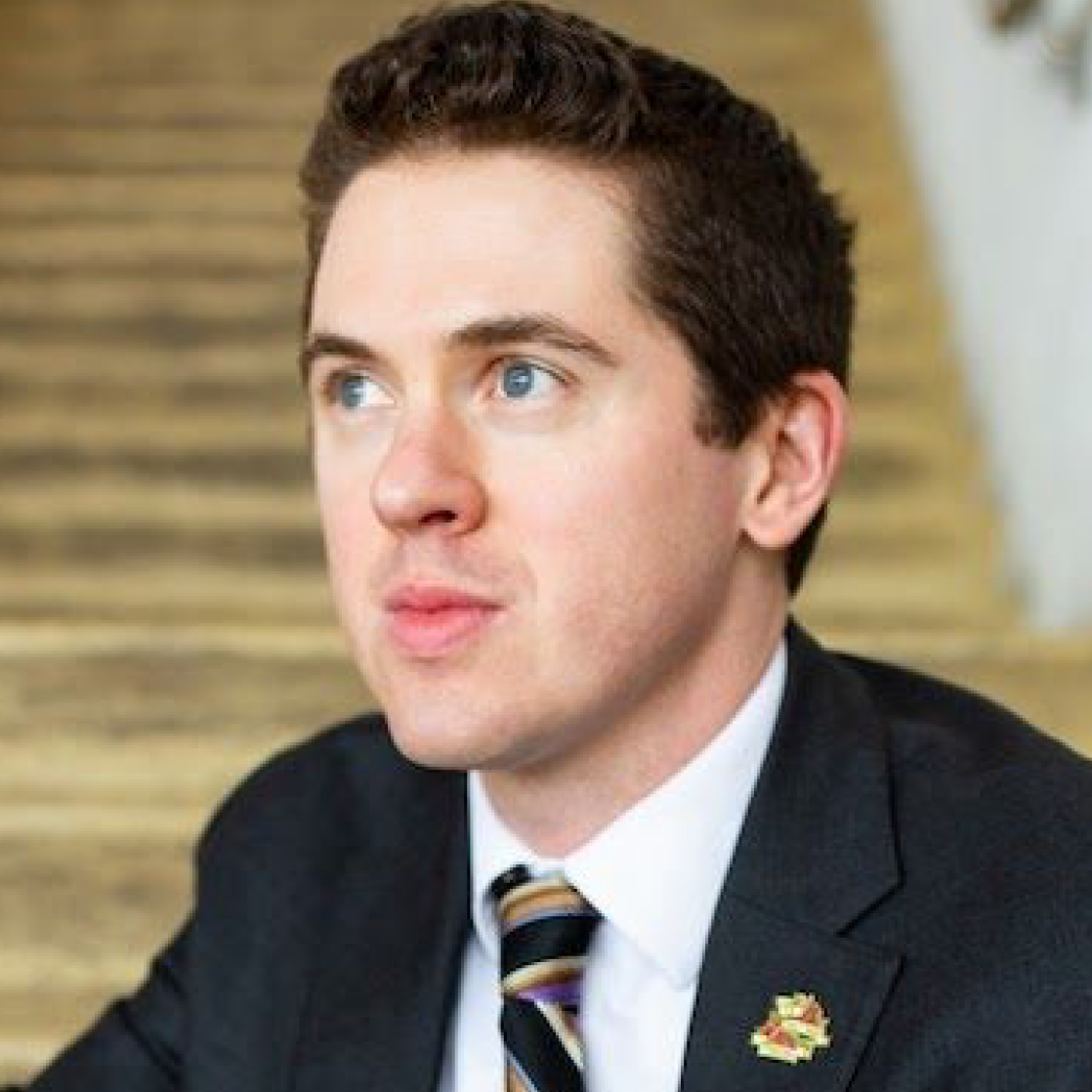
Nate Levin-Aspenson (he/him) is a writer and fundraiser based in Rhode Island. Born and raised in Durham, NC, he has since left the South, taking his strong opinions on regional barbecue styles with him. He started his fundraising career as an unpaid intern of and then as the Marketing and Development Director for The Servant Center in Greensboro, North Carolina. He currently serves as the Lead Grants and Foundations Relations Manager at Newport Mental Health. He is a member in good standing (the last time he checked) of the Association of Fundraising Professionals, Rhode Island Chapter, where he sits on the Professional Development and IDEA Committees with many other excellent people. You can get in touch with him by email and you can usually find him on Twitter.

7 ways to tell stories ethically: the journey from exploited program participant to empowered storyteller

By Nel Taylor, major gifts officer

One thing we are learning when it comes to community-centric fundraising is to move away from individual storytelling and toward organizational storytelling.

But what if you have an incredible, compelling story to share? Is there a way to do it in a community-centric way?

The following is my experience as a storyteller and a storytell-ee.

The unintended consequences of individual story telling

I spent a few years being praised for my difficulties rather than celebrated for my real attributes and hard work.

My career in nonprofit storytelling began at my transition out of homelessness. I was a program participant in a small arts nonprofit organization and as an 18-year-old formerly homeless, queer, non-binary, Indigenous person who used to sell drugs, my story was clearly a testament to the organization’s success, and it became the story they would sell to donors.

I use the word “sell” consciously.

Speaking at galas, small donor dinners, in the newspaper, and at other fundraising events certainly had its benefits. I became acquainted with some of the most powerful people in the Portland arts community. I was invited to luncheons with senators, dinners with key funders, and built relationships with really remarkable people who invested in my success.

But the experience also had many drawbacks. I felt as if the worst parts of myself were on display. I remember being interviewed for the local paper and, without any coaching, didn’t know quite what I had gotten into. Nervous and unprepared, I shared some very personal and dark details of my life, the consequences of which didn’t settle in until I saw the text in black and white: “Nel Taylor talks of selling drugs on the streets while travelling with Grateful Dead fans.”

My stomach sank. After that story went to print, I received an unsettling piece of vulgar ‘fan mail’ from a prison inmate. I was 18. I was still a child. No one had protected me.

While I enjoyed speaking about my journey and educating privileged people about the realities of living on the streets, it didn’t take long before the story no longer felt like my own. I was coached on what to say and how to say it. One event manager even told me that there was math behind whether you cry or not while giving an appeal and the rate at which people give.

Really.

I spent a few years being praised for my difficulties rather than celebrated for my real attributes and hard work. And I don’t fault the organization for this at all — because this is how it’s always been done.

This work eventually led me down a path to a professional development career, and for that I’m extremely grateful.

But when I took my first full time job at another arts nonprofit, I decided I would do it differently.

Here are the rules I created for myself to ensure that the story I’m telling is done so ethically:

1. Put out an open call for folx to offer their stories

I know it’s tempting to hand-pick the story you find the most compelling or to identify the ‘most diverse’ person to represent your organization’s work, but when we ask someone directly, especially if they are marginalized, it can sometimes be impossible to say no. Remember that none of your program participants owe you anything.

And offer a stipend, if you can. Ask folx who would like to share their experience to come forward — and look for enthusiastic consent.

2. Meet this individual in person (or via Zoom)

Have an actual meeting with them because simply asking someone to type something up, or answer a list of questions emailed to them creates a power imbalance. Also, perhaps they struggle with the written word, maybe they need to warm up to you first, or maybe they aren’t sure what you’re looking for and might share more than they’d like to.

Create a real, authentic relationship with the person you are highlighting. Watch their body language and facial expressions for discomfort or excitement. Hold real, safe space for them to share.

3. Introduce yourself and set expectations

Make it very clear why you’re asking for this story. How will it be used? Who will see it? What is the goal? Get very specific.

Introduce yourself thoroughly. What are your own fundraising ethics? How far are you on your equity journey? What do you still have to learn?

Come with clear questions to ask, more than just “tell me your story.”

4. Ask permission

Say these things: “May I write the first draft and send it back to you?” “May I record this interview?” “I noticed you shared something rather personal, may I include that in the letter?” “May I use your name? Your pronouns? A picture? Other identifiable information?”

Don’t assume that they know what a traditional appeal looks like, or that they know what they’ve signed up for. Ask for consent every step of the way.

5. Involve them in the drafting and editing process

This person should have access to every version of the document. Give them editing abilities on Google Docs or however you’re drafting. Send them each draft to edit and approve. Notify them of any major changes. They should have final approval of everything.

6. Have a back-up plan

Remember that someone can revoke consent any time they want to. Create a space where it is OK for someone to change their mind and have a back-up story ready to go, just in case.

Folx don’t need to be bothered with the guilt of putting you behind on deadline or you scrambling to get something out last minute.

7. Manage donor interactions

As much as we love our wonderful supporters, they can sometimes be a little … out of touch. If your participant is going to be making calls to donors or speaking at an event or dinner with your stakeholders, it is your responsibility that that is a safe thing to do.

Give the power to your participant. Ensure that their needs are met first, rather than centering the donors needs. Field questions and inappropriate topics, create space to check in and make sure that everything still feels comfortable for your storyteller.

And most importantly, hold your donors to the same expectations as your staff. The time has passed where we chuckle off a racist comment from a major supporter. We are all responsible for holding our donors accountable and that responsibility is even more important when they are interacting with a program participant. I can’t stress this enough: Push. Back. On. Problematic. Behaviors!


Through my work in storytelling and implementing these rules, I feel a sense of relief that I have undone the damage caused to me by the nonprofit industrial complex and have received overwhelming positive feedback from program participants that I’ve worked with. This is the key to maintaining positive relationships with your alum, and ensuring that you have many powerful stories to tell in the future.

Nel Taylor

Nel Taylor

Nel Taylor (they/them/theirs), Confederated Tribes of Umatilla Indian Reservation, is a development professional with nearly 10 years of donor relations and storytelling experience in the arts. After years of supplementing part-time and volunteer work in fundraising with bartending, they took the leap into full-time development work two years ago. They have served on the board of directors at the Circus Project, graduated the Art of Leadership program through Regional Arts and Culture Council, and are currently taking the certificate in nonprofit fundraising course at Willamette Valley Development Officers. Nel was born and raised in Portland, OR, is an active participant in the social justice and activism community in Portland, is a strong advocate for equity in nonprofit work, is a musician and performer, and an avid meditator and NBA fan.

CCF’s top 10 accomplishments of 2020

CCF’s top 10 accomplishments of 2020

Hi CCF community,

In mid-July this year, the Community-Centric Fundraising movement was launched. Some people thought it was ridiculous to launch a movement in the middle of a double pandemic — and normally they would be right!

But it turns out, the inequities revealed by the pandemic combined with society’s reckoning with the state-sanctioned murders of Black people made many of us confront the fact that we often are complicit in perpetuating the very injustice we decry in our solidarity statements and that it was time for some changes in our sector. This included the way we do fundraising, which has been historically centered around donors. And when we center the comforts of rich, mostly white folx, we inevitably advance capitalism and white supremacy.

More than five months later, CCF has grown and expanded across the United States and even in other countries. We still have a lot to do, but as this year closes, let’s celebrate a few of the accomplishments we have all created together in this movement.

1. Our launch event was attended by over 2,800 people from around the world!

We also temporarily crashed several websites (including our own) when we recommended people check them out. Among them is native-land.ca, where you can find out which Indigenous nation(s)’ land you are standing on.

2. We published 51 content pieces in the CCF Hub.

We built this content hub to answer the call for a space to share out and take in new perspectives on or challenges existing within fundraising conventions. The majority of these pieces were created by Black and Indigenous women and other women of color, whose voices are often dismissed or even punished in our field.

3. We created a Slack in response to a need and call for community.

Our CCF Slack now has over 2,300 members. From this community there are 76 city-based subchannels that formed, and colleagues have been having various virtual meetings. It is wonderful to see the interactions, advice- and resource-sharing, and also the mutual support among colleagues as we all explore how to do fundraising in more equity-aligned ways.

4. We kicked off CCF’s presence on social media.

We have over 6,000 followers across Instagram, Twitter, and Facebook. Not bad for five months! Social media presence has been extremely helpful to share the work of our many wonderful content creators.

5. We built a base of over 10,000 people on our mailing list for CCF’s Rewind.

The Rewind is CCF’s weekly digest of new content, news, and announcements. Each week, we are reaching more and more folx.

(FYI, our communications and the CCF Content Hub is managed by Stacy, Jordan, and Eric. Thanks, y’all!)

6. The Ethical Rainmaker podcast was launched.

The Ethical Rainmaker (TER) covers multiple provocative topics, including how data has been weaponized against community, how leaders can keep foundations accountable, and how to bring our full authentic selves into the work. Since its launch, TER episodes have been downloaded over 13,000 times. (FYI, TER is produced and hosted by Michelle Shireen Muri.)

7. We worked with CalNonprofits and Institute for Policy Studies on a townhall series.

This series discussed advocacy to enact new legislation on philanthropy, including requiring foundations to double their minimum payout rate from 5% a year to 10% or more a year, as well as to make sure donor-advised funds do not keep being a tool for rich people to hoard wealth and avoid paying taxes. (Check out charitystimulus.org for more details and to sign the petition)

8. We collaborated with incredible partners to advance CCF principles.

Our partners included Willamette Valley Development Officers, Philanthropy Northwest, Grant Professionals Association of Kentucky, Grant Professionals Association of Arkansas, Minnesota Council of Nonprofits, Washington Nonprofits, the University of Washington, University of Southern California’s Sol Price School of Public Policy, Satterberg Foundation, University of Washington’s Museology Masters of Arts Program, Gladiator Consulting, and The Libra Foundation.

9. We released an infographic series on fundraising perceptions in the sector.

The information from these infographics came from a survey that had over 2,100 completed responses from colleagues across the sector. We discovered several key pieces of information, including that 73% of BIPOC fundraisers and 63% of white fundraisers are unhappy with the current fundraising philosophies and practices, with nearly 90% of respondents thinking that these current practices increase white saviorism and poverty tourism. (Note: This series by Anna Rebecca Lopez is still ongoing, so look for more in 2021.)

10. Most importantly, the movement is providing folks with the language and tools to create change.

As colleague Mandie Rice of Seattle Music Partners says, “I found that the CCF movement provided articles and resources to help me re-evaluate what I was taught about fundraising. It helped me find language to the issues that I had ‘felt’ yet couldn’t articulate.”


These are just a few things all of us accomplished together as a movement in 2020. During one of the most challenging years of our lives, we questioned beliefs and practices that we were taught were sacred and unchangeable — we took courageous stands, we lifted up the voices of those who are often ignored, and we built community and supported one another and our missions while doing so.

This is a movement that will change and grow, and there are so many more exciting things in development for 2021. For now though, let us all take a moment to celebrate! And also to take a break. We deserve it!

CCF 2020 rewind: All of the stories, essays, and performances!

CCF 2020 rewind: All of the stories, essays, and performances!

When Community-Centric Fundraising launched in July, we had no concept of what our hub would look like in December 2020. We had no idea we would be so fortunate to have the opportunity to work with such passionate, and intelligent folx — and we didn’t fully understand the kind of talent that exists in our sector.

Here’s an anthology of everything that was published in 2020, organized by theme (and in order of date they were first published).

Accessibility

8 ways to make fundraising more accessible for people with disabilities,” by Elizabeth Ralston
The invisible disability: How nonprofits fail their employees with mental illness,” by Ashley Lugo
Curb cuts and universal design: How I use my invisible disability to advocate for arts accessibility,” by Elizabeth Ralston

Antiracism

Why I decided to give up complicity in order to be an anti-racist volunteer manager,” by Laura Pilati
Reparations: How we white relatives must try to pay back the unpayable debt,” by Hilary Giovale
As a white woman, do I have a responsibility to disrupt philanthropy?” by Rebecca Paugh
White women as gatekeepers,” with Fleur Larsen, by the Ethical Rainmaker/Michelle Shireen Muri
Tokenism is NOT transformation” with Chuck Warpehoski, by the Ethical Rainmaker/Michelle Shireen Muri
Is your diversity plan going nowhere fast? Here are the 4 reasons why” by Christine Bariahtaris

Black Lives Matter

12 years a fly in the milk,” by Marisa DeSalles
10 reasons why fundraisers and nonprofits all need to support defunding the police,” by Erika Chen
How green bell peppers will end anti-Blackness. Seriously,” by Nina Yarbrough

CCF Principles

How you can start applying CCF’s 10 Principles today,” by CCF
My love of Ori’ dance, as seen through a community-centric lens,” by Isabella Lock
7 must-do activities in order to actualize a practice centered around community-centric fundraising,” by Rachel D’Souza-Siebert

Data & Research

How prospect research can help nonprofits become less racist and more inclusive,” by Elisa Shoenberger
Data Says!: Nonprofit professionals are unhappy with fundraising,” by Anna Rebecca Lopez
Decolonizing data,” with Anna Rebecca Lopez & Vu Le, by the Ethical Rainmaker/Michelle Shireen Muri
Data Says!: Current Fundraising Practices & Philosophies are Harmful,” by Anna Rebecca Lopez

Fundraising

The power of a fundraiser: Why you are the key to systems change,” by Michelle Shireen Muri
Six reasons why tiered event sponsorship needs to go!” by Phuong Pham
5 reasons your development planning sucks,” by Nikkia Johnson

Nonprofit sector

Nonprofit Industrial Complex 101: a primer on how it upholds inequity and flattens resistance,” by Sidra Morgan-Montoya
Radical transparency: Confronting nonprofit governance to truly eliminate discrimination and harassment,” by Shanaaz Gokool
Nonprofits can’t engage in political advocacy at all, you say? Wrong. We can and we must,” by Cami Aurioles
What if Jeff Bezos used food banks? An examination of how NPOs subsidize affluence,” by Sapna Sopori

On the job

What I learned from losing two jobs in the fight for racial equity,” by Erika Chen
“‘You want a director of what now?!’ When orgs that are hiring are too lazy to know what they want,” by Marisa DeSalles
Raises in a pandemic” with Ananda Valenzuela, by the Ethical Rainmaker/Michelle Shireen Muri
5 data-driven ways to bridge the culture gap between staff and board,” by Meenakshi Das

Philanthropy

Philanthropy,” by Abdul Ali
Meaning well isn’t good enough,” with Vu Le, by the Ethical Rainmaker/Michelle Shireen Muri
Interpersonal Philanthropy,” by On Word for Wildlife/Tykee James
Disrupting your community foundation,” with Heather Infantry, by the Ethical Rainmaker/Michelle Shireen Muri
The racist roots of nonprofits & philanthropy,” with Christina Shimizu, by the Ethical Rainmaker/Michelle Shireen Muri
We’re breaking up: And it’s not me, Philanthropy — it’s you,” by Kimberly Tso

Self-care & authenticity

Kink, consent, & centering community,” with Lateef “L.T.” Taylor, by the Ethical Rainmaker/Michelle Shireen Muri
Heal yourself to transform society,” with Victoria Santos, by the Ethical Rainmaker/Michelle Shireen Muri
“‘What are you again?’ (Not your token Brown friend, that’s for sure!),” by Rachel D’Souza-Siebert
If we’re fighting for our futures, then why do I feel so tired and judged right now?” by Sidra Morgan-Montoya
The lies year-end fundraising told you (and 5 ways to care for yourself this time of year)!” by April Walker

White Supremacy & White Supremacy Culture

Why being gaslit by white people isn’t just emotionally violent, it’s racist,” by Melia Smith
White supremacy culture in professional spaces is toxic — to dismantle it, we must first be willing to name it!” by Ashley Lugo
#NonprofitKarens: What they look like and how you can spot one!” by Dominique Calixte
Code-switching! For when being your true self impedes that promotion you want!” by Kaitlyn Rich
Looking behind the curtain: How anonymous giving can uphold white supremacy,” by Elisa Shoenberger
White people: We need to do more than just ‘leverage whiteness’ to dismantle white supremacy!” by Sarah Stickney Murphy
Can anybody hear me? How white nonprofit writing standards erase BIPOC voices — and why that is definitely not OK,” by Yolanda Contreras
Ho ho holy silent dark night of the soul: On Christian foundations and how they maintain power through wealth distribution,” by Nancy Slavin

7 must-do activities in order to actualize a practice centered around community-centric fundraising

7 must-do activities in order to actualize a practice centered around community-centric fundraising

By Rachel D’SouzaFounder + Principal, Gladiator Consulting, Justice Philanthropy Catalyst, Forward Through Ferguson

Over the summer of 2015, I found myself at a crossroads in my career. I was on maternity leave with my daughter and home with my 4-year-old son. It was during this personal transition period that my business, Gladiator Consulting, was born.

I wanted to find a way to infuse my personal commitment to racial justice and equity into my new role as a nonprofit consultant. I knew my point of view and skills could help justice-oriented organizations reach their full potential through fund development. I quickly found my niche working with grassroots and grasstops organizations in the start-up or initial capacity-building phase of their lifecycle.

I knew I needed to make a change — I was no longer willing to perpetuate racist fund development strategies in my work.

However, by 2017, I found myself faced with a company, much like my toddler, entering the terrible twos.

While there was no biting or kicking at Gladiator Consulting, it was a period marked by frustration, growing pains, and a few of my own meltdowns. And honestly, not that much was “different.”

It was just that, after two years working with justice-oriented organizations to raise money, using traditional donor-centric practices — things no longer felt right.

I had already spent a decade of my career in the nonprofit sector in various development roles, and I knew my way around a strong fund development program. But I increasingly became aware that the way I learned to raise money was centered on notions of whiteness and white supremacy culture.

I knew I needed to make a change — I was no longer willing to perpetuate racist fund development strategies in my work.

That spring, I read Vu Le’s blog on the principles of community-centric fundraising. While I found it inspiring, I was still struggling to understand how to integrate these ideas into my fundraising work.

Luckily, I attended Stanford Social Innovation Review’s Nonprofit Management Institute that fall where I heard Dorian Burton and Brian Barnes of TandemEd expound upon an article they’d co-authored earlier that year — Shifting Philanthropy from Charity to Justice. Their seven questions, along with Community-Centric Fundraising Principles, served as the framework for a shift in my fundraising practice.

These philosophies moved me beyond just the idea of anti-racist resource development and provided me the framework and inspiration to take action.

As I reflect on the last three years of successes and failures in actualizing a practice centered around community-centric fundraising, I identified some key activities that helped me get started. I hope they help you introduce this movement to your work.

1. Acknowledge where you internalize white supremacy culture

To transform yourself, your institution or a system, you must understand where you and your institution internalize or benefit from racism and white supremacy culture. This is hard. Even the most woke of us have much work to do.

As a non-Black person of color, I have had to get clear with myself about where I have benefitted from being an active participant in upholding racist and inequitable systems. When we understand where we’ve made mistakes in the past, we can actively choose to change our behaviors.

2. Operate based on core values/guiding principles

To be unclear is to be unkind. I wanted a crystal-clear set of values to guide my work and eventually settled on five. I know that I’m doing the right work when these values are explicit in our clients’ resource development efforts. Whether you ascribe to a personal set of core values or organize your efforts around the core values of your institution, you must be rooted in something that matters to you.

Here are my values. You can use them as an example.

  • Social justice and racial equity — We believe that everyone deserves equal economic, political, and social rights and opportunities, and we believe in working towards a state in which outcomes are no longer predicted by race. We actively seek and prioritize serving clients who are committed to dismantling racist systems and addressing the root causes of inequity and injustice.
  • Community — We believe that people affected by inequity and injustice are best positioned to develop strategies and determine solutions to overcome systemic oppression. We will strongly encourage our clients to put the voices of their constituents at the center of all decision-making processes. We will work with our clients to build protocols to ensure accountability to the community.
  • Growth — We believe that leadership is a journey that requires continuous improvement, learning from failure, and adapting to an evolving environment. Our team is committed to our own professional development, and we expect that our clients are committed to theirs. We will work with our clients to prioritize growth and development for themselves and their teams.
  • Audacity — We believe in a willingness to take bold risks and challenge the status quo. We will push clients to explore innovative solutions to old problems. We embrace failure as a key step in finding sustainable solutions. We intend to play a role in dismantling the nonprofit industrial complex.
  • Imagination — We are resourceful, open-minded, and creative in pursuit of ingeniously elegant solutions. We find a strong balance between idealism and realism. We whole-heartedly envision and believe in a bright future for St. Louis.

3. Create space for learning, forgiving, and healing

You know you don’t have all the answers — so schedule time for learning. This does not mean you have to spend a fortune on membership organizations and fancy webinars or conferences. Start by picking a few newsletters to read or grab some books from the library. Listen to a podcast (like the Ethical Rainmaker!). Volunteer with another organization you’ve always been curious about.

And when your learning reveals that some past actions have not aged well, give yourself some grace. Apologize where you need to and share your learnings with others.

4. Leverage existing expertise

Community-centric fundraising doesn’t exist in a vacuum. You cannot do it alone. Joining this work is accepting that you are part of something bigger and better than just you. This means we share ideas, so invite your colleagues to a Zoom where you share fundraising ideas and strategies. Open your mind to the possibilities of unlikely, but necessary partnerships. Build and cultivate a network of relationships that you can share to enhance the fundraising muscles of peer organizations.

5. Embraces a nonlinear process

You are going to fail. And learn. And fail some more. You will mess up.

We are brought up in a system that teaches us we must get it right the first time. And if we don’t, there are few incentives to try again. We are taught to experience exhilarating success when something we tried yields a great benefit to our organization.

And, when we fail, well, you might be like me and momentarily consider leaving the field to return to your college of job folding sweaters at the mall.

But then you will remember that your best and highest value in this world is to keep trying. Inequitable systems have been around a looong time. We know how to be comfortable in them. It is important in this work to choose discomfort and take the incremental wins where we can get them. Every day.

6. Build your squad

Don’t worry — I am not suggesting you create another committee. Rather, be intentional about building relationships with those in and around your organization who will support a transformation towards community-centric fundraising ideals. Who believes in this work as much as you do? Who are the people who will help advance your community-centric fundraising agenda? What are the power dynamics in your institution? Who do you need to persuade? And, who will struggle with the principles of community-centric fundraising?

In addition to holding tight to the community-centric fundraising advocates, it is also important to hear and learn from ‘critical friends.’ This allows you to build your CCF muscles.

7. Pick a place and START

Movements don’t happen overnight — or in a month or year or even a decade. You likely won’t be able to implement a full articulation of Community-Centric Fundraising Principles soon, and you won’t realize the full impact of this movement for quite some time. This doesn’t mean you should wait. There isn’t going to be the perfect time, enough resources, or the strongest support for you and your organization to feel ready to try something that simply doesn’t happen around us.

But pick a place to start. Maybe you vet your ideas with a handful of institutional funders. Maybe you shift the focus of your recurring gifts, or maybe you stop doing events. Whatever it is, just start and believe that you’ll know more in the days, weeks, and years to come than you do now.

What have you learned on your CCF journey that would benefit this growing community? I would love to hear about your big successes and big failures.

End note: Rachel would like to express her gratitude to colleagues Natalie Self and Ann Fisher-Jackson who push her to shake imposter syndrome and take up space.

Rachel D'Souza

Rachel D'Souza

Rachel D’Souza (she/her) is the Founder+Principal of Gladiator Consulting in St. Louis, Missouri. Through Gladiator, Rachel has combined her knowledge of organizational culture and fund development with her deep personal commitment to centering community, seeking justice and creating belonging for those who have been disenfranchised or targeted by institutions, systems, and policy.

Born to parents who immigrated to the U.S. from India, Rachel has always been passionate about bridging differences and celebrating what’s possible when we collaborate from a mindset of abundance, learning, and risk-taking. Rachel loves cooking, snuggling her kids, and Instagram.