As a white woman, do I have a responsibility to disrupt philanthropy?

By Rebecca Paugh, Nonprofit Fundraiser

Recently, I was given a task by a mentor. My assignment was to ask others to describe me. (Super cringy exercise, but personal growth is uncomfortable, right?) Of all of the many ways I was described by old friends, co-workers, and acquaintances, no one — not a single soul — called me a quitter. The results were a variety of flattering, feel-good adjectives. There were multiple references to me as “joyful” — clear evidence that none of my children or loved ones were participants.

One person even offered: “Has a LET’S DO THIS attitude.” That is the one that really resonated with me because I am a fundraiser and fundraisers get shit done.

But this is the third time that I have taken — and then quit — a fundraising job. And every time I have done so, I swore it would be my last.

What does the quintessential nonprofit fundraiser look like? (Spoiler: like me)

More than 70% of all fundraisers are female and 82% of all fundraisers are white. The average age? 42. For many foundations and individual donors of wealth, the image of the development director is a middle-aged white woman who has at least one ‘gala’ outfit in her closet. That, in a nutshell, is me.

I let my hair go silvery gray when I turned 50, and I wear a silk scarf when I go to grownup meetings to signal that I belong — and to cover up the increasingly crepe-y skin on my neck. I am a “liberal do-gooder,” and yet I never had an authentic conversation with a Black person until I was 21. So yeah. My actual name is Becky and I am WHITE. All caps.

I first dipped my toe into the world of stewardship at a prestigious private prep school over a decade ago. I did not really feel qualified (imposter syndrome, anyone?) having been out of the workforce for 10 years at the time, but I was newly divorced with three young kids and I needed a job immediately. I saw the job post, cashed in on a personal connection, and jumped in.

(I would later learn that the job was about to be offered to someone else [I suspect a more qualified woman of color] but at the last minute the decision was overruled to ensure it would be my spot.)

I was out of my comfort zone in many ways, but I quickly morphed and adapted with my improvise-your-way-out-of-anything strategy honed during my previous life as a theatre artist.

During my time at the fancy prep school, I was a sponge; I did online classes, webinars, read about “best practices,” and watched and learned from my colleagues who were pros. Stewardship (which is code for donor-centric ass-kissing) taught me to cram my head full of minutiae and trivia. I knew the names of donors’ dogs and grandchildren. I knew where they went on their last vacation: “Tell me all about your trip to the Galapagos Islands!” I knew that The Donor Who Shall Not Be Named only liked turkey sandwiches, didn’t drink wine, and expected that his signature cocktail would be waiting on the side whenever he arrived at an event.

I learned that donors were always right and I constantly worried about making a single misstep.

I knew what was happening. I mean, I really knew. As the newbie on the team, I was relegated to the task of taking notes at the top-secret meetings. The board chair, the Donor Who Shall Not Be Named, and the other power players on the development committee — these people were philanthropists! They were generous! They got medals and fancy parties and big buildings named after them!

And they were also engaged in the long-held tradition of ensuring that the elite class maintained their power by “investing in the next generation.”

They were consolidating their wealth by feeding a massive endowment that we were all tasked with growing, to ensure that the rich prep school kids could grow up to be rich prep school alums who would perpetuate the cycle. And of course, they spoke with deep pride about “our financial aid kids” because not only were they generous, these extra-special philanthropists were white saviors!

At the time, I didn’t yet have the language to express what I saw happening but I knew it filled me with secret shame. As a single mom of three, walking away from a “good job” was terrifying, but I began to feel sick to my stomach every morning as I stepped foot on campus. After three years I called it quits.

When white people do ‘good work’! (AKA dancing with white saviorism)

I wanted to find work grounded in meaningful relationships and social justice, so I searched for a place where I could do fundraising work that had a mission more in keeping with my values. I used my connections yet again and began my ‘good work’ helping refugees and immigrants. I networked tirelessly, soliciting my affluent white neighbors and friends to help raise funds and grow the organization’s base. We hosted house parties that brought refugees into the living rooms of white wealth to “share their stories.”

It was a successful model and white people loved those house parties! The more horrific the story, the better! Yes, it felt wrong and weird, but it was for a really wonderful and amazing cause!

As a fundraiser I know that emotions motivate donors, and these donors were feeling all the feelings — and giving — so clearly I was doing great work!

But I know now the names for what I was doing: Exploitation. Victimization. Poverty tourism.

After that, I took a break from fundraising. When I started my most recent nonprofit job, I announced, “I will do anything you want. Anything. Except development work.”

I was tasked with organizing events, which is my superpower. It was a dream job. The board was diverse and hardworking, my colleagues cared deeply about race and equity — and the mission was perfect — providing arts access — primarily for communities of color in my own city.

But in no time at all, there I was: the old scarf-wearing white lady, creating collateral content, identifying top prospects, organizing the annual appeal and guiding the board and the leadership through the ins and outs of cultivation, solicitation and stewardship.

Despite emphatically denouncing this work, I found myself driven to do it, time and again.

So what kept pulling me back? Is this my own endless dance with white saviorism? What kind of power do I derive from having proximity and access to people of wealth?

I was looking for answers: I was reading Decolonizing Wealth by Edgar Villanueva, Winners Take All by Anand Giridharadas, and participated in an Undoing Racism workshop led by The People’s Institute for Survival and Beyond. I was tangled in knots trying to deconstruct my relationship with fundraising and the way that it overlaps with race and power.

I knew that everything I had learned about successful fundraising was ‘working’ (for donors and white people), but by now I was finding the words to describe my negative experience with it; this was not just me — it was an entire system that was toxic and broken. I just didn’t know what to do about it.

This awakening was significant, but I was still feeling lonely in my work, slipping back into a familiar cycle of self-loathing, and more uncomfortable than ever in my job. I knew I needed to find like-minded folks who were feeling what I was feeling.

Who are my people (and where the heck are they)?

I was a regular attendee at the quarterly development roundtable hosted by our local community foundation. At our last meeting, I summoned up the courage to ask if others were interested in engaging in a candid discussion around the challenges and discomfort of being a white fundraiser for an organization that serves communities of color.

The topic was quickly shut down by the moderator. “We would need to have an expert come in if you want to talk about that. We aren’t equipped to discuss that.”

The foundation had just launched its five-year strategic plan outlining its two main goals, one of which was: Create opportunity, promote inclusion and reduce inequities through inclusive growth. And yet we were discouraged from having a conversation that addressed core issues of inclusivity and what that looks for many of us who are doing this work.

I felt deflated and despondent. I was struggling with my mental health. I needed to be done with this fundraising bullshit — and this time I quit for good.

As luck would have it, I cleaned out my office on Sunday, March 8, and two days later everything began shutting down as COVID-19 changed the world. I was unemployed and quarantined.

So I decided to commit time and space to my own personal race work. I continued to read, protest, Zoom — and I continued to meet regularly with my mentor to sort out where I wanted to land next.

“Anything,” I said emphatically. “I will do anything except fundraising.”

My inner monologue ran like this: Maybe I am too old to unlearn everything I was taught. Maybe I will never make an impact. Maybe it is time for me to take a step back into a quieter job and make room for younger people of color to lead.

A whispering voice challenged me with a rebuttal: Or maybe this work is just too uncomfortable for you, Becky?

If I really believe that change must come, and it must — then I have to do the hard, uncomfortable work. That much I know, but this is collective work and I need not — in fact, cannot — do it alone.

I was spending hours a day scouring LinkedIn in search of co-conspirators and reading Vu Le’s blog NonprofitAF. I started using the hashtag #disruptphilanthropy, hoping others would find me and began putting out feelers in my community.

And then I stumbled across the Zoom launch of Community-Centric Fundraising. I was pumped with anticipation — and anxiety. Would I be the only white person? Would I be welcomed? There were thousands of people online and for the first time in a very, very long time, I did not feel alone. My story did not have to be a shameful secret anymore.

I am inspired by the groundwork CCF has already done. I have found BIPOC who are leading the way and like-minded white folks who understand that it falls on us to do some heavy-lifting. Our donor-centric mindset has led us down a path that has caused harm. We are complicit and we must speak up and stand up. We know the rules and if we are going to create a new system and a new set of rules, it will take all of us — together.

The more I learn about who I am, who I strive to be, and what I seek in this world, the more I see that my work must be to disrupt philanthropy. I cannot un-see everything I know to be true about income inequities in our world and the out-of-whack power that white philanthropists wield. If not me, then who? Who better to challenge white folks about their privilege than another privileged white person?

What I don’t know yet is what this work looks like for me in my community. Or what it looks like for you within yours. Maybe I will get involved with a CCF group in my city. Maybe I will continue planting the seeds for community-centric practices in quiet conversations with leaders, donors, and board members. Maybe I will find a job where I can begin to disrupt philanthropy. Maybe I will take to the streets and organize a protest. There is no playbook for this, and change will not come easily or quickly. But for now, I know there is work for the Beckys of the world to do, and we don’t have to do it alone.

So, perhaps trying to out myself as a “quitter” was premature. Because fundraisers get shit done. See you out there.

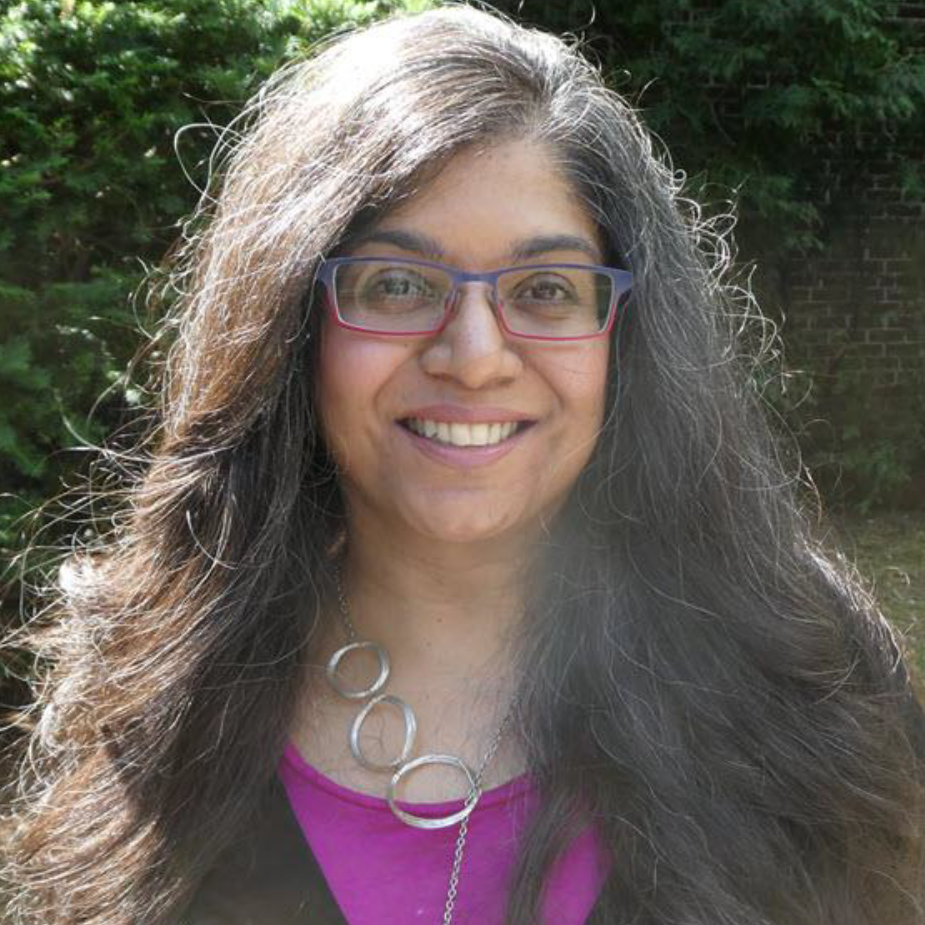
Rebecca Paugh

Rebecca Paugh

Rebecca (Becky) Paugh (she/her) has worn many hats in the nonprofit sector: co-artistic director/co-founder of a theatre company, stewardship/event planner for a private school, program developer for a refugee resettlement org, and director of development/chief recycler for a youth arts org. Becky hails from Montana, and she has spent the last few months channeling her inner farm girl by buying a shiny pitchfork and adding to her newly established compost heap. Jigsaw puzzles are her drug of choice. She is also actively seeking remote work now that writing this piece has alienated her from her local nonprofit community. Find her on LinkedIn and Facebook. Because, ya know … she is an old white lady.

Radical transparency: Confronting nonprofit governance to truly eliminate discrimination and harassment

By Shanaaz Gokool, life-long human rights activist and nonprofit discrimination disruptor

In Canada, the pre-pandemic nonprofit sector is a multi-billion-dollar-per-year sector that employs 2 million Canadians. However, the pandemic has laid bare the number of structural and systemic inequities within our sector. Knowing this, can we confidently expect the nonprofit sector to lead on issues of racism and other deeply rooted forms of systemic discrimination?

The Ontario Nonprofit Network (ONN) reports 80% of employees in the sector are women. Women often experience inequality in compensation and unsafe systems for reporting discrimination and harassment, especially women who are immigrants, racialized, and women with disabilities. Women also have limited opportunities for advancement into the management or executive levels of their organizations.

This sector claims to lead social good. Yet, when it comes to systemic racism and discrimination complaints, there are far too many outdated human resources practices and poor governance models that need to be revisited, reviewed and mostly tossed out the door. As a former CEO and also a former board chair, I’ve been on both sides of the aisle and believe that now is the time to reimagine innovative governance models that will hold the nonprofit and charitable sector accountable when these concerns are raised. This essay discusses how radical transparency can provide some answers to the short-comings in traditional governance when dealing with discrimination.

Governance: more than just a board of directors

In Canada, nonprofits and charities have legal requirements to have boards of directors, ideally to ensure responsible and efficient management oversight. Since boards usually comprise well-meaning volunteers, there may reluctance to unpack the role that they and senior staff play when discrimination complaints are raised. They are just doing their best, after all. But the current status quo of what’s best is failing.

Too many boards of directors and senior management teams fail to achieve proportional diversity representation of the communities they serve. And, where there is a lack of diversity in leadership, there may be high rates of oppression.

All too often, governance in the sector becomes synonymous with the boards of directors. However, this misunderstanding of impactful governance can prove damaging when directors assume, either intentionally or not, too much or too little control over the organization.

Instead, governance can and must be a power-sharing arrangement between directors, the executive, staff, key stakeholders, volunteers, funders, donors, and supporters.

The ONN sums this up well: “Governance is an ecosystem with many players, influences, and factors. … We need to critically examine the very design of governance so that effective governance is not wholly dependent on maintaining an effective board.”

Weak governance structures that cede too much power to the board of directors, or to the executive staff, miss and obstruct the opportunities for staff, volunteers and other stakeholders, including recipients of the charitable work, to bring matters of systemic discrimination forward. All too often, people who speak up are quietly forced out due to exhaustion, marginalization, and reprisal — and in some cases, through terminations.

People who do this vital work carry an additional burden: They care deeply. They deserve to make a fair and decent living in safe and discrimination-free environments. But caring for the cause can make good people feel guilty about calling out poor behaviour, especially if they feel forced to break their silence publicly. Voices of internal dissent may be uncomfortable, but when they speak truth to power about discrimination, we need to champion these experiences and seize the opportunity for change.

Without mechanisms that deincentivize discriminatory behaviour and encourage equitable actions, we arrive at exactly where we are today — the status quo. If the sector is sincerely interested in addressing anti-Black racism, systemic racism, and other forms of discrimination, we need to overhaul some of the current systems that have led us here.

The change required in the nonprofit sector requires radical transparency. Transformation begins by challenging the heart of governance and acknowledging that existing governance models are poorly equipped to proactively, effectively, and fairly deal with critical matters of discrimination and harassment.

The legal requirement to have a board of directors will not change anytime soon, but their role should be balanced along with staff, volunteers, members, and donors when issues of discrimination rears its ugly head. And make no mistake, when people who raise these issues are not treated with dignity, including acknowledging the legitimacy of their experiences, the situation can get very ugly.

The roadmap to radical transparency

The root and rot of discriminatory behaviour in the sector stem from poor governance models that provide more performative lip service than real mechanisms to end biased and discriminatory practices. If governance is where the root problems originate, then it may also be where we find some of the answers.

The sector needs to come clean about the collective millions of dollars spent every year on governance, legal, and other consultants. If spending on legal and governance expertise is transparent for every nonprofit and charity, and the numbers seem disproportionate against overall operating costs, this might be a red flag for stakeholders, especially donors. If these costs are released as an aggregate, and it appears to be bloated, wouldn’t that be an indicator that there may be a problem in the sector?

While the Canada Revenue Agency (CRA) does disclose the operational costs for all registered charities, it is not a detailed disclosure. Expense breakdowns for legal fees, governance and other expert consultants must be publicly accessible. The same must hold true for nonprofits that are not registered charities. This measure of transparency could provide an “early warning system” when persistent issues of racism and discrimination remain unresolved, and can certainly be an indicator for other governance-related concerns.

Lastly, federal laws must be amended so that the CRA can publicly disclose matters of serious non-compliance with a registered charity. Currently, this information is only available after a charity has been audited by the CRA and their charitable status has been revoked or annulled. These audits may take years to complete. In the meantime, donors, supporters, and the public may be blissfully unaware that a serious problem may be brewing and are unable to make informed decisions about donations, volunteering, potential partnerships, and sponsorships.

The by-laws: It’s time to codify

By-laws and articles of incorporation are the primary governing documents for the nonprofit sector. By-laws outline systems of accountability for directors, management, and members and typically include rules about meetings, membership, roles of directors including the removal of directors, and more. They may also contain clauses on grievances. These grievance clauses are all too often reproduced boilerplate text.

Let’s be clear here folks: If the policies and processes to address discrimination grievances are not found within the organization’s governing by-laws, it can be very challenging for employees, volunteers, members, and donors to hold the organization’s board and executive accountable.

It’s time to codify responsibilities and grievance processes in nonprofit and charity by-laws to specifically address protected human rights grounds related to discrimination and harassment, bullying, and whistle-blowing. These protections must also be addressed in employment agreements and human resource policies. And, for greater transparency, by-laws must be published online.

Protecting all stakeholders in nonprofit operations from discrimination and harassment is not merely a human resources matter. These are issues that can upend and corrupt organizations from the inside out and ultimately divert and obstruct the core mission. Though not a nonprofit, the recent damning external review of the Canadian Museum for Human Rights found “pervasive and systemic racism” which led to a toxic culture at the museum and ultimately contradicts the museum’s goals of upholding respect for human rights.

The failure to include these issues, and protocols for redress, within the core governance documents of any organization is ultimately a failure of good governance.

Non-disclosure agreements must be lifted

Free speech is constitutionally-protected in our democracy. The sector must lift non-disclosure agreements (NDAs) on issues related to protected human rights grounds. In 2019, a former staffer who was sexually harassed at a Canadian NGO in 2011 broke an NDA on social media after becoming frustrated and heartbroken that abuses at this organization continued. In recent weeks, other staffers including Amanda Maitland from WE Charity have come forward to share their stories of anti-Black racism and systemic discrimination.

It’s shameful in Canada that organizations with social justice values require whistle-blowing employees to sign these gag orders against free expression. Equally as problematic is the practice that some nonprofits engage in when they threaten current and former staff and volunteers with defamation lawsuits if they choose to speak out publicly. This cold chill runs counter to ending racial injustice and oppression.

We can’t resolve systemic discrimination when people are too afraid to speak out because of the potential negative financial, legal, health, and reputational consequences. These are people who are often already in financially precarious situations because of decades-long societal structural discrimination. If they choose to speak out, their stories must be heard and become part of our collective consciousness to transform the diversity disparity in the sector.

We also need an annual organizational disclosure to the Canada Revenue Agency or another appropriate body, to report on the number of complaints made on protected human-rights grounds, including the number that are resolved and how many are still open. If we can’t measure the scale of discrimination complaints in the sector, it’s going to be awfully hard to pat ourselves on the back for how progressive and fair we are.

We need diversity data and salary disclosures

The sector needs diversity disclosures related to boards, executives, and management. And, we need corresponding cross-sectional salary band information. We cannot assume that having greater diversity on boards, executive, management, and staff will translate into equitable compensation. As a former CEO who was not compensated fairly for several years, I know that ticking a diversity checkbox is insufficient.

Privacy rights can be maintained when these data points are released to the public as an aggregate. Confidence must be built with data and facts.

The sector needs to commit to a new standard that includes salary pay bands with all recruitment postings.

And perhaps it’s time to report salaries for people in the nonprofit sector who are paid $125K or more. These folks work for organizations that receive significant tax benefits. Can we truly be equitable if the salaries of the highest paid people in the sector are not transparent? (While the CRA already reports salary ranges for each registered charity, they do so at approximately $40,000 intervals until $350,000 — and then the range thereafter is “$350,000+.” Hardly transparent for some of the biggest charities in the country.)

Diversity disclosures, cross-sectional salary information, grievances, and salary disclosures must be collected to ensure that the changes we need in the sector are implemented. Without progressive disincentives for discriminatory behaviour, we may continue to see incremental cosmetic adjustments that do not result in meaningful change

A call for greater oversight

Canada needs to establish an external structure to represent and regulate the sector, including investigations that are required by law, when issues of discrimination are raised. It’s a fundamental conflict of interest when the folks who hold the purse strings are often the ones determining the scope and recommendations of the investigation. Believe it or not, in some cases the people in charge of an investigation are the ones being investigated. An independent body is required to ensure fairness and objectivity.

Over the past few months, we have witnessed some remarkable and unprecedented global calls to end anti-Black racism, systemic racism, and discrimination. Many organizations and leaders are making commitments to “change.”

Meaningful change can only come when the burdens of discrimination are shifted and shared so that everyone in the sector has fair and just access to evolving power dynamics when concerns of discrimination and harassment are raised. While there are talented equity, diversity, and inclusion professionals working hard to bridge the diversity disparity in nonprofits across the country, we can’t wait for them to bring everyone else up to speed. We need to help them so outcomes can be fair, objective, and transparent to stakeholders and the public.

Based on my experiences with systemic racism and discrimination at a national charity, I believe that we must focus on the impacts of discriminatory words, actions, and behaviours. (People who raise complaints about systemic discrimination are not required to prove intent. Why, you might ask? Because we don’t live in other people’s heads and cannot prove there was or was not, an intention to discriminate.) Instead, we can look to patterns of sustained behaviours that include microagressions and unconscious bias. The remedies above address how radical transparency can impact these outcomes and create real change. My simple truth is people don’t seem to behave so well when left to our own devices. We need incentives to encourage good behaviour and disincentives to disrupt the status quo.

Radical transparency ensures that we can govern words, actions, and behaviours so that people, their dignity, and our collective human rights are front and centre in Canadian nonprofits and charities.

Shanaaz Gokool

Shanaaz Gokool

Shanaaz Gokool (she/her) has executive experience and governance expertise in the nonprofit sector. She is a human rights activist and the former CEO of a national human rights charity. She currently has a wrongful dismissal and systemic racism and discrimination lawsuit pending against Dying With Dignity Canada. She can be reached at shanaaz.gokool@outlook.com and on LinkedIn.

CCF August 2020 Town Hall recap!

On August 10, 2020, Community-Centric Fundraising held its first Global Town Hall on Zoom, which featured a panel discussion on ethical fundraising with writers from CCF’s Content Hub as well as CCF Seattle chapter’s leadership. Nearly 700 people attended. The panelists were:

The event was moderated by CCF Seattle’s James Hong. Anna Rebecca Lopez kicked off the event with a land acknowledgment, and Rehana Lanewala shared how she got involved with CCF Seattle.

In addition to sharing the thinking and processes behind their CCF Content Hub pieces, panelists also answered questions from the audience like, “How to have courageous conversations in fundraising” and talked about the ways in which they shift their language in the course of fundraising, from “you” language to “we” language.

Check out the video above for a recording of the event in case you were unable to attend! You can also check out the chat transcript from attendees here. 

My love of Ori’ dance, as seen through a community-centric lens

By Isabella Lock, freelance journalist and student at University of Manchester studying Spanish and Japanese.

Ori’ dancers taking photos on a beach

Charity work has always been an important part of my life. At the age of 11, I organised a fundraiser at my school. All 120 pupils of my year group participated in my charity walk to raise money for our local charity, Haven House, which supports families looking after children and young people with life-limiting or life-threatening conditions. I had previously taken part in Haven House charity events and wanted to help out more. It was important to me to support the community and give where I can.

Today, I am a regular volunteer at a riding trust for people with special needs. There I volunteer as a side-helper, walking next to the riders for both physical and emotional support. I have grown close to one rider in particular. Although she is 10 years old and I am 19, we grew close as friends, and we always have fun together.

Her big dreams and determination to achieve them inspired me in my own pursuits. When I moved out to university and away from home, I had to say goodbye to my friend. Whenever I come back home, I visit the riding trust and catch up with the rider and other volunteers. I have found volunteer work highly rewarding. It always leaves me feeling happy, inspired, and grateful for life.

Besides fundraising and volunteering, I also dance Ori’, a traditional dance originating from Tahiti, Polynesia.

Ori’ dance origins

Ori’ dance was an important part of life in ancient Tahiti and was often performed in religious ceremonies, social gatherings, and everyday life. It was used by the Tahitian people to pass down traditions to younger generations so that they can tell the stories of their ancestors. Each individual dance tells a story through hip movements and hand motions.

Within Ori’ dance, there are different types of dance. At my dance school, we perform ‘ōte’a and ‘aparima. While the former consists of faster hip movements and less focus on the hands, the latter tells the story predominantly through hand motions (the word ‘rima’ translates into ‘hands’).

This is my dance school’s 3rd Place Mehura (‘aparima) for the Ori Tahiti Nui competition in Tahiti 2019.

I began Ori’ dance almost three years ago. Growing up, my grandfather often played Polynesian music. As a little girl, I loved listening to the music and asked my grandfather where it came from. He explained that it was from Polynesia and showed me videos of Polynesian dance. I fell in love with the beautiful costumes and the elegance of the dance. Unfortunately, Ori’ dance isn’t popular here in the UK, and so I was unable to find any dance schools to learn the dance myself.

In 2017, I discovered London School of Hula and Ori’ (LSHO), which was holding dance classes at Pineapple Studios in London. I decided to give it a shot and the rest is history. I have found a love for a culture on another island across the world. More importantly, I have made wonderful friends with fellow dancers, who always inspire and support me.

Learning and respecting the culture

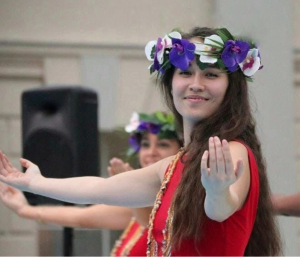
Ori’ dancer from my dance school

During my time dancing Ori’, I have performed at various cultural events to offer others an insight into Tahitian culture through music and dance. This is reflective of CCF’s first principle in relation to opening the conversation about culture and race. It is in my dance school’s ethos to build a community of culturally aware and technically trained dancers to effectively represent Ori’ dance in the United Kingdom.

Although we are a small community of Ori’ dancers in the UK, we are growing. When I joined three years ago, the classes were smaller and there was no website for people to look up. Today LSHO welcomes people from all over the world to dance with us via Zoom. All those who join, whether it be their first or 1000th class, is welcomed and supported as any other dance is.

Being mixed race, I have discovered the importance of culture. Growing up, I often struggled to fit into any one community since my cultural background is so mixed and unique. I have learnt to embrace all my wonderful cultures and belong to all communities. I believe that culture does not run through blood, but through the soul. My dream in life is to embrace every culture in the world and walk in the footsteps of every stranger. When I dance Ori’, I stand in the shoes of an ancient Tahitian telling the story of their ancestors. I feel a great sense of gratitude that I have been given this opportunity by the Tahitian people and I feel that it is my responsibility to share this culture in the most effective and respectful manner.

And while it is important to open the conversation about Tahitian culture with non-Tahitians, I feel that it is unfair that Ori’ dancers often perform at cultural events for free.

Between rehearsing, costume-making, and organising all individuals involved, performances cost a lot of our time.

Krysten Resnick, founder and director of London School of Ori’ and Hula, shares that it takes a lot of time to put on a show, such as “making the costumes, cleaning the costumes, carrying the costumes — and that’s just costumes.” She goes on to state that “if you’re asking me for my time, you’re asking me for my money.”

I have witnessed the amount of time and commitment that Krysten puts into LSHO, for which I have great respect. I, too, have spent hours making costumes and running through the same dance until perfect — but my individual work only scrapes the surface of the entirety of LSHO’s hard work. To not pay LSHO for their hard work is disrespectful and exploitative. This directly relates to CCF’s fifth principle, which stresses that time is equal to money.

Krysten also explained that when LSHO was offered its first performance opportunity, she felt that she had to take it to “get their foot in the door” despite the work being unpaid. Since Ori’ dance is not very well-known in the UK, every opportunity is important to share the wonderful culture.

In my opinion, I often feel that there is a difficult balance of wanting to share our passion for Ori’ dance to others, whilst also being respected for our hard work. As LSHO grows, I believe that organisations will begin to recognise the amount of time and money that goes into our performances and pay us respectfully.

Community and belonging

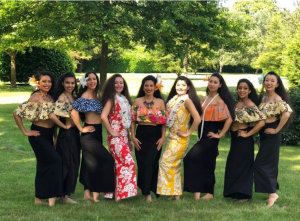
My dance community

When I think about the Ori’ community, I think of family. Although we are all individual dancers, we move together as one. Without one dancer, we are incomplete.

A perfect example of this is the preparation before a show. We all run around the dressing room, grabbing hair brushes, finding our costumes, and practising our dances. Most importantly, we run around helping each other.

From brushing another dancer’s hair to putting fake lashes on another, we must all work together as a team and ensure that we are all ready to perform. Sometimes people get angry and stressed out but, like a family, we brush it off and move forward knowing that we all still love and support one another.

I remember for one performance we had to practise the same dance over and over again outside in the suffocating heat of London. At the time, I was fed up and annoyed at my dance teacher for making us repeat it many times.

Now, during lockdown when we cannot perform together at shows, I miss it. I miss the stress and panic of shows. I miss the support and love among the dancers before we walk out on a stage. We are all in it together to tell the audience a story originating from the island of Tahiti across the world from the UK. Everyone has a role in our Ori’ family and so everyone belongs, which relates to CCF’s seventh principle of belonging.

The Ori’ community welcomes all, no matter your background, ability, or age. Each dancer, from beginner to professional, is embraced and supported. We help each other grow as dancers and as people to create a safe space to learn about Tahitian culture.

During my time dancing Ori’, I have often made cultural mistakes. For example, I have called dance moves by the wrong name or performed them incorrectly. However, my dance sisters are happy to correct me in a respectful and kind manner. In this way, I feel both valued and safe in the Ori’ community as I try my best to learn and improve as a dancer.

CCF’s third principle states that nonprofits must not treat one another as competitors but as critical partners with the same goal of strengthening the community. This represents the Ori’ community. While competition is a big aspect of the Ori’ dance world, we all have the same goal of strengthening the community and spreading Ori’ dance across the world.

Under lockdown, Ori’ dance champion, Tehani Robinson, set up Amui’ Tatou’, a series of Ori’ workshops held via Zoom, in which all proceeds went to a charity of choice. From all over the world, top Ori’ dancers, such as Hinatea Colombani and Jesy Muñoz, shared their knowledge and expertise on Ori’ dance. The ambience of the workshops was not of competition, but rather of supporting each other in our journey of strengthening both the community and ourselves as dancers. In this way, we can effectively share the culture together and invite others to join us.

CCF’s tenth principle recognises the importance of healing and liberation. Beyond learning about the rich culture of Tahiti and educating others, dancing Ori’ offers a safe space to express oneself. It can heal the soul when feeling emotionally drained or disconnected from the world. To all those who fight for justice, I encourage you to try Ori’ dance to nourish both your soul and body.

Isabella Lock

Isabella Lock

Isabella Lock (she/her) is a freelance journalist and student at the University of Manchester studying Spanish and Japanese. She regularly writes for her blog and The Mancunion. All of Isabella’s published work can be found in her portfolio. She can be reached on Twitter at @isabellalock_, on Instagram at @isabellalock_, or via email at isabella174@btinternet.com.

Reparations: How we white relatives must try to pay back the unpayable debt

By Hilary Giovale, author/organizer

As a child, I was taught in school that slavery ended in 1865, all thanks to the benevolence and heroism of President Abraham Lincoln. After that, there was some unrest in the 1960s, and Martin Luther King, Jr. was assassinated. Fortunately, slavery is now a relic of the past. Now, we know so much better, and every February is Black History Month.

Like most white children who were indoctrinated with this false history, I accepted that I was innocent, and that this history had nothing to do with me.

Our indulgence in the luxury of this denial needs to end.

The imprint of chattel slavery is woven throughout this nation’s fabric. Even if the United States government were capable of committing to some form of financial reparations, slavery produced spiritual debts that are ongoing, unfathomable, and unpayable.

What is the unpayable debt?

At 40 years of age, my white worldview shattered when I opened a book of family genealogy. The book was written by my great uncle, and it had been tucked away on a bookshelf for more than two decades.

I was sickened to learn that my 5th great-grandfather had received a land grant in North Carolina and had inherited enslaved people of the African diaspora. His descendants later purchased and sold African Americans in Mississippi.

Ever since reading the names of enslaved people on my ancestors’ lists of “property,” I have been navigating the shadows of the unpayable debt. I see it in how the institution of policing originated in the Antebellum South, with bands of armed men patrolling, terrorizing, and chasing down people who were trying to escape to freedom — in the reign of terror produced by lynching in the Jim Crow South — in the brutality of the Civil Rights movement — in racial profiling and state-sanctioned murder of Black people by police — in the school to prison pipeline that criminalizes Black children and incarcerates Black adults at a rate five times higher than white adults — in the fact that Black people comprise 13% of the American population — and 42% of the inmates on death row.

The debt is evident in obscene income disparity between Black and white Americans, in which median white families possess 41 times more wealth than median Black families. It is apparent in inequitable opportunities for housing and healthcare and in predatory banking practices.

It is unmistakable in maternal health disparities: Black babies are twice as likely to die as white babies, and Black women are 3-4 times more likely to die in childbirth than white women.

These disparities indicate how the wellbeing of Black women and their children is chronically undervalued.

Because of our false sense of superiority that is subtly reinforced on a daily basis, it can be habitual for white Americans to read these statistics and still feel deep down inside that these are “Black problems.” Many of us “well-meaning white folks” are steeped in the virtue of charity, believing that it is good to “help poor people with their problems,” rather than investigating the root causes of poverty, and undoing our problems with racism, amnesia, and denial.

Friends who are Black, Indigenous, and People of Color (BIPOC) have generously sensitized me by sharing their experiences with the internalized shame of oppression, the pain of lateral violence, and the exhaustion of dealing with these realities every day — while swimming upstream in a river of white denial. Listening to their stories viscerally imprinted that slavery and colonization never ended — they just changed form.

Since the founding of this nation, white families have developed intergenerational family security, heroic legacies, and wealth, while ignoring or imposing intergenerational traumatic stress, forced labor, relocation, and division on BIPOC families. White families can enjoy political and institutional advantages and not worry about police killing our children in the streets with impunity. Our white supremacist culture assures us that it is “normal” to live with ignorance and apathy about the terror, discrimination, and poverty impacting BIPOC.

My own denial was so thick that it took years of discomfort for me to finally see and acknowledge these pathological patterns lurking in my own mind.

These patterns are systemically entrenched and are being replicated on a mass scale according to what our ancestors prioritized and the legacies they left. These statistics and feelings will keep being replicated until we do the gut-wrenching work to purge our internalized racism and colonialism, cleanse the original wounds, and try to reduce the harm from centuries of horrific abuse that can never be undone.

The need for healing

The financial compensation that is owed to Black Americans is in the trillions of dollars, but reparations are only partially about money. Healing is crucial to the intergenerational process of making reparations.

This nation of “liberty and justice for all” is a paradox: It was built upon stolen land, with stolen labor. Its inspiring founding ideology was propped up by domination.

Because of this fundamental contradiction, even acknowledging the existence of the unpayable debt threatens white comfort.

First and foremost, white families and communities need to turn the lens inward. Our healing begins by excavating to the roots of the dehumanization our ancestors inflicted and we perpetuate, that is still invisible to many of us. Gathering with our white friends and family to understand our European ancestral trauma builds resilience. We must consciously commit to perceiving the ongoing impacts of colonialism, enslavement, and institutional racism without the filters of denial we were taught as children.

Deep personal and community inquiry helps us feel the cognitive dissonance of our complicity in upholding institutional racism. We need to feel it, in order to become effective partners in dismantling it.

Ever since learning about my ancestors’ longstanding presence on this land, I have been immersed in this process. Indigenous mentors have offered opportunities to experience the sophisticated cultural principle “we are all related.” With their encouragement, I am reconnecting with the ancient cultures of my ancestors. Ritual, apology, and forgiveness have helped me to accept and love myself, my ancestors, and my living family enough to try to reduce the harm. I believe that even amidst the long shadows of our painful history, it is possible to become a good relative.

White people learning to become good relatives is not only an inside job. It happens in tandem with our taking a multitude of reparative actions, such as humbly supporting the leadership of Black and Indigenous women, establishing racial justice curriculum in our children’s schools, opening an account at a Black-owned bank, upholding efforts to defund police and redirect funds to caring for communities of color, teaching our children to challenge racism, learning from films and books by BIPOC artists and scholars, advocating for student loan forgiveness, patronizing BIPOC-owned businesses, and enabling the return of stolen lands. Most importantly, it happens when we build relationships with BIPOC, and school ourselves in the sacred art of listening.

Doing our own work to heal from the pathologies of racism and colonialism helps us develop the capacity to show up for the needs of BIPOC. We can support BIPOC communities to tell their own stories, celebrate their own brilliance, and generate their own solutions. We can follow the guidance of BIPOC leadership, generating cultural and institutional changes that safeguard their lives from racial terror. Spiritual, emotional, and material support of BIPOC relatives confirms that we are all related. We actualize our human potential and become whole when we nurture the lives of our relatives.

Philanthropy’s role

Ten years ago, I began philanthropic work with my husband’s family. Initially, I was in denial about reparations and thought that “someone else” would take care of that, “someday.” Now, I know that money must be released on a massive scale, and intentionally directed toward racial healing.

My husband and I return resources to Black-led organizations working to tell the truth of this nation’s history, reform the so-called criminal justice system, celebrate the resilience and beauty of the African diaspora, create spaces for restorative justice and healing, improve birth outcomes through policy change and midwifery/doula care for Black mothers and babies, empower Black entrepreneurs, build Black political and institutional power, and provide zero interest loans to Southern Black farmers. We return resources to Indigenous-led organizations working to protect the world’s waters, legally defend land rights, ensure Indigenous food sovereignty, reclaim language and culture, support matriarchs, heal historical trauma, and provide essential COVID relief to Indigenous communities.

The power of kidnapped and enslaved African relatives and their descendants was captured, generation after generation, to create a wealth-generating and hoarding economy so vast that it impacted the entire world. This economy was built upon stolen lands, broken treaties, genocide, and the ongoing erasure of Indigenous relatives. Since the inception of this American paradox, money and power have been consolidated, enabling today’s institutional philanthropy. Keeping power in white hands is exactly how this economy was designed to function. To subvert this longstanding pattern, we need to disrupt inherently imbalanced philanthropic power dynamics.

We need to support reparative grantmaking designed to return decision-making power.

One example is a participatory grantmaking circle in Mississippi, the state in which my ancestors enslaved people for several generations. With the support of RSF Social Finance, a community of Black-led organizations will participate in a day of grantmaking. They will allocate money without our input, and they will be compensated for their time and expertise. The circle will include organizations working to address food insecurity, voter suppression, education, public health, and building community wealth. This process will be intersectional and mutually supportive, centering the voices of those who are most impacted.

Another example of grantmaking that shares decision-making power is the Kindle Project’s Indigenous Women’s Flow Fund. For three years, a cohort of Indigenous women will make grants to benefit their communities, supporting each other in the process. This will nourish the revitalization of matriarchal systems of governance interrupted by colonization and patriarchy. Indigenous women, the backbone of their communities, are rightfully the ones to nourish the people, land, and waters by liberating and redistributing resources built upon their ancestral homelands.

Regranting funds are another example of reparative philanthropy that returns power to the communities from which it was taken. In these organizations, BIPOC leadership decides how grants will be made, according to their unique knowledge of and relationships with the communities they serve. Some examples of Indigenous-led regranting funds are the Seventh Generation Fund for Indigenous Peoples and Liberated Capital. Another example, Medicine Theory, offers sliding scale, donation-based webinars open to all people. Taught by Indigenous thinkers and leaders, they cover Indigenous perspectives on topics such as midwifery, musicology, hydrology, climate science, and governance. Those funds are returned to individuals and communities who are impacted by settler colonialism and institutional racism.

In authentic reparative grantmaking, BIPOC communities are accountable only to themselves. Therefore, we do not require reports from the organizations we support directly. Within the aforementioned participatory grantmaking, flow-funding, and regranting organizations, BIPOC grantmakers and flow funders work with grantees to decide whether reporting will happen, using qualitative, relational, and collaborative processes.

Repaying the debt together

Repaying the unpayable debt is not about wallowing in pity and guilt, nor is it about swooping in to save the day as white saviors. Regularly asking for spiritual and ancestral support generates sober humility. Cultivating courage and curiosity transforms our fears over time. Commitment to right relationships embodies trust that there is enough for all of us to thrive. Asking our relatives to take their resources and power back, with outstretched palms and open hearts, is necessary.

Dear white relatives, does this make you uncomfortable? Do you want to turn away, pretend you didn’t read this, and continue with business as usual? Do you want to argue or defend yourself?

For years, a painful internal blockage kept me from making reparations. Inside that blockage were fears of acknowledging the magnitude of the debt, fears of my efforts not being enough, fears of giving up power, and fears of being exposed.

If a blockage is coming up for you, I invite you to sit with it on the land, by the water, and with your ancestors. Notice where that fear resides in your body and how it feels. Greet the fear, listen to it, and make it a relative. Repeat as often as needed. That fear does not need to define who you are, nor does it need to stop you from taking the first good step, and then the next.

Healing is possible. Ten years ago, I was in denial about reparations and did not know how to begin. Today, 92% of our philanthropic giving goes to social and environmental work led by BIPOC experts, for the healing of BIPOC communities and Mother Earth. We have outgrown the insidious, white mythology of our childhood; this nation’s history does have something to do with us. We are not exceptional; we are simply taking humble steps to recover our humanity and care for our relatives, one step at a time.

Will you join us?

Gratitude to Amber Starks, Konda Mason, Tia Oros Peters, Lyla June Johnston, Edgar Villanueva, Sadaf Rassoul Cameron, and Kayla Leduc for providing input on this essay.

Hilary Giovale

Hilary Giovale

This essay is a modified excerpt from Hilary Giovale’s forthcoming ethnoautobiography about her process of decolonization. Hilary (she/her) is a 9th generation American settler of Scots, Irish, and Scandinavian descent, who is influenced by her relationships with Indigenous peoples, worldview, movements and places. A mama, dancer, writer, filmmaker, community organizer, and philanthropist, she lives at the foot of a sacred mountain of kinship on Diné, Hopi, and Havasupai land.