
 Those of us who work closely with nonprofit boards or serve on boards know that a high percentage of boards are not working. And the challenges in terms of the stresses that boards are experiencing (racial injustice, inequities, workplace burnout, uncertainty in the larger economic environment) have increased over the past few years.
The Content Hub
The Content Hub is a free, educational resource featuring essays, podcasts, art, poetry, and practical fundraising guidance, completely resourced from the members—those who are new and those who are true to the CCF movement!
What the mini-series Secret Invasion can teach us about allyship and restoration when we’ve caused harm
 Let’s dig into what Secret Invasion has to teach us about allyship journeys, building bridges and navigating internal community dynamics, and potential paths to restoration when you’ve done harm as an ally.
Harnessing the Law of Oneness for Community-Centric Fundraising
 The Law of Oneness can be applied to all the principles of CCF. I welcome you to journal, sing, draw, meditate, or otherwise reflect on your own about each of the principles and how you are one with them (as well as everyone else who is applying them or not to this collective work).
No more silence: Suicide and nonprofit staff
 There is something oddly cyclical about experiencing trauma, starting a nonprofit to mitigate trauma, and asking people to work at a nonprofit exposing them to trauma.
What charity runs can accomplish: Why I’m running 26 miles alongside my dad to support a suicide helpline
 While I cannot go back in time and change the past, I can help to prevent this terrible loss from happening to others. If running the marathon saves just one life, then it would have been more than worth it.
How our liberation and joy are being hijacked by the LGBTQ+ nonprofit sector
 …performative displays have been demonstrated by well-funded mainstream LGBTQ+ nonprofits in metropolitan cities across the U.S. that have historically been founded by white, cis, upwardly mobile gay men and women.
Knowing
This piece is for Black and Indigenous people of color to find themselves in and ask how they define themselves – the positive, negative, and neutral – and for everyone, especially white allies, to more deeply interrogate how they uphold cultural Whiteness in workplaces where we exist.
Beyond Philanthropy: Disrupting Through Organizing #BringAFoldingChair
By Monique Curry-Mims and Valerie Johnson
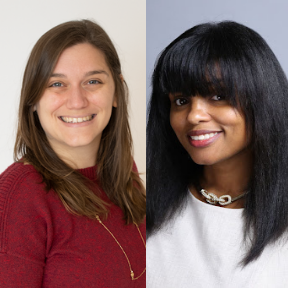 In this episode, Monique and Valerie sit down with Vu Le, Creator of NonprofitAF and one of the Founders of Community Centric Fundraising, to discuss how nonprofits leaders need to grab a folding chair and organize to save our communities and how funders need to shift practices to do the same.
Using my experience with inequities in traditional grant writing to create a better opportunity for others
 While experiencing the grant world as both a grant writer and a grantor, I got to see the possibilities along with the difficulties of providing an equitable and fair opportunity. And an opportunity to create a process for providing organizations with the support they need to continue the positive change they are making in their communities.
Navigating one of the biggest barriers to getting people to care about social justice: Fear
 I want to acknowledge that fear is not always the reason for resistance.But for the times when fear is the reason for resistance, I want to help fellow changemakers understand how fear happens in the workplace, the reasoning behind those manifestations, and strategies to navigate and overcome it.
Philanthropy’s golden handcuffs: The illusion of liberation and the complex balance between self-preservation and complacency among foundation workers
 In my pursuit of contributing to more equitable grantmaking practices, it became apparent that my initial honeymoon period, which boasted an abundance mindset and work-life balance, was really the cuffing of philanthropy’s golden handcuffs.
The imperial nature of empirical research: The importance of experiential knowledge in the nonprofit sector
 Simple surveys can’t quantify the experiences of BIPOC individuals, nor can an A/B test describe the impact of a message or mission. It is time to embrace experiential knowledge, and that must start today.