“Poor people” don’t “give back.” They just give.

“Poor people” don’t “give back.” They just give.

By Carol Ng’ang’a, founder of Msingi Trust and member of the CCF Global Council

Philanthropy is a cure for the symptoms of a disease the world created. It does some good to keep the disease at bay, but it doesn’t really heal it.

The global philanthropy world is a strange one for me! I realize its contradictions every day, and I struggle to make sense of it.

‘Give back’ is a counterintuitive term – what if you never took from people and thus never had to give back?

If business practices were not as extractive as they are today, making ridiculous profits on the backs of labourers and consumers, maybe they would not have as much profit to ‘give back’ to the communities from which they have extracted.

What if we just gave?

What if the world’s economic systems became honest about the sweat labour and time that the working majorities offer it and compensated that equitably eliminating the need for ‘philanthropy’?

Philanthropy is a cure for the symptoms of a disease the world created. It does some good to keep the disease at bay, but it doesn’t really heal it.

One example that comes to mind is how the international non-governmental organization (NGO) industrial complex is a nightmare to navigate. Well-resourced NGOs who want to appear networked with grassroots organizations but hardly deal with the day-to-day realities that these grassroots organizations deal with set the agenda and priorities for these organizations.

Localization efforts by international organizations also inadvertently mean reduced budgets from global offices. This reduces the capacities of the local leaders to impact at the local level, making it seem that things were better when the expatriates (who are almost always mostly white) were there.

Writing proposals drains the souls of local community organizers who have to balance between community organizing and advocacy efforts and negotiating with international corporate NGOs who have hot meals in their offices and access to on-the-go cabs for fieldwork and site visits to places with ever-shrinking administration budgets for the grassroots organizations.

Local community organizers may have had no food the night before and are being invited to a 5-star hotel the next day to discuss ‘poverty in the informal settlements.’ They might have had to navigate complex public transport systems and are then looked down upon when they arrive at the meetings late, sweaty, and with mud on their shoes.

There are industries that depend on the existence of poverty in order to survive. The nonprofit world is one of them.

As I think through these ‘fun’ topics in my head, I wonder about the actual numbers in terms of the money that ‘poor’ countries receive from high-income countries. According to the Charities Aid Foundation’s World Giving Index 2022, ‘The pandemic has altered the landscape of global giving behaviour. In 2018, 7 out of the 10 most generous countries were classed by the United Nations as high-income countries. However, in 2020, during the height of the pandemic, 7 out of the top 10 were low- and middle-income economies. This trend continued in 2021. Only 4 of this year’s top 10 most generous countries are classed as high-income countries, and 6 are low- and middle-income countries.”

These numbers have not changed much in the latest 2024 research findings.

I am writing this from Kenya. We have been consistently ranked amongst the most generous countries in the world. We are also considered part of the Global Majority, Global South, and lower middle-income countries of the world. 

I am writing this from Kenya. We have been consistently ranked amongst the most generous countries in the world. We are also considered part of the Global Majority, Global South, and lower middle-income countries of the world. 

I am a recipient of Kenyan generosity. As the first in my immediate and extended family to attain a university education, my first air ticket was paid for by my community. People chipped in their KSh 10, 20, 100, 500 to help pay for my studies. They generously gave from their daily wages to give me a chance at life, and every day, I work hard to ensure I do not fail them!

I am also writing this as a member of various self-organized groups that come together to contribute towards emergencies, hospital bills, school fees, weddings, funerals, and any other big life events that need community contribution. In most of these groups, there are ‘skip lunch’ challenges where one chooses to forfeit lunch and contribute to the need at hand. 

What I have experienced locally in Kenya also rings true globally. As shared from the data from the World Giving Index research, when a crisis happens, rich nations hoard wealth while poor nations give more of their already strained resources. 

The research explores generosity through three prisms a) giving time, b) giving money, and c) helping strangers. Do we in the nonprofit sector appreciate these other kinds of philanthropy? And if so, how do we honour and celebrate it? 

These communities never ‘give back’ they just give.

As you can maybe already tell, my brain explores the world and society through questions, and so I leave us with more questions to consider:

1) Would we in the poorer economies be generous if our health, education, and social welfare systems worked, or is this generosity a way of coping with the failing social welfare systems?

Would rich economies and richer organizations entirely stop giving if it affected their profit margins and their buffers? 

2) We left home to change home!

This is a common mantra that carries most of us who emigrate in search of greener pastures in the city or abroad. We have a strong desire to see where we come from change and for our siblings and kin to have better options than life gave us. This is done through remittances. ‘Every year on 16 June, the global community observes the International Day of Family Remittances. This day raises awareness of the hard work of millions of migrants who support their families and communities of origin through the money they send back home.’ With about $669 billion USD, ‘Remittances outstrip aid nearly three times over.

Philanthropy, therefore, has a face, and it is the faces of migrants from poor communities of origin who, because of their familial link and personal connection to the needs at home, have been successful in pulling their families out of poverty. This is money that has no administration and overhead budget, goes directly to the beneficiaries, and meets immediate and long-term needs of communities. In light of this, what lessons can we in the development and philanthropy sector learn from the hard work and the giving of the migrant workers that will better inform our practices in the philanthropy world?

3) Africa is human resource-rich and mineral-rich, yet corporations and imperialists, with the help of self-centered African leaders, have ensured that these resources do not benefit the continent by fuelling wars and unjust trade practices.

What would happen if the continent said “no” to the sedatives given to us in the form of aid (which is mostly a meagre percent of the resources that have been extracted from us) and truly controlled our resources? What would reparations look like for communities that have been impoverished through centuries of continuous exploitation and for those communities and countries that have been enriched from centuries of continuous extraction of others? What we call compounded extraction in our communities is compounded profit in the hands and economies of the imperialists.

4) CCF values sound very African to me!

I am especially drawn to the recognition that “All who engage in strengthening the community are equally valued whether volunteer, staff donor, or board member.” So how, in all our capacities, do we appreciate those who give to us non-monetarily? Do we have databases, CRMs, and retention strategies for them as well? Do we “schmooze” them as we do the cash donors? Do we know their names? Do we also acknowledge that positionality and race affect how we come in community and that we need to sometimes platform the silenced gifts more and deplatform the obvious loud voices?

When poor people give, it is done in community and in what I would call generosity circles. We all benefit from the generosity of the circle and, therefore, are indebted to the community. We also have the knowledge that need is not selective. Today, I might be responding to you in need; tomorrow, I may very well be the one in need. There is neither an eternal giver nor an eternal recipient. Today, it might be you in need; tomorrow, it will be me in need. There is no one eternal giver and one eternal recipient.

I have found that admitting to needing help requires a deep admission that I cannot manage life alone. As community workers and ‘rescuers,’ as people from high-income communities, as independent Black women, as first-born daughters, as men, as cis-hetero people, it is harder for us to admit to the people whom we are serving and are in community with that we are in crisis and need help and support. We have a god complex that we need to break. 

I would even carefully suggest that our hesitation to ask for help could be tied to an unhealthy view of what needing help is and thus unconsciously correlates to how we view those whom we work with who come to us needing help. 

So, what would a world where we just give look like? Even better, what would a world that doesn’t need systemized philanthropy because there is equity look like? What is the journey that we need to make between the now and then, and is our philanthropy organizing inclusive of that vision?
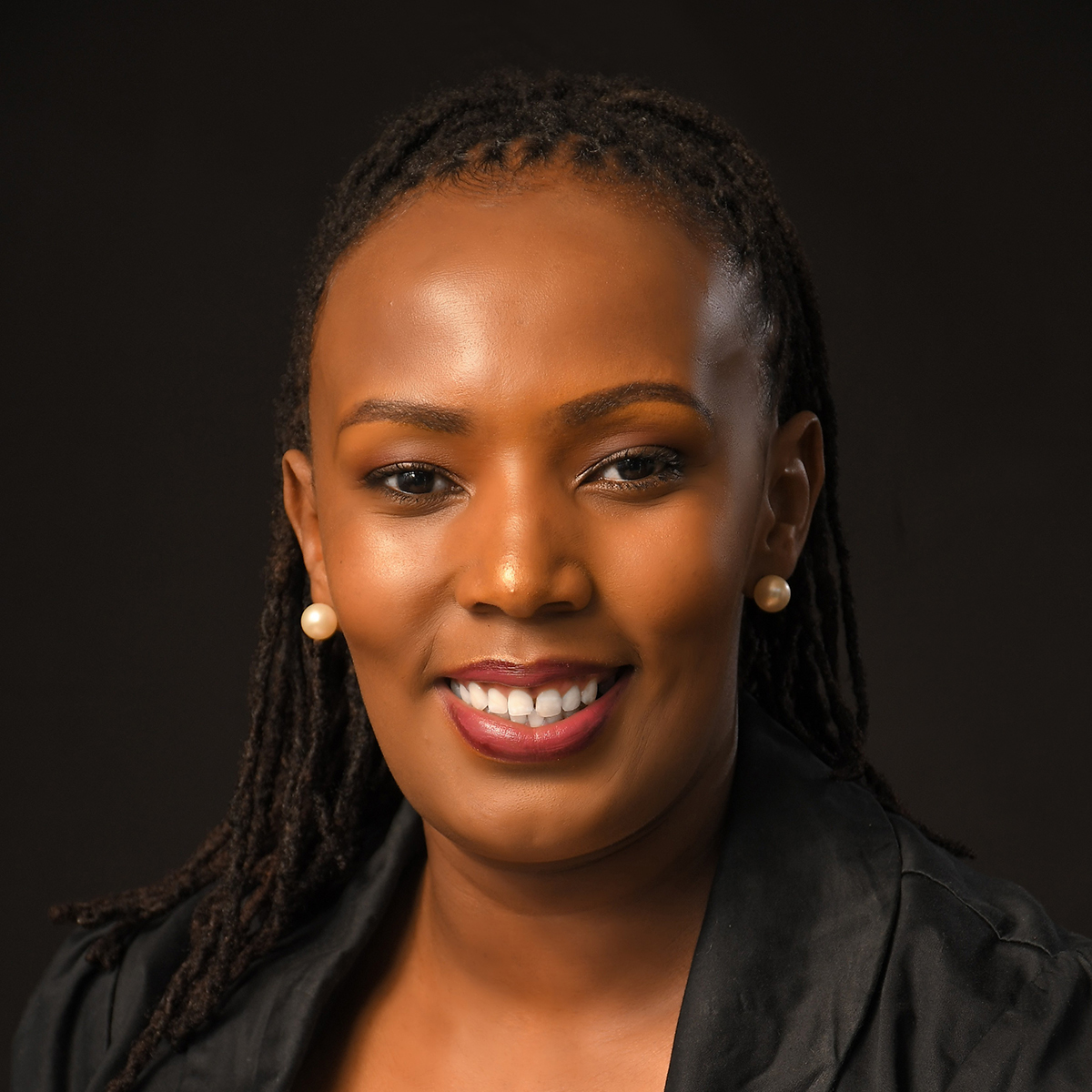
Carol Ng’ang’a

Carol Ng’ang’a

Carol Ng’ang’a (she/her) is a community development practitioner. She has a Bachelor of Theology (BTh) in Community Development from Cornerstone Institute in Cape Town. She has spent the last 14 years walking alongside various communities towards interventions for their empowerment. 

In July 2017, she founded Msingi Trust, whose aim is to ‘Mobilize, Inspire, Equip and Network Christians and community leaders towards Social Justice, Social Activism and Social Transformation.’ Carol is an ardent believer of justice, equality, and empowerment for all and has a special interest in working with faith leaders and grassroots human rights defenders, bridging the gaps, making connections between these two worlds, to create conversation content and connections to help in the fight against injustice within their community contexts.

Follow her on her personal Insta at @ndutahnganga

Follow her work at www.msingiafrica.org, Facebook, Instagram, and Twitter. Listen to her Podcast, Msingi Talks Podcast, across all mainstream podcast channels.

Support her work on Patreon or through PayPay at ndutahnganga@gmail.com.
Defying philanthropy: No good deed (goes unpunished)

Defying philanthropy: No good deed (goes unpunished)

By Carlos García León, anti-capitalist fundraiser, nap taker, and arts lover

…a white woman hates a woman of color for simply not being white, and a woman of color has a disdain for a racist woman. And yet, somehow, the grace of the kingdom is given to the white woman. I don’t have to tell you what a familiar experience this is for those of the global majority.

With the recent film release of Wicked, it feels right to unpack one of the many topics that come up in the musical: doing good. It is rather relevant to our field of fundraising and philanthropy – a sector filled with people who think they are “doing good,” as philanthropists like to say, “for the love of humanity.” 

However, before we start this walk down the yellow brick road, we have to put those bricks down. If you are new to the film or already over it, there is some history to talk about when it comes to the movie. 

This latest iteration is taken from the musical that premiered on Broadway back in 2003, starring the now widely known Idina Menzel and Kristin Chenoweth as Elphaba and Glinda, respectively. The musical is based on a book, Wicked: The Life and Times of the Wicked Witch of the West, by Gregory Maguire, published in 1995. This revisionist fiction is the tale of what and who the characters of Oz are before our beloved Dorothy storms in. 

So now, the stage is set. The curtains (and the man behind them) are ready. Let’s go down, down, down the road. (Yes, I can bring in Agatha All Along, too!) 

Of course, as always, one begins to question why a musical has anything to do with philanthropy and politics. To that, I must answer you with a question: What is art but not a reflection of socio-politics? From Shakespeare to The Christmas Carol to Maguire’s novel, the themes are always there. If they are not, then you must wonder what sort of privilege the art has for it to be omitted from the story which continues the socio-politics of it all. 

In this Oz world, we come to discover that the Wonderful Wizard is just a conman who has fooled a whole country through massive propaganda, rewriting the history of the land, and encaging and taking away the voices of those who oppose any of his ideals. Oh, this sounds a lot like the current U.S. landscape. Huh? So odd! 

So much for wonderful, right? But what about the “goodness” of the good witch, Glinda? Well, as we see in the film, portrayed wonderfully by Ariana Grande, her “goodness” is always about making her look good. A classic case of white feminism. 

Not that Ms. Glinda would know what feminism is – which is truly another checkpoint of white feminism. As we hear in the film through the song “What is this Feeling?” without even getting to know Elphaba, Glinda has a hatred of her that stems from her green-color skin (racism, if it was too subtle), so much so that the rest of the students “are all on her side. [All] share this feeling.” That feeling being one of loathing. 

Put in another way, a white woman hates a woman of color for simply not being white, and a woman of color has a disdain for a racist woman. And yet, somehow, the grace of the kingdom is given to the white woman. I don’t have to tell you what a familiar experience this is for those of the global majority. 

The song “Popular” is just a white woman telling a woman of color how to act and behave to be treated better instead of fighting the root cause of the mistreatment, ending the song with “just not quite as popular as me.” Telling us that no matter how much you assimilate or “be good,” they’ll never consider you an equal.

Proximity to whiteness will give you short-term benefits and privilege, but it will never save you, it will not liberate you, and it will not liberate others who look like you. 

Those last sentences are something I want to re-emphasize to the folks of the global majority who continue voting against the rights of their kin folk. Proximity to whiteness will give you short-term benefits and privilege, but it will never save you, it will not liberate you, and it will not liberate others who look like you. 

So what does our green-hued Elphaba do after realizing this and escaping the clutches of the Wizard? Run away to recoup, strategize, and find community. She’s aware that “Dancing Through Life,” as lovely as that sounds, is playing straight into the Wizard’s game. Let me tell you, I too, wish I could become more naive and be unaware of the injustices happening in our world and the continued harm that the nonprofit industrial complex embedded and intertwined with philanthropy have and are doing. Yet, that’s a short-term wish to minimize long-term harm. A realization that our charming love interest, Fiyero, discovers as he experiences and witnesses the maltreatment of those around him.

In Act II of the musical, when Elphaba sings “No Good Deed,” the lyrics are:

“One question haunts and hurts
Too much, too much to mention
Was I really seeking good
Or just seeking attention?
Is that all good deeds are when looked at with an ice-cold eye?
If that’s all good deeds are
Maybe that’s the reason why
No good deed goes unpunished”

I’m particularly fond of this as I think of philanthropy. Top of mind is name recognition of buildings, stages, and other physical items. Or we have the simple yet time-consuming and tedious program recognition on websites and paper materials. 

So we return to the question that haunts our wicked witch (and me, honestly), “Is giving really doing good, or is it seeking attention?” Can it be both? Sure, but then can it ever be really good if it also seeks attention? 

As Edgar Villanueva writes in his book Decolonizing Wealth: Indigenous Wisdom to Heal Divides and Restore Balance, “altruism is actually a fundamental reflection of the separation paradigm, the Us versus Them mindset. Altruism is the poster child for white saviors.” 

And so, in this land of Oz, we see the same issues we run into in the real world: Community building for the wrong reasons. The enemies of the liberation we are all aiming towards are much better at building community than we have been. It’s easier for them. It always has been. History has shown time and time again that nothing unites folks better than a common enemy. Oz has the Wicked Witch of the West; back in the 1800s, the U.S. had Irish immigrants; in the 1980s, the homosexuals during the AIDS epidemic and the Reagan administration; Muslim folks after 9/11 and the Bush administration – and still to this day, honestly. Othering is a tactic that is not new, and yet somehow, we are still not great at combating it. 

If we are to continue on this journey of “love of humanity” for the sake of philanthropy, then we have to embrace the ugliness of our histories–whether personal or institutional. To truly defy philanthropy the same way that Elphaba defies gravity, we have to love ourselves in all aspects of ourselves; we must come to be at peace with the darkness that has been socialized and enacted by others that we have internalized as common and normal. Elphaba gains her powers once she realizes that she is powerful because she is different. 

The story of the tragic anti-heroine of this tale doesn’t have a happy ending, per se, but we can still learn lessons from her. Defy gravity. Fight for the oppressed. Read a book. Wash away the critiques of your enemy. Be loud. Take care of yourself when you need it. Trust that others will pick up when you cannot. Pick up when others cannot and you can. 

If you get the chance to engage in the material, whether through the book, the musical – that is still running and occasionally touring – or the new film, I hope that you get the notion to be a little wicked. 

This world may have too many Glindas, Wonderful Wizards, and submissive Ozians, and this world deserves more people flying, perhaps not on brooms, but flying nonetheless.

Carlos García León

Carlos García León

Carlos García León (he/they; el/elle) is a queer, non-binary, Latine, Mexican-Statesian, and arts fundraiser. They were born in Atlixco, Puebla, Mexico, and reside in the stolen land of the Peoria, Potawatomi, Kickapoo, and Kaskaskia tribes, also known as Chicago, Illinois. Currently, Carlos is gratefully employed as the Assistant Director of Development at Lookingglass Theatre Company. Their work is driven by a fight for cultural equity, decolonizing the arts, and social justice. As such, Carlos describes themselves as an anti-capitalist, community-centric, theoretical fundraiser.

Carlos has spoken at multiple conferences introducing the concept of Community-Centric Fundraising and building a more gender-inclusive workplace to hundreds of attendees. Carlos holds a B.M. in Bassoon Performance from the University of Illinois at Urbana-Champaign, and a M.A. in Arts Administration and an MBA from the University of Cincinnati. Outside of working and writing, Carlos is a poet, writer, and fledgling kickboxer. They enjoy their leisure time by hanging with friends, resisting capitalism by taking naps, dancing to Latin, disco, and house music, and exploring new Chicago food spots. They can be reached via email or on InstagramTwitter, and other social media platforms @cgarcia_leon. Tip them for their work via Venmo @cgarcia_leon or via PayPal using their email

Creating sustainable movements: Expanding capacity in grassroots nonprofits with CRM technology

Creating sustainable movements: Expanding capacity in grassroots nonprofits with CRM technology

By Calion Winter, a multiply-marginalized activist helping grassroots nonprofits expand capacity through technology

Many CRM programs are built to be highly customizable for entrepreneurs and small businesses both for revenue generation and streamlining workflows. So, what if we used these programs for nonprofits? And, most importantly, used them to their fullest extent?

We’re always asking philanthropists to change their funding methods to support our often-neglected grassroots initiatives, but what would happen if our organizations took power back into our own hands? Instead of relying on new limited funding opportunities, what if we were able to create sustainable operational systems within existing budgets?

This was the question I posed to a room of trafficking survivors, philanthropists, and human rights organizations while the fresh air of springtime in Kenya wafted in. 

Before that, the discussion focused on how funders could shift their grantmaking strategies to better support grassroots organizations, especially those in the Global South or organizations led by systemically marginalized groups. 

But, let’s be honest—will funders really change their rhythm? They may, but we can’t count on that. 

So, how do our organizations bring the power of capacity expansion back into our own hands when facing the struggle to find multi-year staff grants?

Using CRMs to Streamline Operations and Increase Capacity

CRM, or Customer Relationship Management software, is a powerful and affordable (or sometimes free!) technological tool. Most organizations are already familiar with donor-specific CRMs or highly complex programs like Salesforce. The former offer costly ways to manage donors, with little flexibility and customization. The latter is often too complicated for organizations to maintain or use fully. 

There’s a happy medium. 

Many CRM programs are built to be highly customizable for entrepreneurs and small businesses both for revenue generation and streamlining workflows. So, what if we used these programs for nonprofits? And, most importantly, used them to their fullest extent? 

I originally discovered the robust capacity-expanding power of CRMs because of my own journey as a multiply-disabled entrepreneur. With only 15 hours of direct effort possible each week, I had to find ways to do more without actually doing more. CRM technology allows me to handle most of my communications and project workflows, almost like a virtual assistant (literally on the virtual part!). 

So, a few years later, it clicked in a conversation with a grassroots nonprofit that asked for assistance in securing the staff grant they needed to fund their $50k/year Operations Manager position. I looked over the description and realized something huge: “You can automate all of this.”

Using CRM automation to expand human capacity, not replace it

Even one small workflow built into their CRM saved them over 10 hours of work per member—meaning they could onboard and reach around 10x more survivors yearly.

The entire job was focused on tedious, recurring tasks. Sending documents to new members, managing data spreadsheets, emailing donors to reconnect, giving members a virtual tour of their platform, hosting recurring pre-recorded trainings, and sorting through volunteer applications to connect them to the right team member or online training or evaluation. 

Every single one of these tasks could be done through technology, plus so much more. 

I’m a firm believer in using technology to expand our capabilities as organizations, not to replace it. I’m not for generative AI and its exploitative history; I’m for solutions that help organizations grow while delivering a better experience to every person reached and preventing staff burnout along the way. 

So, instead of spending 10-15 hours a week on these recurring digital tasks, their team could focus on actual communication with members and donors—letting the tech handle the tedious. 

Plus, instead of looking at a $50k/year Operations Manager position, they could fund the entire role with a $500/year CRM subscription. They’d also need one-time help to create the tech system—but that cost only a small portion of what they were looking at for a staff grant. It was much easier to land a $20k technology or communications grant. 

Best part? Even one small workflow built into their CRM saved them over 10 hours of work per member—meaning they could onboard and reach around 10x more survivors yearly. 

Using technology offered real, tangible capacity growth.

How to apply CRM strategy to expand capacity in grassroots organizations

The most important thing for us to start doing is expanding our vision of what CRMs can do for nonprofits. They aren’t just for donors or events! Instead, a general CRM (think Hubspot or ActiveCampaign) can be customized to nearly every workflow within an organization, outside of in-person or person-led trainings or meetings. 

Everything from document signing, new member onboarding guides via emails or SMS, online trainings, event management and follow-up, KPI tracking, donor follow-up and re-engagement, volunteer onboarding, and management…that’s all possible. 

As a disabled trafficking survivor, I’m also passionate about healing-centered engagement (aka “being trauma informed”) and accessibility. 

Hosting member onboarding, donor outreach and retention, and volunteer management through a CRM leads to a more predictable and responsive experience for all new beneficiaries, preventing that stressful experience of not knowing what to expect or waiting in limbo for a year before staff could onboard them! After all, a CRM can be programmed to respond promptly and consistently and can fuel automatic communication between a new member and the nonprofit team. 

CRMs also allow for great customization, like screen-reader-adapted emails, multilingual segmentation, and different communication preferences through a user’s click of a button. Consent is streamlined and prioritized. Data is better protected. Instead of manual team effort to make everything accessible upon request (not ideal for either party!), everything can be automatically built for accessibility. 

CRMs help organizations create more intuitive and responsive communication centers, allowing for a greater programmatic reach within limited staff hours while preventing staff burnout.

Applications to grassroots organizations, marginalized community movements, and the Global South

Recurring staff funding is a great source of scarcity for small organizations. Far too many organizations doing the most important work fall apart because funders deny them an expected grant. I believe our movements and organizations can reclaim this power when we seek grants to build long-lasting tech systems to support our most critical and foundational operations. 

Instead of needing multi-year staff grants, both global donor-based revenue and capacity can grow with a single tech or operational grant. 

For philanthropists and funders, here’s my request: Partner with professionals familiar with the full extent of CRMs and fund systems through them for organizations. This costs a fraction of a multi-year staff grant, allowing funds to be distributed to more organizations doing critical movement-building and justice-focused work, especially in underfunded areas and fields.

Staff will still be essential, but in lieu of funding, CRM systems offer a way to keep organizations thriving even when political situations, country-based funding limits, and global conflicts interrupt our intent to fund the most important human-driven missions on the planet. 

Most importantly, it provides a solution for expanding capacity in organizations often denied recurring funding due to the movements and identities they exist within. It brings the power back to organizations with customized systems best for what they need, not what funders impose upon them. 

Calion Winter

Calion Winter

As a multiply-marginalized trafficking survivor, Calion Winter (he/they) has been a passionate international activist for over ten years. His experience with severe disability has created a deep desire to innovate ways to expand movements in the midst of great limitations. He founded Taking Routes to do this and, through it, helps nonprofits expand capacity and revenue through CRMs and other technological solutions.

Low wages cannot be justified by industry standards: The Industry standard is systemic racism.

Low wages cannot be justified by industry standards: The Industry standard is systemic racism.

By Amanda Nicholson, a mixed media artist, consultant, and researcher from New York

Industry standard needs to be interrogated for its origins in systemic racism and the perpetuation of wealth disparities in BIPOC communities…

Basing pay on the industry standard is an enduring practice in the non-profit sector that leads to wage stagnation for certain populations. Executive and managerial roles enjoy consistent salary increases, while subordinate positions are plagued by low wages. 

Nonprofits cannot pride themselves on being equity-focused as they justify underpaying employees and independent contractors, sometimes for their own ideas. Industry standard needs to be interrogated for its origins in systemic racism and the perpetuation of wealth disparities in BIPOC communities, which are often not equally represented in leadership roles in this sector. (It is important to note that even BIPOC-led organizations sometimes contribute to wealth disparities in the communities they serve and are not exempt from examining their practices). 

The Industry Standard is systemic racism.

I was offered 14% of a grant to do the actual work because “Industry Standard.”

Before I share the email draft that I originally planned to send to the director of a nonprofit art gallery in Los Angeles directly, I want to share my backstory. I have been a mixed-media artist for 12 years, and successfully exhibited twice in the Museum of Modern Art (MoMA) in New York by the age of 18. Unfortunately, the stereotype of the starving artist deterred me from pursuing art full-time. 

I’ve been in the nonprofit sector for the better part of the last decade, and I know firsthand how low wages, often justified by budget limitations, can be. Outside of executive and managerial roles, nonprofit employees and contractors almost always hit a ceiling. 

In the past year, I returned to my artist roots and began to look for residencies. Within months I secured a Creatives in Residence opportunity at a (nonprofit) arts and mental health center based in LA. I created five pieces centered around my grassroots organizing and lived experience with housing instability. 

The subject of this essay came onto my radar earlier this year after seeing an Instagram ad (how I find out about most cool events). I quickly realized people who look like me were being platformed as curators and exhibitors. After attending a few of their receptions, I mentioned my idea for a group show around displacement as a global phenomenon to the staff, and we agreed to sit down to discuss the full idea. 

For a while, nothing came of it. 

A few weeks after the opening of my residency, I gave the small executive team a full tour of the exhibition and officially pitched the group show. I would be curating this show and had plans for adjunct programming during its tenure, such as panel discussions and healing events. The staff enjoyed the pitch and told me they would be in touch. 

Suddenly in early June, one of the directors reached out to let me know they found a funding opportunity for my show, but the grant application would be due in two days. 

Given my background in research, I scoured the California Arts grant website and quickly found the $25K grant they were referring to. I polished my artist statement and answered the application-specific questions. We scheduled a meeting to discuss logistics hours before the grant was due. Two directors and I sat in a Zoom meeting for about an hour as they went over the details. 

Things were going well until the staff indicated I would be compensated 14% of the total grant for curation of the artwork in addition to the creation of my own. 

Furthermore, despite having no lived experience, the staff thought they would handle the development of the adjunct programming themselves. Staff compensation was not transparent; one director just said in passing that an undisclosed amount of the grant would “cover their salaries.” I was never shown a proposed grant budget with line items. (For context, the majority of staff serve in director roles.) 

We wrapped up the meeting, and I sent a decline email in which I calculated 20% to 40% compensation relative to the time commitment. There was hardly any way for this opportunity to be equitable for the other artists or myself. 

A director responded to my email in a manner that started as an apology and quickly turned into a patronizing defense. They reduced the estimated time commitment for the group show and threw in an extra $1K for materials which brought my compensation up to about 18.5%. 

In reality, art always takes longer than any of us can predict. They mentioned their “very collaborative” approach and that “a lot of [their] value is in the human capital [their] staff provides.” 

My true gripe with the response was the audacity to justify the “above industry standard” compensation by sending me a link to wageforwork.com, where they calculated my compensation based on their total annual operating expenses. 

The interaction led me to research fiscal sponsorship for artists and to better understand established equity practices which I include in the email draft. This article by The Arts Area explains three different types of fiscal sponsorship, but there are others depending on the needs of the artist and the structure of the 501c(3) providing sponsorship. Organizations like The Field and Fractured Atlas are upfront about their flat administrative fees (in addition to membership fees) for sponsored artists. 

It spurred the drafting of the (almost sent) email below. 

Dear [redacted], this is how you move beyond the “Industry Standard” and toward equitable compensation.

This experience helped me reflect on what equity truly means for me. 

I have been waiting for a few weeks to disclose this information, but the time has finally come to share that I am officially serving on the Board of Directors for ClearPath NYC, a 501(c)3 in New York that provides a free database of available resources for transitional youth exiting foster care and young adults facing housing or food insecurity.

This is a very exciting new role that will allow me to provide feedback on the housing and social services sector and, more generally, the nonprofit industry as a whole. Having worked in this industry for the past 8 years, I am very familiar with the successes and shortcomings that directly impact staff and clientele.

I appreciate your clarification on how lead artist compensation for my project proposal was determined. I believe [redacted] is a progressive and intentional organization, seeking to uplift artists who are often excluded from traditional arts spaces. I approached [redacted] because I’ve witnessed the platform Black and Brown artists have received firsthand. While we did not move forward with this opportunity, it provided the space to examine areas for growth. I advise that [redacted] explore how and by whom industry standards are set. Wage stagnation has plagued workers and working artists alike, due to industry standards that have not impacted executive and managerial roles in the same manner.

Ultimately, our discussions around the [curation for a group show about global displacement and homelessness] were very fruitful in assisting me to narrow down what type of funding I am seeking. For this particular project, a deep equity fiscal sponsorship is most aligned with its needs. The target collaborating artists for the project have been historically disadvantaged and otherwise underpaid. With that in mind, it is most equitable to receive fiscal sponsorship through a 501(c)3 that has outside resources for administrative costs, such as director salaries, and can deduct minimal administrative fees in accordance with the industry standard for fiscal sponsorship of 5-15% (referenced here). For this reason, the opportunity was not the most equitable for the artists. 

I know you are committed to funding projects the right way, as you mentioned in our meeting. I’ve included resources below that can serve as a guiding light as you move forward in your operations.

New Venture Fund, a fiscal sponsor, has published Leveraging Fiscal Sponsorship for Racial Equity that identifies the needs, concerns, and recommendations of grassroot groups seeking this type of support. They define deep equity in organizations that “act on an explicit commitment to advancing racial equity, serve groups who share that commitment, and provide services with a culturally relevant approach aligned with that commitment.” You can learn more about that here.

To quote a report from Social Policy Research Associates, “In many cases, there was a general mistrust of fiscal sponsors, especially those who are large and/or white-led, due to their perceived proximity to other powerful institutions of the nonprofit establishment, specifically funders. Unequal and unacknowledged power dynamics contribute to feelings of mistrust some grassroots groups held for fiscal sponsors.” The Evaluation of the Capacity Building for Minority-Led Organizations Project report can be found here.

Change Elemental, a partner consultancy and co-creation organization, published Centering Equity in Intermediary Relationships, where they detail methods to sustain and scale equity-aligned services. They advise exploring anchor partnerships that can be key to alternative business models. Most fiscal sponsorship business models rely on percentages taken from constituent groups and grantees to cover their operating expenses. One fiscal sponsor identified that this practice creates conflict with “the values of transparency and equity.” Organizations moving towards equity can provide grant writing support and secure funding but to be equity aligned they need to “use power and position to engage funders in shifting their practices towards greater equity.” You can find the full report here.

Third Sector New England, Inc. (TSNE), a capacity building organization that partners with nonprofits, has published Reimagining Fiscal Sponsorship In Service of Equity. It highlights emerging practices and recommendations, alongside case studies. The tangible applications of wealth redistribution are tantamount. To identify as equitable, it becomes imperative that an organization de-center itself and focus on the community being served. 

You can find details about this report here.

Best,
Amanda Nicholson


This experience helped me reflect on what equity truly means for me. 

There is opportunity to focus on our own gain when we lead projects, but that also upholds an unfair power dynamic. I realize that to best serve artists in a group show, a smaller pool of exhibiting artists guarantees equitable compensation for them as well. It becomes imperative in an equity-centered project to prioritize the maximum compensation that artists can receive in determining how large a show can be. 

I know firsthand how difficult the search for funding can be, especially in the nonprofit sector. Grant writing is no easy feat, even for the most seasoned professionals. 

By centering equity, it becomes a responsibility to share funding in addition to finding and securing it. Fiscal sponsorship can provide opportunities for established nonprofits to center wealth redistribution in their work in a meaningful way, but only if organizations are bold enough to do it. 

Amanda Nicholson

Amanda Nicholson

Amanda Nicholson (she/they) is a consultant, mixed media artist, and researcher. She currently serves on the board of ClearPath NYC, a social wellness portal designed for youth transitioning out of foster care and young adults. As a seasoned professional in business administration, Amanda has committed to advancing social impact for over a decade. Her expertise includes professional development training such as the Lunch and Learn series at The Center in Hollywood. Using a framework in harm reduction and self-advocacy, she has developed a robust foundation for both practical management and community-driven solutions.

buymeacoffee.com/angconsulting

We need more language justice in fundraising spaces

We need more language justice in fundraising spaces

By Desireé Martin, Storyteller and Organizer, member of Texas Black Migrant Ecosystem convened by the Black LGBTQIA+ Migrant Project (BLMP), Tyra Montour, MPH, Doctoral Student, member of Texas Black Migrant Ecosystem convened by the BLMP, and Monti Hill, Marketing and Communications Manager, Rebus Foundation, member of Texas Black Migrant Ecosystem powered by BLMP

Language justice is not just a budget addendum for translation services. It’s a commitment to creating a more equitable and inclusive society.

Language barriers can significantly hinder participation for marginalized communities, particularly in contexts where fundraising is essential for accessing educational or cultural programs. 

Language justice involves creating an environment where our humanity and the humanity of others are respected through the use of language that doesn’t center on Western culture. 

Language justice is not just a budget addendum for translation services. It’s a commitment to creating a more equitable and inclusive society. It’s about honoring our diverse backgrounds and ensuring that everyone from all cultural backgrounds has the opportunity to communicate and be understood. 

As we continue to see policy and programs become under-resourced, the divestment of language justice services from progressive initiatives persists; it is critical for principled philanthropists to create a world where everyone, regardless of their language background, has the chance to thrive.

We all deserve access to the resources and opportunities available to us. 

For a significant number of individuals, mainly Black migrants in the United States, the lack of language justice in philanthropic efforts creates substantial barriers when trying to access necessary funding to support the services someone might need. 

For instance, when legal aid nonprofits provide people with know-your-rights resources, training, and legal aid, those resources are sometimes limited because of language barriers. The limitations make it difficult to seek services and speak to someone who knows their native language—making their stay in deportation longer. 

With a stable philanthropic landscape for language justice, migrants can voice their concerns and priorities with dignity.

For many, especially Black migrants in the US, the absence of language justice in philanthropy serves as a barrier to funding, as well as to the discussions that determine where and how that funding is allocated within the community.

Policies are broadening the immigration enforcement system and creating deeper connections within the criminal legal system. This not only perpetuates the pipeline of the prison industrial complex but also intensifies the demand for social services in immigration spaces. 

Language justice is the key to ensuring everyone has the opportunity to participate fully in the social and economic fabric of our society. 

It’s past time that the philanthropy landscape makes space for communities that want to build intentional futures. Implementing language justice-rooted initiatives can bring positive change and create a more inclusive and equitable future.

Community Centric-Fundraising teaches us how to develop a system change approach to build more equitable philanthropic systems that can change and improve for all people – especially marginalized communities. By creating an anti-racist approach to language justice, more nonprofit organizations can work closely with legal access groups and lawyers. 

We have to start asking ourselves what a future with language justice looks like. It could include providing room to hire language justice translators and community groups, or requests to expand support and ask for more language learning workshops. There are so many possibilities for everyone to thrive.

When diversifying language access with BIPOC communities, organizations can enhance their fundraising capabilities and ensure their initiatives are accessible to a broader audience. 

It’s past time that the philanthropy landscape makes space for communities that want to build intentional futures. Implementing language justice-rooted initiatives can bring positive change and create a more inclusive and equitable future.

Expanding language justice services and improving funding in the sector will allow more inclusive and thriving communities for many im/migrants and their dignity to thrive in this country. When someone is free to speak their native language, there’s a greater chance to support them with their needs or provide legal aid. 

The future of language justice and access to services means developing futuristic pathways that uproot the traditional ones in our sector.

Ensuring that people can access information in their primary language to secure housing, healthcare, education, or even legal assistance improves the quality of life for individuals and also strengthens the sector’s immigration organizing and overall well-being. 

To address systemic inequities, stereotypes and biases that perpetuate discrimination and marginalization in philanthropy must be dismantled. Funding and resources can be expanded beyond legal aid services and be allocated to developing an ecosystem of interruptions. Expand outreach services for BIPOC to apply to become interpreters and provide a decent wage for their services. 

Including language justice services creates a space where multilingual communities can actively participate in and drive initiatives that address their unique priorities. Language-inclusive policies and practices help to build spaces where no one’s identity leaves them out of the conversation. 

The philanthropy table just needs to make space for us and all of our primary languages.


The Texas Black Migrant Ecosystem (TBME) is a new collaborative comprised of politically aligned community members, leaders, and organizations committed to addressing the power-building needs of Black migrant communities across Texas.

Desirée Martin

Desirée Martin

Desireé (she/her) is a Texas-raised storyteller and organizer who has shaped narratives of liberation and amplified the stories of underrepresented communities for over a decade. With a deep respect for people power, she is committed to advancing Black feminist thought and praxis. She earned a Bachelor of Arts in communications from the University of Houston with a focus in advertising and has been a member of the Texas Black Migrant Ecosystem powered by the Black LGBTQIA+ Migrants Project since 2022.

Monti Hill

Monti Hill

Internal Operations Committee of Texas Black Migrant Ecosystem powered by Black LGBTQIA+ Migrants Project. Monti (she/her) is the Marketing and Communications Manager for Rebus Foundation. Crafting promotional materials, implementing social media campaigns, and nurturing partnerships to expand an open publishing ecosystem. As the digital community grows and expands, it’s essential to support intentional visual storytelling, branding, and marketing for communities to begin healing and ensuring marginalized voices are leading the narratives.

Tyra Montour

Tyra Montour

Tyra (she/her) is a health education PhD candidate at Texas A&M University, where she combines her communication skills with a public health background to address health literacy disparities in vulnerable populations. Previously, she worked as a graduate research assistant, focusing on aligning scientific research with community needs, and now serves as a social media strategist for Equitable Cities LLC. With a BA in Communications and New Media from Gardner-Webb University and a Master of Public Health from Morehouse School of Medicine, she is also an active member of Alpha Kappa Alpha Sorority, Incorporated. Member of Texas Black Migrant Ecosystem powered by Black LGBTQIA+ Migrants Project