World-building at world’s end: Our responsibility at the precipice of catastrophe

World-building at world’s end: Our responsibility at the precipice of catastrophe

By Alli Rolle, with you in the now, and the world to come

Here we are fragile, but not yet broken. Here we are rallying in defiance. Here we are with our ancestor’s breath fresh in our lungs. We are at this moment together. We are facing this moment with eyes wide open. It is now that we summon the screams in our chest. It is now that those sounds must create anew.

This essay seeks to salve the soul. 

This essay seeks to speak to the screams in your chest. 

I hope this reading serves as a communion, as a summoning toward collective action. 

I hope this reading addresses your despair. 

And I hope it prepares you for the work that is to come.

First, we must acknowledge that we are at the precipice of catastrophe. We stand in horror as the state incapacitates us mentally, physically, and spiritually. We tremor as Black, Indigenous, People of Color (POC), Queer, and Trans bodies are targeted and attacked. 

We are stunned, and we are terrified. 

The reverberations of this moment wrack through our collective bones. It incapacitates us, driving into the spine, and wedging a stake into our collective hearts. This moment is haunting, one that relentlessly pursues our unwavering and unmoving surrender. This moment is disturbing. It seeks to do away with our presence and very existence. 

Yet here we are at this precipice. Here we are fragile, but not yet broken. Here we are rallying in defiance. Here we are with our ancestor’s breath fresh in our lungs. We are at this moment together. We are facing this moment with eyes wide open. It is now that we summon the screams in our chest. It is now that those sounds must create anew.

As an activist, I often reflect on the consequences of the moment. I reflect on our despair, but I also reflect on our futures. What this moment calls for is a turn toward the collective. A turn toward the elusive. 

What this moment calls for is a summoning. For communion at the site of imagination. This moment calls on us to renew our purpose. It calls on us to build new worlds.

As fundraisers, we are required to take part in world-building at world’s end. We are required to compile our knowledge(s), experience, and ambitions to create futures beyond the current epoch of systemic and social violence. Right now, we must begin composing strategies, networks, and movements that bring about life possibilities in the midst of turmoil. It is only in doing so that we may survive the horrors of the present. 

World-Building at World’s End

As articulated by Kelly Hayes in Let This Radicalize You, we must ground ourselves in the here and now and remember that the world is much bigger than this moment. While this may seem impossible, it is a challenge we have no choice but to face. To survive this moment, we must dare to see beyond today. We must dare to see beyond ourselves. We must turn toward one another if we are to tear down and build again.

We can begin by sharing our knowledge in grounding places, in the spaces we reside in and interlock with. For some of us, this involves sharing acquisition strategies. For others, it is active participation in capacity-building. 

I have seen incredible movements manifest from the mingling of collective minds. I have seen movements made by radical acts of defiance and love. As fundraisers, it is our responsibility to share with our communities, and all communities forced into the zone of inhibition. This means we must use our skills to ensure safety and our financial, nutritional, and spiritual security. 

Our knowledge has given us the means to create strategies that bolster the capacity of community programs. It has given us the ability to foster economic, housing, and food sovereignty for our communities. It has given us the cache to create free courses, workshops, and roundtable discussions. It calls on us to serve as mentors to our youth and collaborators in liberatory spaces. 

To participate in constellations of knowledge is to form kinship at world’s end. It is in this kinship that we self-sustain, and it is in this kinship that we may survive, and one day again thrive. 

What I am imploring of you is a commitment to upending knowledge hierarchies in the pursuit of something greater. What I am imploring of you is a reimagination of your purpose, and how your knowledge can transform time, atmosphere, and space.

Beyond Ends to New Beginnings

It is our responsibility to produce efforts that move us toward liberation. We spend our careers cultivating wealth for organizations, we must bring these skills back into community spaces.

It is at this precipice that we have the opportunity to create anew. We may conceptualize this moment as what Jennifer James calls “the bottom” in the paper “A Theory of the Bottom: Black Ecofeminism as Politics.” “The bottom” is a forced site of residence where we may reconstitute the future. It is at the bottom that we think, coalesce, and take collective action. It is at the bottom that we meaningfully practice community care. 

As fundraisers, we must participate in the composition of new systems of care in kinship with artists, scholars, cultural workers, youth, elders, and a host of others. This means we must reconceptualize our roles beyond the confines of job description to understand how our skills bring about the worlds we seek to create. 

In my work, I use my skills to create spaces, supports, and food sovereignty for Black, POC, and Queer youth. I use my skills in collaboration to ensure that communities thrive. 

For you, your contributions may manifest differently. However, your ambitions should be the same. 

It is our responsibility to produce efforts that move us toward liberation. We spend our careers cultivating wealth for organizations, we must bring these skills back into community spaces. This means we must reconceptualize wealth, to embrace a definition that foregrounds collective empowerment. This means we must jump into the battle against systemic violence and help create spaces for respite and reconstruction.

To prepare for this work, we must reimagine our role in collaboration with those around us. We must think beyond acquisition and retention to bring about survival and sustainability. The work we do in tandem with others will serve as a salve to the harms we have endured. The work we do in tandem with others may serve as a map toward new worlds yet to come. 

What I implore of you is to embrace a new understanding of your role, of your position, of your purpose. What I ask is that you connect with communities, and become a part of grassroots movements. What I ask is that you prepare for this work to begin, and for it to start imminently. 

I will not promise you a gentle path out of darkness, but I can promise my presence at this cliff’s edge. 

Alli Rolle

Alli Rolle

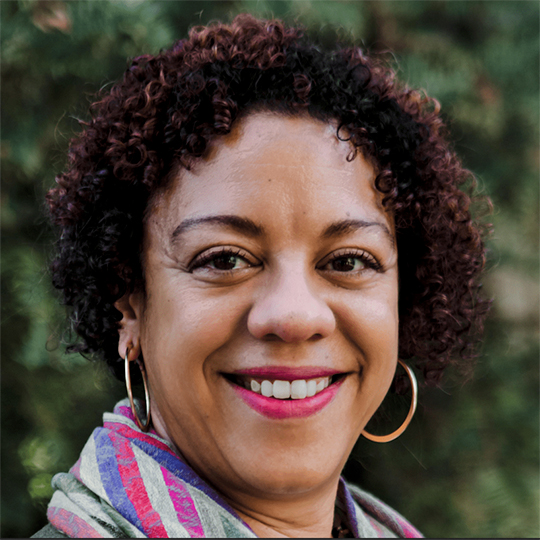
Alli Rolle (they/them) is an award-winning artist, scholar, non-profit leader, and activist. Honoring the legacy of their ancestors, Alli seeks decolonial futurities that bring about collective liberation. Alli’s work centers an Afro-Queer-futurist approach that both critically reflects on – and reimagines – life possibilities for the Black, Indigenous, Queer, and other marginalised people. Outside of the fundraising sector, Alli shifts theory to praxis by creating art-based programs that disrupt the historic and ongoing processes that subjugate marginalised bodies.

USAID’s pause and its effect on one Kenyan organization

USAID’s pause and its effect on one Kenyan organization

By Abigail Oduol, a CCF Global Council Member, and Bernadette (alias), a youth leader in Kenya

One day, Bernadette and others were working in the office, when they received the news that everything was being put on hold indefinitely due to the order made by the US president to stop funding the President’s Emergency Plan for AIDS Relief (PEPFAR). 

United States news is once again world news as executive orders effectively stopping the United States Agency for International Development (USAID)—the agency tasked with providing assistance to countries experiencing conflict, poverty, or disaster—have not just affected its American staff members worldwide but thousands of nonprofits whose work is funded by USAID grants and who employ tens of thousands of workers and part-time volunteers around the world.

Is USAID the best, most effective way to create change in the world? No. USAID’s main goal is the creation of US soft power—like when gangs do food and backpack giveaways. But that motivation doesn’t mean the kids don’t need and deserve the backpacks or that the food doesn’t help the community. The program just doesn’t completely pass the “for the love of humanity” nonprofit purity test.

Despite the cross purposes, USAID has done a lot of good. This includes tuberculosis testing, food for malnourished children, clean drinking water for displaced people, and more; programs that have a gender focus, protect victims of domestic violence, and prevent HIV infection. 

The following is a story from someone close to me in Kenya who has been affected by USAID cuts to a program they are a part of. Her story is shared with permission and the following is co-written. 

Bernadette (name changed to protect privacy) volunteers for an HIV prevention program that works with adolescent girls and young women (AGYW) who are 10-24 years old. The program uses evidence-based interventions to address structural factors like gender inequality, poverty, and lack of education. Bernadette and her colleagues do so by providing services like youth-friendly reproductive healthcare, social asset building, HIV testing, education subsidies, vocational training, entrepreneurship, and programs for parents and caregivers. Their programs are implemented throughout Kenya with thousands of adolescent girls and young women participating. 

Bernadette began volunteering for the organization after hearing about it from one of the nonprofit staff. She was going through a rough patch in her life and was looking for additional meaning and the ability to pour into others. Volunteering gave her a reason to get out of bed every day. 

As a volunteer, she traveled across Kenya to deliver supplies and get to know and mentor younger women. So many of the young women were orphaned, had an abusive or missing parent, and were experiencing other versions of being socially unprotected. She saw how much they had in common, and had a sense of how lucky they were to be spending time with each other. 

“Having interacted with the adolescent girls and young women through mentoring them gave me purpose to serve the community to connect with them and just be someone they could be vulnerable with and look up to for answers,” she said. Volunteering helped Bernadette realize a deeper passion to serve others and make a difference in people’s lives. 

It was in her fourth year working with the program that she decided to switch from working in marketing and sales to nonprofit work as a result of this passion, which unfortunately came at the same time as the cut to USAID. The transition during the cuts has been jarring. 

One day, Bernadette and others were working in the office, when they received the news that everything was being put on hold indefinitely due to the order made by the US president to stop funding the President’s Emergency Plan for AIDS Relief (PEPFAR). 

She described to me the effect that it has had: “People lost their source of livelihood and as well our adolescent girls and young women[‘s]…jobs have also been affected since they cannot get services anymore.” 

They are still waiting to hear more information on if PEPFAR will resume, and if not, if the government will find the money to continue the program, and how many people will suffer as a result of the gap in service and care. 

Service for thousands of adolescent girls and women suddenly stopped. 

Reproductive health services stopped. 

Youth-friendly sexual and reproductive health information and services, including contraception and sanitary pads, stopped.  

HIV prevention education stopped. 

Gender-based violence prevention stopped. 

As for economic empowerment, community engagement, and psychosocial support? On hold indefinitely.

“The program provided a space for these women to discover their own self-worth, to have hope, dreams, and light in their lives. The program ending suddenly has been light and a source of hope disappearing from these women’s lives.” 

As fundraisers and nonprofit workers in the US, it’s easy to be trapped in the ongoing daily crisis that we have been experiencing and feel powerless.  It’s important to remember that work like ours is global,  that we have counterparts across the world suffering because of choices that the US government has made. If you do not have ties to or are not a part of a Global South immigrant community already, I encourage you to have curiosity about local organizations like this one that have been impacted and assist them directly.

Some additional resources I’d recommend are as follows.: 

Abigail Oduol

Abigail Oduol

Abigail Oduol’s (she/hers) surname is not Irish or Pennsylvania Dutch. It’s Kenyan. Abigail serves on the CCF Global Council and is a member of too many committees. She invests time thinking about how popular culture informs fundraising and how people connect to each other. Follow Abigail on LinkedIn.

Bernadette

Bernadette is a youth leader in Kenya who empowers young people through mentorship and community facilitation.

Palestine will free us all: A story of funder repression

Palestine will free us all: A story of funder repression

By Allison Celosia, Resource Mobilization Director at 18 Million Rising

The funding loss was initially a gut punch. It stoked fear in our hearts, it made us question our campaigns, and above all, it made us grieve the ongoing violence against Palestine.

Let’s start with the facts.

In 2024 alone, the U.S. government sent Israel at least $17.9 billion in military funding to mass murder the Palestinian people.

In the same year, right-wing donors and foundations spent $1 billion to keep people from voting.

And between October 2023 and June 2024, nonprofits who have supported Palestinian rights have lost at least $8 million in grant funding

This climate of political and economic violence is what we’re up against as movement organizers, as coalition members for justice, and as pro-Palestinian advocates.

18 Million Rising (18MR) is a national Asian American advocacy organization that mobilizes communities around racial justice, abolition, and democracy. We work within movements towards a liberated future for Asian Americans and all marginalized peoples. We have been unwavering in our commitment to a free Palestine.

18 Million Rising organizer group at 2024 March on the DNC

18 Million Rising organizer group at 2024 March on the DNC

From calling out The Asian American Foundation to #DropTheADL to marching on the Democratic National Convention to end U.S. military aid to Israel to mobilizing philanthropy to support Palestinian communities, we continue to call for an end to this genocide and the 77 years of settler colonial violence against the Palestinian people.

Little did we know though, it would be a single solidarity statement we made that flagged our organization for funding review.

18MR’s Fight for Justice Amid Funding Cuts

In January 2025, Wellspring Philanthropic Fund, a major funder of racial justice organizations, informed us that the foundation would be ending its relationship with 18MR and canceling the final $250,000 payment of a multi-year grant. The reason cited was a community statement 18MR made in solidarity with Palestine.

Screenshot of an article synopsis in The Chronicle of Philanthropy which says Nonprofit & Funders. How a single Instagram post cost one nonprofit a quarter of its budget. By Sara Herschander, April 21, 2025. When a progressive group posted in support of Palestinians in Gaza, it saw funding evaporate. Similar fissures are reverberating across the nonprofit world.

Media headline “How A Single Instagram Post Cost One Nonprofit a Quarter of Its Budget” by Sara Herschander, Chronicle of Philanthropy (April 2025)

The full story has been reported on by the Chronicle of Philanthropy, but the tl;dr version is that our Executive Director was called into a closed-door meeting with Wellspring’s executive leadership and was informed of the Wellspring board’s sudden decision to end the grant relationship. The reasons Wellspring gave were vague and rooted in misunderstanding and misinterpretation of our message to call out the root causes of the Palestine-Israel conflict. Ultimately, our formal request to appeal their funding decision failed, and we were left to wonder if other Wellspring grantees with pro-Palestinian stances experienced similar cuts (spoiler alert: we later learned that 18MR was singled out for our solidarity). 

Mind you, 18MR is a small nonprofit. We are a team of 8.0 FTE employees, organizing nationally on a $1.2 million operating budget. The entire staff team holds multiple identities as Southeast Asian, South Asian, East Asian, mixed race, queer, trans, and working class people. 

The funding loss was initially a gut punch. It stoked fear in our hearts, it made us question our campaigns, and above all, it made us grieve the ongoing violence against Palestine. By conservative estimates, more than 52,000 Palestinians have lost their lives since October 2023, while ninety percent of Gaza’s population of 2.1 million people have been forcibly displaced multiple times within the region and continue to survive under oppressive conditions to this day.

Staff Morale Under Funder Repression

Wellspring’s funding decision came right at the beginning of the year, just as 18MR was finalizing its strategic campaigns and programs for 2025. Our annual operating budget was set, and we were counting on our final grant payment from Wellspring to come in that same month. 

We were already feeling the pressure of operating in this volatile landscape. 2024 marked the House passage of H.R. 9495, the “nonprofit killer bill,” many sector employees were forced into Saving on a Valuable Education (SAVE) plan forbearance on their student loans without the possibility of Public Service Loan Forgiveness, and a growing number of social justice organizations have faced or are anticipating threats to their reputation, office, or personnel in addition to cuts in funding, especially federal grants. 

Needless to say, telling our staff team the news about losing funds for our Palestinian solidarity was a hard conversation. Together, we discussed our organization’s overall financial sustainability, and we listened to our team members’ concerns about salaries and job protection. Even with all our worries, the staff still wanted an opportunity to organize and fight back. They quickly identified that the solidarity statement was the same one being tracked by MAGA and the far right, and they asked how we were going to call out the funding decision as an attack on movement power and Palestinian solidarity.

18 Million Rising Instagram “An Attack on Movement Power” Informational Post

18 Million Rising Instagram “An Attack on Movement Power”Informational Post

…fighting for Palestine helped free us. We are no longer grantees of the Wellspring Philanthropic Fund. We are free to partner with our community in new, more powerful ways when it comes to fundraising and resource mobilization.

As leadership, we moved quickly to assess our organizational risk and come up with a plan. The power dynamics between funders and grantee organizations have always been challenging, no matter the political landscape. To name a funder as large as Wellspring Philanthropic Fund as one who had failed us in solidarity was a big decision for our organization, one that demanded vulnerability but also courage. We’re incredibly grateful for our community of trusted movement and philanthropic partners who encouraged us to tell our story of funder backlash as a way to continue our campaign and call for an end to the Palestinian genocide.

How Palestine continues to free us

Ultimately, fighting for Palestine helped free us. We are no longer grantees of the Wellspring Philanthropic Fund. We are free to partner with our community in new, more powerful ways when it comes to fundraising and resource mobilization. We want mutual support and values alignment when it comes to fighting for the liberation of Palestine and all marginalized peoples.

Moving forward, 18MR’s resource strategy will continue to embody the same strategies that drive our programmatic work — we educate, we mobilize, and we organize. It is our hope that by deepening our shared analysis of power and wealth with funders, donors, and our community members at large, we can continue to challenge traditional philanthropy and help sharpen its role and responsibilities within the social justice movement. 

No more risk aversion, no more censorship, no more saving dollars for a rainy day. Funders must organize and do the hard work with us today, and every day until Palestine is free.

We owe it to Hind Rajab. We owe it to Mahmoud Khalil. We owe it to generations of Palestinian families, who deserve freedom, healing, and justice. 

After all, in our thousands, in our millions, we are all Palestinians.

In solidarity,
Allison and the 18 Million Rising team


If you want to join 18MR in movement, we have upcoming briefing events on movement defense and philanthropy. Contact us at info@18millionrising.org to learn more. If you are called to donate in solidarity, we have a community fund at bit.ly/18MR_FUNDCOMMUNITY.

Resources:


Allison Celosia

Allison Celosia

Allison Celosia (she/they/siya) is a movement fundraiser, a plain croissant lover, and most of all, a caregiver at her core. They are a queer second generation Bisaya (Filipino) American and proud daughter of immigrant parents. Allison has tapped into movement building through years of resource mobilization, donor organizing, coaching, mentorship, and facilitation. She has organized on multi-racial issues within labor and workers rights, electoral politics, immigration justice, and youth movements.

At the end of the day, Allison regards the kitchen as her political home, where she “nurture-organizes” and cooks for and feeds her loved ones. They even mill their own flour and do a lot of home baking projects. Connect with Allison on LinkedIn. Readers are welcome to drop some community love at Allison’s PayPal for her labor on this piece.

Navigating justice as the “model” minority: Asian solidarity and allyship in BIPOC movements

Navigating justice as the “model” minority: Asian solidarity and allyship in BIPOC movements

By Rachel D’Souza, daughter of Indian immigrants and her ancestors’ wildest dream and Esther Saehyun Lee, very Asian, immigrant, ahjimma-in-training

In honor of Asian American Heritage Month, Esther and I wanted to explore the potential roles and opportunities for those of us who identify as Asian or of the Asian diaspora in movements for justice like Community-Centric Fundraising.

Esther and Rachel clinking glasses sitting outside.Last year, my sister CCF Global Council Member Esther wrote a post on LinkedIn for her birthday. It was a simple and celebratory reflection of her professional journey that often included being the youngest or most melanated person at the table, and sometimes both. 

It is not often that I read someone else’s words and feel that I could have written them myself. 

Feeling a sense of belonging has been fleeting as I’ve often found myself as the “only” or “other” in equity and justice work. To be in friendship and movement work with another woman of Asian heritage who shares my values is a blessing I never believed possible. 

In honor of Asian American Heritage Month, Esther and I wanted to explore the potential roles and opportunities for those of us who identify as Asian or of the Asian diaspora in movements for justice like Community-Centric Fundraising. We realized that in order to chart a path forward, we had to reflect on our experiences of race, assimilation, privilege, resistance, and power. 

Rachel’s Story

In the 1960s, my maternal grandfather moved to the United States to marry his childhood sweetheart after losing his first wife. At that time, the United States was in the midst of a major civil rights movement. In 1965, the Immigration and Nationality Act was passed into law and removed annual quotas that limited immigration from India to 100 people per year. My gramps, along with my mom and her two brothers, moved from Goa, India to St. Louis, Missouri and pursued the path to naturalized citizenship. 

In the early days following their immigration, it became clear that assimilation meant survival. 

By the time I was born in 1982, my family was living some version of the “American Dream” — my parents owned a home and vehicles, had stable employment, and were raising three healthy English-only speaking children in a heavily white and Catholic suburb of St. Louis. 

Growing up brown in the Midwest is not for the weak, my dear readers. Decades of policy-driven racial segregation cemented an “either/or” mentality when it came to identity. You were supposed to be either white or Black — to exist as something outside of this binary didn’t play by the historically constructed rules. 

It wasn’t until I was in high school and participating in a leadership institute focused on understanding institutional oppression that I really began to understand the explicit violence of  race as a social construct. One activity involved caucus conversations that separated our cohort into two racial identity groups—white and “People of Color.” I remember sitting with another brown girl watching the white kids go to the left and the Black kids go to the right. I stared at our brown hands, knowing logically that we should go right but feeling as if we had much more in common with the white kids going left. 

This is how deeply nefarious the construct of racism can be — that we may choose a false sense of belonging and proximity to whiteness over the reality of aligning with our true (oppressed) identities. 

It turns out that this moment of uncertainty — of clearly not belonging — is one shared by many non-Black people of color building their lives in white-dominant cultures and countries. 

I would continue to struggle with my own identity and belonging in my college years and through my 20s. Things changed drastically when I became a parent. Being the brown mama of biracial and multi-ethnic children offered me the opportunity to reparent myself as well. 

But I couldn’t have imagined the complexities that social constructs like race bring to justice, systems change and movement work in the U.S. 

Over the last two decades of adulthood and activism, various iterations of The Wheel of Power and Privilege[1] have guided my understanding of where my identities afford or deny me privilege. I understand that my proximity to whiteness growing up paired with other privileged identities such as being able-bodied, slim, cisgender, English-speaking, and having attained post-secondary education means that I have power

And while I fall in the middle when it comes to skin color, mental health, and wealth, I have never experienced anti-Blackness or any other severe oppression or systemic violence that happens to the most marginalized identities on the wheel. 

So how might those of us who navigate “the middle” be forces for change in movements of equity, justice and liberation? 

How can we use the tension of privilege and oppression to bring others with power along? 

And, perhaps most importantly, how do we stay brave enough to take risks, experience failure, and continue to push forward with our new lessons (un)learned?

Those of you who know me well know that I love the “gray area.” Uncertainty is filled with possibility and potential. My excitement doesn’t mean I’m not scared or anxious — but it does mean that I’m willing to push into the unknown, believing that learning from my missteps, mistakes, and failures make me more resilient and powerful in the long game. Unlearning complicity to White Supremacy behaviors, navigating the stereotypes connected to Asian identity, and being a thoughtful ally is a formidable mental load. I’ve had to become comfortable with trying and failing and trying again. I’ve aspired to be critically aware of how I navigate privilege, power, and allyship — and sometimes that’s meant sitting the F*** out or getting out of the way. 

On this journey, I have felt disappointment, fear, anxiety, shame, embarrassment, loss, and hopelessness. For me, it simply means there’s more to (un)learn… And, the next right thing to do on a solo journey is to find a friend to join you.

Footnote

1. The author acknowledges that this wheel is not a comprehensive representation of power and privilege in identity.

Rachel celebrates her brother’s nuptials with her children. For this occasion, they donned traditional Indian garb - a sari for Rachel, lehenga for Emelia, and kurta for Cameron.
Rachel celebrates her brother’s nuptials with her children. For this occasion, they donned traditional Indian garb – a sari for Rachel, lehenga for Emelia, and kurta for Cameron.
Esther, her omma, and sister dressed in colorful hambok.

Esther’s Story

My family immigrated to Calgary, Alberta, Canada when I was four years old.

It’s such an early memory but I still remember the culture shock. I remember stepping off the plane and seeing white people—everywhere. There were not many people of colour, let alone Asians, let alone Koreans in Calgary at the time. 

I came from being surrounded by family, friends, and a community of folks that all looked and sounded similarly to me to being surrounded by white people speaking a language that sounded like their tongues were heavier than they should be. I bore witness to my parents—well-respected community members in Korea who were held in high esteem—suddenly be belittled and undermined because of their lack of fluency in English and because of their identity.

I learned quickly that we were Other. And even at four, I understood immediately that I didn’t want to be Other.

One of my earlier memories is of my mom taking us to a cowboy store and getting us outfitted in pure Western wear. We looked like caricatures of cowboys and we stood out as an awkward Asian family desperate to look and seem like we belonged. My heart aches for this version of us who believed all it would take was an outfit change to find community.

The thing I wish our family knew then was that assimilation was more than the costume or wardrobe of Canadianness. What I wish I knew was that assimilation is more than adopting the dominant cultural values. Assimilation requires an erasure of one’s identity and culture to “fit in.” 

The ugly truth of it is, in the pursuit of assimilation, we do make a choice (somewhat consciously) that to survive, we need to reject our identity and the community and values that are tied to that identity

The liminal space in which I found myself (not Korean enough, not Canadian—read: white—enough) put me in a position of not quite feeling I belonged…anywhere. 

The pursuit of belonging was one that I struggled with most of my childhood. It was a journey that I wasn’t able to fully delve into until I was willing to locate myself in the matrix of power and privilege in Canada and by extension North America. I didn’t have the frameworks or community to navigate this until college.

I studied English Literature, partly because I was and remain a massive nerd, but partly (and this is a reflection I’ve had many years later) because a part of me naively thought that if I was able to master the language, I would complete the final step of assimilation. I truly believed that if I was articulate enough, educated enough, smart enough, I would belong

Asian identity in academia actually showed me more clearly than ever the location I sit in the matrix of power and privilege. While the validity of my presence in academia was subtly (or not so subtly) contested, I was also hyperaware of the way professors wanted me to speak and teach about all BIPOC authors.

Learning and locating myself in academia and fighting the individual and institutionalized racism omnipresent in universities and colleges actually taught me to locate myself in equity work. The opportunity to delve deeper in power dynamics through literature as a vessel reflected my identity back to me in a powerful way. It also reflected the ways in which Asian folks hold a privilege closer to white people than other people of colour but also the ways that white institutions feel aligned and comfortable enough to have Asians as a checkmark for fulfilling their DEI requirements. 

In Minor Feelings: An Asian American Reckoning, Cathy Park Hong writes:

“In the popular imagination, Asian Americans inhabit a vague purgatorial status; not white enough nor black enough; distrusted by African Americans, ignored by whites, unless we’re used by whites to keep the Black man down. We are the carpenter ants of the service industry, the apparatchiks of the corporate world. We are math-crunching middle managers who keep the corporate wheels grasped but who never get promoted since we don’t have the right ‘face’ for leadership.”

As someone who is actively trying to unlearn the racism taught to me in assimilation as an immigrant, I realize it takes an active unlearning of the anti-Black racism that scars both Canada and the U.S., understanding the vicious and constant systematic white supremacist values that are drilled into Asian folks as part of assimilation.

And I now understand, and gain more clarity every day, about why BIPOC as a term itself is so fraught. I now understand that locating myself in this matrix of power and privilege and understanding how I can best serve our shared goal to racial justice will be a lifelong journey.

I will make mistakes (and have made many). I will not have the trust of all communities yet. The trust has to be earned. But I’m ready to try. 

To our fellow Asian folks committed to justice, this is a journey we must embrace together:

We have and continue to benefit from whiteness.

We have and continue to perpetuate the oppression of white supremacy.

It takes active resistance to stop.

It will be a lifelong journey.

Our call to Asian folks this AAPI month is to build community with other Asian folks. Let’s build a community where we can confront the problems inherent in our spaces—anti-Black racism, the call for assimilation, the liminal space of power and oppression we occupy.

We invite you to join us in a new space we are co-hosting—Asians in CCF. Please save the date for May 14  at 7-8PM EST for an IG live to discuss our article. We hope that sharing our stories, obstacles and aspirations will 1) ease someone else’s journey and 2) provide fertile ground for the long road to liberation ahead. 

Let’s have the courage to speak about this honestly so that we can stand in solidarity with other people of colour.

For all Asian folks in CCF and/or justice work, let’s gather June 13 at 2PM EST and think about how we can mobilize our community towards collective liberation. 

Rachel D'Souza

Rachel D'Souza

Rachel D’Souza (she/her) is the Founder+Principal of Gladiator Consulting in St. Louis, Missouri. Through Gladiator, Rachel has combined her knowledge of organizational culture and fund development with her deep personal commitment to centering community, seeking justice and creating belonging for those who have been disenfranchised or targeted by institutions, systems, and policy.

Born to parents who immigrated to the U.S. from India, Rachel has always been passionate about bridging differences and celebrating what’s possible when we collaborate from a mindset of abundance, learning, and risk-taking. Rachel loves cooking, snuggling her kids, and Instagram.

Esther Saehyun Lee

Esther Saehyun Lee

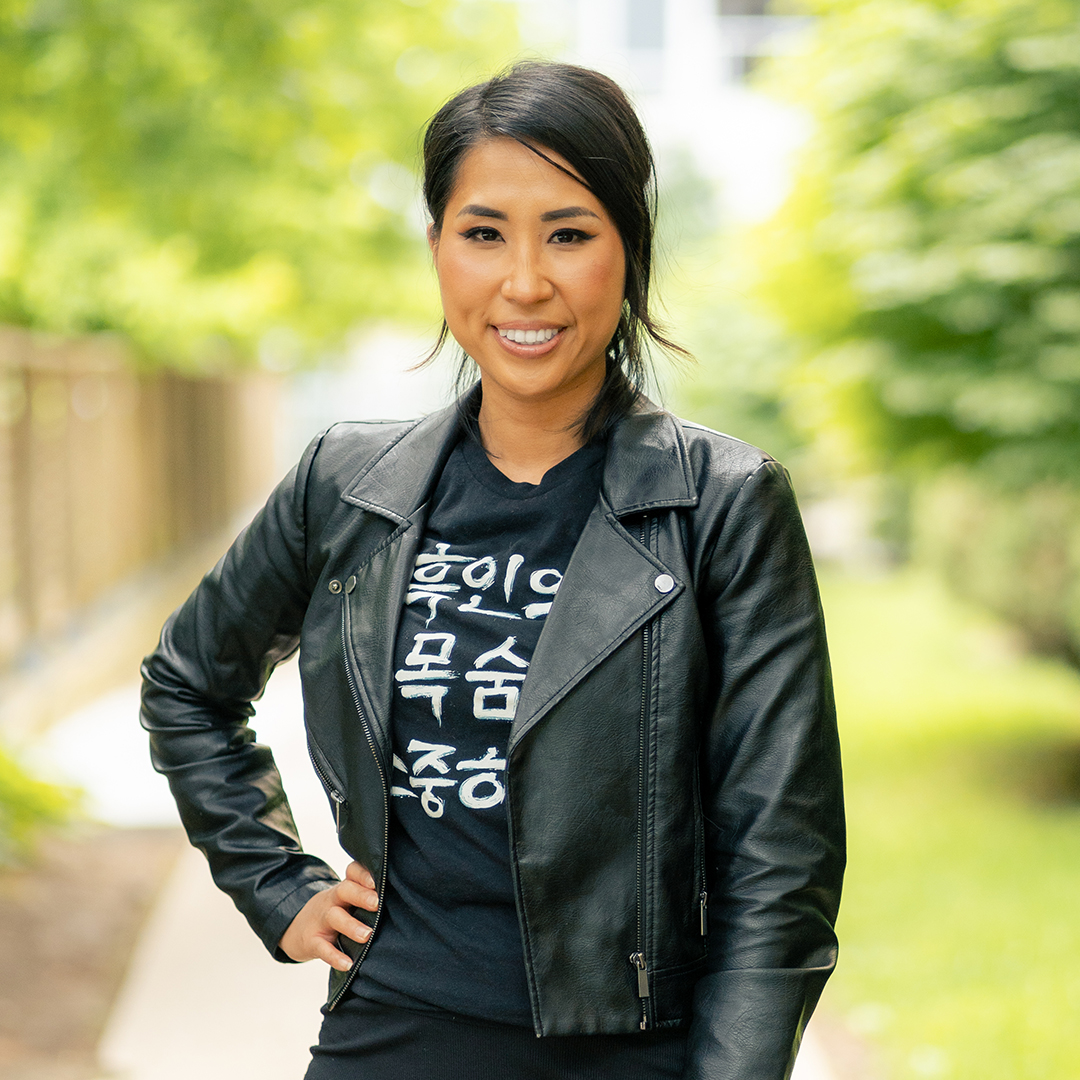
Esther Saehyun Lee, MA, (she/her) is a Community-Centric fundraiser and Consultant at Elevate Philanthropy Consulting. She is a fundraiser, storyteller, and advocate who works to mobilize resources to communities. In her work and volunteer positions, she challenges and dismantles systems of power in the nonprofit sector to ground its practices towards equity and justice. She’s helped many nonprofits increase their revenue, implement fundraising processes and structures in a CCF lens, and has demonstrated increase in both revenue and donor base.

She is dedicated to advancing the mission of justice in the nonprofit sector and does so in her roles as a Community-Centric Fundraising (CCF) Global Council member and Interim Board Member of Association of Fundraising Professionals Greater Toronto Chapter. She is a movement builder dedicated to making space for people of colour within the nonprofit sector. In addition to these titles, she is an amateur banjo player and cat mom. If you’d like to chat about equity in nonprofit, grab a virtual coffee, or just exchange memes, find her on LinkedIn. If you’d like to work with Esther, book a meeting with her.

Making DEI unshakeable: Why it needs to be embedded in your organization and not just a program in it

Making DEI unshakeable: Why it needs to be embedded in your organization and not just a program in it

By Nel Taylor, (Umatilla) they/them, he/him — queer, trans, fat, organizational change and anti-racist DEIJ consultant

This is a time to move beyond only diversity-based initiatives… and make the structural changes necessary to create a workplace where Black, Indigenous, People of Color, disabled, queer, trans and gender-expansive people, and others who face systemic oppression are safe to work.

DEI isn’t dead—but it’s under attack, and it’s time to change how we do it. 

Diversity, equity, and inclusion (DEI) has never just been about workshops, awareness months, or committees—it’s about transforming the actual structures of our workplaces. Equity lives in pay scales, hiring practices, accountability systems, and the policies we often take for granted. When DEI is baked into these policies—not just tacked on as a program—it’s harder to defund, harder to politicize, and actually improves the workplace for everyone.

The recent wave of anti-DEI rhetoric makes it even more urgent to get this right. We don’t need less structure—we need better structure.

In his first week in office, Donald Trump issued several executive orders. I considered listing a few, but I don’t want to put you through that again. Among the horrifying wave of assaults on human rights, Trump put out a hit on DEI. Along with the executive order ending all federal DEI and environmental justice (yes, that’s called out by name) programming, pulling federal funding for DEI programs in the third sector, and compiling a list of all DEI-related positions, committees, services, activities, expenditures, and every contractor who provided the federal government with DEI training and materials, the white house (they don’t deserve capitalization) also launched a public smear campaign on “DEI”—which, to them, seems to mean anyone who has a job who is not a white cis man.

The white house is doing what I think many people do—even those committed to DEI work—they are hyperfocused on Diversity without fully understanding the “E” and “I.” Many people think they’re talking about Equity when they really mean Diversity. 

Obviously, there’s a difference in the harm caused when the federal government defines and targets people solely on their identity characteristics, and when a well-meaning nonprofit thinks that DEI work ends at racial sensitivity trainings—don’t mistake me for conflating the two. But it does warrant a revisit of these definitions.

Diversity

Diversity is all the ways that people are different at individual and group levels. Organizational diversity requires examining and questioning the makeup of a group to ensure that multiple perspectives are represented. 

Equity

The process of redistributing material and non-material access and opportunity, often at the expense of equality, to be fair and just; the state of being free of bias, discrimination, and identity-predictable outcomes (i.e., knowing that a Black woman is more likely to be denied medical treatment than her white counterparts).

Trump’s dangerous rhetoric about diversity puts a blanket condemnation on DEI, which impacts so much more than diversity and definitively benefits everyone, regardless of race, gender identity, sexuality, or disability.

With DEI under attack, many nonprofits are taking their equity statements off their websites and rolling back their DEI initiatives, but we don’t have to respond out of fear. 

This is a time to move beyond only diversity-based initiatives, such as awareness training and cultural celebrations, and make the structural changes necessary to create a workplace where Black, Indigenous, People of Color, disabled, queer, trans and gender-expansive people, and others who face systemic oppression are safe to work. Without transforming policies and practices, we risk inviting people into environments where they must mask, code-switch, and assimilate just to survive—while also being targeted as “DEI hires.”

We can take the philosophies of Diversity, Equity, Inclusion, and Justice beyond DEI committees and operationalize them through systemic changes—changes such as equitable pay, non-punitive accountability, redistribution of decision-making power, and equitable hiring practices. These systems live in our HR policies and employee handbooks.

Equity isn’t a program, a committee, or a line item on a budget—it’s the water you swim in. And when we embed it into our policies, our decision-making, and our day-to-day operations, it’s much harder to defund, dismiss, or destroy.

When DEI is policy, it is not a “program.” When the philosophies of equity are deeply embedded into all parts of the organization, it’s no longer a separate entity that can be targeted and defunded.

Author of DEI Deconstructed:Your no-nonsense guide to doing the work and doing it right and Reconstructing DEI: A practitioner’s workbook, Lily Zheng, recently published an article in the Harvard Business Review debuting their new approach to equity work, the Fairness, Access, Inclusion, and Representation (FAIR) framework. The FAIR framework applies “a change management approach to create impact at scale, improving personnel policies; hiring, promotion, and feedback processes; leadership incentives; and organizational culture and norms, rather than repeatedly seeking to ‘build awareness’ without follow-up.”

Too often, organizations postpone these structural changes until a crisis forces their hand. 

Maybe it’s a discrimination complaint, a wrongful termination case, or a staff uprising—either way, the urgent scramble to patch things up usually leads to sloppy, reactive fixes. But when we make the changes that many hoped would be the outcome of DEI committees in the first place, we don’t just avoid crises. We dismantle white supremacist systems, foster inclusion and belonging, improve morale, retain a diverse workforce—and, yes, reduce the risk of getting sued (if you care about that sort of thing).

Some people hear policy and structure and immediately think of rigidity, control, or bureaucratic nonsense—and honestly, they’re not wrong. Many of the systems we’ve inherited were built exactly for that: to control, to punish, and to preserve inequity. But structure itself isn’t the problem. In fact, standardization, when done with care, is one of the most powerful tools we have for equity.

This is the difference between coercive bureaucracy and enabling bureaucracy. Coercive bureaucracy uses policy to gatekeep and protect power. Enabling bureaucracy uses policy to create consistency, predictability, and real access—especially for those historically pushed out or harmed by “unspoken rules.”

The goal isn’t to get rid of structure; it’s to build better structures. 

Equity isn’t a program, a committee, or a line item on a budget—it’s the water you swim in. And when we embed it into our policies, our decision-making, and our day-to-day operations, it’s much harder to defund, dismiss, or destroy.

Nel Taylor

Nel Taylor

Nel Taylor (they/them and he/him) is an organizational development, Diversity, Equity, and Inclusion, Human Resources, and fundraising strategy consultant with over 13 years of nonprofit experience. As the Founder and Steward of Now This Consulting, Nel guides organizations through operationalizing anti-racist principles into everyday operations and practices, moving their clients beyond DEI committees, into direct action and organizational change.

Their introduction to nonprofit work came out of their transition from houselessness when they were 18 years old. After experiencing exploitation at the hands of the nonprofit industrial complex, they set out to shift the traditional practices and systems that perpetuate harm throughout the nonprofit sector.

Register for Nel’s free webinar on advancing Equity through today’s political challenges

Join the upcoming cohort of Rethinking HR–Transforming Policies for Workplace Equity and Justice. This 12-week live course begins May 1, 2025 Use code CCF for $250 off tuition.

Connect with him on Instagram @nowthisconsulting, LinkedIn, TikTok, or via their website nowthisconsulting.com. If you appreciated this article, consider sending some love via Venmo; it’s hard out here for a DEI consultant.