To stay or not to stay; that is the question.

To stay or not to stay; that is the question.

By Carlos García León, Queer, non-binary, Mexican-Statesian, and anti-capitalist fundraiser

As the year is ending, and I enter my 3rd year fully integrated in the field of philanthropy and fundraising, the joke I have often been saying out loud is:

“I wish I was bad at my job.”

Now, hear me out. Do I want to be fired? No. Am I intentionally being bad at my job? No (but in Spanish). Do I want to continue challenging how and what fundraising looks like while also being in this cyclical capitalistic nightmare? Yeah…no.

My tenure, if we can even call it that, has been bumpy but not rough. The appeal of raising money for a good cause was short-lived as I had to become a gold medal hurdle runner to avoid all these pitfalls set for queer, non-binary, and people of color in this cis, hetero, white-dominated field. It has been manageable (shout out to my therapist for the added sanity) and it has also felt infinite, like I have been doing this for multiple years, not just a couple. I kid you not; my job has been graying me. Thus, as I enter the 3rd year — the point at which I can check the 3-5 year box in job position descriptions — in this field, I have some questions that you may or may not also be asking.

Why do I want to be bad at my job? 

It would be so much easier to leave this job and this field, if I knew I was bad at it. That I wasn’t meant to be a part of this or wasn’t meant to start chipping away at the problems (the solutions of which I may or may not see in my lifetime).

The progress and pace of equity and community-centrism in our field have felt slow even after all the research, articles, and personal stories that have been shared. The battle feels like a Sisyphean task. Do not get me wrong. Has there been progress? Abso-freaking-lutely. Yet, continuing in this, and just the thought of it, is draining and overwhelming.

Am I a good fundraiser? If we were to look at data (as we know, data should not be the only way we view success, but it can provide some context), it would show I have raised more money and brought in new and lapsed donors, often surpassing the goals set for me. I like to credit much of that success to CCF and the ideals I have tried to center in my work.

Do I want to continue doing the work? Here is where you get me. It would be so much easier to leave this job and this field, if I knew I was bad at it. That I wasn’t meant to be a part of this or wasn’t meant to start chipping away at the problems (the solutions of which I may or may not see in my lifetime). But now that there is evidence that I am decent at it, that the longer I continue, the more I will achieve, and the more intertwined I will be in this field, it leaves me in this in-between space where I have to make a choice.

Since it is still early, could I have a bigger impact if I wasn’t in fundraising? In my specific arts fundraising niche? Let’s not even touch on the topic of salaries… I know that I could be making more money in the non-nonprofit world. These are just some of the dangers, harms, and doubts put into our work because of capitalism. Truthfully, many of these capitalistic pitfalls exist outside of the nonprofit world. It is not my wish to be — as a colleague once jokingly called me — an anti-capitalist. It is not that I don’t believe in capitalism, but I certainly do not believe in this version of capitalism that we live in that continues to exploit us for the sake of very few.

So why do we stay? 

This writing is not meant to lure you one way or the other. If it does, I am glad it pushed you to make a decision (and I hope that they lead you to a path full of joy). My goal is to let you know that if you are having these thoughts, you are not alone.

For me, in the arts fundraising world I am in, the art form would have been enough to keep me going. Getting to see performances on a regular basis and witnessing the joy that both those on stage and in the audience received from participating in those moments.

Alas, the COVID panaderia made that practically obsolete. I stayed in my job because I needed a job and was so grateful that I wasn’t furloughed or let go.

Since my attachment to the work was no longer there, my involvement then became a survival instinct. When performing organizations returned to present their works, the joy from performances did not return for me. Much of this is because I could no longer overlook the overtly obvious fact that there is so much whiteness in the “classical” arts.

Do you have a heart?

If no one has told you, or if you haven’t told yourself, you have a heart that has a sense of justice and morality for yourself and your community, and that is a rare but beautiful thing.

There is a piece of me that thinks that we engage with nonprofits because we care and want to change the world. I think many of us do. We put up with the toxicity, sexual abuse, racism, heterosexism, harassment, and all the other awful things because we have a heart telling us that we are the person that can change that. And so I ask, why are we punished for having a heart? For caring? For being undervalued and underpaid?

I am good at my job because of my work ethic, but if I cared more about money would I be better? If I cared less about making change would the numbers change?

I can’t answer these questions for you, but what I can do is write that if you have had these thoughts before reading this, or if these are resonating with you for the first time, you should be celebrated. You have a heart. You do care. And yes, you shouldn’t be punished for that. But this inner dialogue is part of the change (and healing) of it all.

If no one has told you, or if you haven’t told yourself, you have a heart that has a sense of justice and morality for yourself and your community, and that is a rare but beautiful thing.

The Answer

There is no one-size-fits-all answer here. I am not a mental health professional or an accountant who can let you know what to prioritize or how to balance it. Yet, as fundraisers, we have seen that there is a network of people that continue to support one another as we navigate these questions. CCF itself is a network where I have found much support through this medium and other social forums.

As for me, I know I’m not stuck in this field of fundraising. I can always leave it for something else. I have seen many Hallmark movies that tell me to leave the city, visit some relatives in the woods where I’ll meet the love (or loves) of my life, and live happily ever after. Who knows, maybe paying less in rent is exactly what I need for more happiness.

For now, I’ll continue raising funds and inviting equity conversations to the donors who engage with me. For now, I am content with being a part of this change. An anti-capitalist fundraiser. An anti-capitalist fundraiser. This community. In some ways, this is a thank you to you for being a part of this movement.

Whatever you choose, may that path be full of joy for you and for the community you want to build.
Carlos García León

Carlos García León

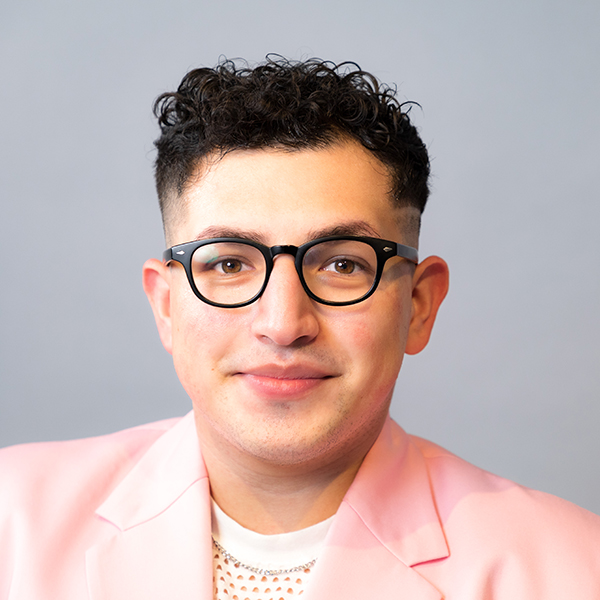
Carlos García León (he/they; el/elle) is a queer, non-binary, Latine, Mexican-Statesian, and fundraiser. They were born in Atlixco, Puebla, Mexico, but currently reside in the stolen land of the Peoria, Potawatomi, Kickapoo, and Kaskaskia tribes, also known as Chicago, Illinois and work as the individual giving manager of Chicago Shakespeare Theater. Their work, both in the arts and through writing, is driven by a fight for cultural equity, decolonizing the arts, and social justice. Outside of working and writing, Carlos likes to stream TV and movies, read a good book, learn German, take naps under their weighted blanket, drink milkshakes, and look for the next poncho to add to their collection. They can be reached via email or on InstagramTwitter, and other social media platforms @cgarcia_leon. Tip them for their work via Venmo @cgarcia_leon or via PayPal using their email, cgarcia.leon@yahoo.com.
The Ethical Rainmaker: Why white people have a hard time being real, ft. Fleur Larsen

The Ethical Rainmaker: Why white people have a hard time being real, ft. Fleur Larsen

By Michelle Shireen Muri, Freedom Conspiracy Principal and CCF co-founding member


Episode Summary

Back by popular demand: “White Lady Wrangler,” Fleur Larsen! Fleur joins Michelle to talk about white nonsense in the workplace, mean girls, martyrdom, tone policing, connection over correction, perfectionism, accountability and cringe-worthy behavior. We could have sector wide transformation if white women could center and hold a clear commitment to racial equity. So what does that look like? Fleur breaks down some nonsense with ownership and responsibility in four calls to action.

Episode Notes

Fleur drops some knowledge especially for our white colleagues — for example “we can’t move forward until  we’ve tended to what’s occurred — most orgs need to do repair…not pretend that we can just move forward like nothing happened, you gotta try and see what happens.” 

Check out our new workshops just for you!

Here are some of the resources she loves on this topic:
Generational Differences in Racial Equity Work by Dax-Devlon Ross
+ How to plan a White Caucus Agenda by Pippi Kessler
Racial Identity Caucusing: A Strategy for Building Anti-Racist Collectives by Crossroads
Why We’re All Suffering from Racial Trauma (Even White People) — and How to Handle It by Resmaa Menakem via Ten Percent Happier
A Call to White People: It’s Time To Live In The Answer by Melia LaCour

Oh and Doctors Without Borders recently set this example of truth telling!

About the Ethical Rainmaker podcast

In the United States alone, philanthropy is a $427 million dollar industry, of which 68% comes from individual donors. Yet the practices, theories, and foundation of modern philanthropy and fundraising often ignore the ways in which the industry perpetuates harm.

The Ethical Rainmaker, hosted by Michelle Shireen Muri, is a podcast that hosts authentic conversations grappling with the questions that we don’t often ask in the nonprofit world. Join us as we explore some of the practices that undermine our missions and navigate the way forward with today’s resisters, reimaginers, and the re-creators of the third sector. It’s time to think differently.

Michelle Shireen Muri

Michelle Shireen Muri

Michelle Shireen Muri (she/her) is the co-chair of the founding Seattle chapter for Community-Centric Fundraising and the host of the podcast, The Ethical Rainmaker. She is the founder of Freedom Conspiracy, a small collective of fundraising consultants focused on bringing values-aligned practices to clients in the nonprofit and philanthropy spaces. @freedomconspiracy on Instagram. You can send her a tip via Patreon.

Open call for MacKenzie Scott grants unleashes possibility

Open call for MacKenzie Scott grants unleashes possibility

By Jen Bokoff, Disability Rights Fund

There are so many articles and even research celebrating the $14,000,000,000+ in MacKenzie Scott grants to date. The discourse is overwhelmingly positive, as it should be. Unrestricted, no-red-tape, unexpected big-bucks support is a fundraiser’s dream! For fundraisers like me excited about driving more money to under-resourced movements, the launch yesterday of the Yield Giving website brought hope, questions, and dreams of how greater inclusion—in funding, initiatives themselves, and sector discourse—could be possible.

With the launch of the website came a public list of grants, coded by focus area and geography and searchable by keywords. Since I work for an organization focused on mobilizing technical, human, and financial resources to diversify and strengthen disability rights movements around the world, I was curious to see how many other organizations with a disability focus area had received grants. I was thrilled to find 94 grants to many fantastic organizations that total—for the 74 organizations whose funding amount was shared—$590,500,000, or 4.2% of Scott’s grantmaking. This already represents a higher percentage than the low overall human rights giving by institutional philanthropy in support of persons with disabilities.

Still, with 1 in 7 people worldwide having a disability, philanthropic support—and Scott’s support—must still continue to increase.

We collectively benefit when these historically excluded groups are resourced in their leadership, ideas, solutions, and joy. However, when we miss this lens, funders inadvertently perpetuate further marginalization and exclusion.

It’s been clear from Scott’s letters that she is moving money with inclusion as a core tenet, and it shows powerfully in her giving data. Many philanthropic and nonprofit initiatives talk about inclusion as a goal but miss the mark. Some examples include women’s rights groups that are not inclusive of women with disabilities, racial equity-focused initiatives that do not use a disability justice lens, and participatory grantmakers that do not include persons with disabilities on their decision-making panels.

By taking a disability justice lens that centers the priorities and approaches of those most historically excluded groups, such as women, people of color, immigrants, and LGBTQIA+ people, inclusion can be more than a buzzword and pipe dream. We collectively benefit when these historically excluded groups are resourced in their leadership, ideas, solutions, and joy. However, when we miss this lens, funders inadvertently perpetuate further marginalization and exclusion.

As a philanthropy data nerd, I’m eager to follow the “org-reported” data shared on the website. Self-coding has strengths and challenges, and a question I have is if the current coding represents the organization as they describe their focus areas now, or what it will be in the future as they apply this grant to their work. Will we see more grants with multiple and intersectional identity groups listed? Will initiatives that include persons with disabilities believe this to be a “focus area” worth listing? And, will the website build in tools for more robust data analysis—for example to look at intersections of funding race and ethnicity AND disability AND sexual and reproductive health and justice? Data can be a powerful tool for sharing inclusive and intersectional approaches–and also for noting gaps in who might be left behind.

Hopes for an equitable and inclusive open-call process

Through this website, we learned that there will soon be an open-call process where organizations can submit information for consideration. This is terrific; the Bridgespan network is vast, but there are many organizations that undoubtedly get overlooked—particularly those led by marginalized groups with small budgets.

An open call gives these organizations a chance to share their work with MacKenzie Scott’s panel of decision-makers and hopefully win a grant. That panel selection process also brings forth a bit more transparency than the current model of closed-door decision-making. I’m hopeful that the panel and its to-be-announced process will embody a disability justice approach to continue to push the potential of this funding to be even more innovative, intentional, and inclusive.

Behind closed doors with other fundraisers, a shared experience has been brewing since the first grants were made in 2020. As one fundraising colleague shared, these grants’ public, highly visible nature leads to boards and leaders encouraging us to “chase lottery wins rather than focusing on the ongoing, consistent, diligent work that is fundraising.” We ourselves also feel the pressure to do so (and the failure of not). Non-fundraisers don’t understand that—up until this point—these aren’t grants that you could actively cultivate. With this forthcoming open call process, I wonder how much energy participating in that process will take, what the payoff will be, and how it will be explained publicly. My hope is that it models Scott’s current no-red-tape approach in asking for minimal information, but that the process also offers multiple submission possibilities for accessibility and flexibility in how organizations best express themselves.

Democratizing discourse and inputs to strengthen outcomes

Those closest to the work are best positioned to know the ecosystem of who’s doing it and—with the perception of competing for funding removed—might be willing to share.

I also wonder if current grantees might play a role in the open-call process. The current pool of grant recipients hasn’t to-date been able to influence additional grant decisions. They have not been asked as a collective to share the names of other organizations doing good work on their issue area or in their identity community. Those closest to the work are best positioned to know the ecosystem of who’s doing it and—with the perception of competing for funding removed—might be willing to share. Many of us who fundraise for movements already take to heart the community-centric fundraising’s principles, but particularly this one: “Individual organizational missions are not as important as the collective community.” It’s energizing to imagine how a wider swath of organizations could potentially lift one another up and see how our liberation and collective success is bound.

I appreciate how some discussion about MacKenzie Scott’s philanthropy journey has started to include some light critique. The overwhelmingly flattering discourse is problematic and simply amplifies one of the many issues with philanthropic discourse—the tensions are harder to name without the potential for backlash. Tensions are good and real and not a sign of something inherently bad, but there is no space to discuss them. I wonder if the shift toward an open process might also include the addition of a feedback mechanism. There are some great conversations behind closed doors by grant recipients and grant dreamers alike that could be really valuable for the team of advisers to hear and integrate that would ultimately keep pushing the envelope of inclusion.

With big bets should come deep analysis, including looking from a variety of angles. This is one fundraiser’s point of view. My dream of unrestricted funding parachuting in from the sky is still there. But the bigger, more sustainable dream is of a dialogue and feedback culture that moves beyond what’s nice to what’s authentic and more fully representative of the messiness of this work. To keep shifting power and strengthening philanthropy practice–and disrupting it entirely–we need to keep creating and fostering meaningful inclusion. Scott’s evolving framework is an energizing step in the right direction, but I also hope we can collectively engage in more nuanced reflection that can lead to an even more “yield” that, building on her tagline, can increase intersectional inclusion and cede power to communities.

Jen Bokoff

Jen Bokoff

Jen Bokoff (she/her) is the development director at the Disability Rights Fund and also does periodic consulting, writing, and speaking. Follow her at @jenbo1 on Twitter and check out disabilityrightsfund.org and jenbokoff.com to learn more.

A Christmas Carol, updated for our times

A Christmas Carol, updated for our times

By: Vu Le, founding member of Community-Centric Fundraising and creator of the blog NonprofitAF.com

Charles Dickens’s novella a Christmas Carol is a timeless classic. It was first published in 1843 and has never gone out of print. But 1843 is nearly 180 years ago. It’s time for us to update the story to be more relevant to our times:

Stave One:

The story opens at a large foundation’s headquarters on Christmas Eve. Ebenezer Scrooge is the president of the foundation’s board of trustees. He is a miser who hates spending money, Christmas, and people in general. Bob Cratchit, Scrooge’s executive assistant, is looking at some documents. “Mr. Scrooge,” he says, “it seems we haven’t met our legal minimum for how much money the foundation has to spend each year. What do you say we give some extra money to a few nonprofits in the area? Look at this one. Tiny Dem. It’s a small organization working to end voter suppression, gerrymandering, and corruption in politics. This is the fifth time they applied to us.”

“Tiny Dem? Bah humbug!” grumbles Scrooge, “that is the most ridiculous name for a nonprofit! And their mission doesn’t align with the foundation’s main priority, which is teaching financial literacy to toddlers. If children learn early, they won’t grow up to be impoverished hornswogglers suckling at the udders of society. No, just put enough money into a Donor-Advised Fund to meet the legal minimum.”

That night, Scrooge is visited by a ghost covered in random papers. “Scrooge,” it whispers in a ghostly tremble, “it’s me, Jacob.”

“Jacob…my old friend. How…how are you here? And why are you covered in random papers?”

“Scrooge,” says the ghost of Jacob Marley, “We don’t have much time. Listen to me. I was a terrible philanthropist. I am covered for eternity in grant proposals, logic models, and budget templates as a reminder of the unnecessary burdens I inflicted on nonprofits. Tonight you will be visited by three ghosts. You must listen to them, or you will end up like me! Don’t end up like me! Even though I am a ghost, I still get papercuts!”

Stave Two:

At the stroke of midnight, another ghost appears. It looks like a kid. “Are you one of the spirits who are supposed to visit me? But you look like a child!”

“I am the Ghost of Philanthropy Past,” says the ghost, “I look innocent, but I am much scarier than most people think.” The spirit takes Scrooge back many decades. He sees a man hard at work tilling the land. “That is your great, great, great, great, great grandfather,” says the spirit. Scrooge beams with pride.

“Stop beaming with pride,” says the spirit, “your ancestors stole this land from several Native families. They cut down all the trees, polluted the water and air with toxic chemicals, exploited workers, and lined the pocketbooks of politicians to avoid taxes and regulations. That’s how your family’s wealth was built.”

“I didn’t know,” says Scrooge. The spirit rolls its eyes. “You didn’t care to know. Few of you ever take time to examine where your wealth came from or what evil your family has unleashed on the world. Apparently one of your rich ancestors, bored from not having to work for a living, invented the aspic, which is that weird savory jelly thing that has meat and vegetables covered in gelatinized meat broth set in a mold.”

They both shudder.

Stave Three:

The Ghost of Philanthropy Past clocks out, and another spirit taps in, a middle-age man wearing a suit with an expensive watch. He is the color of translucent alabaster. “Scrooge,” he says, “it is I, the Ghost of Philanthropy Present. Come, I am here to show you what’s going on right now in nonprofit and philanthropy.”

The spirit takes scrooge to a holiday party attended by well-dressed beings who are pale in the light. “Are these also ghosts?” asks Scrooge.

“No,” the spirit replies, “they’re just white. These are some of the wealthiest individuals in the country. Your contemporaries.”

“I have an announcement,” says a man, “After three years and five million dollars in investment, the white paper for my foundation’s research, titled ‘Change Without Change: Advancing Equity While Preserving Your Assets and Power’ will be out next month! Let’s toast to that!” There is an enthusiastic round of applause.

The spirit whisks Scrooge to another scene. An office in a basement. Rickety old chairs are scattered about. A space heater stands in the middle of the room, but the dozen or so people are bundled up, appearing cold and uncomfortable.

“Why do they look so sad?” asks Scrooge. To which the spirit replies, “This is Tiny Dem. Because you didn’t fund them, they are closing.”

“Well their name is ridiculous,” says Scrooge, “and also, why didn’t they apply to other funders?”

“Their name is a play on small-D democracy,” says the spirit, “and they’ve been applying to everyone. But few funders want to fund civic engagement or political organizing. You all want something heart-tugging and easy to measure, and things that don’t challenge inequitable systems that allow rich white people to be at the top.”

A woman who appears to be the ED clears her throat, “Thanks so much for coming to our holiday party everyone. I’m sorry we can no longer keep our door open. Thank you for all your hard work. Please grab a swag mug and your coupon for a free guacamole add-on at Chipotle on your way out.”

Stave Four:

Scrooge finds himself back in his office. The final spirit arrives, a hooded figure holding a scythe. The room suddenly feels warm. Unseasonably warm. “You must be the Ghost of Philanthropy Yet to Come?” The spirit nods. “Why is it so hot?” Scrooge asks. The spirit points to a newspaper. The headline reads, “Global temperature continues to skyrocket. Rising sea level wipes out whole cities.”

“But Spirit! Surely things can’t be that bad!” The Spirit points to another newspaper headline: “Bands of cannibals take over run-down Chipotle joints across the US.”

The spirit turns on the radio. A voice murmurs ruefully. “Another brutal defeat for democracy as the Supreme Court once again upholds gerrymandering and voter suppression. In another stunning but not surprising decision, the Court affirms the right of preschoolers to wield laser death rays at daycare centers.”

“I don’t understand. How could this happen? What are philanthropists doing?”

To answer his question, the spirit takes Scrooge to a beautiful giant dome on Mars. Well-dressed people eat fancy tiny foods, mingling with robots with human faces.

“Wow, things look bad on earth,” says a man looking at a screen at a news segment on preschoolers wielding laser death rays, “maybe we should release some more of the 13.5Trillion dollars* we have stored up in foundation endowments and Donor-Advised Funds that we were saving for a rainy day.” (*Currently 1.4Trillion)

“No,” says a robot that has a smug human face on its head, “we need to save up for when things get worse. Besides, we’re not just standing here twiddling the mechanical thumbs on the robotic bodies that some of us uploaded our consciousness to after our human bodies died. My foundation just released a request for grant proposals and got lots of applications. So far they are very inspiring. For example, we have a request for 50,000 Bitcoins from a band of cannibals in Las Vegas that wants to turn a run-down Chipotle into a senior center. They actually have a great theory of change.”

“No!” Scrooge screams, “I can’t take it anymore! Spirit, please don’t let this be the future!”

“I hope they move to the next round,” says the robot-human, “I want to visit Las Vegas. I hear the new Pacific Ocean beaches are amazing there.”

“Noooooooooo!!”

Stave Five:

Scrooge wakes up on Christmas morning. He is a changed man. He calls up his executive assistant. “Cratchit!” he says excitedly, “I have seen the errors of my ways. We need to do philanthropy differently. No more grant applications! No more making nonprofits wait for months for a decision! No more forcing nonprofits to fit the priorities we determine based on our various fickle whims and interests! Let’s increase our payout rate and start sunsetting! Let’s take a serious look at reparation! Meanwhile, call up Tiny Dem. I want to give them a large 20-year grant to do their work protecting democracy. And also for them to do some rebranding.”

“Sir, even though you’re calling me on Christmas to talk about work, that’s amazing,” says Cratchit, “would you like to come over for dinner? We have a delicious seitan roast.”

“I would love that. I’ll bring some tofu tacos from Chipotle!”

From then until he finally dies and his consciousness is transferred to a robotic body residing on Mars, Scrooge is kind and generous and everybody loves him and he inspires many other funders to do better too. The end.

Vu Le

Vu Le

Vu Le (“voo lay” he/him) writes the blog NonprofitAF.com. He is the former executive director of RVC, a nonprofit in Seattle that promotes social justice by supporting leaders of color, strengthening organizations led by communities of color, and fostering collaboration between diverse communities. Vu is a founding board member of Community-Centric Fundraising. He has degrees in Psychology and Social Work. Vu has two kids, ages nine and six, and watches way too much television when not causing trouble. Find him on FB @NonprofitAF, on IG @nonprofit.af and at @NonprofitAF on Twitter.

The Ethical Rainmaker: Patagonia did WHAT? ft. Andy King

The Ethical Rainmaker: Patagonia did WHAT? ft. Andy King

By Michelle Shireen Muri, Freedom Conspiracy Principal and CCF co-chair


Episode Summary

What’s up with the controversies around Patagonia’s generosity? Fraud in Captain Tom’s household? BrewDog’s shock tactics and hypocrisy? Tokenism of Indigenous Tribes at Forterra? Michelle is discussing shock tactics, wealth hoarding, trust issues and more, with “The UK’s most influential fundraiser,” Andy King!

Episode Notes

“If you’re giving back, maybe you should just stop taking.” Wow, so much to say about current events in the world of nonprofits and philanthropy including ridiculous claims and unethical, dishonest behavior from UK’s famous BrewDog, dishonest partnership and tokenization at Forterra in Seattle, the relationship between extractive practices, power hoarding and Patagonia, and beloved Captain Tom and his daughter, mourning through greed! Show notes can be found at theethicalrainmaker.com

Learn about upcoming collaborations between Michelle and guests like Andy King, Mallory Mitchell, Fleur Larsen, Rachel D’Souza and more at http://www.theethicalrainmaker.com/

About the Ethical Rainmaker podcast

In the United States alone, philanthropy is a $427 million dollar industry, of which 68% comes from individual donors. Yet the practices, theories, and foundation of modern philanthropy and fundraising often ignore the ways in which the industry perpetuates harm.

The Ethical Rainmaker, hosted by Michelle Shireen Muri, is a podcast that hosts authentic conversations grappling with the questions that we don’t often ask in the nonprofit world. Join us as we explore some of the practices that undermine our missions and navigate the way forward with today’s resisters, reimaginers, and the re-creators of the third sector. It’s time to think differently.

Michelle Shireen Muri

Michelle Shireen Muri

Michelle Shireen Muri (she/her) is the co-chair of the founding Seattle chapter for Community-Centric Fundraising and the host of the podcast, The Ethical Rainmaker. She is the founder of Freedom Conspiracy, a small collective of fundraising consultants focused on bringing values-aligned practices to clients in the nonprofit and philanthropy spaces. @freedomconspiracy on Instagram. You can send her a tip via Patreon.