The myth of the unqualified Black job candidate: systemic racism that undermines Black self-reliance and what can be done to combat it
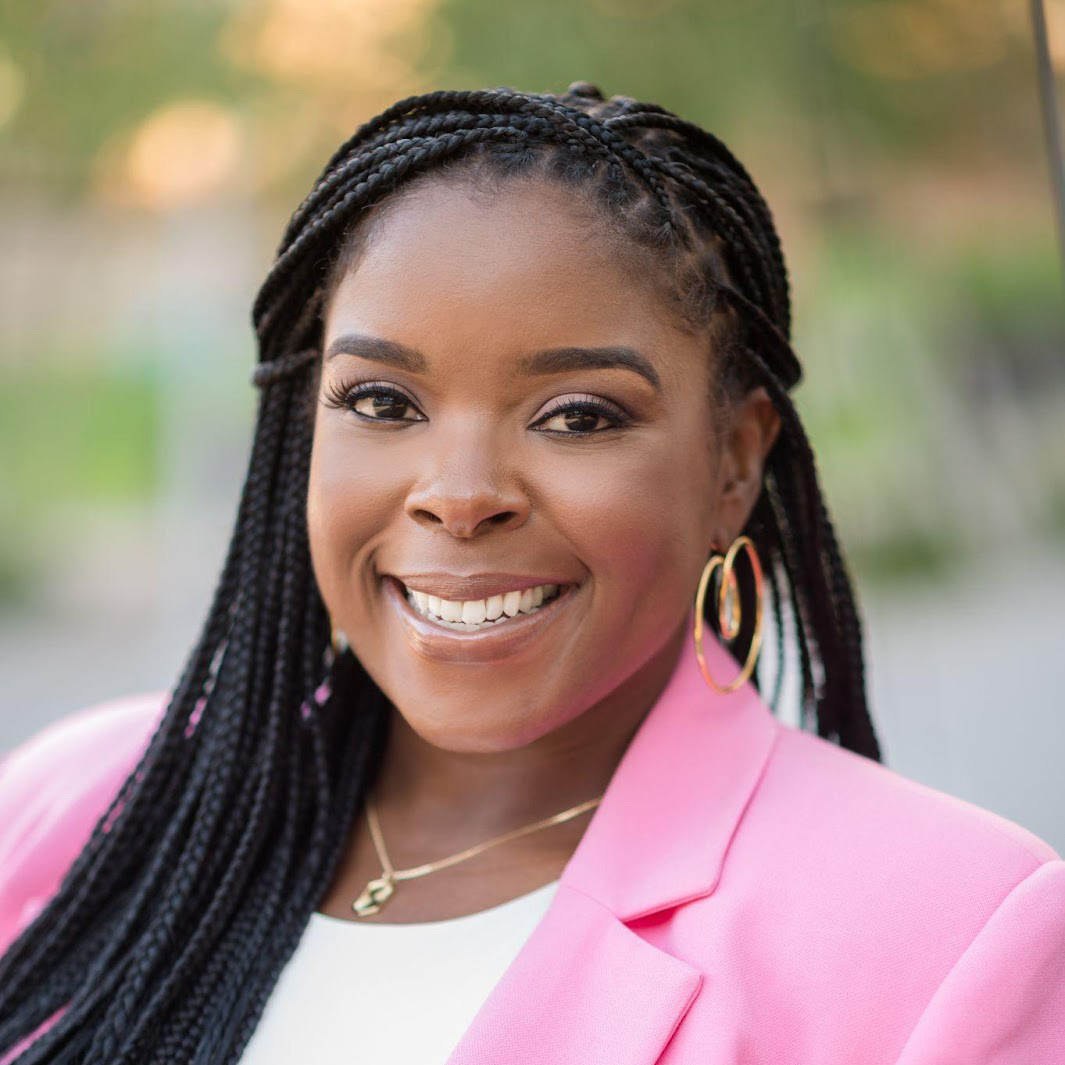
By: Johane Alexis-Phanor, a fundraising and communications consultant with an expertise in building capacity for organizations that impact racial equity
Today, movements on behalf of Black people look significantly different, especially in the nonprofit world. White executive directors and board members determine the vision. White-led foundations (both public and private) fund the initiatives. White businesses provide technical assistance. White staff execute the projects. And white people benefit in the form of more funding, accolades, and career advancement.
Black self-reliance fueled one of the most successful acts of defiance during the Civil Rights Movement, the Montgomery bus boycott, which led to the integration of the public bus system in the United States.
During the 13 months of the boycott, more than 300 Black taxi drivers and Black drivers organized an intricate carpool system for the Black people of Montgomery, Alabama. Black ministers and leaders, including Martin Luther King Jr., and Black workers came together to carpool, take taxis, or simply walk to work. Thousands of Black women like Georgia Teresa Gilmore led and participated in grassroots fundraising efforts selling cakes, pies, and other plates of food to fund the Montgomery Improvement Association (MIA) and the protest. Black women professionals of the Women’s Political Council helped initiate and organize meetings, communicated with protesters, and drafted the boycott and the changes they sought for Montgomery’s bus system. Black leaders determined the vision and strategy of the bus boycott. Black grassroots activists galvanized protesters. Black businesses supplied financial and technical assistance. Black churches provided spiritual and moral support as well as meeting places for organizing. Black workers provided support networks and bodies to undertake the nonviolent action. And Black people benefited in the form of freedom, integration, and equal rights.
Today, movements on behalf of Black people look significantly different, especially in the nonprofit world. White executive directors and board members determine the vision. White-led foundations (both public and private) fund the initiatives. White businesses provide technical assistance. White staff execute the projects. And white people benefit in the form of more funding, accolades, and career advancement.
Multiracial alliances are important in the movement for social justice. For example, it was a white Supreme Court that ruled that bus segregation laws were unconstitutional. Furthermore, we can’t talk about the Civil Rights Movement without speaking about the support of white foundations as well as the NAACP, which was started by Black and white activists.
However, the erosion of Black self-reliance and the systemic racism that undermines Black empowerment has come at a large cost to our communities. And this is partly because white leadership often focuses on the deficits of Black communities, failing to recognize Black community assets like Black wisdom, Black creativity, and Black vision.
For white leadership, Black communities have nothing to offer but Black problems. Thus white leadership has marginalized and undermined the autonomy and voice of Black people. The lack of Black leadership, especially in the nonprofit field, has led to some insidious attacks on the complete freedom, emancipation, and achievement of equity in the Black community.
The Myth of the Unqualified Black Job Candidate
When they told us there were no qualified Black job candidates, senior management really meant, “There are no Black candidates with the right education and connections, and we’re not willing to invest in an excellent Black candidate with potential.”
During my own time in the nonprofit world, “There are no qualified Black candidates” was a popular refrain that would be used to justify why our staff was largely white.
Every time a position was open, senior management would gather, and everyone would agree that we should hire a candidate who reflected the communities we served. Then, the applications would roll in, and many of the Black candidates would be deemed unqualified and inferior.
But, as I have seen over many years and as any professional in the nonprofit world can tell you, the truth is that nonprofits hire “unqualified” job candidates all the time.
Job descriptions are aspirational; no candidate meets all of the skills requirements. This is intentional because nonprofits want to hire someone who can grow into a role. They don’t want someone who is going to get bored and leave the organization in a few months, leaving them to incur more costs to search and once again train and onboard a new candidate.
Qualified candidates are not born; they are created. The candidate just needs to have the basics and the organization needs to believe that the candidate is capable enough to learn on the job.
When they told us there were no qualified Black job candidates, senior management really meant, “There are no Black candidates with the right education and connections, and we’re not willing to invest in an excellent Black candidate with potential.” I know this because I saw the lengths that white senior staff went to hire unqualified white job candidates.
There was an opening for one of the better-paying jobs in my former organization in a department with the most opportunities for career advancement. After the director of that department, a white woman, searched for a few months, she came back to the executive director and senior staff and told us she could not find a Black candidate. This position was a priority in our organization, and accounted for a large percentage of our work. The department director had failed to secure a Black search firm. She had failed to ask the Black staff to reach out to their networks. And she had failed to reach out to any Black professional organizations. Yet, she felt justified in claiming she had not found any good candidates of color. At this point, the Black staff went into overdrive to find potential candidates. But it was too late. The department director had already narrowed down the finalists to two white applicants, one of them from her alumni association.
Senior staff were asked to sit in on the interviews of the two final candidates and what I experienced that day, was one of the most jarring examples of unjust hiring practices I have ever seen.
The first applicant, who the director had found through her alumni association, walked into the interview as though the meeting with our organization had been an afterthought. Her appearance was better suited for a day at the farmers’ market, and her arrogance told us that she believed that her connection to the director meant she was a shoo-in. She answered the questions with nonchalance and didn’t hide from us the fact that she had several other offers.
The second candidate, like the first, had nowhere near the skills the job required. She had never worked in communities of color, nor was there any real passion or commitment to our type of community work. Nevertheless, these were the finalists. In our post-interview debrief, we all agreed that these were not the best candidates for the job. However, these candidates were people the director of that department felt comfortable with because of “white familiarity” — shared backgrounds, interests, and hobbies —- that superseded job skills.
As I left that meeting, I overheard the director say she planned to hire both of these very unqualified white candidates. She would work very closely with them. Their strengths and weaknesses would balance each other out. It would take some work, and she would have to rearrange some things in the department. The candidates would need a lot of training and supervision. But she believed they could grow into the role.
And that’s when it dawned on me: would the director have gone above and beyond to make exceptions to rearrange an entire department and to provide so much close supervision for a Black man or a Black woman? The answer is no. Black people are not afforded these opportunities. We are just deemed “unqualified.”
At any point during the process, the executive director should have stepped in with the belief that this position in the best-paid department of the organization could have been better used to enfranchise the low- and moderate-income Black people we purported to serve.
In the end, only one of the unqualified white candidates was hired, the one who had not exemplified through her résumé nor through her interview any real connection or commitment to the Black community.
Championing Black Self-Reliance
Black self-reliance means Black leadership, which means access to power, resources, and just and equitable change.
Given that about 80 percent of overall staff at both nonprofits and foundations are white, there is a glaring issue of racial inequity in the hiring practices of these organizations. I believe that this story and its examples of structural racism, as seen by Black people being locked out of opportunities because they don’t belong to the right networks or have the right education, and the lack of effort to recruit Black candidates, are representative of some if not many of the hiring processes of nonprofits.
Here are three solutions to promote racial equity and Black leadership in the philanthropic field:
1. Establish Racially Equitable Hiring Practices as a Written Organizational Value that Is Endorsed by the Entire Organization
It’s important for nonprofits to not just say that they want to practice equity when it comes to the staff they hire; this goal needs to be written into the organization’s values statements and strategic plans.
Achieving racial equity in its hiring practices needs to be an organizational goal supported by everyone from the executive director to department heads, staff, board members, vendors, and suppliers. Often, equity is relegated to one department or person in the organization. This person usually has a title like “director of diversity and inclusion.” This person works in a silo and is tasked as the one who is supposed to care and implement all diversity initiatives. This model does not work. If an organization decides it wants its staff to reflect the population it serves, there must be concrete goals about what that looks like, and all personnel need to be actively engaged in this work.
2. Have a Plan
Organizations need to establish a systematic process for finding Black leadership.
First, this includes developing robust relationships with Black affinity groups where potential candidates can be found. In Boston, organizations like the Urban League of Eastern Massachusetts, the NAACP Boston Branch, and the National Black MBA Association Boston Chapter are all great sources of talent.
Nonprofits should ask existing Black staff to reach out to their networks when positions open. Newspapers and media outlets that cater to Black communities, like The Bay State Banner and the Dorchester Reporter, should be obvious job posting sites. Finally, if resources are available, search firms that specialize in finding Black talent should be used.
3. Qualified Black Job Candidates Are Nurtured, Not Born
Organizations should be ready to invest in and support the pipeline of potential Black candidates and existing Black staff. As a Black woman who has worked in nonprofits, I’ve experienced firsthand the burnout that comes from a lack of training, support, and mentorship.
There are several professional development programs that nonprofits can access for their employees. In corporate leadership, fundraising, and community development, particularly, these include The Partnership, Inc, the Association of Fundraising Professionals Diversity & Inclusion Program, and the Mel King Institute. Organizations should not only be prepared to pay the costs associated with programs, but also offer recommendation letters and provide their workers the flexibility to take part in these leadership development opportunities.
Black people who have lived in Black communities and experienced firsthand the joys, as well as the challenges that face our neighborhoods, are the most equipped to address the problems Black communities face. Black employees have a nuanced view of our strengths as well as the areas that need investments. We have an emotional attachment and a long-term commitment to the work. We have a vision grounded in real life, not textbooks, white papers, and nonprofit workshops and presentations.
This emphasis is not meant to diminish the value and strategy of reaching across racial lines and working with different groups in a mutually beneficial way. But our community loses and suffers because we do not prioritize investing in, promoting, and championing Black leadership in Black communities. There are significant long-term implications for the movement at hand. Black self-reliance means Black leadership, which means access to power, resources, and just and equitable change.
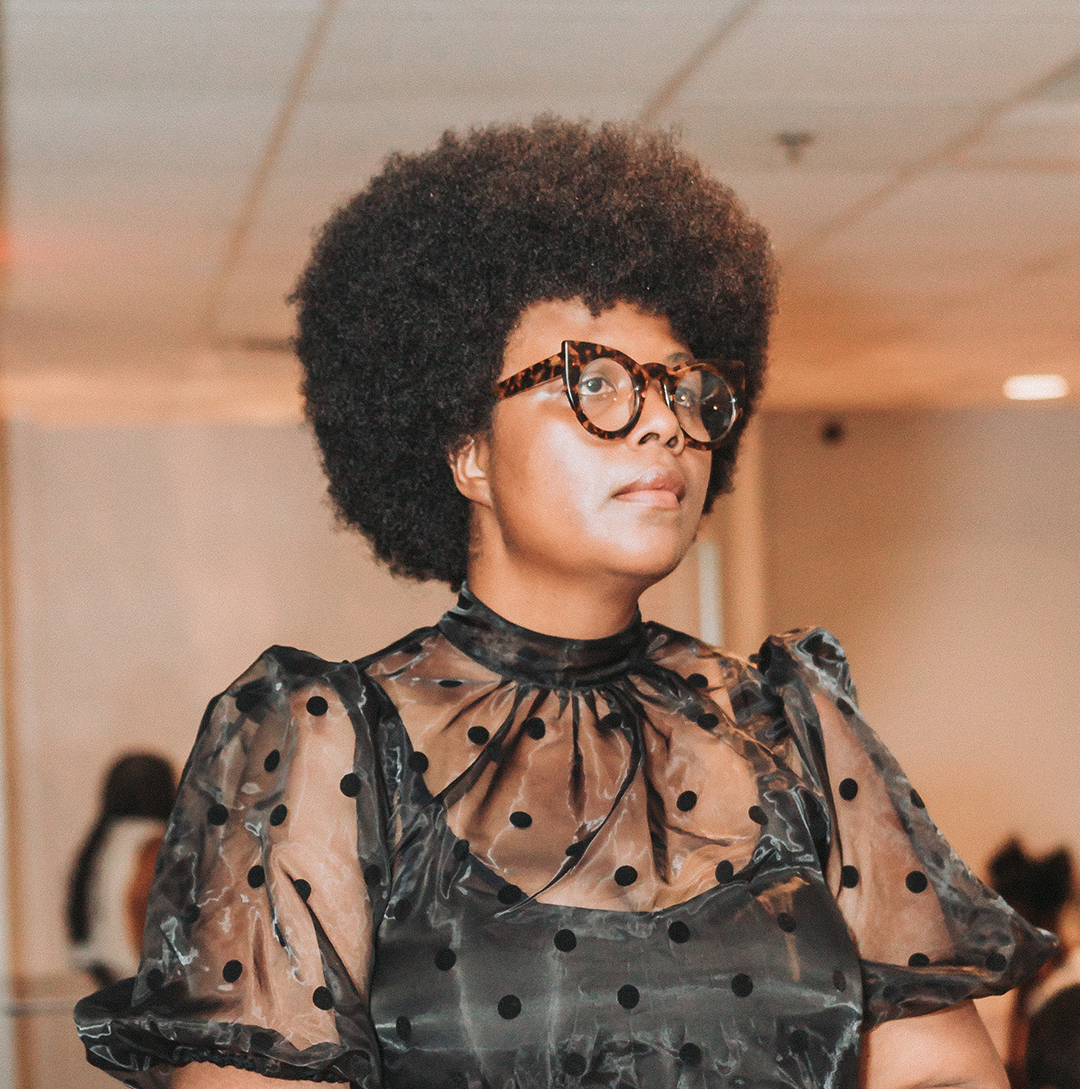
Johane Alexis-Phanor
Johane Alexis-Phanor (she/her) Johane is a fundraising and communications consultant with an expertise in building capacity for organizations that impact racial equity. She grew up as a second generation immigrant in the Haitian enclave of Mattapan, in Boston. Using her entrepreneurial spirit, she launched Beyond Wordz to assist with the organizational development of non-profits doing work to positively impact Black people and Black communities. To date, she’s raised close to $3 million to support community development initiatives. In 2022, she was one of 5 finalists for the Haitian-American Young Citizen of the Year given by the U.S. Haitian Chamber of Commerce to recognize professionals under 45 whose commitment, outstanding civic engagement, volunteerism and public service has benefitted their community. Follow her on Twitter at @beyondwordz_.
S.M.A.R.T. Black Philanthropy (SBP) aims to advance a new model for philanthropic efforts in Black communities. This model is asset based instead of deficit based. It prioritizes a collaborative approach instead of a directive approach to philanthropy. Finally, it is rooted in Black traditions and movements.
SBP is written from the perspective of a Haitian-American woman who inadvertently found herself in the field of community development working to leverage charitable giving to support the economic empowerment of communities of color. It challenges the current paradigm of philanthropy while exploring issues of Black self-reliance, structural inequalities in the non-profit field, the intersection of faith and social justice, and more. The S.M.A.R.T in S.M.A.R.T Black Philanthropy stands for specific, measurable, achievable, realistic, and timely- an acronym that is often used to set mission-driven goals. These writings present a S.M.A.R.T alternative for achieving greater social good through philanthropy.