No, you can’t decolonize philanthropy, Part 2: But we can fund acts of decolonizing and repair
By Chantelle Ohrling, a hopeful daydreamer of postcolonial futures
Decolonization does not have a synonym. It is a very literal refusal and re-creation. It is not a swappable term for improving schools, societies… nor a philanthropic foundation.
This essay is a continuation of “No, you can’t decolonize philanthropy, Part 1: A closer look at colonialism and decolonization.”
In today’s society, colonialism has impacted all aspects of everyone’s lives.
As a descendant of that first decolonial act on Turtle Island and Abya Yala, my African ancestors and Indigenous ancestors have survived their own respective apocalypses. Everything about our ways of living have been violently reformed into this neocolonial reality.
Modern activist-scholars recognize this and have pushed our understanding of decolonialism by examining the endless ways that colonialism has reshaped us and taken from us.
While we won’t be able to cover the myriad of them, I do want to highlight two crucial examples: the gender and sexuality binary that has been imposed upon us by the violent patriarchy and the politics of recognition and radical reciprocation.
Expanding Applications of Decolonizing and Decolonialism: But Not as a Metaphor
Thus, decolonization initially began as a descriptive term denoting a process of political change, but has since transcended its original domain and pervaded diverse spheres, becoming ubiquitous. Presently, one talks about decolonization of bodies (Blackwell 2023), zombies (Saldarriaga and Manini 2022), gastronomy (Janer 2022), metal music (Varas-Diaz 2021), health (Nunes and Louvison 2020), hair (Norwood 2018), design (Tlostanova 2017), cinema (Piçarro, Cabecinhas, and Castro 2016), work, time, and leisure (Shippen 2014) as naturally as colonial agents in the 1940s and 1950s spoke of decolonizing French West Africa.
– Wilson Trajano Filho, On Decolonization and Its Correlates
Coloniality informs our very understanding of gender and sexuality. In Critically Sovereign: Indigenous Gender, Sexuality, and Feminist Studies, Joanne Barker reminds us that “critical Indigenous studies scholars have uncovered multiple (not merely third genders or two-spirits) identificatory categories of gender and sexuality within Indigenous languages that defy binary logics and analyses.” In Critically Sovereign, she brought together essays from contributors that “question and reframe the thinking about Indigenous knowledge, nationhood, citizenship, history, identity, belonging, and the possibilities for a decolonial future.”
In The Invention of Women: Making an African Sense of Western Gender Discourses, Oyèrónkẹ́ Oyěwùmí demonstrates how Western biological colonial logic imposed a gender binary hierarchy on societies like the Yorùbá where it did not previously exist. Colonialism forced these fluid Yorùbá identities into the rigid Western categories of “man” and “woman,” where “woman” was automatically defined as the “Other” or the subordinate.
Billy-Ray Belcourt in his essay “Decolonization is a Queer Desire” (published in Making Space for Indigenous Feminism) teaches us “There is something queer about decolonization that has to do with the coloniality of normative conceptions of the self and gender and the cis-heteropatriarchy of social form. A world unmoored from these is in the end a queer and decolonial world” and “decolonization is a desire to unmake the world and build it anew.”
Scholar-activists Glen Coulthard in Red Skin, White Masks: Rejecting the Colonial Politics of Recognition and Leanne Betasamosake Simpson in As We Have Always Done: Indigenous Freedom Through Radical Resistance argue against the “politics of recognition.” They suggest that seeking “inclusion” and “recognition” within the settler state is a trap; true decolonization is about “grounded normativity” – the radical resurgence of Indigenous intelligence and governance that exists entirely outside the state’s permission.
The Black Canadian Fundraisers’ Collective practices a reciprocal recognition by turning inward to a network of relationships. Relations that uplift each other in a refusal of the colonial eye. The Collective was created as a form of maroonage resistance to the anti-Black racism which is pervasive in the NPIC. They fund their own awards to uplift Black fundraisers, are structured without a hierarchy and are driven by the values of belonging and freedom. This suggests that “decolonizing” can and must be applied to our social categories and daily lives in radical resurgence, but only if it remains anchored in the dismantling of the colonial imposition.
However, in “Decolonization is Not a Metaphor,” Eve Tuck and K Wayne Yang warn that, “when metaphor invades decolonization, it kills the very possibility of decolonization; it recenters whiteness, it resettles theory…Decolonize (a verb) and decolonization (a noun) cannot easily be grafted onto pre-existing discourses/frameworks, even if they are critical, even if they are anti-racist, even if they are justice frameworks.” This warning continues to ring true and clear.
Frantz Fanon explains in his 1963 seminal work, The Wretched of the Earth, that decolonizing the mind is the first step, not the only step toward overthrowing colonial regimes. To decolonize is not to “improve,” “diversify,” or “sensitize.” It is a specific, radical process of undoing the structures of a colonial state… And that decolonization is a “program of complete disorder.” It is not a natural occurrence or a “friendly understanding” reached over a board table; it is a historical movement that seeks to fundamentally alter the order of the world.
The modern Zapatista movement (EZLN) in Chiapas serves as a living example of Fanon’s theory in action. By delinking from global capitalism and building autonomous schools and healthcare, the Zapatistas practice a modern Marronage. They do not ask for “inclusion” in the Mexican state; they create a world where “many worlds fit,” embodying through their world-building that decolonization is a present-tense act of building autonomous infrastructure.
Within the confines of Canadian borders, we see ongoing rejection of colonialism in the Kanesatake Resistance (beautifully retold by Katsi’tsakwas Ellen Gabriel with Sean Carleton in When the Pine Needles Fall: Indigenous Acts of Resistence), Wet’suwet’en, and many others. Gord Hill details this unbroken tradition of de- and anticolonial movements in 500 Years of Indigenous Resistance and The Anti-Capitalist Resistance Comic Book.
Decolonization does not have a synonym. It is a very literal refusal and re-creation. It is not a swappable term for improving schools, societies… nor a philanthropic foundation. If the goal is not the repatriation of land and the abolition of the Black body as a site of extraction, then it is something else. This something else is very often necessary work, but we should be precise in our language so we do not erase the actual needs of Indigenous and Black liberation.
So No, You Can’t Decolonize Philanthropy…
To agree on what [decolonization] is not: neither evangelization, nor a philanthropic enterprise, nor a desire to push back the frontiers of ignorance, disease, and tyranny… (Césaire, 2000, p. 32) We deliberately extend Césaire’s words above to assert what decolonization is not. It is not converting Indigenous politics to a Western doctrine of liberation; it is not a philanthropic process of ‘helping’ the at-risk and alleviating suffering; it is not a generic term for struggle against oppressive conditions and outcomes. The broad umbrella of social justice may have room underneath for all of these efforts. By contrast, decolonization specifically requires the repatriation of Indigenous land and life. Decolonization is not a metonym for social justice.
– Tuck and Yang, “Decolonization is Not a Metaphor”
It is against this rigorous backdrop that we must evaluate the philanthropic sector. If decolonization is about the repatriation of land and the dismantling of extraction, then philanthropy faces a fundamental crisis of legitimacy.
We must face the hard truth that one cannot use a system built on the joint exploitation of Black bodies on stolen Indigenous land to dismantle the structures that continue to extract. The capital that fills foundation endowments as Robyn Maynard and Walter Rodney and many others have documented, was literally fuelled by stolen labour on stolen territory. The Nonprofit Industrial Complex’s (NPIC) existence is reliant on the successful execution of the ongoing colonial capitalist project.
Charity is designed to ease the suffering caused by colonialism without challenging the structures that cause the suffering. According to Andrea Smith in the introduction to The Revolution Will Not Be Funded:Beyond the Non-Profit Industrial Complex, the NPIC often functions to “ameliorate the impact of low wages” or land displacement rather than campaigning for the systemic shifts that would render charity unnecessary. In this sense, philanthropy acts as a buffer that stabilizes the colonial state, making the “plantation” just comfortable enough to forestall its total dismantling.
The INCITE! Women of Color Against Violence Collective argued in The Revolution Will Not Be Funded, that the growth of the nonprofit sector, the NPIC, has also functioned to neutralize radical movements. By turning liberation work into “grant cycles” and “deliverables,” the state and the wealthy elite manage social change in a way that ensures it never threatens the underlying structures of racial capitalism. Charity and philanthropy depend on and uphold those structures, and as such cannot be decolonized.
Other ways that philanthropy upholds those structures is through the underfunding of Black and Indigenous organisations and movements. As I wrote in “Narrowing the Racial Wealth Gap: Planned giving as a tool for economic justice,” “The Unfunded report, published in 2020 (which also details more examples of systemic injustice faced by Black people), found that private and public foundations have underfunded Black-led or Black-serving organizations and that while community foundations fared better, for every $100 disbursed, only seven cents went to Black-led organizations. When Sharon Redsky, Wanda Brascoupé, Mark Blumberg, and Jessie Lang reviewed the T3010 Registered Charity Information Return database for 2018, they found that even though Indigenous people represent approximately 4.9% of the population, Indigenous groups received just over .5% of gifted funds.”
The structure of charities and nonprofits themselves, with their strict requirements to maintain tax exempt status, encourages them to model themselves after racial capitalism – the modern face of colonialism and imperialism. Philanthropy, in this light, rather than being a partner in decolonization, is a tool of containment designed to ameliorate the symptoms of colonialism while preserving the virus.
This problem is further explored in Edgar Villanueva’s Decolonizing Wealth: Indigenous Wisdom to Heal Divides and Restore Balance, where he identifies the “colonizer virus” within our financial structures. The structural “glitch” of modern philanthropy is most visible in its investment models. Most foundations are legally structured to exist in perpetuity, requiring them to invest their principal assets in the global market to ensure a steady return for annual granting. This creates a chilling contradiction where a foundation might provide a small grant to an Indigenous language program while its multi-million dollar endowment remains invested in the very extractive industries – mining, pipelines, and logging – that are currently encroaching on that community’s sovereignty.
“In the United States, charitable giving became more formalized through various tax laws that have enabled the continued hoarding of wealth via foundations.” We see similar tax laws and disbursement quotas within the colonial borders of Canada. The wise Malcolm Burrows once said that “Any kind of endowment is a form of funds languishing.” Languishing, yes, and also hoarding of capital is antithetical to nature. It is a form of damage similar to ecological degradation, the destruction of an environment through depletion of resources. In nature, even death reciprocates by returning nutrients to the ecosystem through decomposition. Perhaps decolonizing, for philanthropy, is a form of decomposition, a returning of nutrients to the ecosystem?
This essay is not to discourage those who do the work of equity, diversity, inclusivity, and right relations within charities and philanthropy. I myself will continue my work to do good while doing good … But in so doing, it’s important to centre our work in the historical truth context and be self aware about the limits of the work. Maria Rio in “Why ‘decolonizing’ is the wrong word for change we make inside oppressive systems…” describes a handful of excellent ways to begin practicing anti-colonial harm reduction in our work (she also offers different verbs that are more suited to critically important social justice work we can do from within the sector and our fundraising practices).
Such efforts include investing in Community Land Trusts (CLTs), worker-owned cooperatives, and independent food systems designed to decouple Black and Indigenous communities from market dependency. By leveraging Indigenous and Black-led initiatives that utilize network-based fund dispersal, these movements bypass traditional gatekeepers.
… But we can fund acts of decolonizing and repair, and create radically reciprocal relationship and systems
What we can do from within the NPIC in relation to decolonization is to help create the conditions for a post-colonial world by funding repair and reparations. To be clear, funding repair and reparations is not decolonizing but harm reduction that can birth true acts of decolonization outside of charity.
Djaka Blais, Executive Director of Hogan’s Alley Society, once said that “If erasure was funded, repair must be funded too… If erasure was funded, then repair cannot be funded like a small pilot project or a special initiative. Repair cannot be funded like a line item that disappears when the economy gets shaky. Repair has to be funded like infrastructure.” Since Haiti is still indebted and punished for freeing themselves from slavery because France demanded restitution for the loss of their “property” (Black people), and the UK was in debt until 2015 for repaying their slave owners for the loss of their property – imagine what that repair funding could and should really look like in equal scale.
Leanne Betasamosake Simpson, in As We Have Always Done, teaches us about Nishnaabeg Anticapitalism. She generously shares that “My ancestors didn’t accumulate capital, they accumulated networks of meaningful, deep, fluid, intimate collective and individual relationships of trust. In times of hardship, we did not rely to any great degree on accumulated capital or individualism but on the strength of our relationships.” These radically reciprocal relationships are also beautifully defined in The Serviceberry: Abundance and Reciprocity in the Natural World by Robin Wall Kimmerer. These relational practices are the basis of my call for philanthropy to function as fungi.
There are practices of giving and “right relationships” that are outside of the colonial canon and always have been and as such do not need to be decolonized. We can incorporate those teachings into a model of harm reduction, following the guidance of Indigenous and Black lead organisations like The Circle on Philanthropy, the Black Canadian Fundraiser’s Collective, the Right Relations Collaborative, and The Black Youth Initiative. These are the organizations that I have been grateful to learn from and be in community with, and there must be many more that escape my limited view.
Leanne Betasamosake Simpsons says, “develop personal relationships with other communities of co-resistors beyond white allies… because when we put our energy into building constellations of coresistance within grounded normativity that refuses to center whiteness, our real white allies show up in solidarity anyway” and “… to create networks of reciprocal resurgent movements with other humans and nonhumans radically imagining their ways out of domination, who are not afraid to let those imaginings destroy the pillars of settler colonialism.” This, to me, is a very true form of decolonizing, one that radically reimagines life and relationships outside of the colonial canon.
Black and Indigenous Peoples have had over 500 years of “relentlessly building worlds through unspeakable violence and loss” as Robyn Maynard details in Rehearsals for Living, “Our histories, presences and futures are different and intertwined with one another. Our world-making projects of abolition and decolonization are enmeshed.”
By funding independent, Black and Indigenous autonomous spaces we can help create a world where we no longer need the “benevolence” of the wealthy – because we have reclaimed our own reciprocity. That could be a form of decolonizing philanthropy – Black and Indigenous Peoples working together to reimagine systems that are entirely outside of and post colonialism. A radically reciprocal structuring that would honour the sacrifices of our ancestors who have given up their lives in the struggle to decolonize, to find their freedom.
When we apply the traditions, histories and teachings of Indigenous Peoples and Nations, Black Marronage, and African traditions as an alternative to modern philanthropy, we can move beyond the “inclusion” model and toward a strategy of autonomous infrastructure.

Chantelle Ohrling
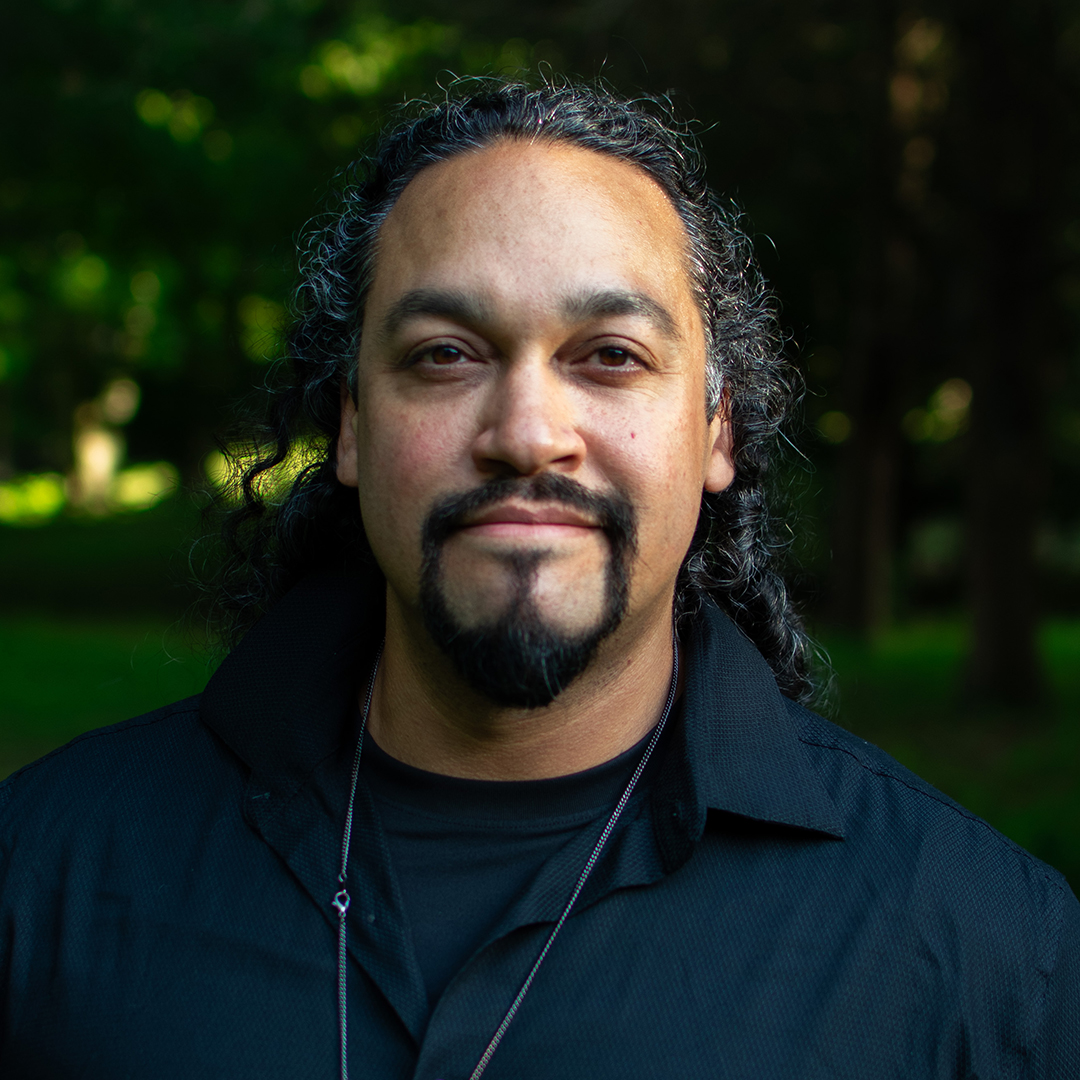
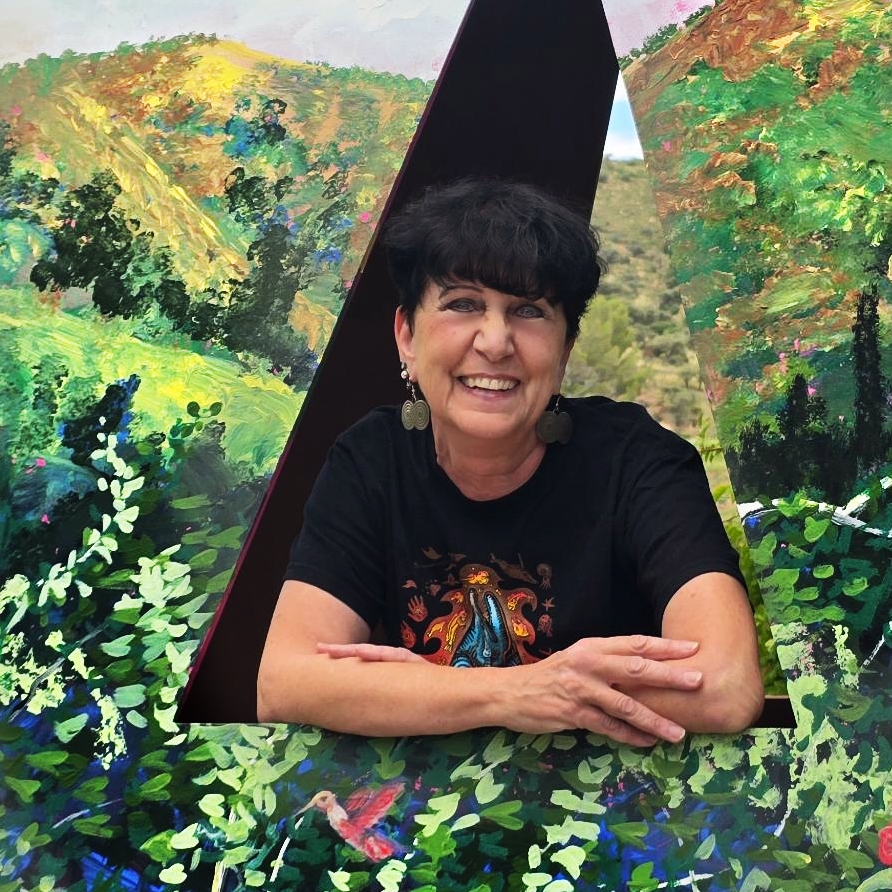
Chantelle Ohrling (she/her), comes from a long line of rebellious Afro-Taíno women. When she isn’t nerding out about planned giving or deeply engrossed in a book, she’s honouring her responsibilities to her communities by tracing histories, listening to stories, and building connections for liberation. She believes we can alchemize oppressive systems (much like fungi decompose dead matter) into fertile ground for new societies rooted in reciprocal relationships based on deep care and respect for all living relations. You can find her on LinkedIn.