No, you can’t decolonize philanthropy, Part 2: But we can fund acts of decolonizing and repair

No, you can’t decolonize philanthropy, Part 2: But we can fund acts of decolonizing and repair

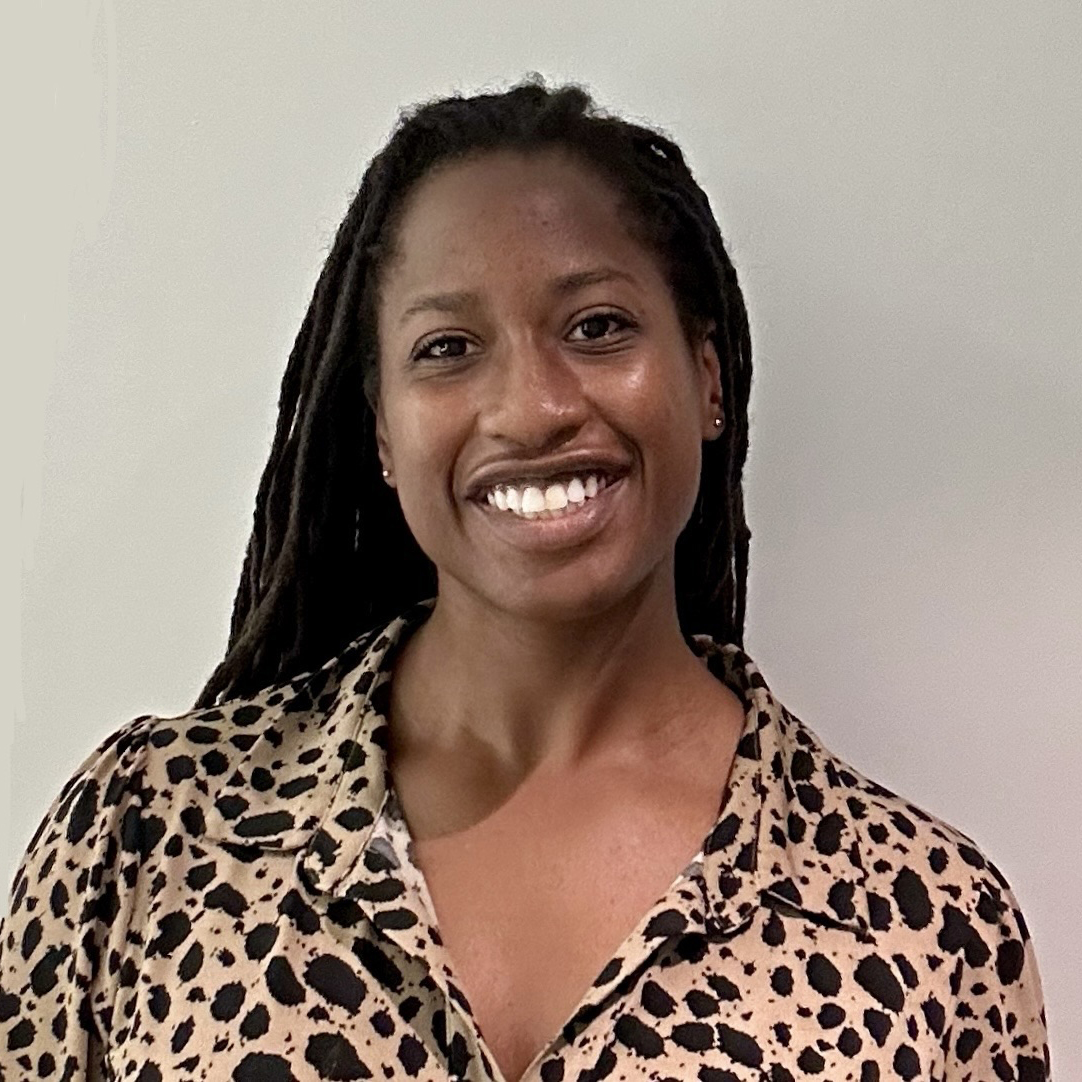
By Chantelle Ohrling, a hopeful daydreamer of postcolonial futures

Decolonization does not have a synonym. It is a very literal refusal and re-creation. It is not a swappable term for improving schools, societies… nor a philanthropic foundation.

This essay is a continuation of “No, you can’t decolonize philanthropy, Part 1: A closer look at colonialism and decolonization.

In today’s society, colonialism has impacted all aspects of everyone’s lives. 

As a descendant of that first decolonial act on Turtle Island and Abya Yala, my African ancestors and Indigenous ancestors have survived their own respective apocalypses. Everything about our ways of living have been violently reformed into this neocolonial reality. 

Modern activist-scholars recognize this and have pushed our understanding of decolonialism by examining the endless ways that colonialism has reshaped us and taken from us. 

While we won’t be able to cover the myriad of them, I do want to highlight two crucial examples: the gender and sexuality binary that has been imposed upon us by the violent patriarchy and the politics of recognition and radical reciprocation.

Expanding Applications of Decolonizing and Decolonialism: But Not as a Metaphor

Thus, decolonization initially began as a descriptive term denoting a process of political change, but has since transcended its original domain and pervaded diverse spheres, becoming ubiquitous. Presently, one talks about decolonization of bodies (Blackwell 2023), zombies (Saldarriaga and Manini 2022), gastronomy (Janer 2022), metal music (Varas-Diaz 2021), health (Nunes and Louvison 2020), hair (Norwood 2018), design (Tlostanova 2017), cinema (Piçarro, Cabecinhas, and Castro 2016), work, time, and leisure (Shippen 2014) as naturally as colonial agents in the 1940s and 1950s spoke of decolonizing French West Africa.

– Wilson Trajano Filho, On Decolonization and Its Correlates

Coloniality informs our very understanding of gender and sexuality. In Critically Sovereign: Indigenous Gender, Sexuality, and Feminist Studies, Joanne Barker reminds us that “critical Indigenous studies scholars have uncovered multiple (not merely third genders or two-spirits) identificatory categories of gender and sexuality within Indigenous languages that defy binary logics and analyses.” In Critically Sovereign, she brought together essays from contributors that “question and reframe the thinking about Indigenous knowledge, nationhood, citizenship, history, identity, belonging, and the possibilities for a decolonial future.”

In The Invention of Women: Making an African Sense of Western Gender Discourses, Oyèrónkẹ́ Oyěwùmí demonstrates how Western biological colonial logic imposed a gender binary hierarchy on societies like the Yorùbá where it did not previously exist. Colonialism forced these fluid Yorùbá identities into the rigid Western categories of “man” and “woman,” where “woman” was automatically defined as the “Other” or the subordinate. 

Billy-Ray Belcourt in his essay “Decolonization is a Queer Desire” (published in Making Space for Indigenous Feminism) teaches us “There is something queer about decolonization that has to do with the coloniality of normative conceptions of the self and gender and the cis-heteropatriarchy of social form. A world unmoored from these is in the end a queer and decolonial world” and “decolonization is a desire to unmake the world and build it anew.”

Scholar-activists Glen Coulthard in Red Skin, White Masks: Rejecting the Colonial Politics of Recognition and Leanne Betasamosake Simpson in As We Have Always Done: Indigenous Freedom Through Radical Resistance argue against the “politics of recognition.” They suggest that seeking “inclusion” and “recognition” within the settler state is a trap; true decolonization is about “grounded normativity” – the radical resurgence of Indigenous intelligence and governance that exists entirely outside the state’s permission. 

The Black Canadian Fundraisers’ Collective practices a reciprocal recognition by turning inward to a network of relationships. Relations that uplift each other in a refusal of the colonial eye. The Collective was created as a form of maroonage resistance to the anti-Black racism which is pervasive in the NPIC. They fund their own awards to uplift Black fundraisers, are structured without a hierarchy and are driven by the values of belonging and freedom. This suggests that “decolonizing” can and must be applied to our social categories and daily lives in radical resurgence, but only if it remains anchored in the dismantling of the colonial imposition.

However, in “Decolonization is Not a Metaphor,” Eve Tuck and K Wayne Yang warn that, “when metaphor invades decolonization, it kills the very possibility of decolonization; it recenters whiteness, it resettles theory…Decolonize (a verb) and decolonization (a noun) cannot easily be grafted onto pre-existing discourses/frameworks, even if they are critical, even if they are anti-racist, even if they are justice frameworks.” This warning continues to ring true and clear.

Frantz Fanon explains in his 1963 seminal work, The Wretched of the Earth, that decolonizing the mind is the first step, not the only step toward overthrowing colonial regimes. To decolonize is not to “improve,” “diversify,” or “sensitize.” It is a specific, radical process of undoing the structures of a colonial state… And that decolonization is a “program of complete disorder.” It is not a natural occurrence or a “friendly understanding” reached over a board table; it is a historical movement that seeks to fundamentally alter the order of the world. 

The modern Zapatista movement (EZLN) in Chiapas serves as a living example of Fanon’s theory in action. By delinking from global capitalism and building autonomous schools and healthcare, the Zapatistas practice a modern Marronage. They do not ask for “inclusion” in the Mexican state; they create a world where “many worlds fit,” embodying through their world-building that decolonization is a present-tense act of building autonomous infrastructure. 

Within the confines of Canadian borders, we see ongoing rejection of colonialism in the Kanesatake Resistance (beautifully retold by Katsi’tsakwas Ellen Gabriel with Sean Carleton in When the Pine Needles Fall: Indigenous Acts of Resistence), Wet’suwet’en, and many others. Gord Hill details this unbroken tradition of de- and anticolonial movements in 500 Years of Indigenous Resistance and The Anti-Capitalist Resistance Comic Book.

Decolonization does not have a synonym. It is a very literal refusal and re-creation. It is not a swappable term for improving schools, societies… nor a philanthropic foundation. If the goal is not the repatriation of land and the abolition of the Black body as a site of extraction, then it is something else. This something else is very often necessary work, but we should be precise in our language so we do not erase the actual needs of Indigenous and Black liberation. 

So No, You Can’t Decolonize Philanthropy… 

To agree on what [decolonization] is not: neither evangelization, nor a philanthropic enterprise, nor a desire to push back the frontiers of ignorance, disease, and tyranny… (Césaire, 2000, p. 32) We deliberately extend Césaire’s words above to assert what decolonization is not. It is not converting Indigenous politics to a Western doctrine of liberation; it is not a philanthropic process of ‘helping’ the at-risk and alleviating suffering; it is not a generic term for struggle against oppressive conditions and outcomes. The broad umbrella of social justice may have room underneath for all of these efforts. By contrast, decolonization specifically requires the repatriation of Indigenous land and life. Decolonization is not a metonym for social justice.

– Tuck and Yang, “Decolonization is Not a Metaphor”

It is against this rigorous backdrop that we must evaluate the philanthropic sector. If decolonization is about the repatriation of land and the dismantling of extraction, then philanthropy faces a fundamental crisis of legitimacy. 

We must face the hard truth that one cannot use a system built on the joint exploitation of Black bodies on stolen Indigenous land to dismantle the structures that continue to extract. The capital that fills foundation endowments as Robyn Maynard and Walter Rodney and many others have documented, was literally fuelled by stolen labour on stolen territory. The Nonprofit Industrial Complex’s (NPIC) existence is reliant on the successful execution of the ongoing colonial capitalist project.

Charity is designed to ease the suffering caused by colonialism without challenging the structures that cause the suffering. According to Andrea Smith in the introduction to The Revolution Will Not Be Funded:Beyond the Non-Profit Industrial Complex, the NPIC often functions to “ameliorate the impact of low wages” or land displacement rather than campaigning for the systemic shifts that would render charity unnecessary. In this sense, philanthropy acts as a buffer that stabilizes the colonial state, making the “plantation” just comfortable enough to forestall its total dismantling.

The INCITE! Women of Color Against Violence Collective argued in The Revolution Will Not Be Funded, that the growth of the nonprofit sector, the NPIC, has also functioned to neutralize radical movements. By turning liberation work into “grant cycles” and “deliverables,” the state and the wealthy elite manage social change in a way that ensures it never threatens the underlying structures of racial capitalism. Charity and philanthropy depend on and uphold those structures, and as such cannot be decolonized. 

Other ways that philanthropy upholds those structures is through the underfunding of Black and Indigenous organisations and movements. As I wrote in “Narrowing the Racial Wealth Gap: Planned giving as a tool for economic justice,” “The Unfunded report, published in 2020 (which also details more examples of systemic injustice faced by Black people), found that private and public foundations have underfunded Black-led or Black-serving organizations and that while community foundations fared better, for every $100 disbursed, only seven cents went to Black-led organizations. When Sharon Redsky, Wanda Brascoupé, Mark Blumberg, and Jessie Lang reviewed the T3010 Registered Charity Information Return database for 2018, they found that even though Indigenous people represent approximately 4.9% of the population, Indigenous groups received just over .5% of gifted funds.” 

The structure of charities and nonprofits themselves, with their strict requirements to maintain tax exempt status, encourages them to model themselves after racial capitalism – the modern face of colonialism and imperialism. Philanthropy, in this light, rather than being a partner in decolonization, is a tool of containment designed to ameliorate the symptoms of colonialism while preserving the virus.

This problem is further explored in Edgar Villanueva’s Decolonizing Wealth: Indigenous Wisdom to Heal Divides and Restore Balance, where he identifies the “colonizer virus” within our financial structures. The structural “glitch” of modern philanthropy is most visible in its investment models. Most foundations are legally structured to exist in perpetuity, requiring them to invest their principal assets in the global market to ensure a steady return for annual granting. This creates a chilling contradiction where a foundation might provide a small grant to an Indigenous language program while its multi-million dollar endowment remains invested in the very extractive industries – mining, pipelines, and logging – that are currently encroaching on that community’s sovereignty.

In the United States, charitable giving became more formalized through various tax laws that have enabled the continued hoarding of wealth via foundations.” We see similar tax laws and disbursement quotas within the colonial borders of Canada. The wise Malcolm Burrows once said that “Any kind of endowment is a form of funds languishing.” Languishing, yes, and also hoarding of capital is antithetical to nature. It is a form of damage similar to ecological degradation, the destruction of an environment through depletion of resources. In nature, even death reciprocates by returning nutrients to the ecosystem through decomposition. Perhaps decolonizing, for philanthropy, is a form of decomposition, a returning of nutrients to the ecosystem?

This essay is not to discourage those who do the work of equity, diversity, inclusivity, and right relations within charities and philanthropy. I myself will continue my work to do good while doing good … But in so doing, it’s important to centre our work in the historical truth context and be self aware about the limits of the work. Maria Rio in “Why ‘decolonizing’ is the wrong word for change we make inside oppressive systems…” describes a handful of excellent ways to begin practicing anti-colonial harm reduction in our work (she also offers different verbs that are more suited to critically important social justice work we can do from within the sector and our fundraising practices). 

Such efforts include investing in Community Land Trusts (CLTs), worker-owned cooperatives, and independent food systems designed to decouple Black and Indigenous communities from market dependency. By leveraging Indigenous and Black-led initiatives that utilize network-based fund dispersal, these movements bypass traditional gatekeepers.

… But we can fund acts of decolonizing and repair, and create radically reciprocal relationship and systems

What we can do from within the NPIC in relation to decolonization is to help create the conditions for a post-colonial world by funding repair and reparations. To be clear, funding repair and reparations is not decolonizing but harm reduction that can birth true acts of decolonization outside of charity. 

Djaka Blais, Executive Director of Hogan’s Alley Society, once said that “If erasure was funded, repair must be funded too… If erasure was funded, then repair cannot be funded like a small pilot project or a special initiative. Repair cannot be funded like a line item that disappears when the economy gets shaky. Repair has to be funded like infrastructure.” Since Haiti is still indebted and punished for freeing themselves from slavery because France demanded restitution for the loss of their “property” (Black people), and the UK was in debt until 2015 for repaying their slave owners for the loss of their property – imagine what that repair funding could and should really look like in equal scale. 

Leanne Betasamosake Simpson, in As We Have Always Done, teaches us about Nishnaabeg Anticapitalism. She generously shares that “My ancestors didn’t accumulate capital, they accumulated networks of meaningful, deep, fluid, intimate collective and individual relationships of trust. In times of hardship, we did not rely to any great degree on accumulated capital or individualism but on the strength of our relationships.” These radically reciprocal relationships are also beautifully defined in The Serviceberry: Abundance and Reciprocity in the Natural World by Robin Wall Kimmerer. These relational practices are the basis of my call for philanthropy to function as fungi.

There are practices of giving and “right relationships” that are outside of the colonial canon and always have been and as such do not need to be decolonized. We can incorporate those teachings into a model of harm reduction, following the guidance of Indigenous and Black lead organisations like The Circle on Philanthropy, the Black Canadian Fundraiser’s Collective, the Right Relations Collaborative, and The Black Youth Initiative. These are the organizations that I have been grateful to learn from and be in community with, and there must be many more that escape my limited view. 

Leanne Betasamosake Simpsons says, “develop personal relationships with other communities of co-resistors beyond white allies… because when we put our energy into building constellations of coresistance within grounded normativity that refuses to center whiteness, our real white allies show up in solidarity anyway” and “… to create networks of reciprocal resurgent movements with other humans and nonhumans radically imagining their ways out of domination, who are not afraid to let those imaginings destroy the pillars of settler colonialism.” This, to me, is a very true form of decolonizing, one that radically reimagines life and relationships outside of the colonial canon. 

Black and Indigenous Peoples have had over 500 years of “relentlessly building worlds through unspeakable violence and loss” as Robyn Maynard details in Rehearsals for Living, “Our histories, presences and futures are different and intertwined with one another. Our world-making projects of abolition and decolonization are enmeshed.” 

By funding independent, Black and Indigenous autonomous spaces we can help create a world where we no longer need the “benevolence” of the wealthy – because we have reclaimed our own reciprocity. That could be a form of decolonizing philanthropy – Black and Indigenous Peoples working together to reimagine systems that are entirely outside of and post colonialism. A radically reciprocal structuring that would honour the sacrifices of our ancestors who have given up their lives in the struggle to decolonize, to find their freedom. 

When we apply the traditions, histories and teachings of Indigenous Peoples and Nations, Black Marronage, and African traditions as an alternative to modern philanthropy, we can move beyond the “inclusion” model and toward a strategy of autonomous infrastructure. 

Chantelle Ohrling

Chantelle Ohrling

Chantelle Ohrling (she/her), comes from a long line of rebellious Afro-Taíno women. When she isn’t nerding out about planned giving or deeply engrossed in a book, she’s honouring her responsibilities to her communities by tracing histories, listening to stories, and building connections for liberation. She believes we can alchemize oppressive systems (much like fungi decompose dead matter) into fertile ground for new societies rooted in reciprocal relationships based on deep care and respect for all living relations. You can find her on LinkedIn.

No, you can’t decolonize philanthropy, Part 1: A closer look at colonialism and decolonization

No, you can’t decolonize philanthropy, Part 1: A closer look at colonialism and decolonization

By Chantelle Ohrling, a student, practitioner and descendant of decolonial praxis

…the terms “decolonization” and “decolonizing” continue to rise into the mainstream of the nonprofit sector, yet their meaning is often diluted into a soft synonym for inclusion or diversity. As if we could simply sprinkle a bit of our colour and culture onto the white walls of charities and foundations and call it liberation.

In recent years, spurred in part by publications including Decolonizing Wealth: Indigenous Wisdom to Heal Divides and Restore Balance by Edgar Villanueva, and grassroots decentralized movements like Black Lives Matter, there has been a reckoning in the philanthropic sector—a reckoning regarding the origins of the wealth and systems of oppression that our Nonprofit Industrial Complex (NPIC) depends on.

Philanthropy is dependent on racial capitalism and, as such, also dependent on the wealth of extraction. This is seen in the many ways the NPIC regularly mirrors conditions in the economy, such as the “generosity crisis” — declining gifts in all areas except for major gifts, which looks a lot like the ever-growing wealth disparity — and the racism that capitalism relies on reflected in the treatment of staff of colour by overwhelmingly white managers, as detailed in Collecting Courage: Joy, Pain, Freedom, Love (and a plethora of research and writing in the Canadian sector alone). 

Colonialism is often touted as a “virus” that has systemically infected the “immune system” of our global economy, specifically within the realms of philanthropy and the nonprofit sector. As Edgar Villanueva suggests, this pathogen thrives on a “command and control” architecture that prioritizes the preservation of institutional wealth over the actual healing of communities. 

Jonathan Meagher-Zayas, in “Q: Why do nonprofits struggle to achieve their missions? A: Colonialism,” accurately identifies that nonprofits struggle to achieve their missions precisely because they are forced to operate within these colonial structures that value rigid metrics over authentic liberation.

There is also the rise of violent colonial extraction south of the border, and with it the rise of hateful rhetoric on the north side. As the western colonial governments’ masks of democracy and liberalism slip to reveal the imperial monsters that birthed our societies, the cries for an alternative grow louder. Even Prime Minister Mark Carney is naming the rupture of the old world order and calling for a new order that “encompasses our values, such as respect for human rights, sustainable development, solidarity, sovereignty and territorial integrity of the various states.” (Too bad he didn’t say “Indigenous Nations” instead of “states,” and later in that speech called for further capitalistic extraction.) 

With this reckoning, the terms “decolonization” and “decolonizing” continue to rise into the mainstream of the nonprofit sector, yet their meaning is often diluted into a soft synonym for inclusion or diversity. As if we could simply sprinkle a bit of our colour and culture onto the white walls of charities and foundations and call it liberation. 

However, decolonization is much more than equitable hiring practices and accessible events. While these are important aspects of inclusion and diversity, they are not decolonizing. 

A closer look at colonialism and decolonization

Colonialism is invested in us not knowing Black & Indigenous histories. Our truths are not included in a state curriculum, and, when we are present, we are a whitewashed, watered-down version of dream catchers and the under-ground railroad instead of four centuries of brilliant and radical Black & Indigenous resistance.

– Leanne Betsamosake Simpson, Rehearsals for Living

Decolonization is an ancient, global struggle. The Irish were engaged in decolonial resistance against English encroachment long before Europe even knew Turtle Island (North America) existed. 

This global struggle is an unbroken tradition, manifesting today in as many unique forms as there are modern iterations of colonialism. These struggles range from Palestine to Sudan to the Kuria in Tanzania dying at the hands of Canadian mining companies. These same companies have schools and rooms named after them in universities across Canada, highlighting another way our NPIC is entangled and dependent on colonial structures. The brute violence of protecting Canada’s “right” to extract resources is felt by Indigenous Peoples within its own borders, and we legitimize and normalize that violence by honouring them with naming opportunities. There is something to be said about enacting a strict gift acceptance policy as harm reduction.

For our purposes, this current reckoning in the “Americas” centres on the specific 534-year history of this hemisphere’s apocalypse of colonialism, imperialism, racial capitalism as well as the Black and Indigenous rejection of such violent forces. 

For over five centuries, an architecture has been violently imposed upon Turtle Island and Abya Yala (South America): a scaffold of extraction that views Indigenous Land as a forever renewable object to be mined (with Indigenous Peoples viewed solely as an impediment to that goal, to be eliminated through violence or assimilation) and the Black body as an object, an engine, for industrial growth.

Robyn Maynard describes colonialism birthing racial capitalism in Rehearsals for Living, writing: “The Industrial Revolution … was quite literally fuelled by the violently coerced labour of kidnapped Africans, on lands from which Indigenous populations had been murdered and forcibly removed.” She echoes Walter Rodney who, in his formative work, How Europe Underdeveloped Africa writes, “Europe transferred its capitalist institutions more completely to North America than to any other part of the globe, and established a powerful form of capitalism – after eliminating the [I]ndigenous inhabitants and exploiting the labor of millions of Africans.” 

Leanne Betasamosake Simpson in As We Have Always Done: Indigenous Freedom Through Radical Resistance describes colonialism’s ongoing presence as “one that is formed and maintained by a series of processes for the purposes of dispossessing, that create a scaffolding within which my relationship to the state is contained. I certainly do not experience it as a historical incident that has unfortunate consequences for the present. I experience it as a gendered structure and a series of complex and overlapping processes that work together as a cohort to maintain the structure.” 

These complex and overlapping processes include the Doctrine of Discovery and Terra Nullius, slavery (yes, there was slavery in Canada for over 200 years), residential “schools,” and the Indian Act. The Royal Canadian Mounted Police (RCMP), created to enforce colonial rule, now disproportionately enforces Canadian law on Black and Indigenous bodies

The modern philanthropic industry is included in these processes of oppression. In a stunning example of this, the last remaining enslaved person in Lower Canada, an Indigenous woman, was donated to a Montreal hospital in 1821. To this day, there are organizations within Canada with charitable tax exemption that are supporting the genocide of Palestinians

We see the ongoing consequences of a gendered oppression structure through the patriarchal violence disappearing our stolen siblings, as detailed in the final report of the National Inquiry into Missing and Murdered Indigenous Women and Girls. 

In an interview with Naomi Klein, Simpson explained, “Colonialism and capitalism are based on extracting and assimilating. My land is seen as a resource. My relatives in the plant and animal worlds are seen as resources. My culture and knowledge is a resource… Extraction is stealing — it is taking without consent, without thought, care or even knowledge of the impacts that extraction has on the other living things in that environment. That’s always been a part of colonialism and conquest.”

Acts of decolonizing, as Frantz Fanon would say, cannot be ignored by the state. When you’re truly removing, leaving, or destroying the colony, the colony reacts. As such, we must not let the word “decolonization” become another balm for the conscience of the powerful. 

To combat this, we can start by grounding our work in a mutual understanding. As with “Decolonization is Not a Metaphor,” my goal is “to remind readers what is unsettling about decolonization — what is unsettling and what should be unsettling.” So, where did “decolonization” originate, and what is its history? And what does it mean to decolonize? Can we truly decolonize philanthropy? 

Origins of Decolonizing and Decolonialism 

Decolonization, which sets out to change the order of the world, is, obviously, a program of complete disorder. But it cannot come as a result of magical practices, nor of a natural shock, nor of a friendly understanding. Decolonization, as we know, is a historical process: that is to say it cannot be understood, it cannot become intelligible nor clear to itself except in the exact measure that we can discern the movements which give it historical form and content. 

 – Franz Fanon, The Wretched of the Earth, 1963, p. 36

 Decolonization is not an “and”. It is an elsewhere. 

– Eve Tuck & K Wayne Yang, “Decolonization is Not a Metaphor,” 2012, p. 40

Colonialism in Turtle Island and Abya Yala began with the arrival of Cristoforo Colombo in the Caribbean and the first colonial settlement of La Navidad on Ayiti (now called Haiti) — and as such, that’s also where decolonization began. As Gord Hill describes in 500 Years of Indigenous Resistance

“Leaving about 35 men on Hispaniola, Colombo and his crew returned to Spain to gather the materials and men needed for the coming colonization, and to report to the crown on his journey. In September 1493, Colombo returned to Hispaniola with a fleet of 17 ships and 1,200 men. The detachment that had been left on Hispaniola had been destroyed following outrages by the Spaniards against the Taíno. The resistance had already begun.” 

This history of refusal expanded through the practice of Marronage throughout the Caribbean and Abya Yala — the radical act of escaped enslaved Africans and Indigenous peoples leaving the plantation’s geography to form autonomous, self-governing societies. These acts of freedom-making and radical Black and Indigenous solidarity outside the bounds of the colonial state embody a truer definition of decolonization. 

The Haitian Revolution served as the ultimate blueprint for decolonizing by dismantling the Code Noir and defeating the Napoleonic forces to establish the first free Black republic in 1804. This act of self-liberation ignited a “domino effect” across Abya Yala and Africa, where enslaved and colonized peoples moved beyond reform to demand the total removal of European administrative, legal, and economic structures.

In the written canon, the word “decolonization” first appears in order to describe this necessary violence of freeing and freedom — the literal removal of colonial control. Frenchman Henri Fonfrède coined the term in 1836 to criticize the French occupation of Algiers. Following Fonfrède’s critique, the term “decolonization” was mostly a technical word used by French officials to describe the “planned” end of their rule. 

Walter Rodney in Decolonial Marxism: Essays from the Pan-African Revolution teaches us that colonial administrators falsely viewed it as a transition they controlled, and they often claimed it was happening too quickly due to political pressures of the colonized. In reality, the revolutions of the colonized were too expensive. Rodney writes, “Imperialism is not imperialism if it costs more to suppress the exploited than the imperialists receive in surplus.” 

However, by the 1930s, a much more radical view of decolonization was being proclaimed and reclaimed by activists and thinkers from within the colonies themselves. Movements like Négritude, led by figures such as Aimé Césaire, Léopold Senghor, and Léon Damas, shifted the focus from a state-led administrative process to a psychological and cultural “thingification” that required a radical reclamation of identity. 

The transition of decolonization from a bureaucratic process to a revolutionary global movement intensified after 1945. As the term moved from the French décolonisation to the English decolonization within the United Nations, it was defined at the 1955 Bandung Conference as an urgent, collective demand for Third World sovereignty. There, President Sukarno of Indonesia famously warned that colonialism had donned a “modern dress,” manifesting as economic, intellectual, and internal physical control. 

By the 1960s, Frantz Fanon further codified this shift in The Wretched of the Earth, framing decolonization not as a mere policy change, but as a violent “meeting of two forces, opposed to each other by their very nature.”

This “modern dress” identified by Sukarno has since evolved into the contemporary state of neocolonialism, where the overt violence of military occupation is replaced by or paired with the “soft power” of capitalist networks. Within this paradigm, control is maintained through international financial institutions that utilize debt and structural adjustment as modern shackles, ensuring peripheral nations remain tethered to the metropole. 

One of these international systems is the NonProfit Industrial Complex, weaponizing humanitarian “assistance” for fiscal discipline and resource extraction, aiding in the institutionalization of a sophisticated scaffold of extraction. 

As Dambisa Moyo argues in Dead Aid: Why Aid is Not Working and How There is a Better Way for Africa, this system maintains a state of managed underdevelopment; here, the “benevolence” of the wealthy functions as a contemporary substitute for the bayonet, ensuring colonial control persists long after the flags have changed.

It’s crucial to be aware of this storied past of decolonization and decolonizing, else we misuse the term. An understanding of decolonization requires the inclusion of the historical context. This Queens University article posits that: “In Canada, decolonization is usually discussed in terms of the relationship between Indigenous and non-Indigenous peoples, and particularly associated with the Truth and Reconciliation Commission of Canada’s final report and Calls to Action.” Unfortunately this is a very shallow view, forgetting that this aforementioned Commission, created in 2008, was modeled on and inspired by South Africa’s Truth and Reconciliation Commission which was formed in 1996. The article even shies away from truly describing the impacts of colonialism — using a passive tone and gentle verbs (“taking over,” which leaves room for implied consent) to describe the many forms of colonial violence. If we aren’t able to name genocide, then we’re too fearful to truly be decolonizing. 

These commissions are not the only examples of a shared decolonial project where Black and Indigenous movements and experiences intersect and support each other to reject colonial mirrors in favour of radical self-determination. Robyn Maynard and Leanne Betasamosake Simpson cocreated Rehearsals for Living as they built kinship and solidarity through letter writing. Glen Coulthard in Red Skin, White Masks: Rejecting the Colonial Politics of Recognition builds on Frantz Fanon’s critique of the politics of recognition in Black Skin, White Masks. Fanon identifies the “mask” as a tool of assimilation, whereas Coulthard identifies state-granted “rights” and symbolic apologies as modern masks that pacify resistance while upholding settler sovereignty.

Audre Lorde’s powerful cry “I am not free while any woman is unfree, even when her shackles are very different from my own” reminds us that while Black and Indigenous Peoples on Turtle Island and Abya Yala may have different shackles, those shackles are placed by and chained together by the same colonialism. 

One cannot be freed without the other, and any definition of decolonization that does not include both Black and Indigenous peoples — as well as our nonhuman relations — is insufficient. 

Chantelle Ohrling

Chantelle Ohrling

Chantelle Ohrling (she/her), comes from a long line of rebellious Afro-Taíno women. When she isn’t nerding out about planned giving or deeply engrossed in a book, she’s honouring her responsibilities to her communities by tracing histories, listening to stories, and building connections for liberation. She believes we can alchemize oppressive systems (much like fungi decompose dead matter) into fertile ground for new societies rooted in reciprocal relationships based on deep care and respect for all living relations. You can find her on LinkedIn.

A joint statement on proposed changes to SAM.gov registration

A joint statement on proposed changes to SAM.gov registration

SAM.gov is not a policy debate. It is not a grant application. It is the door. And this administration wants to put a political test in front of it.

Public Comment Deadline: March 30, 2026

We are deeply concerned about proposed changes to the SAM.gov registration process and the broader policy environment in which these changes are emerging.

The General Services Administration is proposing to add new certifications to SAM.gov, the registration every nonprofit must complete and renew annually to be eligible for federal funding. Before an organization submits a single application, it would be required to attest that it does not engage in what this administration has defined as “illegal DEI,” it does not serve undocumented immigrants, and it poses no threat to national security. These certifications would apply universally, across every future application, to every federal agency, under threat of civil and criminal penalties. 

SAM.gov is not a policy debate. It is not a grant application. It is the door. And this administration wants to put a political test in front of it.

The language is vague, and the legal exposure is a concern because the populations most likely to be limited by that combination are the same populations that have always had the hardest time getting through this door.

Our collective experiences in this field have proven that when the rules are unclear and the stakes are high, organizations lose options for needed revenue. The organizations most likely to lose are grassroots nonprofits, BIPOC-led organizations, immigrant-serving agencies, LGBTQ+-affirming providers, and organizations doing racial equity work.

That is the intended effect.

We support accountability in federal grantmaking. Real accountability asks whether public money reaches people, whether it is used responsibly, whether communities have any say in how it moves. These proposed certifications, however, require organizations to attest to ideological alignment with a political agenda as a condition of participation in a public funding system. Those are not the same thing, and we will not pretend they are.

The public comment period closes March 30, 2026. We are asking professionals in our communities to submit a comment before that deadline. Your expertise and insight are powerful. Use your experience to share what these certifications would mean for the organizations you work with, the people those organizations serve, and the sector’s ability to do its job.

Public funds should be accessible to organizations doing public good. The entry point to federal funding is not the place for a political test.

You can find more information from the National Council on Nonprofits and submit comments here.

Community-Centric Fundraising is a movement working to center race, equity, and community in philanthropy and fundraising. 

More Than Grant Writers is a community of grant professionals committed to a more equitable and accountable funding sector. 

Crappy Funding Practices holds funders publicly accountable for the barriers and burdens they place on the nonprofits and communities this sector claims to serve.


Why CCF Family Reunion is different from other conferences: Centering BIPOC leadership and lived wisdom is non-negotiable

Why CCF Family Reunion is different from other conferences: Centering BIPOC leadership and lived wisdom is non-negotiable

Community-Centric Fundraising itself and the Family Reunion exist to elevate Black, Indigenous, queer, trans, and other marginalized leaders — especially those whose wisdom may not be captured in written or academic formats. This is clear in our sessions for the event.

The Community-Centric Fundraising (CCF) Family Reunion is just one month and two days away! Have you gotten your tickets yet?

The Family Reunion, just like CCF itself, intentionally exists to elevate Black, Indigenous, queer, trans, and other marginalized leaders — especially those whose wisdom may not be currently captured in written or academic formats. This focus creates a safer, more supported pathway for BIPOC thought leaders to present; values oral, relational, and experiential knowledge; and it designs away barriers, such as credentials, polished presentation norms, and unpaid labor.

Nowhere do we see this exemplified more than in our sessions for this year’s event! Read below to find out more about the amazing sessions and speakers!

A look behind the scenes:

As we were deciding the sessions for this year’s event, we considered how we could make a safer, more supported pathway for BIPOC and other marginalized thought leaders to present, how we could value oral, relational, and experiential knowledge, and how we could design way barriers (like requiring credentials that are expensive and inaccessible, polished presentation norms that force presenters into a white “professionalism,” and unpaid labor that foists the burden of costs onto presenters) to open up opportunities and support a diverse set of speakers.

For us, that meant being intentional about our processes, deviating from streamlined funnels that we often use in nonprofit event planning to optimize time, and treating our potential speakers as individuals, attempting to meet their individual needs. It meant finding Values-Aligned Partners (VAPs) to help us afford accessibility investments, stipends, and thoughtful design choices that cost more. (If you want to be a VAP or know someone who would, please check out our Prospectus and One-Pager and reach out to Amie!)

It also meant being honest about what we could deliver this year while planning for how we could prepare ourselves to be able to support more accessibility investments at future events. While we understood that cost-cutting measures undermines our values, we also understood that we couldn’t do everything for everyone in the first year.

One of the nonprofit event planning barriers we’ve seen in the past, and I’ve definitely been complicit in, is knowing we couldn’t do things “perfectly,” so not trying. The planning committee wanted to avoid this pitfall, and leaned heavily into the CCF values and principles. We had to make practical decisions and compromises about what we could do this year, while envisioning what we could do with more funding, resources, and time in future years, rather than become so afraid that we would not implement changes perfectly that we didn’t try.

A look at the sessions:

Most of our sessions are now listed on the website (although, we’re working on BIPOC time, so some are still in progress. LOL).

Based on the proposals we received, the planning committee has loosely grouped the offerings in four tracks:

  • Visionary and future thinkings sessions:
    • Creativity as medicine: Ancestral wisdom, health, and building a new world
    • It’s dangerous to go alone, take this: Building coalitions to secure and protect institutional funding
    • We have to talk about AI, so here it is (panel)
  • Sessions tethered to immediate actions:
    • But what do I specifically do? CCF and fundraising tactics (panel)
    • Community-Centric Fundraising isn’t a dropdown field: What our data systems teach us about power and participation
    • The donor convo we’ve been afraid to have (And why we need to have it now)
    • Facing feedback: Adventures in emotional capacity
  • Case study sessions:
    • From silos to solidarity through action, community, and learning with CCF San Diego
    • Ignite your donor ground game: How to fire up your community-powered giving, the Mamdani way
    • Who benefits? A borderland case study in community-led climate justice
  • Spanish-speaking sessions*:
    • CCF en Español — Presentación de los Principios de CCF
    • Plurality without neutrality: Practicing fundraising across difference and power
    • The rebellion is in our culture: How the arts and culture sector is the heart of our movement

You can check out the sessions descriptions on the website to see which sessions you might want to attend! (The planning committee is putting the last touches on the schedule, and playing Tetris to determine which session goes in which classroom and when, but we will be sharing the final schedule as soon as it’s available and will include it in the newsletter! If you aren’t already subscribed, you can subscribe here.)

But we did want to share more about our AI panel, because we need your help!

We are hosting the cheekily named We have to talk about AI, so here it is panel facilitated by our very own Movement Coordinator, Abigail Oduol, with (confirmed) panelists Carlos García León and Jennifer Li Dotson (a couple of other asks are out there in the universe, so we hope to add more panelists!). The session is intended for those who are concerned about the impacts of AI, folks who want to learn how to use AI in an ethical way (if it can be), and everyone in between.

We want to know, what are your burning questions about AI for the panelists? So many of us have formed an opinion about AI already (I know I have), but what are your burning questions about AI that you want addressed? What gaps in your knowledge need addressing? What ethical and community-centric concerns do you have? Do you have hopes about what AI could do and want to find out if they’re feasible? Let us know in the comment section below. We can’t promise every question will get added to list, but we will try and add as many as we can so we can make informed decisions about whether or not we will use AI in our lives and nonprofits.

A huge thank you to our speakers and panel facilitators!

Without these individuals sharing their knowledge and expertise with us, this event wouldn’t be what it promises to be! Full bios of our presenters can be found on the website here.

Abigail with a beige wall in the background

Abigail Oduol (she/her)

Alexander Sterling with foliage in the background

Alexander Sterling (he/they)

Alexandra sits on a chair in a landscape with mountains in the background

Alexandra Peek (she/her)

Headshot of Carlos

Carlos García León (he/they)

Headshot of Dan Mueller

Dan Mueller (they/she)

Headshot of Dana James

Dāna James (she/her)

Headshot of Dwight Frederick

Dwight Frederick (he/him)

Elise Baker headshot

Elise Baker (she/her)

Headshot of Elly Brown

Elly Brown (she/her)

Headshot of Frank against a gray background

Frank Velásquez Jr. (he/his/el)

Black and white headshot of Grace with a pink, white, and yellow background

Grace Weil (she/her)

Headshot of Jennifer Li Dotson

Jennifer Li Dotson 李麗玲 (she/her)

Headshot of Jenny

Jenny Brandt (she/her/ella)

Kelly Phipps with the sunset in the background

Kelly Phipps (she/her)

Headshot of Lucas outside

Lucas Land (they/them)

Headshot of Nate Levin-Aspenson with sunglasses

Nate Levin-Aspenson (he/him)

Photograph of Naya

Naya Diaz (she/her/ella)

A headshot of Nel wearing a "decolonize & Indigenise" hoodie

Nel Taylor (they/them he/him, Umatilla)

Headshot of Shantel with mountains in the background

Shantel Suaréz Ávila (she/her/ella)

*Why only three Spanish-speaking sessions and not Spanish translation for all? This was one of those compromises we had to make this year while planning for future years. We wanted to have Spanish translators at every session, but with our current budget and pledged amount from our VAP, it wasn’t economically feasible to have a translator for every session. But this is something we hope to be able to do in the future! At this time, we have three presenters who will be giving their originally proposed sessions in Spanish! A huge thank you to Carlos García León, Jenny Brandt, Naya Diaz for doing the extra labor of translating their presentations and giving it in Spanish for our members who are monolingual Spanish speakers, those that learn more readily in Spanish, or those that simply want to practice their Spanish comprehension!

Now is the time for planning that guides us to step into our power

Now is the time for planning that guides us to step into our power

By Hildy Gottlieb, futurist and social scientist at the nonprofit Creating the Future

If all we do is resist and react in this moment, without also working to create what is possible, we are dooming ourselves to playing defense in perpetuity.

When times are tough, articles start popping up, suggesting that organizations eschew long-term planning in favor of focusing on survival. 

It happened during the 2008 crash. It happened when Trump was elected the first time. It is happening again now in this current state of crisis. Right now, the Chronicle of Philanthropy is promoting a webinar about “streamlined” planning, noting, “Today’s uncertain climate calls for shorter planning horizons and increased flexibility.”

In this time of crisis, we need the exact opposite of that advice.

We need to have a different conversation that has been arising among nonprofit leaders; an alternative that directly addresses Alice Walker’s observation that “The most common way people give up their power is by thinking they don’t have any.”

Instead of simply reacting to current circumstances, this is precisely the time to step into our power to create the future we want to live in. If all we do is resist and react in this moment, without also working to create what is possible, we are dooming ourselves to playing defense in perpetuity.

When positive change has happened in the world, it has happened at critical junctures like this one, when it feels like things couldn’t get any worse. And that change has always been about what is possible rather than only reacting to what is wrong. From Nelson Mandela and Martin Luther King to modern-day movement leaders, it is not just their defensive strategies that inspire us; it is the ultimate why of those efforts, their dogged pursuit of a future that is more humane than our present circumstances. 

This time of polycrisis is a defining moment for our sector. The hunger for a more humane, equitable, healthy, loving path forward is palpable. This is the time to step into our power to create that. 

And that all starts with the plans we develop and begin to execute right now.

Short-term planning leaves us vulnerable

Folks who urge short-term, reactive planning mean well. It can be a struggle to think about the future when the present is so uncertain. The advice of those experts is therefore to focus on weathering the storm. 

Unfortunately, the result is that nonprofits and our communities are no stronger now than we were during the last crisis and the one before that. We are still vulnerable, subject to the whims of forces outside our control.

The problem, though, is not just one of the time period the plan will cover. The problem is actually the fault of strategic planning itself. Because traditional strategic planning is simply not meant for the work nonprofits do – in times like these and always. 

Birthed in the military and then adopted by the business world, strategic planning was designed for gaining strategic advantage over an enemy (in business: the competition) to create short term gains (win a battle, increase profits). As such, it is about defining the current reality and dealing with it in some way. 

The result is a planning process that is almost entirely reactive, whether that is reacting to demand or reacting to a problem. Those processes may start with visioning as a warm-up exercise, but the next step is not about creating that vision. With the instruction “Now let’s get down to reality,” the process de facto tells us that our vision for the community is not realistic, and then moves straightaway into responding or reacting to current conditions.

That is why so many supposedly “strategic” plans feel more operational and incremental than truly strategic. It is also why the plan you made in 2023 no longer fits with reality in the dark times of 2026. If a plan is built to react to current circumstances, then that plan will clearly be inapplicable when those circumstances change. 

Whether we use traditional planning or the short-term, reactive planning many experts are recommending, those plans cannot move us beyond the conditions that keep nonprofits vulnerable, and particularly, the conditions that keep our communities vulnerable. The next time there is a crisis, we therefore wind up in the same defensive position, trying to survive and wishing there was a better way.

The reality is therefore not that we need shorter term, more reactive plans.

The reality in this pivotal moment is that we need a form of planning that is intended for organizations to step into the power we do have. We need an approach that leads us to simultaneously resist and react, while aiming to make our communities the humane, healthy, equitable places we want to live in.

And because traditional strategic planning was never intended for that, it is incapable of taking advantage of this moment. 

Taking a community impact approach to planning

So then, what kind of planning would guide organizations to step into their power? 

First, it would be radically inclusive, because when we are living in scarcity, the answer is each other. In the spirit of “nothing about us without us,” we would be planning alongside the very community members who will be affected by that plan.

The plans themselves would then be rooted in our community’s aspirations. When the present is scary, and we are living with uncertainty, the answer is what is constant – our shared vision for a better future. Planning would therefore be tethered to that aspirational vision, not just as a warm-up exercise, but as a realistic and achievable goal.

Our plans would then determine what it would take to achieve that vision. We would be encouraged to build the line of dominoes that would lead to that ultimate reality. 

Those plans would also be strength-based in all ways, acknowledging the power we do have and the assets we have to build upon.

That inclusion, that striving for what is possible, that building on strength – that is the planning that is needed right now. Planning that guides us to simultaneously intervene in the current moment while working to create what is possible for the future of our communities. Planning that focuses on the “why” of our work, the North Star of radical possibility and maximum community impact, now and into the future.

The questions guiding this type of community impact planning are the questions that traditional strategic planning never asks: 

  • Who will be affected by the plans we make? What would it take for those individuals to participate in those decisions, to lead the direction we take?
  • What are the visionary results our organization will aim to create in our community? What steps will we take to turn that vision into reality? 
  • What do we have to build upon, to resource the change we want to create? And especially what do we have together, in a spirit of mutual aid and mutual care.

What does this look like in practice?

During COVID, the food bank in my hometown of Tucson, Arizona, began their community impact planning by connecting with the people who would be affected by that plan. That included conversations with their partner agencies, and with all the people those partner agencies served, as well as all 100+ employees on the food bank’s staff.

The questions they asked in those conversations were not about the problems people faced. Instead, they asked about people’s aspirations for their community, and the steps they thought were important to take to turn those aspirations into achievable goals. Some of those steps were about solving current problems, while other steps reached for goals around equity and quality of life.

Those conversations were especially important during the critical time of COVID, when people were feeling scared, alone, hopeless. Instead of simply reacting to the crisis, folks were seeing their power to create the community they wanted to live in. 

After those initial conversations, the food bank continued that inclusion, inviting community members to be the ones to prioritize which were the most important goals for the food bank to focus on.

This approach of radical inclusion and radical possibility was about seeing the community as participants in and agents of their own future. In reaching for what was possible for their community, they also addressed what needed to be fixed. The entire approach was rooted in the strengths of those community members. And the result was a pathway to hope at a time that felt anything but hopeful.

What this approach makes possible in times like these

We can make a bigger difference.
Rooted in the “why” of an organization, a community impact approach helps groups create a walkable path to actually achieving their vision. At a time when there is so much hopelessness, there is great power in not only imagining what is possible, but devising plans to achieve that. 

We don’t have to choose one or the other; we can address all issues.
Community impact planning simultaneously aims at what is possible while responding to current circumstances, addressing the short term within the long term. When you ask, “What would it take for our culture to be more humane?” the answers will obviously include alleviating people’s suffering. The difference is you won’t be treating those interventions as if they are the ultimate goal. Instead, you’ll be addressing current problems within the context of the future you intend to create.

We can be more radically inclusive.
Inclusion is our nonprofit superpower. By including the folks who will be affected by your work, you are building upon the strength of numbers, the strength of your community’s interconnections. And you will be living the values of “nothing about us without us.” During this time when we all need to feel that we can do something to make a difference, you will be tapping into all that energy while providing folks with a path to their own power.

We can be a source of hope.
If there is anything those of us working in social change need right now, it is hope. Hope is a strength that builds upon itself. Reactivity saps our hope, leaving us on the hamster wheel of scarcity and powerlessness. When you ground your planning in the future you intend to create, you are building a pathway of hope. And that hope becomes another strength to build upon.

The time for that planning is now.

When we shrink our plans, we are shrinking our potential, our power, and ourselves. This moment is instead calling us to our best selves, and to step into the power we may not realize we have – our collective power to create a future different from our past. 

Will we squander all that power and potential in reactive, short-term planning that leaves us always playing defense? Or will we pull together and build upon our collective imagination to create the future we want? 

That choice all starts with the plans we make right now.

Hildy Gottlieb

Hildy Gottlieb

Hildy Gottlieb (she/her) is the founder of the nonprofit Creating the Future, and the author of the forthcoming book, How to Create the Future. You can learn more about Community Impact Planning and connect with Hildy at https://creatingthefuture.org/