
By Jonathan Meagher-Zayas, nonprofit strategist, eductor, and equity warrior
Given my learnings, I identified a key thing holding nonprofits back from achieving their missions and advancing progressive change: their complicity in colonial mindsets.
We all know 2025 was a hot mess, and 2026 is already looking just as rough. The United States federal government is imposing systemic challenges impacting nonprofits across the globe. These challenges are compounding on the injustices under-resourced communities already face. Even though our sector has been aware of the systemic inequities facing our communities, I often see nonprofit leaders struggle to name what they are and why they exist.
Last year, I attended several nonprofit and fundraising conferences. During one of these conferences, I was in a session focused on strategic and scenario planning. While engaging in group discussions, many attendees shared numerous concerns. They talked about having risk-averse boards and executive directors who did not understand fundraising. They mentioned key organizational leaders were afraid to double down on their diversity, equity, inclusion, and belonging efforts. They shared toxic aspects of their jobs, such as being forced to focus on quantity over quality, dealing with constant resistance to change, and being stuck with employees who have a “that’s always how we’ve done it” mindset.
We even dove into how difficult it was to educate new employees coming into the sector—regardless of age—having the wrong mindset. These new people thought they could come to nonprofits to “save” helpless people and believed they were better than the people the organization served.
This applied to donors as well, who were only responding to messages on how they could “save” or “fix” society’s problems.
The themes were definitely ones I’ve heard from many nonprofits across the continent.
Now, for many of us in the Community-Centric Fundraising movement, you might hear these challenges and instantly think about oppressive ideologies—such as scarcity mindsets, white supremacy culture, and saviorism. During that specific session, I was eager for the facilitators to help name these and help the leaders understand, grieve, heal, and focus on overcoming these toxic ways of thinking. Unfortunately, as I see in many educational spaces for nonprofits, the facilitators either did not understand or were afraid to approach the topic. We spent more time discussing how to cope with these challenges because “this is how the sector works.”
Thankfully, a happy hour followed the session, and I processed my frustrations with trusted colleagues who were disappointed in the event facilitators. We’d hoped for better…
Complicity in Colonial Mindsets Hold Us Back
Stories like this are not uncommon in our sector. Many nonprofit management and leadership environments do a great job of naming challenges we have to face as professionals, but often forget to truly consider the reasons these challenges exist. The learning focuses on personal and organizational failures and avoids the systemic inequities.
As a consultant, coach, and educator for the field, I have had time to heal from nonprofit “professionalism” as well as time to step back and really try to understand what is holding our sector back. Personally, I strive to learn as much as I can and support others in their learning journey. This is why I value Community-Centric Fundraising spaces and the super talented colleagues within them; it is why I’m pursuing a Doctor of Education in learning and social contexts; and it is why I learn from great sector leaders by reading their work. (Vu Le’s book “Reimagining Nonprofits and Philanthropy: Unlocking the Full Potential of a Vital and Complex Sector,” Vanessa Priya Daniel’s Unrig the Game: What Women of Color Can Teach Everyone About Winning, and all of Lily Zheng’s books are some of the most transformational works I have read lately if you are looking for a place to start.)
Given my learnings, I identified a key thing holding nonprofits back from achieving their missions and advancing progressive change: their complicity in colonial mindsets. Since acknowledging this, I have felt a sense of liberation from that type of thinking, and have continued on my journey to decolonize my approach to leadership. (Also, “decolonization” is not a synonym for DEI work, and if that concept is new to you, you should read the academic article “Decolonization is not a metaphor” by Eve Tuck and K. Wayne Yang and Maria Rio’s CCF article “Why ‘decolonizing’ is the wrong word for changes we make inside oppressive systems, and how we can strive to be anti-colonial instead.”)
For my fellow social justice warriors, we know that the true cause of our world’s current destruction is capitalism. Colonialism is a product of capitalism, just as fascism, racism, sexism, ableism, homophobia, environmental destruction, and other forms of systemic oppression are. I know firsthand that it is part of my mission to support the reimagining of a world without oppressive capitalism. However, I intentionally use language to meet people where they are. Unfortunately, many people with power in our sector are not ready to name and acknowledge capitalism’s oppression. I’ll also explain later, based on my personal background, why I’m focusing on colonialism.
How Colonialism Shows Up in Modern-Day Nonprofits
Many traditional nonprofit spaces have not connected our challenges to colonialism, and that’s part of my research. I am exploring how to educate people and help them change their mindsets to further pursue decolonized forms of wisdom and knowledge.
In New York, the New York Council of Nonprofits publishes an annual report naming 10 of the most challenging issues nonprofit leaders say they face. In the most recent year, the majority of the 10 were categorized into three primary areas: financial and fundraising, staffing and organizational culture, and boards and leadership. I believe a big reason why many of these issues persist is because of colonial mindsets, such as:
1. Scarcity Mindset
I found that this past year, through my consulting and training work and conversations with other sector leaders, more leaders adopted a scarcity mindset when making decisions about their organizations. They were afraid of being attacked. They were uncertain about the future and lacked the confidence and competence to navigate the new political and community pressures.
As someone who’s pretty fiery and loves to get stuff done, this was pretty frustrating to see.
Thanks to fellow CCF contributors such as, April Walker, Yura Sapi, Esther Saehyun Lee, and Nel Taylor, we know the damaging impact a scarcity mindset can have on ourselves, our organizations, and our communities. It wasn’t until I dove into literature such as the must-read Decolonizing Wealth: Indigenous Wisdom to Heal Divides and Restore Balance by Edgar Villanueva, and listened to Indigenous scholars, that I realized scarcity mindset is a product of colonialism.
Here we have talented, smart leaders who are supposed to be addressing our most pressing societal issues, but are instantly afraid to challenge the status quo that created these issues or educate those in power. By doing nothing, leaders sacrifice the needs of marginalized communities to protect their status and access instead of helping create more equitable systems.
We see this often when trying to get our leaders and board to fundraise, or when they are insistent on toxic and unsustainable ways to generate support—like asking too much, exclusive and out of touch events, poverty porn, and giving up too much power to the donor.
Scarcity mindsets cause people to freeze and hoard resources, thinking they are saving it for a “rainy day,” but in reality, they are withholding the opportunity to generate wealth and support for people who need it. (Also, I think it’s chaotically storming now.)
This is one of the main things I feel my fellow consultants and fractional fundraisers are frustrated about: leaders would rather be frozen and avoid any risk than support us. Our communities right now need the most courageous and competent leaders right now, not those saving for an imaginary “rainy day” when it’s too late.
2. White Supremacy Culture
When I first learned what white supremacy culture was, I felt so liberated as a young, queer, Puerto Rican professional in our sector because it helped me understand the frustrations I had in numerous organizations. I am also grateful for the previous CCF contributors who elaborated more on white supremacy culture including, Michelle Shireen Muri and Fleur Larsen, Ashley Lugo, and Chris Talbot.
Now, as a diversity, equity, inclusion, and belonging consultant, I educate on how white supremacy culture is impacting staff retention rates, organizational culture, adaptability, and sustainability. This mindset has hurt us all, and we need to name it, heal from it, learn how to transform ourselves and our organizations, and take action to mitigate and dismantle it. White supremacy culture originated from the European settlers, who needed terminology and conditions to reign over the Indigenous land they stole and the African people they enslaved. While this may appear to be institutions of the past, many of our policies, values, and workplace expectations are based on these oppressive ideologies.
In addition, we have attacked and devalued values and wisdom from People of the Global Majority.
Naming this is a needed wake-up call for many people complaining about their organizational challenges. While it is a liberating moment for many, other leaders resist and derail to avoid their own guilt.
I had many attendees at my trainings resist this learning, despite other employees telling them characteristics of white supremacy exist at their organization. Regardless of whether people believe it, it’s another ideology rooting from colonialism that we have to address in our nonprofit sector. Our leaders’ and funders’ complicity is likely the reason we have yet to solve the decades-long “staffing crisis” in our sector.
3. Saviorism
When I talk about saviorism, many of my social justice fundraisers instantly understand that it has a negative impact on our fundraising efforts. Check out Yolie Contreras’ and Alli Rolle’s previous articles for more about this.
Too often, our organizations have centered people with power as the heroes of our movements. We see that language in direct mail appeals and emails. We see people with money and access being awarded, so they come to more events and hopefully give more money. We see these people recruited to boards, and brag about how great they are despite lacking the knowledge, community connections, or skills needed for effective board governance.
Saviorism originates from colonialism. History lessons still talk about how “uncivilized” Indigenous and African communities were, and how the white European man was burdened to save them. The United States still celebrates a genocidal criminal, and many nonprofits still have his holiday in their employee handbook.
Saviorism shows up in many ways in which nonprofits operate. I work a lot with human services agencies serving people with disabilities, where they have a significant staffing issues and horrible retention rates. Many human resources staff boast about recruiting employees who are most passionate about helping the people they serve, but they fail to educate themselves on why we need nonprofits serving people with disabilities in the first place. This disparity is why research done by the Council on Quality Leadership showed that most disability professionals are ableist.
During a presentation on racism in philanthropy from my local AFP conference, a cisgender white woman fundraiser working at a local disability services nonprofit derailed the presentation because we “failed” to discuss people with disabilities in our equity in fundraising presentation. One of the presenters wanted to discuss ableism and was planning to address it, but lost the psychological safety to do so due to this disruption and accusation. (Also, I know from my work that this woman’s organization eliminated its DEI work in 2023 and has one of the lowest organizational ratings on Indeed in the field.) When we disguise our saviorism as passion for helping others, it impedes our efforts. Even though this woman appeared to be advocating for people with disabilities, she ended up harming someone from that community and is harming others in her fundraising role.
I see the same saviorism mindset happening on boards, too. The volunteer leaders—with no or limited knowledge of the historical oppression the communities they serve have faced— make the organization’s most influential decisions based on their perspectives, thoughts, and bias. Often, they can only make those decisions if they are fed all the information in a carefully curated way. They also lack the understanding of their role within the movement ecosystem which results in organization-first decision making and embracing business “best practices.” We know as nonprofit leaders we do not need more private sector wisdom coming into our sector; we need the private sector to be accountable to the oppressive systems they create and uphold.
We also have nonprofit leaders who stay in their positions longer than they should because they believe they are the only person that can do the job. Overlapping with individualism in white supremacy culture, the belief that certain leaders need to be the heroes and save their communities is destructive. It results in withholding resources and eliminating opportunities for leadership, it reserves resources for outdated practices, and causes a disruption of trust from a new generation of leaders. The best leaders are the ones who embrace their strengths and roles in the community and uplift others along the way.
In order for our sector to truly thrive, we have to overcome these oppressive mindsets and focus on creating a world liberated from this type of thinking. We likely cannot create it right away, but that shouldn’t let us stop working towards that world. Decolonizing our thinking means embracing wisdom like the Haudenosaunee’s Seventh-Generation Principle. We should be thinking how our actions today will impact seven generations after us.
Why I Named Colonialism As a Toxic Trait to Our Sector
As part of my doctoral journey as well as my personal healing, I constantly want to examine my bias, perspectives, and positionality. (I highly encourage you to read Charisse Iglesias, PhD’s “From assumptions to integration: Examining your positionality throughout your community-engaged partnerships” article to help with this.) I find myself in a unique role where I can hopefully connect mainstream education leaders and inspire them to pursue decolonized wisdom.
This is because my ancestors were both the colonized and colonizers. This applies to three areas of my life:
- First, I proudly identify as Puerto Rican because my maternal grandparents and their ancestors were born on the island of Borikén in the Caribbean. We know from history (thank you, Chantelle, for your beautiful article on the topic) that the Taíno Community was living there until the Spanish conquistadores came, enacted a genocide, and brought over Africans they enslaved. Many of my fellow Latine people know that this is a complicated part of our history that we have to name and heal from.
- Second, on my father’s side, some of my first ancestors from England came over in the 1400s as some of the earliest settlers to take over Turtle Island. It is very easy for me to name and even trace back my European roots to the 1400s. (I likely also have ancestry from the Indigenous community whose land they occupied, but that community connection is disrupted.)
- Lastly, I am a United States citizen, and our country is an imperial empire occupying several lands as colonies, including those on the island of Puerto Rico. My community members there face significant economic oppression and exploitation, all for the benefit of rich mainland citizens.
Reflecting on these identities, I see an opportunity to navigate my multiple identities to connect people and help them understand different disciplines and perspectives.
I see mainstream nonprofit spaces complicit in their bias and still not centering scholars of color, elder wisdom, or adapting to new community-centric forms of leadership. I plan to take the strength of my ancestors to heal the wounds created and perpetuated by the other. I hope to help educate on these challenges and inspire people to pursue their journey of decolonization.
I wanted to share this opportunity here to manifest the opportunity to build our transformative learning strategies and experiment new ways to lead our movements. Now, more than ever, we need to be thinking about the generations to follow.
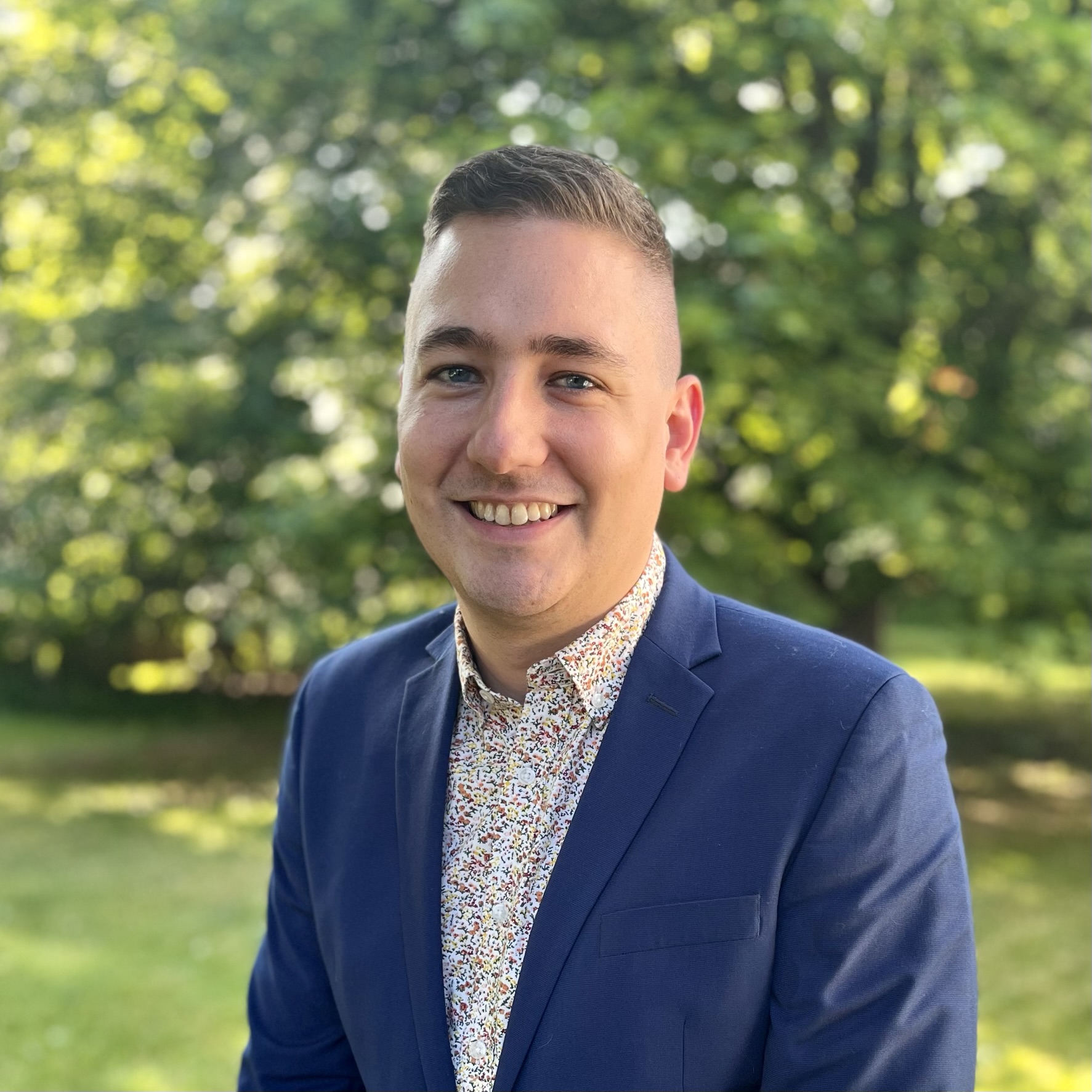
Jonathan Meagher-Zayas
Jonathan Meagher-Zayas (he/him) is a Queer Latinx Millennial nonprofit strategist dedicated to addressing equity issues, building capacity, engaging the community, motivating new impact leaders, and getting stuff done. He wears many professional hats, including Nonprofit Capacity Building Educator, Community Engagement Strategist, Adjunct Social Work Professor, Diversity Equity & Inclusion Consultant, Leadership Development Trainer, Award-Winning Fundraiser/Resource Mobilizer, Impact Sector Coach & Facilitator, Learning and Social Contexts Doctoral Candidate, and Social Justice Champion. He can be reached at jonathan@equitywarriorstrategies.com or on LinkedIn.
Discover more from CCF
Subscribe to get the latest posts sent to your email.