Q: Why do nonprofits struggle to achieve their missions? A: Colonialism

Q: Why do nonprofits struggle to achieve their missions? A: Colonialism

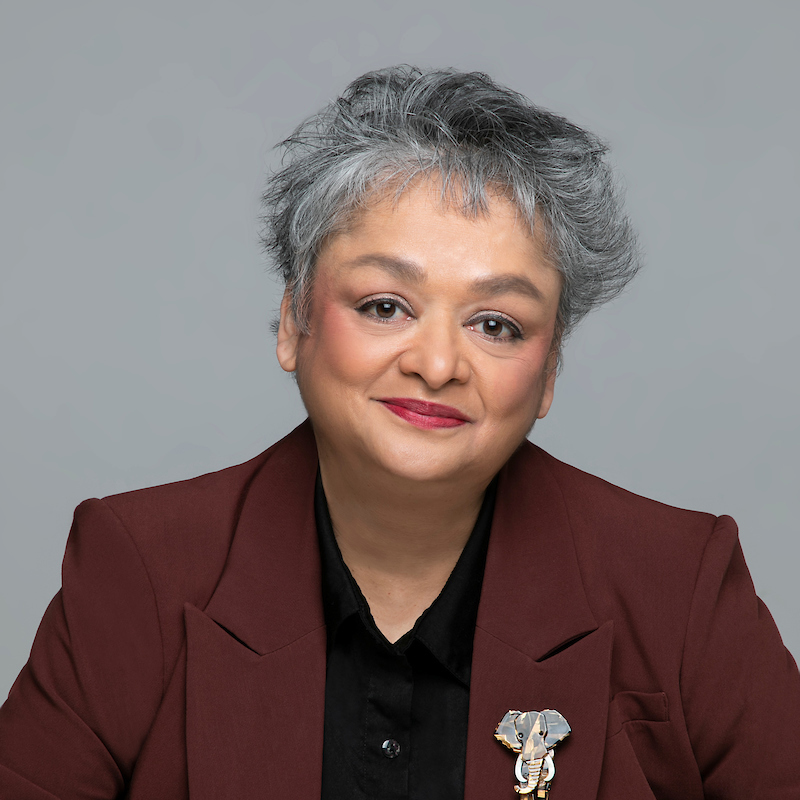
By Jonathan Meagher-Zayas, nonprofit strategist, eductor, and equity warrior

Given my learnings, I identified a key thing holding nonprofits back from achieving their missions and advancing progressive change: their complicity in colonial mindsets.

We all know 2025 was a hot mess, and 2026 is already looking just as rough. The United States federal government is imposing systemic challenges impacting nonprofits across the globe. These challenges are compounding on the injustices under-resourced communities already face. Even though our sector has been aware of the systemic inequities facing our communities, I often see nonprofit leaders struggle to name what they are and why they exist. 

Last year, I attended several nonprofit and fundraising conferences. During one of these conferences, I was in a session focused on strategic and scenario planning. While engaging in group discussions, many attendees shared numerous concerns. They talked about having risk-averse boards and executive directors who did not understand fundraising. They mentioned key organizational leaders were afraid to double down on their diversity, equity, inclusion, and belonging efforts. They shared toxic aspects of their jobs, such as being forced to focus on quantity over quality, dealing with constant resistance to change, and being stuck with employees who have a “that’s always how we’ve done it” mindset.

We even dove into how difficult it was to educate new employees coming into the sector—regardless of age—having the wrong mindset. These new people thought they could come to nonprofits to “save” helpless people and believed they were better than the people the organization served. 

This applied to donors as well, who were only responding to messages on how they could “save” or “fix” society’s problems.

The themes were definitely ones I’ve heard from many nonprofits across the continent. 

Now, for many of us in the Community-Centric Fundraising movement, you might hear these challenges and instantly think about oppressive ideologies—such as scarcity mindsets, white supremacy culture, and saviorism. During that specific session, I was eager for the facilitators to help name these and help the leaders understand, grieve, heal, and focus on overcoming these toxic ways of thinking. Unfortunately, as I see in many educational spaces for nonprofits, the facilitators either did not understand or were afraid to approach the topic. We spent more time discussing how to cope with these challenges because “this is how the sector works.” 

Thankfully, a happy hour followed the session, and I processed my frustrations with trusted colleagues who were disappointed in the event facilitators. We’d hoped for better…

Complicity in Colonial Mindsets Hold Us Back 

Stories like this are not uncommon in our sector. Many nonprofit management and leadership environments do a great job of naming challenges we have to face as professionals, but often forget to truly consider the reasons these challenges exist. The learning focuses on personal and organizational failures and avoids the systemic inequities. 

As a consultant, coach, and educator for the field, I have had time to heal from nonprofit “professionalism” as well as time to step back and really try to understand what is holding our sector back. Personally, I strive to learn as much as I can and support others in their learning journey.  This is why I value Community-Centric Fundraising spaces and the super talented colleagues within them; it is why I’m pursuing a Doctor of Education in learning and social contexts; and it is why I learn from great sector leaders by reading their work. (Vu Le’s book “Reimagining Nonprofits and Philanthropy: Unlocking the Full Potential of a Vital and Complex Sector,” Vanessa Priya Daniel’s Unrig the Game: What Women of Color Can Teach Everyone About Winning, and all of Lily Zheng’s books are some of the most transformational works I have read lately if you are looking for a place to start.) 

Given my learnings, I identified a key thing holding nonprofits back from achieving their missions and advancing progressive change: their complicity in colonial mindsets. Since acknowledging this, I have felt a sense of liberation from that type of thinking, and have continued on my journey to decolonize my approach to leadership. (Also, “decolonization” is not a synonym for DEI work, and if that concept is new to you, you should read the academic article “Decolonization is not a metaphor” by Eve Tuck and K. Wayne Yang and Maria Rio’s CCF article “Why ‘decolonizing’ is the wrong word for changes we make inside oppressive systems, and how we can strive to be anti-colonial instead.”) 

For my fellow social justice warriors, we know that the true cause of our world’s current destruction is capitalism. Colonialism is a product of capitalism, just as fascism, racism, sexism, ableism, homophobia, environmental destruction, and other forms of systemic oppression are. I know firsthand that it is part of my mission to support the reimagining of a world without oppressive capitalism. However, I intentionally use language to meet people where they are. Unfortunately, many people with power in our sector are not ready to name and acknowledge capitalism’s oppression. I’ll also explain later, based on my personal background, why I’m focusing on colonialism. 

How Colonialism Shows Up in Modern-Day Nonprofits

Many traditional nonprofit spaces have not connected our challenges to colonialism, and that’s part of my research. I am exploring how to educate people and help them change their mindsets to further pursue decolonized forms of wisdom and knowledge. 

In New York, the New York Council of Nonprofits publishes an annual report naming 10 of the most challenging issues nonprofit leaders say they face. In the most recent year, the majority of the 10 were categorized into three primary areas: financial and fundraising, staffing and organizational culture, and boards and leadership. I believe a big reason why many of these issues persist is because of colonial mindsets, such as: 

1. Scarcity Mindset 

I found that this past year, through my consulting and training work and conversations with other sector leaders, more leaders adopted a scarcity mindset when making decisions about their organizations. They were afraid of being attacked. They were uncertain about the future and lacked the confidence and competence to navigate the new political and community pressures. 

As someone who’s pretty fiery and loves to get stuff done, this was pretty frustrating to see. 

Thanks to fellow CCF contributors such as, April Walker, Yura Sapi, Esther Saehyun Lee, and Nel Taylor, we know the damaging impact a scarcity mindset can have on ourselves, our organizations, and our communities. It wasn’t until I dove into literature such as the must-read Decolonizing Wealth: Indigenous Wisdom to Heal Divides and Restore Balance by Edgar Villanueva, and listened to Indigenous scholars, that I realized scarcity mindset is a product of colonialism. 

Here we have talented, smart leaders who are supposed to be addressing our most pressing societal issues, but are instantly afraid to challenge the status quo that created these issues or educate those in power. By doing nothing, leaders sacrifice the needs of marginalized communities to protect their status and access instead of helping create more equitable systems. 

We see this often when trying to get our leaders and board to fundraise, or when they are insistent on toxic and unsustainable ways to generate support—like asking too much, exclusive and out of touch events, poverty porn, and giving up too much power to the donor. 

Scarcity mindsets cause people to freeze and hoard resources, thinking they are saving it for a “rainy day,” but in reality, they are withholding the opportunity to generate wealth and support for people who need it. (Also, I think it’s chaotically storming now.) 

This is one of the main things I feel my fellow consultants and fractional fundraisers are frustrated about: leaders would rather be frozen and avoid any risk than support us. Our communities right now need the most courageous and competent leaders right now, not those saving for an imaginary “rainy day” when it’s too late. 

2. White Supremacy Culture

When I first learned what white supremacy culture was, I felt so liberated as a young, queer, Puerto Rican professional in our sector because it helped me understand the frustrations I had in numerous organizations. I am also grateful for the previous CCF contributors who elaborated more on white supremacy culture including, Michelle Shireen Muri and Fleur Larsen, Ashley Lugo, and Chris Talbot

Now, as a diversity, equity, inclusion, and belonging consultant, I educate on how white supremacy culture is impacting staff retention rates, organizational culture, adaptability, and sustainability. This mindset has hurt us all, and we need to name it, heal from it, learn how to transform ourselves and our organizations, and take action to mitigate and dismantle it. White supremacy culture originated from the European settlers, who needed terminology and conditions to reign over the Indigenous land they stole and the African people they enslaved. While this may appear to be institutions of the past, many of our policies, values, and workplace expectations are based on these oppressive ideologies. 

In addition, we have attacked and devalued values and wisdom from People of the Global Majority. 

Naming this is a needed wake-up call for many people complaining about their organizational challenges. While it is a liberating moment for many, other leaders resist and derail to avoid their own guilt. 

I had many attendees at my trainings resist this learning, despite other employees telling them characteristics of white supremacy exist at their organization. Regardless of whether people believe it, it’s another ideology rooting from colonialism that we have to address in our nonprofit sector. Our leaders’ and funders’ complicity is likely the reason we have yet to solve the decades-long “staffing crisis” in our sector. 

3. Saviorism 

When I talk about saviorism, many of my social justice fundraisers instantly understand that it has a negative impact on our fundraising efforts. Check out  Yolie Contreras’ and Alli Rolle’s previous articles for more about this. 

Too often, our organizations have centered people with power as the heroes of our movements. We see that language in direct mail appeals and emails. We see people with money and access being awarded, so they come to more events and hopefully give more money. We see these people recruited to boards, and brag about how great they are despite lacking the knowledge, community connections, or skills needed for effective board governance. 

Saviorism originates from colonialism. History lessons still talk about how “uncivilized” Indigenous and African communities were, and how the white European man was burdened to save them. The United States still celebrates a genocidal criminal, and many nonprofits still have his holiday in their employee handbook. 

Saviorism shows up in many ways in which nonprofits operate. I work a lot with human services agencies serving people with disabilities, where they have a significant staffing issues and horrible retention rates. Many human resources staff boast about recruiting employees who are most passionate about helping the people they serve, but they fail to educate themselves on why we need nonprofits serving people with disabilities in the first place. This disparity is why research done by the Council on Quality Leadership showed that most disability professionals are ableist

During a presentation on racism in philanthropy from my local AFP conference, a cisgender white woman fundraiser working at a local disability services nonprofit derailed the presentation because we “failed” to discuss people with disabilities in our equity in fundraising presentation. One of the presenters wanted to discuss ableism and was planning to address it, but lost the psychological safety to do so due to this disruption and accusation. (Also, I know from my work that this woman’s organization eliminated its DEI work in 2023 and has one of the lowest organizational ratings on Indeed in the field.) When we disguise our saviorism as passion for helping others, it impedes our efforts. Even though this woman appeared to be advocating for people with disabilities, she ended up harming someone from that community and is harming others in her fundraising role. 

I see the same saviorism mindset happening on boards, too. The volunteer leaders—with no or limited knowledge of the historical oppression the communities they serve have faced— make the organization’s most influential decisions based on their perspectives, thoughts, and bias. Often, they can only make those decisions if they are fed all the information in a carefully curated way. They also lack the understanding of their role within the movement ecosystem which results in organization-first decision making and embracing business “best practices.” We know as nonprofit leaders we do not need more private sector wisdom coming into our sector; we need the private sector to be accountable to the oppressive systems they create and uphold. 

We also have nonprofit leaders who stay in their positions longer than they should because they believe they are the only person that can do the job. Overlapping with individualism in white supremacy culture, the belief that certain leaders need to be the heroes and save their communities is destructive. It results in withholding resources and eliminating opportunities for leadership, it reserves resources for outdated practices, and causes a disruption of trust from a new generation of leaders. The best leaders are the ones who embrace their strengths and roles in the community and uplift others along the way. 

In order for our sector to truly thrive, we have to overcome these oppressive mindsets and focus on creating a world liberated from this type of thinking. We likely cannot create it right away, but that shouldn’t let us stop working towards that world. Decolonizing our thinking means embracing wisdom like the Haudenosaunee’s Seventh-Generation Principle. We should be thinking how our actions today will impact seven generations after us. 

Why I Named Colonialism As a Toxic Trait to Our Sector

As part of my doctoral journey as well as my personal healing, I constantly want to examine my bias, perspectives, and positionality. (I highly encourage you to read Charisse Iglesias, PhD’s “From assumptions to integration: Examining your positionality throughout your community-engaged partnerships” article to help with this.) I find myself in a unique role where I can hopefully connect mainstream education leaders and inspire them to pursue decolonized wisdom. 

This is because my ancestors were both the colonized and colonizers. This applies to three areas of my life: 

  1. First, I proudly identify as Puerto Rican because my maternal grandparents and their ancestors were born on the island of Borikén in the Caribbean. We know from history (thank you, Chantelle, for your beautiful article on the topic) that the Taíno Community was living there until the Spanish conquistadores came, enacted a genocide, and brought over Africans they enslaved. Many of my fellow Latine people know that this is a complicated part of our history that we have to name and heal from. 
  2. Second, on my father’s side, some of my first ancestors from England came over in the 1400s as some of the earliest settlers to take over Turtle Island. It is very easy for me to name and even trace back my European roots to the 1400s. (I likely also have ancestry from the Indigenous community whose land they occupied, but that community connection is disrupted.) 
  3. Lastly, I am a United States citizen, and our country is an imperial empire occupying several lands as colonies, including those on the island of Puerto Rico. My community members there face significant economic oppression and exploitation, all for the benefit of rich mainland citizens. 

Reflecting on these identities, I see an opportunity to navigate my multiple identities to connect people and help them understand different disciplines and perspectives. 

I see mainstream nonprofit spaces complicit in their bias and still not centering scholars of color, elder wisdom, or adapting to new community-centric forms of leadership. I plan to take the strength of my ancestors to heal the wounds created and perpetuated by the other. I hope to help educate on these challenges and inspire people to pursue their journey of decolonization. 

I wanted to share this opportunity here to manifest the opportunity to build our transformative learning strategies and experiment new ways to lead our movements. Now, more than ever, we need to be thinking about the generations to follow. 

Jonathan Meagher-Zayas

Jonathan Meagher-Zayas

Jonathan Meagher-Zayas (he/him) is a Queer Latinx Millennial nonprofit strategist dedicated to addressing equity issues, building capacity, engaging the community, motivating new impact leaders, and getting stuff done. He wears many professional hats, including Nonprofit Capacity Building Educator, Community Engagement Strategist, Adjunct Social Work Professor, Diversity Equity & Inclusion Consultant, Leadership Development Trainer, Award-Winning Fundraiser/Resource Mobilizer, Impact Sector Coach & Facilitator, Learning and Social Contexts Doctoral Candidate, and Social Justice Champion. He can be reached at jonathan@equitywarriorstrategies.com or on LinkedIn.

To the young, the less young, and the still-here fundraiser

To the young, the less young, and the still-here fundraiser

By Sadé Dozan, a philanthropic advisor, culturist, and movement ecosystem architect

The field often mistakes how much harm fundraisers can absorb for how good they are at relationship-building. We praise the ability to absorb discomfort, translate harm, and stay pleasant under pressure, and call it ‘professionalism.’

You don’t need me to tell you this work is heavy.

Sometimes we feel it in our bodies before we can even name it. 

If you’re like me, you’ve felt it in the way your shoulders tense before certain meetings. In the pause before you answer a question that really isn’t a question. In the careful calibration of your tone—be warm, but not needy; be confident, but not threatening; grateful but not indebted. You’ve learned that fundraising is rarely just about money. It’s about translation. About people. About holding multiple truths at once and deciding which ones are safe to say out loud. 

If you’re newer to the field, you may still think this weight means you’re doing something wrong—that one day it will get easier if you just learn the right framework, or find the right mentor, or say the right thing in the right order… And, if you’ve been here longer, you know the truth is more complex. The work doesn’t necessarily lighten. You just get clearer about what you’re willing—and no longer willing—to carry. And sometimes, when we grow more powerful in ourselves, the work transforms into something not just to endure, but an invitation of an entirely new way of being. 

Fundraising sits at a strange nexus. We are often asked to be relational in systems that reward transaction. We are told to be authentic while constantly managing perception. We are expected to build trust while operating within power dynamics that make trust fragile by default. 

And overtime, it can begin to feel like the work is less about moving resources, and more about managing comfort—ours, but mostly, everyone else’s. 

Guess what?

It’s not because you’re doing it wrong. It’s because the systems we work within were never truly designed to hold the full humanity of the people doing this work. 

The field often mistakes how much harm fundraisers can absorb for how good they are at relationship-building. We praise the ability to absorb discomfort, translate harm, and stay pleasant under pressure, and call it ‘professionalism.’ 

And still, here you are.

What keeps us here, has never just been about skill. I promise you it hasn’t been about the perfect pitch deck, or more dynamic theory of change, or the CRM that finally makes sense (though, may we all find that one day). What has kept us here is something older, quieter, deeper. 

Every breath you take is a reverberated exhale of those who came before you. 

The air in your lungs has been here longer than any institution you work for. Longer than philanthropy as we know it. Longer than the languages we use to describe impact and outcomes. You are quite literally breathing in survival. 

I often focus on breath. When I’m in a particularly stressful donor meeting, before I go on a stage, before I have a hard conversation… I breathe in. And I share that with you, in the turn of this year, as we face more fires only weeks in. Take breaths. The air that surrounds you is full of legacy. 

You are breathing in people who figured out how to live—and sometimes thrive—under conditions far more brutal than a donor meeting or a funding cycle that has fallen a part. 

I do not say this to disintegrate the reality of the weight we hold now, but simply to underline to you: breath itself has always been the work. Beings breathing life into what did not yet exist. A lineage of people who managed to inhale and exhale long enough to pass the torch to you. 

So breathe. Long enough to imagine. Long enough to build. Long enough to pass something forward.

You are not alone in this work. I’m here. And so are the footprints of people who learned how to keep breathing when the future had no language yet, who built toward freedom before it had form, who made room for worlds they would never fully see. They carried dreams on their shoulders without guarantees. Weight they chose to hold, and they moved anyway. 

And now, here you are. 

What will you choose to carry?

We tend to think of fundraising as a particularly modern profession, shaped by contemporary tools and trends. But resource mobilization is ancient. It is one of the oldest practices born from mutual aid, from collective survival, from the understanding that no one truly makes it alone. Our communities have always known how to pool, protect, and move what they need to live. 

What we sometimes forget, and what I invite us to remember, is that this work has never been about certainty. It has always been about breath and belief. About building something not yet fully defined. About sometimes carrying others towards a future that does not yet have words. 

You are a continuum. 

What you are doing now is continuity of lineage… even when the language feels sterile, even when the systems feel extractive, even when the work feels at times disconnected from the values that bring you here. 

If this moment feels like winter…and after this year we’ve had, and the preview of what currently may be, I agree—remember that winter has never been the end. Even the harshest winter breaks for spring. Not because it wants to, but because it must. 

Survival is cyclical. 

You are cyclical.

I am glad you are here.

Sadé Dozan

Sadé Dozan

Sadé Dozan (she/her) is a philanthropic advisor, culturist, and movement ecosystem architect whose work sits at the intersection of wealth, care, culture, and power. She serves as Vice President of Advancement at Borealis Philanthropy, leading organization-wide fundraising and communications strategy during a period of profound sector transition. She is also the Founder of Melanate., a movement infrastructure initiative cultivating leadership, narrative power, and resource fluency among Black women and gender-expansive people working in wealth and philanthropy.

You can find her on LinkedIn, she’d love to connect with you.

You can learn about her legacy project—Melanate!

When responsibility is individual rather than systemic: CCF’s unfinished work

When responsibility is individual rather than systemic: CCF’s unfinished work

By Maria Rio, Fractional Fundraiser + CEO of Further Together Fundraising

If CCF stops at perfecting individual ethics while systemic harm continues untouched, we’ve accomplished what the recycling movement did before governments intervened: we’ve made people feel better about participating in a fundamentally unjust system.

Community-Centric Fundraising has fundamentally shifted how thousands of fundraisers think about donor-centricity, storytelling, and power dynamics. We’ve learned to question sob stories, challenge scarcity narratives, and push back against treating donors like saviors. 

This is critical work, but it’s incomplete.

CCF as a movement feels focused intensely on ethical behavior at the individual level: how you write appeals, how you steward donors, how you tell stories. But prioritizing individual ethics without meaningfully confronting systemic barriers mirrors the same failures we see across public health, environmental policy, and consumer protection. 

When institutions with power avoid accountability by framing harm as personal choice, real change remains impossible.

The Individual Responsibility Trap

The dominant narrative across countless social issues sounds the same: “If individuals just made better choices, the problem would go away.” 

  • Smokers should quit. 
  • Consumers should recycle. 
  • People should eat healthier. 
  • Donors should give better.

When we fixate on individual behavior rather than overarching regulation, we guarantee that harm continues; we just get better at blaming the people with the least power for outcomes they don’t control.

How Systemic Change Actually Works

The tobacco industry spent decades insisting smoking was an individual choice. They argued they weren’t responsible for what consumers decided to do with their products. 

Then governments intervened—not by shaming smokers harder, but by exposing the industry’s deliberate deception, mandating warning labels, restricting advertising, removing smoking from TV, and pursuing litigation. The responsibility shifted from individuals to producers, and smoking rates plummeted. Not through shame. Through systemic intervention.

Compare this to gun violence in the United States. The dominant argument “guns don’t kill people, people kill people” downloads all responsibility onto individuals after the harm occurs. Violence gets framed as a result of an individual’s mental health issues, rather than a public health crisis requiring regulation. But what does this lead to? Massive societal harm continues while manufacturers and distributors face minimal accountability. Guns remain protected despite overwhelming population-level data because we refuse to treat this as the systemic issue it is.

Or consider food quality. In North America, weak regulation allows widespread use of additives, excessive sugars, and ultra-processing. Responsibility gets framed as “personal diet choices.” In Europe, stronger regulation bans harmful substances before widespread damage occurs. The outcome? North America has some of the highest obesity rates globally, while Europe doesn’t, despite similar consumer behavior. The difference isn’t willpower. It’s regulation.

When systemic change actually happens, power holders:

  • Expose hidden costs. People adapted to recycling when governments communicated the true cost of landfills and created incentives. In Ontario, my home province, we can dispose of recycling for free. However, excessive garbage bags require payment for tags, making garbage costly and recycling free. Behaviour shifted not because individuals became more virtuous or aware of environmental harms, but because the system made different behavior logical.
  • Counter powerful narratives. Tobacco companies claimed consumers preferred their products and bore sole responsibility for outcomes. Governments exposed long-term harm, secondhand exposure, and deliberate manipulation, removing the industry’s plausible deniability.
  • Protect people without agency. Secondhand smoke regulations weren’t about smokers’ choices. They were about protecting bystanders who never consented to harm. This reframed the debate entirely.
  • Shift accountability upward. Once governments proved individuals would adapt to new systems, corporations lost their excuse that “consumers prefer it this way.” Responsibility moved where it belonged: to the institutions creating the conditions for harm.

The sequence is consistent: reveal true cost, enable or incentivize individual compliance, prove adaptation is possible, then regulate institutions. 

Individual ethics matter, but only systemic intervention actually changes outcomes.

What This Means for Fundraising

Our sector mirrors these challenges. We’ve placed ethics on individual fundraisers, while structural causes of harm remain largely untouched:

  • Donor-Advised Funds concentrate wealth and delay community benefit, but we frame this as “donor preference.” 
  • Tax policy incentivizes wealth hoarding, but we treat this as unfortunate but inevitable. 
  • Northern wealth extraction creates the conditions requiring Southern “development,” but we focus on better donor conversations rather than confronting global inequity through lobbying or regulatory change.

The communities harmed by these systems have no agency in how philanthropy operates. They bear the consequences of decisions made by people with structural power, mediated by nonprofits that depend on those same power holders for survival.

Just like recycling, food quality, and tobacco, people choose what is subsidized, normalized, and marketed as responsible. Philanthropic behavior follows the structure policy creates. “Donor preference” is manufactured by tax incentives, regulatory frameworks, and dominant narratives that treat charity as superior to redistribution.

CCF Cannot Stop at Individual Ethics

Community-Centric Fundraising has made us better fundraisers. We tell stories with more dignity. We challenge donor supremacy in our daily practice. We refuse to perpetuate harm through our communications.

This both matters immensely and is not enough.

If CCF stops at perfecting individual ethics while systemic harm continues untouched, we’ve accomplished what the recycling movement did before governments intervened: we’ve made people feel better about participating in a fundamentally unjust system.

Real change requires moving from ethics to power. That means:

  • Collective advocacy such as fundraisers lobbying for policy changes that reduce wealth concentration, increase mandatory payout rates, and eliminate donor control mechanisms that delay community benefit.
  • Structural reform like challenging the regulatory frameworks that make charity tax-advantaged while direct cash transfers aren’t and questioning why perpetual endowments receive preferential treatment when community needs are immediate.
  • Accountability for institutions, starting with naming which foundations, which wealth managers, which policymakers benefit from systems that download responsibility onto communities and individual fundraisers.

We cannot shame our way to justice any more than we could shame our way to lower smoking rates. We cannot individual-ethics our way out of systems designed to concentrate power and extract wealth.

The Question CCF Must Answer

What if we demonstrated—clearly, publicly, with data—the true cost of relying on charity instead of robust public systems? The true cost of chronic nonprofit underfunding? The true cost of downloading responsibility for societal wellbeing onto communities and the people who serve them?

Then the “individual choice” argument collapses the same way it did for tobacco.

CCF has taught us to see the water we’re swimming in. Now we need to change the water itself. That requires moving beyond what individual fundraisers can do differently and confronting what institutional power must be forced to do differently.

The sector has spent decades perfecting how to ask nicely, how to build relationships, how to demonstrate impact to satisfy donor preferences, all while the conditions creating the need for charity intensify.

The question isn’t whether individual ethics matter. They do. The question is whether CCF, and the people who follow the principles of the movement, are ready to meet the moment. To move past individual ethics to power shifting. To name institutions. To demand regulation. To shift accountability upward to where it belongs.

Because if we don’t, we’re just teaching people to recycle while corporations keep polluting. We’re shaming smokers while tobacco companies lobby hard to write policy. We’re downloading responsibility onto individuals who never had the power to change systems in the first place.

And nothing fundamental to our collective liberation changes at all.

Maria Rio

Maria Rio

Maria Rio is the founder and CEO of Further Together, a fundraising consulting firm dedicated to driving systemic change through Community-Centric Fundraising. A refugee who arrived in Canada at an early age, Maria uses her lived experience to help justice-driven nonprofits double their fundraising revenue while centering community voices. She serves on the Board of Living Wage Canada and hosts The Small Nonprofit podcast.

A personal reflection on the US Refugee Admissions Program

A personal reflection on the US Refugee Admissions Program

By Abigail Oduol, a Community Centric Fundraiser

Bureaucracy has faces. A long time ago, in a past life it seems, it wore mine. I was a refugee resettlement officer on the continent of Africa, straddling nonprofit immigration work and public service.

At the time of writing, refugees are in the news cycle. The current administration has just banned and seriously restricted travel for almost 50% of African countries, including the top countries for refugees. There has also been a targeted denaturalization effort at Somali families across Minnesota and the US. And just like following the fall of the racist apartheid government in South Africa, the US government has once again adopted a policy of admitting white South African applicants for resettlement to the US. 

Bureaucracy has faces. A long time ago, in a past life it seems, it wore mine. I was a refugee resettlement officer on the continent of Africa, straddling nonprofit immigration work and public service. 

Most days I’d sit in the office and do some sort of administrative work related to refugee processing. I’d look at spreadsheets and put numbers into them. I didn’t smoke, but I’d take smoke breaks to go outside and feel the air on my skin. I was a cog in the process that’s required for someone to come to America as a refugee. 

There are common threads in their stories. They have all fled their country because of a durable threat of violence against them and their family because of protected characteristics such as gender, sexuality, political affiliation, ethnic group, or religion. They’ve fled, sometimes to other villages first, and finally to another country that won’t let them stay permanently. Some countries require that refugees live in camps. 

Where I worked, only some types of refugees were allowed to live in cities. The United Nations High Commissioner on Refugees (UNHCR) reviewed all the refugees, prioritizing groups that camp life was unsafe for. After that, refugees were assigned and ranked based on profiles of who was accepted into countries’ programs in the past. According to the USCIS website, this is the structure, but functionally, the relationship with UNHCR as of now is even more complex and unclear. 

Less than 2% of all refugees were approved to participate in the United States Refugee Admission Program. And they don’t get to choose where they go. They may have family members in Italy or Canada or Sweden, but may be chosen instead for the US program. Saying no to the US refugee resettlement program may mean that they don’t get resettled at all. 

Here are the true stories of people I interviewed:

  • A Muslim man secretly converted to Christianity after having a dream. But he lived in a country where religious conversion is illegal. He told his wife on their wedding day that he was not actually a Muslim. He is now fleeing family members and local authorities trying to kill him. 
  • A gay man was being hunted down by each village he moved to because of expressing his sexuality or people guessing his sexuality. Being gay is illegal in his country. 
  • An albino person was running for their life because of their body parts being valued for local witchcraft. If they return, they’ll be killed and the country they are currently in won’t let them stay.
  • In Sudan, fertile land is being taken away from Darfuris by the government and given to non-Black citizens, enforced by deputized forces on horseback called janjawed
  • I met a variety of former journalists, radio personalities, and educated elites who spoke out against their government’s actions. Regardless of the different countries they came from, their governments responded similarly: punishment for them and their family that included torture and imprisonment.
  • I interviewed children who chased a butterfly across the border and were shot at when they tried to go home because border crossings were illegal in their country. 
  • I spoke with people who experienced unspeakable state-sponsored violence because of the language they spoke. Some of the situations were so violent and intense that the interpreters broke down mid-story, with one having to leave the room and take the rest of the day off. 

There were so many violent stories. Although I love action movies and thrillers, I couldn’t watch either for years without a panic attack. Gunshot sounds in songs triggered me, too. My colleagues and I experienced secondary trauma. Sometimes the stories we heard were all we could think about, all we could see.

Once I interviewed refugees and collected a lot of biographical and demographic information, they had another interview with the US State Department. Then, if approved, they faced a series of other security checks and verifications before they could come to the US. It could take as short as a month or as long as many years. Any life change that should have been celebratory like getting married, having children, or becoming a legal adult could reset a refugee’s case entirely. 

Someone who had lived in a refugee camp their entire life met someone and got married. They had to navigate case bureaucracy with a number of repercussions for interviews, security clearances, and travel. Someone’s child turned 18, and now they had to have their own persecution claim about horrific events their parents didn’t want to discuss with them. 

As I did this work, I often felt conflicted. Some things that people experienced outside the US could happen or did happen in some form here. And that was the hardest part of my job as a Black American interviewing and recording the stories of mostly Black people from across the continent of Africa. It was: telling them that the things they were trying to escape were also present where they were trying to go.

A gay Black man I interviewed asked for a white caseworker, believing that I would not do as good of a job in his case. (Anti-Blackness is a global project.) I had to tell him that if he gets to the US, whiteness will not protect him.

A group of Dafuri refugees said to me, “at least there’s no janjawed [northern Sudanese militia] to target us based on our skin color in America,” and I had to tell them the truth about being Black in America. 

Was I taking some of these people out of the frying pan and into the fire? I think that for some people, yes. Their best lives would not have been in the refugee camp or in America, but in another country that would recognize their full humanity and allow them to be with their family and flourish. I hoped that over time, more countries would follow Tanzania’s example and allow refugees to assimilate into their society.

A colleague reminded me of all the white saviorism built into the system at every stage, from hand-picking who receives help, and then making that help “conditional, revocable and political.” The system as it existed centered the limited benevolence of the US and other countries at every turn, and refugee self-actualization didn’t even exist as a philosophical exercise.  

All of this to say the program wasn’t perfect. And now, it’s gone. 

On January 20, 2025, the administration signed executive orders banning refugee resettlement and freezing foreign aid. It was abruptly operationalized on January 22, when 10,000 refugee’s flights were canceled and 120,000 people’s cases were put in limbo. The current administration has its priorities, and the refugees I worked with have not been among them. 

When looking at what is happening across the United States, it can be hard to remember that there are people that we don’t see and that you may never get to meet who are also nonprofit workers. 

Within the US context, many fundraisers that I know supported this work through applying for grants and securing individual gift funds to improve the day-to-day experiences of refugees still living in camps. They mobilized churches, communities, and individual gift donors to greet refugees at the airport, donated beds and TVs, taught new refugees how to pass their driver’s test, and donated money to ease the pains of resettlement in a foreign land. 

For the many fundraisers and refugee workers, the federal freezes and funding cuts meant an abrupt end to something challenging and meaningful that they’d dedicated their lives to. 

I mourn for the people who had to start all over again and not in a new country, for the people whose hope for the future was snatched away, and for the peoples whose lives are in danger in their current location. I also see a way forward in completely rebuilding a program that has been razed to the ground. It’s hard to know how to feel.

Abigail Oduol

Abigail Oduol

Abigail Oduol’s (she/hers) surname is not Irish or Pennsylvania Dutch. It’s Kenyan. Abigail is the CCF Movement Coordinator and is a member of too many committees. She invests time thinking about how popular culture informs fundraising and how people connect to each other. Follow Abigail on LinkedIn.

The staying kind: Storytelling as a tool for reconnection and repair

The staying kind: Storytelling as a tool for reconnection and repair

By nae vallejo, access designer and experiential archivist

I have watched stories that were sacred to someone become a branding tool for someone else. We deserve a different relationship to story, one that moves us toward repair instead of extraction. 

I have always believed that story is a form of returning. 

Not only returning to ourselves – though the slow gathering of pieces we were not sure still belonged to us is part of it – but returning to each other. Returning to communities we have drifted from, or been pushed out of. Returning to relationships that carry both tenderness and harm. Story has always been one of the few places I could land without needing to shrink myself or translate my survival for someone else’s comfort. 

Storytelling has been the one practice I could rely on when institutions failed, when care was conditional, when rooms asked me to be grateful just for being allowed inside. Story was where I placed the things I could not carry alone: confusion, grief, anger, hope, imagination, fragments of memory that felt too heavy or too bright to name out loud. 

But in nonprofit and fundraising spaces, I have seen storytelling used in ways that pull us away from one another. 

I have seen it trimmed into a “narrative asset,” polished beyond recognition, flattened into messaging that serves a budget line before it serves a community. I have watched stories that were sacred to someone become a branding tool for someone else. 

We deserve a different relationship to story, one that moves us toward repair instead of extraction. 

Story as Relationship, Not Resource 

For me, storytelling begins with relationship. It begins with the kind of trust you build slowly, without forcing timelines or outcomes. It begins in the space between people, the part that is quiet, tender, and often uncomfortable, because truth-telling asks us to be seen. 

Nonprofit culture often pushes story into a different shape: a product. Something to package, optimize, measure, or leverage. A story becomes proof of impact, or a hook for a fundraising campaign, or a way to demonstrate “reach.” These tactics might keep dollars flowing, but they interrupt the deeper work of listening. They strip away the complexity of real lives and replace it with narratives that secure institutional comfort. 

When organizations treat story as a resource rather than a relationship, they harm the very communities they claim to serve. A story lifted out of context can reinforce stereotypes. A story shared without care can reopen wounds. A story twisted to fit a grant proposal can prevent the teller from being fully human. 

Community-centric fundraising invites us to move differently, to build relationships first, and let story arise from that ground, not the other way around. 

Repair Requires Honesty, Not Performance 

In my work, I have sat with people whose stories were mishandled by nonprofits, twisted into marketing language, used without consent, or shared before the teller was ready. I have also sat inside organizations trying desperately to demonstrate transparency through storytelling alone, without the relational groundwork that makes those efforts real. 

Story cannot replace accountability. 
Story cannot substitute for repair. 
Story cannot be an apology on behalf of someone who is not accountable. Honest stories can support repair, but they cannot carry that work alone. 

When communities have been harmed, when access was denied, when leadership broke trust, when disabled people were sidelined or tokenized, the first step is not branding. The first step is not crafting a message. The first step is slowing down enough to tell the truth: 

We caused harm. 
We did not listen. 
We did not follow through. 
We are trying to do better, and here is how. 

Repair begins when leaders stop speaking about community and start speaking with community, creating space for multiple stories to coexist without competing for legitimacy. It is not polished. It is not pretty. It is not something you can script. 

But it is real. And real is what people remember. 

Tenderness as a Condition for Belonging 

When I talk about “the staying kind,” I’m talking about the tenderness that lets us remain connected even when things get hard. Staying kind is not the same as staying quiet. It is not passive. It is not about swallowing harm for the comfort of others. 

Staying kind is a practice of presence, a return to humanity in moments when institutions might prefer efficiency or control. It is what lets us sit with discomfort without rushing toward the nearest explanation, solution, or spin. It is what helps us ask: 

What does belonging look like if we do not force a single story to carry all of us? 

Tenderness is a form of access. Tenderness is a form of leadership. Tenderness is what keeps the door open when mistrust has settled in. And in fundraising spaces, tenderness can shift a narrative from transactional to relational, from extractive to restorative. 

When community members feel tenderness in the room, we feel safe enough to tell the truth. Not a curated, institutional version of the truth, but the truth we live every day. 

And when truth enters the room, repair becomes possible. 

Story as a Tool for Reconnection 

Real storytelling does not just transmit information. It nourishes connection. It helps people see themselves in someone else’s experience without requiring sameness or erasing difference. It creates a space where multiple truths can be side by side. 

I have seen story repair relationships between community members and organizations after years of mistrust, not because the story was “useful,” but because it was held with integrity. I have seen story deepen belonging for people who thought they had no place left to return to. I have seen story help fundraisers rethink their practices, shifting away from narratives that center donors and toward narratives that center community. 

When we hold story as relational practice, it asks something of us: slow down, listen deeply, and be accountable for the ways we show up. It asks organizations to move at a human pace, not a grant cycle pace. It asks fundraisers to choose accuracy over appeal, truth over aesthetics, care over urgency. 

And it asks all of us to remember that storytelling is not an endpoint. Storytelling is an invitation to reconnect, to repair, to recommit. 

Toward a Culture of Staying 

If I return to story again and again, it is because story has returned me to myself, gently, repeatedly, unexpectedly. Story has helped me survive isolation, institutional betrayal, disability burnout, and the kind of grief that rearranges everything you thought you knew. 

Story helped me stay. 
Stay present. 
Stay honest. 
Stay connected. 
Stay kind. 

And in community-centered fundraising, “the staying kind” is how we build long-term relationships rooted in equity, not extraction. It is how we honor the people we claim to uplift. It is how we hold each other through the work of transforming systems that were never built for us. 

Story is not a strategy. 
Story is not a tool. 
Story is a relationship worth tending, with patience, courage, and care. 

If we follow that truth, repair becomes possible. And not just repair, but the kind of belonging that lasts, the kind that holds, the kind that welcomes us back when we are ready to return.

nae vallejo

nae vallejo

nae vallejo (they/he) is a Black, Caddo, Mexican, queer, trans, disabled experiential archivist and access designer. their work moves through memory, rememory, and care, exploring how survivors leave trace across body, land, and story. as the founder of naeborhood projects, nae creates art that weaves disability justice, sensory attunement, and community connection into everyday practices of survival and tenderness. a hard of hearing, neurodivergent service dog guardian and lifelong educator, he centers interdependence, ritual, and storytelling as tools for collective care. follow their offerings on Instagram @naeborhoodprojects and support their labor via Venmo @nae-vallejo or Paypal @naevallejo.