I don’t think my ADHD is a problem and neither should you

By Christine Bariahtaris, prospect researcher and writer

I grew up believing that I was completely neurotypical.

After a rough year in the nonprofit job market, I’m finally starting to see full-time research positions popping up regularly. That’s exciting, because I do miss working for an organization. In the ‘before times,’ I would have felt like I knew exactly the right approach to applying and interviewing. But in the before times, I didn’t know that I have an attention deficit hyperactivity disorder (ADHD). And now that I do know, I’m thinking about our working world very differently.

I grew up believing that I was completely neurotypical. I’m a child of the 1990s, when researchers believed boys were up to nine times more likely to have ADHD than girls. Everyone was focused on the hyperactive aspects of the condition, which did present more strongly in boys. I was far from hyperactive. In fact, my teachers usually told my parents that I was a little too quiet and could stand to speak out more. It turns out, all of my hyperactivity was on the inside. I may have seemed shy, but my brain was always on. Imagine a pinball machine, but it’s your mind, and it never resets. Since I was a strong student and didn’t appear to have social challenges, the adults in my life never signalled that I was different in any way. In turn, I assumed that my mind worked in the way everyone’s did, because I met every benchmark set for me.

But in the back of my mind, I also knew I had difficulty with basic things that my friends could do with ease. I couldn’t keep track of time well, or stick to a self-driven practice schedule for music or sports. Process-oriented subjects like math were confounding and finishing projects was a trial. Worst of all, meeting new people made me feel excruciatingly awkward. When I was questioned about these things, I had the stupidest explanations possible: I don’t know why. I just can’t. I need to try harder.

The situation didn’t improve in adulthood. On paper, I navigated college very successfully, but I know that transcript hides a lot of struggles. I was a master procrastinator, which is not great when you’re an English major and every assignment is an 8-page-minimum essay. I would joke about it, but the reality is that I needed the time pressure because it forced me to ignore distractions. I always got very sick after finals because of the stress I experienced trying to do so much focused work in a short period of time. Internally, I could recognize that my mental distress was a little outside the normal bounds for a college student. But my grades were high, so I figured asking for help would make me look dramatic.

I was 31 years old when I received my diagnosis, and suddenly, all those basic-but-difficult things, all that awkwardness, made sense. I wasn’t lazy, or unmotivated, or unfriendly — I’m just wired a little differently.

The story kept repeating itself at graduate school and then in my professional career. I always delivered good work, but I was burying the chaotic experiences I had getting to the finish line. And I had trouble connecting with my coworkers, who always seemed very friendly but unrelatable in a way I couldn’t describe. There were many evenings where I went home telling myself that I had to be the problem. I knew how I was supposed to function in the workplace, and I had no excuse to feel awkward in that system.

I was 31 years old when I received my diagnosis, and suddenly, all those basic-but-difficult things, all that awkwardness, made sense. I wasn’t lazy, or unmotivated, or unfriendly — I’m just wired a little differently.

During the past 18 months, I’ve learned so much about how my mind works and how it both helps and hinders me as I move through the world. I’ve also learned that I’m not alone. There are many adults out there who are navigating the same territory as I am after making it a long way in life through coping strategies that masked their symptoms.

And I’ve learned that the professional world is not built to be kind to us. I never wanted to acknowledge how uncomfortable I have been at times while at work, because I figured it was always a problem with me. But it isn’t. 

My ADHD is only a problem because the world tells me to think of it that way. It’s past time that we got rid of that line of thinking and made our workplaces more welcoming for neurodivergent employees. 

Leave your assumptions at the door

I grew up absorbing the stigma around ADHD and other learning disorders. It was clear to me from a young age that society expected neurodivergent people to be hard to manage. Even worse, expectations of my peers with ADHD seemed to be low, like they had an inherently lower ceiling for achievement. Let’s dispel a few common myths right now:

Myth: ADHD isn’t real. 

I can’t believe I have to say this, but yes, ADHD is a real condition. My therapist very helpfully explained it as a “sleepy” frontal lobe, the part of the brain that regulates organizational thinking such as memory, judgement, planning, and time perception. My frontal lobe is never going to correct itself — it’s going to be a little drowsy for the rest of my life.

Myth: ADHD is overmedicated. 

Wading into the stigma around psychiatric medication was eye-opening for me. I had many people in my life express concern: “Did you really need those drugs? Haven’t you been doing just fine without them? Don’t you know that Adderall is essentially meth?”

The short answer is: Medication helps. ADHD is treated with stimulants because they wake up that sleepy frontal lobe. The idea is to target your dosage so that part of your brain will function at the same baseline as a neurotypical brain and no further. There may be a trial-and-error period to figure out which medication and dosage works best, but there is very little risk when you’re under the care of a licensed psychiatrist.

The long answer is that medication helps a lot when combined with behavioral therapy, especially for those of us diagnosed as adults. I understand now that many habits I formed in adolescence and early adulthood were coping mechanisms. I had to create my own work-arounds so that I could soothe my hyperactive mind and not get derailed by distractions. Now that the medication makes me capable of typical focus, I need to unlearn those habits. No one can go cold turkey on years of ingrained behaviors. For children, the combination of medication and therapy stops those coping mechanisms from forming in the first place.

MYTH: If you can focus on one activity, you can’t have ADHD.

I also used to believe that ADHD was an all-or-nothing situation, but that is far from the truth. People with ADHD have trouble with open-ended, unstructured tasks. I absolutely love creative projects, but I always give myself a pep-talk before I start them. Working from square one is where I’m most prone to distraction and I know I will have to be extra cognizant of how I spend my time.

Structure is the ADHD lifesaver. We’re usually good at activities like cooking and video games. You can be creative around a recipe, and there may be multiple strategies to beat a game level, but the core structure is set. The brain can’t wander when the next step is known. I’m certain that I gravitated towards research and data management because it is all highly structured work.

Let us talk about it

A 2013 CDC report stated that approximately 4% of adults in the U.S. deal with ADHD daily. I had no idea, and there is a reason for that. The prevailing advice is to never, ever discuss ADHD at work. The reasoning is that employers don’t want to have to deal with potential accommodations, so your job is safer if you don’t disclose your diagnosis. 

Let us pause for a moment to consider how messed up this is. What is the point of the Americans with Disabilities Act (ADA) if this is the type of guidance we give to people who might need its protections? This advice is its own form of discimination. It shames people who may need legally-mandated help into silence, forcing them to work in ways that could actually hurt their job performance. It’s a preposterous Catch-22: I can’t ask for accommodation because it will put my job in jeopardy — but I can’t do my job well without the accommodation, so my job is in jeopardy.

Honestly, nothing made me feel lower than being told to keep my mouth shut about something that will always be a part of me. I’m lucky in that I don’t require formal accommodations to do my work, so I cannot imagine how painful this must be for someone who does.

Embrace flex work

One major realization I’ve had in the past year is that the average office environment is not designed to help people like me. Fundraising is a very social work environment, and that’s to be expected when the job is to form relationships and foster connection. Like many people with inattentive ADHD, I’m introverted, a little anxious, and inconsistent with social cues. The extroverted atmosphere of a fundraising team can feel very overwhelming, no matter how badly I want to participate. 

Most of the social obstacles that come with ADHD were solved when I started working remotely. There was no more extraneous noise coming from a cubicle sea. In the office, I always felt bad that I preferred to communicate over email or messenger when my colleagues were around the corner, but having everything in writing helped me to stay organized. A casual drop-in to my desk could completely derail my train of thought, so I tried to keep conversation short. It was extremely awkward, and I worried I came off as anti-social, when I was really just afraid of losing track of my work.

When I started working from home, I could control my environment, which meant I could maintain focus. There was no noise and few unanticipated interruptions to deal with. As a result, I was less stressed. I noticed almost immediately that I was happier and more easy-going with my colleagues. I truly believe I cultivated some of my best work relationships over Zoom. It also made the time that I did see my colleagues in person feel more valuable. As the world hopefully starts to move back to normal, I hope that we can start acknowledging that the home office actually is the better choice for some employees.

Recognize our strengths

When I was first diagnosed, I was angry. It felt like I had never been as good as I believed at anything in life because my ADHD must have been holding me back. I understand now that not only is that mindset unkind, it’s also incorrect: ADHD has its advantages.

I have always gravitated towards artistic activities. This is a common theme among people with ADHD, because our brains are geared for creativity. Research has shown that people with ADHD are incredibly good at divergent thinking, or coming up with multiple ideas from a single starting point. That constant pinballing in our brains also makes us highly innovative, because we are actually wired to follow thought tangents that other people would dismiss. Who knew there was an upside to being bored easily?

I can say with confidence that my ADHD makes me a better researcher. I don’t give up easily, and I’m willing to dig into small details that might not seem promising but I find interesting. I’ve found some of my best information following a thread that didn’t seem important. My craving for structure also means that I care about how research is disseminated and organized for my entire team. Most people I know think that part of the job is torture, but I can’t get enough.

The community of adults with ADHD is large. I never knew it existed until a year ago, and now I’m proud to be a member. I’ve learned to like the term “neurodivergent,” because that is the most accurate way to describe the condition — our brains are just a little different. We may need a little more quiet and a little more process around our work, but we don’t need babysitting. We can be just as successful as our neurotypical peers, and can even excel in areas that they find challenging. So let us out of our boxes at work. Let us be ourselves.
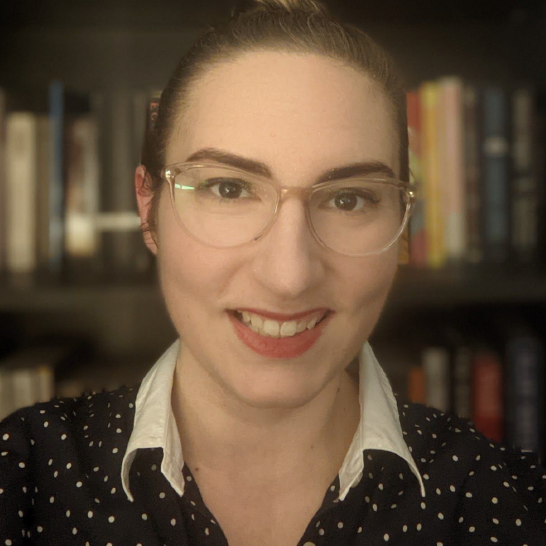
Christine Bariahtaris

Christine Bariahtaris

Christine Bariahtaris (she/her) is a consulting prospect researcher and writer in West Hartford, Connecticut. She has a special interest in helping small nonprofits access research resources and develop good data practices. In her free time, she is an avid gamer and knitter. She writes about her amateur genealogy work and family history at www.heartscrapsblog.com. Pictures of her very cute dog (and sometimes food) can be found on Instagram at @cbariahtaris. She’s still learning to Twitter at @CEBariWritesTo tip Christine for this essay, Venmo @cbariahtaris.
How we get over — how the Arts can be more than entertainment

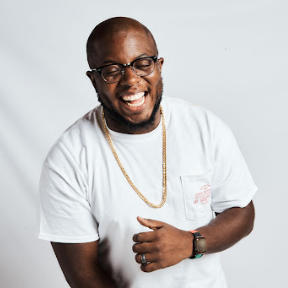
By Nicholas Steven George, The Listening founding executive director

“A society must assume that it is stable, but the artist must know, and he must let us know, that there is nothing stable under heaven.” – James Baldwin

What a heavy burden it can be, the role of an artist.

Before I continue writing, let’s clarify the definition of artistry, lest you be led astray. For the sake of this article, we are referring to aesthetes. This is for those of you who eat, sleep, and breath artistry. If you have treble notes leaking out of your pores and you spend inordinate amounts of time reading the liner notes to your favorite album, this is for you. If your favorite parts of a movie include an actor’s range or the score of the film, this is for you. If you enjoy music in a way that borders on inappropriate, this is for you.

Have you ever wondered what it is that makes art so powerful?

There’s a strange alchemy that takes place whenever the impact of a singer’s vibrato or the drama of a poet’s syntax is made on the listener. One obvious part of this relationship is the artist’s talent. The other part is equally important, but often overlooked: the listener themselves.

Each of us who love and believe in the arts rarely show up empty-handed. We come with our hurt, with our trauma, with our excitement and joy. We bring all that we’ve experienced, all we know, and all we believe in. We bring communities aching for their stories to be told. We bring the tales of our families. We bring our heartbreak, and not just for former lovers — we turn up the volume in hopes to turn down the pain of the world. This is not a one-sided relationship, but a dialogue that is journeyed and burdensome.

Here is the question that I pose: How do we continue to shine a light on art forms like dance or theater being used in ways beyond entertainment?

Consider each social movement that has taken place in the United States over the last century. Starting with the Harlem Renaissance, when former enslaved people departed the South and ventured North in hopes of opportunity and some freaking room to breathe. Not only did they manage to bring new life into cities like Detroit, Chicago, and St. Louis, they rendered a new description on literature, theater, dance, and music. Artists like Countee Cullen, Anne Spencer, Bessie Smith, and Alain Locke, along with many others, were a part of the New Negro Movement. This wasn’t just academia, and this definitely was not entertainment. This was how we got over.

When Audre Lorde took pen to pad, it was not for the status quo. Known as a self-described “Black, lesbian, mother, warrior, poet,” many of us had never seen intersectionality and a strengthened identity via prose before. When Joan Baez picked up her ukulele and guitar to sing out loud, it was for civil rights and it was calling for a change to come.

Just like Sam Cooke did.

Just like August Wilson did.

Just like Jean Michel Basquiat did.

The arts, specifically the performing arts, have always been a part of speaking truth to power. Something about bringing one’s creative self to near ubiquity by sharing it with others is powerful. This trend of suggesting cultural and community change creatively and physically and kinetically and audibly with whoever found themselves within the blast radius echoes through history like a thoroughly vibrant bloodline.

This is how we got over. This is how we get over.

Here is the question that I pose: How do we continue to shine a light on art forms like dance or theater being used in ways beyond entertainment?

This question led me to starting my own nonprofit organization in 2013. Of course, I didn’t know I would be starting a nonprofit — I was just looking for a way to instigate community and communicate compassion. Yet, at the same time, I knew that it could become something that spoke to our culture’s need for a conscience. We need the arts to do more than entertain us. It wasn’t something that could be taken for granted or expected to come through the traditional pipeline, not when two-thirds of public school teachers believe the arts are getting steamrolled in priority by English and math (my paraphrase, mind you).

There are many organizations that are taking matters into their own hands. From funders and institutions to everyday citizens and artists who believe in assonance and arpeggios, we are that alchemy. The nonprofit community has the opportunity, especially in days like these, to become the mixing room where this amazing alchemy for aesthetes takes place. Driven by nothing more than a desire to change a life, change a community, change the world, we can be the ones to develop artists who give a damn, and we can be the ones who show artists that this kind of work is needed. This can work.

This is how we get over.

Nicholas Steven George

Nicholas Steven George

Nicholas Steven George (he/him) is the founding executive director of The Listening, Inc, an organization in Central Virginia, with the mission to engage, change and save lives with the performing arts through community engagement and youth programming. Developing his creative and performance style of writing since his teenage years, Nick is continuously growing as a poet, author, public speaker and facilitator. With a strong background in performance poetry (also referred to as “spoken word poetry”), Nick pulls from his own life experiences and personal challenges as inspiration for his work. Through advocating for mental health and recognizing the utility of the performing arts, Nicholas uses his voice and skills to ignite social impact, challenge stigmas, and develop deep community. When he’s not living vicariously through Amanda Gorman or fantasizing about the Marvel Cinematic Universe, he’s living his best Black life with his wife and three children. You can see more of Nick’s work on his website, follow Nick on Instagram at @nickgeorgethepoet, and tip him for his work via Cash App, $nsteveng.

In case you missed it: CCF One-Year Anniversary Celebration edited video

On Aug. 25, 2021, Community-Centric Fundraising (CCF) celebrated one year of movement building. We heard updates from co-chairs, Andrea Arenas and Michelle Muri, and were in community through dialogue and fun games.

We want to send out a big thanks to everyone who took part in CCF’s anniversary celebration. We’ve gotten a number of requests to make a recording of the event available for those who could not attend. Please view an edited version of our event below or on our YouTube channel (we trimmed out breakout sessions)!

Here is why you don’t feel like a leader. (But you are one! You are!)

By Meenakshi Das, fundraising consultant

But why is shifting your mindset — to acknowledge and embrace yourself as a leader — so hard to do?

You don’t have to hold a C-level title to be a leader. You already are one — especially if you are chasing ridiculously long to-do lists, especially if your day is littered with activities ranging from people management to overseeing operations to technology wrangling to sitting in on check-ins and other meetings — especially when you’re doing all of this so that your project or program stays on course.      

But why is shifting your mindset — to acknowledge and embrace yourself as a leader — so hard to do?      

For a long time, I partly blamed it on imposter syndrome. Confession: I know imposter syndrome well as a BIPOC woman. I have spent hours taking classes to try to fill in my self-perceived professional ‘gaps.’ I have told myself, “If only I know….”, “if only I look or talk a bit like…”, “if only I accomplish…” — and the list goes on. 

I have also blamed my struggle of “trying to fit in” versus “trying to stand out” on being an immigrant in a new environment. And over time, I realized that the outcome of chasing my list of professional development activities was not a feeling of accomplishment, but rather the feelings of impatience and exhaustion. 

With that realization (and the pandemic giving us more reasons to prioritize mental health), I am now actively transitioning from a learning-to-fill-gaps mode to a more celebratory approach of who I am in my journey. 

Perhaps it was that same celebratory approach that empowered me to leave two perfect-on-paper jobs just within the last nine months! In actuality, these jobs exhausted me to my core and did not allow me to be my usual me (which is a person who happily wants to learn every bit of her job and go beyond the job description when she can). 

Taking inspiration from many around me, I embarked upon the journey of independent consulting — leading my entrepreneurship with emotional intelligence, empathy, and a sense of equity. And every day, I am learning just why shifting our mindset — to acknowledge and embrace ourselves as leaders — is so hard to do.      

I want to share four unhealthy expectations, habits, and ‘beliefs’ we internalize (especially now during the pandemic) — that have somehow deeply embedded themselves into our brains, so much that they’ve become part of our lives. These four unhealthy expectations are perhaps why we don’t consistently feel like leaders. 

While you may not have faced all of these expectations in the same way I have, I do think that semblances of these do certainly switch on our self-judgment button.

Unhealthy expectation #1: We must have big monetary goals. If we don’t (and if we don’t hit them), then our work is more a hobby than a job.          

This type of expectation is common— especially when we are working as consultants, entrepreneurs, fundraisers, executives, or in any other working role that contains responsibility over financial goals. 

When I started consulting, my YouTube and Facebook homepages were full of coaching ads, with business coaches claiming that I can make multiple six-figure deals just by working with them. 

Although that sounded lucrative (I mean, can you imagine what else I could do if I earned multiple six-figure deals just in a few months!), it also profoundly lacked sustainability. Money cannot be the only (or the biggest) criteria of success. Those criteria should also include your mental health and overall happiness. 

Building my consulting from a place of celebrating who I am and what I bring to the table for my clients, regardless of the deals and their values, is my version of sustainability. So, I consciously removed those advertisements from all my social media accounts, one by one — to not be constantly reminded of someone else’s definition of success. 

The world around us may repeatedly push us to place money as the highest weighted metric in the formula of success — the six-digit dollar value of consulting deals, fundraising gifts, or revenue amount. But don’t fall for that. You get to choose the drivers of your success — and it should begin with your balanced mental health and continuous affirmation of yourself. And, as you aim for that success and sustainability, know that you are a leader.     

Unhealthy expectation #2: Mental health isn’t that important to account for. Neither is the baggage the pandemic is leaving on us. What continues to matter are the unrealistic annual goals.     

I can speak on behalf of my own mental health — it’s acting out. I have a lot of work cut out for myself in the coming months, to get back to my healthier self. 

For one, I live in a country that is far from my home country (India). I’ve witnessed multiple travel bans that continue to be extended. And I know I’m not the only one facing this — many of you also are. We all have our reasons for why this has affected our mental health. We don’t yet know how deeply we’re being impacted. And, in our desperation to go back to some shape or form of old-normal, the chances are that we may miss signs or indicators from our mind and body, urging us to pause and give ourselves time to heal. 

And as the internal part of us continues to deal with all this, our work-self still feels like it needs us to be on the top of our annual goals.           

And when we cannot catch up on those goals, we self-judge, feel unaccomplished, and get even farther away from celebrating the sheer courage it takes to show up on certain days during this pandemic. 

We need to be flexible with our annual goals. Organizations must factor in some space for unforeseen vulnerabilities. We need much more than an occasional Friday off before a weekend. We need time to allow our whole self to breathe. Asking organizations to revise annual goals with mindful updates does not make you look incompetent. It makes you a leader.

Unhealthy expectation #3: Tiredness is weakness. In spite of a pandemic, we shouldn’t feel burned out or out of control, ever.      

During the past 12 months, how tired have you been?           

If you’re anything like me, those back-to-back Zoom calls sure don’t help, do they? My fatigue has included:

  • Sleep issues     
  • Forgetting sentences when they’re already halfway out of my mouth     
  • Less time to collect my thoughts, less time to share any helpful perspective      

And let’s not even go into my exercise regime.

This constant feeling of being burned out only makes us feel more and more entrenched in a never-ending marathon race and, sooner or later, we’ll start questioning our abilities. (Have you seen that meme, “Thinking gives me stress, so I stopped doing that”? That’s how I feel sometimes.) 

Well, you are not alone in feeling out of control. Remember to acknowledge all your emotions —      the good, bad, and strange. We cannot be kind to ourselves unless we accept the whole of us. In the past few months, as I started to recognize my triggers of panic and anxiety, I began to understand myself better. Knowing who you are empowers you. And, yes, you are still a leader as you navigate through all the uncertainties around you.

Unhealthy expectation #4: Always chase that perfect on-paper opportunity, to the point where we compare everything to it. 

Admit it — we all have certain job regrets. So many of us feel like we have missed that one perfect-on-paper job from the past — a job that was the right combination of responsibilities and skills, one that was in a good location, one that was an opportunity to grow. 

I remember my perfect-on-paper job. I ended up leaving that job because I couldn’t keep putting up with the unsustainable work practices it demanded. (And I must admit that after I moved out of that job, I still missed it — I missed having a perfect-on-paper job description in my portfolio.)     

I eventually realized that I was lamenting over a perfect-only-on-paper job way more than celebrating and prioritizing myself. 

Learn from me and watch out for any such behavioral patterns or signs in yourself — if you find such patterns in you, chances are it’s likely you do not feel your best in your current role. Pause, reflect, and remind yourself of how you came to the place you are today and the challenges that have made you, you. Is the job truly a good fit? Leaving your job to prioritize yourself — yes, that especially makes you a leader.     


The thing is, juggling through multiple responsibilities to reach your goals, responding to the overly critical internal voice, consciously choosing a different or unconventional route of career growth, or redefining your specific vision of success — none of these things make us any less of a leader. Our paths to becoming a leader should be unique in their challenges and opportunities.

So, be the leader you are. All you have to do is celebrate your story unapologetically and allow yourself to build your path.

Meenakshi Das

Meenakshi Das

Meenakshi (Meena) Das (she/her/hers) is a fundraising analytics consultant. She specializes in designing survey-based research tools and analyzing engagement. Meena appreciates spending her time outside work as a mentor to immigrants and as pro bono research advisor to small shops. Her two recent favorite projects are working on making data-based research tools more DEIA (Diversity, Equity, Inclusion, and Accessibility) compliant and designing the second season of her podcast “Being and Unbeing an Immigrant” where she wants to bring together the families of immigrants left behind in the home country. Connect with Meena on LinkedIn.

Gretchen, stop trying to make “change the system from within” happen. It’s not going to happen.

By Rebekah Giacomantonio, culture disruptor and community healer

The master’s tools will not dismantle the master’s house” implies that system change will not happen from within.

I’ve  been working in the nonprofit sector for over ten years. I’ve been a volunteer, an intern, and a staff member.

And recently, I quit.

I’ve quit before, but this time I really think I’m done. I burned out, again, and some truths I’d been running from caught up with me.

Early in my politicization I was introduced to Audre Lorde’s “The Master’s Tools Will Not Dismantle the Master’s House”, the thesis of which is represented by the title. I’ve read that essay a dozen times, and I’ve quoted it hundreds of times. But, if I’m honest, I hadn’t fully integrated it’s teachings. Until I quit this last time.

 “The master’s tools will not dismantle the master’s house” implies that system change will not happen from within. Not now, not ever. But for just about all of my career, I’ve been trying to make systems change happen, thinking I could leverage my white privilege to reform existing structures. I was wrong. The system will not be complicit in its demise. White people really need to realize this, stop trying to make “change from within” happen, and grab a sledgehammer. We’re only causing harm by running from this truth.

If you are reluctant to believe me, here are some receipts:

My first job out of college was at a nonprofit I’d worked for as an intern. By the time I started as a staff member, I’d already watched the people I worked for make a number of sacrifices, compromising their values and what they knew was right in order to secure contracts. This was especially true in the case of the contract I took the lead on when my boss left, all because we believed the best way to make change was to “change the system from within it.” We were trying to change both the Department of Education and the Department of Corrections. Here’s what that looked like:  

After a few years of work at an all-girls public high school with an overwhelming population of non-white students, our (white-led) organization had established a significant level of trust with the students and the (mostly white) teachers. We’d given workshops and training and mentoring for students and staff in restorative justice. A youth council was being considered. Students knew my name and came to me readily with their issues. I was riding my high horse through the school hallways regularly, preaching the gospel of change from within to all who gathered around my soapbox.

One day, a few of the high-achieving students in their first year stole some Texas Instrument calculators valued at $150 each. It was around Christmas time, and the negligent substitute teacher had left the classroom and turned off the lights at the precise moment the bell rang while the students were still in their seats. This group of girls, under the pressure of poverty and a number of other manifestations of systemic racism, shoved as many of the calculators as they could fit into their backpacks, because the substitute had left the room before locking up the closet that stored them.

The next day, upon realizing that the calculators had been stolen, and that she would likely be held accountable for their theft even though she wasn’t there, the (not white) permanent teacher of that class sought solace in the community of teachers she worked with. Thinking she’d lose her job over this theft, this first-year teacher was terrified. The teachers began organizing and fundraising amongst themselves to cover the cost of the calculators so that their colleague wouldn’t lose her job. As I write this story, I am overcome with goosebumps and the tears beckon. Community was working! People were taking care of each other!

Internally I was polishing my metaphorical saddle.

As the teachers organized, the students who took the calculators confessed to their mistake, apologized to the teacher, and came to me, the restorative justice coordinator, to begin a circle process. It was happening! Culture shift! Change! Healing!

I went to the principal’s office to share with her all that I’d learned (for context, she was Latina.) She was relieved to hear all that had already transpired, and encouraged me to start the circle process. I did, meeting 1-1 with the students, and then their guardians who had all been called. Here I was, deep in the system, working for a nonprofit at a public school and creating change!

I began to envision the speech I’d give at the local bar that weekend, how I’d saved these young women and successfully dismantled the oppressive punitive disciplinary system of the Department of Education.

The progress we had made in years of work at that school was immediately crushed

I was calling another student into a 1-1 when the police arrived. Two white men in full dress came in and gave a speech worthy of a slot on the “Scared Straight” TV show. The students broke into tears. “My mom is right,” said one, “I’m bad, just like my dad. I’m going to prison just like him.” These students were members of the student council. Most of them were on honor roll. They were not bad kids. They were trying to survive in a world that didn’t see them worthy of survival.

The progress we had made in years of work at that school was immediately crushed. Why should the students trust restorative justice if the police were going to get called anyway? Why should the students trust restorative justice if when they made a mistake and acknowledged the harm they caused — even apologizing unprompted to the person they harmed and invited a circle process — the police were still called, and they were still threatened with time in prison?

The girls did not go to prison, as the police officers said they would, but they did get two-week suspensions on top of the trauma of the experience itself — and the circle process never happened. The teacher kept her job, though she did get reprimanded for not better equipping the substitute teacher, thereby leaving school property unprotected. Because word passed quickly throughout the school, none of the students at the school ever re-engaged with restorative justice work in the same way, and, when I asked the principal why she had called the police she said, “I had to, the total amount of the cost of the stolen calculators exceeded the limit for a restorative response. You didn’t think we were just going to do a restorative circle, did you?”

The system will never be complicit in its demise.

I thought I could work within the Department of Education, within a 501(c)(3) and create lasting cultural and systemic change, but when the rubber hit the road, I realized just how wrong I was.

In fact, my efforts to do both had actually caused harm. The students got vulnerable with me, and were punished for it. The teachers organized to protect their colleague, and she still received a professional demerit. People let their guards down, trusted in me, trusted in the work that we were doing, trusted in the process, and everyone got burned.

The system had given me an inch. It said that I could do restorative justice, but only in certain circumstances when it was advantageous for it, like when it increased test scores or filled a gap that an overworked administrator couldn’t fill. But when I pushed for another inch, when I started doing deeper work, when I put into question the status quo, when I was getting too close to the root of the problem — they would always hold me back. The system will not be complicit in it’s demise, and it would let me know that, everytime. 

When I went back to my (white) supervisors at the agency that employed me, suggesting that we meet with the Department of Education and say we can’t work with them like this, when I said that we needed to use our power and reputation as an organization to create systemic change so that this doesn’t happen again, they said, “Don’t be silly, Bekah, we need those DOE contracts to pay your salary.” It was the first time I burned out, and it was the worst.  

I didn’t learn my lesson, though, and went crawling back to nonprofits.  

This time, I was transparent in my interview. “I’m here to disrupt the way we replicate systemic oppression in nonprofits,” I said. “I’m here to leverage privilege for real, lasting, social change.”  

And my interviewer emphatically said, “Yes.”  

Fast-forward no more than two months, and I’m on the outs. It’s me vs. my supervisor. Me identifying harm and them refusing to take accountability for the harm they’re causing or complicit in. I blamed it on the specific supervisor, the individual person, and found another job.

The nonprofit industrial complex expects us to conform or quit. It expects us to give up fighting the transformative fight or burn out fighting. It counts on us to get tired and leave or numb our way through our days. Mix this in with our own whiteness and ooof, it’s a fatal cocktail, y’all.

That next job was the worst of them all, though. My boss did not realize that she had been compromised. It was as if she was behaving from a script written by the inventors of white supremacy. I have not fully metabolized the harm she caused me, or the harm I witnessed her cause other people, and I won’t speak to it more. What I will say is that we have got to watch out. She was the type of person that had read all the books, listened to all of the podcasts, been through all of the training — and they still commit egregious harm. These types of people are too disembodied, too burnt out to see any of it, to recognize that any of those terrible actions belonged to them, not even when well-meaning, thoughtful folks come to offer them accountability and compassion.

My former boss just could not receive it, and I know she’s not unique.

It is a common thing I see for folks like me who go into the nonprofit industrial complex wanting to “change it from within.” Burnout or complacency are two terrible and all-too-frequent outcomes of this system. Almost all of my past supervisors have become the system they most wanted to transform. And all of them have been white people.

Do I think that they were malicious in their intent? No. Almost every one of my supervisors has said to me that they are trying to change the system from within. And I believe that they believe that. And perhaps, when they started working in the nonprofit industrial complex, it was true.

But then they got a raise — and another one — and another one — and then they started getting public accolades, maybe they witnessed a few small changes here and there and then — suddenly — they became the system. Oppressive, alienating, self-interested. 

The nonprofit industrial complex expects us to conform or quit. It expects us to give up fighting the transformative fight or burn out fighting. It counts on us to get tired and leave or numb our way through our days. Mix this in with our own whiteness and ooof, it’s a fatal cocktail, y’all. A cocktail that is necessary for the toxic systems to survive, to continue keeping us all oppressed (because even when we feel free, none of us truly are until everyone is.).

So, white people of the nonprofit sector, I offer you these notes. If you must work in nonprofits, do so with extreme caution. Keep the following things in mind, and you might survive with your values intact. 

1. When we push to create change within a system, we cause harm.

The system won’t let us create real change, and when we get peoples hopes up — when we convince them to trust us, to trust that this time will be different — we put them in vulnerable positions. And then when the shit hits the fan — which it inevitably will — we (white people) can walk away, and the people we are working with — the people who were already suffering just trying to survive — get the brunt of it. We leave them worse than they were when we joined them. Every. Time.

2. It is never individuals. It is always the system. 

My teachers in Guatemala always used to tell me, “Ningún ser humano es desechable,” (“No human being is disposable”), and I think it’s really important to hold that truth, even when we are faced with people who are causing harm. They have fallen prey to a system that is voracious. Their principal mistake was not practicing the next point.

3. If you haven’t already figured this out: DO NOT ENTER THE NONPROFIT INDUSTRIAL COMPLEX ALONE. 

Have people you love and trust around you, calling you in, offering accountability from day one. Otherwise, you will get swallowed whole. 

4. “Your job is not your political home” 

In a newsletter, Lutze Segu wrote, “Your job is not your political home,” and I think it’s really important white people begin to recognize that. Like really, deeply, integrate it into our consciousness. A good number of us choose nonprofits thinking that it’ll kill two birds with one stone (pay the bills, save the world.) So many of us have flocked to this work that we’ve flooded the sector. I get why we do it, I did it myself. In the preface of The Revolution Will Not Be Funded by INCITE!, the authors make it clear that when the movement deems a nonprofit necessary to receive a grant, “[that] nonprofit would answer to the movement; it [is] not seen as the movement itself.” Our job is not our political home — our nonprofit is not the movement. Let that change you — let it shift how and where you work towards collective liberation. 

5. The belief that we can change the system from within comes from privilege

Folks who live with oppression day in and day out know that the system won’t be complicit in it’s demise. If you are white and you don’t believe me, you need to diversify the content you are consuming. Try anything touched by adrienne maree brown, Mariame Kaba, Audre Lorde, or anything written on abolition. 

6. Lastly, just transitions are a thing. 

I know dismantling white supremacy won’t happen overnight, but the just transition from a racist, capitalist system and a broken social service system to a world where everyone is fed, free, and radiating in the fullness of their being will not be led by white people. We all know it’s true, so let’s start acting like it.


Rebekah Giacomantonio

Rebekah Giacomantonio

Rebekah Giacomantonio (she/her) was raised on the land of the Wabanaki Confederacy in what is now called Maine, where she now resides for the time being. Bekah supports community healing as a facilitator of transformative justice processes and restorative mediations. Through her facilitation Bekah aims to disrupt cultural norms that perpetuate harm and keep us from collective liberation. Bekah is also a graduate student in clinical mental health counseling with a somatics focus.

For more musings on culture, interdependence, healing, and transformative justice she can be found on Instagram or on LinkedIn.