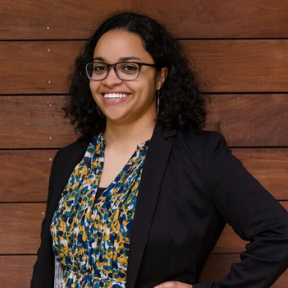
Las comunidades latinx merecen un lugar en la filantropía

Por Andrea Cota Avila, Coordinadora de Desarrollo, Coalición por los Derechos de los Inmigrantes de Colorado 

Cuando tenía 6 años, mi familia se embarcó en un viaje que nos llevaría desde nuestra tierra natal de México hasta un estado llamado Michigan. Aunque la historia de cada inmigrante es distinta, los motivos de nuestros padres para dejar atrás todo lo que conocieron se debieron en parte al Sueño Americano: el deseo de tener más oportunidades y una vida mejor. 

La búsqueda de este sueño nos llevó a un próspero suburbio de Detroit, donde pude continuar mi educación en un distrito escolar donde la mayoría de los estudiantes no hablaban mi idioma ni compartían mi herencia cultural. Esto no fue una sorpresa para nosotros, considerando que el suburbio era 76% blanco. Sin embargo, avanzamos un par de años cuando me encontré en una universidad con una población de estudiantes de pregrado de más de 35.000. Antes de llegar allí, me imaginaba inmerso en una comunidad y un entorno diversos, pero estaba equivocado. La población estudiantil en la universidad era 67% blanca, y el departamento donde estudié también era abrumadoramente blanco. 

Ahora que estoy comenzando una carrera en la recaudación de fondos, me encuentro en el mismo lugar en el que he estado durante 22 años. Siempre soy la única mujer latina cuando asisto a eventos o reuniones de recaudación de fondos, y rara vez veo a personas latinas en puestos de liderazgo filantrópico. El hecho es que las comunidades latinx están tremendamente subrepresentadas en este sector, como miembros del personal y donantes. A pesar de ser el 18% de la población de EE. UU., los latinos representan solo el 5% de los empleados del personal de organizaciones sin fines de lucro. Peor aún, menos del 4% de los latinxs sirven como fideicomisarios en fundaciones y menos del 3% son directores ejecutivos. 

Yo creo que el futuro de la filantropía se basa en adoptar un enfoque centrado en la comunidad. Esto significa colocar en el centro a la comunidad a la que sirve la organización sin fines de lucro. También significa reconocer el oscuro pasado de la filantropía y mirar hacia el futuro con una lente de justicia social y racial. Es la única forma en que podemos comenzar a sanar colectivamente y traer equidad a nuestras comunidades. Un principio clave de la filantropía centrada en la comunidad es valorar todo lo que las personas pueden aportar además del dinero. Esto puede tener lugar en forma de tiempo, elementos, talento o conexiones. Las personas latinas merecen un lugar en la filantropía porque los valores de

nuestra comunidad están arraigados en las donaciones, especialmente en el tipo de donaciones que no son monetarias. 

Las personas latinas nacen para ser personas caritativas. Está en nuestra sangre. 

Históricamente, los mexicanos tienen el Gran Círculo de Obreros de México, una sociedad de ayuda mutua que tenía más de 28 sucursales en México en 1875. Cuando los trabajadores mexicanos comenzaron a emigrar a los Estados Unidos, trajeron consigo la mutualista modelo y grupos de apoyo establecidos. Estos grupos ofrecían a los inmigrantes algo más que seguridad económica: también podían recibir educación, seguro de enfermedad y entierro, bibliotecas y oportunidades de liderazgo. Además, estos eran espacios donde los inmigrantes podían crear un sentido de comunidad al ofrecer espacios para actividades y eventos sociales y culturales. 

Luego está el papel de la iglesia en América Latina. En Chile, el padre Alberto Hurtado fundó el Hogar de Cristo en 1944. No solo brindó refugio a las personas sin hogar, sino que se convirtió en un lugar donde la comunidad podía recibir capacitación laboral en carpintería. Luego, 32 años después, en 1976, el Cardenal Raúl Silva Henríquez formó el Vicariato de Solidaridad y brindó asistencia legal, médica y humanitaria a los chilenos durante el régimen opresivo de Pinochet. 

Nuestro sentido de comunidad y generosidad también se muestra en nuestras tradiciones culturales. En las quinceañeras, los familiares y amigos suelen “patrocinar” diferentes aspectos de la fiesta. La gente se ofrecerá a contribuir con el vestido, el pastel, el lugar de evento, ¡lo que sea! 

Incluso demostramos nuestros valores al dar a nuestros seres queridos fallecidos durante el Día de los Muertos. Las comunidades se reúnen alrededor de intrincadas y hermosas ofrendas que se crean en recuerdo de los que han pasado. Estos altares a menudo incluyen artículos como juguetes, flores, calaveras, la comida y bebida favorita del difunto y, por supuesto, el icónico pan del Día de los Muertos. 

Los latinos son algunas de las personas más caritativas que conozco, especialmente cuando se trata de comida. La comida es un aspecto culturalmente importante de la vida de los latinos, y se nota. Entra en un hogar latinoamericano y te recibirán con los brazos abiertos y un plato de comida caliente. Asiste a cualquier barbacoa Latinx y los papás te ofrecerán un trozo de carne asada cuando salga de la parrilla. Recuerdo que cada vez que volvía a casa de la universidad,

mi madre me preparaba mi comida favorita sin importar cuánto tiempo o esfuerzo tomará. Eso es amor. 

Y al final del día, de eso se trata la filantropía … el amor a la humanidad.

3 formas de incluir a las comunidades latinx en la filantropía 

Así que ahora probablemente se esté preguntando: ¿Cómo puedo incluir más comunidades latinx, ya sea en mi programación o como parte del personal de mi organización sin fines de lucro o de la lista de donantes? Aquí hay tres formas: 

Consejo 1: contrate entre un grupo de personas más diverso 

Si está en una posición en su organización que maneja la contratación, asegúrese de hacer un esfuerzo para obtener un grupo diverso de candidatos. (Quiero dejar claro que esto no significa preguntarle a su colega Latinx o de color si pueden compartir su publicación de trabajo con sus redes y ayudar en la búsqueda). Significa que, si tiene el presupuesto, considere contratar una empresa de reclutamiento que centra su trabajo en torno a la diversidad, la equidad y la inclusión. 

Consejo 2: ofrece pasantías remuneradas 

También es importante que si va a contratar pasantes en el sector sin fines de lucro, esas oportunidades sean remuneradas. Ofrecer pasantías no remuneradas dará como resultado que un tipo muy específico de persona solicite el puesto: un estudiante que tiene el privilegio de realizar una pasantía no remunerada. 

Muchas comunidades de color, incluidas las comunidades latinx, carecen de una riqueza familiar significativa, lo que hace que las familias de color tengan dificultades para que sus hijos vayan a la universidad. Son los jóvenes latinx los que a menudo no pueden darse el lujo de aprovechar oportunidades no remuneradas, lo que los deja fuera del grupo de candidatos. 

¿No puede permitirse ofrecer pasantías pagadas? Conéctese con su colegio o universidad local para que los estudiantes puedan recibir crédito de clase a cambio de una pasantía, u ofrecer una oportunidad de voluntariado con bajo compromiso en su lugar. (Comencé a recaudar fondos porque me contrataron como pasante de desarrollo. Este puesto no sólo me pagó, sino

que creó un camino que me permitió sumergirme en este trabajo). Necesitamos asegurarnos de crear este camino para los demás. 

Consejo 3: expanda de forma creativa su base de donantes 

Por último, si trabaja como recaudador de fondos, eche un vistazo a quién le da a su organización. Si este grupo es principalmente blanco, entonces debe haber un mayor esfuerzo para atraer una mayor diversidad racial de donantes. 

También es crucial tener diferentes estrategias de reclutamiento, orientadas en torno a los diferentes orígenes económicos de los que provienen las personas latinx. Para las comunidades latinx de clase media, intente traducir sus comunicaciones sin fines de lucro en español si aún no lo está haciendo. Después de todo, ¿cómo se supone que las personas que no hablan inglés se conecten con su misión y contribuyan si no pueden entenderla? 

Para las personas o familias latinas acomodadas, simplemente incluirlas en la filantropía puede ser un paso monumental. Según la investigación de Radiant Strategies sobre donantes de color de alto patrimonio neto, las personas adineradas de color están muy conectadas en redes en organizaciones profesionales o fraternales, pero rara vez en comunidades filantrópicas o entre sí. La investigación también encontró que los donantes de color son bastante nuevos en los modelos formales de donación al estilo estadounidense. 

Aquí hay una gran oportunidad. Busque donantes latinx, conózcalos y pídales que participen en su trabajo. Será el comienzo de una asociación increíble. 

¿Creo que hay mucho trabajo por hacer para incluir a las personas latinx en el mundo de la filantropía? 

sí. 

Sin embargo, como joven recaudador de fondos de color, también miro hacia el futuro con esperanza. 

Los dejo con una cita de mi escritora chicana favorita, Sandra Cisneros:

“Cuanto mayor soy, más consciente soy de las formas en que las cosas muy pequeñas pueden hacer un cambio en el mundo. Pequeñas cosas, pero el mundo está hecho de pequeñas cosas, ¿no es así? ” 

Estoy entusiasmada de ser parte de un movimiento que se esfuerza por solucionar estos pequeños asuntos de la filantropía. 
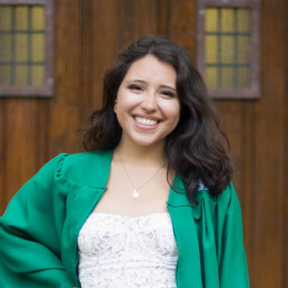
Andrea Cota Avila

Andrea Cota Avila

Andrea Cota Avila (ella) es una inmigrante de primera generación de México que vive en Denver, Colorado. Trabaja como Coordinadora de Desarrollo para la Coalición por los Derechos de los Inmigrantes de Colorado, una organización sin fines de lucro que aboga por todos los inmigrantes independientemente de su estatus migratorio. Andrea se define a sí misma como una nueva recaudadora de fondos, defensora de la comunidad, excursionista, yogui y aprendiz de por vida. Cuando no se embarca en una aventura, puede encontrarla cuidando sus muchas plantas o encontrando la próxima actividad que la mantenga ocupada. 

Puede conectarse con ella en Facebook, Instagram o por correo electrónico a andrea@coloradoimmigrant.org.
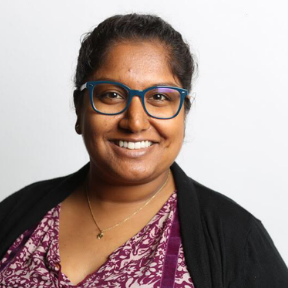

Latinx communities deserve a place in philanthropy

By Andrea Cota Avila, Development Coordinator, Colorado Immigrant Rights Coalition

Latinx people deserve a place in philanthropy because our community values are rooted in giving, especially the kind of giving that isn’t monetary.

When I was 6 years old, my family embarked on a journey that would take us from our native land of Mexico all the way to a mitten state called Michigan. Although every immigrant’s story is distinct, our parents’ motives for leaving behind everything they ever knew was due in part to  the American Dream: the desire for more opportunities and a better life. 

Pursuing this dream landed us in an affluent suburb of Detroit, where I was able to continue my education in a school district where the majority of students did not speak my language or shared my cultural heritage. This came as no surprise to us, considering the suburb was 76% white. Fast forward a couple of years though, when I found myself at a university with an undergraduate student population of more than 35,000. Before I got there, I pictured myself immersed in a diverse community and environment, but I was wrong. The student population at the university was 67% white, and the department where I studied was also overwhelmingly white.  

Now that I’m starting a career in fundraising, I find myself in the very same spot I’ve been in for 22 years. I’m always the only Latina woman when I attend fundraising events or meetings, and I rarely see Latinx individuals in philanthropic leadership positions. The fact of the matter is that Latinx communities are wildy underrepresented in this sector — as staff members and donors. Despite being 18% of the US population, Latinxs make up only 5% of nonprofit staff employees. Even worse, less than 4% of Latinxs serve as trustees at foundations and less than 3% are CEOs.

I believe that the future of philanthropy relies on taking a community-centric approach. This means placing the community the nonprofit is serving at the center. It also means acknowledging philanthropy’s dark past and looking towards the future with a social and racial justice lens. It is the only way we can begin to collectively heal and bring equity to our communities. A key principle of community-centric philanthropy is valuing everything people can bring to the table besides money. This can take place in the form of time, items, talent or connections. Latinx people deserve a place in philanthropy because our community values are rooted in giving, especially the kind of giving that isn’t monetary.

Latinx people are born to be charitable individuals. It’s in our blood. 

Historically, Mexicans have the Gran Círculo de Obreros de México (the Great Circle of Mexican Workers), a mutual aid society that had over 28 branches in Mexico by 1875. When Mexican workers began immigrating to the United States, they brought with them the mutualista model and established groups of support. These groups offered immigrants with more than just economic security: They could also receive education, sickness and burial insurance, libraries, and leadership opportunities. Additionally, these were spaces where immigrants could create a sense of community by offering spaces for social and cultural activities and events. 

Then there’s the role of the church in Latin America. In Chile, Father Alberto Hurtado founded Hogar de Cristo (Christ’s Home) in 1944. It not only provided shelter for the homeless, but became a place where the community could receive job training in carpentry. Then 32 years later in 1976, The Vicariate of Solidarity was formed by Cardinal Raul Silva Henriquez and provided legal, medical, and humanitarian assistance to Chileans during Pinochet’s oppressive regime.

And at the end of the day, that’s what philanthropy should be about … love of humankind.

Our sense of community and generosity also shows in our cultural traditions. In quinceañeras (15th birthday celebrations for girls), family members and friends will often ‘sponsor’ different aspects of the party. People will offer to help contribute for the girl’s dress, cake, venue — you name it! 

We even demonstrate our values in giving to our departed loved ones during Día de los Muertos. Communities gather around intricate and beautiful ofrendas, or altars, which are created in remembrance of those who have passed. These altars often include items such as toys, flowers, calaveras, the deceased’s favorite food and drink, and of course the iconic Día de los Muertos bread.

Latinx people are some of the most charitable individuals I know, especially when it comes to food. Food is a culturally important aspect of life for Latinx people, and it shows. Walk into a Latin American household and you’ll be greeted with open arms and a warm plate of food. Attend any Latinx barbeque, and dads will offer you a piece of carne asada as it’s coming off the grill. I remember every time I used to come home from college, my mother would make me my favorite meal regardless of how much time or effort it took. That’s love right there. 

And at the end of the day, that’s what philanthropy should be about … love of humankind. 

3 ways to include Latinx communities in philanthropy 

So now you’re probably asking yourself: How can I include more Latinx communities — whether in my programming or as part of my nonprofit’s staff or donor roster? Here are three ways:

Tip 1: Hire from a more diverse pool of people

If you’re in a position in your organization that handles hiring, make sure you’re putting an effort to get a diverse pool of candidates. (I want to be clear that this does not mean asking your Latinx or BIPOC colleague if they can share your job posting with their networks and assist in the search.) It means that, if you have the budget, consider hiring a recruiting firm that centers their work around diversity, equity, and inclusion. 

Tip 2: Offer paid internships

It’s also important that if you’re hiring interns in the nonprofit sector, that those opportunities are paid. Offering unpaid internships will result in a very specific kind of individual applying for the position — a student who is privileged enough to take an unpaid internship. 

Many communities of color, including Latinx communities, lack significant household wealth, resulting in families of color struggling to put their children through college. It’s young Latinx people who oftentimes can not afford to take unpaid opportunities, which leaves them out of the candidate pool. 

Can’t afford to offer paid internships? Connect with your local college or university so students can receive class credit in exchange for an internship — or offer a low-commitment volunteer opportunity instead. (I got into fundraising because I was hired as a development intern. This position not only paid me, but it created a path that allowed me to immerse myself in this work.) We need to make sure we create this path for others. 

Tip 3: Creatively expand your donor base

Lastly, if you work as a fundraiser, take a look at who gives to your organization. If this group is primarily white, then there needs to be more of an effort to attract a greater racial diversity of donors. 

It’s also crucial to have different strategies for recruitment, oriented around the different economic backgrounds Latinx individuals come from. For middle class Latinx communities, try translating your nonprofit communications in Spanish if you’re not doing this already. After all, how are non-English speakers supposed to connect with your mission and contribute if they can’t understand it? 

For affluent Latinx people or families, simply including them in philanthropy can be a monumental step. According to Radiant Strategies research on high net worth donors of color, wealthy BIPOC individuals are highly networked in professional or fraternal organizations, but rarely in philanthropic communities or with each other. Research also found that donors of color are fairly new to formal, American-style models of giving. 

There’s great opportunity here. Seek out Latinx donors, get to know them, and ask them to be involved in your work. It will be the start of an incredible partnership. 


Do I think there is a lot of work that needs to be done in including Latinx people in the world of philanthropy? 

Yes. 

However, as a young fundraiser of color, I also look towards the future with hope. 

I’ll leave you with a quote from my favorite Chicana writer Sandra Cisneros: 

“The older I get, the more I’m conscious of ways very small things can make a change in the world. Tiny little things, but the world is made up of tiny matters, isn’t it?” 

I look forward to being a part of a movement that strives to fix these tiny matters in philanthropy.

Para leer este ensayo en español, haga clic aquí.

Andrea Cota Avila

Andrea Cota Avila

Andrea Cota Avila (she/her) is a 1.5 immigrant from Mexico based in Denver, Colorado. She currently works as a development coordinator for the Colorado Immigrant Rights Coalition, a nonprofit organization that advocates for all immigrants regardless of their immigration status. Andrea defines herself as a new fundraiser, community advocate, hiker, yogi, and lifelong learner. When she’s not going on an adventure, you can find her tending to her many plants or finding the next activity that keeps her busy. You can connect with her on Facebook, Instagram, or email at andrea@coloradoimmigrant.org.

Why I am a fundraiser — despite not setting out to be one

By Rakhi Agrawal, CCF Organizer

I used to wonder: “Why are we buying lunches for people who can already afford to buy lunch everyday?”

I am one of those fundraisers who “fell into fundraising” instead of seeking out this job in a more traditional way. 

I was the first person to attend college in my family. I went to college at an elite institution in New York City with the goal of supporting myself through college without any family or external financial support (aside from need-based financial aid and scholarships). I worked six jobs to support myself through college, including a job as an administrative assistant (functionally a receptionist) at a Jewish student center on campus. 

On most days, I was almost the only woman of color in the entire building — the other melanated faces included those of the security guard and the cleaning staff. Through hard work and balancing all of my jobs, on top of living in a new city and trying to be involved in student life, I was incredibly efficient at my job. So much so that, slowly, they started giving me tasks to support the development director — such as inputting data into our CRM, processing acknowledgements, donor research, and prepping for board meetings. 

I reluctantly did the tasks so I could log more hours and not negatively impact my paycheck — I was very quick and efficient at my basic admin tasks, which counterproductively meant less time at work and less pay — but didn’t yet understand fundraising. (I was a free-and-reduced-lunch kid who had grown up in poverty — without fully realizing it because of how immersed I was in our immigrant life versus the lives of my peers — for much of my childhood.) In this particular job, I couldn’t imagine having the guts to ask rich white donors for checks or stroking their egos and playing nice to get them to give more to the organization. 

I used to wonder:

“Why are we buying lunches for people who can already afford to buy lunch everyday?” 

“Why would we host dinner galas that cost thousands instead of giving that money away to students in financial need?” 

“Why is someone getting paid more to sit in an office and coddle white egos than the person who interfaces with every student when they walk into the building and asks them how they are doing (read: the security guard)?”

The fall

Our dinner galas made me uncomfortable. Using my brownness in fundraising campaigns promoting ‘diversity’ at the center made me self-conscious.

Over time, and slowly, I morphed into a development assistant — a promotion in title and hours but not pay. This was one of the first real “professional, resume-building” jobs I had. (Growing up, I had worked in my family’s convenience store since age 7, and then when I was legal to work elsewhere, did odd jobs helping local businesses sell things online, dog sat for neighbors, and worked 40 hours a week at a local grocery store.) I didn’t know who to talk to at the center or how to advocate for myself for a raise, all the while still knowing that an increase in responsibility should probably come with an increase in pay. Instead of a raise, I was made to feel grateful and special that I was chosen — out of any other student worker — to be the person who would be taking on development work, which would bolster the number of hours I got to log on my timesheet.

As the development assistant, I was never invited to donor meetings or to speak with board members, but I did all of the behind-the-scenes work. I understood the need for nonprofits, but I didn’t understand philanthropy — I didn’t understand why people were hoarding money and then selectively giving it away instead of just accepting less money from the get-go.

It was during this job that I started to find language around my early criticisms of the sector, language such as: nonprofit industrial complex, anti-capitalism, interdependence, equity and social justice. I also discovered Vu Le’s Nonprofit AF blog and realized there was at least one other person in the world who saw the same issues within the sector that I did. 

Our dinner galas made me uncomfortable. Using my brownness in fundraising campaigns promoting ‘diversity’ at the center made me self-conscious. Having to remove my name from any donor-facing communication because my name was clearly not Jewish made me shrink into myself.

Needless to say, upon graduating from college and this role, I left the world of nonprofit development and didn’t look back — for a time. 

The detour

After college, I ventured into education —  teaching Black and brown kids math. I also organized in my free time, from fighting for reparations for victims of police torture in Chicago to organizing protests against family detention centers in south Texas.

It was exhausting. I dealt with so much secondhand trauma — students and their family members being shot and killed, being deported, getting arrested, struggling financially. Friends and comrades were organizing bail funds, occupying city hall buildings, and being arrested for protesting. I would leave school after a 16-hour work day and go home and send out emails to organize weekend actions. On top of everything, I wasn’t making enough to even be able to afford twice-a-month therapy, nor did I have the luxury of having plentiful PTO to be able to take time off for appointments. I realized that I was no longer good for my students when my mental illness started to seep into my teaching.

Why are we perpetuating white savior narratives by serving up poverty porn in appeal letters? Where are our affected populations involved and centered in our fundraising processes?

I inevitably got burnt out and was left confused about where to go after my teaching career. Do I sell my soul, ignore my values, and go into tech? Do I find a way to pursue more systemic change through community organizing for probably less pay? Do I go serve wealthy white communities as a service-worker, nanny, or tutor?

At the end of the day, I realized that the only tangible ‘hard’ skillset I had was nonprofit development — I knew how to write grants, plan fundraising events, do donor prospect research, and maintain CRMs and donor data. I knew that nonprofits couldn’t thrive without good fundraisers, and that the nonprofits I had worked closest with as a teacher and community organizer — the ones that mattered the most to me — tended to be small, grassroots, BIPOC- and/or queer-led nonprofits, who didn’t always have someone on staff with development skillsets. 

So I decided to take my skillsets and bring them into BIPOC-led nonprofits. I started contracting wherever I could and won grant after grant, developing giving campaigns, and taught peers about cultivation and stewardship. 

In many cases, I had to do some unlearning, followed by facilitating unlearning for others, about practices that I never understood — like, who is a “major donor? Where is the room to acknowledge folx who give at different levels that might still be personally significant for them? Where is the acknowledgement of time and talent in addition to treasure? Why are we perpetuating white savior narratives by serving up poverty porn in appeal letters? Where are our affected populations involved and centered in our fundraising processes? Why do we have to say, “$10/month pays for one book for one Black girl in our program,” in order to justify our need for funding?

The return

As a queer, brown fundraiser, I am able to push orgs, challenge donors, and help decolonize wealth in service of true, grassroots work.

Last summer, after I lost my full-time fundraising job due to COVID, I stumbled upon the Community-Centric Fundraising website and shrieked out loud. Everything I had been asking myself and questioning for years, quietly, was addressed in type on a live website. 

For the first time in my more-than-a-decade-long nonprofit career, CCF has given me a space where I don’t need to tamp down on my values or dampen my beliefs, a place where I can be a proud anticapitalist, decolonizer, and abolitionist, a place where I can openly say what I’ve known for years — that nonprofits only exist because of capitalism. 

I’ve learned that there is a growing movement of folx who are critical of the white supremacist structures that prioritize individual (white) comfort in our sector over collective advancement, especially of those most historically disregarded. I’ve learned to identify the Westernized dominance that we, BIPOC fundraisers, are forced to adopt to be taken seriously, as we are also pushed to disregard practices that honor our deep, ancestral roots in collectivism and community.

The sharing of the 10 CCF Principles in the sector is finally giving us a common language and base from which to examine development practices and shift systems that have perpetuated the nonprofit industrial complex since the birth of the industry. As a queer, brown fundraiser, I am able to push orgs, challenge donors, and help decolonize wealth in service of true, grassroots work. I implore you to do the same.

Rakhi Agrawal

Rakhi Agrawal

Rakhi Agrawal (she/her/ella) is a nonprofit development consultant and grant writer, educator, community advocate, data scientist, and current CCF organizer. Through CCF, she has combined her experiences as a community organizer and former activist with her wide nonprofit development experience. She has received privileged credentials from schools that uphold systems of white supremacy, and as a queer, fat, brown disabled woman who was born to South Asian immigrants, is dedicated to leveraging her privileges to working towards equity, justice, and liberation for all. She currently lives, connects, and organizes on the land of the Tonkawa and Comanche peoples in Austin, Texas. She has never-ending love for and interest in babies, half-sour dill pickles, and Criminal Minds. Connect with her on the CCF Slack, LinkedIn, Twitter, and/or Insta!

Why we need to get back up when we get knocked down: Lessons from closing a nonprofit I founded

By Philip Deng, founder of Grantable

In that moment, I felt in my gut that it likely meant the end of an organization that I had poured my heart into and knew had so much potential (if only we were given a real chance to succeed).

I don’t have to tell you that our current system of grant funding is broken. Instead, let me share how two grantseeking experiences coming from different sides of inequity led me to where I am today — leading a software startup and building tools that make grantseeking more efficient and equitable for everyone.

In 2017, the nonprofit I founded and was leading had reached a crossroads in its development. We had achieved some success with our early pilot program, gained considerable public interest and support, and brought together a group of public, private, and nonprofit partner organizations who donated six-figures worth of in-kind services and who also were committed to our vision if we found a way to fund the next phase. 

What wasn’t looking so great was our bank account, which had less than $10,000 in it. At the time, I was doing what I could to keep us afloat, including waiting tables in the evenings to make a living. 

A mission you could taste

We had our sights set on a $250,000 systems change grant, which seemed perfectly suited to our cause and would have finally meant an end to the subsistence budget we’d survived on for three years. For the application, I brought together a team of writers and advisors, including several very experienced executives from other organizations who had strong track records of winning major grant awards. I led the drafting process and incorporated dozens of rounds of feedback from this generous panel of skilled collaborators. The narrative was concise with beautiful storytelling, and the supporting documentation was high quality throughout.

We were seeking funding for the planning phase of an ambitious vision to transform a vacant train station into a public marketplace, to incubate food stall businesses run by immigrant and refugee entrepreneurs from under-resourced backgrounds. We had nonprofit partners who were ready to conduct culturally competent business training and development, a James Beard Award-winning chef as our culinary advisor, for-profit partners to handle real estate, architecture, and construction — and we had community entities that endorsed the alignment of our vision with the broader cultural goals for the neighborhood. 

For the site visit associated with this systems change grant, I had to beg a City office to allow me to access the station. This was where I set up a conference space, arranged catering from local immigrant-owned restaurants, and borrowed a screen and projector from a local law firm to show our presentation, which included beautiful professional architectural renderings of the market we envisioned. 

When the panel of judges arrived, I greeted them along with the leaders of our partner organizations and representatives of key stakeholder groups. We walked around the historic station on a guided tour led by the architects who had recently completed renovations for the station. The entire group marveled at the potential of the space. Everyone representing our project spoke from the heart and added important context and expertise to the plan. The judges asked good questions and enjoyed an Ethiopian coffee service with pastries. All in, we invested hundreds of hours of collective capacity to be able to immerse the grantmakers in our vision, which they could literally taste.

So when I received the email that we had been rejected — and learned that we were the only group eliminated from the final group of candidates, I was devastated and angry. 

In that moment, I felt in my gut that it likely meant the end of an organization that I had poured my heart into and knew had so much potential (if only we were given a real chance to succeed). 

I asked for feedback and was galled to hear that our plan to change our local food system was dinged for having too many stakeholders and that the outcomes of our work wouldn’t be fully realized within the one-year funding timeframe of the grant. 

What kind of systems change encourages fewer stakeholders? What kind of systems change can be completed in a single year? 

I also learned that the decision came down to an impassioned debate among a deadlocked panel of judges — with those who hadn’t attended our site visit on one side and our champions who had tasted the coffee, eaten the cake, and seen our vision, leading the other. The agonizingly close final vote didn’t go our way. 

This was only the worst letdown of many. We applied for dozens of grants over our four years, grants that consumed thousands of hours of capacity. And in the end, we won just two awards worth $5,000 each.

Privilege improves the odds

Now, because I was ghostwriting for a large white-led organization with millions of dollars of funding, I could propose grand visions with little support and still expect huge checks to roll in.

After closing down my organization, I took a position at a large white-led nonprofit, leading their grants program. There, I encountered an entirely different grantseeking experience. 

One instance stands out in my mind: A colleague had mistakenly submitted the wrong proposal to a foundation and, to my utter disbelief, we were still awarded $75,000. We won grants seemingly every week, and in some cases, I knew the programs I was writing grants to propose were not based on any kind of tangible record of success. 

In those times, I frequently thought back to my little nonprofit and the farmers market food stand we launched as our pilot program. We fundraised and built that stand ourselves, cooked and served delicious food to thousands of real people, and demonstrated an appetite for more — and yet we were denied even the most modest awards. 

Now, because I was ghostwriting for a large white-led organization with millions of dollars of funding, I could propose grand visions with little support and still expect huge checks to roll in. 

My personal experience helps me understand how, each year, just 1% of recipients capture half of all grant funding. 

I quickly lost passion for the work — because of the experiences described and also because I was tired of the toxic workplace culture that is pervasive in the sector, which has been written about extensively here on CCF. 

As a result, I stopped trying to write grants, and I began looking for ways to assemble them instead. I started copying and pasting drafts together from the dozens of proposals I had worked on already. To do this as efficiently as possible, I came up with a hack using Trello, which allowed me to find bits of content I needed in a matter of seconds and eventually meant I could draft proposals for my managers to review usually in less than an hour.

A hack for one, software for all

Inspiration is a funny thing that comes from the places we least expect, and sometimes we don’t even recognize inspiration as inspiration for years.

Last summer, I attempted to move beyond the Trello hack to build software specifically for the purpose of streamlining the grant writing process. Over this last year, the hack became the inspiration behind the core feature in software I’m custom-building — software that will help level the playing field for overworked grantseekers.

I’ve created a prototype of this software, which I’ve used with my grant writing clients. I’ve found that by leveraging a few proposals as source material, my prototype has helped me draft new grants up to seven times faster than by using conventional methods. 

This outcome was enough to convince me to take the entrepreneurial leap (again!) to start a company called Grantable.

Grantable recently participated in a nationally recognized startup accelerator called Lighthouse Labs, here in our home base of Richmond, Virginia. In the weeks since graduating from the accelerator program, I’ve put my head down to build and launch the beta version of our product. I’m thrilled and terrified as grant writers from around the country begin to use my software, finding the things they like and, of course, finding the bugs that need to be fixed. 

My goal is to release a public version of our software later this year for folks to use. I view this milestone as the first tiny step in using technology to help reimagine the grantmaking system in order to make it more efficient and equitable. 

Lessons from failure, direction from fear

Fear of rejection and failure is still ever present on this kind of journey, but I hope I’ve grown enough to be able to listen to what fear has to teach me, to be able to leave behind what isn’t helpful.

On some days, I feel like I’ve come a long way in the years since we were dishing up adobo for farmers market patrons. On other days, the feelings from that time feel fresh, as if I experienced them just yesterday. Inspiration is a funny thing that comes from the places we least expect, and sometimes we don’t even recognize inspiration as inspiration for years. 

As a repeat entrepreneur, I find myself in a familiar position — facing long odds, which are further lengthened by my identity as a BIPOC founder. To find my peace and walk in my truth, I appreciate that I’m once again passionate about my work on behalf of a mission I believe is helpful to people in need. 

Fear of rejection and failure is still ever present on this kind of journey, but I hope I’ve grown enough to be able to listen to what fear has to teach me, to be able to leave behind what isn’t helpful. I also know that just because I didn’t succeed in the way I had hoped the first time around, it doesn’t mean it was wrong to have tried. After all, that beautiful train station that we tried to bring to life still sits half-empty.

Philip Deng

Philip Deng

Philip Deng (he/him) is the founder and CEO of Grantable, a software company building tools to make grant funding more equitable and more efficient. Philip has spent most of his 13-year career in the nonprofit sector, much of it abroad, and he continues to be most passionate about issues affecting the wellbeing of people and the planet. He has served as a facilitator and communications consultant for global nonprofit organizations and companies. Philip is an avid backpacker who speaks three languages including Mandarin and Marshallese. One of his favorite jobs was working in a pub in Ireland as a waiter, bartender, and chef, which was an experience that instilled a deep love of food, cooking, and gathering together. Connect with him on LinkedIn.

What does it look like when we stop waiting for those in power to ‘save’ us, and start working collectively to keep each other safe?

By Hanna Stubblefield-Tave, Development Manager, Hi-ARTS

Just as the COVID-19 pandemic exacerbated racial and economic inequities in the U.S., it also highlighted longstanding failures in the arts.

As of December 2020, Americans for the Arts reported that 60% of white creative workers and 69% of Black, Indigenous, Arab, Asian, Hispanic, Latinx, Middle Eastern, and Pacific Islander creative workers in the United States had become unemployed. The numbers are even higher in New York where I live. The total revenue loss for creative workers in 2020 was an estimated $77.2 billion, with an average of $15,140 per person — and 55% of creative workers do not have any savings. 

Just as the COVID-19 pandemic exacerbated racial and economic inequities in the U.S., it also highlighted longstanding failures in the arts. The trickle-down system from institutions to artists isn’t broken; it’s rigged, especially for arts workers in marginalized communities. The safety net, where it exists at all, remains tattered and fragile at best.

Many artists have reached a breaking point with institutions. In January 2021, I remember reading Emily Johnson’s open letter to the National Endowment for the Arts about her experience with Peak Performances at Montclair State University in New Jersey. Not only did she experience verbal abuse and white rage as an Indigenous woman, but she did not receive the $100,000 commission she was promised. 

“I don’t think it’s great that Peak Performances brags about paying artists while this artist — and every collaborator I would have employed — expected, and due to the exclusivity clause depended, for over a year, on receiving payment from Peak Performances,” she wrote.

She also later added, “I want the NEA to consider new paths of funding that do not lead to nor encourage institutional power over artists.” 

Montclair State University released a statement in defense of Jedediah Wheeler, Executive Director of the Office of Arts and Cultural Programming, which presents Peak Performances. They pointed to the COVID-19 pandemic and said, “Anyone who questions Mr. Wheeler’s commitment to supporting and working with artists simply cannot be aware of his long track record, while at Montclair State University and before.” 

If we’re not here for our artists and workers, I would argue we shouldn’t be here at all.

No matter how many times I read a statement like this, I’m still shocked that powerful arts administrators can (intentionally or unintentionally) ignore artists and miss the mark completely.

As leaders in our sector, we need to rise to the occasion — both during this emergency and on an ongoing basis. Arts and cultural organizations need to provide direct financial support to artists and cultural workers because we would not be here without them. We would have nothing to offer our communities without artists, administrators, production staff, custodians, educators, ushers, and guards. 

If we’re not here for our artists and workers, I would argue we shouldn’t be here at all. What would my job as an arts fundraiser mean without the people who make art happen? As Dance/NYC advocates, #ArtistsAreNecessaryWorkers.

At the Arts Worker Rally To Demand Equitable Financial Relief Now & As A Precedent For Systemic Change in Manhattan on May 8, 2021, following New York City Mayor Bill de Blasio’s announcement of a flashy yet insufficient City Artist Corps, host Miz Jade urged, “Art workers are facing homelessness and food and housing insecurity, and there’s no city or state emergency relief being offered. Art workers are essential workers … There’s no justice in public money.”

This is the premise of the Cultural Solidarity Fund (CSF), for which I’m part of the organizing group. The CSF raises donations from New York City arts and cultural organizations in order to provide $500 microgrants to individual artists and cultural workers with a consensus prioritization of Black, Indigenous, and People of Color (BIPOC), immigrant, disabled, Deaf, transgender, gender nonconforming, and nonbinary applicants. 

More than a relief fund, it is a labor of love. It is an exercise in radical transparency and trust-based philanthropy. It is the result of action by a coalition of leaders who imagine an arts and culture ecosystem beyond the 501(c)(3) nonprofit model. 

Led by Ximena Garnica of LEIMAY and Randi Berry of The Indie Theater Fund and Indie Space, more than 80 arts and cultural organizations and 120 individuals have come together to build the CSF, and we are continuing to actively fundraise.

In a single week at the beginning of March 2021, an open online process garnered 2,722 eligible applications. 

In designing the one-page form for applicants, we decided we would intentionally accommodate people without easy internet access or facility, those who primarily communicate in a language other than English, and disabled applicants. We took pains to ensure that no one would be asked to relive trauma by proving their need. No one would be judged based on the quality of their artistry. No one would spend more than 15 minutes applying for funds. 

Grounding our fundraising in our values is easier said than done. Taking action takes work.

Sometimes that made our job difficult when it came to reviewing hundreds of sparse applications in a matter of days, but really our job was simple: to trust the applicants. Did they list a relevant organization they’ve worked with? Or link to their artistic social media? Write one sentence describing their work with a cultural institution? 

Any of those was sufficient for eligibility. 

I struggled with that at first, wanting to Google every musician and actor to make sure they were really working in the nonprofit or community-based sector here in New York City, but the team pushed me, and I’m grateful for it. If someone is taking time to apply for $500, let’s trust they need it. 

About 56% of the eligible applicants expressed dire need for food and housing funds, far outpacing the funds available, and 81% qualified as a priority group. To support all, we needed to raise a total of $1.4 million.

A month after receiving applications, we invited philanthropic leaders to a CSF working group meeting. We shared our experiences and ideas in rethinking generosity and care in response to this crisis and in building just and sustainable resources for the future. 

As we brainstormed together, our conversation eroded the grantor/grantee power dynamic in a way I had never experienced before. The CSF working group practices “showing up with our full selves as individuals, and not just as representatives of our organizations,” one of several community agreements adapted from the Mosaic Network and Fund. Everyone on that Zoom call honored this commitment, and it truly made a difference. 

Four days later, one guest, Executive Director Laura Aden Packer of the Howard Gilman Foundation, shared that the CSF would be awarded a $100,000 challenge grant. Her expediency is a credit to Laura and her Board’s keen awareness of issues in our sector. It is also a credit to the power of the vision, passion, and openness of Ximena and Randi, backed by our full working group. 

A few weeks later, we received fantastic news from another guest, Emil Kang, Program Director for the Arts and Culture program at The Andrew W. Mellon Foundation: CSF was invited to apply for $100,000, no match required. (Then, as they were reviewing our application, they decided to double the grant to $200,000!) 

Sometimes I take a moment to sit with huge numbers like this. It’s nowhere near enough for the artists and cultural workers who applied, but it’s also more money than I can imagine holding.

While we are not letting go of the goal for our own organizations to directly support our community of artists and cultural workers, it was significant for the Gilman and Mellon Foundations to make large grants and to encourage both peers in philanthropy and nonprofits to join us. We have raised over $500,000 and distributed 978 microgrants at the time of writing. Our next goal is to fund 50% of the original 2,772 applicants. (And I wouldn’t be doing my job if I didn’t invite you to join us by making a donation to sponsor an artist or cultural worker!)

I want to close with a reflection. I first heard about Ximena’s idea for the Cultural Solidarity Fund in December 2020. At the time, as a stressed, early-career development manager, I wasn’t sure what to do. What about our own fundraising for Hi-ARTS, especially at the end of the year? What about my endless to-do list? Do I really have time for this? What will my boss say? 

Social justice and anti-racism have been implicit in Hi-ARTS’ mission for over two decades. Yet, we are a 501(c)(3), one that is dependent on standard (read: white supremacist) fundraising practices. Grounding our fundraising in our values is easier said than done. Taking action takes work. Our executive director was on board with making a financial contribution, although I got the sense that it shouldn’t become a pattern — we don’t have extra dollars to spend, so let’s not make this a regular thing. 

But what if it were? Moving out of a scarcity mindset and into a place of abundance, what if we rethought our role in community and fundraising through a lens of radical generosity?

So here is my invitation: We can all be as imaginative, bold, and tireless as Ximena Garnica so that her voice isn’t the only one in the room. As fundraisers and leaders of nonprofits, especially those of us who are salaried, we can share in that labor to make real change. Let’s work together collectively to fight inequity and care for each other. And please, white leaders, that includes you, too.

Hanna Stubblefield-Tave

Hanna Stubblefield-Tave

Hanna Stubblefield-Tave (she/her) is a mixed race Black woman who is interested in applying a racial equity lens to support artists and the organizations that advance them. She is currently the development manager of Hi-ARTS in East Harlem and previously worked as the manager of development and grantmaking at Dance/NYC. She is grateful to have dance in her life, a snuggly cat at home, and a tattoo that reminds her daily of sankofa. Connect with her on Instagram @hannadance94.

Hanna’s photo was taken by Jo Chiang.