What I Learned from Losing Two Jobs in the Fight for Racial Equity
By Erika Chen, CCF leadership, Seattle-based activist, and former development professional
In September 2017, I was fired from my role as associate director of Invest in Youth in Seattle because I was outspoken about the organization’s need to diversify their volunteer tutors and board members. My passion for anti-racism work did not align with their investment in the status quo.
Of course they will deny this, and I did not win my wrongful termination complaint against them. But I know, as many other womxn of color know, what it’s like to be forced out of an organization for advocating for racial equity. I will not be gaslighted, and I will not stay silent.
In February 2019, I decided to leave my job as event and volunteer manager at Rainier Scholars in Seattle. Among my many reasons for quitting, donor-centrism and upholding systems of white supremacy within the organizational culture were among my top concerns.
While I had never been anything but professional and ethical, I was treated extremely poorly upon my resignation. I was told that my two weeks’ notice was not accepted, stripped of my passwords and keys, given a box to pack up my desk, and literally escorted from the building. And this came from an organization that has BIPOC leadership (still white founded and led by a white executive director).
In both of these situations, I knew I was being treated as a threat, as if I was dangerous — but I didn’t understand why. It wasn’t until much later on that it dawned on me — they were scared of me because I am powerful.
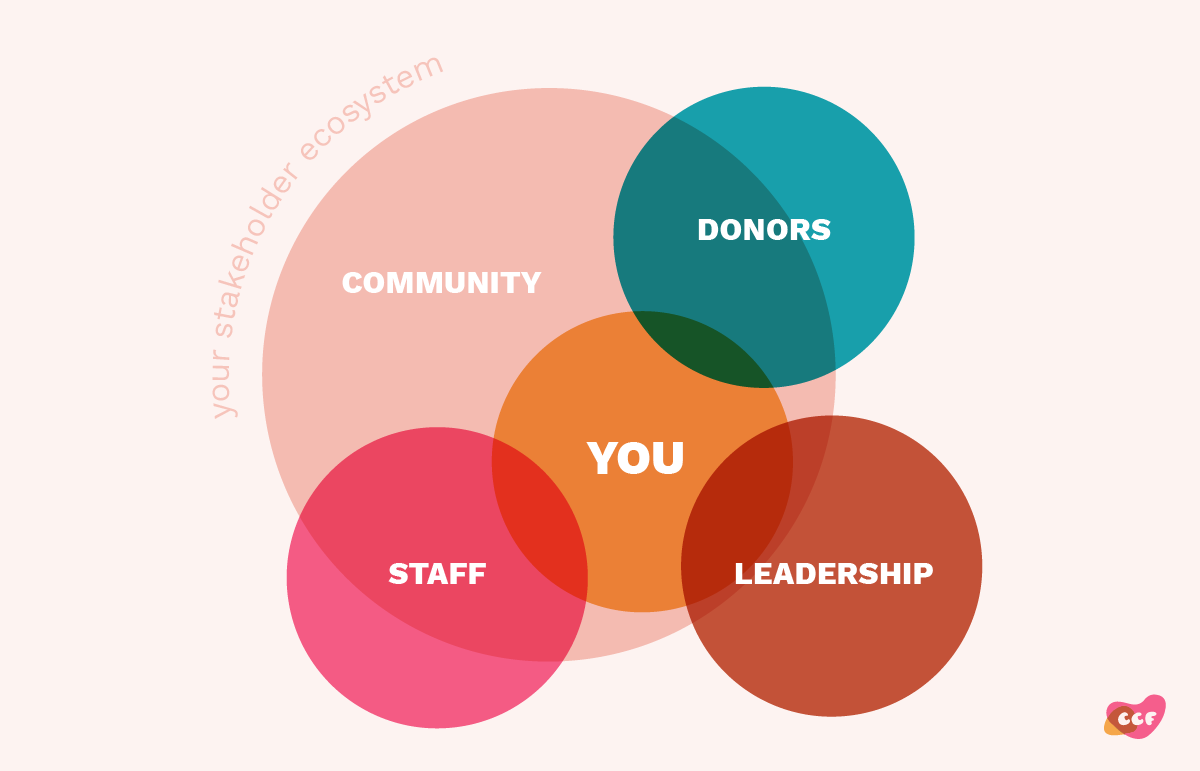
There is power in my voice and in my truth — the power to unveil, the power to spread, the power to disrupt. As Michelle explains in her piece, fundraisers sit at the center of the stakeholder ecosystem and have influence in interpersonal relationships and strategic decision-making.
I was simply too influential to keep around once I became vocal about challenging the status quo.
I could go into so much detail about what exactly happened while I worked for each of these organizations, but I’ve already spent too much time focused on them. I’ve ranted to friends and family; I’ve filed complaints; I’ve written out exit interview questions and answers; I’ve debated putting them on blast; I’ve thought about the student program recipients at each org and wondered if I should continue to advocate for them; I’ve thought about friends of mine who were still working there; I’ve cried; I‘ve channeled my energy into volunteer projects because I felt like I would never be paid for fighting for racial equity; I’ve grappled with my own self worth.
And now, after being embraced, trusted, and heard by people who want to improve our sector, after finding a therapist who understands systems of oppression, and after realizing that some people and organizations do not deserve my time and effort because they have shown time and time again that they do not want to listen or change — I realized where I want to focus my efforts.
I want to focus on you. You, who are here to learn about community-centric fundraising and about bringing anti-racism practices to nonprofits. I’d rather refocus what I learned from these painful experiences to what I wish was talked about more in the nonprofit sector and fundraising field.
One of the painful lessons I learned was that the nonprofit sector is steeped in white supremacy. While missions are often focused on communities of color, the same values, care, and practices are not focused inward on organizational operations and culture.
I believe that making internal changes toward being more community-centric will result in necessary positive changes.
Tough lessons I’ve learn
What I want to see
While I could go on and on, the most salient thing that I learned is what I really want to see in the nonprofit sector and fundraising field.
I want to see more nonprofits founded and led by BIPOC, especially Black womxn. I want to see internal organizational culture and operations matching the organizational values.
When I first entered the ‘real world’ after college, I got a job in for-profit fundraising. I quickly saw how mission and profit were antithetical and how a toxic work environment brings everything down. I thought that switching from the for-profit sector to nonprofit work would be freeing, and that mission-driven organizations would be better.
But I’ll never forget what one of my grad school professors said: “Nonprofit is a tax status, not a business model.” Mission-driven orgs are still profit seeking, and I see a lot of the same toxicity that I saw in for-profit work.
I am learning that our sector has a lot of work to do in order to realign our missions and our operations, fundraising included. But I am also learning that the majority of folx agree and are excited to put in the effort to make these improvements.
On a more personal note, I have also learned to love and embrace the fact that I am a change-maker and a thought-leader and an activist. I have realized that I want to effect change on a larger scale than just with one nonprofit. I want to change the sector and change the world. I want these changes to happen quickly so others don’t have to go through similar experiences, but I also realize that many individuals will have to band together to make waves. And I believe in us. We can do this together.

Erika Chen
Erika Chen (she/her) is a founding member of the Community-Centric Fundraising Seattle Chapter. She also volunteers her time as the Appeals Chair for the Seattle Human Rights Commission and as Vice President of Diversity, Equity, Inclusion, and Access for AFP Advancement NW. She is a consultant focused on racial equity within nonprofit operations and organizational culture, with an emphasis on inclusion and employee happiness. She can be reached on Twitter at @erika_chen and on TikTok at @erikalianchen.