Looking behind the curtain: How anonymous giving can uphold white supremacy

By Elisa Shoenberger, Journalist and Writer

In annual reports and donor lists around the country, there’s always a section for anonymous giving. It’s accepted as a norm in the fundraising world that some donors elect to be anonymous for one reason or another. The Association of Fundraising Professionals (AFP) outlines confidentiality as a right in The Donor Bill of Rights. However, recent scandals in the past year surrounding anonymous gifts raises the question of whether anonymous giving helps or hurts the work of philanthropy to create a more equitable and just world.

Types of anonymous giving

So what exactly is anonymous giving?

Basically it is giving a gift to a nonprofit but not having your identity revealed.

However, there are degrees of anonymous giving. John Taylor of John Taylor Consulting identifies three levels of anonymous giving:

  1. The lowest level of anonymous giving is the donor who gives to a nonprofit but may ask for certain gifts to be unnamed and/or unacknowledged publicly.
  2. The next level is a donor who gives to a nonprofit where all their gifts are anonymous but the nonprofit knows who they are.
  3. The top level is the anonymous donor who is anonymous to the nonprofit entirely or almost entirely.

I’ll add a fourth special category of anonymous giving: when people use their donor-advised fund (DAF) or their limited liability company (LLC) to give to a nonprofit where their identity is not known.

Benefits of anonymous giving

Anonymous giving may be a way of moving away from lauding extremely wealthy givers for their gifts.

According to Maimonides, a medieval Sephardic Jewish philosopher, there are eight rungs in his “Ladder of Charity.” The lowest rung is giving reluctantly and shaming the person who you are giving to while the top rung is basically calling for the donor to create a world that eliminates the need for charity, an aspiration I think we can all get behind.

But the 7th rung is that people give to other people where neither knows their identity. In other words, anonymous donors are ethically superior to donors whose identities are known to their givers.

There are other general benefits to giving anonymously. Robert Osborne, Jr., Principal at The Osborne Group, says that certain donors choose to give anonymously because they may not want to reveal the extent of their wealth to the general public. People opt to give anonymously because they may not want to be approached for other gifts or they may value their privacy as a whole.

Donors may also want to give freely to organizations without worrying about societal repercussions, explains Osborne. He uses the example of someone who may live in a religious town may not want it publicly known that they have given to Planned Parenthood.

Anonymous giving may be a way of moving away from lauding extremely wealthy givers for their gifts. Reports like Gilded Giving have explored how the U.S. philanthropic landscape is increasingly unequal, with extremely wealthy people giving to nonprofits across the country. Named giving, in this case, can hypothetically work in service of upholding white supremacy since the donors benefit in various ways from their gifts (which were gotten through white supremacy and growing income inequality). In this case, the donor’s public profile is enhanced since these gifts are a display of their empathy and/or a sign of their prolific wealth, both of which help their political, social, and economic standing as a whole.

In this particular case, giving anonymously removes those benefits and could hypothetically put the focus on the work of the nonprofit, rather than on the person making the gift.

However, anonymous giving can also prop up white supremacy.

Drawbacks of anonymous giving

By definition, anonymous giving means a lack of transparency … in 2019, we learned that Massachusetts Institute of Technology’s accepted substantial anonymous donations from the late sex-offender Jeffrey Epstein, with anonymity being a key part of the deal.

While giving anonymously allows folks to give to nonprofits without worrying about societal pushback, that benefit can be used for problematic causes. In other words, people can give to causes that are distasteful or hateful without facing societal consequences.

The Southern Poverty Law Center, in conjunction with other groups, released a 2020 report about how DAFs, the hot giving vehicle in recent years, are being used to fund hate groups in the U.S. Local community foundations and big organizations, like Fidelity Charitable, have released funds, at donors’ requests, to hate groups supporting Islamophobia, white supremacy, or are anti-LGBTQ (to name a few). Donors can give to hate groups using a DAF or even a LLC, another tactic that obscures their name, shielding them from the negative consequences of their gifts. They can literally eat their cake and have it too.

By definition, anonymous giving means a lack of transparency. This secrecy may cause organizations to make compromises that are at odds with their missions. For instance in 2019, we learned that Massachusetts Institute of Technology’s accepted substantial anonymous donations from the late sex-offender Jeffrey Epstein, with anonymity being a key part of the deal. MIT knew that accepting the gift publicly from Epstein would be bad publicity, and thus accepted the gifts under the veil of anonymity.

Nonprofits also can lose out from the gift announcement with an anonymous donation. When people give publicly to an organization, the gift can serve as inspiration to get others to give, Osborne says. People respond to the gift and may open their own pockets to give or engage with the nonprofit since one donor has shown that they care about the cause, he explains. And while large anonymous gifts can and are often written about in the news, they don’t have the same effect.

Does anonymous giving help or hurt philanthropy’s work towards equity?

More importantly, organizations should not let donors have power over the nonprofit just for the sake of a gift. That’s true of any donor, anonymous or not. No donor should be able to dictate how a nonprofit works in exchange for a gift.

While there are definite benefits and drawbacks to anonymous giving, it may not be the giving itself that is problematic but how nonprofits approach it. Completely anonymous giving to a nonprofit (i.e. no one or a very select few know who the donor is) is problematic. Nonprofits should be hesitant to accept donations from unknown sources since the funds could be illegally obtained, the result of highly questionable activities, or come from hypothetically problematic figures.

Both Osborne and Taylor advocate for the importance of having strong gift acceptance policies to help safeguard everyone involved. Osborne does not believe that anonymous giving is inherently good or bad, it depends on how the nonprofit handles these situations. They need to have a strong sense of clarity about their values, along with a strong gift acceptance policy, to get in front of any possible issues, he points out. Nonprofits may forget that they can turn down gifts if the donations don’t live up to their values or missions. There are nonprofits that will not accept corporate giving, because these organizations believe that accepting such donations would potentially be in violation of their values.

More importantly, organizations should not let donors have power over the nonprofit just for the sake of a gift. That’s true of any donor, anonymous or not. No donor should be able to dictate how a nonprofit works in exchange for a gift. By creating defined gift acceptance policies and keeping true to the mission and values, nonprofits can avoid these situations. Turning down gifts for any reason that runs counter to the nonprofit’s goals is something that every organization should consider.

As for DAFs, people should not be permitted to donate anonymously through their DAFs (or their LLCs) to hate groups. While Fidelity Charitable reported in their 2020 report that only 3% of donors give completely anonymously, there’s plenty of damage that anonymous donors can make to the public good. Requiring that DAF owners cannot give anonymously could be one solution. But it would be better if all DAF holders, like community foundations and Schwab Charitable, developed policies that do not allow any donation, anonymous or not, to groups designated as hate groups. Frankly, this ban would be a bare minimum in the fight against white supremacy in philanthropy (and the country).

Ultimately, it’s not anonymous giving itself that helps uphold white supremacy in fundraising and the world. But it’s a tool that can be used to help support these structures, whether it’s allowing morally questionable people to make gifts to nonprofits to avoid scrutiny or obscure someone’s identity to make gifts to hate groups. Nonprofits have a moral imperative to make sure that their gift acceptance policies align with their values and stick to them, regardless of the donor being named or not. That will be an important step in the much needed work of fundraising to fight back against white supremacy in its ranks and the U.S. as a whole.
Elisa Shoenberger

Elisa Shoenberger

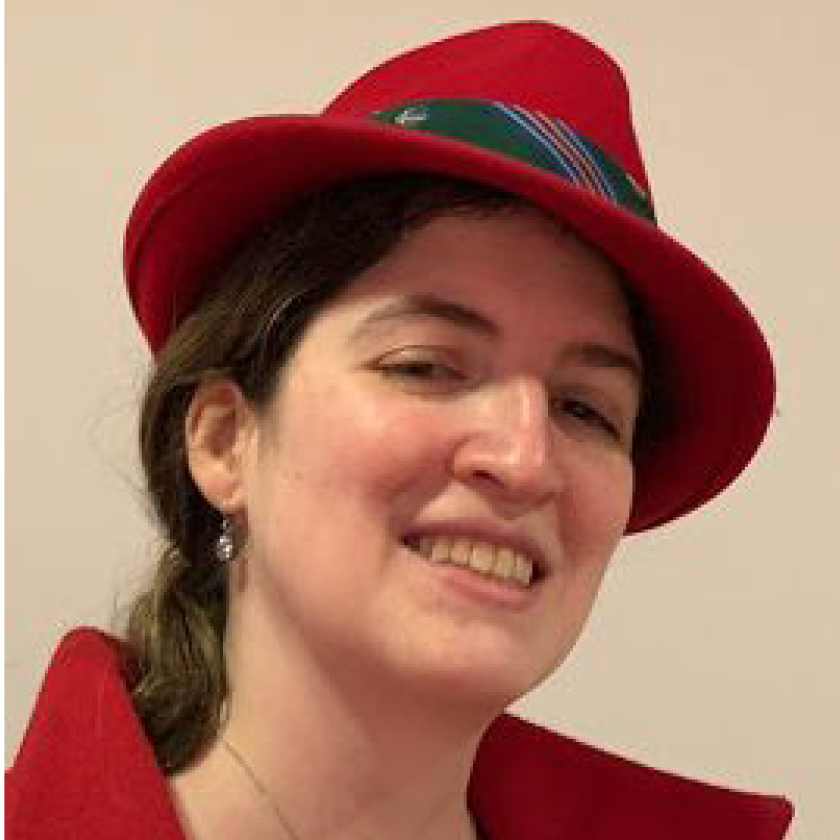
Elisa Shoenberger (she/her) has worked in the fundraising field as a prospect researcher and data analyst for over eight years. She is a Research Consultant for Aspire Research Group. She is a journalist and writer and has written on numerous topics about philanthropy for Inside Philanthropy, Brainfacts.org (Society for Neuroscience), Council for the Advancement of Education, MoneyGeek, The Daily Dot and many others. She has also written for the Boston Globe, Huffington Post, Business Insider, and many others. You can find her at @vogontroubadour or at Bowler Hat Fox, LLC.
Curb cuts and universal design: How I use my invisible disability to advocate for arts accessibility

My journey to accessibility in the arts started more than 20 years ago, when I first moved to Seattle from the East Coast. While in Los Angeles on vacation, I went to see “Titanic,” which had just come out in movie theaters. For the first time, I used a captioning device that fit into the cup holder of my seat, allowing me to read the words being spoken onscreen. It was exhilarating: I was finally able to fully understand the dialogue on the big screen.

It was important to me to be seen as someone who was just a regular nonprofit professional, a mom, a former Peace Corps volunteer, and a nonprofit jack-of-all-trades with a specialty in communications — rather than people thinking the only thing cool about me was my deafness.

And that is because I am deaf and read lips. I use two cochlear implants to hear and do not sign. So for me at that moment, having access to movies in the theater was a huge deal.

I decided then and there that we had to have captioning in movie theaters in Seattle. I got a group of friends together to form Caption Seattle and we worked with Paul Allen’s group, Vulcan, to bring captioning to the Cinerama Theater. Over time, captioning spread to other movie theaters throughout the city.

Fast forward to July 2017:

Despite having a master’s degree in public health, I was underpaid and being repeatedly asked to help with fundraising and communications work at a nonprofit where I was the volunteer program manager. As is my nature, I went above and beyond my job responsibilities to help out. After four years of successfully bringing in new donors and volunteers, creating an employee volunteering program which brought more corporations into the organization’s sphere, my boss and the executive director refused to increase my hours or recognize the extra work I was doing.

So I left that job after multiple failed efforts to negotiate a pay increase and more hours. I decided to find a job that would pay better and allow me to use my skills and strengths in a better way.

By September 2018, I had successfully completed a nonprofit management certificate program at the University of Washington but still hadn’t found a job. I was spending hours networking, interviewing, and applying for dozens and dozens of positions. I even got coaching to help me identify my professional brand so I could tell the “story of me” better.

I started thinking about other skill sets I had besides my public health and nonprofit management experience. I excelled at fundraising communications, especially the storytelling and relationship-building that went along with it.

Then I realized — wait a minute — my disability IS an asset.

Throughout this job search, my deafness stayed invisible — you would never know I had such a profound hearing loss until I open my mouth and start speaking. (I have pretty good speech after 15 years of speech therapy as a child but still have a “deaf accent.”)

It was important to me to be seen as someone who was just a regular nonprofit professional, a mom, a former Peace Corps volunteer, and a nonprofit jack-of-all-trades with a specialty in communications — rather than people thinking the only thing cool about me was my deafness.

Then I realized — wait a minute — my disability is an asset.

Because of my hearing loss, I am a better listener. I pay very close attention to what people are saying — I have to. And I have empathy for marginalized populations — that is why I went into public health.

But with this realization also came this: How could I continue to devote my life to public service after receiving constant rejections? (My growing suspicions told me this had to do with either my disability, age or both.) Something clearly wasn’t working.

I knew I had to make a pivot. And that came in the most unexpected way: through the arts.

Accessing the arts

People who engage in the arts are healthier, less depressed, and feel more a part of society. But if people with disabilities are not welcomed or included in the arts sector, how is that equitable and accessible?

One of my favorite things to do in my free time is going to the theater. As a child, my parents never let my deafness hold me back from experiencing all the arts had to offer. I had a brother who loved to act in high school and college, and I would relish helping him memorize his lines (think “Wonder of Wonders” from “Fiddler on the Roof”). At shows I would follow along with the dialogue using a script and a tiny pen flashlight — how else could I read in a darkened theater? I was often scolded by other audience members or ushers, telling me that the light from my flashlight was distracting. (And I won’t recount all the times theater staff refused to let me borrow the script.)

And when it comes to accessibility, I face challenges every single day. Going to the supermarket, a doctor’s appointment, or a business presents difficulties, particularly as lipreading is impossible when people are wearing face coverings. I have found that so far people have been gracious and willing to support my communication needs. And as a parent of two children with disabilities, I have had to advocate for my childrens’ needs, particularly in the education system.

I thought about how most theaters only have one captioned show per run of the show. This meant that I had to plan my schedule around when that one captioned show was playing. For other deaf people who use sign language, there are also few ASL interpreted shows.

Even though this one captioned show made it “accessible,” it really was not an equitable means of providing access. People with normal hearing can go to a show whenever they want. But for many people with other kinds of disabilities, it requires planning, figuring out how to request accommodations, explaining what this accommodation looks like, finding an accessible place to park, and on and on.

With my public health hat on, I started thinking about health and equity in the arts. Access to art is a vital part of the human experience, has positive public health implications and also addresses many issues of equity and inclusion. People who engage in the arts are healthier, less depressed, and feel more a part of society. But if people with disabilities are not welcomed or included in the arts sector, how is that equitable and accessible?

Starting SCAC and the Curb-Cut Effect

I decided that I wanted to change that, so I founded the Seattle Cultural Accessibility Consortium (SCAC), whose mission is to connect arts and cultural organizations with the information and resources to improve accessibility for people of all abilities. SCAC’s goals include: providing professional development and training, a website to house resources, and providing technical assistance to help guide arts and culture administrators in their journey to integrate accessibility into the structure of their organizations.

And now with COVID, many programs have moved to a virtual platform and we have had to convert our in-person workshops to online forums.One thing I talk about in accessibility work is integrating accessibility and universal design into the rebuilding of the arts sector. Universal design, much like the Curb-Cut Effect, makes it so that programs, events and spaces are designed so that everyone benefits. The Curb-Cut Effect refers to the effect that occurred after a number of disability advocates were successful in advocating that small ramps be cut so that wheelchairs can go up and down curbs in Berkeley, CA in the 1970s.

This article by Vu Le explains this so well — what happened when curb cuts were implemented: “When the wall of exclusion came down, everybody benefited — not only people in wheelchairs. Parents pushing strollers headed straight for curb cuts. So did workers pushing heavy carts, business travelers wheeling luggage, even runners and skateboarders.”

Accessibility is not just about providing captioning — it really is a philosophy to be integrated within an organization’s culture and structure.

So when we start meeting again in person once the danger of COVID has passed, we need to be thinking about how live programs and events can benefit everyone — what a great opportunity to start planning for this now.

And let’s be mindful of the fact that achieving accessibility is not just about ticking boxes and creating ramps to help people using wheelchairs or other mobility devices to enter a space.

Let me give you an example: I was asked recently to submit a proposal to a potential client about how to make their virtual fundraiser accessible. I wrote a thorough proposal including all the elements of what accessibility would look like. In the end, they declined my proposal, deciding to simply have their event production partner integrate captioning into their event. Unfortunately, this is a shortsighted view: Accessibility is not just about providing captioning — it really is a philosophy to be integrated within an organization’s culture and structure.

And accessibility not only applies to arts and culture, but across the board in the nonprofit sector, and even beyond.

This quote from a Time magazine article about rethinking the language of accessibility hits it right on the mark: “What makes a space accessible is the empathy, connection, freedom and possibility it engenders for people of all abilities and identities to come together.”

Elizabeth Ralston

Elizabeth Ralston

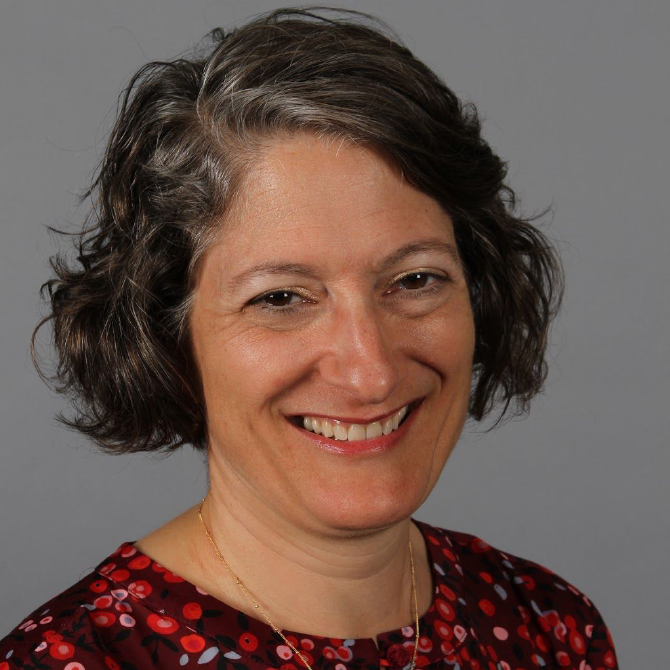
Elizabeth Ralston (she/her) has more than 20 years of experience working with nonprofits, government agencies, and academic institutions. She works with organizations to engage constituents through capacity building, program delivery, strategic communications and accessibility. Her objective is to showcase an organization’s story and impact in a compelling way, attracting more program participants, volunteers, donors, and community partners to its mission. She also helps nonprofits, fundraisers and event planners make their programs, communication materials and events more accessible. Check out this recent Seattle Times article featuring Elizabeth’s work on accessibility as well as SCAC’s Opening Doors podcast.

Elizabeth is deaf and uses two cochlear implants to hear. An avid patron of the arts, she founded the Seattle Cultural Accessibility Consortium, a grassroots effort to connect arts and cultural organizations with information and resources to improve accessibility for people of all abilities. She can be reached at elizabeth.s.ralston@gmail.com. You can also follow and like the Consortium on Facebook!

The Ethical Rainmaker: The racist roots of nonprofits & philanthropy with Christina Shimizu

By Michelle Shireen Muri, Freedom Conspiracy Principal and CCF co-chair

Episode Summary

“Faulty.” “Problematic.” “Racist.” In this episode, we talk about why these terms are now regularly used to describe the foundations that the nonprofit and philanthropic systems were built upon. Guest Christina Shimizu, a co-founder of Community-Centric Fundraising, briefly explores the relatively recent history of how these systems came to be, why they are built on deep injustices and how philanthropy and nonprofits are actually a political and economic system.

Unpack all of this with us! If we don’t examine how these things came to be, we can never hope to reimagine them, improve them or do better, to benefit the communities we are trying to serve.

Find episode notes and the podcast transcript here.

About the Ethical Rainmaker podcast

In the United States alone, philanthropy is a $427 million dollar industry, of which 68% comes from individual donors. Yet the practices, theories, and foundation of modern philanthropy and fundraising often ignore the ways in which the industry perpetuates harm.

The Ethical Rainmaker, hosted by Michelle Shireen Muri, is a podcast that hosts authentic conversations grappling with the questions that we don’t often ask in the nonprofit world. Join us as we explore some of the practices that undermine our missions and navigate the way forward with today’s resisters, reimaginers, and the re-creators of the third sector. It’s time to think differently.

Michelle Shireen Muri

Michelle Shireen Muri

Michelle Shireen Muri (she/her) is the co-chair for Community-Centric Fundraising and the host of the new podcast, The Ethical Rainmaker, launching July 29. She is the founder of Freedom Conspiracy, a small collective of fundraising consultants focused on bringing values-aligned practices to clients in the nonprofit and philanthropy spaces. She can be reached at @freedomconspiracy on Instagram.

The invisible disability: How nonprofits fail their employees with mental illness

By Ashley Lugo, a human who works in fundraising and development

My experience with mental illness is often challenged and gaslighted by family  and friends — but, I never expected that it would play such a role in my career.

So, I have a mental illness. Like any disability, there is shame and stigma associated with mental illness, and because mental illness is something most individuals generally can’t see, it also comes with much denial.

(Sidebar: I will use the word ‘disability’ to refer to all conditions protected by the American’s with Disabilities Act (ADA) and that includes mental illness.)

My experience with mental illness is often challenged and gaslighted by family and friends — but, I never expected that it would play such a role in my career. I want to share some of what I’ve experienced while navigating mental illness in professional spaces and hope to challenge managers and leaders to be better when managing individuals that don’t fit a neurotypical mold.

Moments of insensitivity at work

I have mostly worked at nonprofit organizations, many of which did not have adequate human resources (HR) departments. At my last job, the chief operating officer (COO) also acted as HR. They knew that I was dealing with mental illness during my tenure there and honestly, they used it against me. I wouldn’t have shared my status with them had it not been that I was having regular panic attacks and changed medication multiple times throughout my tenure.

Changes in medication usually come with side effects that can include a decrease in energy as well as fluctuations in mood. I thought I was doing my due diligence by sharing my mental health status since it was all beyond my control, and I knew it was going to affect my performance at work. During my exit interview with the COO/HR, she started the meeting with, “It’s really hard to manage someone with mental illness.”

And then she told me that if I didn’t get myself together, she would have to fire me.

She then spent the remainder of my exit interview asking me to identify moments throughout my tenure when I was triggered by her/the organization so that she could retroactively understand me (and thus others like me) as well as providing me with unwarranted advice on handling the ‘stress’ at my next job.

She essentially shamed me and asked me to relive my trauma for her benefit.

If you can’t see this as an act of violence, then you are part of the problem.

I had a similar experience with a different employer — also a nonprofit organization. My director lured me into an impromptu meeting where she tried to play good cop/bad cop. With no HR representation present, she made it a point to call out my depression — because I was exhibiting pretty clear symptoms of depression — then attempted to relate to it through a story of the one time she was really sad but had to get over it.

And then she told me that if I didn’t get myself together, she would have to fire me.

I quit that job pretty much the following day.

I’m so grateful I’ve been in great therapeutic relationships during both of these experiences, which helped me through them — but gosh, looking back at the experiences, I can’t help but be reminded of how insensitive and unprofessional these leaders were.

Of course, we’re all learning, and we all make mistakes. That being said, in a professional environment, what happened to me is not how anyone should speak to people, regardless of their disability status.

This brings me to the first point I want to make: Nonprofits must invest in their employees. People are not dispensable and should not be made to feel that they are. One way that employers can help to establish safety for their employees — disabled or not — is by ensuring there are proper HR protocols in place.

Nonprofits, HR, and the more-for-less management style

How can employees be expected to perform at their best when they don’t know who to turn to when they need help?

Anyone that has worked within the nonprofit sector knows that we do a lot with small budgets. This more-for-less mentality extends into how nonprofits are managed as well how many nonprofit leaders opt to function without an HR department or an HR professional. Some get around this by having a member of the leadership team or board function as HR, but I would argue that makes for a major conflict of interest.

Any HR professional job description you look up identifies key HR responsibilities to be organization development, performance management, policy recommendation, and employee relations. How can a leadership employee such as a COO, CEO, or ED be expected to manage key aspects of the organization such as fiscal health, partnerships, organizational growth and serve as a non-partisan individual managing employee relations? How can a board member who has limited contact with the organization’s employees understand and manage employee culture?

For example, the COO I mentioned earlier pretty much did more for the fiscal health of the organization than the CEO. They knew all the ins and outs of the organization, not only because they had worked there for over a decade, but also because they put into place many of the goals that the organization strove towards.

They also tried to be friends with most of the people that worked at the organization to the point where lines were extremely blurred. With them, if you had stepped out of line with them while having a friend-to-friend conversation, they would retaliate as the HR manager.

How is this healthy? How can employees be expected to perform at their best when they don’t know who to turn to when they need help?

If the annual budget apparently prevents (at least) hiring an HR professional for the organization, why not consider a creative restructuring of the budget? For example, perhaps it doesn’t make sense to pay your executive director $200K annually while everyone else is making under $50K, your budget is $2 million, and 40% of that has to go to programming?

I may be a naive, young, nonprofit professional, but even I know how to balance my budget.

Depression is on the rise

All of these elements create a pretty common nonprofit work culture, one where staff members at any given time are experiencing some form of mental health disturbance.

It was important for me to make sure I expressed how crucial HR professionals are to an organization’s staff. People need to know who to go to when they have questions regarding the stability of their roles.

But, let me bring it back to mental illness for a moment here.

I am clinically diagnosed with depression and anxiety but many people can experience moments of depression and anxiety. In a study conducted by the Blue Cross Blue Shield, they found that since 2013, “diagnoses of major depression have risen by 33 percent.” This study also pointed out that among millennials, fewer of them are seeking treatment due to lack of health insurance or poor insurance plans. Business Insider’s Hillary Hoffower also notes that depression is “a growing problem in today’s workplace because of trends like rising workloads, limited staff and resources, and long hours.”

So, let’s think about this in regard to nonprofits who have a history of underpaying and overworking employees. To get around underpaying, you see younger professionals employed in director-level positions because these folx can be asked to do director-level work but can be paid “based on experience,” which most of the time equates to a number of years in the workforce.

Additionally, many nonprofits offer little to no health benefits for employees. Sure, there is no requirement for employers to provide health insurance, but now, with the Affordable Care Act, there is a penalty if they have 50 or more full-time employees — a stipulation many nonprofits can skirt around.

And then, there is also the part regarding overworked employees. I have never worked at a nonprofit organization that doesn’t have several employees individually doing the work of multiple roles. At one organization that I worked at, one of my colleagues was the program coordinator, website and marketing manager, and a donor data manager.

When my colleague was finally fed up with the structure of their position and left the job for good, the organization didn’t hire one individual to fill their role but created three new roles! My guess is they knew no one would apply for a position so clearly mismanaged. This experience is one that I know many nonprofit professionals share and, personally, one that makes me sick.

All of these elements create a pretty common nonprofit work culture, one where staff members at any given time are experiencing some form of mental health disturbance. Mental illnesses can develop during moments of high stress and disorder because mental illnesses are thought to be caused by a variety of genetic and environmental factors.

Don’t be insensitive. Be a leader.

Even with a proper HR representative and HR protocols in place, a manager/director must be equipped to lead employees with mental illness. The following are a few things one could do as a manager to support an employee with mental illness.

Be proactive and do your research.

You can’t expect that an individual with mental illness will disclose all the details about their illness. You also can’t expect that they’ll be willing and open to answering all questions you may have about their illness. Additionally, creating an accountability plan with your employee requires collaboration between the two of you, but you should still know what is or isn’t appropriate to expect or say.

When my COO/HR manager said that it was hard to manage me because of my mental illness, they followed that up by saying that they tried to do research and couldn’t find any articles on this subject. In doing my own research for this essay, I know that is a lie. I found seven articles in less than a second, simply by Googling, “How to manage an employee with mental illness.”

It’s clear to me that sometimes managers don’t really want to help those they manage succeed at their jobs, which leads me to a point I want to make clear: If you expect employees to be complicit and perfect and if you have no desire to mentor, don’t go into leadership.

Be flexible.

Employees with mental illness will require accommodations to help cope with and manage their symptoms. According to Dori Meinert at HR Magazine, “The ADA requires most employers to offer accommodations to an employee with a mental illness — even if it is episodic. Accommodations may include reduced work hours as the employee transitions back to work, permission to work from home, or changed duties.”

These accommodations will need to be communicated between the employee and employer, and sometimes the necessity of accommodations may creep up suddenly and it may be hard to plan comprehensively in the moment. That’s why it’s important to remain flexible and collaborative as you can help to make the employee feel supported and not ashamed for requesting accommodations.

Be transparent and don’t withhold information.

Does your organization have an employee resource site? Make sure to share it with your employees. Does your organization have a partnership with a health and wellness phone resource center? Share it! Is your HR outsourced or are they a member of your organization/board? Make sure your employees know who these partners are.

While I was working at that organization with the director that threatened to fire me if I didn’t get my mental illness ‘together,’ I didn’t know who or where to go regarding my rights in that situation. They never shared any form of an employee manual nor was there a formal orientation that introduced me to our HR rep. Through my research over the years, I’ve learned that I could have sued for this incident.

As a manager, you should understand that hoarding information is a way of silencing your employees and taking away their power.

Ultimately, all of this matters because in making a safer work environment for individuals with mental illness and disabilities, you make a safe environment for all employees.

If you or someone you know is struggling with mental illness the following is a list of resources to find support.

Find Support — National Alliance on Mental Illness (NAMI)
Help for Mental Illnesses — National Institute of Mental Health (NIH)
National Suicide Prevention Lifeline
Crisis Text Line | Text HOME To 741741 free, 24/7 Crisis Counseling
Mental Health Hotline

Ashley Lugo

Ashley Lugo

Ashley Lugo (she/they) is a neurodivergent, queer, multiracial, and Latinx person. They have a degree in Vocal Performance from CCPA at Roosevelt University and a patchwork of work experiences in sectors and roles ranging from grocery store clerk to fundraiser. Currently, she is a Grant Writer at Giant Squid Group. When not working, she serves on the board of Thompson Street Opera Company and continues to sing every day in the shower, while cooking, and to her cat, Morena. They savor wine and enjoy long bike rides down Chicago’s Lake Shore Drive. Often at the same time! You can find Ashley on LinkedIn — tip them on Venmo.

Code-switching! For when being your true self impedes that promotion you want!

By Kaitlyn Rich, Community Strategist at the Redd

The term code-switching originated in linguistics, referring to mixing and changing languages and speech patterns. This term continues to evolve and in daily use, I love the definition from Gene Demby, “[…] code-switching is about dialogue that spans cultures.

Recently, I had a moment in a team meeting that gave me pause. We were discussing upcoming fundraising efforts and our messaging. I had drafted a bulk of the initial structure and content, intentionally leaving room for others to collaborate and fill in gaps, as a good initiative is never the sole vision of one in my experience. Going over what needed to be finished, a seasoned fundraiser on the team noted that we must absolutely stop using language like “folx” in our fundraising materials because funders do not know what this language means.

Others in the meeting agreed and moved on. But for me this was a full stop. I lingered on this moment, trying to understand why this did not sit well with me. Was it because I could not take constructive criticism? Was it imposter syndrome, me feeling uneasy because I was caught not knowing enough about fundraising and being exposed as too radical and unprofessional? Or was it that I had stayed silent and not voiced my disagreement?

As I sat with these possibilities, they all felt like half truths. I brought up this moment of discomfort in conversations with coworkers and friends, as I tried to make sense of it for myself. After a week, I worried that being Virgo AF, that I was just hanging onto an insignificant and falsely perceived slight. Why did this bother me!

Then it clicked.

If we are asking funders to invest in our visions of racial equity, then we are also asking them to do the work of not policing our language, not asking BIPOC fundraisers to code switch, and not center funders’ whiteness.

Let’s unpack this.

Many BIPOC professionals have an all too familiar daily decision of either being their whole selves or fitting into a box that was not made for them.

The term code-switching originated in linguistics, referring to mixing and changing languages and speech patterns. This term continues to evolve and in daily use, I love the definition from Gene Demby, “[…] code-switching is about dialogue that spans cultures.” This is a broad, multicultural perspective that notes the reasons we code switch; we are trying to bridge between our own cultures and the cultures that surround us. There is nothing inherently wrong with code-switching, and it is a part of a lived experience navigating and building relationships from each of our unique and shared cultures. But, when we code switch as a result of centering whiteness or policing language so as to be viewed as “respectable” or “professional” — we should stop and think about why we feel this is necessary.

Many BIPOC professionals have an all too familiar daily decision of either being their whole selves or fitting into a box that was not made for them. That box might dictate the way you wear your hair, the way you purposely mispronounce your own name to prioritize someone else’s feelings, the way you overdress or really, being extra in any way so as to dissociate from common racial stereotypes and so many other subtle shifts — to living a full-fledged double life.

Madeleine Corich, who identifies as biracial Chinese American, is a nonprofit grant coordinator and climate justice organizer. She empathizes, saying, “Once I got the job, I had to go shopping for new clothes, and my mom was dragging me into all these stores with shirts for $80, telling me, ‘They’re paying you more so that you can dress a certain way.’ I was like, ‘But I don’t want to.’”

Her mother’s insistence on buying ‘office appropriate’ clothes won out, but Madeleine still struggles to find the line where the aesthetic she feels comfortable in also meets a standard where she looks like she belongs; or at the least, does not cause disruption for the dominant culture in her workplace.

Even in environments that urge folx bring their whole selves, is that call for authenticity really real? … When we do show up as ourselves, we might be seen as undeserving of leadership roles, perhaps as lazy or angry, or simply not competent.

“I knew that if I didn’t put some effort and intention behind changing how I show up, I couldn’t ascend to a director position,” she told me. “When I consulted a coworker on whether she thought an eyebrow piercing would work in our office culture, she took a minute, responding ‘Yes, I think that’d be okay — you couldn’t have [our director’s job] … but for a coordinator, sure.’”

And that’s a choice a lot of us are constantly navigating.

Jasmine Keith, who identifies as biracial African American, is a recent MBA graduate. She remembers a presentation she gave at the start of our predominantly white business program about her leadership style.

“I was struggling with what I wanted to disclose about my upbringing [as a biracial woman, first generation student from a low-income and single parent household] because that’s part of who I am […] and I didn’t feel like I could talk about leadership without talking about those sorts of things, but then I also felt super vulnerable, as in, how honest can I get in this presentation? And like, yeah, that exact debate like, I don’t know if I can bring my whole self to that.”

Even in environments that urge folx bring their whole selves, is that call for authenticity really real? For Jasmine and myself, two of several BIPOC graduate students in our otherwise predominantly white MBA program, it was unilaterally encouraged that students show up as their authentic selves. But, what was not a part of that conversation was how this was different or potentially not possible for BIPOC students or professionals, especially Black and Indigenous folx.

When we do show up as ourselves, we might be seen as undeserving of leadership roles, perhaps as lazy or angry, or simply not competent. As this Harvard Business Review (HBR) article by Courtney L. Mccluney, Kathrina Robotham, Serenity Lee, Richard Smith, and Myles Durkee about the costs of code-switching articulates: “Companies should consider if they are asking their Black employees to do something that they will then be punished for. Specifically, are you asking Black employees to bring their whole selves to work only if they also assimilate with dominant cultural norms?”

It’s a serious flex. And there is a cost if we choose to code switch. It’s energy and emotional labor that involves being aware of and prioritizing a dominant culture’s comfort over our own day in and day out. And there’s a cost if we choose not to, like Madeleine noted, potentially not advancing in our careers or securing funding.

So, what should we do?

This isn’t on individuals to solve alone. Organizations are responsible, as are the systems we operate in. When we think from a systemic perspective, the way nonprofits operate in the U.S. lock us into a cycle of dependency with predominantly white funders. As Sidra Morgan-Montoya put it in their essay, “The nonprofit industrial complex helps the rich maintain control of their wealth — and of our movements.”

Consider your criteria for grants. Do you throw out proposals based on vernacular or grammar? Consider that the delivery is less important than the information and impact of the proposal.

That’s a pretty large issue, and I won’t dive into it here. But, I think it’s clear that organizations can do more (and then more and then more). Organizations can’t claim values if they don’t align action to practice them. If it is A-OK for BIPOC employees to not code switch, then they should not feel they have to in order to succeed in your organization or secure a grant from your foundation.

Diversity is one thing and building an inclusive workplace culture is another. Regardless of where your organization is at with diversity, implementing best practices for diversity recruiting will not result in long lasting employment without creating a culture of inclusiveness. This is where an organization can continue to put action to practice by creating space for conversation about what is happening in the world, especially right now. Talk about systemic racism, racial equity, and issues that affect BIPOC employees outside of the work environment.

Too often the dynamic in cross-racial relationships (platonic, professional, romantic, friendship, and everything else) is the person of color always has to bring up the topic of race. Alleviate this by doing some heavy lifting for your employees of color. As the HBR article puts it, “One way to strike this balance is for company leaders to address issues outside of their companies that affect Black employees’ work experiences. Inviting these conversations demonstrates that the company values Black employees beyond their individual contributions to the bottom line.”

And while you’re at it, talk to your funders and investors about these issues. Let them know they are important to your organization, your staff, your board, and your mission. Our goal as fundraisers is to build support, resources, and capacity for our mission and impact. Our goal is not to make funders feel comfortable.

Or if you’re a foundation, let your grantees know you care about racial equity and put your money behind that value. Consider your criteria for grants. Do you throw out proposals based on vernacular or grammar? Consider that the delivery is less important than the information and impact of the proposal.

And don’t let not knowing what a word means throw you off. You can always look it up.

Kaitlyn Rich

Kaitlyn Rich

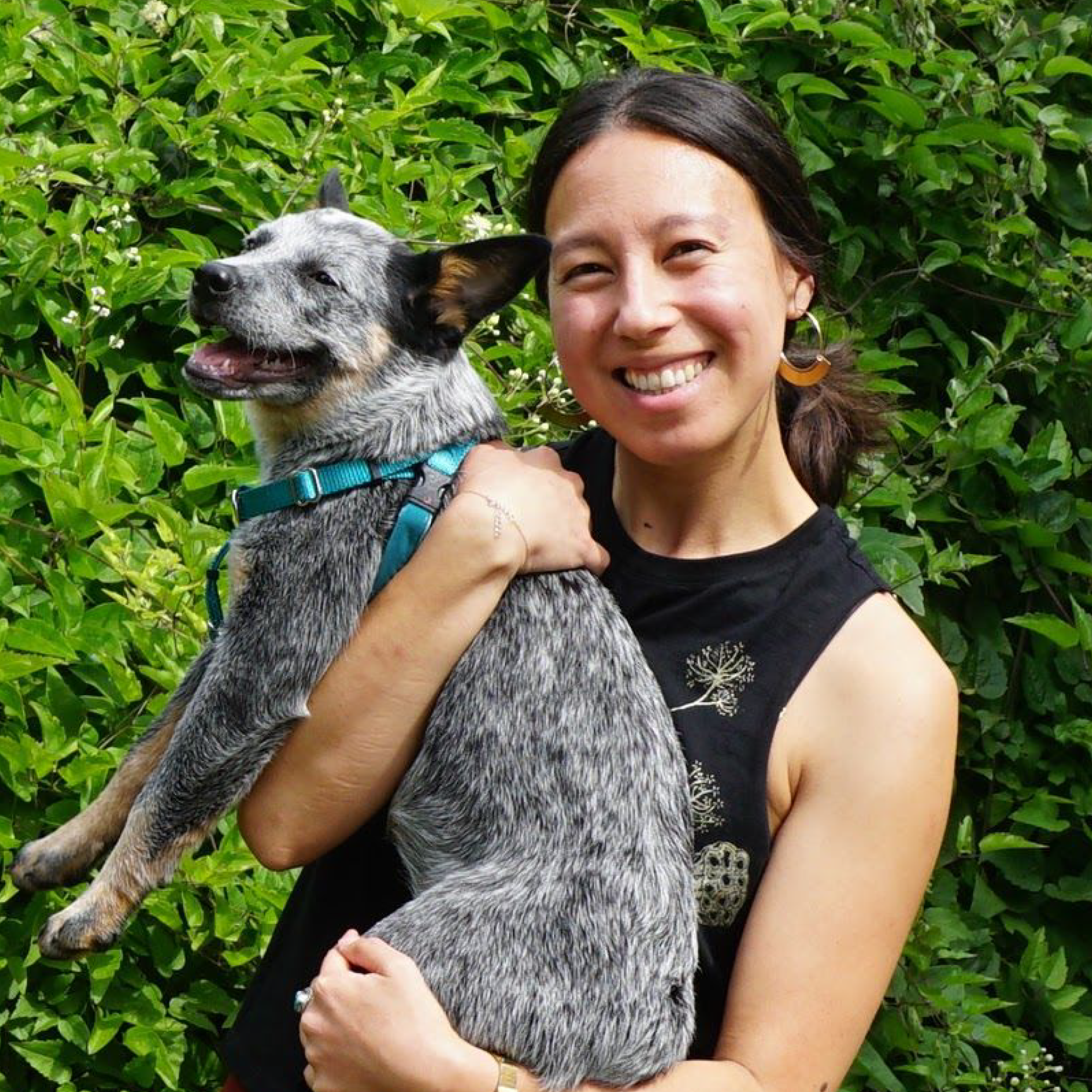
Kaitlyn Rich (she/her) is an intrapreneur, community strategist, and analyst. She is currently based in Portland, Oregon, was raised in the Great Lakes, and her ancestors are Korean, Italian, and Polish. She believes in bridging the gap between purpose and profit for as long as we live under Capitalism. When she’s not working from home, she’s out foraging and wildcrafting in the woods, rock climbing, and giving all the belly rubs to her blue heeler pup. She can be reached at her website and blog, Kaitlynrich.com or on Instagram @kaitlynkrich.