The untold dress code in philanthropy: how and when we choose to police gender expression

By Carlos García León, Queer, non-binary, Mexican-Statesian, and fundraiser

As fundraisers, we are not allowed to move past the heteronormative standards of behavior or even wear clothing that is more acceptable in other departments.

In a previous job, my development supervisor bought me nail polish since she knew I enjoy wearing it. This was evident, as I had done so in the office previously.

However, this supervisor was also the one to tell me to remove the nail polish before I went to any donor event or donor meeting.

The message was clear: You can be whoever you want to be, as long as it doesn’t interfere with or inconvenience our revenue streams.

Yet, my colleagues in the artistic department received no such messages. They would come to work dressed fabulously, with their dyed hair and wearing chunky jewelry — while also being placed at the same tables as our donors during galas.

This was a complete disconnect for me — and I didn’t understand it initially. As years went by, it became evident that being able to variate what is perceived as “normal” is reserved for creative types and not for those who deal with money or who work in other “serious” jobs.

As we keep exploring and discussing the multiple spectra of gender and gender expression in the sector, I often feel and have seen that trans and non-binary people have more of a disadvantage working in non-profit philanthropy. As fundraisers, we are not allowed to move past the heteronormative standards of behavior or even wear clothing that is more acceptable in other departments.

There is a major problem here — although many don’t understand this — in seeing that creativity is necessary in the field of fundraising.

The way we view dress codes now is problematic, too

This barrier isn’t often explicitly addressed in the dress code of organizations, but the rules of heteronormativity and the consequences of breaking heteronormativity definitely exist in our field.

In philanthropy and fundraising, it is already hard to not be white, male, and heterosexual. In addition to the lack of staffing of trans and nonbinary BIPOC individuals and the erasure of our identities through the erasure of our writings, we are doing an additional disservice by not allowing these folx to express themselves authentically in the workplace.

What is especially noteworthy is that we do this even more so when it comes to donors, who we generally and collectively envision as more conservative and uncomfortable with these types of conversations and topics.

Let us not forget that this is an intersectional issue. Expressing yourself outside of your perceived gender is celebrated if you are white and thin (i.e. Harry Styles, Nico Tortorella, Ezra Miller). However, this kind of expression from BIPOC and/or body diverse individuals is not as admired, like Alejandro Speitzer, Jaden Smith, or Sam Smith.

This barrier isn’t often explicitly addressed in the dress code of organizations, but the rules of heteronormativity and the consequences of breaking heteronormativity definitely exist in our field.

According to the National Center for Transgender Equality and the National Gay and Lesbian Task Force in 2011, 47% of workers have experienced an adverse job outcome because of their gender identity or expression, including being passed over a job, not getting a promotion, or even being fired.

It has only slightly gotten better. The 2015 U.S. Transgender Survey report states that 30% of respondents were fired, denied a promotion, or experienced mistreatment at their jobs because of their gender identity or expression in that past year.

These consequences are still happening and begin at young ages, too. Only last month, a student at a Texas high school was suspended for simply wearing nail polish since it went against the school’s dress code. (This seemed extreme to me as well as such a double standard. In my experience growing up and going to public school, teachers and school administrators were not as vigilant when girls wore makeup or nail polish.

As for me — during a mock job interview only two years ago, I was reprimanded for not wearing a suit and tie and for choosing to wear heels. My mock interviewer went as far as telling me that they would never hire me at their company, even if I was qualified.

The policing of gender expression needs to go

Gender policing should be removed from all dress codes and diverse gender expression should be allowed at all work events. Let people wear what they feel most comfortable in.

Dress codes, whether explicitly written or not, are just another barrier of classism that our art and nonprofit sectors already have a lot of trouble dealing with.

You might be thinking: “Of course, Carlos, wearing a mesh glittery top to a fundraising gala is a dream. However, in my opinion, I don’t think that we as a nation are ready for the wearing of such things in the course of our jobs, yet.”

For those who are currently worrying and calculating that slippery slope problem of “how far is too far” — in my experience, those who choose to stray from heteronormative clothing are wise in choosing a look that feels proper to the setting. As a collective, we should make sensible decisions in order to still do our work at such events.

Allow for these moments of expression to happen with donors

Give your donors the opportunity to experience your fundraiser’s true self.

Organizations often act like their missions and policies are unchangeable, and therefore they are unwilling to accept the benefits of change and create moments of discomfort that could provide a helpful lens for what is holding these systems of oppression in place. It is a harmful practice, one that creates inauthentic or fabricated personas, centers whiteness, generates toxicity for BIPOC individuals, and leads us all to hide the reasons why a person is or isn’t qualified for their job in the first place.

Many times, when we are unwilling to change a policy (or a mission) to one that will have a good impact on marginalized communities, particularly when it involves dress codes, the result is gender-expansive individuals hiding themselves for their own safety or for job security.

Give your donors the opportunity to experience your fundraiser’s true self. It’ll not only make the workplace better for your staff, for the organization, and for retention, but it will also give your fundraiser the chance to speak with donors about other issues that go hand-in-hand with DEI statements. (After all, a reason gatekeeping exists is to make donors as comfortable as possible.)

We cannot justifiably make DEI statements and DEI promises without being willing to challenge the comforts of our donors. If they aren’t willing to listen, if they make negative comments about outfit decisions, or if they don’t make an effort to grow after being given the chance — drop them.

I know it’s not an easy decision, especially for those with few donors, but in this time and age, there is simply no room for those who aren’t even willing to make the effort.

Let me tell you, from my perspective as a queer and non-binary person of color, the more out and proud you as an organization are in your stances, the more people will come and support you from near and far. Yes, there will be people that leave, but if you are committed to changing for the better, you have to learn to be okay with that. Not only for your future employees, but also for your future donors and patrons.

Younger generations have become bolder in how they express themselves. Men are painting their nails. Women are wearing suits and baggy clothing. Gender norms are things that the younger generations are breaking down and are no longer placing on themselves, and much less their clothing. These people are our future donors!

If organizations want to attract and sustain these younger generations, they will have to come to grasp that policing gender expression at work is no longer viable. To put it frankly, it’s not a good business strategy for the future of the arts, the future of the fundraising field, the future staff, and the future of the potential art lovers (donors) that have yet to experience what we are bringing to the stage.
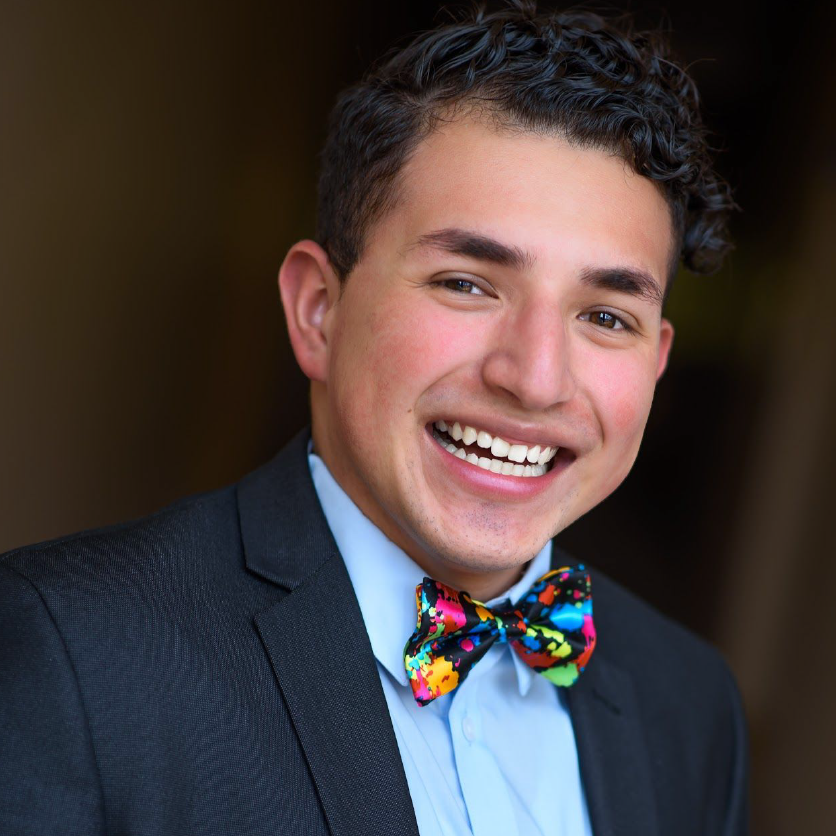
Carlos García León

Carlos García León

Carlos García León (he/they ; el/elle) is a queer, non-binary, Latine, Mexican-Statesian, and fundraiser. They were born in Atlixco, Puebla, Mexico, but currently reside in the stolen land of the Shawnee and Miami tribes, also known as Cincinnati, Ohio and work as the individual giving manager of Cincinnati Opera. Their work, both in the arts and through writing, is driven by a fight for cultural equity, decolonizing the arts, and social justice. Outside of working and writing, Carlos likes to stream TV and movies, read a good book, learn German, take naps under their weighted blanket, drink milkshakes, and look for the next poncho to add to their collection. They can be reached via email or on Instagram, Twitter, and other social media platforms @cgarcia_leon.
Discomfort is the new black: 7 ways to prioritize discomfort so that you can learn to be a better human — for yourself and for the world!

By Nina Yarbrough, Business Development Manager & Consultant

Other than learning to throw a decent right hook, resting in my own discomfort has been integral to me surviving 2020.

In 2018 I started training with Coach Tricia Arcaro Turton at her boxing gym, Arcaro Boxing. It’s located at 1208 E. Jefferson St., in that weird zone where Seattle’s very white, used-to-be-hella-queer Capitol Hill neighborhood bleeds into the once-upon-a-time-hella-Black (historically speaking) and used-to-be-affordable Central District neighborhood.

Coach Tricia, or just “Coach” as many of us call her, is a powerhouse. If you look up Unrelenting Badass Witch on Wikipedia, her smug beautiful mug will be staring right back at you.

And don’t be mistaken. She’s not a witch because she’s evil and masochistic (although she totally is sometimes). Coach is a real-deal broom-rider because the things she’s been able to get my very squishy body to do over the past few years is nothing short of Ms. Frizzle-level magic!

Despite being in a deeply committed relationship with her long-time girlfriend Jen Hamann, who is also a former U.S. National Boxing Champion, Coach and I are going steady until one of us either leaves the state or dies. (Translation: She’s in my corner for the long-haul, ready to help me achieve my goals to become a better, less crappy human being, capable of knocking bitches out.)

One of the ways we’re accomplishing this is learning to wrestle with my least favorite concept: discomfort.

Other than learning to throw a decent right hook, resting in my own discomfort has been integral to me surviving 2020. Not just that, but it’s been important for me to figure out what pain and my own patterns of behavior have to teach me — and learning these things have also been part of the reason I was actually able to thrive during the aforementioned year from hell.

It was through working on my exterior shell with Coach that she (very sneakily might I add) got me to reckon with the reality of my interior framework. Who knew boxing was about more than fancy footwork and learning to properly connect body shots?

Given that none of us know what 2021 has in store, I thought I’d share some practical advice on how you can also feel less crappy and hopefully thrive more in the coming year. (Lessons in knocking bitches out should be booked directly with Coach though.)

1. No one is coming to save you, Frodo, so use the force and Wingardium Leviosa your ass to the outcomes you want.

Take a lesson from every Black- and Brown-bodied womxn who ever breathed: You have to be your own hero.

There will never be a perfect time to start that new project or decide to leave your currently-messed-up situation.

Which is kind of a relief because if you did have to wait for some precise moment or for a nondescript [male] savior, none of us would do anything — except wait. Angela Basset wouldn’t have taught us to exhale and Megan wouldn’t have gifted us with a step-by-step plan for being our most savage selves. We wouldn’t have Netflix for heaven’s sake!

To be clear, this is not an endorsement of “pull yourself up by your bootstraps” meritocracy. That is a myth we need to let go of. This is, however, an invitation to place yourself first and be your biggest champion. It can be hard to actually center your own wellbeing, but trust me, it’s worth it.

2. You may feel like you’re on your own, but you aren’t alone. ASK FOR HELP, DUMMY!

While I for damn sure have gotten to where I am today through my own effort, hard work, and determination, I also have been fortunate to have an incredible support system around me (ie. the Unrelenting Badass Witch).

In the early days of Coach and me working together, I struggled a lot with the belief that I had to do everything on my own.

I had to immediately transform myself into someone who went to the gym. I had to fix over three decades of body image issues and magically develop a healthy relationship with food. I HAD TO GET FIT AND BECOME THE SKINNY QUEEN THE WORLD DEMANDED I BE!

As you likely imagined, I hit several walls (and continue to do so).

The funny thing is, Coach never once demanded any of that from me. It was me — once I decided that I was going to ‘make a change,’ all of a sudden, I believed I had to change. As in, I believed I needed to completely evolve into something I had never been before.

The first year of our relationship was Coach trying to get me to see that:

A. Change and transformation are long and gradual processes.
B. She was actually on my side and I wasn’t doing it alone.
C. The first part of my journey of wrestling with discomfort, was learning that I could not do it by myself and muscle through the uncomfortable parts of sitting with myself.

I would need help, time, and support from people that cared about my progress and who were invested in my success.

I was a dumb little potato, but Coach stuck with me.

All that to say: Be an independent, fierce little fox, but also know that things don’t have to be as hard as we make them sometimes. As you work to be the person you most aspire to be and build the world you want to live in, know that you have people there with you who want to see you flourish as well. Closed mouths don’t get fed. Need help? Try asking for it.

3. Get curious — the sexy kind of curious — and by that, I mean get deeply introspective and existential. So SEXY.

Did you know that a global pandemic that forces you into isolation and distances you from human contact is a great way to have a deep existential crisis? 2020 sure was fun.

In all seriousness, getting curious and introspective with myself have been incredible gifts. The pace of our everyday lives is such that we never have time to think deeply about who we are, why we get up in the morning, and what on earth we are doing with our lives. When that hectic pace gets removed and you have to keep your butt in your own little world, you are guaranteed to start questioning some stuff.

It doesn’t feel good to stare yourself squarely in the eye and say, “I don’t like my life. I don’t like who I have become.”

(What the hell do you do with that!)

It is very uncomfortable to admit that maybe the choices you have been making — the job you have, the circle of friends you’ve acquired, or even the partner you settled for — none of them have been putting you closer to the life you actually want.

Don’t shame yourself over these realizations or for the choices you’ve made. Brené Brown has taught us wonders about the lethal nature of shame and how it can derail your growth. Instead, try vulnerability on for size. See how being open and compassionate with yourself in conjunction with your new sexy curiosity will work wonders for you.

4. Value progress over perfection, as taught to me by Rowena Tsai.

YouTube has been my new companion during the pandemic. The countless videos of ambient coffee shop noises, the live streams of lo-fi hip-hop beats, and all of the Bossa Nova work jazz that I have listened to is ridiculous. There’s an eight-hour video called Magical Tearoom ASMR Ambience that has over 2 million views, and I love it. The internet is beautiful.

One of the other joys I have come across are posts from a woman named Rowena Tsai. She is part productivity maven, part positivity pixie, and part self-improvement advocate. One of her videos has been hitting me in my soft and squishies, and it’s a concept that we can all benefit from. Watch the full video here, but the major takeaway is the idea of embracing progress over perfection.

Striving for excellence in whatever you do rather than trying to get everything right all the time can assist in placing you more firmly in your purpose.

How? If your focus is on progress rather than a particular product or outcome, you can’t help but be more accepting of the incremental steps that compound, one on top the other, that ultimately result in reaching your desired outcome.

There is nothing wrong with setting goals or wanting to achieve great things. But if your attention is always on the ‘thing’ itself, then you will miss out on all the wonderful parts of why you are striving for the ‘thing’ in the first place.

5. You’re not that smart. Read a book, you basic bitch.

We’re all a bunch of idiots floundering around trying to figure this shit out. Just like asking for help is critical to your growth, so too is seeking out good information. And surprise, you live in the modern world where, through just a few clicks, you have access to vast treasure troves of boundless knowledge.

Our problems are not unique, which is a blessing. That means that other people — smarter, majestic, nerdier people — have suffered as you have suffered, and they have written about it. Gorgeous big-brained dynamos have documented their journeys or spun fantastic tales with incredible lessons just waiting for you to stumble upon.

I know it can be hard, in a world filled with so much content at the tip of your fingers, to carve out time to read books. We are inundated with so much data and crap that it’s shocking that we ever make choices at all.

I promise you, though, if you start investing in books, then a few things will happen.

The first is that you’ll find that in setting aside time to read more, you’ll need to make an intentional choice to put yourself first — whether for a few minutes or a few hours.

Secondly, you’ll likely discover some cool shit that actually makes you think and wonder and question.

Lastly, you will get smarter (or at least marginally less dumb.) The double-edged sword of having access to so much information is that we like to think we are smarter than everyone else that came before us. (Remember how we have Netflix?)

The joy of books and reading though, is that you are quickly cured of any notion of your own intellectual superiority. Humbling oneself and seeking out the wisdom and guidance of different people is liberating. Challenging and time consuming for sure! But the benefits of reading what others have experienced? Learning to grow your empathy as you follow the story of a character you love or even despise? You can’t buy that.

Hitting your head against a wall trying to figure out why your organization can’t seem to stick to systems? There’s a book for that.

Need a little confidence boost before you prep for your end-of-year review? Someone’s written an epic fantasy with a lead heroine that’ll make you feel braver than you thought possible.

And I am by no means a purist when it comes to reading modes. Kindles, audiobooks, PDFs, or old-fashioned handbound leather tomes — all of them are spectacular.

(Still looking for a way to get back into reading? Watch this incredible video by Max Joseph called “BOOKSTORES: How to Read More Books in the Golden Age of Content.” Be warned! It is book porn, and it will get your brain moist.)

6. Get therapy. We should all be in therapy.

Living on the West Coast, in Seattle specifically, I feel fortunate to reside in a place that is more open and embracing of prioritizing one’s mental health.

In BIPOC communities though, it is especially troubling to see how few resources and energy gets invested in the mental, emotional, and spiritual well-being of the people. Whether you call it therapy, counseling, or ‘talking to a friend,’ I encourage everyone to find someone to talk to.

My therapist, Shirley, has been a godsend. I was fortunate to meet her right at the start of the pandemic and continuing our sessions virtually has not only been a great touchstone for me, but they have allowed me to work on areas of my life that I thought weren’t important enough to devote attention to. Talk about discomfort.

Wrestling with your demons or just acknowledging that you are not OK is beyond difficult. Talking with Shirley is one of the easiest and hardest things I do in my routine. Easy because talking to someone who has enough distance from my life, that has to listen to me because I pay them, feels amazing.

It’s also difficult because she’s a professional that can call me on my bullshit while providing me with the tools that I need to be accountable to myself. Adulting sucks but getting out on the side of 2020 with greater perspective, more connection to myself, and a more discernment with regards to the crap I will or will not deal with is worth it.

7. Lay on a softball. Only a small portion of the cool kids are doing it.

When you work with Coach Tricia you learn a few things. You learn that she’s usually right and she teaches you that our default setting, as modern people, is to stay in our most comfortable patterns.

You also learn that when she puts you on the cable machine and has you perform a press or other movement that is meant to correct a dysfunction, trying to wiggle out of that movement will piss her off.

Coach, when she is pissed off makes my life miserable.

How?

She has me lay on softballs. In her eyes, it’s not really a punishment because it will ultimately work out knots or adhesions in my body that caused me to want to wiggle in the first place.

If you’ve ever used a foam roller to work out a tight spot on your side or help to stretch your IT band, then you’ll know why she has me lay on softballs. It’s called myofascial release, and it’s one of the most uncomfortable, sometimes outright painful aspects of the restorative work she does with me.

The lesson I want you to take from this is: The reason I voluntarily subject myself to this kind of discomfort and pain is that I know that what’s on the other side of that pain will be better for me. The dysfunctions themselves and how they manifest in the body should not be viewed as “bad” or taken to mean there is something “wrong” with you. In fact the opposite is true! Our dysfunctions and pain points can offer road maps to remedies and they offer insight into our histories. Whether it appears as a physical adhesion of myofascial tissue or the ache from emotional trauma, these pain points can inform us of how we might create a better way, a more holistic way of being.

The question is, are you willing to wrestle with the beast of discomfort, however it shows up, and learn what it is trying to teach you?

There will not be a magic pill that can ensure 2021 isn’t a complete landfill of an experience. Beyond a worldwide pandemic, the new decade also brought, to the general population, the kind of clarity that marginalized people have been forced to live with for centuries.

I don’t want to go back to the way things were. Prior to the pandemic, we prioritized profit margins over health and we let fascism run amuck and piss all over the best ideals of our country’s inception.

In the years to come, I would like for us all to move forward in a holistic manner that centers the well-being of Black, Indigenous, and other people of color. More than self-care, we need to:

  • Be the heroes we have always needed
  • Learn to ask for help
  • Get curious about our own interior world
  • Prioritize progress over perfection
  • Learn from those who are wiser than us
  • Seek therapy
  • Rest in our own discomfort

If we do these things, we might actually create a legion of whole-hearted human beings that have the energy, capacity, and empathy to show up for one another.

I wish you love, good food, and great rest in the year ahead. You deserve that and so much more.

Nina Yarbrough

Nina Yarbrough

Nina Yarbrough (she/her) has a background in theatre performance, spoken word, and playwriting. She has had a multi-faceted career, which has spanned 14 years both in the arts and the broader nonprofit sector. An Ohio transplant, Nina moved to Seattle in 2014 and obtained her MFA in Arts Leadership from Seattle University two years later. She began her work in fundraising as a member of Seattle Opera’s capital campaign team and currently works for The Central District Forum for Arts & Ideas as the Business Development Manager. A theatre kid at heart, Nina is an avid crafter, owning more books than she’ll ever have time to actually read, and trolls her roommate at least three times a day. This year, she hopes to publish her first collection of poetry, and you can learn more about her artwork by visiting her very cool website, ninayarbrough.com(Photo cred: Jonathan Vanderweit)

How Growing Gardens went from a nonprofit that ignored racism to one that is actively practicing antiracism

By Alice Skipton, communications consultant

Rima Green

“I don’t help people. I provide tools for people least served by the system,” says Rima Green, Growing Gardens’ Lettuce Grow program director. A Portland-based nonprofit, Growing Gardens uses the experience of growing food in schools, backyards, and correctional facilities to cultivate healthy and equitable communities.

Retired master gardener Rima knows what it means to be least served.

“One of the things I love is telling people I did time,” she says. “What happened to me happened entirely out of rage. Everyone had written me off, the judge and my family. I did two separate crimes, one as a juvenile and one as an adult. So I spent time in both adult and juvenile correctional systems. At my probation hearing, the judge said, ‘You’ll be back.’”

Rima didn’t believe him. Instead, she thought, “I will succeed.”

A Native American, after her release Green paid for college with Pell Grants. After earning two engineering degrees and completing graduate school, she secured a job in the tech sector.

“I had affirmative action in my favor,” she says. “In me, they got three: a woman, a minority, and an ex-felon. HR had an orgasm.”

By way of congratulations, her brother sent her a New York City subway token and a message: “Never forget. You are here because you are a token, and you have to do better than anyone else.”

Being ‘a token’ took its toll.

“I was so angry,” she says. “I was driven to succeed by a sense of rage and distrust that came out of the prison time. I wrecked relationships with my husband and children because I was angry and didn’t trust people.”

Today, Rima has a particular reason for doing the work she does.

“I’m a tough person, and I don’t think anyone should have to go through that. The prison system is still set up to punish more than rehabilitate. Until we rethink incarceration and what we hope to achieve out of incarcerating people, we will continue to release angry people with very little hope of a better life,” she says.

That’s why she began working for an organization that did work supporting prison populations. When that organization merged with Growing Gardens in 2015, she wanted to continue to do her best work, but felt frustrated with its leadership’s approach.

“It trended very heavily to the do-gooder, bestowing our knowledge and help on the deserving poor,” she says.

It was a model familiar to her, not only in the nonprofit sector but also personally.

“Like every mission school, it’s everything that is wrong with the reservation system,” she says. “We’ve had enough experience with the ‘great white father.’ Been there, done that.”

A failure of culture

Amber Baker

Amber Baker, who is white, joined the Growing Gardens board in 2016, hoping to offer some perspective on creating community-led, participant-led programs. As the former leader of Village Gardens, another Portland-based nonprofit, she became connected with the organization during their search for a new executive director. Baker knew one of the candidates, Jason Skipton, who had worked at Village Gardens.

During Amber’s second board meeting, Jason, who is white and was newly hired, brought up a request from staff. Staff wanted to post on social media in solidarity with protests marking the second anniversary of Michael Brown’s death in Ferguson, which had gained national attention. Being new, Jason wanted to know if it was something he could approve or if the board needed to be involved.

A discussion followed.

Jason Skipton

The board decided that the request fell outside the organization’s mission and scope. They didn’t want to post a statement.

Looking back on that meeting, Amber remembers that the decision upset Jason. And while she spoke up in favor of putting out a solidarity statement, nothing came of it.

“We were a lot of people that didn’t know each other,” she says. As a new member, she was uncomfortable. “It was a Robert’s Rules kind of meeting — dull and long, and nobody said much.”

At another meeting some weeks later, Amber saw what looked like a problem on a report, a significant shortfall. While not a financial person, as a former director of a nonprofit, she had some experience with profit and loss statements — yet, someone with more financial experience said that it was fine.

“I had my own inferiority thing,” she says, and so she let the matter drop.

Not long after, the organization had to let people go. As Amber went on maternity leave, the board voted for closed-door meetings while they made layoff decisions.

This marked one of the organization’s lowest moments but also a turning point. The board was making critical top-down decisions while being entirely out of step with the heart and soul of the organization’s work. If it went on as-is, the organization likely wouldn’t survive.

Staff members knew that they were doing social justice work, and they also knew that they couldn’t continue with a board working in ignorance and isolation. Change couldn’t wait.

Emily Keeler

So when two staff members, Rima and Emily Keeler, got the opportunity to attend an Undoing Racism workshop with the People’s Institute for free instead of paying the standard $300 fee, they took it.

“I hate diversity training,” says Rima. “In a lot of cases, it’s a lot of hand-wringing, going over the same ground and then going back to what you were doing before.”

But by the second day, Rima was thinking: “This is the best thing I’ve ever done.”

She and Emily went back to Growing Gardens and said they would each personally pay for another person to attend. More staff members went.

The board was another matter.

“People were confused,” says Amber. “They didn’t understand the point of the People’s Institute.”

But pressure increased, with staff sending a powerful message as they continued to offer to pay for board members to attend.

Over time, as new members joined the board and others left, the new board president participated in the workshop and became invested in getting others to follow. A subset of the board decided to do a presentation to the larger group to clarify why it wasn’t mission creep for a garden organization to address racism.

The combination of pressure from staff and key board members finally turned the tide.

“A couple more people went and had a profound experience,” says Amber. “Then we said, ‘If you want to participate as a board member, you have to go.’”

Gaining momentum

Rashae Burns

For over 15 years, Rashae Burns, a Black woman, worked as a healthcare professional doing outreach and equity work related to social determinants of health. In 2017, she needed to make changes for the sake of her own health.

“I wanted to eat better,” she says. “But it was super expensive, so I started looking at gardening.” She found Growing Gardens and signed up.

Rashae loved the program, telling as many friends and family members about it as possible. After eight months of gardening, Emily, who is white, asked if Rashae wanted to join the team as a community organizer (she did.).

And in 2020, Rashae was promoted, becoming the Home Gardens director. When she started, she saw an organization that required everyone to attend Undoing Racism training and one that was asking many questions about how it did its work, from hiring to funding to community engagement.

“I took the training,” she says. “As I engaged with the team, I saw that our leadership was looking for ways to grow in equity and uplift people.”

She and others also pointed it out when they saw inconsistencies. One of those was the expensive-to-attend annual fundraising dinners hosted by well-known chefs in the area. Rashae noticed that a lot of the community organizers weren’t attending. “When I went, I got an uncomfortable feeling of not belonging,” Rashae says.

She talked about it with Jason, telling him, “Our funders don’t know who is doing the work. Do we want funding from people not aligned with our work and our principals? We do anti-racist work.”

Hiring practices represented another problematic area.

“Frankly, I can teach anyone to do Excel,” says Rima. “But I can’t teach people about communities. If you aren’t of a community and blunder in, display your ignorance, and then assume you are doing the right thing, that’s white supremacy.”

Reconnecting as human beings

Shireen Duke

In addition to finding more community-centric ways to fundraise and revamping hiring practices based on a different set of values, Growing Gardens continued to evolve its board. Shireen Duke became a new member in 2017.

As a Black fifth-generation Oregonian whose father worked on the police force, she lived the Civil Rights movement. Her family currently experiences gentrification of the neighborhood where they live.

Like Rashae, she came to the organization with no gardening experience. She started as a participant and then became a master gardener. On her master gardener volunteer days, she sat next to fellow volunteer Rima. Soon she joined Rima when Rima went to talk to inmates. Growing Gardens also asked Shireen to evaluate a Sauvie Island program to see if a partnership might make sense.

As a retired employee of Mt. Hood Community College, Shireen spent her career as a student services specialist helping people find their way on their journey. She continues to help people find their way today.

“I’m that older person, that momma, aunty person, where you talk about vegetables and life and other problems,” she says.

“When you start acting like humans, things change,” says Amber. She credits the People’s Institute for helping her see the way sharing culture helps to undo racism. “What I love about what happened on the board after the People’s Institute training is that staff could come to board meetings whenever they wanted and share their work. We were so effective. People weren’t afraid to ask questions. We’d spend 45 minutes talking and eating and being together and then get to business, and then end the meeting early.”

Today, Growing Gardens isn’t finished or fixed. But now, undoing racism is part of who they are. Tough conversations are scheduled and are frequent, and they have a lot more tools in their toolbox.

“We just had an epic discussion about it yesterday,” says Rima.

“It’s a continuous process,” Jason says. “Every institution in our country is built on racism. We can never check off that box as being complete. We will always have to challenge and push ourselves in new and different ways.”

Rima hopes that the country has reached a tipping point. She’s been saying for years that if people visited prisons, then reform would happen.

“You can’t take one-third of society and say, ‘It isn’t me. It’s not my problem.’ Then you get into ‘Man the barricades!’” says Rima. “We take ourselves apart when we start doing this. We cut ourselves off from good things when we deny people’s experiences and stories and history as not being relevant to us.”

“We’re using gardening as a catalyst to build relationships and see people for who they are,” says Rashae. “It’s the cultural aspect of growing, sharing out to the community and the community shares back, learning about differences, taking those learnings and implementing them into life.”

Editor’s note: Jason Skipton is the brother-in-law of this essay’s writer, Alice Skipton.

Alice Skipton

Alice Skipton

Alice Skipton (she/her) creates strategic content for mission-driven organizations. Connect with her at Skipton Creative or on LinkedIn.

5 anti-ableist practices that any organization can embrace now!

By Jessie Calero, fundraiser and freelance writer

No one wants to talk about the cold hard truth — that within philanthropy, nonprofits whose missions are focused on disability are often the worst offenders in terms of ableism and its impacts.

As an Autistic woman and as a fundraiser who has worked at a disability-focused nonprofit for almost 10 years, one of the first things I’m asked when I talk about my identity or the work that I do is, “Have you heard of [X nonprofit]? They work with people with disabilities.”

Nine times out of ten I find myself fighting the desire to transparently respond with, “I know a lot about them. PLEASE DON’T GIVE THEM YOUR MONEY, and this is why …”

One thing I’ve learned from navigating an abled world is that this isn’t actually the conversation that these well-meaning people want to have. No one wants to talk about the cold hard truth — that within philanthropy, nonprofits whose missions are focused on disability are often the worst offenders in terms of ableism and its impacts.

As an antidote to this problem, I’m offering five practices abled people can look for when they want to know if a nonprofit that supports disabled people is worth investing in — as well as five ways disability nonprofits can shift their culture in a meaningful direction.

1. Disability organizations should always center the lived experience of disabled adults.

Some of the most ubiquitous nationwide disability organizations are actually prone to dismissing the voices of disabled adults in order to cater to “special needs” parents. (Pro-tip: It’s massively problematic to form an identity around barriers you will never experience, as an abled parent — and “special needs” is a deeply offensive euphemism for disability). These disability organizations often provide services and resources for disabled children and their families, but they usually fail to realize that these children grow up and desperately want to learn, work, and engage in their communities as self-actualized adults.

So, rather than addressing the real barriers disabled people face and resourcing programs that the disabled community has identified as most helpful, many of these nonprofits focus only on providing support groups for the family members of disabled individuals, fundraising in support of “cures” (usually for communities that are not interested in being erased), and shooting puzzle-piece logo-covered paraphernalia into the world with a t-shirt cannon (again, hugely problematic because disabled people are not puzzles in need of solving).

Nonprofits that truly center the needs of disabled people design their services around what disabled people truly want: access to adaptive and individualized education, accommodations and support to allow them to participate in the workforce at an equitable rate of pay, and for communities to embrace universal design (spaces and processes that are created to be accessible to people with a wide range of skills, abilities, sensory needs, body sizes, and ranges of mobility).

2. Disability organizations need to employ disabled people at minimum wage or higher.

I know what you’re thinking: “Isn’t this the bare minimum?”

The short answer is no.

There are only two populations in the United States that are exempt from the protections provided by the federal minimum wage: disabled people, and people who are currently incarcerated.

While no one would be surprised to learn that corporations exploit the labor of vulnerable workers in order to make a profit, many people are very surprised to learn that this practice is also prevalent among nonprofit organizations whose central missions are to provide opportunities for the very communities they are exploiting. These organizations, who maintain something called a 14(c) certificate in order to legally compensate their employees below minimum wage, often created for-profit subsidiaries, wherein they hire people with disabilities from their programs to provide piece-meal labor (stuffing envelopes, shredding documents, packaging products, or stocking shelves).

They then bill clients for these services at the market rate while simultaneously billing Medicaid for providing “job training” to their “employees,” ensuring they turn a profit no matter what level of productivity individual employees achieve. These organizations often hire people for whom they know the work would be largely impossible.

A young lady I know, who had limited use of her hands, worked 30 hours a week stuffing envelopes. She made anywhere between $5 and $7 dollars a pay period because the work required fine motor skills she did not possess. She was later hired as a receptionist within another organization where she was able to do her job using a hands-free headset. In one hour of work in her new position, she made more than she had in 60 hours of work in her previous ‘job.’

These enterprises, known as “sheltered workshops,” are cash cows. With the proceeds from for-profit enterprises, nonprofit organizations are able to fund other areas of programming — programming that is supposed to improve quality of life for people with disabilities.

There are many arguments for why these sheltered work opportunities are meaningful.

But I will not entertain the idea that there are just some people for which real, gainful employment isn’t feasible, or that the ends (funding for other disability-focused programs) justify the means (exploitation). Whether someone has limited physical mobility, is a nonverbal communicator, has significant behavioral needs, or all of the above — with the right support and the right job placement (which takes more time, effort, and planning up front), it is possible for these people to have real, fulfilling jobs.

At the end of the day, if a nonprofit organization can’t rise to the occasion of equitably paying disabled people, they have no business fundraising on their behalf.

3. Disability organizations must never promote inspiration porn, even though it’s effective in fundraising.

We’ve all seen it: the story about the man with an intellectual disability who has never missed a day of work at the local grocery store — the story about the teenager with Down syndrome who got voted homecoming king.

Why are these stories damaging?

Because these stories fail to acknowledge the ableist barriers that make these situations ‘unique.’ The man with an intellectual disability has never missed a day of work at the local grocery store because it took him three years to finally land a job. He’s afraid to take time off because if he causes his employer the slightest inconvenience, he could get fired and never find work again. The teenager with Down syndrome is actually homecoming king because he’s incredibly friendly and has an amazing sense of humor, but it ends up being a featured story on the local news because no abled person finds it believable that someone with Down syndrome could be popular. The local news instead applauds an ‘inclusive’ student body for pitying a disabled person enough to recognize him as their peer.

These are not stories that are written for, or center, disabled narratives. These stories are written for the abled gaze. We could share both of these narratives in a way that honored the experiences of both of these disabled men — but because most organizations have a primarily abled donor base, they cater the stories to that base in order to increase fundraising.

4. Disability organizations must ensure that people with disabilities are included at all levels of the organization.

While this should be the case within every community business — and frankly, every nonprofit organization — this is not even the case at a lot of disability nonprofits who claim to be the experts at removing barriers and providing accommodations.

Disability organizations should actually prioritize hiring disabled consultants and trainers as well as recruit disabled people to serve on their boards. Unfortunately, this is not a priority among many organizations.

In my own experience, a local nonprofit asked myself and another Autistic woman, a dear friend of mine, to serve as unpaid members of an advisory committee. Before agreeing to take this on, me and my friend met with the executive director to express concerns about the way the organization had responded to disabled community members in the past. The conversation, while difficult, seemed to go well. We challenged her to skip the creation of an advisory board and instead hire and pay disabled consultants for their time — as well as engage these potential ‘volunteers’ as full members of the board.

This seemed to resonate with her. I told her that if the organization was truly interested in changing its culture, I would be willing to give my time as a board member, both to assist with program design and to contribute based on my track record as a successful fundraiser and grant writer. The ED expressed interest in this possibility, and we all left the meeting excited.

And then within a month, she reached out to say that she had “forgotten” to invite us to their recent annual meeting where new potential board members were introduced — but that she would still love for us to join the advisory committee.

This organization, whether out of fear, discrimination, or severely incompetent leadership, lost the opportunity to incorporate two deeply committed, experienced, and valuable assets onto their board. People with disabilities, without question, have the lived experience and the capacity to contribute meaningfully as members of any board of directors, if only organizations make the effort to create environments that disabled people are welcome to serve in.

5. Disability organizations must recognize that disabled people are not a monolith.

Disability organizations need to understand the intersections between disability and race, gender identity, and sexual orientation. Also, their employees, volunteers, board members, and the people they support should reflect the community they live in.

In the world of disability, there is an unfortunate and patently false notion that disabled people are primarily white men. A truly inclusive disability organization acknowledges that the disability community is composed of folx who are Black, Indigenous, and People of Color. Truly inclusive disability organizations are able to acknowledge that coming from BIPOC communities deeply influences a disabled individual’s experience — both in terms of accessing support and in terms of experiencing discrimination in their community.

As we continue to examine racial disparities in the United States, it’s important to note the implications of being BIPOC and also disabled. Ableism and racism intersect and intertwine, both stemming from white supremacy culture, where the value of a person is based on “societally constructed ideas of normality, intelligence, excellence, and productivity.

Furthermore, there is a hesitation in acknowledging that people with disabilities understand their own gender or sexual orientation. Truly inclusive disability organizations have the capacity to acknowledge that disabled people (whether white or BIPOC) can also identify as lesbian, gay, bisexual, and transgender. They acknowledge that people with disabilities have valid gender identities and valid sexual orientations. They dismiss the idea that disability precludes an individual from being able to fully participate in adult relationships, physical expressions of affection and intimacy, and the creation of successful lives and families of their own.


My sincere hope is that transformational change will occur in the disability sector in the coming years, both locally and nationally.

In exploring my own identity, I have had to overcome feelings of internalized ableism. I have had to learn to embrace aspects of my neurodiversity that I have masked or smothered for over 25 years. As a direct result, I now find myself communicating more authentically with the people around me. I also now have more frank conversations with my peers in fundraising, acknowledging the very real equity gaps in philanthropy.

I have learned that there may be hope for the nonprofit sector after all, especially when we acknowledge that the world of philanthropy is still mired in a culture of toxic white saviorism. While it is only beginning to grapple with the realities of racism and its deeply entrenched transactional, donor-centered practices, there is further hope for this sector when we focus on addressing and dismantling the practices and patterns of behavior that have damaged the communities we want to support.

And it is possible to rebuild ineffective organizations in ways that can meaningfully center the communities for whom they were created, whether for disabled people or other communities — through honoring the lived experience of community members, prioritizing equitable compensation and hiring practices, eliminating donor-centered storytelling, and acknowledging the intersectionality between disability and other identities.

As fundraisers and leaders in philanthropy, we can engage in the hard work of re-examining the spaces we take up and ensure that they are spaces we belong in. We can do the even harder work of ceding that space to the people who should have owned it all along, but were purposely prevented from inhabiting it.

My sincere hope is that transformational change will occur in the disability sector in the coming years, both locally and nationally. I hope that my son, who is also neurodiverse, meets a world that acknowledges and values the social and cultural contributions that disabled people make. More importantly, I hope that he is able to see the fingerprints I hope to leave on the disability landscape in our community.

Jessie Calero

Jessie Calero

Jessie Calero (she/her/hers) is a life-long resident of New Mexico who earned her Bachelor and Master of Arts degrees from the University of New Mexico. With over 10 years of experience in nonprofit leadership and fundraising, Jessie serves as a development professional within a civil legal services organization in Albuquerque, New Mexico. She enjoys freelance writing and tackling home improvement projects in her spare time. As an autistic woman, Jessie also provides training focused on ableism and its impacts to nonprofit organizations and community businesses that want to prioritize accessibility, inclusivity, and universal design. She can be reached via email or on LinkedIn.

Always give a cost of living increase — yes, especially after 2020

By Chris Talbot, communications professional

… give [your employees] a raise or a bonus — not a gift card that will sit in their wallets for the next five years (or until it expires).

Usually at the end of any given year, all throughout Facebook Nonprofit Group Land, white, cisgender, heterosexual, abled women in HR and director positions start numerous posts asking different variations of, “What end of the year gift should we be giving our employees to show our appreciation for their work?”

And the answer is always the same, from me, anyway — a raise or a bonus. Please don’t give people desk organizers (supplies should be provided by workplaces, not given as gifts) or gift cards to “nice” (read: expensive) restaurants.

(I still have an unused gift card from 2017, an end of the year gift from a job, because I can’t justify spending hard-earned cash to complete the cost of a meal that the gift card doesn’t cover, not to mention spending $3 on bus fare and giving up an hour on a bus in order to redeem this card when I could get ingredients for two meals at the grocery store just five blocks away.)

Bottom line: Unless you know your employees are financially secure, understand their history with money, and have their tastes down to a T, give them a raise or a bonus — not a gift card that will sit in their wallets for the next five years (or until it expires).

In 2020, the question changed a bit (I almost said “pivoted”; 2020 has changed me). The question became: “Should we be giving raises this year or can we get out of it since 2020 was a dumpster fire?” or some variation of that. One person I saw even added: “Is [giving raises] the wrong precedent to set when folks didn’t hit fundraising budgets for them to get a raise?”

First of all, really? You really expected people to hit fundraising budgets set months before a global pandemic shut down the economy and forced an unemployment rate of nearly 15%? And you’re planning on basing raises given on whether or not your fundraisers were able to meet this wholly unmeetable goal?

Beyond that, we need to look at the equity of this even further.

Personal history and identity shape how we weather financial turmoil

The problem that a lot of white, cisgender, heterosexual, abled HR representatives and directors don’t understand is that we don’t all have the same ability to weather these hits as they come, and a lot of that will have to do with our history, which, of course, has a lot to do with our intersections.

Confession time: I’m an extremely underpaid communications professional. (Really. Not just low for nonprofits — low beyond that. My rate doesn’t even show up on LinkedIn’s graph of communications manager salaries in my local region for an entry-level employee, and I’ve got 18 years experience.).

I’ve (unwillingly) foregone two cost-of-living increases in a row, in 2019 and 2020, (and did get one to start in 2021) because the organization I work at didn’t meet its financial goals in the previous years (though I well-exceeded mine — prior to 2020, that is).

What does foregoing a cost-of-living increase mean for people like me? And why should that matter to our employers?

It could mean receiving two rent payments less than if we had gotten cost-of-living increases.

As someone living just above the line where I would qualify for renter’s assistance, two rental payments is a pretty big deal. And as someone who’s been unhoused multiple times and who’s lived in poverty most of my adult life, this can also be emotionally and mentally triggering.

In 2019, my spouse and I had an unbelievably hard year — both emotionally and financially. His mother and oldest sister both lost their battles with cancer. When we came back from his sister’s funeral, our cat, Badashanren, had jaundice. Despite his hospitalization, he did not recover and he died as well. On top of the mental anguish of all of this death, we drained our meager savings. We were once again living paycheck to paycheck.

And then 2020 happened. My spouse was laid off for months and has worked part time since. For us, would two rent payments have made all the difference? Probably yes!

So again, why should our employers care?

Well, it’s really hard to shut off who we are when we go to work. Especially if who we are and who we’ve been includes housing and food insecurities. When we have insecurities like these ones, all of our brain power goes towards survival.

Let me say that again: All our brain power goes to survival. Because it needs to.

Employers: If you don’t care for your employees individually, care that their production will be lower and their attention divided if they have to worry about these things. (I mean, care about your employees individually, too. But if you absolutely can’t …)

The problem that a lot of white, cisgender, heterosexual, abled HR representatives and directors don’t understand is that we don’t all have the same ability to weather these hits as they come, and a lot of that will have to do with our history, which, of course, has a lot to do with our intersections.

Not to mention, surviving a global pandemic (so far) isn’t the only thing some of us are contending with. Others of us had other traumas this year.

Hundreds of thousands of people have died. But the deaths were not equal across the races, due to a disproportionate number of “essential” workers as well as centuries of environmental injustices enacted against marginalized communities. Compared to non-Hispanic white people, Indigenous Americans were 2.6x more likely to die from coronavirus; Black and Hispanic or Latinx people were 2.8x more likely.

Over the summer, in the midst of the pandemic, the Trump administration’s Department of Health and Human Services removed nondiscrimination protections for Lesbian, Gay, Bisexual, Transgender, Intersexual, Queer/Questioning, Asexual/Agender, Two Spirit, plus (LGBTIQA2+) Americans. Under the change, LGBTIQA2+ Americans could be denied care, even emergency care, if the hospital or doctor had a “moral or religious belief” that went counter to caring for that person.

2020 was one of the deadliest years for trans people and because the trans panic defense is still allowed in most states’ courts, their murderers are unlikely to be prosecuted.

Black people were murdered in broad daylight by unapologetic police officers and random white people with guns, who got away with it. Then white friends, acquaintances, and co-workers all debated the guilt or innocence of the Black people murdered, the validity of the Black Lives Matter movement, and so many more things they have no background in.

2020 has been one of the most traumatic years in modern U.S. history. And not everyone had the same resources going into this traumatic year, to help us weather it.

Passion exploitation can damage marginalized staffs’ long-term financial security

I once got in an argument with an HR representative who chastised me for asking for a performance review and raise because I was experiencing a financial hit. She said that if I wanted to be rolling in the cash, I should have picked the corporate sector. She basically said that “those of us” who choose to do nonprofit work should see our compensation in moving the needle forward in our respective movements, not in cash bonuses and good pay.

That, for me, was pretty ignorant. This white, cisgender, heterosexual, abled woman came from money. She had her education paid for, she could call her parents for help anytime she needed, and any financial burdens she experienced would be temporary — because she will inherit generational wealth.

Those of us without generational wealth — BIPOCs, LGBTIQA2+ folx, and disabled folx — are more likely to have extended periods of entry-level (read: low-paid) employment due to biases in hiring and career advancement. We don’t have the same safety nets as our white, cisgender, heterosexual, abled co-workers.

One of the times I was unhoused, I worked at an environmental nonprofit. I couch-surfed for a roof over my head.

In this sector, working as much as we do, we should not have to worry about where we sleep or how we would eat. In this sector, setting up a company culture of passion exploitation means that white, cisgender, heterosexual, abled people from middle-class-and-up upbringings are the only people who will be able to afford to work at nonprofits.

If organizations are not up front with your employees from marginalized backgrounds upon hiring — letting them know that you will balance the budget on their backs if you have a bad year — organizations can end up doing real damage to your staff’s long-term financial security.

When organizations decide not to give a cost-of-living increase to their employees, they are essentially forcing them to take a pay cut because inflation doesn’t stop and my landlord certainly doesn’t stop increasing my rent when the organization has a bad year (or three in a row).

So, what about performance increases?

Take into account the circumstances of employees. Who rents and who has experienced significant rent hikes? Who cares for many dependents who are unable to work? Who has always been struggling in your organization to pay their bills, even before 2020?

I personally think we should throw performance-based increases out the window. Everyone deserves an increase whether or not they showed impeccable performance. They stuck with the organization, did what they could, and they showed up. None of those things should be negated as “not performing” during a traumatic year. Remember: in times of insecurity, all your brain power goes to survival. The fact that any of your employees, especially those from marginalized communities, spared some of their brain power towards making sure the machinations of your organization kept going is performance.

And if you don’t have enough in reserves for across-the-board increases?

This is where the equity vs. equality debate needs to come into play.

Equality is when you theoretically give each person the same resources and opportunities. Equity is when you recognize that each person has different systemic privileges and allocate resources and opportunities based on this context.

I once was denied a payout I was owed for over three years until I basically begged for it. The idea was that if the payout couldn’t be paid to everyone who was owed one, then no one should get it.

I had asked for the payout when my printer broke (at this particular remote workplace, I was responsible for outfitting my own home office — not very equitable, by the way.). My request was denied.

I asked again a year later after an emergency trip to visit a family member in the hospital. I was denied.

I asked again, half a year later following bills from a family member’s hospital stay. I was again, initially denied, until I wrote out documentation of the inequity I was experiencing (through incurring interest on huge sums of money to balance the organization’s budget when that money was owed to me).

The excuse that it “wouldn’t be fair” to pay my payout and not others did not hold water for me. None of my coworkers were pushing for their own payout because none of them had the circumstances that I did. All of them owned homes and were financially stable.

How was it “fair” to make me incur huge debts and pay interest on those debts because I wasn’t being paid equitably?

Now is the time to scrutinize your budget to see if your employees from marginalized communities are being compensated fairly. Too often, BIPOC, disabled folx, and LGBTIQA2+ folx are paid less than their white, cisgender, heterosexual, abled counterparts. The excuses for this range from “that’s what they asked for” to “it was similar to previous compensation they’d received” to “they don’t have the formal education that non-marginalized employees have.” These excuses further inequities and ignore questions of accessibility and opportunity.

If these biases are at play in your compensation, fix them.

Take into account the circumstances of employees. Who rents and who has experienced significant rent hikes? Who cares for many dependents who are unable to work? Who has always been struggling in your organization to pay their bills, even before 2020? Who has spouses or partners who have been laid off or had their hours cut? Who has medical bills from either contracting or assisting someone who contracted coronavirus? Who had to pay for burials or funerals this year?

Give these folx raises.


Don’t be like that HR representative who assumed that her life, her resources, and the safety nets in place for her is the blueprint for all nonprofit workers. Think it through, and do the right thing. And always give a cost of living increase, especially after 2020!

Chris Talbot

Chris Talbot

Chris Talbot (they/them) is a queer, trans nonbinary, mixed-race artist, activist, and nonprofit employee. When they aren’t working the day job, they spend their free time editing art and literature magazines, writing and illustrating educomics to help folks affirm their nonbinary pals, creating a graphic novel to describe what it’s like to be nonbinary in a gender binary world, cuddling their cat, and quad skating in the park. 

You can find Chris at talbot-heindl.com, on LinkedIn, Instagram, Bluesky, and Twitter — and tip them on Venmo or PayPal or join as a patron on their Patreon