Want to keep Black women in the nonprofit sector? Worry about yourselves

By April Walker, nonprofit executive leader

I have experienced my share of policing at the hands of colleagues and managers. It manifests in ways bold and slippery, through commentary on my vocabulary, through dismissiveness, through reminders for me to stay in my place. And I am hardly alone.

On April 20, 2021, I waited stoically in front of my television for the verdict in Derek Chauvin’s trial for the murder of George Floyd. The minutes were long and unsure, laced with hope for Mr. Floyd’s family and exhaustion from our country’s apathy. 

Upon hearing the guilty verdict, my heart did not quite know how to beat. 

I was happy, but not. Relieved, yet melancholy. 

Justice simply felt unjust. More than anything, the verdict reminded me that I feel policed in my everyday life, in a sector that I joined in order to serve a greater good. It reminded me I feel policed because of the ways anti-Blackness shows up in the nonprofit sector, how it informs policies, determines who enters the leadership pipeline, and shapes decision making power. 

Today, Black women in the nonprofit realm constantly face spoken and unspoken rules on how to present our bodies, our voices, and our aspirations. This new kind of policing is unlike the respectability politics of old — the politics that would have you believe that advanced degrees and a business suit can keep you safe from harm. This new type of policing problematizes however we show up. It makes an issue of our joy, our bodies, our intellect, and our work ethic. 

I have experienced my share of policing at the hands of colleagues and managers. It manifests in ways bold and slippery, through commentary on my vocabulary, through dismissiveness, through reminders for me to stay in my place. And I am hardly alone. 

The Chronicle of Philanthropy has documented the ways Black leaders feel isolated and navigate “racially fraught power dynamics.” 

At the intersection of philanthropy and leadership is a sector that expects Black professionals —  women especially — to shrink and accept the status quo. 

But our lived experiences are actually intersectional and compounding — and they will be among the greatest measures of progress towards a nonprofit sector that addresses systemic inequities with the same gumption that it wordsmiths statements of support. 

Here are some experiences I gathered from my peers — all Black women — on the myriad ways anti-Blackness has shown up for them at work — as well as their wisdom and strategies for thriving in spite of it all.   

Your joy is too loud.”

My friend Dominique is a millennial fundraiser to watch. She is a dynamic event planner in Boston with expertise helping nonprofits engage millennials of color. This experience with being silenced nearly led her to choose a different career path. Fortunately for the sector, Dominique is still here, still raising money for worthy causes, and still spreading joy. 

“Early in my career I worked as a development coordinator at a school,”said Dominique. “It felt like anything I did was under complete scrutiny. My supervisor would hear me talking and would come into my office to tell me, ‘You sound like you’re having too much fun.’ How does my joy make it seem like I’m not working? Why was laughter and smiling only reserved for her conversations? The same energy I brought into work was the same way I showed up in my interview, as a proud Black woman. We were fundraising for a school of primarily Latinx and Black girls so her silencing my joy was a missed opportunity to authentically engage with students and to have donor relationships that were not performative or scripted. Isn’t that the point?”

“Let’s soften your look.”

There is only one Kishshana. She is a philanthropic fairy godmother to many and an inspiration to all. The New York-based fundraising extraordinaire and nonprofit consultant curates safe spaces for Black and brown development professionals. This experience having her body policed is one of many she could have divulged, and it only begins to scratch the surface of how Black bodies are surveilled in the workplace. 

“The way I look has been policed for as long as I can remember,” Kishshana told me. “From very early in my career, I have been told I am too colorful, too manly, too sharp, a bit too much. When I lived in the South, one of my subordinates invited me to lunch to tell me that if I wanted to be successful raising money, I needed to ‘do some things differently.’ She advised that I buy myself small diamonds, pearls, and lower-than-knee length skirts to appear ‘more likeable, approachable, feminine, and soft.’ According to her, I already had such a strong personality and would be seen as too aggressive. Since then, I have gone on to raise over $100 million for nonprofits. I made the decision to live in color and embrace the way I show up in this body, in this world.” 

“Leadership isn’t for you.” 

My colleague Melony empowers thousands of women throughout Cleveland to achieve economic independence. She is a visionary who never hesitates to dream big, for herself or for others. Melony’s journey to become a nonprofit executive director, at an organization where she was once a client, lays bare the nuances of leadership within a sector that is slow, if not outright resistant, to promote Black women to positions of power. 

“Even after eight years working at a nonprofit, I was very aware that I was not on a management track,” Melony said. “Any kind of development or training I wanted, I had to make the investment myself. I watched the organization provide training for others but there was no plan or path for me. When I eventually applied for a leadership position anyway, I was told ‘You are really good but [this role] is too big of a jump for someone like you.’ I have been in leadership for 11 years, and even still, the people who are prepared to critique me far outnumber those who are willing to empower me.” 

We have to self-police to survive.

Maria, my sister in fundraising, has a clarity of purpose that is contagious. She moves with intention, in a down-to-earth way that disarms all pretense. A professional fundraiser in New York for more than 15 years, Maria’s experience within the nonprofit realm underscores how help and harm coexist within this ecosystem. 

“A lot of the policing that I have done to myself has been for my survival. I adopted coping mechanisms — changing my speech, withholding questions, making others comfortable, not discussing politics — to simply exist in nonprofit spaces. I would love to see Black women check our internalized need to self-police. We carry it in our bodies. We are tense. We are not able to take deep breaths, to get oxygen in our lungs. The proverbial knees are on our necks all day.”

What all of these stories make plain is a truth we all carry —that every moment is not teachable. It’s not that we have just encountered a few bad actors. It’s that we exist in spaces that believe our joy is in contention with our productivity, spaces that would sooner dim our lights than invest in our development. 

Black women in philanthropy have to press ahead in a sector “where the percentage of people of color in the executive director/CEO role has remained under 20% for the last 15 years.” We press ahead while the mainstream discourse spins its wheels debating whether our country is racist. We press ahead so the generation of nonprofit leaders behind us can know inclusion in the workplace in practice, not just theory. 
APRIL WALKER

APRIL WALKER

April Walker (she/her) is nonprofit leader and fundraising professional. Her career in philanthropy spans seven years and includes fundraising, consulting, and grantmaking positions at the American Heart Association, the Boys & Girls Clubs of ChicagoCCS FundraisingVNA Foundation, and Iris Krieg & Associates, a Chicago-based philanthropic advisory firm. Born and raised in Baltimore, April’s background in social service administration informs her commitment to advancing philanthropy rooted in racial equity and social justice. She currently serves as chief development officer for a workforce development nonprofit in Cleveland, Ohio and is a member of the Association of Fundraising Professionals Greater Cleveland Chapter. She also serves on the boards of Progressive Arts Alliance and the Akron Community Foundation’s Gay Community Endowment Fund. Connect with her via LinkedIn or by email.
A teen’s guide to putting the FUN in fundraising

By Allison Hood, associate director of sustainability at VOX ATL and Sophie James, teen board member

Infographics by Anjali D and Jazlynn Mitchell-Garland, teen staff members

VOX ATL is a teen-led organization. For us, that means teens are involved in every aspect of the organization — they serve on the board of directors, work as peer editors, facilitate community workshops, pick what new swag items we buy, and more. They also participate in fundraising efforts. 

You might be getting a little concerned because you can probably think of countless examples of nonprofit organizations exploiting the stories of the people they serve to bring in money. (Cue the sad music on those late night commercials.) 

What we are suggesting is actually the opposite! 

VOX ATL teens who have participated in our fundraising work have helped compile a list of what to do —  and more importantly, what not to do — to ensure that you are keeping things VOXy. (We use the word VOXy to describe any activity or action that is inclusive, uplifting, encouraging, and affirming. It also can refer to an atmosphere or environment that feels welcoming and makes each person feel prioritized and heard.) 

And even if your organization doesn’t serve teens, you can still apply these same ideas to your work. 

“Do” animation by Anjali D

DOs

Collaborate.

We cannot emphasize enough how great meaningful collaboration is. Create opportunities for teens to be involved in every aspect of the event, such as creating the agenda, designing promotional materials, and facilitating the event. (More on this in a bit!) Also, get input from us on your fundraising process. VOX ATL started using a participatory budget process in 2021. Teens learned about how the organization creates our annual budget, what we spend money on, and how we raise money. We had the opportunity to weigh in on next year’s budget, including who to ask to financially support VOX ATL.

Be creative and have fun.

Let’s be honest — we have all had enough of the traditional nonprofit gala with a seated dinner and silent auction. When you bring new perspectives to the table, you are going to come up with new ideas. We started doing a trivia fundraiser a couple of years ago, and we hosted it virtually in 2020 with a Halloween theme, including a costume contest. Everyone loved it! 

Hire teens or young alumni as vendors.

For example, a few years ago we got connected with local Atlanta teen DJ Marvel. DJ Marvel has become an important part of all VOX ATL fundraising events. We have also hired young alumni to emcee events. Make sure you pay us, just like you would any other vendor.

Invite a teen to kick-off the event.

Recruit us to welcome everyone at the beginning of the event, introduce the organization’s work for any new folks, and/or give an overview of the event. This sets a VOXy tone for the event and reminds the audience that teens’ voices need to be taken seriously.

Prepare teens for facilitation roles.

Schedule a prep session before the event to go through the agenda, answer any questions, talk through logistics, and practice speeches. Make sure that we have the opportunity to decide what we are going to say for any speaking roles. It is fine to give us feedback on the script, but do not tell us what to say or hand us a script to read. 

“Don’t” animation by Jazlyn Mitchell-Garland

DON’Ts

Do not tokenize teens.

VOX ATL Teens Sophie James (right) and Jabari Courtney at their homecoming event.


This includes not involving us in the process and only including us as the “face” of the fundraising campaign or event. We are not here to serve as props for your fundraising event or campaign. We bring unique and important perspectives to all aspects of this work, and we should be treated accordingly.

Do not share only sad stories.

This is not the sad dog commercial featuring Sarah McLachlan singing “Angel.” Start your fundraising from a place of abundance, not scarcity. Remember, teens are the experts in our own lives and teen leadership makes an organization stronger (and more fun). We focus on stories that lift up all the amazing things VOX ATL teens are doing. 

Do not talk down to teens.

All participants in your fundraising planning process, no matter their age, are on an equal playing field. This is not the time for hierarchy. There is no need to oversimplify things for our sake. Create an environment where everyone is encouraged to ask questions and share ideas.

VOXy suggestions for including teens in fundraising

Jazlyn Mitchell-Garland, a VOX teen staff member who also created an animation below.


So now what? We have some practical suggestions for you to consider when planning your next event or fundraising campaign!

Invite at least two teens to serve on your event planning committee.

If you only reserve one spot for a teen, you will be veering into tokenizing territory. Also, extra support is always a plus! 

Work with a group of teens to create the agenda for the event.

This ensures that your entire event will be VOXy from start to finish. 

Involve teens in as many facilitation roles as possible.

Ideas include welcoming everyone to the event, giving fund-a-need speeches, reading instructions for any activities (or questions for trivia rounds), and judging any competition aspects (like how we did with our Halloween costume contest). Specific to in-person events, we can help out at the registration table, validate parking passes, or move around the room with a credit card swipe asking for donations (a favorite activity for VOX ATL teens). 

Recruit teens to design promotional materials to use on social media.

This could be a flyer advertising an upcoming event, or a graphic asking your community to donate to a fundraising campaign. Depending on the project, VOX ATL often provides a stipend for teens who create these materials (more on this in a bit!). An important note for adult supporters: it can be tempting to give lots of instructions ahead of time and micromanage the process, but please resist this urge. You will be defeating the purpose of uplifting teen voices if the end process is exactly what you had in mind. 

Send out a short survey to the teens you serve asking a variety of questions about how the organization impacts them.

Be transparent that this is for fundraising purposes and will be used in grant proposals or fundraising campaigns. As a small gift of appreciation for our time, VOX ATL always does a drawing for a gift card for anyone who completes a survey. 

Bonus suggestion

Allison Hood (left), associate director of sustainability at VOX ATL, and VOX board alum Andy Chang at a VOX homecoming event.


We have one final suggestion for you! It’s applicable to all program activities (not so much fundraising) but it’s one of our favorite things we do, so we couldn’t resist mentioning it.

Provide teens with leadership stipends.

At VOX ATL, teens receive leadership stipends for their work as peer editors, content creators, and community facilitators. Not all activities are stipended — we do not provide stipends for facilitation for internal events (like skill-building workshops that are only open to teen staff members) or fundraising events. These non-stipended events are a way to practice facilitation skills and to support the VOX ATL community with a labor of love. The adult staff are upfront about which facilitation opportunities include stipends and which do not, in order to set expectations appropriately. Grant funding is often tied to outputs that teens are responsible for (like publishing content and facilitating workshops), and stipends are a great way to show us that our hard work, energy, expertise, and time are valued!

One of our mantras at VOX ATL is that we want to be “the place where teens speak and Atlanta listens.” We see everyday that power-sharing between adults and teens — like when adults take the time to actually listen to teens — creates a stronger community for everyone, and this is especially true when it comes to money and fundraising. We hope that you will feel encouraged to try out some of our suggestions at your organization to make your fundraising efforts more VOXy (and fun!). 

Allison Hood, Jazlynn Mitchell-Garland, and Sophie James

Allison Hood, Jazlynn Mitchell-Garland, and Sophie James

Allison Hood (she/her), Jazlynn Mitchell-Garland (she/her), and Sophie James (she/her) is from VOX ATL.

Allison Hood is proud to be a guide on the side to all of the amazing teens at VOX ATL. Her favorite thing about fundraising is figuring out meaningful ways for teens to be involved (and making sure enough money is raised each year to buy new swag items!). When she’s not working, she enjoys reading YA novels, doing jigsaw puzzles, and finding new dessert spots in Atlanta.

Jazlynn Mitchell-Garland, 13, is a homeschooled 7th grader and has a passion for fashion. She enjoys writing short stories, roller skating, playing video games, painting, and talking with friends. She looks for an experience in all new things from trying sushi, to even reorganizing! Jazlynn is truly an ecstatic person to be around. 🙂

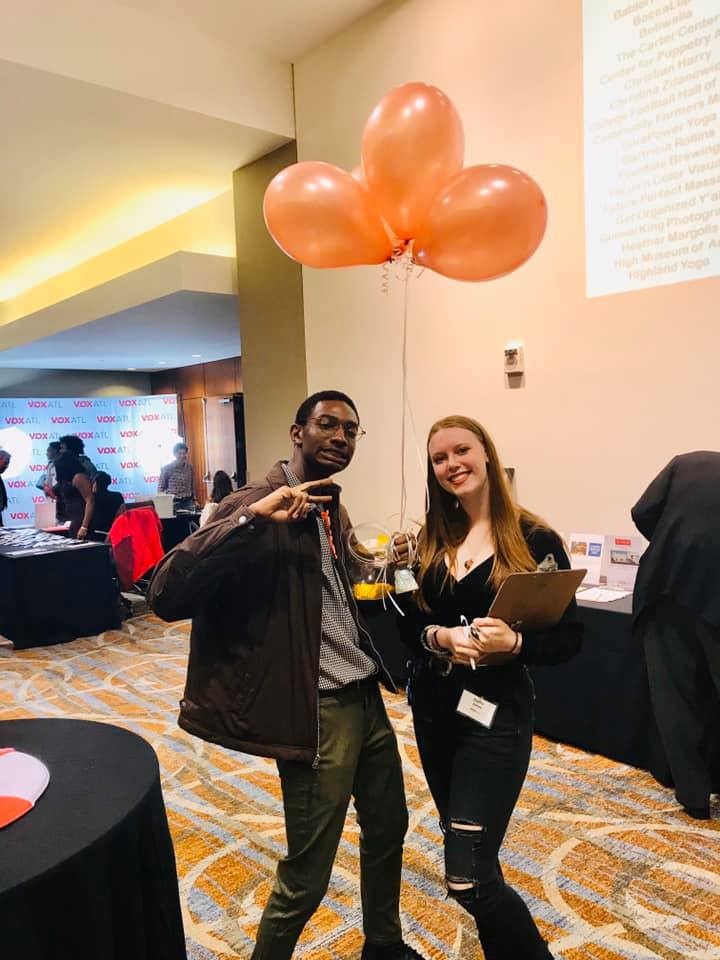
Sophie James is a 17 year old senior at Decatur High School and serves on the external committee of our VOX ATL board. Along with hanging out with fellow VOXers, she enjoys fundraising activities like selling mystery balloons (see photo)! She looks forward to VOX’s work everyday to make sure teen voices are heard on every level of our organization and says there is never a dull moment. 🙂 Check out some of Sophie’s original work on VOXATL.org.

Cultivate talent with the same energy level you cultivate gifts — especially with your BIPOC support staff

By Priscilla Lopezresource organizer and fundraising activist

We need to make intentional power shifts within our organizations to promote emerging BIPOC leaders.

If our sector wants to solve its Black, Indigenous, and People of Color leadership deficit, it must first address its talent management problem.

The nonprofit sector undervalues the reward of cultivating talent internally. 

Due to a lack of resources and HR staff, organizations normalize high turnover and over-rely on external hires to meet their diversity goals. Don’t get me wrong. Turnover can be healthy, and if your staff is primarily white, you should focus on hiring diverse candidates. But for the last 15 years, BIPOC executive leadership has remained under 20 percent. We can’t keep moving in the same direction expecting different outcomes. 

We need to make intentional power shifts within our organizations to promote emerging BIPOC leaders. Those leaders are probably in your office right now. And that power shift can be initiated by every manager becoming an advocate for their staff’s career advancement.

Take a moment to think about your team right now.

  • Do you have BIPOC staff? (You better!)
  • Are they primarily in leadership roles? If not, analyze why they are not. 
  • Have you ever systematically identified ways you and your organization can support the development and advancement of BIPOC staff in your office? 
  • What is stopping you from doing this work?

I’ve worked in nonprofits for eight years in primarily administrative support roles, as do many BIPOC folks, and I’ve always been ambitious in my pursuit of career growth. My managers over the years grew accustomed to my self-initiated professional development plans. I’ve done external training, personal career coaching and courses at city college. Most of my managers were supportive of these efforts. Ongoing education was encouraged. 

But, when I initiated conversations about career advancement internally, some managers — not all — expressed apprehension. 

I understand it isn’t easy because budgets are tight, HR staff is a rarity, and we don’t have the luxury of time to invest in our people’s talents when we’re saving the world — but it’s time to shift our perspective on why it’s worth cultivating talent internally. 

We should be inviting and applauding conversations about career advancement with staff — particularly BIPOC staff.

Value and cultivate emerging BIPOC talent

The lack of BIPOC leaders is rooted in systemic racism.

When someone tells you that they are interested in growing with your organization, your first thought shouldn’t be, “We can’t pay you more.” Instead, you should welcome that conversation with genuine gratitude because they are telling you, “I’m committed and ready to give you more of my talents.” What a gift to your team and organization!

When a BIPOC staff person signals they want advancement — they are offering an excellent opportunity for you.

BIPOC staff contribute more than competencies and skills. We bring invaluable perspective to our work. We have a deep, lived understanding of oppression and are driven by our desire to eradicate it. 

That is the kind of experience we need in our sector’s leadership. That is the kind of experience we need to achieve real social justice. 

But, shifting power from predominantly white folks leading the sector is not easy.

The lack of BIPOC leaders is rooted in systemic racism. According to the Nonprofits So White report, “nonprofit organizations are defined by a pervasive and systemic white advantage … [the] structure and power in nonprofit organizations reinforce the benefits of whiteness.” The growing commitment to diversity, equity, inclusion, and belonging in the sector is evolving our awareness of this white advantage. 

But in the last decade, the shifts in power have been nominal. 

Reconsider the origins of existing systems

The racial power structures embedded within our organizations cannot be externally hired away. They need to be cultivated from within.

Despite my commitment to ongoing professional development, I found the pathway out of an administrative support role into leadership tough. I’m still figuring it out. That’s because organizations don’t have internal systems or cultures that support the advancement of staff internally. As a result, even after meeting competencies for growth, the pathways to meaningful advancement are still obscure. 

My experience in the sector tracks with existing research that finds highly educated women of color are most likely to occupy administrative roles and least likely to hold senior leadership positions. That is rooted in how women of color have always been considered “the help” in our society. As a Latinx woman, I’m accustomed to seeing myself in the media portrayed as a maid. It follows that the world would not see me as a leader. 

In Women, Race, and Class, Angela Davis explains that “… women of colour – and especially Black women – have been receiving wages for housework for untold decades. In 1910, when over half of all Black females were working outside their homes, one-third of them were employed as paid domestic workers. By 1920 over one-half were domestic servants, and in 1930 the proportion had risen to three out of five.” The racial power structures embedded within our organizations cannot be externally hired away. They need to be cultivated from within.

Unlike the private sector that has long invested in human resources, our sector doesn’t have extensive experience investing in the people doing the work

That’s because the nonprofit sector was never intended to be a professionalized field. In the U.S., the nonprofit sector has only been in existence for about 100 years. The professionalized field we’ve come to know originated from wealthy white women looking for something to devote their time to in the absence of voting rights and access to the workforce. 

The informal organizational structures that created nonprofits are classist, racist, paternalistic, and not designed to support careers. Today, our sector makes up the third-largest workforce among U.S. industries but is mired with toxic workplace cultures rife with underpaid and burned-out staff

Most development professionals leave a position every 18 months. That is not normal. It indicates severe underlying issues with our workplaces, all of which are amplified for BIPOC staff. And it comes at a high cost.

Reimagine and redesign BIPOC leadership advancement

The shift in power away from white leadership requires a radical redesign of our current organizational power structures.

A lot is spent on external hiring — especially at senior levels. Filling a senior leadership role with an external candidate can cost half their annual salary. Additionally, for-profit research shows that external hires are paid more, have lower performance evaluations, and are more likely to be fired or quit. 

That’s why the private sector has invested for decades in retaining and advancing its staff internally. In some cases, CEOs have dedicated 30 to 50 percent of their time and focus on cultivating talent within their organizations. 

Funders, boards, executives, and managers in nonprofits need to take note, and they also need to take responsibility for developing the emerging BIPOC leaders within their organizations instead of making it someone else’s responsibility. 

That means  skills-building capacity need to be increased and growth opportunities need to be created on the job. After all, research has found that adults learn 70% through on-the-job stretch opportunities, 20% through coaching and mentoring, and 10% through training programs. If the prospect of developing such growth opportunities internally for staff seems daunting to you — shift your perspective.

It is important to shift because we stand to gain an entire leadership pipeline of Black, Indigenous, and other People of Color. The shift in power away from white leadership requires a radical redesign of our current organizational power structures. And most importantly, people who are willing to reimagine their individual responsibility to make that shift in power possible. 

Some thoughts for your reimagination quest

1. Invest in a culture that values internal growth

Create an environment where career growth is encouraged, expected, and celebrated. Develop systems that support managers to have these conversations with staff. Get excited when staff raise their hand for growth opportunities, value their commitment, and cultivate their talent. 

Please, please, please stop being weird about engaging in these types of conversations with staff. Snuffing out these conversations results in harmful demotivation of staff and ultimately the work. 

Managers — you have more power than you realize — get creative cultivating growth.

2. Uplift your emerging BIPOC leaders 

Invite conversations with BIPOC staff about their career goals. Even if their sights are set beyond your organization — champion those goals. If they are committed to your organization, work hard to keep them and find meaningful advancement for them. Be a co-conspirator in achieving their aspirations.  

3. Good people management is vital

Supportive relationships between staff and managers are foundational to developing leaders. Invest heavily in hiring, training, and retaining good people managers. Be willing to let go of bad people managers. The damage they cause is not worth it. 

4. Demystify the pathway to internal advancement 

Identify all the possible opportunities for internal advancement in your organization. Not all of them need to be vertical. Some might be lateral or even diagonal. Think about what growth can look like in your organization. Think expansively. Don’t let your fear of not getting it right stop you from trying. 

5. Modeling the private sector can be a starting point, but it’s not a best practice. 

Organizations seeking to dismantle oppression should not replicate the private sector’s systems. As Audre Lorde said, “The master’s tools will never dismantle the master’s house.” We need to develop systems that are unique to our sector, de-centering oppression and whiteness. We have the creativity to design better systems.  

6. Build the advancement pathways in partnership with staff

Hierarchy is efficient, but it doesn’t always result in unique solutions. A reimagined system will require input from the bottom out. Be willing to co-create advancement pathways with staff of all seniority levels.

7. Shifting power requires investment

Having professional development budgets and good managers are critical. But power shifts require handing over decision-making power along with titles and appropriate compensation. Get ready to make the necessary investments.

I’ll leave you with a few of my favorite principles from Adrienne Marie Brown’s book Emergent Strategy: Shaping Change, Changing Worlds, “There is always enough time for the right work … never failure, always a lesson … what you pay attention to grows.” 

PRISCILLA LOPEZ

PRISCILLA LOPEZ

Priscilla Lopez (she/her) is a Latinx-indigenous social justice activist, star-gazer, and vision seeker. She is a major gifts officer at ACLU NorCal working to protect and advance civil liberties for all. She also serves on the board of Eviction Defense Collaborative in San Francisco, enforcing the basic human right to housing and shelter. Priscilla is an avid outdoorist and founder of Yay Area Hikers, a Bay Area hiking group committed to supporting Black, Indigenous, and People of Color explore joy outdoors. When not at work or on a trail you will find her shaking her booty in the kitchen or with her dance team! Priscilla can be reached via Instagram @Pris.chilla or on LinkedIn.

The Ethical Rainmaker: Surthrival with Kishshana Palmer

By Michelle Shireen Muri, Freedom Conspiracy Principal and CCF co-chair

Episode Summary

In this episode, Michelle speaks with Kishshana Palmer, the Let’s Take This Offline podcast, The Rooted Collaborative and Kishshana + Co about living well to lead well, performative allyship, authenticity, financial fortitude and her new podcast! Please join us for this rich conversation!

Find episode notes and the podcast transcript here.

About the Ethical Rainmaker podcast

In the United States alone, philanthropy is a $427 million dollar industry, of which 68% comes from individual donors. Yet the practices, theories, and foundation of modern philanthropy and fundraising often ignore the ways in which the industry perpetuates harm.

The Ethical Rainmaker, hosted by Michelle Shireen Muri, is a podcast that hosts authentic conversations grappling with the questions that we don’t often ask in the nonprofit world. Join us as we explore some of the practices that undermine our missions and navigate the way forward with today’s resisters, reimaginers, and the re-creators of the third sector. It’s time to think differently.

Michelle Shireen Muri

Michelle Shireen Muri

Michelle Shireen Muri (she/her) is the co-chair for Community-Centric Fundraising and the host of the new podcast, The Ethical Rainmaker. She is the founder of Freedom Conspiracy, a small collective of fundraising consultants focused on bringing values-aligned practices to clients in the nonprofit and philanthropy spaces. She can be reached at @freedomconspiracy on Instagram.

Time Needs To Be Spent on the Intersections of Social Justice and Fundraising

By Anna Rebecca Lopez, AR Lopez Consulting

This infographic is part of a multi-part series. View the first infographic in the series here and the second here. Follow CCF on Instagram, Facebook, or sign up for our mailing list to get notified of the next part!

Anna Rebecca Lopez

Anna Rebecca Lopez

Anna Rebecca Lopez (she/they) is an experienced Evaluator and consultant, using mixed-method approaches to social science research, statistical analysis, community engagement & collaboration, digitization and more. She is the Principal Evaluator at AR Lopez Consulting, where she specializes is disaggregating data in a way that tell authentic and useful stories. You can find her on IG @anna_.rebecca