
By Nel Taylor, (Umatilla) they/them, he/him — queer, trans, fat, organizational equity strategist, ethical fundraising expert, and nonprofit systems fixer
Someone working from [a Collective Abundance] model doesn’t wait for big grants to trickle down. They find creative, hyper-local ways to resource others in the community by sharing donors ethically, co-hosting campaigns, exchanging labor, pooling sponsorships, and even trading non-cash resources that reduce expenses.
One of the huge shifts that the Community-Centric Fundraising movement ignited is the mindset shift from scarcity to abundance. At the core of the abundance mindset is the belief that there’s enough money out there, and more will come your way.
Does that strike anyone else as individualistic?
A great example of scarcity vs. abundance mindset, where the solution was in neither approach, can be found in the Great Toilet Paper Panic of 2020. Facing the threat of quarantine, apparently one of the first things on many Americans’ minds was, “how many times am I going to need to poop before this is over?”
Those with a scarcity mindset loaded up on as much toilet paper as they could fit in their car, fearing that there wouldn’t be enough later on. And those with an abundance mindset bought only what they needed, trusting that more would be there for them when they were ready for it.
But the reality was that stores did indeed run out of toilet paper, and if someone couldn’t travel to another store or order it online, there really wasn’t any left for them. That scarcity was real, and if you were one of those people, someone telling you “don’t worry, there will be enough” feels a lot like toxic positivity.
What if, instead, our neighborhood acknowledged the scarcity and instead of hoarding or waiting for someone with resources to redistribute (*cough* foundations), we created alternate ways to meet the need together?
Maybe Riley down the street begins sewing washable cloths that can be used for #1. Maybe Zyair has a bidet, and we all take shifts– Ok, maybe this metaphor is circling the drain…
The point is that we want to leave scarcity and competition in the past, but a fundraiser working from a traditional abundance mindset focuses on their own donor base, trusting that more will come in, which doesn’t really center the community either.
The model I’m suggesting, and have been calling “Collective Abundance” (although I am under no impression that I’m “inventing” this model), acknowledges donor fatigue, economic downturns, and funding cuts do happen. Someone working from this model doesn’t wait for big grants to trickle down. They find creative, hyper-local ways to resource others in the community by sharing donors ethically, co-hosting campaigns, exchanging labor, pooling sponsorships, and even trading non-cash resources that reduce expenses.
Ten ways to practice a Collective Abundance model:
1–Shared or guest authored newsletters
Are you working for one of two organizations running a fundraising campaign at the same time? You could trade off the responsibility of writing newsletters every week. On week 1, organization A writes up a newsletter with updates from their organization and organization B. Both organizations send the newsletter to their list featuring a link to encourage giving to the other. The following week, organization B takes on the task and the team on organization A can focus on another campaign task.
2–”Give to both and win” incentive promotions
Promote an incentive prize that your audience can be entered to win if they make a gift to both your organization and your partner’s. At the end of the promotion, you cross-reference donor lists, and select a winner from the donors who appear on both. Be sure not to add other people to your donor list unless you receive explicit permission.
I’ve done this with Portland Parks Foundation and People of Color Outdoors for a few years in a row, and it has always been successful. Check out this Instagram post!
3–Shared sponsorships or matches
If your organization secures a match or sponsor, bring in a partner organization and split the benefit. You might even find that sponsors will be more generous if they know it will be leveraged for two missions.
4–Combined appeals
Two organizations could run one campaign together and split responsibilities. Maybe your organization has a design team, and the other organization has more capacity for donation processing and tax receipts.
5–Share administrative staff
I haven’t seen this one in practice, but I’ve thought about it for a long time. Could two organizations split one full-time HR person or grant writer? Could you share an entire administrative team? I’m sure there are many legal considerations and compliance requirements, but I envision a sector where this could become a common practice among small organizations.
6–Share office space or big ticket equipment
Organizations can go in on an office space, and maybe even split the days the office is used by each organization. You could have “hot desks” for staff who primarily work from home, and split the cost of utilities and cleaning service. This could work with equipment too!
A Portland nonprofit found themselves stuck with a very expensive printer contract that they hardly utilized and couldn’t get out of. They were able to rent out shared use to another organization in their building to reduce the financial strain of printing on both organizations.
7–Offer back-end fundraising support
Share grant templates, donor tracking spreadsheet templates, swap campaign packets, sponsor connections, and share your debrief documents and lessons learned from events and campaigns.
8–Host joint donor thank-you events
Host a small appreciation gathering for donors from multiple organizations, highlighting their missions. You can split the cost of catering, event space, and planning duties along with the benefit of introducing your donors to a new organization to support.
9–Skill-swap workshops
Do you have a Canva wizard on your team? Maybe your Development Manager is a grants pro. Consider trading mini-trainings or lunch-and-learns, rather than paying for outside help.
10–Resource matchmaking
Maintain a running “extras list” with your nonprofit neighbors tracking overflow event supplies, unopened merch, spare office chairs, or even supplies your neighbors can borrow for one-time events like linens or 6-ft tables.
The Core Principles
As I’ve been percolating on this idea, I’ve identified some critical core principles to keep the Collective Abundance model supportive and equitable:
1. Transparency – Be honest about what you have, what you need, and what you can offer.
2. Reciprocity – While sometimes a well-resourced organization will have the flexibility to offer unconditional support, the spirit of this model is that both sides give and gain whether it’s resources, relationships, or trust.
3. Clarity – It’s going to be critical to clearly establish roles and responsibilities and outline formal agreements for some collaborations. Nothing breaks trust in a partnership like one person feeling like they’re doing all the work.
4. Efficiency – Reduce, do not add, to the workload. Partnerships shouldn’t mean more unnecessary meetings or longer hours.
5. Relationship First – This is about building relationships with other nonprofits, as well as staff, donors, sponsors, and community members. The stronger the trust, the easier the collaboration, and the more we benefit as a whole.
How to get started
Interested in starting to practice a Collective Abundance model? Pick a pilot idea to try:
- Pick one low-stakes partnership (like a shared newsletter or giving day incentive).
- Debrief afterward asking each organization: Did we save time? Did our donor base grow? Did the relationship feel stronger?
- If it worked, share your framework with another organization! We spread new movements through communication and knowledge sharing.
I believe that adopting these practices will have benefits beyond dollars raised, including donor growth and connection, increased staff capacity and morale (ex: I was able to take a week off because you covered our newsletter!), deepened relationship depth, and collective momentum as a sector.
When nonprofits lean into Collective Abundance, the whole sector gets stronger.
We’re not waiting for the “toilet paper distributor” to restock the shelves. We’re sewing cloths, sharing bidets, and figuring out together how to meet the need now, with what we have and what we can create and share.
It’s not just about survival. It’s about making sure that when one of us thrives, we all do.
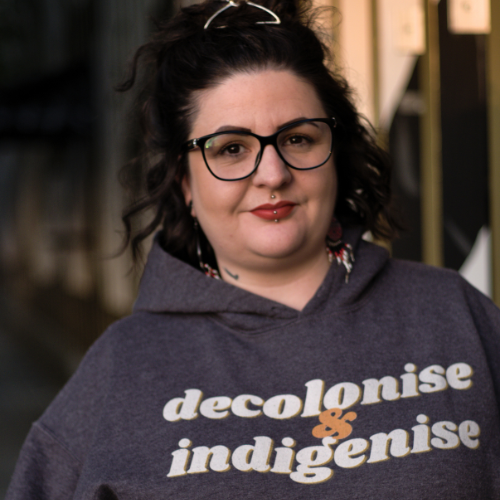
Nel Taylor
Nel Taylor (they/them and he/him) is an organizational development, Diversity, Equity, and Inclusion, Human Resources, and fundraising strategy consultant with 14 years of nonprofit experience. As the Founder and Steward of Now This Consulting, Nel guides organizations through operationalizing anti-racist principles into everyday operations and practices, moving their clients beyond DEI committees, into direct action and organizational change.
Their introduction to nonprofit work came out of their transition from houselessness when they were 18 years old. After experiencing exploitation at the hands of the nonprofit industrial complex, they set out to shift the traditional practices and systems that perpetuate harm throughout the nonprofit sector.
Download Now This Consulting’s Fundraising Equity Lens
Connect with him on Instagram @nowthisconsulting, LinkedIn, TikTok, or via their website nowthisconsulting.com. If you appreciated this article, consider sending some love via Venmo; it’s hard out here for a DEI consultant.
Discover more from CCF
Subscribe to get the latest posts sent to your email.