7 Liberatory Signs That Made Me Apply for My Job

7 Liberatory Signs That Made Me Apply for My Job

By Michelle Dominguez, proud teammate at Social Justice Partners Los Angeles

I’ve been seeking a justice-centered workplace where I can be my authentic, Queer, Trans, Latinx self for my whole career. Like many, I’ve been exploited as an employee and I need a workplace where I am represented, gendered appropriately, and can thrive — what Social Justice Partners Los Angeles terms a “liberatory workplace,” where everyone feels belonging and freedom. 

Then, I find a job prospect that really excites me and gives me hope! Here are the seven signs from the job search that give me the good tingles of a liberatory workplace:

1. A Positive Recommendation from a Friend

My beloved community was looking out for me as I set boundaries with exploitative workplaces. A Queer and Trans friend forwards me a job announcement and two Queer friends vouch for the organization’s social justice values. 

Good word-of-mouth is so helpful because I trust my community’s lived experience more than a staff-written website. When an organization uses keywords like “social justice,” it may be a good sign, but it doesn’t prove their actions improve the lives of their QTPOC staff.

2. A Majority Woman of Color Staff with Queer Representation

The job announcement has a photo of the current team. I do what many of us without the privilege of representation do, and scan the faces to count for gender presentation and People of Color. I know it can be problematic since I cannot determine someone’s race or gender by looking at them, and it’s also a learned survival tactic. 

From the scan, I read the staff as predominantly feminine-presenting and of Color, which excites me because it’s what I have been searching for. I also read the staff bios and note multiple staff who have done LGBTQ advocacy (and are presumably LGBTQ themselves). Finally, somewhere I can belong and am not the only one! 

3. A Transparent Living Wage

Usually, job announcements have a wide pay range or no transparent wage at all. This job announcement states outright the pay per year—and it’s a living wage! 

Our sector’s legal status is defined by operating for public good rather than profit, but it’s “non-profit” not “non-wage.” We need to address the economic conditions we seek to change in our communities from within our organizations. These economic conditions disproportionately harm Queer and Trans People of Color. We need not only living, but thriving wages.

4. Comprehensive Insurance Coverage

“100% employee costs of medical, dental, vision, and long-term disability insurance.” I read that sentence twice because I have never seen it in a job description before. It is a sign that the organization values healthcare as a human right. Healthcare coverage is especially needed for Trans humans of Color, who are systematically excluded from accessing care.  

Plus, with 100% employee costs covered, it is easier for applicants to calculate the take-home pay for the position. 

If you want to cultivate a liberatory workplace, be transparent with take-home pay so candidates can know whether they can afford applying for and working at your organization. 

5. A Staff Support Stipend 

The job provides funds for employee professional development and wellness. This is a liberatory two-for-one. It signals an organization promotes a learning culture. It also shows the organization understands the interdependence between healthy, whole staff and healthy, whole communities. 

Just like our sector wants simple grant reports and unrestricted funding, employees should also have a simple stipend process with few restrictions and no burdens. Organizations should give staff the autonomy to choose how the stipend will support them best—whether that be paying for a name change, therapy, acupuncture, or more healing modalities not typically covered by Western health care.

6. A Short Application

The application directions include, written in bold: “No cover letter required.” Instead, a short questionnaire asks  really meaningful questions, like: “How do our mission and values resonate with you personally?” and “How would you personally like to grow in your anti-racist practice?” These questions give me the space to share about my whole self, including parts of myself that often get repressed in job search processes. 

The application also asks for my pronouns, which shows the organization’s basic gender literacy and intention for Trans inclusion. 

That’s the type of work environment I need in my life.

7. A Practice of Rest

Another first I’ve read in a job announcement is mention of “quiet time.” Twice a year, the organization sets aside three weeks of rest from external activities. I love this intentional time for team reflection. 

We need more spaciousness in our work so we can focus on healing, quality relationships, and making lasting positive change in our communities.

For a long time, I wondered if a liberatory workplace where I could feel a sense of belonging existed. I was sure there was and that I had not found one yet, and this job announcement is inspiring proof! Since seeing it, I’ve seen more job announcements with mention of 4-day work weeks, childcare support, menstrual leave, building wealth stipends, and more much-needed compensation for our sector. 

I’m hopeful for the day that liberatory workplaces becomes the norm, because I’m tired of feeling like it’s solely on me to retain myself as a Queer and Trans Worker of Color. 

What are some signs you’ve seen of a liberatory workplace?
Michelle Dominguez

Michelle Dominguez

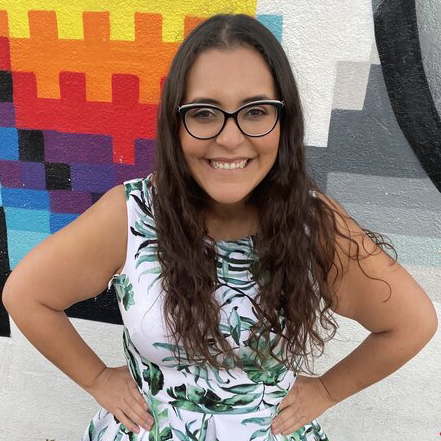
Michelle Dominguez (they/them/elle) is a Queer and Trans Los Angeles native born to Colombian immigrants. After a decade-long career in higher education student affairs, they switched sectors in 2021 to join the team at Social Justice Partners Los Angeles. What brings Michelle joy? Quality time with loved ones, mindfulness, audiobooks, vegan chocolate desserts, and Disney magic. You can find Michelle on LinkedIn and tip them via Venmo @MMissy003.

The highs and lows of CCF in practice: 9 approaches we’ve championed

The highs and lows of CCF in practice: 9 approaches we’ve championed

By: Maria Rio, the Director of Development and Communications at The Stop Community Food Centre

Many fundraisers recognize that current fundraising practices and philosophies are harmful and founded on white saviorism but are unsure how to dismantle oppressive practices. I hope to shed some light on how we have approached CCF.

About two years ago, I was sitting in an AFP Congress session hearing white women talk about how they would approach a donor who had said a racist remark. Maybe they had a bad day, maybe it would jeopardize the gift, it would be too hard to say something. As a racialized woman, I felt unsafe and unseen, something I have felt many times before in philanthropy.

I have been fundraising for over a decade now, with my passion for it growing from my personal use of charitable services and supports. I lived in a World Vision refugee shelter, skipped school to access food banks, got help from a children’s hospital with obtaining my citizenship through a 12-year process, went to church drop-in meal programs, and received Christmas gifts from total strangers. I personally know the deep, widespread impact our work can have. We undeniably change the course of people’s lives. 

As a woman, a racialized person, an immigrant, and a member of the LGBTQ2S+ community, I work diligently every day to ensure that I can make a meaningful difference in the lives of these and other often underrepresented groups. 

That is why when I discovered Community-Centric Fundraising, I was excited to have the language and tools to implement my values into my work and to remove white fragility and supremacy. Of course, as our non-profits operate within — and often contribute to — a problematic system, there are many limitations fundraisers must navigate.

At my organization, we have worked the past year and a half to audit our fundraising methods and move towards a less problematic approach. My team has navigated the transition from donor-centric to community-centric fundraising, and we have learned about the real-life concerns and rewards of applying the theory in a medium-sized community organization.

Many fundraisers recognize that current fundraising practices and philosophies are harmful and founded on white saviorism but are unsure how to dismantle oppressive practices. I hope to shed some light on how we have approached CCF.

Here are some examples of approaches from our journey implementing CCF:

Reimagining Engagement

There were many factors we considered when reimagining engagement of our various stakeholders: how we tell the stories of our community members, how we discuss how non-profits and donors often uphold inequity, how we recognize contributions, when we partner with other organizations, and how we support the greater mission.

  • We removed transactional recognition for donors. We removed online donor walls, did not list donors in our reports, and did not provide public recognition for supporters unless we had a significant partnership where the donor has supported us for many years. We also started sending personalized thank you videos to many donors twice a year, irrespective of their gift date and giving capacity.
  • Revamped how we steward volunteers. We sent volunteers the same stewardship pieces we sent to donors who gave money. We listed our volunteers in our annual report to acknowledge their contribution to our organization.
  • Moved away from signature donor-centric events. The pandemic was a great opportunity to completely overhaul our fundraising strategy. Pre-pandemic, our organization raised 25% of revenue through signature events like galas: events that were not designed with our service users in mind and perpetuated the divide between our donors and community members. We took the opportunity to pause events and ask our supporters to make up the revenue gap, which led to a 55% increase in revenue in a Q4 year-over-year comparison. We are now in the process of re-imagining what our events could look like when designed to be accessible to all.
  • Built the right partnerships. We are a well-liked brand in the community, and many people reach out to us wanting to help. Individuals may offer things we turn away as they do not offer the dignity we provide in our programming, such as 50 singular mismatched socks, meal replacement shakes, or access to free gardening spaces where community members had to look and act a certain way.
  • Stopped initiatives that didn’t align with CCF, even when they were successful. A year and a half ago, we signed onto a program to help donors with estate planning, a program that taught donors how to minimize their estate tax and instead give those funds to our organization. As we audited our fundraising and changed our approaches, these sessions stood out to us as being the outlier. Although our donors loved them, we decided to step away from this initiative and find a more CCF-aligned approach to planned giving, which we are now exploring.

Centering the community

Too often the community is last to be included in a conversation about services, communications, or public policy priorities. We deeply understand the importance of getting the insight of our service users when providing dignified programming, advocacy, and storytelling.

  • Metrics-informed public policy decision making. We surveyed 200 service users on their top public policy priorities to determine which were most important for our organization to tackle. Low social assistance rates, unaffordable housing, and free dental care were ranked highly. We used this information to advocate publicly, connect with organizations addressing these issues, and send letters to our representatives.
  • Piloted our first community fund. Using the public policy priorities identified by our community, we engaged two donors to give $25,000 each – $25,000 would go to our organization and $25,000 to another organization that addressed the public policy needs of our community, no restrictions. The recipient of the community fund was voted on by community members.
  • Offered skill sharing and prioritized the collective mission. Over the past year, we have developed resources internally and shared them with like-minded organizations: voting guides, social media best practices, CCF skill-sharing sessions, advocacy ideas, etc.
  • Had difficult conversations with donors. We discuss in-depth with our major donors the origins of their wealth, anti-racism and anti-oppression, systemic barriers, the importance of paying taxes, wealth hoarding, white supremacy, power dynamics, and more. Each fundraiser is empowered to end a relationship with a problematic donor and push back on any problematic notions they may have.

Overall, we have had many wins implementing CCF, although we recognize there is still a long way to go. Our next step is to do a CCF audit of our fundraising, communications, and stewardship using the CCF Aligned Action List.

The bottom line

Although there have been challenges, the rewards outweigh the difficulties. Working in a way that aligns with my personal values and the personal values of my team has been a huge weight off my shoulders. I can feel confident that our organization is doing its best to reduce harm while encouraging philanthropy and collective action.

I am sure many of you are wondering, like I was a few years ago, how does moving away from donor-centric fundraising affect the bottom line? Well, we have had significant successes, with this year being our strongest fundraising year yet. We have collaborated with partners, raised the number of gifts and dollars, solidified our first million-dollar gift, and are $400k above YTD of where we were last fiscal year.

However, it is not always a smooth journey. We’ve had to reckon with the origins of wealth in a capitalist system and our role in maintaining or enabling inequality. We have also had various challenges such as educating and getting buy-in from the board, identifying ways to make planned giving more community-centric, and grappling with the fact that although we work hard to ensure our actions are based in equity, our organization does not operate in a bubble. We’ve had to walk away from donations because they did not align with our values, and we are still unsure how the move from events to individual giving will affect our revenue five years from now. 

Although there have been challenges, the rewards outweigh the difficulties. Working in a way that aligns with my personal values and the personal values of my team has been a huge weight off my shoulders. I can feel confident that our organization is doing its best to reduce harm while encouraging philanthropy and collective action. Having these conversations with our donors has also been amazing and has helped us turn transactional supporters into partners and allies.

With the impact fundraisers have every day in the lives of their organization’s service users, it is imperative that we move towards CCF as a more just and equitable way to tell stories with dignity, engage our audiences, and push for systemic change.

Maria Rio

Maria Rio

Maria Rio is the Director of Development at The Stop Community Food Centre, a mid-sized non-profit that provides emergency food access, community building programs, and urban agriculture. Having come to Canada as a refugee at an early age, Maria developed a passion for human rights that now fuels her drive to help locally and make a difference in the lives of people of various marginalized and often inter-sectional groups. After being assisted by many charities and going through an arduous 12-year immigration process to become a Canadian citizen, Maria devoted herself to working in a charity setting to give back to the industry, which had drastically and undeniably improved the course of her life. As a woman, a racialized person, an immigrant, and a member of the LGBTQ community, Maria works diligently every day to ensure that she can make a meaningful difference in the lives of these and other often underrepresented groups. 

You can follow or connect with Maria on LinkedIn here.

Dressing up: we must overcome class shame in fundraising to build true equity & justice

Dressing up: we must overcome class shame in fundraising to build true equity & justice

By: Christa Orth, a lifelong fundraiser who has worked with hundreds of nonprofits

How do we honor and uplift our lived experiences of socioeconomic class, and turn them into a source of strength to become fearless fundraisers?

As a fundraiser, I’ve been to my share of “fancy” parties. Each time, I rummage through my closet trying to find the perfect outfit that will look sufficiently dressed up, professional, and that shows off my genderqueer style.

I want to fit in. As a cis, white, queer person, I might look the part, but deep inside, I fear that people will judge me because I don’t come from wealth. 

Many of the fundraisers I know are like me — people who got involved in the development profession out of a love of doing good and a desire to support the missions of organizations we care about. We are not always wealthy and don’t always come from family money. This creates a tension as we navigate spaces of wealth and interface every day with philanthropists who may have very different class backgrounds than ourselves. The tension is compounded for fundraisers of color who must contend with blatant racism, microaggressions, being passed over for jobs and promotions, and more.

How do we honor and uplift our lived experiences of socioeconomic class, and turn them into a source of strength to become fearless fundraisers?

I don’t have all the answers, but I do know we should examine how we learned about money as children, because this affects how we operate in the world as adults. 

I was in a workshop for LGBTQ+ fundraisers once where they asked us to close our eyes and think about our first memories of money. I squeezed my eyes shut and here’s what I saw:

Memory #1: Living with scarcity can instill a scarcity mindset

When I was around six years old, I sat at the kitchen table, watching my mom pay the monthly utility bills. She carefully consulted the calendar as she wrote checks. She tapped her pen on a day, then wrote the date in the corner of the bill envelope where the stamp would go. The envelopes sat in a neat stack on her bedroom dresser until there was enough money in the bank account. When that day came, she licked a stamp to cover her handwriting, and dropped the bill in the mailbox. My mom learned this money-tracking system from her single mother who supported her family as a housekeeper.

My white working-class family had just enough to squeak by, and I grew up in a household that was living just above water. As a result, my relationship to money was formed with a scarcity mindset.

Memory #2: How others perceive us can be a root of class shame

I was a kid in the 1980s era of excess, and I wanted lots of things— Guess jeans and Keds sneakers were on the top of my list. I saved my $2 a week allowance to buy them and as you might imagine, it took forever. As I waited for the pennies to pile up in my piggy bank, I took a seam ripper to the no-name triangle label on the pocket of my acid wash jeans. With a blue ballpoint pen I drew rectangles on the backs of my generic Keds. I hoped these measures would distract from the fact that I couldn’t afford name brands. I hoped kids at school wouldn’t tease me so much. I hoped to overcome the shame I was feeling.

However materialistic this might seem to me now, as an anti-capitalist adult, I recognize my actions and this feeling of inadequacy was at the root of my class shame.

More money doesn’t always solve class problems, and I find this is especially true because of my identity as a white cis queer woman, which leads me to my third memory:

Memory #3: Class shame is intersectional

Because of internalized shame about my socioeconomic background, and early messages about scarcity and homophobia in my family of origin, I’ve had to work through feelings of worthiness and what it means to belong in order to become a professional fundraiser.

When I was a teenager and had my first job scooping ice cream, I finally got to buy the clothes that made me feel most whole— ripped men’s jeans, flannels, and Birkenstocks. My dad and I fought bitterly because he insisted I “dress up” in “girl’s clothes” and wear skirts to church. This was physically painful for me because whenever I attempted to dress in a way that felt feminine to me, my teenage queerness made me feel foreign in my own skin.

As a grown-up, I now realize my parents held shame about their poor and working-class backgrounds, which they reflected and transferred to me. Dressing up became a signifier to others that our white heteronormative family was doing better, that we were a part of a community that shared similar values and experiences.

Because of internalized shame about my socioeconomic background, and early messages about scarcity and homophobia in my family of origin, I’ve had to work through feelings of worthiness and what it means to belong in order to become a professional fundraiser. Despite my whiteness, I often feel like an absolute interloper at my workplace— especially at galas, intimate four-course dinners with prospective donors, and “major donor” events.

As fundraisers, we talk about money all the time. But we rarely talk about class and the unspoken power it wields within our profession, which has real consequences. My class shame is constantly triggered by going to work and it’s not made any better by “dressing up” for the part.

When I moved across the country from Portland, Oregon to Brooklyn, New York in 2008, I encountered layer upon layer of the most extraordinary wealth and poverty that I had never known. On my daily commute, I encountered people living on the streets and panhandling in the subway to feed their families. I also became aware that some people own multiple homes in Manhattan, in the Hamptons, in Rome, in Shanghai. It’s in the world of that income disparity that I experienced my fourth memory:

Memory #4: Our class backgrounds are our power

When I was 35 years old, I prepared for a job interview for a Major Gifts Officer position by scanning the organization’s website for the names of their largest donors. I searched a few of them— all white, gay, male couples, with high-powered corporate bios. As a fundraiser for queer organizations, I was more than used to this. I thought I needed to present myself as best as I possibly could for the interview— with a snazzy new outfit. I chose a lavender men’s button-up from Calvin Klein, bought at Housing Works Thrift Store. Respectably queer.

The interviewers sat across a big conference table— two white gay men a bit older than me. I recounted my deep experience fundraising from high net worth individuals and families, and we laughed about the show “Portlandia.” (That show really put Portland, Oregon on the map for New Yorkers.) I detailed my dedication to queer community, including that I had done academic research about queer workers seeking economic justice in unions. The older man folded his arms across his chest and asked me, “Do you hate rich people?”

He was reading me as not rich— there was no private school on my resume and my interest in economic justice was front and center. He was pitting me against the wealthy. My face flushed and I balled my fist under the table. In major gifts, there is a myth that peers must ask peers for major gifts, and I most certainly was not, and never would be, a financial peer of someone who could write a check for $50,000.

My inner child conjured the image of my mother and her careful timing of sending a check to the utility company. Instead of shame, I felt pride in who I am and where I come from. As much as I truly wanted this job, I couldn’t hide myself any longer. I gathered my courage and answered honestly, “I delight in working with wealthy people with philanthropic hearts. Moving money to people who most need it is why I work in fundraising.” I didn’t get that job, but now having successfully worked for years in major gifts, I’m satisfied with my answer, and my point of view.

Fundraisers from diverse socio-economic backgrounds are a gift to this profession.

In the field of nonprofit fundraising, where I’ve built my career, I’ve grappled with overcoming my class shame in order to operate as a bridge builder. I’ve learned to move among wealthy people so that I can raise money for social justice movements. I’ve learned how to use my privilege as a white, cis person to teach others who are like me—from un-wealthy backgrounds— to become donors and fundraisers themselves. It’s a gigantic feat given that regardless of our socioeconomic backgrounds, we’ve all grown up under capitalism and have been taught not to discuss money. We’ve got to dig deep to name and reconcile our class shame, and to uncover our belonging. 

The field of fundraising is widely known as a stressful career. Folks in the profession blame high turnover rates in development departments on unrealistically high fundraising goals and lack of support from boards. But we must also consider that people may feel fed up and pushed out because of white supremacy, systemic racism, and class shame. 

People who do not come from wealth contribute a ton to this field. We know how and where to move resources, and we are donors of time and money ourselves. We make gifts that are meaningful to us, whether it’s $1 or $1,000, whether we volunteer for our community mutual aid or serve on a board. People with lower incomes give a higher percentage of their resources than people with high net worth. But regardless of levels of financial giving, everyone should see themselves as a valued donor, and everyone should feel comfortable asking people with wealthy backgrounds to give to their cause.

In an ideal world, fundraisers would feel powerful asking anyone to give their resources to a mission, without hesitation, without shame, and without having to worry about how they are dressed. They would be supported to do their jobs and recognized when they bring in even a dollar. Everyone would be seen as a supporter, including people perceived without means, and everyone’s contribution would be appreciated equally. 

It wouldn’t matter if your family couldn’t afford brand-name clothes, private education, higher education, or if family heirloom jewelry was made of glass instead of diamonds. 

Here’s how I propose we start to overcome class shame in fundraising to build true equity and justice:

  1. Make space to be curious and talk candidly about class differences
  2. Debunk the old myth of donor solicitation that peers must ask peers (wealth asks wealth)
  3. Redefine philanthropy to include contributions beyond the financial— people and families give in many ways and traditional philanthropy is trapped in a “charity” mindset that consolidates power with the wealthy instead of distributing it equitably
  4. Implement all the community-centric fundraising principles at our organizations

We must free ourselves from class shame so we can care for the people in our movements, innovate for the future, and liberate everyone.

Christa Orth

Christa Orth

Christa Orth (they/she) is a lifelong fundraiser and has worked with hundreds of nonprofits in staff roles at StoryCorps and Streetsblog, and as a consultant to social justice orgs like Campaign for Southern Equality, Drama Club, First Peoples Fund, Third Wave Fund, and Trans Justice Funding Project. They serve as the Co-Vice Chair of AFP-NYC’s Inclusion, Diversity, Equity, and Access committee, and their previous work can be found in the Grassroots Fundraising Journal archive and on Candid. They live on Canarsie Lenape land (also known as Brooklyn), they’re writing a memoir about their life as a drag king, and they just launched Seaworthy Fundraising, a consulting practice providing joyful strategy and implementation for community-centric individual and “major” giving. You can follow Christa for very infrequent tweets @christamaeorth, email them, or tip them on Venmo @Christa-Orth

White people: Heal thyself to be more effective at antiracism!

White people: Heal thyself to be more effective at antiracism!

By Katherine Leshchiner, grant writer

In one of my previous workplaces, a funder was planning a site visit and requested that we provide an opportunity for them to speak with program participants as well as frontline staff. I met with the program leadership team — all Black and Latina women — to make a plan. They were understandably concerned about the timing of the site visit, which was set to coincide with a major reopening of in-person services after months of the pandemic. The team was already working overtime under immense pressure from our two white senior leaders. 

As the main point of contact with the funder, I offered to request postponing the site visit by a week or two. I drafted an email explaining the circumstances and ran it past my supervisor (one of the senior managers) for her approval. 

This was her response:

“My suggestion is not to send the email. The site visit has been scheduled and I wouldn’t put it off — it will just be harder once we’ve reopened. Management should be able to speak for those they supervise. Please proceed as scheduled with the four original attendees.”

My boss not only dismissed the concerns of the program team, but she also wanted to exclude the coordinator of the program that was being funded along with the staff who worked directly with our program participants — not to mention the participants themselves.

Reading between the lines, I know that the organization’s senior leadership didn’t trust the BIPOC staff and participants to deliver their talking points in a “professional” (read: white) manner. Aside from our Black program director, the rest of us attending the meeting were white and not involved in any direct way with the daily activities of the program — including me as the grant writer. 

Although I passionately disagreed with my bosses in my own mind, I did not challenge them on their decision. Instead, I let fear prevent me from acting in alignment with my values and chose to prioritize my own comfort over the rights of my BIPOC colleagues. 

I have learned since that it is our responsibility as white folks to develop the courage and resilience we need to bravely disrupt racism — and that often means caring for our own mental wellbeing.

White supremacy culture and mental health

I have had to recognize that struggling with a mental illness does not excuse me from being accountable for my actions — or my inaction.

The incident I just described was a clear example of white supremacy culture in action — one of many that I am complicit in perpetuating in the white-led organizations where I have worked. 

White supremacy culture is the set of norms, values, and beliefs that uphold a system where white people are rewarded and protected while Black, Indigenous, and/or people of color experience dehumanizing behavior and violence. White supremacy is reinforced by all our institutions — including nonprofit organizations — when particular attributes of the dominant (white middle-class and owning class) culture are accepted and reproduced as “normal” and desirable. These intersecting characteristics include perfectionism, denial and defensiveness, right to comfort and fear of conflict, individualism, urgency, and quantity over quality.

As someone with Social Anxiety Disorder, my internalized perfectionism and fear of conflict are both problematic tendencies when it comes to confronting white supremacy culture. That means I have to continue to do the necessary healing so that I can overcome the impulse to avoid situations where I fear failure and judgment — such as calling in my supervisors about their racist comments and behaviors.

I never disclosed my diagnosis at work because it was clear that mental health was grossly misunderstood by my supervisors, who made numerous disparaging remarks in my presence about donors, board members, former staff, beneficiaries, and others who lived with mental illness. In that toxic environment, public humiliation was a favorite tactic to keep employees in line, and any voicing of a contrary opinion was viewed as “insubordination.”

Yet as a white woman, the repercussions I might have faced for speaking up would not have been as severe as those experienced by my Latina colleagues who were forced out for daring to disagree with the power structure. I have had to recognize that struggling with a mental illness does not excuse me from being accountable for my actions — or my inaction.

On top of that, racism has never been a factor in my experience navigating social anxiety. BIPOC people — and especially trans people of color — with mental health concerns are often misdiagnosed, have less access to culturally appropriate care, face greater stigma, and are criminalized or institutionalized at higher rates than white people. In addition, the news of frequent police killings of Black people and the daily racial traumas experienced by BIPOC communities adds up to even more significant disparities in mental health outcomes.

What therapy can teach us about challenging white supremacy culture

…it wasn’t until participating in a program to unlearn my racist conditioning — Healing from Internalized Whiteness (HIW) — that I began to view mental wellness beyond a lens of individualized self-care for my own benefit. I now understand the importance of mental health as a foundation for collective antiracism work.

Several years ago, I was fortunate to benefit from five months of weekly group therapy sessions that were life-changing. Through cognitive behavioral therapy (CBT), I learned new tools to recognize my distorted thoughts and feelings and then reframe them in more realistic and helpful ways. With the support of my fellow group members and our therapist, I also engaged in real-life “experiments” where I tested out new behaviors to reduce the anxiety that certain situations provoked. 

However, it wasn’t until participating in a program to unlearn my racist conditioning — Healing from Internalized Whiteness (HIW) — that I began to view mental wellness beyond a lens of individualized self-care for my own benefit. I now understand the importance of mental health as a foundation for collective antiracism work.

There are valuable parallels between CBT and the skills white people need to develop in order to challenge white supremacy in our lives: 

  1. As with anxiety or any other mental health concern, the first step to healing is awareness. Once we recognize a harmful or unhelpful pattern in our thoughts or behaviors, we have the opportunity to learn from it and change. 
  2. Finding support from others who are equipped to hold us through the process is crucial. Just like a therapist or peers in group therapy can provide compassionate accountability while we struggle to change, we need to turn to other white folks who have been through it and who will not be triggered by the emotions that will inevitably arise when we confront our lifelong conditioning in white supremacy.
  3. Practice, practice, practice! I only lessened the grip that social anxiety had on my life by striking up conversations with strangers at a party or sharing my opinion at a work meeting (along with the structure of CBT tools to manage my feelings before, during, and after). I put myself in situations that made me uncomfortable and built up resilience by seeing evidence that my worst fears actually did not come true. In other words, we as white people need to expand our capacity for feelings of discomfort so that we can do the necessary work of challenging white supremacy culture in our nonprofits, families, communities, and any other spaces we inhabit.
  4. Continue on the spiral. Healing is not a linear process and many of the challenges we face will come up again and again. The key is to keep engaging in the practice.

Therapy, mindfulness, coaching, and other healing practices have taught me that my anxiety is not something that will ever disappear but it is possible to minimize its negative impacts and learn to manage it in a healthy way. I cannot excise the unwanted thoughts and feelings from my body and mind but I can acknowledge them without judgment and choose how I behave in response. 

In the same way, I can never stop being white but it is possible for me to mitigate the harm I cause while unlearning some of the white superiority that I have been conditioned into internalizing. In both cases, the only thing that I can control is my actions, and I have the agency to make a conscious choice about them.

Healing for white people is an essential step to ending white supremacy

By shifting our patterns of thinking and acting, white folks will be better able to show up — and keep on showing up — in the ways that we are needed to act in solidarity against white supremacy. To put it bluntly, we’ve gotta handle our own sh*t so that we can get out of the way and be effective at antiracism.

While in group therapy, it was a revelation to learn that most people I encountered were not criticizing and judging me nearly as much as I was of myself. During conversations, I would typically put so much energy into scrutinizing every minute detail of how the other person might be perceiving me that I could not actually listen to what they were saying. It has been freeing to discover that I can have stronger and more fulfilling relationships when I relax more and stop focusing so much attention on myself. 

Similarly, we white people have so much to gain from decentering ourselves and letting go of our shame and fragility. Healing — whether through therapy or another practice — is one necessary step toward repairing the harm that whiteness has inflicted in our relationships with BIPOC people. By shifting our patterns of thinking and acting, white folks will be better able to show up — and keep on showing up — in the ways that we are needed to act in solidarity against white supremacy. To put it bluntly, we’ve gotta handle our own sh*t so that we can get out of the way and be effective at antiracism.

The incredible thing is that in the process of creating the conditions for our collective liberation, we white people also get to free ourselves from the patterns that harm us. We get to reclaim our own humanity and experience true belonging and human connection while building genuine, thriving relationships with BIPOC folks.

Reflecting back on my past job, I could see that even my bosses were negatively impacted by the white supremacy culture they clung to; their glorifying of overwork and martyrdom, being consumed by constant urgency, taking pride in never taking a sick day despite poor health, and damaging relationships by putting work above all else — these were harming them along with the entire organization. Imagine how much better our work and lives could have been for everyone — them included — if the senior leadership had begun their own process of healing and built an affirmative work culture by modeling how to prioritize true wellbeing.

If we white people hope to “re-become human,” as the creator of HIW, Sandra Kim, puts it, we cannot tear down other white people in the process. We need to invite them in with empathy and bring them along on their own healing journeys. This is our job as antiracist white people. We have to be the ones to show other white people what they have to gain from changing their hearts and minds so that we all — every person in our racialized society — can be together as our whole and fully human selves.

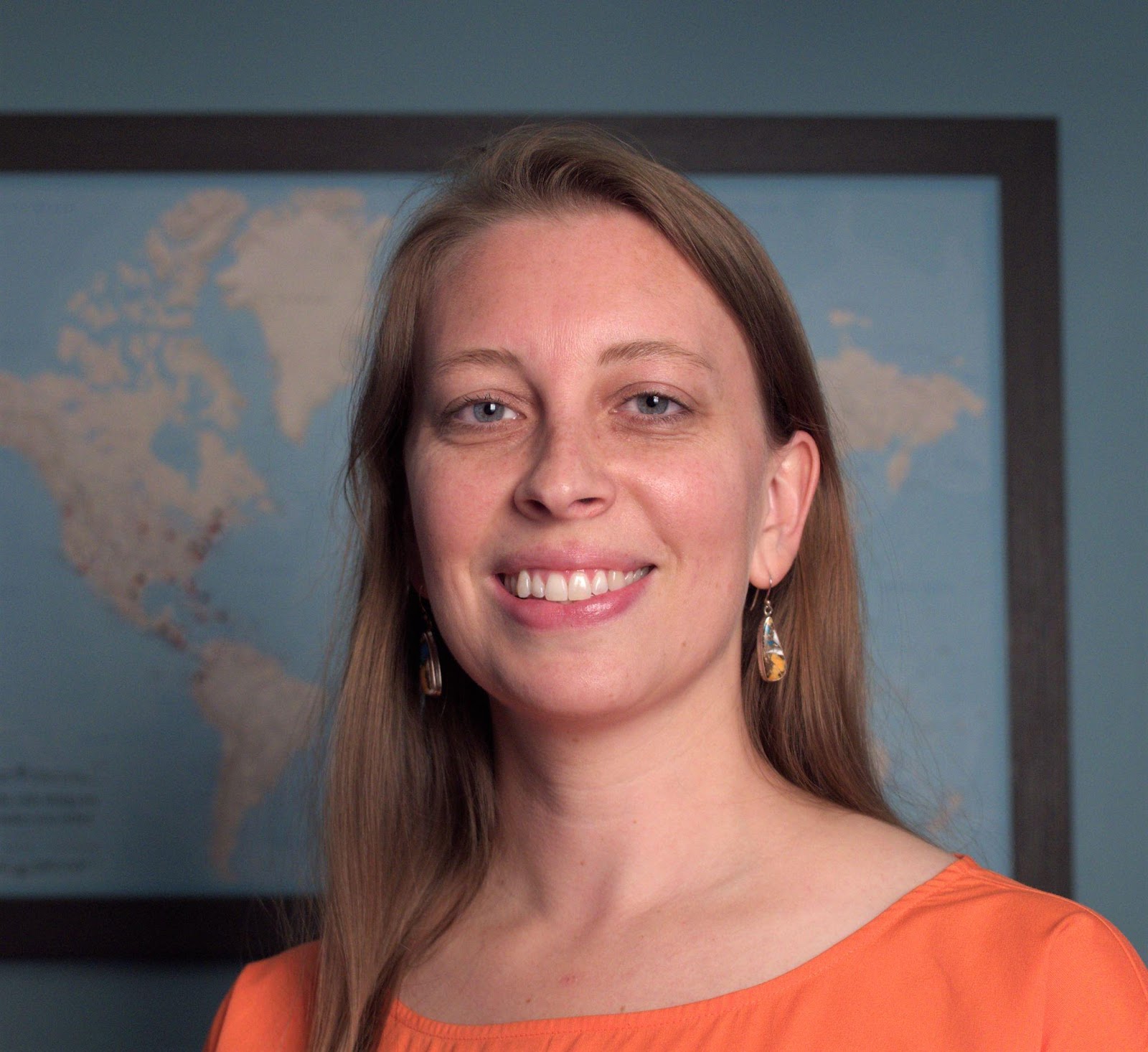
Katherine Leshchiner

Katherine Leshchiner

Katherine Leshchiner (she/her) is a writer, a podcast enthusiast, and a curious learner always striving to do better. Katherine has over a decade of experience in nonprofit fundraising. After taking a hiatus to recover from a toxic workplace and imagine other possibilities for the future, she is currently searching for work as a grant writer. Katherine grew up between Vermont and New Jersey and now resides with her husband and daughter in Maryland. She has a passion for travel and lived for several years in Guatemala. She feels happiest out in nature and is grateful to her dog for keeping her active.

You can connect with her on LinkedIn.

If her writing inspires you, please consider donating to The WildSeed Society, The National Queer & Trans Therapists of Color Network, or The Loveland Foundation.

Beyond Philanthropy: The Role of the Donor

Beyond Philanthropy: The Role of the Donor

About the podcast episode

Community Centric Fundraising involves not just fundraisers, but the donors and funders who are supporting the community. In this episode Monique and Valerie sit down to discuss the role of a donor or funder in this movement. Grounded in Community Centric Fundraising principles, this episode examines what the funder’s role is and steps they can take to be community centric.

Find the podcast transcript here.

Topic timestamps

Intro to topic 00:12

Recap of 10 principles of CCF 4:29

Fostering a sense of belonging 10:25

Funding priorities 14:05

Hard conversations 22:58

Everyone benefits 34:15

Monique Curry-Mims

Monique Curry-Mims

Monique Curry-Mims has over 15 years of business and leadership experience in both the nonprofit and for-profit sectors. As Principal of Civic Capital Consulting, an international social impact consulting firm, Monique delivers innovative strategies that help organizations meet their mission and goals, education services that empower solutions and equity, and funding to help communities working on the ground be part of the change they need. To further change impact, Monique serves as a steering committee member of Philadelphia Black Giving Circle, Trustee and the Allocations Chair of Union Benevolent Association, and a Committee Member of AFP Global’s Government Relations Committee. Additionally, Monique serves as Founder and Convener of PHLanthropy Week and co-host of Beyond Philanthropy alongside Valerie Johnson.

Valerie Johnson

Valerie Johnson

Valerie Johnson joined Pathways to Housing PA as Director of Institutional Advancement in 2018, and was promoted to VP of Advancement and Special Projects in 2021. She co-hosts a podcast, Beyond Philanthropy, alongside Monique Curry-Mims. She was also the Director of Advancement for Council for Relationships and worked as a fundraiser for Valley Youth House and the American Association for Cancer Research. Valerie, a Certified Fundraising Executive, holds a Bachelor’s degree in Marketing and an MBA from Drexel University. A member of the Association of Fundraising Professionals since 2012, she serves on the Greater Philadelphia Chapter’s Board of Directors as Vice President of Education and Professional Development. Valerie has been a featured speaker for the Pennsylvania Association of Nonprofit Organizations, NTEN, AFP GPC, and AFP Brandywine, and contributes to Generocity. You can find her on Twitter and Instagram, where you’ll see plenty of running and baking content alongside her cats, Agador and Spartacus. 

To tip Valerie and Monique for their work on their podcast, Venmo them at: @valer1ej