Radical philanthropy for Black-led movements: A new asset-based approach to fundraising

Radical philanthropy for Black-led movements: A new asset-based approach to fundraising

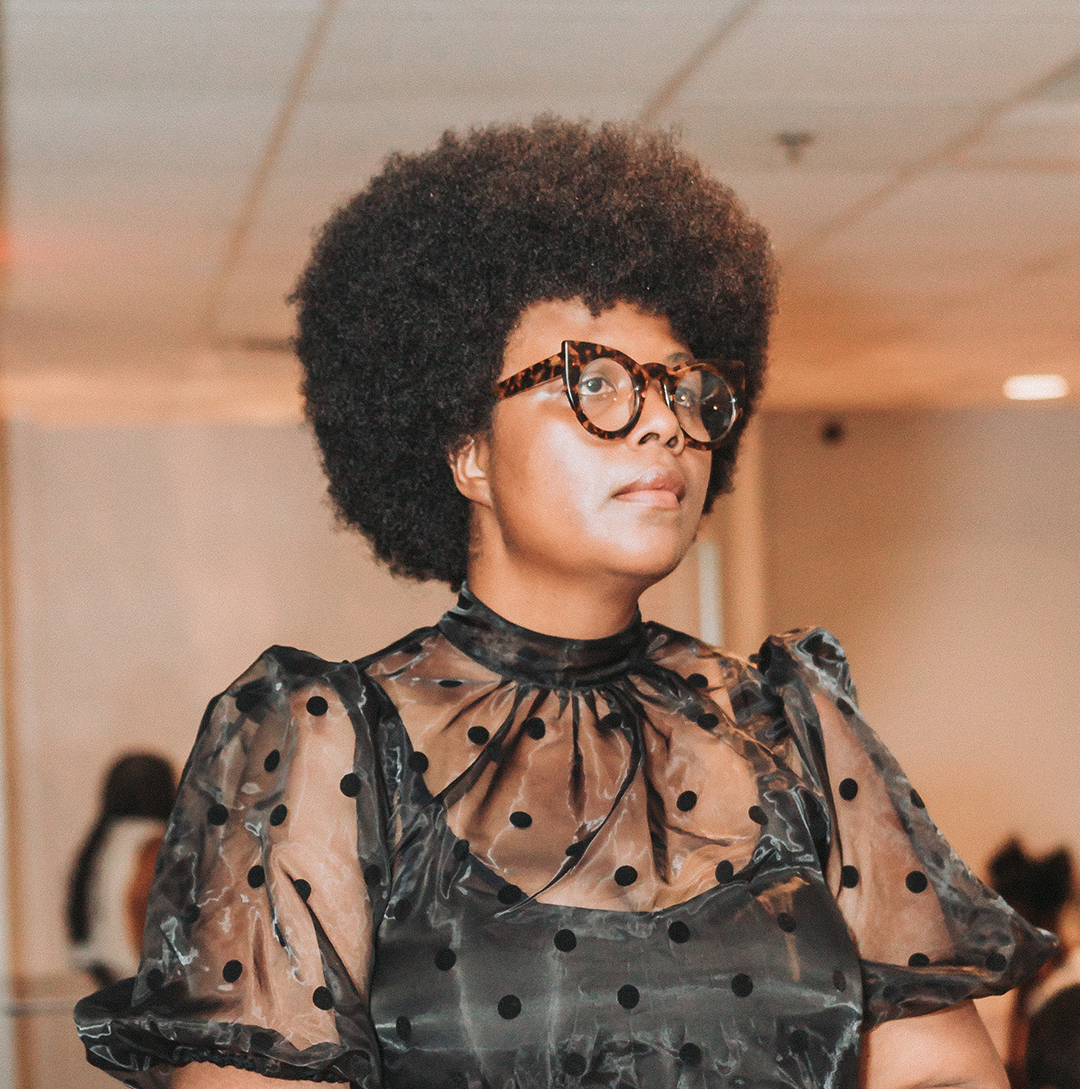
By: Johane Alexis-Phanor, a fundraising and communications consultant with an expertise in raising funds for Black-led movements

I came to the conclusion that the distance is intentional because philanthropy does not truly value the communities they serve and they do not see them as equals.

I stepped inside a beautiful foundation building today with offices overlooking the waterfront. They had the prerequisite-suited security guard at the front desk lobby to let me in. 

As I sat in their conference room looking out at all the skyscrapers, I began to ask myself, “Why is this foundation not located in one of the Black communities it serves? Why rely on nonprofit staff, grant proposals, and site visits to experience firsthand the challenges they are trying to solve? Why wouldn’t they want to be in a place where they could go outside every day, patronize the community businesses, and interact with the residents? Why do I have to travel almost an hour to hear about their philanthropic priorities for my community? Why have they created this distance?”

And I came to the conclusion that the distance is intentional because philanthropy does not truly value the communities they serve and they do not see them as equals.

Practicing deficit-based philanthropy devalues Black communities

Recently, a recruiter reached out to me about a leadership opportunity with a charitable organization. My interest was piqued because they were embarking on a new philanthropic initiative with equity at its core. This new strategy would launch a multi-year fundraising campaign.  

When I looked at the report that would help to shape this new pathway, every single data point about the community they hoped to serve was a racial or economic disparity. 

To define a community solely based on disparities is a very narrow way of doing social justice work. And to develop philanthropic strategies solely based on these disparities is to create deficit-based solutions centered around a deficit-based approach to philanthropy.

The deficit-based approach to philanthropy says that Black communities have no assets, no strengths, and no solutions to offer to address their most pressing and urgent social and economic issues. Deficit-based philanthropy takes agency completely away from Black communities. It leaves Black communities in a constant state of victimhood. It tells Black communities that they have no resources to offer to the fight for liberation. Deficit-based philanthropy has a very myopic view of the Black community because of distance. There is physical distance between funders and communities. There is also a separation in lived experiences and a detachment that occurs when you only know a neighborhood from proposals, reports, and white papers. Deficit-based philanthropy replicates inequalities, and it is ineffective. 

It’s time that we stop participating in the devaluing of Black communities and develop a new model of philanthropy that recognizes the inherent value and worth of the communities we serve.

To practice deficit-based philanthropy is to devalue Black communities. 

There are white institutions that have extracted hundreds of millions of dollars from the Black community in the form of fundraising campaigns that leverage stories, images, and the “plight” of Black communities. The professionals who work at these institutions make six figures a year, sit in a cushy office somewhere in their city’s downtown, and have received awards and accolades as a result of their philanthropic work while simultaneously telling Black communities every year that they are “struggling,” “suffering,” and “marginalized.”  

It’s time that we stop participating in the devaluing of Black communities and develop a new model of philanthropy that recognizes the inherent value and worth of the communities we serve.

S.M.A.R.T. Black Philanthropy is asset-based instead of deficit-based

In 2016, working as a Director of Resource Development, I began to develop the concept of S.M.A.R.T. Black Philanthropy (SBP), which aims to advance a new model of philanthropy in Black communities. (The S.M.A.R.T in S.M.A.R.T Black Philanthropy stands for specific, measurable, achievable, realistic, and timely- –an acronym often used to set mission-driven goals.)

This model is asset-based. It prioritizes a collaborative approach instead of a competitive approach to philanthropy. Finally, it is rooted in Black traditions and movements. 

Asset-based philanthropy starts with the premise that Black communities have assets that can be leveraged to address problems of inequality. Black communities have untapped resources that can be invested in. SBP believes in Black creativity, Black wisdom, and Black ingenuity. SBP believes that Black people have everything we need to be effective in our social change movements.

The power of words, stories, and narratives

For far too long, mainstream philanthropy has had the power to write the stories of and shape the narratives around Black communities. And the stories they have told about Black people are disparaging. Words have the power to create reality. The words we use affect the work that we do. That is why SBP avoids words like  “underserved,” “underprivileged,” “at risk,” “underrepresented,” “disadvantaged,” “under-resourced,” “marginalized,” and every other deficit-based label that white mainstream philanthropy has used to define Black communities. 

The stories of scarcity that philanthropy tells about Black communities are like self-fulling prophecies: We believe that these communities have little value and little worth, and so instead of coming up with expansive strategies for real transformation, actually investing in what it would really take for change, we patch up the problem because we don’t truly believe in the potential of the community. 

An example of the negative impacts of deficit-based narratives is the media coverage of Black communities. Stories are overwhelmingly negative, with a focus on crime and violence. Narratives are solidified about how unsafe these communities are. People refuse to visit, do business, and live in these communities. Disinvestment happens. Crime proliferates. And the vicious cycle continues.

Deficit-based solutions vs assets-based solutions


Here is an example (based on real-life philanthropic initiatives) of how deficit-based vs asset-based philanthropy would address social problems in Black communities:

Deficit-based approach–  Start with the deficit, i.e., Black boys and men are more likely to experience poor mental health conditions.

Deficit-based solution- Spend hundreds of thousands of dollars and convene multiple nonprofit organizations and staff to create a multi-year program to convene Black boys and men so they can meet monthly and have a supportive environment to discuss their mental well-being. In other words, therapy.

Asset-based approach– Start with the asset, i.e., 55% of Black-owned businesses in 2020 were led by Black men.

Asset-based solution- Develop initiatives that invest in, provide business technical assistance, and provide opportunities for Black male entrepreneurship in various fields, taking into consideration some of the challenges they face (i.e., access to education, effects of having a CORI, etc). This not only impacts the economic well-being but also addresses the mental well-being of Black men by lessening their exposure to poverty. 

Six key assets in asset-based philanthropy

If philanthropy really wants to repair the harm caused by systemic and structural racial inequities, it needs to begin its work by identifying assets in Black communities that we can invest in. 

I recommend that philanthropy cease to put together report after report of a laundry list of disparities in Black communities as a framework to guide their strategies. We know that social, gender, and racial disparities exist in our society. We can identify the needs of our communities as we evaluate the impact of our work, but disparities should not be our philanthropic guiding light. 

The Collaborative for Neighborhood Transformation has a great toolkit for asset-based community development that I have adopted as a model for asset-based philanthropy. 

I have made changes and additions to their model to develop the Six Key Assets in Asset-Based Philanthropy for greater social impact. These assets are:

  1. People Assets: People assets are the individual gifts of a community as well as their connections and relationships with each other. An example of people assets in Black communities is strong family ties, which often lead to multi-generational living.
  2. Cultural Assets: Cultural assets include arts, language, food, and music. An example of cultural assets in Black communities is storytelling and oral traditions.
  3. Physical Assets: Physical assets include land, green spaces, blue spaces (rivers, oceans, etc), and buildings. An example of a physical asset in a Black community is Black-owned homes.
  4. Intellectual Assets: Intellectual assets are knowledge and experiences often passed down through generations. An example of an intellectual asset in Black communities is the legacy of community organizing and movements for equal rights.
  5. Economic Assets: Economic assets are financial assets. Examples of economic assets in Black communities are Black-owned businesses and enterprises, funds, and investments.
  6. Institutional Assets: Institutional assets are professionally organized groups that serve communities. Examples of institutional assets in Black communities are Black churches, museums, and affinity organizations. 

This is a model for how we can identify and leverage assets in Black communities to bring about real social change. It’s a way for us to recognize the unique strengths and opportunities that can flourish within Black communities given the right financial investments.

I’m extending a challenge to philanthropy, both foundations and non-profits alike, to make detailed accounts of the assets in Black communities. Then, I’d like us to develop strategies for how funders will invest in those assets and how non-profits will leverage those strengths to move the needle toward positive social change.  
Author

Author

Johane Alexis-Phanor (she/her) is a fundraising and communications consultant with an expertise in building capacity for organizations that impact racial equity. She grew up as a second generation immigrant in the Haitian enclave of Mattapan, in Boston. Using her entrepreneurial spirit, she launched Beyond Wordz to assist with the organizational development of non-profits doing work to positively impact Black people and Black communities. To date, she’s raised close to $3 million to support community development initiatives. In 2022, she was one of 5 finalists for the Haitian-American Young Citizen of the Year given by the U.S. Haitian Chamber of Commerce to recognize professionals under 45 whose commitment, outstanding civic engagement, volunteerism and public service has benefitted their community. Follow her on Twitter at @beyondwordz_.

S.M.A.R.T. Black Philanthropy aims to advance a new model of philanthropy in Black communities. This model is asset based instead of deficit based. It prioritizes a collaborative approach instead of a competitive approach to philanthropy. Finally, it is rooted in Black traditions and movements.  

SBP is written from the perspective of Johane, a Haitian-American woman, who inadvertently found herself in the field of community development working to leverage charitable giving to support the economic empowerment of communities of color. It challenges the current paradigm of philanthropy while exploring issues of Black self-reliance, structural inequalities in the non-profit field, the intersection of faith and social justice, and more. The S.M.A.R.T in S.M.A.R.T Black Philanthropy stands for specific, measurable, achievable, realistic, and timely- an acronym that is often used to set mission-driven goals. These writings present a S.M.A.R.T alternative for achieving greater social good through philanthropy.

Instagram Live: What does it mean to be a disrupter in an institution?

Instagram Live: What does it mean to be a disrupter in an institution?

In 2024, less is more: How I learned to honor my boundaries, rest, and find community

In 2024, less is more: How I learned to honor my boundaries, rest, and find community

By Pear Jam, (alias) is a seasoned fundraising professional whose collaborative, results-driven, strategic planning and execution have resulted in millions of philanthropic dollars directed toward racial justice, immigrants’ rights, education, and food justice causes.

In 2024, I am not wasting any energy on converting people who have no intention of seeing me: “See me and my community or not, we are here – poignant, relevant, brilliant and beautiful, rich and resourceful.”

From the moment I arrived at the organization that tokenized and then fired me in 2023, it was clear that I was the cleanup woman. Staff members’ talk about revoking their own planned gifts, donors going unthanked for years, and unwillingness to ask Board members to give annually, should have given me a hint that I might be chewed up and spit out at this place. 

“When someone shows you who they are, believe them the first time,” Maya Angelou once said.

Perhaps the previous development director – also answering to the titles of lawyer, marketing director, and compliance officer – didn’t own her boundaries as a fundraiser. I would protect my zone of genius, I insisted.

Living my grandmothers’ wildest dreams, I updated, merged, and purged outdated and duplicate donor records, evaluated donor trends and history, and crafted a stewardship program that included an annual giving campaign and donor engagement touchpoints. As a newly minted certified fundraising executive (CFRE), I hung up my certificate on the wall to remind everyone they were entering the office of a fundraising professional.

“We don’t like the word fundraising around here,” they said, despite their post for “CFRE Preferred” applicants on the job announcement I answered. “We build relationships.”

“To what end?” I reiterated each time they rejected industry standards-based donor solicitation recommendations that they would have fawned over if my expertise were manifested in a white-presenting body. 

I received regular hints that I didn’t “understand the culture” of the organization while overlooking their cancellations of my check-in requests and insistence on my perpetual “drinking out of the fire hose” as appropriate onboarding.

A few weeks in, the white board that hired me appeared disappointed that I had no mystical Black magic theatrics to produce millions of dollars before year-end. They balked at my invitations to collaborate on regular donor records review, gift history storytelling, and identification of new prospects. No effort was made to include me in conversations revealing their “relationship-building” goals. 

“I’m not impressed by you,” the newly-hired, white, well-heeled, highest-paid person in the office (HiPPO) directly addressed me within weeks of her arrival. My new supervisor, as the HiPPO, was deputized to evaluate my performance and freely undermine me in front of other colleagues despite her lack of fundraising experience. Her derisive looks suggested annoyance that I, as a Black woman without equivalent social status, dared to sit at the helm as her equal in deference. 

“You are one of the highest-paid people here,” she grunted, apparently surprised when it slipped out in a meeting where I was requesting, again, to be updated with abrupt pivots and Board decisions that touched my workstream. Perhaps I was not showing enough gratitude for being permitted to sit at the table.

Diversity Hire?

Months prior to hiring both me and the HiPPO, the organization hosted a DEI training led by an external Black consultant. The result was a chuckling, happy, mostly homogenous room of white people agreeing on their favorite foods and shared love for the local NFL team. 

“Remember, we are all more alike than our differences,” the consultant said, reiterating the thesis of the gathering. That archived video’s date stamp indicates that I was interviewed shortly thereafter, as many PWI organizations sought to distinguish themselves as progressive and woke in the wake of the George Floyd murder and subsequent racial reckoning. 

In the only DEI session that happened – of the three that were promised – there was no mention of systemic racism, imbalance of power, and unconscious bias. Neither was the word “belonging” part of the conversation around building a diverse staff. 

It makes sense that key strategic fund development conversations once I was hired happened with me on the other side of closed doors and that significant stakeholder introductions that would have closed the “organization’s fundraising culture” gap never made it to my calendar. 

Expecting and insisting on buying milk at this hardware store made me look ridiculous. Something needed to happen so that I could move on.

Collecting My Stuff and Finding Myself

Six months after receiving the pink slip, I am still smarting at how much more energy my former employer directed toward offloading than onboarding me. Sufficiently degreed with 15 years as a frontline fundraiser, I expected the same deference given the HiPPO when she arrived – introductions, inclusion, and relevant onboarding. It is still hard to accept that no matter what or how I asked, my request was rejected, not because it was unreasonable but because there was never an intention to support me. Whether intended, the harm to my BIPOC fundraiser soul over the past 15 years and as a Black-presenting body for more than 50 years resurfaced.

“You will never belong, but you can make people respect you,” I had told myself for decades of micromanaging my countenance, acculturation, and assimilation.

This core gaslighting belief pushed me into six months of spiritual coaching by a BIPOC woman who resonated with the work of reassembling my shattered identity as a successful people pleaser.

Manifesting Congruence

In the months following the work separation, I heard my inner daughter regularly asking me whether and how I might keep her safe in future relationships. She also asked whether I still loved her, even though she felt like a failure. Sometimes, we just hung out together in bed all day; other times, I showered her with high quantities of sugar and flour. 

My spiritual coach guided me through grief over job loss, my identity crisis as a dismissed women of color fundraiser, and my sense of self-betrayal while staying at a job that continuously harmed me. I used that time of “sabbatical” to admit that I was burned out and that the only entity in the nonprofit world needing me right now was me. I had rallied so many times over the past decade in the face of a slow, painful death by 1,000 microaggressive cuts. 

Consistent meetings with my coach, supportive family and friend network, my Higher Power, and my inner daughter helped me to unearth core personal values that would guide my future decisions about the job I began in January 2024.

Seeing Me

I am in my first 100 days as Development Director of a Black-centered, Black-led organization, where my voice is celebrated as part of the organization’s health and wealth. Coming home to myself, first and foremost, in the fallout of a toxic work breakup, manifested this. 

Community-centric values of collaboration, partnership, gentle patience, intentional planning, and clear communications are among the shared qualities at this BIPOC-centered non-profit that support my path of healing as a nonprofit fundraising professional. 

I name Black leadership in my new assignment, not to suggest that community-centrism is inclusive of all BIPOC organizations or exclusive of all PWIs, but to reaffirm that I needed an organization that mirrors, centers, and resources my identity as a Black woman in leadership. 

In the Rearview Mirror

2023 started with me as a Black-identifying fundraiser with a chip on her shoulder: “See me and the community that raised me, you racist philanthropic system that categorically denies the true experts and primary change agents equal access to financial resources and grantor trust.” 

In 2024, I am not wasting any energy on converting people who have no intention of seeing me: “See me and my community or not, we are here – poignant, relevant, brilliant and beautiful, rich and resourceful.”

Whether others see me, I see myself. I am grateful to choose each day what I am going to accept and what I am going to change about me.

God, may I do or cause no harm. For all of my seasoned experience, I know fundraising spaces are frequently harmful. I will not be perfect, and we will each fail each other in many ways. Higher Power, Whom I call All-Inclusive Spirit, please grant me the serenity to accept the people running the organization that I cannot change, the courage to change the only person I can change, and the wisdom to know that this person is me. May I breathe into new lessons as I invite and deepen new and existing relationships with staff, Board leaders, network members, volunteers, and donors who are in congruence with our organizations’ values and principles. 

In 2024, Less is More

“Don’t go in there doing the most,” my sister-in-law told me when I announced my new job. “I told you that last time. Don’t do more than is expected of everyone else. Go home when everyone else does.”

Spoken like a true non-fundraiser, my sister-in-law is reminding me that  less is more:

  • Less compulsion yields more boundaries.
  • Less proving results in more rest.
  • Less deference supports more honesty.
  • Less overthinking ignites more activation.
  • Less self-protection allows more self-trust.
  • Less individualism provides more community.

Thanks, Sis. I’m for all that. 

In 2024, I commit to cultivating myself more: walking, reading, writing, and gardening.

I’m taking more space for rest and recovery: more intermittent healing so I don’t have to hit the bottom so hard, resulting in depleted sick leave. 

It’s not a question of being selfish, Nonprofit Leader. Self-cultivation helps everyone, ensuring that the safekeeper is first well-kept. In 2024, I’m going to see myself more. How much more of yourself will you see?

Pear Jam

Pear Jam

Pear Jam’s healing journey starts with decolonizing the self of misogynoir sentiments that manifest as self-sabotage and self-hatred. A lifelong learner, PJ’s contemplative writing, walking discipline, land practices ground them.

As a U.S. Gulf South resident, they remain committed to their own personal and professional development, which includes honoring the power of Black love, faith, and family in the face of generations of racialized trauma.

As a children’s book writer, their fondest dream would be to join the ranks of celebrated Black authors whose books help children to love, trust, and hold safe spaces for their own beautiful reflections.

Seeing every day as a new opportunity to learn, they tend to ask a lot of questions that inform effective advocacy and cause selling. Their love of words infiltrates even during play time — when they’re not crafting compelling case statements, they’re arranging Scrabble bingos for a decisive win. On a beautiful day, one might find them briskly walking the neighborhood, tending their home garden, and most recently, working on their Pickleball returns.

Justice 40 Initiative: An opportunity to right environmental injustice

Justice 40 Initiative: An opportunity to right environmental injustice

By Jenny Brandt, member of CCF Global Council and co-lead of membership team

We have an opportunity to address long-standing environmental injustices and redistribute wealth back into communities it has been taken from.

With the passage of Executive Order 14008, which created the Justice 40 initiative, we are in a time of unprecedented funding available for environmental justice communities. 

The US government has not always invested in Black, Indigenous, and people of color (BIPOC) communities. And some historical investments have gone a long way to harm these communities (i.e., building highways and airports that displace Black and Brown communities and increase pollution and noise levels; siting toxic waste disposal facilities, including landfills and incinerators, in marginalized communities; the development and operation of fossil fuel infrastructure, such as pipelines, refineries, and extraction sites, leading to environmental degradation, health problems, and economic disparities in these communities, just to name a few).

It is important that our CCF network, especially the BIPOC fundraisers, have access to information about the avenues for accessing that funding to improve the lives of BIPOC communities.

The specifics of the Justice 40 Initiative

Three years ago, President Biden signed Executive Order 14008, “Tackling the Climate Crisis at Home and Abroad,” creating the Justice 40 Initiative. This initiative seeks to change the amount of investment that would flow to communities that were not usually considered a priority to receive Federal investments. The new goal is that 40% of the overall benefits of certain Federal investments will go to disadvantaged communities that are marginalized, underserved, and overburdened by pollution. 

For reasons related to the possibility of this being struck down in court, these communities are not referred to by race, though the fact that most of these are BIPOC communities is no coincidence.

The funding focuses on investments set to address climate change, clean energy and energy efficiency, clean transit, affordable and sustainable housing, training and workforce development, remediation and reduction of legacy pollution, and the development of critical clean water and wastewater infrastructure.

The order did not create a fund in and of itself, instead, the funds come from existing Federal programs and new programs created under the Inflation Reduction Act, Bipartisan Infrastructure Law, and the American Rescue Plan.

Accessing funds and how to learn more

The government created a Climate and Economic Justice Screening Tool (CJEST), which today looks like this map. It can tell you the burdens that your community faces and if your community could be eligible to receive funding. All communities on land within the boundaries of Federally Recognized Tribes are eligible. 

Additionally, if your community is at or above the 90th percentile in one or more environmental, climate, or other burdens, and at or above the 65th percentile for low income, it would be eligible. 

As an example, I used this map to look up my old neighborhood in Queen’s Chapel in Washington, DC. The census tract it falls in is above the 90th percentile for people who have been told they have asthma, for lead paint in homes, for the count of hazardous waste facilities within 5 km, for underground storage tanks and releases but below the 65th percentile for low income, so my community is not eligible to apply for funds to clean up legacy pollution, housing, or health. But our unemployment is above the 90th percentile, and the percent of people ages 25 years or older whose high school education is less than a high school diploma is above 10%, making my community eligible for workforce development funding. (Methodology).    

This information will be most useful to groups already doing workforce development in the area, or a group of concerned community members can get together and find partners to submit a proposal to receive such funding. If you need additional support in connecting with potential partners in local government, or groups with experience attaining these funds, you can look for it from your regional Environmental Justice Thriving Communities Technical Assistance Center (EJ TCTAC).

The Environmental Protection Agency and the Department of Energy have funded 16 EJ TCTACs around the country that will receive $177 million to help underserved and overburdened communities across the country. In the table below are the EJ TCTACs, which state, territory, or area they cover, and how to find out more:

Region 1

(serving CT, ME, MA, NH, RI, and VT)

Institute for Sustainable Communities is a national EJ TCTAC that will serve Region 1 until a Region 1-focused EJ TCTAC is selected, expected in early 2024. region1tctacinquiries@sustain.org

Region 2

(serving NJ, NY, Puerto Rico, the U.S. Virgin Islands, and 8 federally recognized Indian Nations)

West Harlem Environmental Action, Inc. (dba WE ACT for Environmental Justice) https://www.weact.org/tctac/

Region 2

(serving NJ, NY, Puerto Rico, the U.S. Virgin Islands, and 8 federally recognized Indian Nations)

Inter-American University of Puerto Rico-Metropolitan Campus https://metro.inter.edu/ecoeagle/

Region 3

(serving DE, DC, MD, PA, VA, WV, and 7 federally recognized tribes)

National Wildlife Federation https://www.nwf.org/Our-Work/Environmental-Justice/Region-3-TCTAC

Region 4

(serving AL, FL, GA, KY, MS, NC, SC, and TN)

Research Triangle Institute (RTI International) http://react4ej.org/

Region 4

(serving AL, FL, GA, KY, MS, NC, SC, and TN)

Deep South Center for Environmental Justice (DSCEJ) https://www.dscej.org/circ

Region 5

(serving IL, IN, MI, MN, OH, and WI)

Blacks in Green (BIG) Google Form

Region 5

(serving IL, IN, MI, MN, OH, and WI)

University of Minnesota https://greatlakestctac.umn.edu/

Region 6

(serving AR, LA, NM, OK, and TX)

New Mexico State University https://scejrc.nmsu.edu/index.html

Region 7

(serving IA, KS, MO, and NE)

Wichita State University https://heartlandej.org/

Region 8

(serving CO, MT, ND, SD, UT, and WY)

International City/County Management Association https://form.jotform.com/233324021161136

Region 9

(serving AZ, CA, HI, NV, American Samoa, Commonwealth of the Northern Mariana Islands, Federated States of Micronesia, Guam, Marshall Islands, and Republic of Palau)

University of Arizona https://westejcenter.arizona.edu/

Region 9

(serving AZ, CA, HI, NV, American Samoa, Commonwealth of the Northern Mariana Islands, Federated States of Micronesia, Guam, Marshall Islands, and Republic of Palau)

San Diego State University Center for Community Energy and Environmental Justice (CCEEJ)

Region 10

(serving AK, ID, OR, WA, and 271 native tribes)

Willamette Partnership https://willamettepartnership.org/ej-tctac/

Region 10

(serving AK, ID, OR, WA, and 271 native tribes)

University of Washington https://deohs.washington.edu/cehe/


Additional resources provided on the White House Justice 40 website.

Agencies that have released their covered programs under the Justice 40 Initiative include:

Early successes of the Justice 40 Initiative

The Justice 40 Accelerator page shares just a few examples of their Justice 40 success stories:

In Chicago, it helped Blacks in Green fund their effort to build a community-directed lead-free water project focused on education, testing, and increasing access to in-home filtration systems. 

In Hamilton, it supported the West Georgia Farmers Cooperative in advancing food security by providing funding for a community-owned grocery store, commercial kitchen, and credit union, empowering local farmers, producers, and culinary entrepreneurs to expand their local businesses.

In Stockton, it assisted Little Manila Rising in facilitating a just energy transition for their community via the Department of Energy’s LEAP program. Through the acquisition of $500,000 in public funding, they are addressing longstanding energy and pollution challenges to establish a clean, dependable, fair, and secure electricity system that benefits the Little Manila community.

This is an important opportunity for the communities who have been the most historically disadvantaged to receive access to funding to improve outcomes in health, climate change preparedness, transportation connectivity and so on. We’re already seeing innovative projects improving lives in these three examples. Please share this potentially life-changing financial opportunity with the communities in your network who need it most. We have an opportunity to address long-standing environmental injustices and redistribute wealth back into communities it has been taken from. 

Jenny Brandt

Jenny Brandt

Jenny Brandt (she/her) is a member of the Global Council at CCF. She is a co-lead of the Membership and Regional team and is building the network in Latin America.    

Her career in non-profit organizations has focused on building equitable access for Latino communities to health, economic justice, advocacy, jobs within the Federal government, environmental justice, resources and conservation.

She currently resides in Chetumal, Mexico where she loves taking photographs. You can find her on Linkedin here

Size isn’t everything: The power of targeted community-building in social justice organizations

Size isn’t everything: The power of targeted community-building in social justice organizations

By Michelle Flores Vryn, CFRE,  frontline fundraiser, board member, and nonprofit consultant

Social justice nonprofits, in particular, must be able to inspire people to see the cause areas from a values-aligned perspective. Like any story that deeply moves you, the power comes in through the intricate details. Part of the story feels so real that it sets your heart on fire! To achieve this, we have to remember that we cannot fit in and stand out at the same time. We gotta pick. 

In nonprofit marketing, we follow the age-old assumption that casting a wider audience net guarantees a heftier and better catch. But does it, really? We borrowed this concept from the sales world and in my 15 years of nonprofit work, I find it leads down an unhelpful trail. In meetings, I have heard comments like “our target audience is everyone.” 

While a well-intentioned notion, this is simply not the case. 

For example, does everyone really care equally about a growing youth prison system in Texas? Probably not. 

Each mission is not equally engaging to everyone. Failing to recognize this has led many organizations to pursue broad, generalized messaging and marketing. What’s left is average messaging that lacks authenticity.

The Power of Focus

Open up Instagram. Your favorite brands are compelling and own a distinct vibe. I love the indie makeup brands, and yes, the Instagram algo has caught on! Araceli Beauty is a brand that uses key ingredients from Mexico, including agave. The Mexican-American owner does a fabulous job of representing the Latina culture in the beauty industry. But that angle will not appeal to everyone … and that’s okay. The people who love it really, really love it. We’re bought in. We are values-aligned. And we’re not buying our blush from L’oreal. 

For people to find and align with you, you have to show them who you are. And who you are is not generic. 

Social justice nonprofits, in particular, must be able to inspire people to see the cause areas from a values-aligned perspective. Like any story that deeply moves you, the power comes in through the intricate details. Part of the story feels so real that it sets your heart on fire! To achieve this, we have to remember that we cannot fit in and stand out at the same time. We gotta pick. 

As marketing leaders like Seth Godin have highlighted, this is because existing for everyone dilutes the unique essence that makes your mission special. The concept of “the smallest viable audience” emerges as a helpful beacon. It asks nonprofits to identify and nurture a specific community that is deeply invested in their cause. Choosing a very small market to engage is brave. This shift from mass to targeted outreach is not just a marketing tactic. It’s a fundamental reframe of your mindset.

Social Media: A Tool for Real Connection, Not Just Wide Broadcasting

Social media, often thought of as a platform solely for en masse broadcasting, holds untapped potential for creating meaningful relationships. It is a conduit of connection, and on it, uniqueness sells. Nonprofits can use their nuanced missions and people-centered stories to engage with specific groups who share their values and show a real interest in their social justice space.

The question then arises: should nonprofits tailor their content to cater to niche interests or try to resonate with everyone? The strategy of “we’ll just wait for some random people to find us” is not great. But also, you should understand that you have two audiences: one to help communicate with the communities served regarding programs and services and another to build a supporter ecosystem. 

Both audiences are important, but the marketing strategy to reach each is different. It’s also important to remember that in the supporter ecosystem category, quality beats quantity every day of the week. Engaging deeply with a smaller, more invested audience yields more meaningful and lasting support for your cause than superficial engagement with a less ‘bought in’ and larger group. This means that your special event or monthly giving program is not really for everyone. Design it with your smallest viable audience in mind. 

For inspo, here are a few nonprofits that are clearly and boldly articulating their social cause and why it matters: 

  • Rise: works to codify civil rights. Rise is superb at demystifying activism by breaking down the often-daunting process of passing new laws into actionable steps, empowering everyday people to become changemakers. This accessible approach makes civil rights advocacy feel achievable and inspires participation.
  • The Human Impact: helping Dallas’ homeless in a remarkably simple way. It promotes the oldest means of helping others: love and companionship.  The Human Impact cuts through complex solutions with one powerful message: friendship conquers homelessness. This disarming clarity resonates deeply, bypassing assumptions and connecting on a fundamental human level. They attract those who see reframing homelessness as a lack of connection, not just material resources. 
  • Nomi Network: works to end human trafficking by creating pathways to safe employment, empowering women and girls to break cycles of exploitation in their families and communities. Nomi Network has a clear focus on empowerment. Their message is not about rescuing victims, but about building resilience. They resonate with those interested in creating sustainable economic opportunities that equip women and girls to break free from cycles of exploitation and become changemakers themselves.

Embracing the ‘Tinder Approach’: A Strong Brand Elevates Social Justice Causes

Drawing an analogy to the dating app Tinder, the choice is clear. You can either swipe right indiscriminately, hoping to connect with anyone, or you can be selective, focusing on those connections that promise deeper, more values-aligned engagement. 

For nonprofits, this means honing in on those who are most likely to support and advocate for your mission. Even though your mission area may have a far-reaching impact, it will not be everyone’s passion area. For the people who get the importance of your work, they really, really get it!

Think about Community-Centric Fundraising–the movement is not for everyone. But for people who are in, they are all in! It’s a powerful micro-community. A micro-community is a group of people with a shared interest or passion, who connect with each other to discuss their specific interests.

Small is Beautiful, If We Let It Be

The nonprofit space is crowded, and there are so many worthy causes vying for attention. Do not try to compete with every nonprofit out there. Instead, start small and focus on being different for a well-defined group of people: this is the smallest viable audience. Ironically, the path to scaled success is not about reaching the masses, but rather about connecting authentically with those who truly care. 

Sound scary? Maybe. But ask yourself how far playing it safe and speaking to a non-descript audience has gotten you. By focusing on your true believers, you can lean more into your authentic voice and build a community of strong advocates. 

If you do work that matters–and I know that you do–then you can find people who genuinely care. Last year hasn’t held back any punches, and neither should you in 2024. 

Be bold, go big, stay true to your mission, and steer clear of distractions posed by skeptics in 2024.

Michelle Flores Vryn, CFRE

Michelle Flores Vryn, CFRE

Michelle Flores Vryn, CFRE (she/her/ella) has 15 years of experience in nonprofits and has worked in many areas of development, from institutional giving and capital campaigns to special events and digital fundraising. As a writer, speaker and thought provoker, Michelle is consistently asking how we can best drive outcomes to help the most people, at scale. She believes that the best work emerges from healthy organizations so she is invested in making the nonprofit sector a more regenerative environment. Michelle currently serves on the boards of the Association of Fundraising Professionals (AFP) Global and Mission Capital and is a CCF Texas chapter organizer. 

Find Michelle on LinkedIn – she’d love to connect!
Check out her website to learn more about consulting services.
Send Michelle a tip via Venmo: @Michelle-Flores-Vryn