You’re not feeling imposter syndrome, you are an imposter: Identity and belonging in nonprofit work

You’re not feeling imposter syndrome, you are an imposter: Identity and belonging in nonprofit work

By Esther Saehyun Lee, Community-Centric Fundraising Global Council Member, Self-Proclaimed Imposter, and Consultant

Why did hearing someone say, “You were right; you are an imposter,” invoke calm instead of panic? I’d always thought that it would unmask me as the fraud I always feared I was.

The title of this essay comes from a TikTok by Shahem Mclaurin. Their reclaiming of “imposter syndrome” was revelatory and inspired me to share their perspective with you.

(I’m not going to talk about imposter syndrome or its effects because, chances are, if you’re reading this, you’ve probably felt this deeply. You don’t need me to detail the symptoms; chances are you’re feeling it right now just from reading the first half of this title.)

For me, hearing this therapist say the words, “You are not feeling imposter syndrome, you are an imposter,” felt like my worst fears being articulated. I thought it would confirm my worst fears and the tape running in my head continually telling me, “I do not belong.”

I thought that my anxiety, the sense of feeling always a little bit othered, of being excluded, of always feeling that I don’t quite belong, would start ringing louder. But instead, I felt calm. 

In fact, I felt liberated.

Then I felt curious.

Why did hearing someone say, “You were right; you are an imposter,” invoke calm instead of panic? I’d always thought that it would unmask me as the fraud I always feared I was. 

This line of thinking led me to reflect on one of the times in my career when my imposter syndrome felt the most suffocating.

When Imposter Syndrome Strikes in Activist Spaces

You would assume it would come from a more corporate setting, but it actually came about when I joined an organization that was unapologetically feminist. My role, filled with promises of anti-racist and intersectional feminist values, ironically made me question if I was enough: equitable enough, feminist enough, committed enough. Having come from academia, where my imposter syndrome was always about whether I was smart enough, this was new. My imposter syndrome evolved from doubting my intelligence to doubting myself as an activist.

In my role, I encountered amazing feminists and team members committed to fighting violence against women. However, I also met many –usually older unionized staff – whose feminism was only really applicable to white women. Who really made it clear that they didn’t care or want to shift their perspective.

Their racism and their condescension to people of colour were palpable. They were racist to other staff and didn’t care even to be subtle about it. The very first week of my job, a staff member refused to let me into the shelter.

Our shelter had two locked entrances, which required a fob to enter. Sometimes (well, oftentimes), the fob scanner wasn’t functional, and when this was the case, the staff member sitting at the front desk would buzz you in.

During my first week as a coordinator, my fob wasn’t working, so I stood at the door, smiled, and waved to the staff member – an older, white, unionized staff member who’d worked at the shelter for decades – I’ll call her Marie.

She glanced at me and went back to her work.

I tried to brush it off and just knocked on the door. But she simply kept ignoring me.

Eventually, another staff member who witnessed me knocking at the door and the advocate willfully ignoring my presence let me in. We said nothing to each other.

But as we were both women of colour, she gave me a look of deep understanding. We knew what Marie was doing. We’ve had Maries all throughout our lives.

Just from that glance, I felt affirmed in my suspicion.

Marie had intentionally ignored me and prevented me from entering the workspace.

The experience of enduring racist harm and abuse in this sector is not new to me. Witnessing it happen to others is not new to me. And I, unfortunately, as many people of colour do, have a catalogue of experiences of being othered, fetishized, excluded, or condescended to. As an Asian woman, I’m used to being stereotyped as subservient or “a good worker” but never a leader. Someone who’s a hard worker and easy to manage because I hold no strong thoughts of my own.

But I chose this example for a reason.

Physically being excluded from the workspace, actively ignored, and made invisible was a tangible confirmation of what my imposter syndrome had been telling me –that I did not belong. And having this experience in an organization that loudly proclaimed its commitment to advocacy and equity demonstrated an irony prevalent in the nonprofit sector.

“For women of color, self-doubt and the feeling that we don’t belong in corporate workplaces can be even more pronounced — not because women of color (a broad, imprecise categorization) have an innate deficiency but because the intersection of our race and gender often places us in a precarious position at work. Many of us across the world are implicitly, if not explicitly, told we don’t belong in white- and male-dominated workplaces.”

         -“Stop telling women they have imposter syndrome”- Ruchika Tulshyan and Jodi-Ann Burey

It was unexpected to have this experience in the nonprofit sector, in a feminist organization staffed by so many women of colour.

Working for an organization that is vocal about its mission and values is so alluring. And its loudest siren call is that “you can be yourself.” It almost lulls you to think that the risk you carry as a woman of colour is erased. That you are now, and truly, “safe.” Safe to be, safe to speak, safe to unmask.

I learned, my first week on the job, that this is false.

And in some ways, I’m grateful that it happened to me so early. This experience of being shut out, erased, and made invisible is such a small drop in the ocean of women of colour’s experiences in the nonprofit sector.

The call for equity-minded fundraisers has become a rote performance, rather than a true commitment to justice

In recent years, the nonprofit sector has been tasked with critical self-reflection to examine how it perpetuates the harms it says it tries to solve. And the call to equity has been one that even the most archaic of institutions, the most powerful, the most resourced, cannot ignore. 

McKinsey’s report found that from November 1, 2020, to May 19, 2021, companies across the private and public sectors, including philanthropic institutions, committed nearly $200 billion to increase efforts toward racial justice.  More and more, we’re hearing a call for justice and a call to shift our organizational and sector culture to reflect the communities we serve. Increasingly, there have also been demands that organizations and our sector itself address the toxicity and racism that is both systemic and rampant.

And there were some hopeful things to come out of this.

But it’s also started to dilute the work of anti-racism and made light of the scope of racial reckoning, justice, and equity work that is going to be a huge undertaking for this sector.

There have been a lot of empty and performative gestures to signal equity, but they have led to nothing. From internal equity audits (with no third party to hold them accountable), the formation of DEI committees (usually with young POC that are not compensated and are instead exploited for their labour), and the procedural land acknowledgment in all-staff meetings (that prompt no self-reflection or call to action but is a mere rote performance of words on a page). Organizations have also begun seeking fundraisers committed to equity but creating a space that is unequivocally unsafe for them.

How do we proceed?

Instead of asking ourselves if we’re imposters, we should ask ourselves, what systems are we imposters of?

I am an imposter. I don’t belong in the nonprofit sector–as it is. I refuse to subscribe to the underpinning values of white saviorism, colonialism, donor worship, poverty tourism, and overall self-congratulatory air that “we came into this sector to do good.”

This perspective has shifted things for me. Watching this Black therapist talk about “belonging” in an academic setting exposed a truth that hit me like a hammer.

I don’t belong. Not to this sector as it is.

And I’m OK with that.

I am an imposter. I don’t belong in the nonprofit sector–as it is.

I refuse to subscribe to the underpinning values of white saviorism, colonialism, donor worship, poverty tourism, and overall self-congratulatory air that “we came into this sector to do good.”

The narrative that we “do good” in this sector is precisely why we do so much harm. This halo effect has blanketed so much interpersonal and systemic harm it’d be impossible to articulate the lengths and traumas that have affected people in this sector.

I’m an imposter. I’d rather focus on the “why” we solicit money than the goal. I’d rather discuss, at length, the cost and labour of a program instead of creating one so we can flaunt it to foundations for money. I’d rather discuss the merits of a 40-page application for a $5k grant, where we must lie to them that this will have a huge impact on our program.

I’d rather partner with organizations that align with our values than pursue one simply because they have money.

And I’m realizing that, in many ways, this does make me an imposter. It makes me an imposter to a disappearing era of fundraising where money was the ultimate end goal.

I’m part of a generation of fundraisers committed to holding this sector accountable to the values it has always professed. I’m part of a generation where one fundraiser who has experienced racist harm is one fundraiser too many. I’m part of a generation of fundraisers where losing money is not my ultimate fear, but losing my values is.

My understanding of imposter syndrome has expanded and contains multitudes now. Instead of asking whether I belong in a space, I ask myself, “Do I want to be here?” 

This reflection is not meant to glamorize imposter syndrome or romanticize it. I couldn’t do that if I tried. Imposter syndrome is debilitating and is the reason this essay took so damn long to write. I’ve simply contextualised my imposter syndrome to systemic issues, not just individual failings. 

This sector wasn’t made for people of colour to feel powerful. It was made to disempower us. And the sooner we recognize that, the sooner we can rebuild it. As Shahem Mclaurin says, “Do not gaslight yourself out of this experience cause that’s how we avoid changing these systems and institutions.” I now have clarity of my purpose in this sector.

My purpose is to be an imposter until this sector rebuilds itself into one that truly serves us all.

My name is Esther Saehyun Lee, and I’m an imposter in the nonprofit sector. And I will remain one until our sector is truly grounded in equity and justice. 
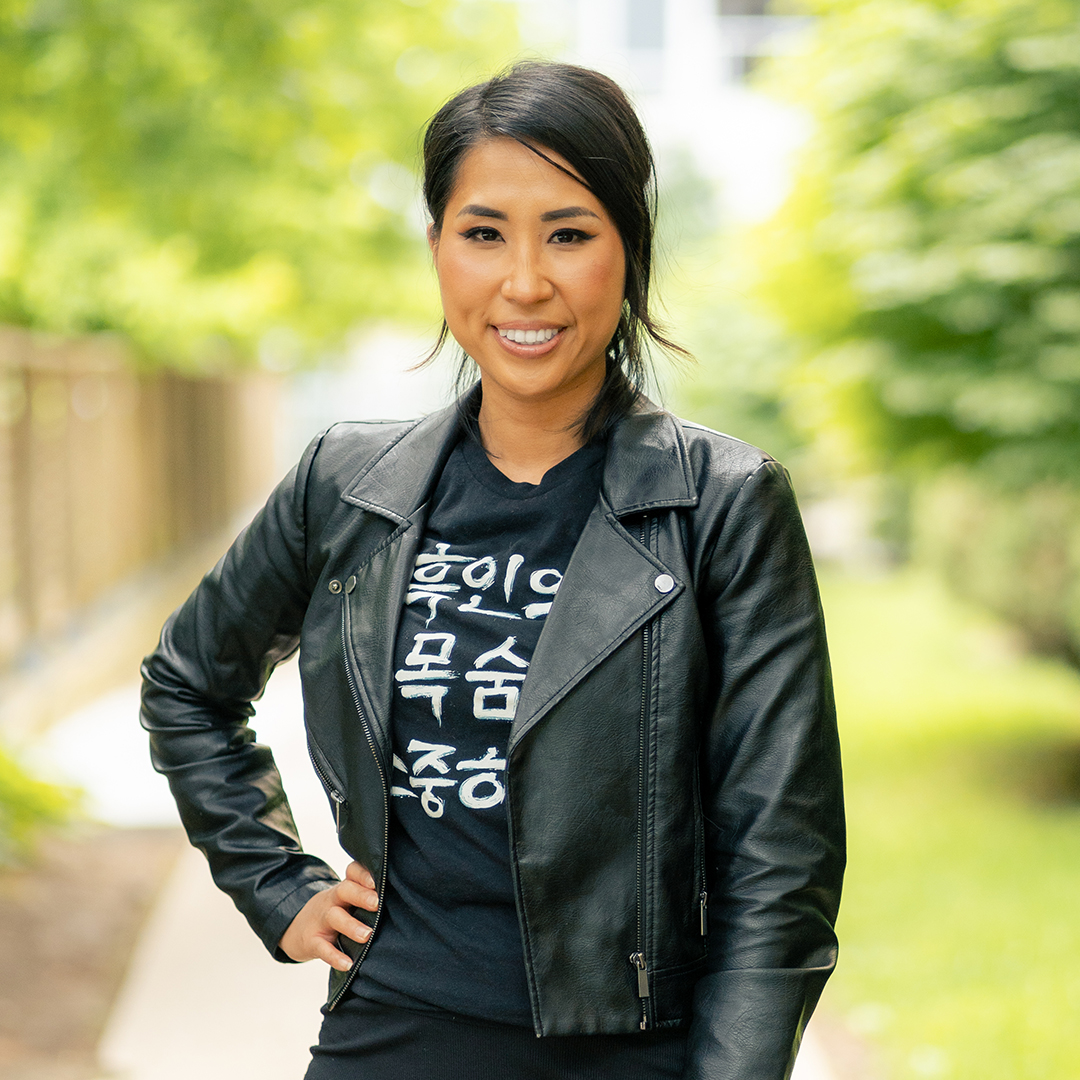
Esther Saehyun Lee

Esther Saehyun Lee

Esther Saehyun Lee, MA, (she/her) is a Community-Centric fundraiser and Consultant at Elevate Philanthropy Consulting. She is a fundraiser, storyteller, and advocate who works to mobilize resources to communities. In her work and volunteer positions, she challenges and dismantles systems of power in the nonprofit sector to ground its practices towards equity and justice. She’s helped many nonprofits increase their revenue, implement fundraising processes and structures in a CCF lens, and has demonstrated increase in both revenue and donor base.

She is dedicated to advancing the mission of justice in the nonprofit sector and does so in her roles as a Community-Centric Fundraising (CCF) Global Council member and Interim Board Member of Association of Fundraising Professionals Greater Toronto Chapter. She is a movement builder dedicated to making space for people of colour within the nonprofit sector. In addition to these titles, she is an amateur banjo player and cat mom. If you’d like to chat about equity in nonprofit, grab a virtual coffee, or just exchange memes, find her on LinkedIn. If you’d like to work with Esther, book a meeting with her.
Work-life imbalance: I am Black Girl Magic

Work-life imbalance: I am Black Girl Magic

By Abigail Oduola Black planned gift fundraiser in California

I don’t want to define myself by what I do, or my performance. I want to instead be. People pursue what my life looks like because capitalism wills us to. It looks like success. Expectations to look like things are working for you are literally chewing people up and spitting them out…

I have a very specific experience:

I’m a Black woman in a cross-cultural marriage. 

I am a planned gift fundraiser who travels for conferences and to meet with supporters. 

I am a high performer. 

At my job, I volunteer to help staff in several ways including a Black staff group, a better workplace committee, and a parenting group.

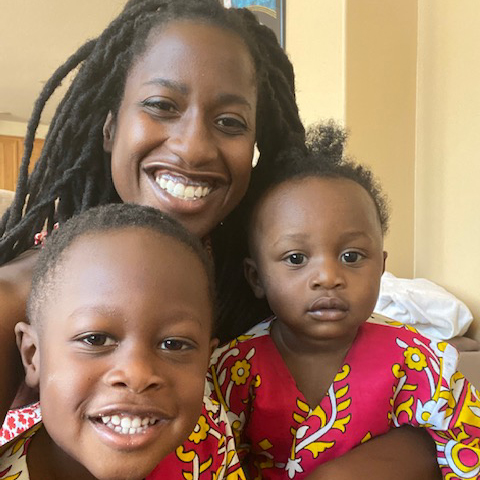
I have young kids for whom I am the point parent, taking care of meals, sports, school activities, and basic needs. I talk with them about their feelings. I don’t let them watch TV because I don’t have time to help them interpret the messages and racism they are getting from most shows. And I read to them every night, hoping teachers will find it difficult to dismiss their intelligence. I also am trying to teach them a language that I’m not great at so they can relate to their extended family.

I run a small family business managing properties, go to church on Sundays, and try to read and listen to podcasts to broaden how I see the world. 

I meet with my therapist to interrogate how I show up for others and myself. 

I try to move my body and eat nutritious food.   

I speak at conferences and have several volunteer commitments that fulfill personal and professional interests and provide growth opportunities. These activities fill my inspiration bucket and allow me to connect with people in different ways.

People look at these things and say “Wow, what a super woman.” They sigh and say, “Women can have it all. Just try harder, lean in, optimize like Abigail.”

I respond with a smile. They mean well. They’re complimenting me. They think my life is a flex. 

Inside, however, I’m in turmoil. 

I see myself as an honest person and speaking this truth is difficult. I need to tell you all something that has been churning in my heart for some time now: I am not a super woman or mom. I’m not sure they even exist outside of the comic book universes.

No, it’s not imposter syndrome. 

To allow you to believe that I am somehow super, more than or beyond human and that my life should be imitated would be wrong of me. Allowing you to try harder in the belief that you can “have it all” would be irresponsible of me. I feel that I have a duty to other people who are working parents to “tell the truth and shame the devil,” as Granny used to say.

Have you ever heard of those stories of moms lifting cars from their babies to save them because of adrenaline and cortisol working together? But lifting a car off your baby is not exactly something you can do on a regular basis. You can’t make a career out of it. That’s the type of stress that heart attacks are made of.

The truth is that I’m a talented but regular person in a specific set of circumstances that mean I must lift cars off of my family on a regular basis. 

I plan well but the parameters of my life and the ways that people interact with my racial and ethnic identity give me little freedom to fail. I’m running on adrenaline and it’s not healthy or sustainable. I don’t plan on doing it forever. My goal is to be a regular person, period, by 2026.

My cholesterol is high even though I don’t eat any of the usual culprits. I don’t wake up early enough to exercise because I can’t seem to get myself to. No matter how much I sleep, it never feels like enough. My kids still interrupt my sleep, but it isn’t their fault. I have been exhausted since 2020.

I experience happiness, joy, and peace that I believe is only by the mercy of God. 

I don’t yell at my kids. I am somehow not miserable and am miraculously growing in kindness toward others. People frequently mistake my disposition, spiritual health, and relative success as markers that my life should be imitated. They aren’t. And it shouldn’t.

When you say that I’m a super mom or super woman I hear you saying that I’m something different than human. That my humanity and the struggle that my life entails do not really exist. It feels like a pedestal and a dangerous one. I can’t afford to define myself this way. 

When my kid gets sick, or we can’t find childcare coverage during my work trip or I have nightmares all night, I fail, and I am no longer who you thought I was. I’m who I was the whole time–a person doing their best with the resources and responsibilities they have, trying to care for themselves and others given the circumstances. A person with little margin for error. 

I don’t want to define myself by what I do, or my performance. I want to instead be.

People pursue what my life looks like because capitalism wills us to. It looks like success. 

Expectations to look like things are working for you are literally chewing people up and spitting them out. 

We have tried to form communities meant to hold us, but we are afraid to be authentic. We know each other but not well enough to stop us from being scared of what happens when people learn that things aren’t as seamless as they appear.

If you do not have to be in these situations, get out. Don’t be a mommy martyr or a person who secretly believes, “When I die of a heart attack, then they’ll know how hard I tried.” 

Cancel activities. Do only what energizes you if possible. Stop signing up for stuff. Postpone sleep training or potty training or whatever else you’ve been convinced you need to do right now. Get off social media if it’s making you miserable. If you have choices, use them.

I’ve started taking Sundays off from home labor, refusing to do chores, cooking, or planning that day. I cook bigger meals and freeze them so I’m not cooking as much. I deleted my IG and I look at the news every two days. We stopped overnight potty training for one of our kids because it was too stressful when I was already not sleeping well. 

I’ve renegotiated relationships. I also try to choose people over tasks every day. I lean into my CCF work and have deep conversations with supporters and colleagues about how my fundraising work intersects with real life. I’ve realized even my most intense donor trips and conferences feel like breaks—despite the harrowing logistics of pulling them off—so I welcome them.

I’m not a super woman. I am a regular woman who works too hard and does too much. 

I am a woman with an outsized sense of responsibility relative to capacity. 

A woman who most days chooses to be a good mom and employee, an okay volunteer, and a bad wife, and sometimes rebalances these ratios. 

I never have the energy and time to be all these things on the same day and I’ve made peace with that. 

That’s what my life is like right now. 

It’s obstacles, survival, and joy despite it all. 

I am not a super woman. 

But I am Black Girl Magic.

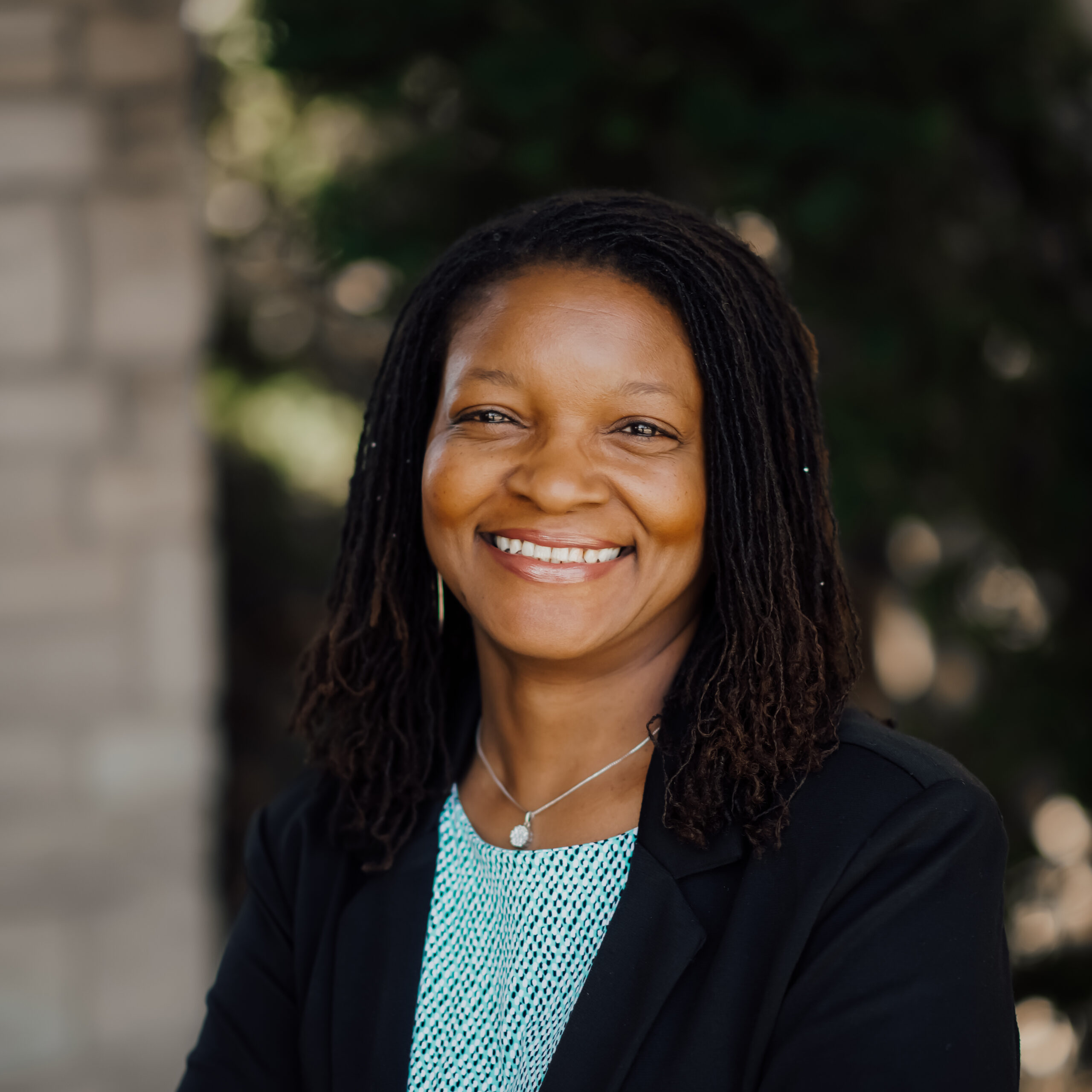
Abigail Oduol

Abigail Oduol

Abigail Oduol’s (she/hers) surname is not Irish or Pennsylvania Dutch. It’s Kenyan. She keeps her escape pod in Kenya ready, and checks on it regularly with her young kids and husband. Abigail serves on the CCF Global Council, NACGP D&I committee and with her local PTA.  You can follow her on LinkedIn, and can send tips and micro reparations to her Cashapp $AbbyOduol.

Navigating Policy and Advocacy: Essential Skills for CCF Practitioners

Navigating Policy and Advocacy: Essential Skills for CCF Practitioners

By Rachel D’SouzaFounder + Principal, Gladiator Consulting, Justice Philanthropy Catalyst, Forward Through Ferguson

“Philanthropy is the love of humankind, the love of people. And we made it about money. We made it about power. But before the colonization, before the capitalism, before the patriarchy, we lived in community. We shared resources. We took care of the people.”

Rachel D’Souza, CCF Global Council Member and Founder of Gladiator Consulting shared insights designed to empower non-profit organizations with the knowledge and tools needed to navigate the complex world of policy. This session explored the critical role that policy plays in shaping the landscape of our work in communities and how non-profits can effectively advocate for policies that support their missions.

Rachel D'Souza

Rachel D'Souza

Rachel D’Souza (she/her) is the Founder+Principal of Gladiator Consulting in St. Louis, Missouri. Through Gladiator, Rachel has combined her knowledge of organizational culture and fund development with her deep personal commitment to centering community, seeking justice and creating belonging for those who have been disenfranchised or targeted by institutions, systems, and policy.

Born to parents who immigrated to the U.S. from India, Rachel has always been passionate about bridging differences and celebrating what’s possible when we collaborate from a mindset of abundance, learning, and risk-taking. Rachel loves cooking, snuggling her kids, and Instagram.

Donor-Advised Funds (DAFs) and changing the sector

Donor-Advised Funds (DAFs) and changing the sector

By Abigail Oduola Black planned gift fundraiser in California

Some nonprofits and a lot of nonprofit workers they surveyed love those mysterious little packages from phantom donors. All I see is unfettered, hyper-individualistic capitalism with little structure to consider community needs.

FreeWill’s report on Donor-Advised Funds (DAFs) is out, and once again, I’m a minority in fundraising according to their research. 

Some nonprofits and a lot of nonprofit workers they surveyed love those mysterious little packages from phantom donors. All I see is unfettered, hyper-individualistic capitalism with little structure to consider community needs.

You probably know what a Donor-Advised Fund is, but in case you do not, the National Philanthropic Trust describes it as “a giving account established at a public charity. The 501(c)(3) public charity serves as a ‘sponsoring organization,’ which manages and administers individual DAF accounts.

“DAF accounts allow donors to make a charitable contribution, receive an immediate tax deduction and then recommend grants from the fund over time. (emphasis added). Here’s a deep dive into what lawyers in Canada, the U.S., and Australia are saying about DAFs.

We often are stuck discussing fundraisers and programmatic competency when talking about DAFs if LinkedIn and conferences are any indication of the conversations fundraisers are having. Do you accept them? What’s in your gift acceptance policy? How are you talking to donors about them? Are you building your capacity to identify them when they come in? 

Because the air that we breathe is capitalist and the poisoned water we’ve been drinking from is donor centrism, we miss out on the larger picture of this newest gift vehicle.

In a recent piece for the CCF Hub, authors Maegan Vallejo and Nia Wassink gave some harrowing stats from their guide “Let’s Talk about DAFs,” which I encourage you to read, as well as the more robust guide that includes discussion and recommendations. Here, I’ll be focusing on two points they raised:

  1. IUPUI Lily Family School of Philanthropy reports, “$1.4 trillion is currently set aside in private foundations or DAFs and yet there is no evidence of DAFs increasing charitable giving.” The lack of payout requirements is actively harming the sector, and we need to figure out what to do about it.
  2. “There is a growing body of evidence to suggest that DAF dollars are only supporting the fund balances of their managing institutions.” We need a revolution among our finance sector friends. Based on how they are currently administered and used, DAFs will continue being harmful in our sector as they reinforce transactional interactions while we work on treating supporters as more than their contributions.

Wealth Hoarding… again

I’ve seen one foundation after another present at conferences, so excited about how much money they have under management. So pumped about the theoretical good they could do that charitable money spent charitably in real time has been deprioritized.

Currently, as a donor, I can put $10 million into a DAF, take the charitable tax deduction today, even spread it across multiple years, and never spend down the DAF.

Plus, if I didn’t list a beneficiary, it would just stay under management by the financial institution. Or maybe I designate that my child inherits it, and I could defer any kind of charitable decision-making for my lifetime. Then my child could theoretically defer for theirs and so on. 

It feels like someone is pulling a massive prank on nonprofits with critical, time-sensitive missions.

Even when it’s a community foundation, which has legal requirements to guard against wealth hoarding and has a specific responsibility to the community, it is locked in the same pattern as its finance sector colleagues. 

I’ve seen one foundation after another present at conferences, so excited about how much money they have under management. So pumped about the theoretical good they could do that charitable money spent charitably in real time has been deprioritized. Where are the financial institutions and community foundations with DAF mandatory spend downs? I’ve heard they exist, or maybe they’re just a few fundraisers’ imaginary friends. If I believe hard enough, maybe they’ll become real for me, too.

Community foundations: I love some of the work you’re doing. You’re making change happen locally and partnering with local governments and private entities. Kudos.

Some of you aren’t even meeting your 5% spend-down floor requirement, but I’m not talking about that or you right now. Here are eloquent pieces for that situation. 

Anti-Racism Daily said it well: when you give money to a foundation or a DAF, it is a fund that holds money for charitable purposes, which means it is no longer yours, and you have agreed to “relinquish dominion and control” of the funds (Cornell Law); they do not own the money any more…the organization or fund may include their name, but they don’t own that either—no one does. It exists to serve the public good.”

Retrain your supporters and staff to understand that you can make DAF rules because your role is to serve the public good. The role of these accounts is to serve the public good. If you’re not feeling particularly creative, you could hold them to the same (incredibly loose) standard you are held to as a starting point. Tell your DAF holders to cut the check.

My metrics promote wealth hoarding

I won’t just pick on community foundations. DAF holding institutions are also charitable arms of large for-profit financial institutions that exist to make money and benefit their shareholders. They don’t seem to have a vested interest in those funds being distributed to the community. 

It’s probably because the amount of money under management is one of the ways their performance is evaluated. Therefore, why learn how a DAF holder might use their funds better and more quickly? 

In my work in planned giving, I’m also noticing that individuals and their advisors are often only viewing philanthropy as solely a tax deduction, rather than considering the disturbing inequities that created, maintain and make the sector a necessity.  

Treating donations as “just” a tax harbor for indecisive people with disposable assets is exploiting a loophole. It allows individuals to benefit in the short term while communities and charities wait indefinitely to benefit. As a result, we have people like the owner of X, making money from laborers but not reinvesting in any part of the system that provided the labor for their riches.

What should we do about it?

Solicit DAF gifts or don’t. Pursue reforms or not. I’m less concerned about one-off individual actions and more about what we can do collectively as fundraisers who are in many corners of the sector multiverse. 

I believe in grassroots community organizing as a means of leveraging people power. We have not succeeded in passing legislation yet, but as a movement, we collectively drove philanthropy to have conversations and grapple with topics in a meaningful way that is still having ripple effects across the sector. 

Those are victories. Let’s keep it going.

I call on people who work in foundations to drive forward conversations collectively and individually about what their DEI work looks like. Consider internal rules that require any DAFs you are holding to have, at a minimum, the same spend-down requirement as the foundation itself.

While we’re on the topic, increase the amount you spend to fund your community. Some of you have done a lot of good; what if you did… more? I call on leaders within foundations to encourage staff to have hard conversations with the donors setting up DAFs.

Have conversations with donors about the purpose of a community foundation and that supporting the community involves not just intentions but action—not just safe-harboring money, but using it for good. 

Because organizations are fighting for their lives right now, we can’t afford to wait for a rainy day when we’re in a hurricane that we might not survive. So many people have already said this eloquently and frequently.

I call on fundraisers to make friends with financial managers and wealth managers. Get your financial advisor credentials and network, and include this in your work to introduce our colleagues in the finance sector to CCF ideas. 

Find them in your local fundraising chapters. Find them in their Patagonia vests at the bar across the street from the giant Fidelity building. Follow groups trying to drive forward similar efforts. 

Just like we learned how to look at our work more holistically and shift the conversation, finance professionals might be doing similar things, too. We must find the folks who are doing the work and join with them because the finance sector is a part of the story of what is happening in philanthropy. They need to reconsider how they are advising clients about their work involving DAFs and beneficiary designations to better promote harmony and progress within our shared ecosystem. And while they’re at it, maybe your new finance friend will get you Patagonia swag.

Abigail Oduol

Abigail Oduol

Abigail Oduol’s (she/hers) surname is not Irish or Pennsylvania Dutch. It’s Kenyan. She keeps her escape pod in Kenya ready, and checks on it regularly with her young kids and husband. Abigail serves on the CCF Global Council, NACGP D&I committee and with her local PTA.  You can follow her on LinkedIn, and can send tips and micro reparations to her Cashapp $AbbyOduol.

Community Centric Fundraising (CCF) and Nonprofit Leadership

Community Centric Fundraising (CCF) and Nonprofit Leadership

By Sommer Dawson and Rickesh Lakhani, nonprofit executive directors and members of the CCF Global Council

“I took on a role as executive director… came on board and realized that there’s no way that I can kind of shift from being a community-centric fundraiser to not being a community-centric leader, as an executive director. And I just have kind of embraced the role by sort of filtering all my decision making through the lens of community-centric fundraising.”

What does the Community Centric Fundraising (CCF) movement mean to nonprofit leaders who are not fundraisers? What does it mean to be a community-centric institution? How are organizational leaders living and breathing CCF? How has CCF informed your nonprofit leadership? Also, if you’re trying to move your organization towards CCF principles, how can you influence leadership to take action?

Sommer Dawson and Rickesh Lakhani, as nonprofit executive directors use their knowledge of CCF principles to lead their organizations. Hear their responses to these questions and more!

Sommer Dawson

Sommer Dawson

Sommer K. Dawson (Brock, she/her) is a dedicated servant leader with a passion for improving outcomes for disadvantaged groups. She has worked to fulfill this desire by serving in various fundraising capacities at several nonprofit organizations in southeast Michigan, including the Frankel Jewish Academy, Society of St. Vincent de Paul – Detroit and Cranbrook Educational Community and by providing consulting services. Currently, Sommer serves as Executive Director at Accent Pontiac. 

Mrs. Dawson has just completed a term as Immediate-PastPresident of the Greater Detroit Chapter of the Association of Fundraising Professionals where she has served in various roles including chair of the National Philanthropy Day committee and vice-chair of the Inclusion, Diversity, Equity, and Access (IDEA) committee. In addition, Sommer is a member of the Community-centric Fundraising (CCF) Global Council, former Vice-President of the Board of Trustees and chair of the Governance Committee for Accent Pontiac and a past board member for Identify Your Dream Foundation, Pontiac Community Foundation, and The Art Experience. A Certified Fund Raising Executive (CFRE), Sommer holds a Bachelor of Science degree from the University of Michigan – Ann Arbor and a certificate in Nonprofit Management from Oakland University.

Sommer is the founder of No Nonsense Fundraising, LLC which helps to expand the reach and impact of small nonprofits, she is a graduate of Leadership Oakland XXVII (27) and a member of Oakland County Elite 40 under 40 class of 2018. She enjoys spending time with her children, Jacoya, age 22 and Trent Jr., age 10; and traveling with her husband, Trent, Sr.

Sommer has presented fundraising workshops for countless nonprofit organizations and for groups as large as 50. Satisfied workshop clients include Co.act Detroit, Pontiac Funders Collaborative, Micah 6 Community, and Leadership Oakland. Additionally, Sommer has presented for The Association of Fundraising Professionals’ Global Conference, AFP ICON in 2021 and 2022.

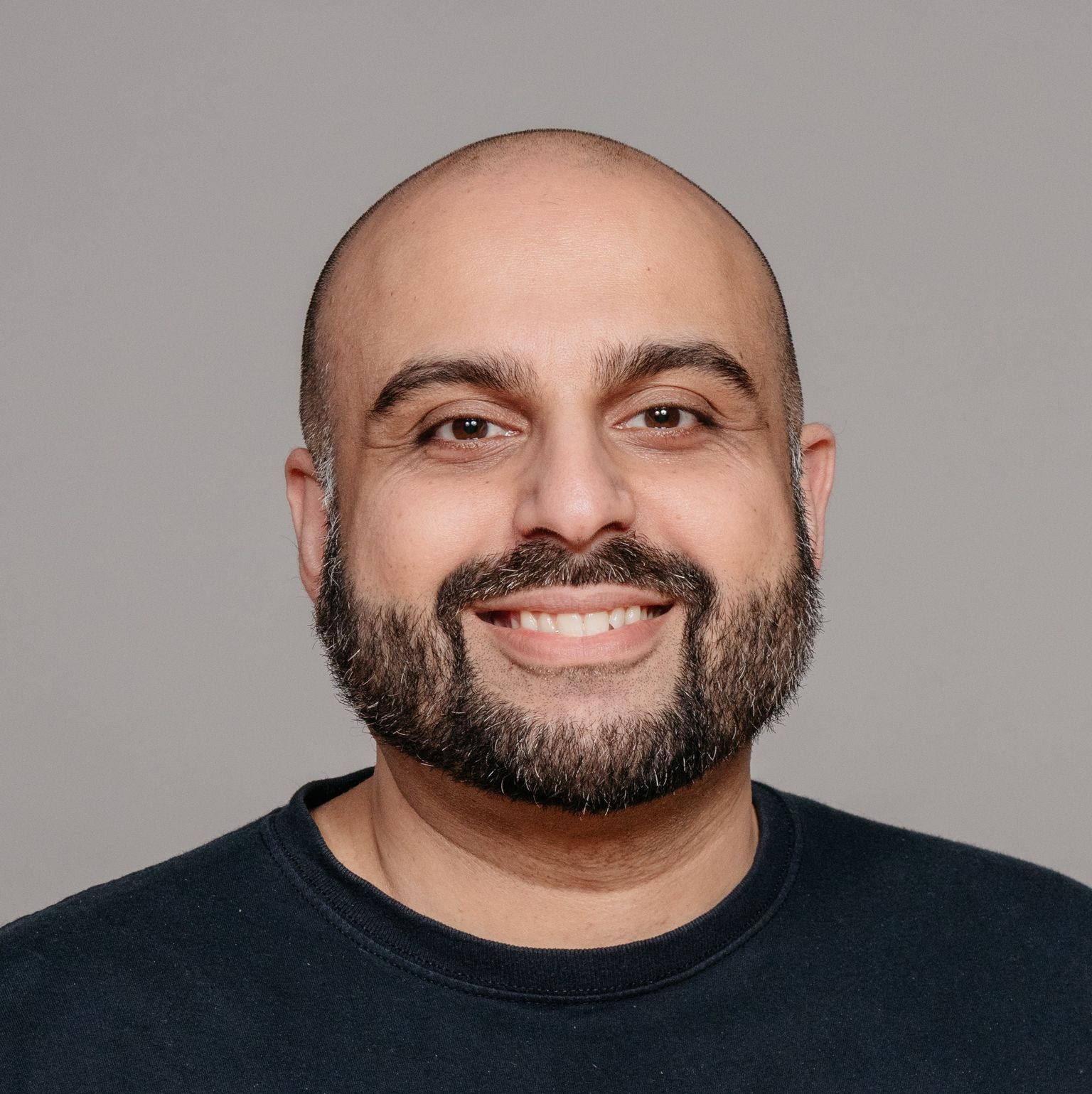
Rickesh Lakhani

Rickesh Lakhani

Rickesh (he/him) believes that we are all responsible for each other’s success. He has over 15 years of experience in the social good sector. He recently served as the Executive Director at Future Possibilities for Kids, a charity supporting children in their middle years in the Greater Toronto Area in leading community-serving projects while building confidence, leadership and life skills. Prior to this, Rickesh was the Director, Campaign at United Way York Region, leading an $8M annual fundraising campaign. He is a work in progress. He enjoys time with his family including his 3 sons, camping, bike riding, cooking, playing drums, and engaging on social media.