How to talk about Palestine in the workplace: A step-by-step guide to starting

How to talk about Palestine in the workplace: A step-by-step guide to starting

By Hanna Stubblefield-Tave, arts administrator in philanthropy

Note: My ideas do not represent any organization I may be affiliated with.

Content warning: This essay contains specifics of the genocide happening in Palestine. Some links contained within go to graphic content. Please proceed with caution. 

…my experiences in philanthropy have taught me that we, as funders, have tangible resources and real power. That is why I have such high expectations for our sector’s response to Palestine, and why it can feel so wrong when I sometimes observe silence more than solidarity.

As June Jordan said in 1991, what we are willing to do for Palestinians is a “litmus test for morality.”

Over the last year, I have learned a lot about Palestine, myself, and working in philanthropy. To be honest, I can’t remember what I knew about Palestine before 2023. It wasn’t much at all.

Growing up in a suburb of Boston with a large Jewish population, and with a Jewish grandfather, I passively accepted that Israel was an idyllic Jewish homeland. The ‘Birthright’ narrative was so strong that I never questioned how the state was formed or what that meant for Palestine. I didn’t know about the Nakba of 1948, in which hundreds of thousands of Palestinians were forced to become refugees so that Jews fleeing persecution of their own could find refuge.

Journalists like Wael Al Dahdouh, Motaz Azaiza, and Bisan have shown me what life is like on the ground in Gaza and the West Bank. And now, I find myself inspired to stand up, speak out, and march in the streets for the first time in my life.

I read the names of more than 10,000 Palestinian children who were killed by the Israel ‘Defense’ Forces, and I am called to stand up.

I witness the conditions at Palestinian hospitals decimated by Israel and I hear of bombings at United Nations schools, and I am called to speak out.

I see human beings buried in the rubble and burned alive as if their lives had no value at all; I see parents digging for their children, and I am called to march.

Earlier this year, I confessed to a white colleague that I didn’t go to the Black Lives Matter protests of 2020 or Women’s March in 2017. (I say she was white because this made my confession much easier.) We were talking about how it felt to be confronted by a huge NYPD presence at recent actions for Palestine. For me, it was my first time being so close to the “frontlines” with the police. For her, she had been through this dozens of times over the last several years. 

During the 2020 COVID shutdown in New York, I was too scared and too exhausted to join crowded rallies. I was glad to see white allies stepping up, and I was comfortable staying back. I found meaning in my work at a Black arts organization, and that was enough for me.

In 2020, I personally didn’t know anyone who disagreed with the idea that Black Lives Matter. But now, there are people in my personal and professional life who disagree with the idea of Palestinian liberation. So now, I need to be LOUD!

At work, I am surrounded by colleagues who have tremendous knowledge about social justice, human rights, our world’s history of imperialism, and the present-day ramifications evident in modern colonialism. I am fortunate to witness nuanced conversations about complex issues every week. Moreover, my experiences in philanthropy have taught me that we, as funders, have tangible resources and real power. That is why I have such high expectations for our sector’s response to Palestine, and why it can feel so wrong when I sometimes observe silence more than solidarity.

So, let’s discuss how you can be in solidarity, talk about Palestine in the workplace, and mobilize resources to support Palestinians, step by step:

1. Check your values.

If you’re reading this, you probably value racial and gender justice. Maybe you’re on a learning journey with disability justice or understanding your own complicity in economic injustice. 

You not only value social justice, it’s at the core of who you are both personally and professionally. You’re fighting the good fight for a better world where we can all be free. Right? 

How do your personal values align with those of the institution you work within?

2. Assess your risk tolerance (and privilege).

As I write this, I’m balancing my social justice values with my innate risk aversion, need for approval, and desire for a comfortable, stable life. 

Can I afford to risk my income and healthcare benefits? Not everyone can, and that’s okay. I don’t have family wealth to fall back on, but I also don’t have a family to take care of, and that’s a privilege. 

I’m deciding I have a strong support system, and it’s worth the risk.

3. Find your people.

Depending on the size of your organization, you might see one or two coworkers at a local protest. Maybe a few people wear a keffiyeh to work or pin a small watermelon on their bag. 

We know we can’t do this work alone, and finding the people you are most closely aligned with first will allow you to have conversations with colleagues with various perspectives on Palestine.

4. Do your homework.

What has your organization said and done about Palestine in the last 76 years and since October 7, 2023? Did they release a statement? Did they move resources for humanitarian aid or otherwise? Did they remind you of any organizational policies and practices or even create new ones? 

What has your leadership said internally and externally? Do they call it a conflict in the Middle East, a crisis, war, or genocide? Do they call it complicated? Do they talk about peace or justice? Do they say the word Palestine? 

What has your organization said and done about Ukraine and other wars? How about apartheid in South Africa? Do they frequently quote Nelson Mandela? Maybe they call upon James Baldwin – who loudly criticized Israel for its treatment of Palestinians after he visited the region in 1961 – in other contexts like LGBTQIA Pride Month.

Understanding your institution’s position on Palestine and other issues will help you organize more effectively.

5. Follow the money. Where is it coming from, and where is it going?

Do you have donors? Do you have an endowment, and how is it invested? Who are your board members, grantee partners, and vendors? If you’re not sure whether your organization has direct ties with Israeli companies or public institutions, ask the question.

“The things that I consider problematic for philanthropy are not the grants, but how we invest the billions in our investment portfolios. In our case, as we reflected on our own behaviors, we learned some startling things about ourselves. On the one hand, we want to reform the criminal-justice system and reduce the expansion of for-profit prisons. And in our investments, we were investing in the prison system; how does one reconcile that? How does one reconcile being a public-health foundation, seeking to improve the health of people in low-income communities, and then be a significant investor in the largest polluter in those communities? These are the paradoxes that I believe are the most challenging: how do we do our best to ensure that we’re not doing harm with the money we’re investing?” – Darren Walker, TIME Magazine

6. Know your audience and figure out your messaging.

Most people working in philanthropy would say they support human dignity for all – at least, I hope so – but one of the most important lessons I’ve learned in my few years working in this sector is that strategic priorities matter. So, what are your organization’s stated values and grantmaking priorities, and how do they align with Palestine, either in terms of humanitarian aid or the fight for justice and liberation? 

The Palestinian Feminist Collective’s Freedom Within Reach toolkit includes examples for those who work in immigration, education, tech, faith communities, the food industry or food justice, democracy, DEI, legal, medicine or public health, workers’ rights, and arts and culture. Speak from your personal experience and facts, craft your message with clarity, and say the word Palestine.

7. Don’t limit yourself to one avenue.

You can have one-on-one conversations with colleagues you may disagree with and collect signatures for an open letter to the president or CEO. You can have both productive water cooler conversations and after-hours venting sessions. You can work to shift company culture in the long term while also pushing for short-term changes now. 

The genocide in Palestine is an urgent issue, and also Palestinian liberation will continue to be an important issue for years to come. Remember discretionary and matching funds if these are available to you.

8. Center Palestinians on the ground and in your community.

Fighting against any kind of systemic oppression requires us to recognize that the most impacted people – the oppressed – know what they need. They have the solutions, and it’s up to us to listen and support. 

We often get this wrong in philanthropy, especially when we, as funders, do not belong to the communities we aim to serve. 

If you are not part of the MENA/SWANA community, be careful not to center yourself. Do you have Palestinian colleagues whose lead you can follow? This does not mean you should remain silent, but it could mean taking a step back at times. 

Follow and amplify Palestinian activists on social media. Find local Palestinian leaders and community-based organizations in your own region. In making decisions, ask yourself: what impact does this have on Palestinians, either right now or in the future?

9. Take care of yourself (to take care of others).

It’s easy to get burnt out. Philanthropy can move slowly; sometimes it feels like fighting for change isn’t worth the struggle. 

Personally, I feel helpless as I scroll through Instagram, watching a genocide that my own elected officials and tax dollars have made possible. 

Nevertheless, Palestinian human rights are too important for us to lose hope and walk away. Take care of yourself so that you can keep fighting for years to come – and so that impacted community members don’t need to do the emotional labor of caring for you.

10. Focus your energy where you have impact, both at work and outside of work.

Within your organization, consider who might be aligned with Palestine and how much power they hold. Who do you trust? Who would be open to a conversation? Who might be moved? What can they do? 

If your time is being wasted, move on. Don’t give up. Focus. If your energy is better spent outside your organization, find a protest near you, and keep building your community.

Most importantly, however you can, start today. We all need to speak up about Palestine to counteract the narrative that Palestinian lives do not matter. Hala Alyan, a Palestinian-American poet, psychologist, and professor, warns us of the cost of dehumanizing Palestinians. As the world watches injustice on such a massive scale, too many have justified doing nothing to stop it: “They’ve seen the names written on limbs. They’ve seen the hospitals be evacuated. They’ve seen the infants left behind – that many have seen it and have deemed it to be an acceptable cost.” Let’s speak up, take action together, and move resources towards a free Palestine within our lifetime.
Hanna Stubblefield-Tave

Hanna Stubblefield-Tave

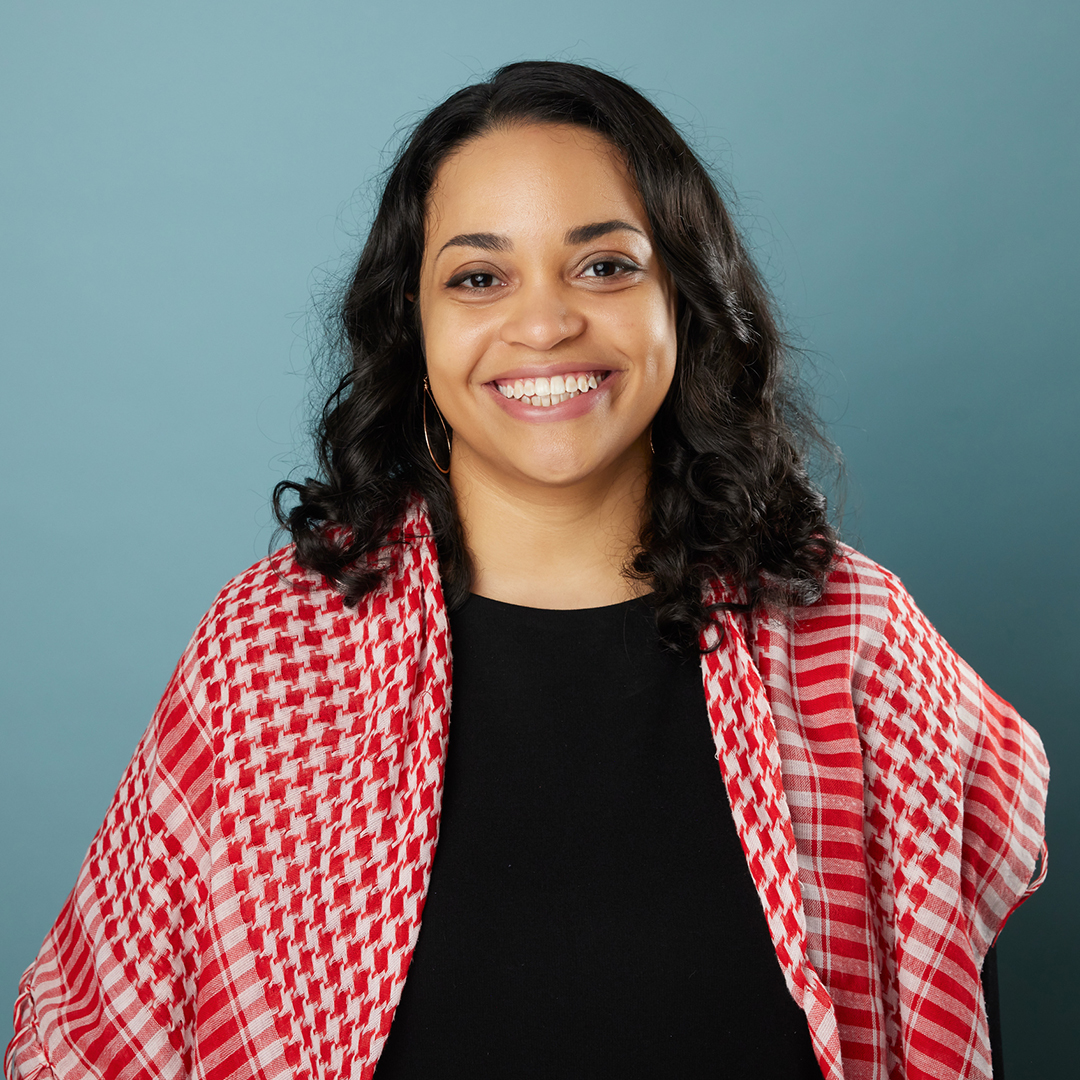
Hanna Stubblefield-Tave (she/her) is a mixed-race Black woman who is interested in applying an intersectional racial equity lens to support artists and the organizations that advance them. She is grateful to have dance in her life, a snuggly cat at home, and a tattoo that reminds her daily of sankofa. Connect with her on Instagram @hannadance94. Consider donating to @ibrahimforgaza mutual aid in Gaza @essssraaa on Venmo or PayPal, and to Queer Mutual Aid Lebanon @QMALebanon on PayPal.
Why the path to leading authentically is different for PoC

Why the path to leading authentically is different for PoC

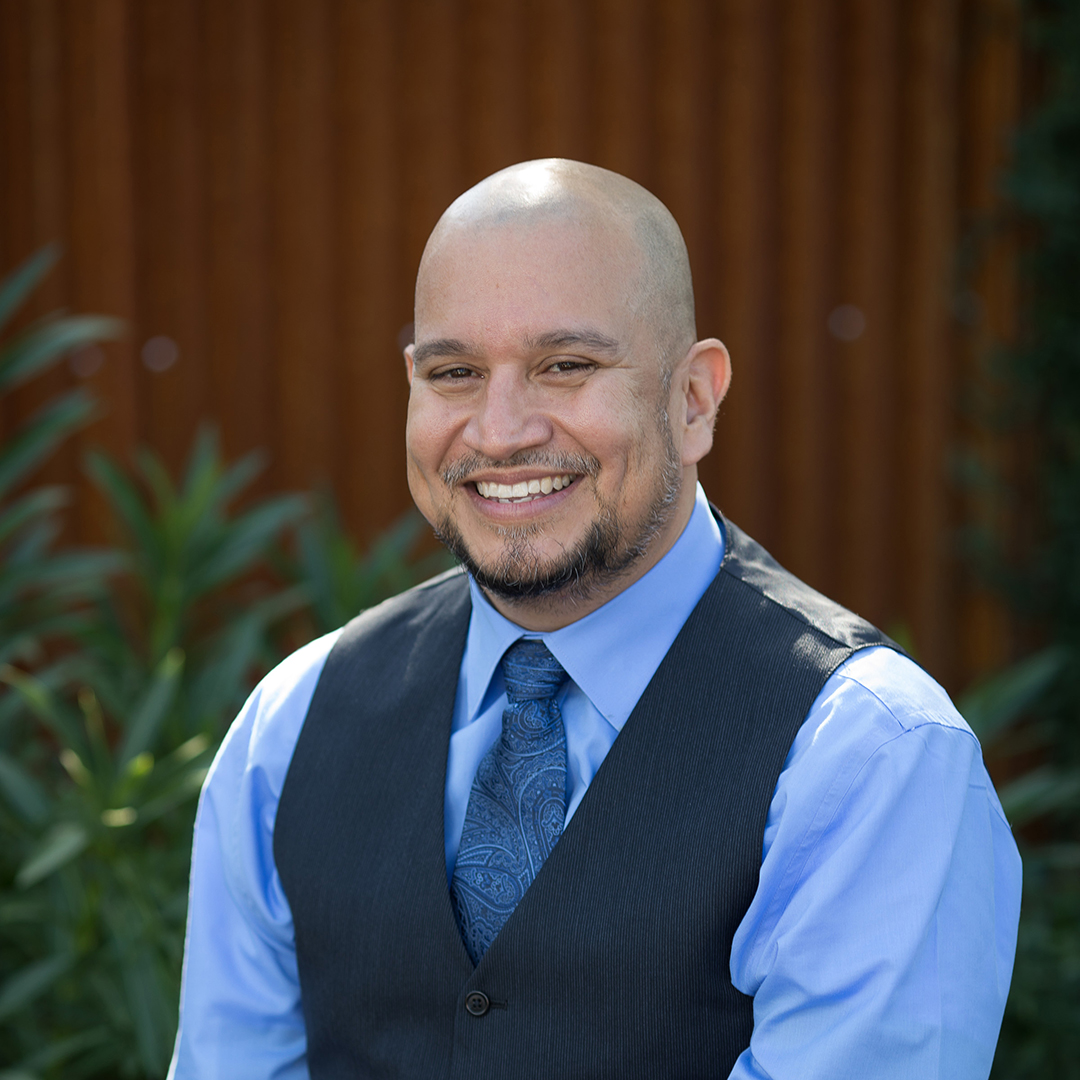
By Frank Velásquez Jr., Storyteller Extraordinaire, Social Justice Warrior and Community Connector

In spite of all of the research and advocacy that has been devoted to DEI, occupational divisions along race lines remain firmly entrenched.

You’ve seen it. I’ve seen it. 

A workshop titled something like, “How to Become an Authentic Leader.” I cringe when I see workshops like this because, frequently, they are facilitated by white folks – albeit well-meaning white folks – who speak from a lens that isn’t representative of the experiences of people of color (PoC) and the tangible differences we face in the workplace.

“How can an ally teach me to be an authentic leader in spaces that were never designed for people who look like me?”

The truth of the matter is that PoC have historically faced barriers to executive leadership opportunities. According to the University of Massachusetts’ Center for Employment Equity, white men are overrepresented in executive jobs in every state in the United States. So, it’s not surprising that PoC experience slower rates of promotion compared to our white peers. Even after over a decade of corporate investment in diversity, equity, and inclusion (DEI), little has actually changed. Executive leadership remains largely white, with only 16% represented by PoC

In spite of all of the research and advocacy that has been devoted to DEI, occupational divisions along race lines remain firmly entrenched.

And this is just one of many examples of a space that is deeply rooted in systemic injustices existing because of persistent and inequitable socio-economic conditions which have severely impacted generations of communities of color. When disparities in representation exist, it creates an impassable gap between the people with access to power and resources and those without. 

This is what PoC experience in the workplace. 

We are required to navigate the white-dominant spaces that exist all around us. These spaces, a result of a white-dominant culture, grant advantages to white people in which they can navigate society both by feeling normal and being viewed as normal.

C-suites are white spaces, and executives who identify as white rarely have to think about their racial identity because they live within a culture that has celebrated whiteness above other cultures. As a result of this normalization, PoC, when in white spaces, face stressors that our white peers simply will never encounter; stressors including microaggressions, code-switching, assimilation, heightened visibility and vulnerability, and constant scrutiny.

This brings to mind a workforce panel discussion I attended several years ago.

At the time, I was working in the nonprofit sector and in a CEO role for the first time. The topic was Second Chances – a term referring to the employment of justice-involved individuals and hiring practices that consider them based on their qualifications and potential rather than dismissing them due to their past mistakes or circumstances.

The discussion was going well until one of the panelists – a white cisgender male in his mid to late 30s – began to share his perspective on hiring justice-involved folks. He began making broad negative generalizations about several groups: people of color, millennials, veterans, and people experiencing poverty. At one point, he said that millennials in our community were lazy and unreliable. I heard the dog whistle. He was referring to the young people of color in our community. I was stunned. I looked around the room to see if the other 20 people in the room were feeling as disgusted as I was. Their faces told me they were. 

After quickly analyzing the situation – something we leaders of color do to ensure our safety and whether it’s even worth speaking up – I raised my hand to address his disparaging remarks about millennials’ work ethic. I politely asked him to stop making generalizations about millennials because his personal experiences with them were not based in fact. To give him context, I shared that the 300 students – an average age of 34 years old and primarily students of color – that we worked with were anything but lazy and unreliable.

I mentioned that despite being “low-income” – I know, I know, that is a deficit-framed word, but it was before I knew it was deficit-framed – they were hardworking and resilient! 

He countered, “Being low-income is an excuse.” 

In the context of the panel topic, he did not represent what a second-chance individual is. He was actually just a spoiled son who was fortunate enough to get a “second chance” at his father’s company. But not just any second chance. The second chance to be vice president.

Let that sink in.

An individual who is truly a second-chance individual very likely does not have a wealthy father who is president and CEO of a company that he founded and in a position to give his child a great-paying job.

So, when this white male spewed what he spewed, I needed to make a new decision. Either engage as authentic Frank would with this privileged man which I desperately wanted to, or disengage because I was just entering my second year as the CEO of frankly anywhere. I chose the latter. 

I stood up from my seat and walked out because I didn’t want to say something that would jeopardize my job. In that moment, I strongly felt that I couldn’t be authentic. And it crushes me to this day that I didn’t say more to check his privilege. But I’m not the only person of color to choose a path like this.

We need spaces in which we can gather and be free from the mainstream stereotypes and marginalization that permeate every other societal space we occupy. We need spaces where we can be our authentic selves without white people’s judgment and discomfort. We need a space fully to ourselves to be our full, authentic selves. A space where we can break bread together, heal together, to lead together.

With the racism we’ve had to endure for generations combined with the daily toll of navigating white spaces, how successful will we actually be in building our authenticity in those spaces? And how will a workshop on authentic leadership facilitated by a white ally address these stressors that uniquely impact us?

What PoC need are our own spaces.

We need spaces in which we can gather and be free from the mainstream stereotypes and marginalization that permeate every other societal space we occupy. We need spaces where we can be our authentic selves without white people’s judgment and discomfort. We need a space fully to ourselves to be our full, authentic selves. A space where we can break bread together, heal together, to lead together.

In May of 2023, I created such a space for leaders of color – Ascending Leaders in Color (ALC). 

In this space, I facilitate and foster a space for peeps of color to be authentically real, reconnect with one another, and reclaim every part of who they are. When they are in this space, with only each other, it is an opportunity for them to simply be. Unfiltered. Unapologetic. And fully authentic.

In this space, they can collectively breathe, giving themselves an opening to heal. And being together gives them space to build their resilience together so that they can begin to bring their fuller selves into integrated spaces where it will inevitably be challenged.

Now, if you didn’t pick up the keyword in that last sentence, here it is again: FULLER.

Which brings me back to my thoughts on “authentic leadership” for People of Color.

In the space I’ve created, there is no promise that by the end of the program, they will be fully authentic in every space they occupy. That would be a lie. However, my goal is that, by being in space with other leaders of color, they become more authentic, more empowered, and more fully themselves. And, by design, when they complete the program, they will be connected to other ALC alums to create a vast network of interconnected leaders of color who have the shared experience of having gone through Ascending Leaders in Color.

Something remarkable occurred along the way. Something that has personally impacted me.

Even in my mostly successful attempts at remaining an objective-guided facilitator, I cannot help but have learned from the five cohorts that have gone through or are continuing to go through Ascending Leaders in Color. The truth is that I navigate a lot of white spaces, both as an employee of an organization that employs a small team and as the founder and solopreneur of 4 Da Hood

I’ve noticed that I am showing up more authentically in the white spaces I occupy. I’m unquestionably further ahead with my own business because, well, it’s my own business, and I’m the boss. In that area, I still intersect with many white folks. Fortunately, I’ve cultivated a reputation as a racial and gender equity subject matter expert, which strengthens my credibility and has boosted my confidence, for sure.

As an employee, though, I find it much more difficult to navigate. There aren’t many leaders of color where I work. In fact, I’m the only person of color with a Director title or above. Moreover, the circles I primarily navigate are also largely white. In this space, I’m expected to dress a certain way, talk a certain way, and act a certain way. Yet…

I am beginning to dress in a way that feels “professional” to me, and over time, the CEO has (mostly) let me be me. I have also encouraged my direct supervisor, who is a millennial, to redefine “professional dress” for his generation in the office. Additionally, I am beginning to write my emails more in my style: with a little more of my personal slang and emojis. This is who I am and this is how I express myself. And it doesn’t hurt anyone.

As my confidence builds in this space, I am feeling more of my authentic self. As a result, I feel I’m a better colleague because I get to be me… mostly.

Perhaps most importantly though, I am starting to advocate for myself in ways I haven’t before.

I’ve asked for compensation from organizations that typically don’t compensate. I’ve called out an organization for publicly erasing my contributions to their event. And as an employee, I’ve had courageous conversations with leadership who ended up appreciating my perspective as a person of color. I’ve been able to do these things because I am sitting in spaces with PoC who have experienced the things I’ve experienced because they’ve experienced these things themselves.

That’s why being an authentic leader is more than just speaking up and knowing yourself. For a person of color, we gotta consider much more! We gotta consider whether or not what we say is gonna get us fired. (Yup, that’s happened to me). We gotta consider if what we say is gonna get us blackballed. (Yup, that’s happened to me too). And if we’re solopreneurs, we gotta consider if what we say is gonna make someone in “power” uncomfortable to the point that they go out of their way to disparage our names. (Sadly, this has happened as well).

For the peeps of color reading this, I encourage you to find a space like the spaces I’ve created. The 40+ folks who have experienced the space called Ascending Leaders in Color have been empowered to lead with more authenticity, courage, and joy! And they have empowered me in the process!

I see it. They see it. You see it.

Frank Velásquez Jr.

Frank Velásquez Jr.

Meet Frank Velásquez Jr. (he/him): Storyteller Extraordinaire, Social Justice Warrior, and Community Connector! With a heart as big as his vision, Frank dances on the frontlines of change, armed with an unshakeable belief in attaining racial and gender equity. Whether he’s dropping knowledge on the conference stage or storytelling behind the scenes, Frank’s passion for social justice is as infectious as his smile. And he creatively connects our stories, preserving the unique flavor of each one like a delicious bowl of gumbo.

As Founder of 4 Da Hood and the mastermind behind the Ascending Leaders in Color leadership program, he’s forging paths for Peeps of Color to lead with more authenticity, courage, and joy! Because for Frank, advancing equity isn’t just a job — it’s a movement towards building generational wealth for communities of color to thrive!

Follow Frank on LinkedIn and 4 Da Hood on Instagram!

If you’d like to tip towards the Ascending Leaders in Color fellowship program, please click this link here. Your gift supports our ability to provide scholarship opportunities for PoC to attend ALC.

By supporting BIPOC fundraisers’ growth and amplifying our voices, we usher in a new way of funding movements

By supporting BIPOC fundraisers’ growth and amplifying our voices, we usher in a new way of funding movements

By Gema Elena Cantu, Director of Development for LeaderSpring Center

But before pushing for diversity and inclusion, we must really ask ourselves, inclusion of what? Are we aiming to uphold the current status quo in nonprofit fundraising, or are we striving for something that truly transforms our field? 

When you’re born and raised in the Mission District of San Francisco, growing up in a low-income, single-parent household, it’s not often that you find yourself having a career in nonprofit fundraising. The concept of fundraising didn’t occur to me until I started to work for a Hip Hop organization in 2016.

During that year, I was walking through the Castro with my ex-boyfriend when a friendly canvasser stopped us, saying, “Hey! Come talk to me about fighting racism with Hip Hop!” Ironically, I was the one who wanted to walk away from the conversation, but my boyfriend at the time said we would return after lunch. And we did. We heard her pitch, donated, and received a Hip Hop CD in return. Little did I know that this interaction would lead me toward a path in fundraising.

It’s been an unconventional journey, navigating the nonprofit sector through firsthand experience. I’ve met incredible, talented, and dedicated people who have inspired, motivated, and encouraged me to continue this career path.

However, along my path, I quickly realized that people of color are severely underrepresented in the development field.

According to a 2022 report by Data USA, the fundraising workforce is comprised of 85% white individuals; 71.3% women and 28.7% men. Hispanic and Latino individuals make up 6.4% of the workforce, individuals of two or more races account for 5.06%, Black individuals: 4.8%, Asian individuals: 4%, and Native American individuals: 0.105%.

This drastic disparity is not lost on me. It highlights the urgent need for greater diversity and inclusion within the fundraising field. But before pushing for diversity and inclusion, we must really ask ourselves, inclusion of what? Are we aiming to uphold the current status quo in nonprofit fundraising, or are we striving for something that truly transforms our field?

I ask this because it’s important to examine the current structures in place before encouraging more people of color to enter a field that is often challenging to succeed in.

What current pathways exist for entering fundraising? What support systems are available for those interested in it? And most importantly, what support exists for those who are already working in it?

And why are so many fundraisers, especially people of color like me, feeling burnt out and frustrated?

The pathway to nonprofit fundraising can be much harder when you come from a low-income background. Whether it’s because of limited access to networks, barriers to education, relationship to money and wealth, and lack of opportunities, these challenges hinder people from underrepresented communities to enter the field or even know that it exists. Meanwhile, most development professionals come from middle- or upper-class backgrounds, where access to resources and opportunities often comes easier to them.

Being a fundraiser is no easy task—it is highly layered. It is both a science and an art form. It requires a deep understanding of power dynamics, cultural norms, and biases. It requires strong communication, writing, and speaking skills, along with having strong relationship building tactics, and effective fundraising strategies. Beyond these skills, fundraisers, especially those committed to transformation and movement work, must know how to navigate and succeed in these colonial frameworks that shape how we work and operate.

Coming from a low-income background, I’ve had to confront imposter syndrome, my relationship to money and wealth, and the pressure to conform to colonial norms, all while facing systemic barriers rooted in power and access. Not to mention, the balancing act of staying aligned with your mission, integrity, and values, while navigating a sector that has limited resources and funding.

And yet, in the midst of all of this, fundraising is truly powerful. It can turn visions into reality by mobilizing resources and people, creating opportunities such as jobs and critical programs, campaigns and so much more.

As a fundraiser, you are a storyteller, a connector, and an advocate for the community you care about. Fundraising builds, sustains, and strengthens movements, and we need more fundraisers, especially fundraisers of color.

However, this sector must create pathways that honor and acknowledge the diverse backgrounds, perspectives, and life experiences of people. We must have training or mentor programs rooted in racial and economic equity, and social justice, in an effort to create innovating pathways that set up folks for success, rather than replicating current structures and treating them as just another cog to the wheel.

We also need to invest in and provide more opportunities for fundraisers of color who are already in the field. We bring such valuable knowledge, perspective, and lived experience, and yet, our voices are still not fully heard or valued in our field.

By supporting our growth and amplifying our voices, we usher in a new way of funding movements that genuinely supports the causes we care about and enhances the quality of life of our people.

Gema Elena Cantu

Gema Elena Cantu

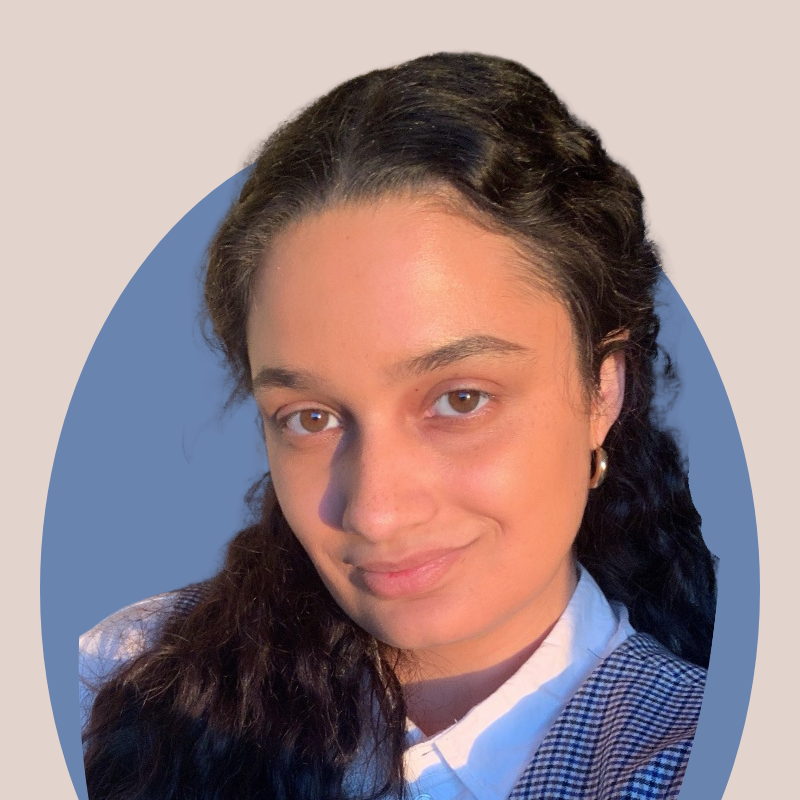
Born and raised in San Francisco’s Mission District, Gema Elena Cantu (she/her) brings over eight years of nonprofit experience to her role. Leading fundraising efforts, she builds relationships with partners to strengthen Bay Area communities. As a Latinx fundraiser, Gema aims to change traditional fundraising methods by implementing Diversity, Equity, Inclusion, and Belonging approaches.

She advocates for the social sector to support and invest in fundraisers of color and encourages individuals from different backgrounds to engage in community-focused fundraising. Gema strives to create new pathways and approaches that offer new strategies to fundraising, ones that speak to her community, inspiring others to become leaders and drive meaningful change. She also serves as a board member for the Development Executive Roundtable, an organization dedicated to providing educational workshops, training, and events for development and fundraising professionals in the San Francisco Bay Area.

Outside of work, you can find Gema on beautiful hiking trails, the archery range, horseback riding, dancing with her Aztec community, or on the dance floor! 

To stay connected with Gema, you can find her on LinkedIn.

Lessons from fungi: Rediscovering the mycorrhizal connections in our communities, philanthropic philosophies, and reciprocal relationships

Lessons from fungi: Rediscovering the mycorrhizal connections in our communities, philanthropic philosophies, and reciprocal relationships

By Chantelle Ohrling, a curious and grateful guest on Turtle Island

As we know, ecosystems are a place, but they’re more than that—they’re a carefully calibrated community. Applying this understanding to our sector, we must reject the individualism of white supremacy, opting instead to create an ecosystem of love, accountability, and trust. 

The inspiration for writing this essay came after reading two very different texts. 

The first was a book called Entangled Life by Merlin Sheldrake, which is about the beauty of fungi and all that they do for their living relations. The second was Resonance: ​​A Just Transition Guide for Philanthropic Transformation published by Justice Funders. In it, they detail how and why philanthropy is to redistribute wealth and democratize power to shift economic control to communities with their Resonance Framework. 

While the two texts may seem like very different subjects, I find that healthy communities function similarly to healthy ecosystems, and both can function in harmony for the well being of the other. This understanding is something I’ve been shown by Indigenous teachings and values, including Braiding Sweetgrass by Dr. Robin Wall Kimmerer 

***

You now find yourself deep in the heart of a vast rainforest, listening to the ancient trees whisper-rustle century old tales of interconnectedness. Herein lies a hidden community quietly working harmoniously for equity and justice amongst their growth. 

You will catch its comforting presence if you breathe deeply and attentively. You look carefully to find fungi on a log, alchemizing decaying matter into nutrients for new life. Grabbing a handful of soil reveals rich, dark, earth filled with mycelium and deep roots—preventing soil erosion while equitably distributing nutrients, water, and information. 

Here, every element plays an incredibly unique yet crucial role. Every role is valued, as they are all needed to maintain harmony within the ecosystem. 

Beneath the heavy, aged weight of the cedars and the as-delicate-as-lace ferns, mycorrhizal networks quietly hold together the deeply reciprocal relationships of all living relations in this ecosystem, equitably promoting the health and safety of the community. Ecosystems thrive symbiotically by sharing nutrients, water, and information through these networks. 

This exchange is a naturally occuring example of community-centric philanthropy, and how I envision our sector’s future. 

As we know, ecosystems are a place, but they’re more than that—they’re a carefully calibrated community. Applying this understanding to our sector, we must reject the individualism of white supremacy, opting instead to create an ecosystem of love, accountability, and trust. 

In this ecosystem, philanthropy is not just an act of charity but a commitment to collective well-being, rooted in reciprocity. 

Fundraisers understand the value of a network. Just as plants use mycorrhizal networks, fundraisers should use their relationships to distribute resources where they’re needed. We understand that true empowerment comes not from handouts from above nor individualism but from the strength of the community. 

Rather than waiting for benevolent donors to swoop in with solutions, we bolster our communities by pooling talents and resources to address the needs of the whole. As Dr. Robin Wall Kimmerer has said, “All flourishing is mutual.” 

Our rainforest ecosystem, unlike capitalism, does not hoard resources. When injured, a tree communicates through its roots sending a signal to neighbouring trees triggering them to share nutrients. Neighbouring trees don’t wait until they’ve received a plan for the use of nutrients, and they don’t expect long reports on how their nutrients were used; they simply transfer them to the front lines where needed. 

This way of working is an example of trust-based philanthropy in action. In this scenario, foundations would respond to calls from the front line and those in the community, and have a plan to “spend down” rather than just providing the minimum disbursement quota. Without convoluted applications and without stringent reporting requirements we are redistributing wealth while shifting economic control to our ecosystems of community. 

Mother trees are large trees that act as centralised hubs supporting communication and nutrient exchange amongst smaller, younger trees. Tapping its vast mycorrhizal network, mother trees supply seedlings with the necessary resources and nutrients to grow. 

Rather than competing with smaller organisations, in our philanthropic ecosystem large established charities are uplifting them by practising supportive philanthropy—something my organization does by lending grant writers to smaller organisations. Just as mother trees support the younger trees around them, the collective community’s well-being is centred around one primary mission. 

As fundraisers, we understand that information and time are important resources. Just as plants can interpret sound, respond to touch, recognize their own kin, communicate with each other about impending threats, and summon help when under attack or needed, the networks we cultivate can have a similar impact on front line communities. By sharing lessons learned and relationships throughout our networks, we empower all groups doing the work. 

This exchange of knowledge and resources, and genuinely listening to the needs and priorities of communities strengthens authentic reciprocal relationships and motivates us to continue our work. 

bell hooks reminds us “If we want a beloved community, we must stand for justice, have recognition for difference without attaching difference to privilege.” Within healthy ecosystems, each individual plays a unique yet crucial role, and is valued for that. Similarly to how fungi adapts to best fit its local environment and the needs of that environment, each member of our community contributes to their abilities and resources and receives based on their unique needs. 

Our organisations demonstrate the value of the individual through equitable action—creating a community of belonging regardless of whether they are a donor, board member, beneficiary, “front line fundraiser,” or the hero behind the scenes who keeps our database clean. 

Steadily and surely, we are reclaiming “philanthropy” and returning it to its original Greek meaning of “love for humanity.” Putting it in direct opposition to the hyper-exploitation and extractivism we live with now under capitalism brought to Turtle Island on the ships of colonialism.

Philanthropy currently functions as an arm of capitalism, upholding systemic injustices left over from colonialism. Tracing back the origins of this philanthropic wealth will take us to the exploitative extractive industries that continue to destroy our ecosystems. Fungi are powerful enough to break down and clean up oil spills, and philanthropy can be powerful enough to transform colonial systems and extractive industries into regenerative economies which benefit and value all living beings. 

It’s not enough to stop the bad and divest from their power; we must build the new and invest in the power of our communities. Audre Lorde reminds us “Anger, used, does not destroy. Hatred does.” 

Fundraisers are already familiar with alchemizing anger and fear over injustices into hope and positive actions. It seems as though every other day, I’m listening to a donor’s climate anxiety and attempting to imbue them with hope. 

Steadily and surely, we are reclaiming “philanthropy” and returning it to its original Greek meaning of “love for humanity.” Putting it in direct opposition to the hyper-exploitation and extractivism we live with now under capitalism brought to Turtle Island on the ships of colonialism. Guided by reciprocal relationships with the land, Indigenous values globally embrace a model of giving that honours their interconnectedness with all living relatives. 

Every act of giving is an act of love, a recognition of the inherent worth and dignity of each member of our communities. Whether it’s through mutual aid networks, community-led initiatives, or culturally grounded practices of giving and receiving, philanthropy here is a celebration of the richness and diversity of human experience. 

Many Africans are familiar with Ubuntu, which approximately means “I am because we are,” or “I am who I am because of who we all are.” The philosophy of Ubuntu is a beautiful reminder of the interdependence of humanity, and the importance of centering community. 

In the Great Lakes region of North America, Dr. Robin Wall Kimmerer in Braiding Sweetgrass generously shared with us the teachings of the honourable harvest that the Anishinaabek Peoples live by. Their neighbours, The Haudenosaunee Confederacy, have a core value called the Seventh Generation: “Look and listen for the welfare of the whole people and have always in view not only the present but also the coming generations, even those whose faces are yet beneath the surface of the ground — the unborn of the future Nation.”[1] Asking us to make decisions which would be sustainable for seven generations. 

In the Caribbean, my own ancestors, the Taíno, were described by Columbus as “the best people in the world, and beyond all the mildest… a people so full of love and without greed… They love their neighbours as themselves.”[2] His observation captures Taino’s cultural practice of Matu’m, which directly translates to generosity. 

In this communal ecosystem, we have returned to these and other Indigenous values. 

As a heavy, deep golden, late afternoon sun filters through the canopy on this thriving community, we can thank the fungi and fundraisers for helping with the restoration of this ecosystem. Guided by the values of community-centric fundraising, we weave a rooted tapestry of resilience and solidarity, a testament to the power of collective action and shared purpose. Growing off of the mossy backs of those who came before, we embody deep gratitude.  

In this forest, where reciprocal relationships run deep and the bonds of kinship are strong, there is hope. Angela Davis knew “It is in collectivities that we find reservoirs of hope and optimism.” In the hands of a community united in purpose, philanthropy becomes more than just a tool for charity—it becomes a force of transformation—a just transition—a path toward a more equitable world for all. 

Footnotes

  1. The Constitution of the Iroquois Nation
  2. Bill Bigelow, Zinn Education Project
Chantelle Ohrling

Chantelle Ohrling

Chantelle Ohrling (she/her), comes from a long line of rebellious Afro-Taíno women. When she isn’t nerding out about planned giving at Ecojustice or with her nose in a book, she’s appreciatively wandering the land of the Coast Salish, Musqueam, Shishalh, Squamish & Tsleil-Waututh Peoples. She honours her responsibilities to her communities by working for environmental protection, strengthening Black communities locally and internationally, and ceaselessly advocating for Indigenous Sovereignty. She believes we can alchemize oppressive systems ( much like fungi decompose dead matter) into fertile ground for new societies rooted in reciprocal relationships based on deep care and respect for all living relations. You can find her on LinkedIn

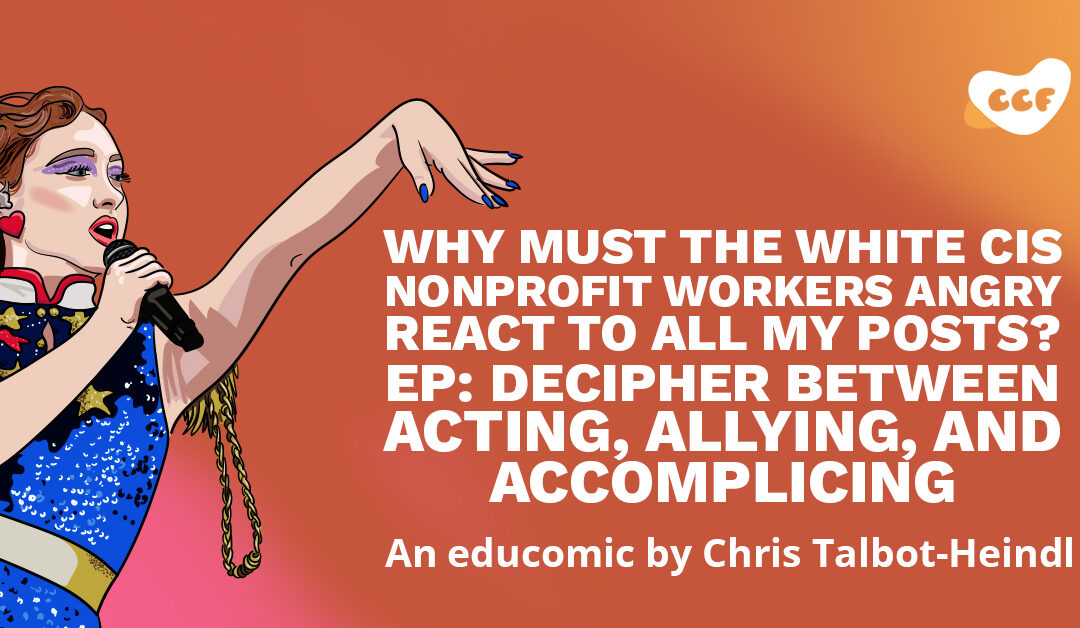
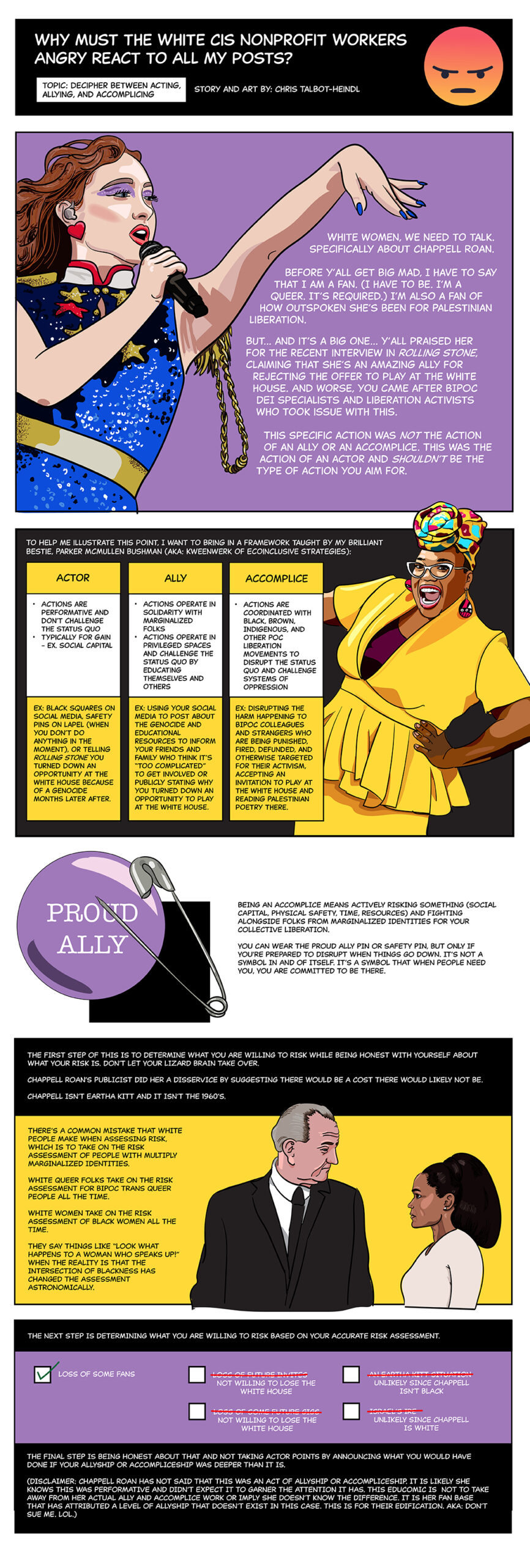
Why must the white cis nonprofit workers angry react to all my posts? Ep: Decipher between acting, allying, and accomplicing

Why must the white cis nonprofit workers angry react to all my posts? Ep: Decipher between acting, allying, and accomplicing

By Chris Talbot, communications professional and educomics creator

View accessible/text-only version

The educomic Why must the white cis nonprofit workers angry react to all my posts? Ep: Decipher between acting, allying, and accomplicing." Full alt-text is available using the link at the top of the page.
Chris Talbot

Chris Talbot

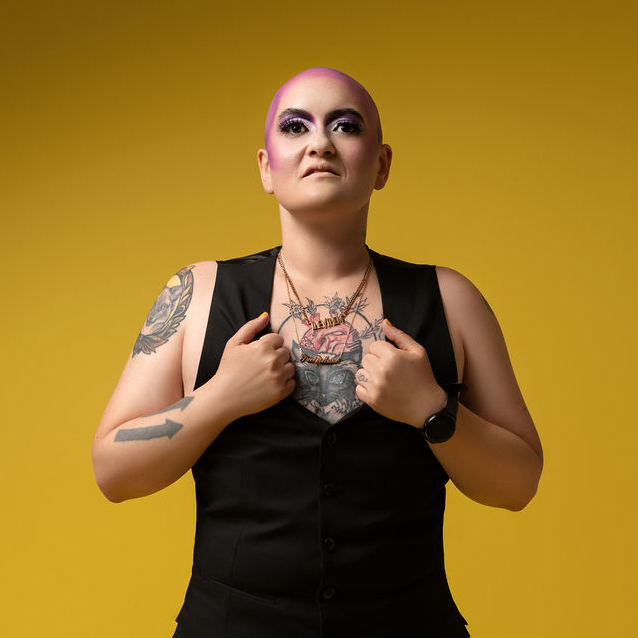
Chris Talbot (they/them) is a queer, trans nonbinary, mixed-race artist, activist, and nonprofit employee. When they aren’t working the day job, they spend their free time editing art and literature magazines, writing and illustrating educomics to help folks affirm their nonbinary pals, creating a graphic novel to describe what it’s like to be nonbinary in a gender binary world, cuddling their cat, and quad skating in the park.

You can find Chris at talbot-heindl.com, on LinkedIn, Instagram, Bluesky, and Twitter — and tip them on Venmo or PayPal or join as a patron on their Patreon

Photo credits: Makeup by Brittany Blaze-Shearz; Direction and photograph by Chermetra Keys/The Female Shoota; cattoo by Aura Rain Heindl-Rockman.