‘You want a director of what now?!’ When orgs that are hiring are too lazy to know what they want

By Marisa DeSalles, Sacramento-based fundraising professional

Recently I saw a director of development position at a local organization whose work I respect. The overview paragraph talked about being the face of the organization, building strategic partnerships, preparation of grants, appeals, campaigns, etcetera. Great, I thought. I can do all of that!

I read further. Under fund development, the second bullet point leaped out and hit me right between the eyes:

Must raise 4 times annual salary.

What!

Okay, I said to myself. Maybe that was phrased a bit awkwardly, so let me keep reading.

Sometimes in a design-by-committee hiring process, weird duties creep in that have no bearing on reality. All the other stuff was normal — donor relations, events management, collateral development — all the stuff we dev folks do before our mid-morning snacks, nothing else problematic at all.

Also, interestingly enough, a couple bullets down on the page was a phrase about developing a “culture of philanthropy” in the organization. Now, that’s a nice and hefty responsibility. How exciting, an opportunity to transform the way the entire org collects and curates program successes and challenges to inform transparent donor relationships and build long-term community engagement. That’s truly directing the development of the organization for the long term.

But that first questionable bullet point about raising four times the annual salary kept sticking out at me.

It looked like someone had copied and pasted it out of a different job description — one from a for-profit company, maybe even one for a used car sales company.

So, I thought, that’s got to be a board member. That one suspect bullet must be coming from some smarmy corporate board member or worse, a consultant hired by the board who comes from a for-profit place where they have sales quotas and tiered incentive structures and daily cash bonuses. (I worked in timeshare telemarketing for a few days, early in my career before I knew better, and I vividly remember how the terrifying sweaty boss would walk around after lunch flashing a wad of cash — a hundred bucks in the form of a “spiff” for whoever brought the highest numbers for that day. You could smell the desperation from down the hall.)

Imagine your major donors, your most cherished and faithful ones, answering that call. How would your development director treat them, knowing their paycheck is on the line?

“Yes, is this Ms. Susan Smith? I’m from the Youth Development Org. I was calling to inform you that you have won the incredible opportunity to invest in youth of color in our community! That’s right! But if you take advantage of this limited time offer, you can actually save not one, but two Black youth for the price of one! And, we’ll throw in the extra STEM summer camp for girls of color if you upgrade to a monthly gift.”

Not only awkward and unprofessional but probably unethical as well.

Meanwhile the dev director is sweating, thinking, OMG, gotta make that spiff or I can’t pay my utility bill this month.

Now, magnify that level of anxiety through the lens of being unemployed in a depression, uninsured in a pandemic, and trying to right the wrongs of the world on what is normally a laughable salary anyway. It’s enough to make me question whether I want to be a development director at all.

The conditioning of continuance of employment upon meeting [random, arbitrary, unrealistic] revenue goals belongs in the private sector — and honestly, maybe not even there. It is yet another destructive relic of plantation capitalism where a person’s intrinsic value is determined by the amount of production they have achieved in the ‘master’s interest’ on that particular day.

I asked about it in the interview. The culture of philanthropy part, that is — because as a Black woman and job supplicant, I did not feel powerful enough to challenge the whole weird used car salesman quota.

The executive director had absolutely no idea what I was talking about and didn’t seem to have any recollection of the actual job description at all. Halfway through the interview, he leaned back in his chair and said, “Marisa, you have tons of qualifications, but I really just need a grant writer to help me get this big federal grant I need.”

Then why did I just waste my time applying to ‘create a culture of philanthropy’ when you just wanted a grant writer-slash-used car salesman to generate revenue?

Worse yet, another local org posted a nearly identical job description with that same line in it a week later.

Graphic of computer and tablet screend displaying job listings with duties including

Beyond the polyester-clad sales quota, both these jobs describe management of development teams that I personally know don’t actually exist at either org. In fact, much of these job descriptions are complete garbage compared to what the actual stated needs of these organizations are, based on my conversations with the EDs after I probed further.

So there are two major problems here — a job description that doesn’t fit and furthers inequities, and EDs that can’t be bothered to write a real one.

But these are BIPOC-led organizations doing amazing work. I’m sure they’d like to attract fantastic BIPOC fundraiser talent, pay them fairly, and honor their unique contributions in relationship building and empathy with both donors and program recipients. (See: Michelle Muri’s post “The power of a fundraiser” for more about just how awesome we are.) Why, then, would these organizations knowingly promote this ridiculous bullshit? Why would they waste the time and hopes of folx who are already traumatized enough without the current crisis?

My suspicion is that they got this job description online or at a board retreat somewhere and never sat down to think about exactly what a director of development actually does, or what type of development their organization actually needs.

Here’s what that negligence means: Anyone who signs up for that job is going to have an uphill struggle to get the proper organizational support required to actually grow and innovate. They are doomed to slog through grant applications to drum up revenue for programs tailored to the needs of the grantor rather than the community. They will spend their professional lives running around putting out lack-of-revenue fires that the ED and board have basically set through lack of fundraising strategy. Without strategy and mindfulness, they are likely to repeat and reinforce the same patterns of systemic inequity that we fundraisers often do without realizing it.

I asked both EDs where they got this job description. One responded, “Our job description was developed (from what I remember) from a series of other job requirements for the same position that we saw and also agreed with.” He was also genuinely interested in knowing where I found an issue with it and wanted my feedback to improve his process. His openness is a concrete example of how to put the 10 Principles of Community-Centric Fundraising into action.

(The other ED was too busy to even respond to me, I guess. Sure am glad I didn’t get that job!)

EDs: If you can’t be bothered to take the time to read your director of development job description and tailor it to your actual needs before you post it, you are going to end up with exactly what you deserve: a bad fit. You’ll have another vacancy in a year or less, with a used-up, depressed used car salesman and a bunch of disenchanted donors walking away from your mission. In the meantime, you’ve turned away plenty of perfectly qualified development directors who could have actually developed your org.

As I wrote back to the ED that responded to me, a true development director is a force of nature, constantly moving the organization forward, not just in terms of revenue but exposure, programming expansion, and equitable, community centered, long-term strategic growth.

We must invest in fundraisers who come from the communities that we serve.

Let’s assume both those orgs would be lucky to have a talented Black woman who lives in the neighborhood they serve and is deeply aligned with their mission. What if, instead of arbitrary production goals, that job description included a commitment to paying for my mental health as a fundraiser of color trying to overcome a lifetime of internalized micro- and macro-aggressions? What if the salary were need-based instead of quota-based? What if I felt like this organization valued my time, talents, and passion as much as they value their grantors and donors? What if all of us felt that way about the organizations we work for?

Our staff play a critical role in building a strong and just community. We must compensate them fairly, invest in their growth, and appreciate them as much as we appreciate donors.

Scrutinizing and decolonizing your hiring practices is a fundamental part of building a diverse, equitable, inclusive, amazing team of humans to carry out your mission. It deserves no less.

 

Marisa DeSalles

Marisa DeSalles

Marisa (she/her) is spending her quarantime growing zucchini bats on her front lawn, obsessing over other people’s Zoom rooms, and actively spoiling a multi-generational and multi-species household. Her favorite superhero is Word Girl and she is overly fond of commas, especially the Oxford one. Please subscribe to her new blog at marisadesalles.com so she can justify renovating her she-shed. Politics on Twitter, critters and plants on Insta @kidscatzntech.

In case you missed it: Data Says! webinar video and presentation slides

On July 24, data expert and evaluator Anna Rebecca Lopez presented some findings from a survey of more than 2000 nonprofit professionals sent out last year. Anna Rebecca shared the information on a webinar of more than 700 folx in the sector. You can watch a recording of the event below as well as read the discussion that happened in the webinar chat box and view Anna Rebecca’s presentation deck from the webinar.
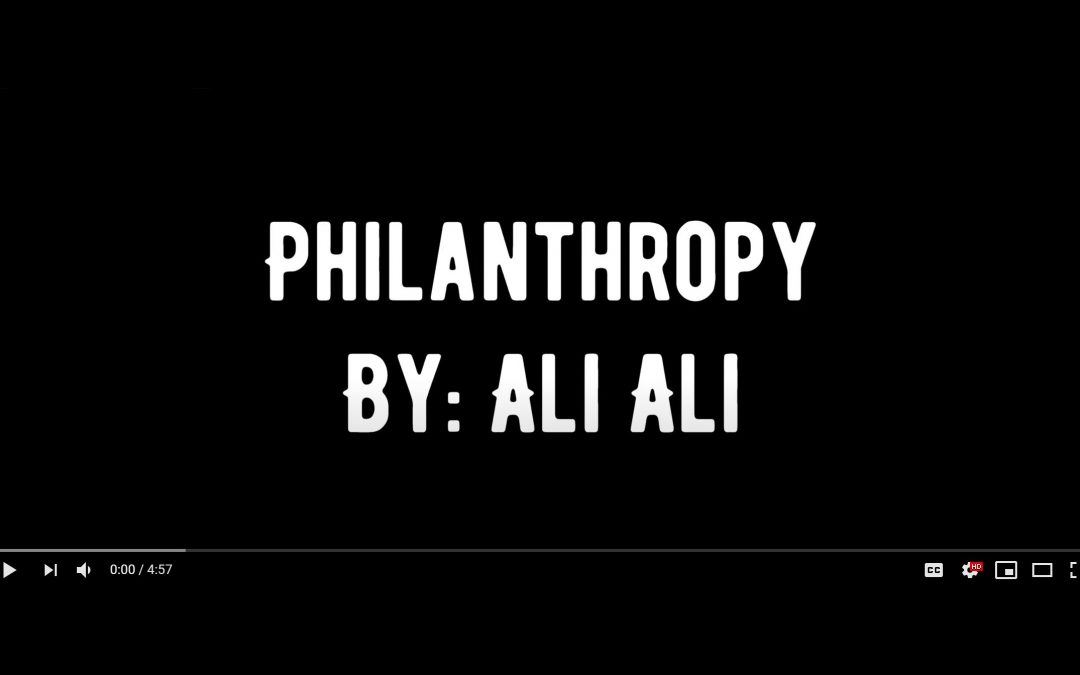
“Philanthropy”

“Philanthropy”

Philanthropy,
The definition is a generous donation,
How did you get all of that wealth accumulated?
what an enormous foundation,
You expect me to believe generosity move the elite,
we’re just in their plantation…

to promote welfare,
I mean, billionaires decide to give some of their share,
To a low class that hold care,
In hopes to declare,
Some type of fair…..
Treatment,

To, settle some affairs,
That are heinous,
Your organization’s plan,
To fight systems built in secret,
Coincidentally conceiving,
Having both sides sign on the dotted lines agreement,
New proposals released then,
Set timely, infrequent,
Boundaries set with rules, so there is no cheatin,
Hmm… how convenient

Examiners examinations gleaming,
As they discuss during a minor briefing,
A table full of individuals that are paid to be seated,
Their duty to decide which application is pleasing,
Kinda like the hunger games as we see it seeping,
Fighting for survival while all sides are competing,

See, their control’s increasing,
We’re left drained, leaking,
We’re then blinded perceiving,
To fight over cheese, were scheming,

The income inequality, a social philosophy,
Had derived from the pain that enriched the economy,

It was between the 30’s and the 70’s reconstruct and rebuild,
up and coming…
we were quite skilled,
Segregation was unwilled, cuz the law has been fulfilled,

But when then the suburbs got built,
those houses were filled,
The Government sat back, the blueprints were a thrill,
The movement to implement, seperational wealth
For generations to thrive,
A caste was instilled,

Prior to this,
All Americans were mixed,
Within communities,
Way before ownership,
Of a 2- or 3-story property,
They gave low cost loans to the white majority,
Then denied or charged high on the loans for minorities,
Left only 2% of ownership to the black man’s authority,

Now it’s all learned behavior with the whites mentality,
That if color moved in, it’s against normality,

No sales distributed, none of colored were commuted,
White flight, right on sight, no need to dispute it,

Now we’ve disguised the law, saying this of the norm,
People choices aren’t governed, so it couldn’t hold up in court,

Was it De Jure or De Facto, that’s the color of law,
They made it stretch whatever way it worked, its was all a facade,

All the houses built clout, the one’s in scattered out,
Now the blocks and the projects were left for those in doubt,
See the jobs then followed, and businesses burnt down,
So if you didn’t own a car, no job for you, cuz there’s no other route,

Now the schools were underfunded,
Flunk down to a drought,
Public homes were disowned,
The walls then broke out,
No government to assist,
Or help with bailouts,
Highways were set,
Division, was witnessed,
So you start to kick it,
Generational hang out,
Chillin and grilling, traditional cookouts,
What else is there to do, when society left you out,

Those in power stayed dreaming
Planning and scheming,
How can we do it legally,
Without, our history is repeating,

It came to 2 words.
Investing, infesting,

Now listen here if you were confused,
This will teach you a lesson,
If we move in simultaneous drives,
Then there will be less tension,

In the suburbs with time, the equity had climbed,
From a few grand to 6 figures, this here was the prime,

Home equity investments, some may say it’s impressive,
Now the others sit in question, it had built some resentment,

But then the hood was infested, with getting high or depressants,
The crack attack impression, while everyone was congested,

They arrested the melanin, sent men like a settlement,
Even though both races were dependant on medicine,
The war on drugs obsession,
100 years if you’re Black, this here was discretion
This propaganda, set Felons,
But no one dared to contest it,

Then they, overtaxed the community,
Sent money to the suburbs,
They paid pensions for punity,
Then gave cops immunity,
Made it seem like badges
And uniform were purity,
This isn’t my story, nor is it foolery,
Check the 13th amendment, it’s there written in eulogy,

But they say it’s returned,
in minor annuity,
Food stamps, or the WIC,
Health care when you’re sick,
Broken roads, and small checks,
To keep you alive,
you’d lose if your pockets got big,

Now let’s bring it back to scratch,
in defining this fantasy,
In total of quantity,
when we say philanthropy,

The sum can start from reparations of free work in slavery,
And what’s owned in acres and million dollar homes,
Are the natives trail of tears, this is the land that got dethroned

The elite, or sponsor, the amounts that we ponder,
As you stand in your privilege, then throw chump change that you launder,
Have this gimmick and practice to divide and conquer,
In these groups we scatter, it’s the cheese were after,
Inside a maze, we chase…
Go fight racism, they say…
Katniss Everdeen
this must be the Hunger Games,

Why don’t they hand you your share,
So you can fight for your freedom,
It’s your ownership that’s taken,
It’s them then that play treason,

The tale of 2 cities,
One has become an embassy,
While the other is like a refugee,
This is why history…. is important,
You’ll start to understand the climate & season,
This is the character of America, (Look at skin)
The institutional reasons…

Abdul Ali

Abdul Ali

Abdul Ali (he/him) is an Ethiopian American social activist who uses philosophical poetry from life’s experiences to meaningful messages in hopes of a better world. He is an artistic director with Maine Inside Out, an organization that uses theater to engage communities around the subject of incarceration, and works as an organizer with Maine Youth Justice, which brings people of all backgrounds together to address the failures of the criminal/juvenile justice system while working to advance reform.

As a formerly incarcerated young man, Ali also works in partnership with the Young People’s Caucus, which connects policy decision makers with young people to discuss and learn about topics that are important to youth in Maine, which creates a bridge for formerly incarcerated young people to access post-secondary education.

Ali can be reached via Instagram @humblephilosopher2020 and on Twitter @Humblephilo2020.

Data Says: What BIPOC fundraisers have known for years!

This event has passed. You can find the recap here.

When: Friday, July 24, 2020 at 12:30pm – 1:30pm PDT

Where: Online

Details:

Join us on Friday, July 24, at 12:30PM PST, for our next event. Pulling data from a survey sent out to over 2,000 nonprofit professionals, “Data Says! What BIPOC fundraisers have known for years — and what the rest of us are only now catching onto’ is an opportunity to explore what white and BIPOC professionals think about fundraising practices in the nonprofit sector — how they agree and where they differ.

Host and CCF leadership member Anna Rebecca Lopez is an experienced Evaluator and consultant, who uses mixed-method approaches to social science research, statistical analysis, community engagement & collaboration, digitization and more.

How prospect research can help nonprofits become less racist and more inclusive

By Elisa Shoenberger, Journalist and Writer

Prospect researchers have a responsibility to play a part in helping nonprofits become proactively less racist and more inclusive. Researchers work with information — donor and constituent data, news articles, and external tools and databases — to inform their work of identifying and evaluating major gift donors. Prospect managers help develop and maintain portfolios for gift officers while data analysts help with modeling and more.

Even though prospect researchers remain behind the scenes of fundraising and institutional decision-making, researchers help organizations figure out who and how to talk to people for fundraising and leadership purposes. Researchers and their partners already play a pivotal role in providing critical information for nonprofits and thus can make a difference in these anti-racist efforts.

Here are a few ways for prospect researchers to think about moving the needle forward on making nonprofits anti-racist.

How can prospect researchers help?

“[Organizations need] to ask themselves tough questions — ask themselves about their history of engaging with communities of color,” explains Tyrone Freeman, Assistant Professor of Philanthropic Studies at the Lilly Family Institute of Philanthropy, Indiana University.

“Sometimes there might be a disconnect between what they think is happening and what is actually happening,” he adds. “If there are harms there in the relationship, be aware and cognizant and begin the acts of repair.”

Acts of repair include acknowledging the harm previously or currently done and working to find community-specific ways to remedy the harm.

Prospect researchers, like their organizations, need to be asking these questions of themselves. Researchers need to examine their own racial biases and how that might play out in their work. Are certain types of groups of people being ignored due to preconceived notions about how they give? Also, who gets put at the top of the prospect and board lists?

Researchers should also look into the ways we’ve structured our work that may perpetuate racial bias. There’s been a recent move in philanthropy about engaging women donors and prospects who have been sidelined for so long by their male counterparts. For example, Preeti Gill of Diversity Driven Data blog and other prospect research professionals have recommended putting women first in profiles to try to highlight their work and interest. While this is just a single example, researchers can start thinking about how profiles can help highlight or hide people.

This work does not have to be done alone. It may require anti-racist trainings and other education to help unpack those biases. It won’t be an easy or quick process, but it is an important one that researchers should undertake.

Looking deeper into communities

One research bias is the misconception that people of color do not have wealth.

“There are lots of people of color that do have wealth, so just checking that bias at the door and understanding [that] people [of color] don’t get asked [to donate],” explains Robert Osborne, Jr., Principal at The Osborne Group.

He also says that researchers should “be conscious of looking beyond usual suspects and usual places and being more creative about how and where you find people who might be of value to your organization.” There’s a long history of Black vibrant philanthropy that has not shown up in white and/or mainstream organizations, explains Freeman.

A lot of studies, including Women Give at the Lilly Institute, have come out in recent years showing how women and people of color give differently than their male and/or white counterparts. Researchers should familiarize themselves with the research and think about ways of applying this knowledge. They should look at different sources— like local newspapers, newspapers specific to communities — rather than just the mainstream newspaper or national papers, or they should key in on different giving and affinity indicators to find and recommend prospects of color. It may mean looking at transaction reports differently — for example, looking at the regular annual givers who might be ordinarily ignored.

But researchers will have to also think about how their organization’s relationship to that person’s community (the prospect) impacts their desire to be a donor.

If a prospect was subject to a racial profiling at the organization, they may not be inclined to give, says Ann Marie Lonsdale of Ghost Boat Consulting. “Nonprofits have to come in with the right motivations and right perspective,” Freeman notes, so “stop looking at them from your perspective and value and appreciate them on their own terms. Then you can move the relationship forward.”

Prospect managers can also play a critical role in this work. To aid in the prospect researcher’s work in finding new prospects of color, prospect managers can help fill portfolios with more prospects of color and suggest ways to engage those populations with the knowledge they have learned about how people and populations give.

Moreover, this deep dive should not stop with prospects. Many organizations have long recognized the need for more diverse boards but may have difficulty finding people of color. Having representative boards can help organizations become more responsive to the communities they want to serve and the direction the organization wishes to take. But finding board members of color boards can be a challenge. For many organizations they tend to rely on the usual suspects and their immediate relationship circles.

Freeman explains that nonprofits have to look beyond and expand their networks to find board members of color. Researchers can take the first step to find those new leads for boards (and other committees) by looking deeper into other parts of the community.

“This is our opportunity to shine,” says Joan Ogwumike, writer of the blog A Researcher’s Diary, “because we curate these lists for frontline staff to engage with.” Promoting their names with gift officers and leadership can help fill in those critical gaps in boards.

However, part of the problem is also retaining board members of color; bringing people of color on the board is a start but it’s important not to tokenize them. Instead, their contributions should be valued and acted on, which is the responsibility of the board and leadership.

Look for donors who share organization’s values

In addition to expanding an organization’s understanding of prospects and donors, researchers should also look to find prospects who support the values of the organization. Part of the problem is that nonprofits may rely on large gifts from some donors who have sway over the programming at an organization, which impacts what an organization can or wants to do. Theaters may not put on certain plays or feature certain playwrights over fears of upsetting their donors.

But to make those spaces more equitable, there has to be some growing pains.

For organizations seeking to become more equitable and anti-racist, they should have the “courage to be clear about what their values and what they are trying to do,” says Brad Erickson, Executive Director at Theatre Bay Area. “Go find the people for whom that resonates and let the other people go.”

It will not be easy to let go of certain donors, but if the organization is committed to change, it is necessary.

And as Erickson notes, there will be prospects out there who will appreciate the change and will want to support it. Using news articles, giving patterns, and contact reports, researchers can help identify prospects that will support the changes.

Be critical of our tools

Just as prospect researchers need to look at their own biases, prospect researchers should look at the tools of the trade for the research and determine if the tools themselves are contributing to the problem.

Lonsdale says folks should “hav[e an] active lens on the tools that you are using and understand the bias that may or may not be built into the tools.”

This may go to the types of news sources that we use regularly — are folks just using the mainstream newspapers that may not cover people of color in the same way as local or community specific newspapers? — and there’s also our data aggregators, which collect massive amounts of data, such as giving, real estate, and more.

With the proliferation of wealth screenings and predictive modeling, one has to wonder what biases may be working behind the scenes. Critics of algorithms and artificial intelligence point to how algorithms can help perpetuate biases against people of color and women — and under the guise of being ‘objective’ — since it’s a computer making the decisions, not a human. It’s not that algorithms and AI are considered inherently racist or biased, it’s that the data collected and used by AI have inherent biases already baked in.

Given that different populations give and hold wealth in different ways, certain differences may not be picked up in wealth screenings and thus do not rank particularly as prominently. Anecdotally, as a researcher, I’ve seen both spouses screened separately and have seen the male spouse consistently rank higher.

While wealth screening and predictive modeling are definitely useful tools to help find new leads and learn about the giving potential of a donor database, researchers should not rely on these tools as the sole means of finding prospects. Prospecting from transactions, contact reports, giving to other organizations, and more, are also ways to find new and exciting prospects for an organization. As noted before, it would behoove prospect researchers to expand their sources to find new prospects that may not give in the ‘traditional’ sense above.

It takes an entire organization

These are just a few steps that prospect researchers and their partners can take to help in the great work that organizations are trying to do to become better partners of the communities and places they want to serve. But it’s a process that will not happen overnight. These steps are not meant to be a cure-all but rather a starting place for those in the profession to figure out how we can do better in this great work.

But it’s also important to realize that prospect researchers and partners are only a part of the puzzle. Leadership and fundraisers buy-in have to be truly committed to this work for the change to happen. Prospect research can help in the work but it only goes so far in an organization. It can be frustrating to do the work and not get the results you need. Fundraisers and leadership have to commit to specific actions with the information provided.

Metrics and benchmarks are critical too, Osborne says. “If you are really serious about this work, then you’ll make a plan. There will be numbers attached to that, there will be responsibility to that in some way, that’s the difference between expressing positive sentiment around wanting to increase your board representation of people of color and donors of color to actually doing the work.”

Lack of buy-in doesn’t mean researchers get off the hook. Prospect researchers should still do this work. It will be challenging personally and organizationally, and sometimes difficult, but the work is important for personal growth and society as a whole. It’s time to get into action.

Elisa Shoenberger

Elisa Shoenberger

Elisa Shoenberger (she/her) has worked in the fundraising field as a prospect researcher and data analyst for over eight years. She is a Research Consultant for Aspire Research Group. She is a journalist and writer and has written on numerous topics about philanthropy for Inside Philanthropy, Brainfacts.org (Society for Neuroscience), Council for the Advancement of Education, MoneyGeek, The Daily Dot and many others. She has also written for the Boston Globe, Huffington Post, Business Insider, and many others. You can find her at @vogontroubadour or at Bowler Hat Fox, LLC.