How are we supposed to get a leg up on the job hunt if all job interview #hottips are for white people?

By Dominique Calixte, Associate Director of Annual Giving and Special Events, YW Boston

… there is an advantage baked into the interview and hiring process, favoring non-BIPOC folx.

Whether you are an emerging professional or a seasoned one in the field, job interviews can take you through a series of emotions. A job interview can often feel extremely judgemental, which can lead to an incredible amount of pressure for some.

When alerted of an incoming job interview, while some folx may feel instant excitement over being one step closer to the job, others can feel anxious.

To ease these feelings of anxiety, many of us rely on research. Cue the endless Google searches on “how to prepare for an interview” and “how to make a good first impression at an interview.” The more detailed of these searches can go as far as including industry-related keywords, which will generate listicles, articles, and so much more to support folx on their journey through the hiring process.

While the list and articles from these searches do a fine job at acknowledging that job interviews are just a step of a hiring process — and that the entire process includes planning, recruitment, and finally, selection — what these articles don’t often convey is that with each step of the process, there is an opportunity for conscious and unconscious bias rooted in racism and white supremacy.

Because this is often left out of the more widely circulated articles, there is an advantage baked into the interview and hiring process, favoring non-BIPOC folx. Because white folx get their anxiety and needs to be addressed in these articles, they have a leg up regarding interview prep.

To those of you writing these career-oriented listicles:

I’m also pretty sure that our fellow job-seekers, the Chads and Billys of the world, are not worried about what they are doing with their hair for their upcoming interview.

Your widely circulated articles are riddled with generic advice purportedly aimed at guide folx through the hiring process. Including such a general focus on job interview prep, one centered on the prescriptive action and steps needed in preparation for an interview, steps that include such things like “do your research,” “practice interview questions,” and “know your interview outfit” don’t at all address microaggressions, systemic racism, and the various forms that discrimination can take.

Thus, because of failure to acknowledge and address the conscious and unconscious biases riddled through the hiring process, BIPOCs are left with doing additional steps (which are unwritten) when it comes time to prepare for a job interview.

Listicle writers, not only do your general articles put the onus on BIPOCs, but they also continue to perpetuate hiring practices that are rooted in racial inequities and are often very gendered. Many of your tips focus on very surface-level superficial attributes that don’t actually reflect a candidate’s performance when they are actually on the job. (Last time I checked, the way I wear my hair doesn’t aid or hinder my ability to complete a task.)

I’m also pretty sure that our fellow job-seekers, the Chads and Billys of the world, are not worried about what they are doing with their hair for their upcoming interview.

Nonprofits, you are part of the problem, too

Often, the tips and hiring best practices I previously referenced are associated with the for-profit sector. Because of that, many assume that, since the nonprofit sector is well-intended, we are impervious to perpetuating practices that can be traumatic for BIPOC applicants.

I’m here to tell you nonprofit organizations that you are not impervious. After all, the common best practices for ‘effective’ nonprofit hiring, the practices that evaluate interviewees, aim to hire for the ‘best fit,’ which can be exclusionary and create a toxic work environment rooted in bias. Starting from a point of exclusion and bias sets the hire, especially BIPOC hires, up for failure.

Nonprofits, as you are hiring, I suggest:

  • Focusing on what can be added as opposed to what ‘fits’. Looking too much at fit shifts the focus from objective things like skill and ability to subjective things that are vague, problematic, and doesn’t allow for innovation and new ideas. Having clear processes that eliminate bias and creates a fair environment for candidates to be evaluated. It gives each of your candidates the opportunity to discuss their interests and motivations while giving hiring managers the same information to make their decisions.
  • Understanding that you are under evaluation too. Many interviewers create a power dynamic for the candidate that does not welcome a true evaluation of the organization by the candidate. It is important, both for your organization’s mission and the candidate’s wellbeing, to allow for both sides to be properly evaluated.
  • Leaving room for people to be themselves. Current structures and processes that are in place for most interview processes only enforce various -isms (racism, sexism, ableism, etc.). And these -isms can create a traumatic and toxic experience for all potential employees, but especially for those who are BIPOC.

To the interviewee — here are some words for you!

To my fellow BIPOC professionals, I know navigating the hiring process is tiring. Through each step of the process, you must navigate through respectability politics, imposter syndrome, and the biases of everyone you interact with during the job search. This is a burden you carry on top of the typical interview worries, like making a lasting first impression.

At this point I have been through my fair share of hiring and interview processes, and here are some of the most poignant advice I’ve received from other BIPOCs in the space as well as conclusions I have come to realize through my own experiences.

DO

  • Come with your own ‘Chad’ and ‘Billy’ energy. It’s no secret that white men tend to navigate the hiring process with an extreme sense of confidence. Our friends Chad and Billy are the types to apply to a job knowing they don’t fully meet the qualifications — yet they will still walk into the job interview with their heads held high. It’s now the time for you to match that energy. Confidence leaves a lasting impression
  • Be your most authentic self. Code-switching is draining, and you don’t want to find yourself in a situation where you can never be your most genuine self. Honestly, if the folx at this new job can’t appreciate your authenticity, they really don’t deserve you!
  • Ask all the questions. Remember, job interviews are just as much a test for them as it is for you. Ask those hard questions and make sure you address all the things that are important to you.
  • Finally, advocate for yourself! By advocating for yourself and demanding the things you need, you are making sure there is a system set up with you in mind. For far too long, BIPOCs have been forced into white-led and white-centered systems that exclude them and keep the power within the systems. Failing to advocate for yourself continues to leave you out of the systems and allows the organization to skate by while you suffer.

DON’T

  • Let organizations off the hook. I’m going to repeat one of my previous tips here: Ask all the questions. Make sure you get the answers you need — and have a plan for follow-up on things that weren’t addressed during your interview time. You should know exactly what you are getting into, with every new opportunity.
  • Go at this alone. Talk to your mentors, peers, and sponsors. Everyone has been through the job interview process and can help you reflect and prepare for the experience. And most importantly, they can help you evaluate throughout the entire process — so that you can make an informed decision.

Now, the key thing about going through the hiring process is the shared end goal. Both the organization and the individual interviewing want to be able to have a collaborative and communicative conversation so that both parties feel well informed. Additionally, conversation rooted in collaboration and effective communication should create an opportunity for the relationship to start from a place and inclusion, which is ideal for all candidates.

To future hiring managers and interviewees out there, I wish you the best of luck. To the listicle writers, stop being so vague with your advice.
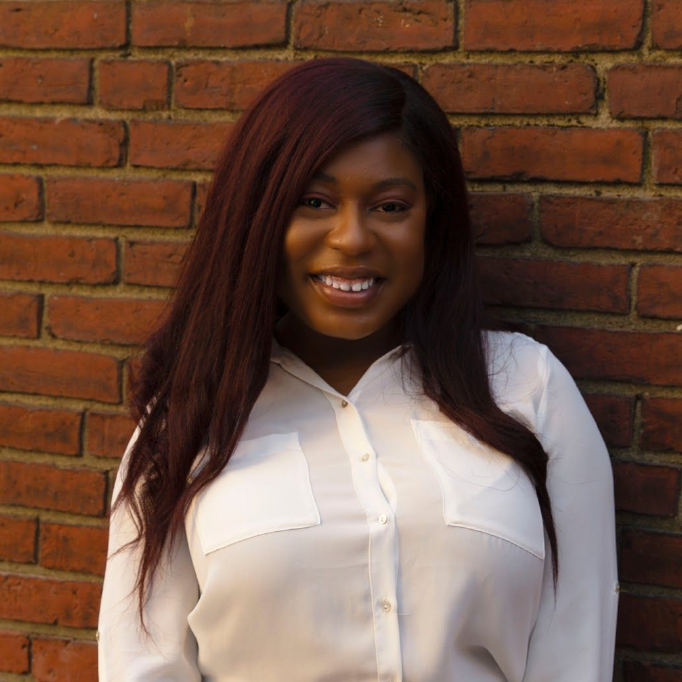
Dominique Calixte

Dominique Calixte

Dominique Calixte (she/her) is a fundraising professional and has worked in the nonprofit fundraising space for six years. In her career, she has supported nonprofits in building revenue streams, implementing systems, and inclusive fundraising practices. She also focuses on activating millennials as change-makers through philanthropy, donor engagement strategies, and effective DEI practices in the fundraising space. Dominique currently serves as the Associate Director of Annual Giving and Special Events at the YW Boston. Outside of her work commitments, she runs a nonprofit Instagram blog called DomProfit. DomProfit aims to be your plug to the nonprofit sector — be sure to give the page a follow for more.

Why every meeting should mention race and equity

By Renee Rubin Ross, founder and principal, The Ross Collective

But because I didn’t feel comfortable, I didn’t mention race. At that time, I thought that if I mentioned race, I would be calling people out or stepping on toes.

As I write this essay, I’m thinking about Shanice*, a Black woman who joined my course at Cal State University East Bay several years ago.

On the last day of class, Shanice handed me a note. The note said, “I didn’t feel encouraged in this class.”

My first reaction was a defensive one. What is she talking about! I thought to myself. I didn’t intentionally treat Shanice differently than any other student.

That note stung. I put it away for a time and held onto my defensiveness.

But eventually, I picked it up again, looked at it, and thought to myself, what is the truth that this note is holding?

I now see it as a gift to deepen my own understanding of how I need to lead as a white instructor and facilitator.

I taught Shanice and her classmates about grant proposal writing. But because I didn’t feel comfortable, I didn’t mention race. At that time, I thought that if I mentioned race, I would be calling people out or stepping on toes.

Now, after some significant work and learning, I know that by not mentioning race, I caused harm. And going forward, one of the best ways that I can honor and affirm the students, colleagues, and participants in the conversations I lead is to be open, direct, and courageous in talking about race.

When we — white people — talk about race in an affirming, open, direct, and courageous manner, we join BIPOCs on the journey towards racial equity and liberation.

This is harder than it sounds.

As a trainer and facilitator, a core of my work is building safety, inclusion, and belonging. Yet as a white person who grew up in our racist society, I learned practices — such as not actively and consciously opening up space for BIPOCs to talk about their experiences of race and racism — that have caused harm.

We — white people — are socialized not to talk about race, especially among people of different races. For many of us, talking about race is perceived to be rude — as if, by referring to someone’s race, we are going to put that person on the spot and embarrass the person.

What I’ve learned over the past few years is that we each need to start unlearning our traditional views on the subject — stat. In order to stop causing harm, white people must talk about race and equity in every meeting.

Why do race and equity need to be brought up in meetings?

When white people fail to have the courage to talk about race, the default racial context for conversations is whiteness. BIPOCs’ lived experience of racism continues to be invisible and suppressed.

As white leaders seeking to build antiracist organizations, it is important for us to try and create environments in which each person in the room (virtual or otherwise) feels welcomed, seen, and affirmed.

This can happen when we de-center ourselves and thus open up more space for people who are not us to talk about their different experiences in the world. Doing this feels especially important at this moment, as our country continues to grapple with different health outcomes based on race from the COVID-19 pandemic.

One study found that Black patients had 1.4 times the risk of hospitalization and 1.36 times increased risk of death compared to white patients. This means that each Black person on our teams, boards, or classrooms is much more likely to know people who have contracted and died from COVID.

When white people fail to have the courage to talk about race, the default racial context for conversations is whiteness. BIPOCs’ lived experience of racism continues to be invisible and suppressed.

Talking about race in every meeting is also so important for strategic planning, board governance, or just building a well-functioning team. At the most basic level, equity means that:

  1. systems are shifted so that BIPOCs who have been historically and systematically disadvantaged in terms of access to wealth, power, education and health have the resources to enjoy full, healthy lives, and
  2. the people closest to these challenges have the power to dictate the solutions.

To move a group towards equity, white leaders must create transparency and clarity about differential racial outcomes and experiences.

How do we do this?

A terrific resource is this presentation, “Equity-Minded and Culturally-Affirming Teaching Practices in Virtual Learning Communities,” by Frank Harris III and J. Luke Wood, professors at San Diego State University. While the presentation focuses on education, the practices Harris and Wood share are relevant to board and staff teams from all kinds of nonprofit organizations.

Harris and Wood mention that “being race conscious” is among the most important of their proposed five practices. They remind white people that we cannot ignore conversations on race, since experiences around race are part of the life experiences of BIPOCs in the (virtual) room.

According to Harris and Wood, race consciousness includes:

  • Being intentional about providing opportunities to engage in race and equity issues
  • Giving participants tools they will need to productively engage in racial dialogue
  • Making sure that leaders have the tools they need to facilitate dialogues
  • Staying present in the dialogue, monitoring it regularly, and intervening when necessary

Some specific steps

Harris and Wood point out a few key ideas, one of which is when we as white people are leading the conversation, we need to build our own comfort with talking about race in an affirming, curious, and open manner.

Harris and Wood point out that it is an ongoing process and effort to build safe spaces that do not create harm–these are practices that cannot be just attended to once, but rather need ongoing awareness. Leaders can continuously set up and reinforce positive group dynamics by starting each meeting or class with group agreements.

But the other part in talking about race among white people and BIPOCS is understanding that microaggressions will inevitably occur. When I lead conversations, I think about “calling people out versus calling people in.” The idea is that we

  1. Acknowledge when someone has made a comment that might be perceived as harmful.
  2. Slow down the conversation.
  3. Encourage all members of the group to think about different perspectives, assumptions and ways of being.
  4. And hold the goal of building a community that affirms safety and trust while acknowledging, celebrating, and incorporating the range of experiences from the individuals in that community.

Harris and Wood also assert that representation matters in the content discussed. Learners and participants want to see themselves in the stories and experiences that the larger group engages with. When I work with organizations on planning processes, I encourage them to survey their staff and board on demographic data and to use this for reflection and discussion.

For example, one reflection question might be: How does the composition of our board and staff reflect our commitment to equity and ensuring that those who are most impacted by challenges are weighing in on solutions?

I believe, according to my faith tradition, Judaism, that it is “not up to us to finish the work, but nor are we free to desist from it.” In other words, it is the responsibility of white people to take the next step, and the step after that, towards race affirming leadership practices. Here are some questions that will lead to advancing first steps:

  1. Assess how comfortable you feel talking about race. What learning or practice could you do to increase your comfort with talking about race?
  2. What tools do you need to better understand microaggressions and what to do when they happen?
  3. If you’re feeling resistance, what feels scary or hard about race conscious practices?
  4. What do you imagine would be the benefit for your team or organization?

For white people who are not used to talking directly about race, it can feel strange at the beginning. We are knocking down a powerful pillar of white supremacy — that it is more polite and socially appropriate to be race neutral.

But in my experience as a white leader, it is also freeing for the entire group when all of us center conversations about race and equity in meetings. In seeing each individual in their joy and pain — and in listening carefully to how the systems of white supremacy and life experiences contributed to pain and joy — we begin to find new paths forward, together.


*Shanice’s name has been changed to preserve her privacy.

Renee Rubin Ross

Renee Rubin Ross

Renee Rubin Ross (she/her) is a recognized leader on board and organizational development and strategy and the founder of The Ross Collective, a consulting firm that designs and leads inclusive, participatory processes for social sector boards and staff.

Committed to racial equity in the nonprofit sector, Dr. Ross supports organizations and individuals in practices that celebrate and amplify diverse voices and perspectives.

In addition to her consulting work, Dr. Ross is the director of the Cal State University East Bay Nonprofit Management Certificate program and teaches board development and grant writing for the program. Dr. Ross lives in the San Francisco Bay Area with her family. She is a board member of the Alliance for Nonprofit Management. Dr. Ross writes regularly on nonprofit strategy, racial equity, and learning. Subscribe here. She can also be connected with on LinkedIn, Twitter, and Instagram.

March 11: CCF BIPOC Town Hall: Part 3 — Movement

When: Thursday, March 11, 2021, 2 p.m. PT, 4 p.m. CT, 5 p.m. ET

Where: Online

Details:

Join us on Thursday, March 11, 2021 for CCF’s ongoing BIPOC Town Hall series. Our theme will be “Movement” and we will share ideas and explore how to center community and racial equity into our fundraising practices. Spoiler alert: It’s not easy and there are no quick answers. That’s why we’re focused on building collective movement toward this vision.

This will be the third of a three-part monthly series by BIPOC fundraisers, for BIPOC fundraisers in the CCF movement.

January 14, 2020: Part 1 — SELF
February 11, 2020: Part 2 — COLLECTIVE
March 11, 2020: Part 3 — MOVEMENT

This event series is EXCLUSIVELY for Black, Indigenous, and persons of color. Hosted by Community-Centric Fundraising.

Live captioning will be provided.

Does your board need to be more diverse? Here’s how to do it.

By Meenakshi Das, fundraising analytics consultant

The desire to chase demographics to tend to those low diversity numbers in the board diversity is actually only a start.

After 2020’s wake-up call for everyone to be better at embracing diversity and social equity, has philanthropy finally learned to make this a priority in every area of our work?

From where I stand (as a person of color, female, of Asian ethnicity, and an immigrant from India), while it appears that these issues are gaining in popularity, there is still an uncomfortable gap that needs to be acknowledged and addressed.

One such space to improve in the nonprofit space is board diversity. In the last few months, numerous nonprofits started springing up to the task of evaluating the why and the how regarding the lack of racial diversity in their board populations. I’ve seen pretty standard (and well-intended) messaging floating around on how more space can and should be created to welcome people from different backgrounds, in time with the departures of outgoing board members.

But, the desire to chase demographics to tend to low numbers in the board diversity is actually only a start. I am exhausted by generic messages, many of which I have received in the past.

“This is a great [xxx] taskforce or [xxx] group that could benefit from your diverse perspective.”

Or:

“We have heard awesome things about your passion in analytics. This [xxx] group could benefit from your experience.”

Such messages do not have specifics of exactly which bit of work from my past fulfills a gap in their group or how my South Asian immigrant background benefits the group’s mission.

Without a doubt, this lack of articulation during initial conversations only leads to undue pressure for me to find success in the chaos.

Here are three instances of when and how you, as a nonprofit representative, can approach achieving a diverse board with inclusivity and equity in mind.

Instance #1: When you plan a recruitment drive for new board volunteers

You want candidates from diverse backgrounds? Yes, we all do! But where do you begin, you ask?

Your outreach should have a purpose. Whether it’s a hiring post on social media or one-on-one communication, every bit of messaging should clarify what you want to achieve out of the hiring and why diversity matters to your organization. From there, some starting points could be:

  • Evaluate and expand the definition of the kind of “diversity” you want to bring in your team. Be intentional of whom you want to approach. For example, if you have an overrepresentation of ciswomen, you may want to consider diversifying by making space for trans or nonbinary women of color.
  • Reach out to known local voices (in the case of the example above, it would be local voices that support LGBTQIA2S+ issues) to get recommendations for your organization.
  • Reach out to your local peer organizations sharing a similar mission and a commitment towards diversity as yours. Check with them to see if they would be willing and comfortable to share names of possible board volunteers interested in your mission (of course while maintaining all ethical standards).
  • If you have any survey communication going to your donors and volunteers, consider including a question about whether they would be interested in sharing their time and wisdom as board volunteers for you.
  • Encourage referrals from current board volunteers who represent the minority and racialized communities you are looking to engage with more.
  • Share the hiring post from your LinkedIn page with a few lines on why YOU personally believe diversity is needed. Say it in your own words. Personalized posts give more confidence to candidates who may be interested in applying.

Instance #2: When you approach a person of color to join your organization as a board volunteer

Okay, so you’ve found someone great for your board that fits everything you are looking for. Here are some items to keep in mind when you approach a member of the BIPOC community with your proposal:

  • Do your research on the candidate — their background, qualifications, accomplishments, interests, and all other information about them that is available publicly. Remember that you are approaching someone for what they bring to the table and not just their demographic diversity. Prepare to articulate the former succinctly, with specific examples of their work.
  • Prepare for authentic conversation around where your organization and board are with diversity and inclusion. Educate yourself on the intentional language around the identities your board represents. Remember, this is not about sharing stats but rather your awareness about how your nonprofit embraces intersectionality of identities.
  • Encourage any current BIPOC board volunteer you may have to join these conversations (that is, if this interests them and if they have the time).
  • Share details of specific steps your organization would offer in terms of inclusive onboarding and beyond to ensure that a new board volunteer feels successful.
  • Ask thoughtful questions like if and how they feel empowered in their identity along with what support they would need to contribute in the role.

Instance #3: When you integrate a person of color onto your board

Yes, this is the time to celebrate the new additions to your work community! Don’t forget that your job of bringing in candidates from different backgrounds to increase board diversity does not end with the welcome message on their first day. Now is when the organization’s commitment to inclusion plays a crucial role in engaging and hopefully retaining the new board volunteer for a long time. Here are some ways you can work towards being an ally to this new member of your team:

  • Lead meetings through asking questions and making space to include all voices (versus just the familiar voices).
  • Do not assume your role as an ally. Instead, admit that you don’t have all the answers, commit to the long-term effort, and then regularly ask questions like, “What do I need to know?” and “How can I help?” and “What can we do together?”
  • Keep a check on your and the group’s unknown behavioral habits, especially when the habits are to take over meetings or speak longer than a normal, expected time. Create deliberate space for more voices.
  • Encourage your board to undertake intermittent trainings on inclusivity and equity. Make space for known voices on social justice and allow for a Q&A session from your team so that information doesn’t just get passed one way.
  • Do not make your team members from demographically diverse backgrounds hold “lunch and learn” sessions about their lived experiences. Learn about identities other than the ones familiar to you on your own and build open space to dialogue and share general perspectives later.

Remember, meeting so-called metrics around achieving a certain proportion of diversity on your board is just the start of the work. The real success of these efforts is when we deliberately pause, are willing to share our vulnerability as we learn, and commit to removing roadblocks that prevent our new colleagues from being able to actualize their power.

These efforts are not a one-time project or just in response to current events. Designing your board diversity with inclusion is going to be an ongoing journey every day, of creating deliberate space at the table, so no one has to carry their folding chairs to share their voice.

Meenakshi Das

Meenakshi Das

Meenakshi (Meena) Das (she/her/hers) is a fundraising analytics consultant. She specializes in designing survey-based research tools and analyzing engagement. Meena appreciates spending her time outside work as a mentor to immigrants and as pro bono research advisor to small shops. Her two recent favorite projects are working on making data-based research tools more DEIA (Diversity, Equity, Inclusion, and Accessibility) compliant and designing the second season of her podcast “Being and Unbeing an Immigrant” where she wants to bring together the families of immigrants left behind in the home country. Connect with Meena on LinkedIn.

The Ethical Rainmaker: Collecting Courage with Nneka Allen

By Michelle Shireen Muri, Freedom Conspiracy Principal and CCF co-chair

Episode Summary

“…it’s really hard to promote the history of Black people and not address the inequities being experienced by Black people…it just felt disingenuous to not find a way to bring these things together.” Nneka Allen joins Michelle, to talk about her essay in the newly released book Collecting Courage for which she is co-author and co-editor. In this episode, Nneka shares the deep and meaningful work of saving one of the Underground Railroad sites – the Nazary AME Church (part of the Amherstburg Freedom Museum) learning her ancestors were leaders in that movement, and the failure of a Board of Directors, to center the current-day struggles of their community. We talk about aligning ourselves with the demands of love, forgiveness, the power of storytelling, and attachment styles! ​

Find episode notes and the podcast transcript here.

About the Ethical Rainmaker podcast

In the United States alone, philanthropy is a $427 million dollar industry, of which 68% comes from individual donors. Yet the practices, theories, and foundation of modern philanthropy and fundraising often ignore the ways in which the industry perpetuates harm.

The Ethical Rainmaker, hosted by Michelle Shireen Muri, is a podcast that hosts authentic conversations grappling with the questions that we don’t often ask in the nonprofit world. Join us as we explore some of the practices that undermine our missions and navigate the way forward with today’s resisters, reimaginers, and the re-creators of the third sector. It’s time to think differently.

Michelle Shireen Muri

Michelle Shireen Muri

Michelle Shireen Muri (she/her) is the co-chair for Community-Centric Fundraising and the host of the new podcast, The Ethical Rainmaker. She is the founder of Freedom Conspiracy, a small collective of fundraising consultants focused on bringing values-aligned practices to clients in the nonprofit and philanthropy spaces. She can be reached at @freedomconspiracy on Instagram.