The Ethical Rainmaker: Deschooling and Decolonization with Akilah Richards

By Michelle Shireen Muri, Freedom Conspiracy Principal and CCF co-chair

Episode Summary

With her podcast, Fare of the Free Child, a Ted Talk, 10 books out and an entire network devoted to the unschooling community, hundreds of thousands of people have been tuning in to Akilah Richards’ body of work. In this episode, Michelle talks with Akilah about how we can decolonize ourselves, centering community and unschooling, which Akilah defines as “…shedding the programming and habits that resulted from other people’s agency over your time, body, thoughts or actions [and] designing and practicing beliefs that align with your desire to thrive, be happy and succeed…” This celebrated speaker, and organizer has just published her latest book, Raising Free People: Unschooling as Liberation and Healing Work. Tune in – you don’t want to miss this conversation.

Find episode notes and the podcast transcript here.

About the Ethical Rainmaker podcast

In the United States alone, philanthropy is a $427 million dollar industry, of which 68% comes from individual donors. Yet the practices, theories, and foundation of modern philanthropy and fundraising often ignore the ways in which the industry perpetuates harm.

The Ethical Rainmaker, hosted by Michelle Shireen Muri, is a podcast that hosts authentic conversations grappling with the questions that we don’t often ask in the nonprofit world. Join us as we explore some of the practices that undermine our missions and navigate the way forward with today’s resisters, reimaginers, and the re-creators of the third sector. It’s time to think differently.

Michelle Shireen Muri

Michelle Shireen Muri

Michelle Shireen Muri (she/her) is the co-chair for Community-Centric Fundraising and the host of the new podcast, The Ethical Rainmaker. She is the founder of Freedom Conspiracy, a small collective of fundraising consultants focused on bringing values-aligned practices to clients in the nonprofit and philanthropy spaces. She can be reached at @freedomconspiracy on Instagram.

Fundraising should be like a polyamorous relationship

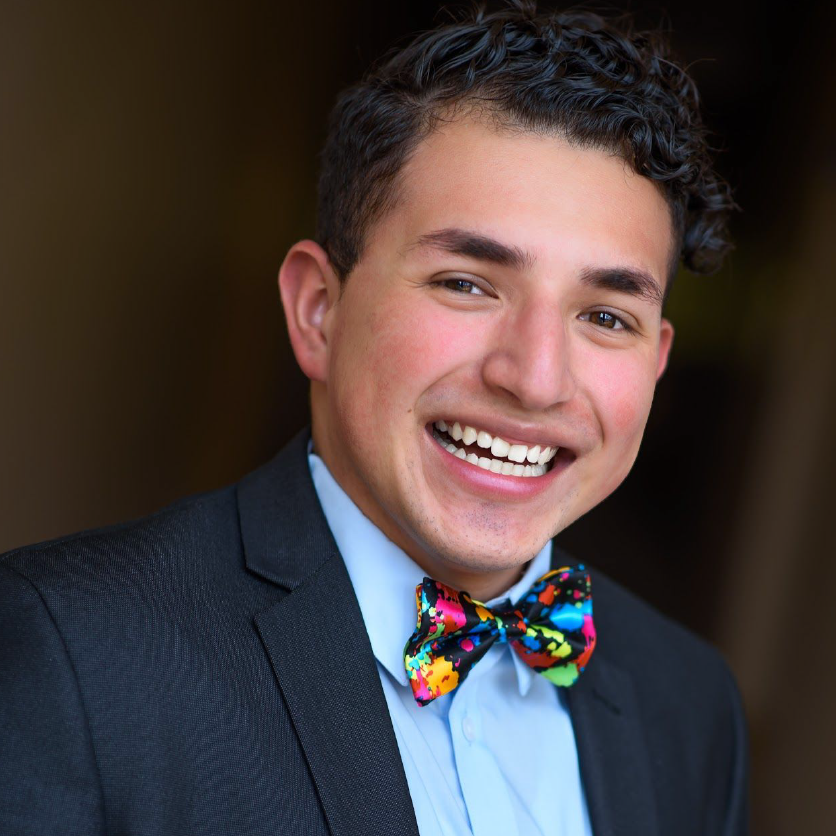
By Carlos García León, Queer, non-binary, Mexican-Statesian, and fundraiser

Many times, we are told that fundraising and development is analogous to relationship-building or relationship-maintenance. Yet, how can we classify ourselves as experts in building many relationships with our many donors when many of us, in our personal lives, only know monogamy?

I want you to know me a little more. While you can read a little bit about me in my bio below or from my byline above, get a sense of me on social media, and get a glimpse of who I am by what I post — and while all of these things will give you a fair amount of information that you can use to build assumptions about me — I want you to hear it from me:

I don’t like monogamy. In other words, I am polyamorous.

Polyamory is the simple notion that one can love multiple individuals at the same time.

To some, this might sound like a crazy idea. Radical even, especially when considering the heteronormative world many of us have been raised in, a world where we have been taught that there is only one type of way to fall in love — and that is to be in love with someONE. We are taught that we need that someone in order to be thought of as whole or complete, and then we are taught that eventually we have to marry that person, and then we are taught that, to continue that love, we have to have kids.

However, queer individuals (and here, I actually mean “queer” not as in LGBTQ+, but “queer,” as in screw the heteronormative white patriarchy) have been practicing polyamory for a long time. It has allowed them to express their love in a way that many have not thought much about. This expression of love, I think, can often solve a lot of the issues we experience in monogamous relationships.

What was the last rom-com you saw? Mine was “To All the Boys” 1, 2, and 3. (It was a movie marathon night for me!) In this trilogy (and in every rom-com ever), the formula is that person A loves person B, but there are issues like distance, jealousy, or deciding if person C is better. The problems are eventually solved with the decision that love will win. Person A and person B kiss, indicating this. It’s the same formula that still wins over a lot of us ‘cause it is so cute, and we wish for it longingly.

But it’s also a little bit of a fairytale.

Life doesn’t have to always be that fairytale though. In polyamorous relationships, you can have your cake and eat it, too. You can choose person B and person C, you can continue with person B in one city and have person D in the other. And while you will deal with jealousy, the truth is we are better off dealing with it rather than ignoring the reasons it exists.

How does this relate to fundraising?

Many times, we are told that fundraising and development is analogous to relationship-building or relationship-maintenance. Yet, how can we classify ourselves as experts in building many relationships with our many donors when many of us, in our personal lives, only know monogamy?

Our current work setup is a polyamorous relationship, actually. We just haven’t acknowledged it or treated it as such. It is my hope that if we could utilize a polyamorous lens in the way we maintain these work relationships, we can further connect with our donors, our community, and ourselves.

So, being the polyamorous person that I am, I wanted to share some tips that I’ve learned from my personal experiences that I think are valuable in our professional field. I hope that from my lived experiences and the books and articles I’ve read on polyamory, I can help spread some of this knowledge to help us all.

Loving multiple people in various capacities

We need to acknowledge that all our donors love us in different ways, just like we should openly acknowledge that we love all our donors in different ways, too.

There are times when polyamorous relationships begin because one person cannot possibly be everything for another person. The pressure to be “the one” can be such a heavy burden to bear all the time. The pressure to be perfect can also be overwhelming, especially when we aren’t allowed to share that burden with different others.

One of the beauties of polyamory is that it removes that burden of being “the one.”

In fundraising, that’s somewhat the system we are in. We are dealing with multiple donors, who, oftentimes, contribute to more than one organization or charitable cause. And while these wealthy donors have many relationships, we tend to be in the habit of treating them as the “one” — angel donors come to mind here.

Similarly, we also tend to treat our wealthier donors as if we are the only organization they donate to. We treat these donors to one-to-one chats and talk to them as if they are the only donor we care about.

All of this is disingenuous.

We need to acknowledge that all our donors love us in different ways, just like we should openly acknowledge that we love all our donors in different ways, too.

Of course, this brings up a certain problem — the idea that oftentimes our “love” is quantifiable via the amount of money a donor gives (should love be quantifiable?)

Polyamory can also provide a solution to that.

Take into account the fact that each person brings different skills to the table

There are some polyamorous people who do utilize the hierarchy system in their relationships. Having primary, secondary, tertiary, and so on partners. In work, this is the way we tend to think of our donors. Primary donors being our major donors and season/corporate sponsors — while other relationships do not have as high a priority due to smaller financial contributions.

While this system has kind of worked for us, a hierarchical or tiered system doesn’t truly take into account the feelings of those in the lower tiers, and it plays into a lot of power dynamics that are tricky to maneuver or downright inequitable.

Polyamorous relationships don’t expect one person to fit into neat gender roles. When we apply this lens to fundraising, it means that donors don’t always have to donate money to contribute to be a part of our relationship. As we continue the discussions of how finding a multitude of ways to appreciate individuals, like in polyamory, allows for relationships to fulfill things that we are sometimes missing or to allow our partners to get something that we cannot provide. Whether that is an emotional, romantic, or financial — relationships can vary.

Similarly, in our fundraising world with community engagement, volunteering, sponsoring an event, or marketing in their networks — what matters is that there is an acknowledgement across the board that we are not perfect individuals and that each of us can bring and receive different things from each other to bring happiness to ourselves and the community we are building.

Handle your jealousy

The thing is, when we allow for the acknowledgment of jealousy and process it, we allow for our donors to trust us more and to connect with us more.

It has been my experience that jealousy is often associated with feelings of insecurity. It has traditionally been an emotion that we haven’t been allowed to explore, to analyze, much less to feel. Like any other emotion though, it takes reflection to understand why we feel it. Polyamory doesn’t remove the emotion from our feelings bucket, but unlike monogamous relationships that sometimes creates jealousy avoidance because you know, heteronormativity. Polyamory allows us to confront jealousy head-on.

We need to be brave and also face jealousy head-on in our fundraising work.

We can implement this by letting donors find other organizations that are doing things that our donors enjoy. Moreover, we should actually encourage it. Our job is to get to know our donors and if we know one of them loves Tchaikovsky’s “Romeo and Juliet” and we find out that there’s an organization doing that very play, of course we should let our donors know. We should learn to not be jealous or worried that they are going to take all their money to another organization.

The thing is, when we allow for the acknowledgment of jealousy and process it, we allow for our donors to trust us more and to connect with us more. We have the hope that the other organizations our donors participate with will do the same for us, but if they don’t (or if our donors don’t come back) then we have to be comfortable with that and take the joy that we were a part of their journey in discovering what is meaningful to them.

Partners all around

Polyamorous parents have the joy of having multiple people love and care for their children. It allows for children to experience a plethora of love and affection and opens them up to the dismantling of the heternormative ways we’ve been taught what love is, how to give it, and how to receive it.

Now imagine our donors as these loved children, all grown up. Can you picture a donor who has appreciation for modern opera and history museums and the zoo? Can you picture a donor who is appreciated back, as if there isn’t any competition between the opera, museum, and zoo?

This sort of nurturing opens us up to relate more to our donors and the other organizations around us — so that we all can better collaborate on how we are going to uplift all the communities that interact with us.

Communication, boundaries, and consent

Now, none of the above is possible without transparent communication skills, the establishment of boundaries, and the understanding of consent. In polyamory, it is so important to know what our boundaries are, what we need, what we can provide, and what we can and won’t forgive.

In my experience, previous partners have crossed boundaries that I didn’t know I had but I was able to forgive them because we made actionable plans to talk about our feelings, ensured that certain boundaries don’t get crossed again, and understood how each of us had done wrong and how it had affected us.

As we set about in this effort to be more equitably communicative and establish boundaries with our statements of solidarity and cultural equity, we will be coming face to face with many donors who have gotten used to crossing those boundaries and not used to us enforcing them. We will have to grow comfortable with keeping our boundaries set, clear, and not letting donors hurt us in these continuing efforts. Being damaged in this field is not something we consented to and we hope to continue using these skills to ensure that we keep ourselves safe.

A fairytale ending

Don’t get me wrong, I, too, sometimes love the idea of a prince charming sweeping me off and living happily ever after. I know polyamory may not be your cup of tea in your personal lives.

But in this field where we are asked to maintain so many relationships, I hope that taking some of these concepts found in polyamory can be beneficial in your work life.

We are currently in the ‘struggle subplot’ of this rom-com we are living in. And yet, even in these times, we have found so much love for one another that being able to embrace the many ways we can love should be a hopeful outlook to the dismantling of a system that has fooled us into only being able to love in one way.

So go out there. Embrace the polyamorous person that’s inside you and take your fundraising relationships to the next level.
Carlos García León

Carlos García León

Carlos García León (he/they ; el/elle) is a queer, non-binary, Latine, Mexican-Statesian, and fundraiser. They were born in Atlixco, Puebla, Mexico, but currently reside in the stolen land of the Shawnee and Miami tribes, also known as Cincinnati, Ohio and work as the individual giving manager of Cincinnati Opera. Their work, both in the arts and through writing, is driven by a fight for cultural equity, decolonizing the arts, and social justice. Outside of working and writing, Carlos likes to stream TV and movies, read a good book, learn German, take naps under their weighted blanket, drink milkshakes, and look for the next poncho to add to their collection. They can be reached via email or on Instagram, Twitter, and other social media platforms @cgarcia_leon.

CCF is gonna go global

Our plans to expand the CCF movement and transition leadership from us to a Global Council

Earlier this month at CCF’s latest BIPOC Town Hall, CCF Seattle organizers announced that we are working to transition leadership to a global council, which will continue to guide the Community-Centric Fundraising movement.

We want to take this space to explain key decisions we’ve made and how we are envisioning what this rapidly-evolving movement might look like moving forward.

It’s been about nine months since Community-Centric Fundraising launched, (though the seed of CCF was planted several years before that, from conversations that many of us in the sector were having about our frustrations with the way that we fundraise.) We’ve been thrilled beyond our wildest dreams by all y’all’s responses to CCF. It’s been so resonant and incredible to connect with and learn from so many others who have experienced the same frustrations and challenges we were personally experiencing, and to see, hear, and feel how many people across the globe are committed to changing the sector for the better.

We love fundraising, fundraisers, and donors! We all got into this work because we truly believe in the power of nonprofits to help create a better world for us all. We want to keep helping create a world where people like us thrive, grow, and continue to do awesome work in the sector.

To make room for this growth …

The current leadership team will need to step aside in order to allow for the creation of a Global CCF Council, one that reflects a broad range of viewpoints, lived experiences, and geographic regions.

When we first began this work, we set out to create a movement, not an organization. As we grew this movement, we learned, over and over, how important it is to be thoughtful of how we go about growth, in order to not replicate the systems of oppression we are steeped in.

The current CCF leadership consists mostly of members in the Seattle area, and our perspectives are very much grounded in the realities and experiences of being Americans living in the Puget Sound region. The CCF movement has to be bigger than individuals. There shouldn’t be one representative voice of CCF. The success of the movement should not be contingent on the involvement of specific people.

We all know and believe that the CCF movement will be best advanced through the creation of a BIPOC-led Global CCF Council to drive the work moving forward.

Next steps

Because CCF grew so rapidly over the past nine months — and wow, we learned quick there is always so much work to do — it’s become super clear that we need to create structures to support this movement and build capacity. While we’ve been able to provide occasional small stipends to team members and pay contractors who have taken on some key tasks, the CCF leadership has been doing this work on a largely volunteer basis. Like, some team members are spending 30+ hours per week on CCF in addition to their regular full-time jobs!

All that to say that there’s a lot of work on the backend to support CCF that may not always be clear publicly — stuff like fundraising, marketing, planning events, communications, managing the Content Hub.

Right now, we are working to build infrastructure and recruit and support new leadership in the Global CCF Council. The current leadership team intends to act as a transition team and keep current operations going while we build this infrastructure and recruit new members — and then we’ll sunset when the new Global CCF Council is established.

Our goal is to fully transition to the Global CCF Council by the end of 2021.

As for the current leadership team, we are envisioning that we will continue to be a part of this work, but in different roles. Some of us may apply to join the Global CCF Council if it makes sense to, others of us will get involved with our local CCF chapters, and others will focus on implementing CCF Principles in our own organizations.

Our goal during this transition is to set up the Global CCF Council for success. We’re gonna do our very best to figure out logistics, such as delineating roles and responsibilities, creating a shared leadership and decision-making model, and fundraising to support the creation of the aforementioned infrastructure. We’re gonna pay members of the leadership team for their time and hire contractors to take on some more of the work so that the time commitment asked of those who will serve on the Global CCF Council is reasonable and not a barrier to involvement.

It’s a pretty exciting time right now. And since we don’t have it all figured out (and we shouldn’t make all of these decisions on our own anyway!), we’ll be looking to the worldwide CCF community for your input, suggestions, and feedback. We’ll definitely be providing regular updates in the coming months. At some point, we’ll send out requests for folks to get involved with the Global CCF Council.

And before we end this, we absolutely gotta say: Thank you so much for all you are contributing to this movement. It’s been an amazing ride so far. We’re excited to see how far we’re all gonna take this.

(Mis)Adventures in fundraising: What you can learn from my first failures in community-centric fundraising

By Rachel D’SouzaFounder + Principal, Gladiator Consulting, Justice Philanthropy Catalyst, Forward Through Ferguson

In my excited attempts to bring community-centric fundraising to life, I made many mistakes. Some were more uncomfortable than others, but all of my failures presented worthy lessons for my next opportunities.

On the first episode of Brené Brown’s Unlocking Us podcast, Brené Brown shares her concept of “Effing First Times”or “FFTs” as she calls them. FFTs are a recognition of the difficulty at being new, let alone good, at just about anything.

“When we have no relevant experiences or expertise, the vulnerability, uncertainty and fear of these firsts can be overwhelming,” she said. “Yet, showing up and pushing ourselves past the awkward learner stage is how we get braver.”

I long for 2018-me to have had access to this framing. I had just begun (intentionally) integrating justice, equity, and belonging into my development practice. As the founder of a boutique consultancy, I committed myself to the trials of novelty, knowing that more than once, I would — inevitably — fall on my face. But, I hoped (maybe knew?) the reward would outweigh the risk. I was open to experiencing and learning from failure.

When I reflect on those earlier days, I can’t help but think of FFTs — and even what those FFTs actually felt like: “FFFs” — Fucking First Failures.

I had spent the previous decade in nonprofit fundraising. The concepts of community-centric fundraising were the breath of fresh air I didn’t know I desperately needed.

At the same time, in 2018, I did not know how to do it. In my excited attempts to bring community-centric fundraising to life, I made many mistakes. Some were more uncomfortable than others, but all of my failures presented worthy lessons for my next opportunities. So here I am, sharing my FFFs with you in the spirit of radical honesty and vulnerability (while desperately hoping you won’t judge me too harshly).

FFF #1: Change is hard

I learned that if you change — or break — the rules without bringing all the players along, you might forfeit the game.

Whether agreed to or not, there are rules of engagement in the nonprofit sector. As with all rules governing systems, sectors, and institutions, these rules of engagement are a collection of ways we agree to behave in relationships with each other, with power, and with money.

In the philanthropy and nonprofit space, these rules reinforce a practice that is driven by harm reduction, scarcity-mindset, resource-hoarding, competition, and silos.

When I embraced the principles of community-centric fundraising, I broke the nonprofit rules of engagement, both on my own and on behalf of my clients. This should absolutely be celebrated.

But, where I failed was diving straight into implementation without first strategizing which specific rules to break, what fall-outs to anticipate (and thus create mitigation strategies), and how to communicate to colleagues that doing this was ultimately in the best interests of the larger community.

I learned that if you change — or break — the rules without bringing all the players along, you might forfeit the game. Community-Centric Fundraising is meant to be a movement, not just a process or a practice. To build a successful movement, all must be welcome at the table — wherever they are in their understanding of equity and justice. We must call in those resistant to change and sit in our own discomfort as we patiently ready the soil for transformation.

FFF #2: History, that thing that repeats itself

The past matters. To understand why we (you, your institution, our partners, the system) are where we are, we have to understand where we’ve been.

In 2018, I didn’t know what I didn’t know — and now I know I should have done more research on how money moves in my community and how local policy decisions reinforce inequitable systems. I should have reviewed 990s for local foundations, asked for casual meetings and conversations with fund administrators and corporate giving leaders to understand how decisions are made, and spent the time asking questions to seek understanding of how things came to be as they are.

In laying this ground work and spending time on research, we can take note of the patterns of power, policy, and influence. This can feel contrary to what has been taught about resource development, but I encourage you to lean into the discomfort.

FFF #3: Ditch the hustle culture

And just as I had broken rules, I began to implement new ones. I set realistic goals with time and encouraged my clients to do so as well.

We have trained our donors to expect certain types of behavior, communication, and outcomes from us. As I began my community-centric fundraising journey, I desperately wanted to ingrain these principles across my fundraising efforts, and this aspiration led to action with little communication.

To bring donors and funders along in our community-centric fundraising movement, we must adopt a mindset where we are allowed to be human and whole and we all have a chance to grow and learn. Testing community-centric fundraising activities and asking donors and funders for feedback felt so much better than trying something new and hoping for the best.

And just as I had broken rules, I began to implement new ones. I set realistic goals with time and encouraged my clients to do so as well. With donors and institutional funders, I was candid about what wasn’t working or where their goals were misaligned with grantee needs. I worked to be transparent with funders about what costs really looked like and encouraged my nonprofit clients to stop reinforcing and requesting funding for programs that were not working.

It was terrifying.

And it worked.

FFF #4: Perfectionism and all its friends

Fundraising lends itself to high-achieving, numbers-driven people. We set goals, and we work until we reach them — ideally on time. After discovering community-centric fundraising, I approached transitioning my work to a new model in the same way. I saw a new path forward and believed I was solely responsible for bringing it about in my region in a rapid timeframe. I worked endless hours, I took on every client remotely interested in my work (because who else could possibly do it?), and I struggled to move the needle.

What I have learned is that the act of moving forward in a movement is the target we should all be striving for. Compromise doesn’t always feel great, but meeting funders, nonprofits, and communities where they are often means we must do it anyway. Additionally, I have discovered that the burden is not mine to bear alone. There are many ways to participate in the movement, and it was my job to cast a wide net inviting other fundraising professionals and consultants, nonprofits (clients and non clients), and funders into the movement to play the role that best suited them.

Examples of what this might look like are sharing opportunities to engage in the work with your community, renegotiating grants with gatekeepers when the grants don’t benefit the organizations or those they serve, taking cues from stakeholders and community members, and being very clear and transparent in communications with funders, program participants, and community members. We must all engage in a culture of lifelong learning and commit to continuing our path forward as opposed to trying to get it “perfect.”

In “Rising Strong,” Brene Brown expands on how she views “failure.” She encourages us to “rumble with failure” and tells us that doing so would be to choose courage over comfort, accountability over blame, and to embed key learnings from failures into our lives. As I consider my own FFFs, I know that I have rumbled with a beast, I’ve come out on the other side, and I’m ready to go back at it again and again, because our work — and the Community-Centric Fundraising movement — is too big for us to sit this one out.

I’m not sharing my experiences as a cautionary tale — rather, it is my hope you take my failures and boldly forge ahead to fail all on your own …

AND THEN learn from your failures and level up to your next exciting success.

Rachel D'Souza

Rachel D'Souza

Rachel D’Souza (she/her) is the Founder+Principal of Gladiator Consulting in St. Louis, Missouri. Through Gladiator, Rachel has combined her knowledge of organizational culture and fund development with her deep personal commitment to centering community, seeking justice and creating belonging for those who have been disenfranchised or targeted by institutions, systems, and policy.

Born to parents who immigrated to the U.S. from India, Rachel has always been passionate about bridging differences and celebrating what’s possible when we collaborate from a mindset of abundance, learning, and risk-taking. Rachel loves cooking, snuggling her kids, and Instagram.

The Ethical Rainmaker: Bringing Community to Communications with Sarah Durham

By Michelle Shireen Muri, Freedom Conspiracy Principal and CCF co-chair

Episode Summary

There have been so many problematic practices we’ve used in nonprofit communications…so how do we start thinking about communications, differently? Well, in this episode, Michelle talks with Sarah Durham founder of Big Duck, a New York-based nonprofit communications firm, podcaster with The Smart Communications podcast and author of two books including Brandraising and The Nonprofit Communications Engine! We talk about the difference between communications, marketing and branding, how Americans are terrible at research, unnecessary urgency as a characteristic of white supremacy in communications, and what we can start doing differently today!

Find episode notes and the podcast transcript here.

About the Ethical Rainmaker podcast

In the United States alone, philanthropy is a $427 million dollar industry, of which 68% comes from individual donors. Yet the practices, theories, and foundation of modern philanthropy and fundraising often ignore the ways in which the industry perpetuates harm.

The Ethical Rainmaker, hosted by Michelle Shireen Muri, is a podcast that hosts authentic conversations grappling with the questions that we don’t often ask in the nonprofit world. Join us as we explore some of the practices that undermine our missions and navigate the way forward with today’s resisters, reimaginers, and the re-creators of the third sector. It’s time to think differently.

Michelle Shireen Muri

Michelle Shireen Muri

Michelle Shireen Muri (she/her) is the co-chair for Community-Centric Fundraising and the host of the new podcast, The Ethical Rainmaker. She is the founder of Freedom Conspiracy, a small collective of fundraising consultants focused on bringing values-aligned practices to clients in the nonprofit and philanthropy spaces. She can be reached at @freedomconspiracy on Instagram.