The ultimate equity test: Reliance on unpaid labor

The ultimate equity test: Reliance on unpaid labor

By Jessie Calero, fundraiser and freelance writer

Among the most egregious practices that cause nonprofit organizations to fail the equity test is a reliance on unpaid labor.

Equity-minded organizations have become more focused than ever on identifying and addressing practices that perpetuate exclusion and prevent historically underrepresented communities from becoming leaders in the nonprofit sector. 

Some have led the charge in examining biased hiring practices, inequity and secrecy in compensation, and historically white leaders and models of power. 

However, within other organizations, almost nothing has changed. 

Elaborate calls for feedback, lengthy surveys, and landscape assessments are conducted, published, and lead nowhere. Statements listing principles of inclusion are filled with meaningless platitudes with no benchmarks or measurable criteria to which organizations could be held accountable. Efforts to embrace inclusion, diversity, equity, and accessibility are built on a foundation of white supremacy culture. And, as is usually the case in a capitalist society, habitual hoarding of power and money overshadows principles of community and resource-sharing. 

Among the most egregious practices that cause nonprofit organizations to fail the equity test is a reliance on unpaid labor. What’s even more concerning is that this is most common among professional development organizations. 

As a member of one such organization, I recently received a Request for Proposals, soliciting content and educational materials to share with their membership. This request specifically highlights inclusion, diversity, equity, and access as central to the organization’s strategic plan. 

They ask for fresh perspectives and innovation. They offer respondents the chance to write articles, create short learning videos, hour-long webinars, or intensive multi-day virtual workshops. They state that proposals can be submitted by members and non-members alike, from both new and experienced fundraisers from across the globe– allowing them to garner content from a wide array of diverse perspectives. 

So, what’s the catch? 

Applicants must agree to contribute their content “to the profession…with no monetary benefit or revenue share accruing to the contributor.” 

Who is most likely to respond to an RFP requiring such an intensive level of work with absolutely no compensation in return? 

  1. Fundraisers whose business model is supported by opportunities for “exposure” (these are the small percentage of fundraisers who are powerhouses in the philanthropic world, with book deals, massive mailing lists, sizable consulting fees, educational platforms, and other means of generating revenue); 
  2. Fundraisers who make more income each year than is necessary to afford continually drastic increases in the cost of living (not to say nonprofit professionals should not be well-compensated for our work– but I don’t know many fundraisers in New Mexico who would fall into this category);
  3. Fundraisers who are part of a dual-income household, who may not be reliant on their own income to sustain themselves;
  4. Fundraisers from a background of family wealth, which could be used to supplement any loss in income from dedicating time to an unpaid project (in the voice of my inner Vu Le: these fundraisers probably have a donor-advised fund at a local community foundation…for which they receive an immediate tax deduction when they make a contribution, but are never legally required to actually distribute);
  5. Fundraisers with access to consistent and affordable childcare, generous paid leave, or other resources without which unpaid work would be untenable (again, not to say these things should not be available to fundraisers– but it is still not the norm). 

A caveat: I’m sure there are many fundraisers who do not count themselves among any of the above-listed groups who choose to donate their time in order to provide resources to their peers. However, their brilliant work is being extracted, packaged, and platformed by well-resourced organizations who could absolutely afford to provide compensation for their work and who immediately leverage their content as part of a case for membership and registration fees, for which the organization’s costs were purely administrative.

A second caveat: Many more fundraisers, again, who may or may not fall into the above-listed situations, frequently donate their time, knowledge, and resources to other fundraising and nonprofit professionals in their community. Through presenting at low-cost or free regional workshops, informally organizing peer groups, and formally or informally mentoring fellow fundraisers in their region, these fundraisers give back to their profession in ways that embrace the mutual aid model. They offer their knowledge and expertise, understanding that other fundraisers in their community would do the same for them. These efforts are admirable and reflect cooperative, meaningful, and community-focused ways of sharing resources and building the nonprofit sector. 

A third caveat: While this process does not explicitly exclude fundraisers of color, LGBTQ+ folks, disabled people, or other historically marginalized groups from adding their voices to the mix, it certainly does not make it easy for them to participate, given the financial and circumstantial barriers to doing so. If you make it difficult for these populations to contribute, you are more likely to produce content that centers the voices of white, straight, cisgender, and non-disabled professionals. 

As a member of a local fundraising chapter, our programming continues to consist of a combination of donated and paid expertise. We have occasionally identified experts whose work would benefit our membership but at a cost that seemed unachievable. When a particularly compelling speaker or workshop series is outside of our budget? We fundraise to make up the difference so as not to pass our increased costs onto our attendees.

So, Association of Fundraising Professionals-Global, have you ever considered raising some money to start paying the people who create your revenue?

Jessie Calero

Jessie Calero

Jessie Calero (she/her/hers) is a life-long resident of New Mexico who earned her Bachelor and Master of Arts degrees from the University of New Mexico. With over 10 years of experience in nonprofit leadership and fundraising, Jessie serves as a development professional within a civil legal services organization in Albuquerque, New Mexico. She enjoys freelance writing and tackling home improvement projects in her spare time. As an autistic woman, Jessie also provides training focused on ableism and its impacts to nonprofit organizations and community businesses that want to prioritize accessibility, inclusivity, and universal design. She can be reached via email or on LinkedIn.

Four insights and five key steps for more equitable nonprofit governance

Four insights and five key steps for more equitable nonprofit governance

By Renee Rubin Ross, strategic planning and governance consultant

Long ago, I worked as a staff person alongside a terrible board.

The staff was thoughtful and strategic. We were deeply knowledgeable about our work, connected, and networked in the community.

But the board? Being on this board was a symbol of having power in the community. They were (mostly) nice people who (mostly) meant well…except when they didn’t.

At least one board member was known to make comments in board meetings about our community partners that went completely against the values of the organization. As a staff person, it was demoralizing to hear these comments from individuals who had power over our work.

Board members frequently ignored or reversed staff suggestions in ways that dismissed our strategic planning and thinking and wasted a lot of everyone’s time.

A large part of our work became attempting to manage these board members.

And the irony was that because board members were powerful community members, no one was willing to name the “truth” of what was taking place.

Is it #AllBoards?

I know – I had a bad experience, and not all boards are that bad! 😊

I now serve as a board member and served on other boards in the past. The Ross Collective works with many delightful, thoughtful, justice-oriented board members who care deeply about the work of the nonprofits they serve. Many are investing significant resources – their time, money, networks, and brain power! — to support and strengthen organizations and their communities.

And despite the positive, my early concerns about boards stayed with me.

Those of us who work closely with nonprofit boards or serve on boards know that a high percentage of boards are not working. And the challenges in terms of the stresses that boards are experiencing (racial injustice, inequities, workplace burnout, uncertainty in the larger economic environment) have increased over the past few years.  

But what instead? I am working on a research project with my colleagues Christal Cherry and Andy Robinson to explore alternative models. We are hardly the first to say that boards aren’t working; we’re joining the chorus of leaders like Vu Le, Hildy Gottleib, and many others in exploring new models.

Boards’ dysfunction frequently comes from structural and cultural causes.

There is a myth that more training will support boards to be better.

Training can be good. If I take on the responsibility of serving on a board, it is important to know what is involved.

But in my initial example of the “terrible board,” these individuals had served on many boards. More instruction would not have helped.

The problem was that the board had too much power relative to the staff and the community served. 

In researching this project, I connected with Lauren Johnson, the Executive Director of SVP Portland (SVP), who recently underwent a governance restructuring process over the past few years.

Four insights emerge from research:

1. The Why for this process came from a genuine desire to be an anti-racist organization and walk their talk towards sharing power.

As Johnson explains, a 2012 strategic planning revealed that despite successful growth of the organizations in which SVP invested their resources, “community-level outcomes were getting worse.”  This led to soul-searching about SVP’s work in the community and an awareness that the organization had an opportunity to shift from investing in different issue areas annually to focusing on a community-level goal: that all children access quality preschool. When they did this, it became clear that systemic racism created the disparities in early learning. This served as a catalyst for centering DEI in all they do, and expanding their strategies to include advocacy, influence, and systems change.

It takes time, effort, and motivation to make this shift. Starting with a clear and compelling Why, shared across the organization, will energize the process when it gets hard.

2. Stop talking about “boards.” Instead think about “governance” – the process of making decisions and guiding the vision of the organization’s work.  

The Reimagining Governance project describes governance as “a framework of responsibilities, requirements, and accountabilities within which organizations operate, including regulatory, audit and reporting requirements, and relationships with key stakeholders.”

In other words, what needs to happen, and who can do this work?

Through a listening tour, SVP Portland learned that their community partners – including nonprofit Executive Directors – were interested in sharing their input on SVP’s direction but did not want to take on the heavier commitment of Board service. 

“We heard, ‘I don’t need to be on your board,” Johnson explains. “But I do want to be involved in the strategic decisions that impact my organization and community,”

Consequently, SVP Portland spent a year conducting research and building a new model. The purpose was to decentralize decision-making and shift power. Ultimately, they created a “minimum functioning board” with fewer members that retain only the responsibilities as required by law. The other responsibilities are distributed to those closest to the work – sometimes staff and sometimes standing committees.

SVP also set up “Dynamic Teams” that work on short-term, critical questions facing the organization. The first dynamic team explored the role that SVP Portland would take on in terms of advocacy. It was composed primarily of BIPOC community leaders (who were compensated for their time), as well as SVP staff and volunteers. Participants collectively brought diverse perspectives, advocacy expertise, and an understanding of SVP’s strengths and limitations. This team did not “advise” the Board, but was fully empowered to make decisions for SVP.

3. Participation matters. As organizations shift towards better governance, those closest to the problems should be leading toward the solutions.

The governance change process at SVP Portland was informed by a diverse team – which is how The Ross Collective is now leading many of the strategic planning and governance processes we facilitate. SVP sought input from BIPOC leaders about opportunities for sharing power and how they want to engage, and SVP responded to it directly, not just in words but in structure, policies, and actions. They engaged the community in decisions that mattered to them and impacted their work. The Ross Collective works in this way, understanding that any one person cannot represent all people with that lived experience. By leading that way, we are expressing our commitment that perspectives informed by lived experiences must be at the front of the room, in power, in all conversations.

4. Shifting structure is not enough.

A while ago, I learned about a prominent nonprofit organization that has put many staff people on their board, so almost half of the board members are staff members.

Which sounds like it would equalize power between the board and staff.

But what actually happened?

From my understanding, final decisions are made by the Executive Director – not the board. The Executive Director is the person with ultimate power. And the larger group has not been able to have an intentional conversation about who has power and how decisions are made.

Five key steps for more equitable governance  

This stuff is challenging!

And I know that this cannot be too abstract. In addition to advising boards, I literally “teach the course” on Board Governance at Cal State University East Bay. Our students are nonprofit leaders and board members who ask us about actionable steps toward new governance models.

From everything we are learning, here are five key steps for more equitable governance:

  1. Start with the organizational Why.
  2. Take some time to look at the different parts of governance and who is currently doing them. Challenge assumptions.
  3. If possible, find guidance from facilitators with the experience to lead a change process.
  4. Ensure that people with lived experience lead or co-lead the change process and authentically engage in decision-making.
  5. Make sure to intentionally explore power and decision-making, and then shift policies, structures, culture, and practices to align with values and intentions for disrupting power imbalances.

As you read this, you may be thinking, “I know that there’s so much about our board that is not working anymore. But how can we find the time and energy to take it all apart – before we put it back together?” 

We have seen boards put these steps into place and shift the way that they work. You can do it too. And if you need support, reach out, we’d be happy to discuss.

Dr. Renee Rubin Ross

Dr. Renee Rubin Ross

Dr. Renee Rubin Ross (she/her), founder of The Ross Collective, leads strategic planning and governance processes that create clarity, energy and justice. She also directs the Cal State East Bay Nonprofit Certificate Program and teaches for the program.  Subscribe to The Ross Collective e-list for free actionable tips on nonprofit strategy, racial equity and leadership or connect with Renee on LinkedIn.

What the mini-series Secret Invasion can teach us about allyship and restoration when we’ve caused harm  

What the mini-series Secret Invasion can teach us about allyship and restoration when we’ve caused harm  

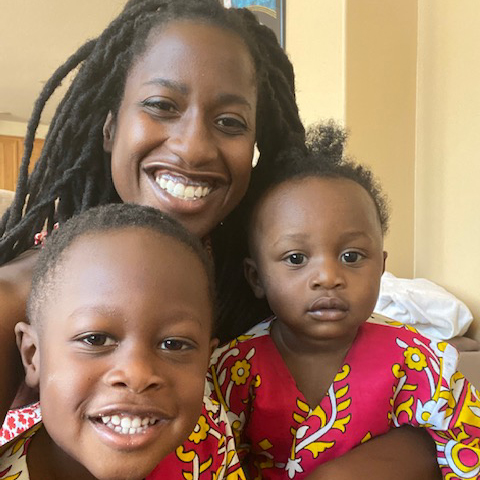
By Abigail Oduol, a planned gift fundraiser in Southern California

Let’s dig into what Secret Invasion has to teach us about allyship journeys, building bridges and navigating internal community dynamics, and potential paths to restoration when you’ve done harm as an ally.  

I’m a Marvel fan. Yeah, I said it. I’ve watched every show as it drops on Disney+ while eagerly waiting for the company to implode or for anti-trust legislation to break up their monopoly.  

That aside, I was particularly excited when I heard that Secret Invasion was going to be a mini-series.  

The story involves an alien race called Skrulls that are refugees on Earth after their planet gets destroyed by the Kree (a storyline introduced in Captain Marvel, a tale about  Second-wave white feminism). These Skrulls can shape-shift into anyone, and only a handful of people know they’re here. Nick Fury, Black super spy extraordinaire, is one of them. He’s also back from space to fix his mistakes with this community and interrupt a Skrull rebel movement working to wipe out humans and claim Earth for themselves. 

There’s other stuff in it too, but the show is essentially, “Invasion of the Body Snatchers: How Fury Got His Groove Back.” I was into it, despite the naysayers, and by the end of episode two I strongly suspected that while Secret Invasion was trying to be a lot of things, it truly succeeds in telling a story about allyship. 

Just to make sure we’re all talking about the same thing, let’s define allyship. Lily Zheng is a Diversity, Equity and Inclusion strategist and consultant, and they have broken down allyship into a list of helpful components: bystander intervention, community organizing, effective advocacy and power and resource sharing.

All four of these components are present in the way Fury engages with the Skrulls. He finds the problems only he can solve and successfully solves them, which drives forward the plot. The examples I’ll present are from scenes where Fury removes barriers, challenges the status quo, intentionally coordinates with others different than himself to further shared interests, and in the end, makes it easier for others to address inequity themselves and actively holds others accountable for harmful language and behavior.  

For those who haven’t watched, there are spoilers in this piece. So, consider this the last warning to bookmark this page, binge watch the six episodes, and make your way back. 

Let’s dig into what Secret Invasion has to teach us about allyship journeys, building bridges and navigating internal community dynamics, and potential paths to restoration when you’ve done harm as an ally. 

Lesson: Allied oppressed groups can oppress others. 

Fury’s work in the Skrull community involves a promise to find the Skrulls a new home rather than permanently assimilating them into human society. This is a goal they were united in. 

What ends up happening is a bit different. Fury makes this promise, and in exchange, the Skrulls offer to work for him as his spy network worldwide. He then catapults himself to the highest echelons of the spy apparatus, and as his best friend and Skrull, Talos, puts it, “you’re fine using us as your spies and your errand boys” exploiting Skrull labor and not making good on his promise.  

Is he good at his job? Yes. Did he work hard? Yes. Is he leading S.H.I.E.L.D because the Skrull spies believe he’s actively working on helping their community relocate? Absolutely yes. Is he also marginalized in the Marvel world as a Black man? Yes.  

Fury makes two basic mistakes. One is conflating his individual purpose and vision with the purpose and vision of the community he swore to serve. It’s the “we’ll all be up when I’m on top” belief, voiced by Col. Rhodes (US Air Force officer, best friend of Tony Stark, also known as War Machine, and introduced in Iron Man) when he rebuts Fury’s accusation of deprioritizing the protection of Earth, stating, “we protect the planet by protecting our seat at the table.”  

Fury refuses to acknowledge that being in charge with the same power dynamics that are racially motivated does not and cannot inherently create the change that this community is looking for.  

Fury and Col. Rhodes discuss their marginalized status as Black men and mutual obligations as a community, with Fury declaring, “We owe each other. Men who look like us don’t get promoted because of who our daddies know. Every ounce of power we wrestle from the vice grip of the mediocre Alexander Pierces who run this world was earned in blood. So, let’s make the power mean something. Help a brother out.”  

There’s a great piece from Nerdist delving into this moment as it relates to Black communities. For our conversation on allyship, this moment reveals how individuals experiencing marginalization and exploitative relationships to power such as Fury and Col. Rhodes, can replicate those very dynamics with other disenfranchised groups.  

Allies, regardless of identity, must apply significant effort to engage in ways that break, rather than reinforce, cycles of oppression. 

The second mistake is that he doesn’t update Skrull representatives on his progress or lack thereof. During a heated conversation on the train about the number of Skrulls on Earth, Talos challenges, “You were gone, and I didn’t think you were coming back… and even when you did come back there was no talking to you about anything real.”  

Everyone is left guessing about what is going on, and when Fury returns after five years from the Blip, he goes straight to space. Everyone is left guessing again as he sorts through his own existential crisis.  

As a result, he loses the trust of Gravik (a young Skrull formerly part of the spy network who idolized Fury), an increasing number of other Skrulls, and the confidence of his Skrull wife Priscilla (birth name Varra).  

As an outsider ally joining the community and making promises, it was his role to clarify how he’s showing up and the challenges he’s facing. Not emotional dumping, but sharing what is happening and why shared goals aren’t being pursued any longer is crucial for relationship building and therefore, allyship. 

Lesson: Building Bridges can be an important benefit of allyship 

Fury made every effort to be an ally to Skrulls in the larger community, and work with them even while their positions were at odds. On the one hand, it’s a classic spy move. Anyone can work for or with a spy, regardless of ultimate allegiance. It’s also a valuable allyship lesson to be flexible enough to work with others when your values or aims are aligned.  

Fury worked with Sonia although she had a scorched Earth philosophy on Skrulls. This was partially to understand what she knew, and to understand where their aims aligned. In the end, Sonia adjusts her philosophy to allow her to pragmatically work with Talos’ powerful Skrull daughter, G’iah.  

Fury also stayed close to Col. Rhodes, even after he knew that it was a Skrull impersonator, Raava, and that she was not an ally. Fury made every reasonable effort to use argumentation rather than violence to flip Raava’s allegiance so she could call off Gravik’s efforts to cause a Russian-US war.  

These examples reveal the role allies can play as bridges when engaging in relationships that might be otherwise harmful for the community but that can supply the leverage and resources that a community needs.  

In the end, Fury made it possible for allies G’iah, Priscilla/Varra, and Talos to have further autonomy in holding community members accountable and deciding community trajectories.  

Lesson: With restoration, mistakes aren’t forever. 

Priscilla/Varra asks Fury to step up in how he engages with her and with the community. Talos asks Fury to get it together. G’iah holds him to account for not doing more.  

Fury loved the Skrulls. He was invested. And still, he failed, got tired, struggled with working through his own stuff (possibly depression), and sometimes he just didn’t communicate or show up well. This inevitably leads to conflict, which of course we need in any decent story.  

Now, Fury was not good at apologies or repairing harm. True allyship means respecting people for who they are, and for where they are at, and realizing the role you played in their harm rather than rushing past it. When in a conflict with Talos, he did not try and move Talos out of his anger or to fix everything. In a better scenario, he would have readdressed the issue when they had both calmed down to discuss how they would move forward in their relationship.  

Similarly, but to a lesser extent, Fury accepted G’iah in her anger and didn’t try and move her into a new emotion, but instead shared a piece of himself and began the path of repair, while also releasing her to pursue community advocacy on her terms.  

As all this unfolded, Fury accepted the consequences, worked to fix his mistakes, and gradually restored the trust of his allies. Fury continues, just as we must, seeking opportunities for restoration instead of leaning on the people he hurt to fix his mistakes. Even when we fall short and are criticized by our comrades who are hurt about the way we showed up, we can continue to grow and evolve into people who can be better allies.  

By the end of the story, he recommits to the goals of the Skrulls by making positive strides in his relationships with G’iah and Priscilla/Varra, putting social chips on the table by criticizing President Ritson for his xenophobic remarks, and by brokering a peace treaty with the Kree.  

Lesson: Involvement in an intimate relationship does not an ally make. 

Nick Fury’s wife, Priscilla/Varra is a Skrull. Initially it’s unclear if he accepts her because of who she really is, or if he accepts her because she takes on the name Priscilla and wears the face and identity of a Black woman (oof). She and others repeatedly question if he is flattening her identity. Does he love who she is in her own skin, or the idea of what she stands for and who he believes her to be? 

For others to feel our allyship, we must accept them in the fullness of who they are. At the end of the mini-series, Fury accepts his wife Varra for who she is. He fully embraces her in her skin, with her name, and asks her again to join his work as a partner rather than a bystander.  

Full knowledge and acceptance of a person fully embodied, regardless of what that means for how you previously identified them, what their earlier name was, or the nature of your past relationship, is its own form of hospitality and care. It shows an interest in engaging the individual as an equal partner. It also shows an understanding that being an ally involves being a part of the community identity and the individual identities therein, even as they evolve in their conception of themselves.  

If you didn’t catch these things while watching, I would encourage you to go back and watch again. Reflect on your own allyship experiences. Where have you been forging ahead with a personal agenda that was at odds with the community’s agenda? Where have you assumed that because of your own identity you couldn’t possibly be harming others through your choices?  

Good art brings both enjoyment as well as opportunities to look deep within ourselves and ask hard questions about what it means to be a part of various communities. I hope that as you reflect on your journey that Fury’s journey inspires you to continue striving forward. Ultimately our humanness makes allyship complicated and messy, but as the music swells, we remember how beautiful it is.

Abigail Oduol

Abigail Oduol

Abigail Oduol’s (she/hers) surname is not Irish or Pennsylvania Dutch. It’s Kenyan. She keeps her escape pod in Kenya ready, and checks on it regularly with her young kids and husband. Abigail serves on the CCF Global Council, NACGP D&I committee and with her local PTA.  Follow her musings on threads @abby_oduol and longer thoughts on LinkedIn. You can send tips and micro reparations to her Cashapp $AbbyOduol.

Harnessing the Law of Oneness for Community-Centric Fundraising

Harnessing the Law of Oneness for Community-Centric Fundraising

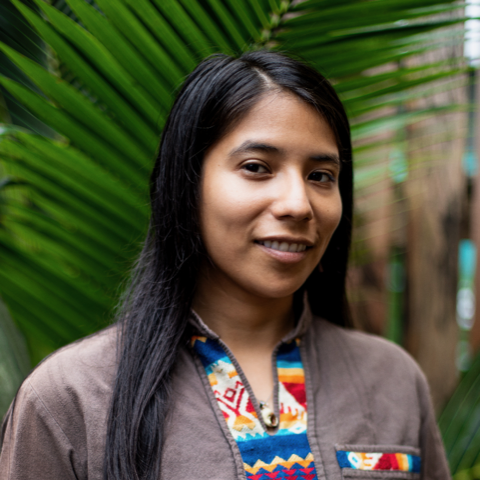
By Yura Sapi, healing artist, Earth being, and nonprofit leader

By embracing the principles of community-centric fundraising (CCF) through the lens of the Law of Oneness, we unlock access to our collective consciousness that transcends our individual efforts and maximizes our impact toward equity, social justice, and community well-being. We become the transformative change we’re yearning for and cause an exponential ripple effect around us.

The Universal Law of Oneness is the idea that we are all connected, that we— meaning everything—  are all one, and that we represent different variations of the same oneness. 

In my personal journey, I have explored the Law of Oneness in order to understand and overcome my anger. I encountered the concept of the 12 Universal Laws, which further deepened my connection to nature, the Earth, the Universe, and our collective existence that I have been cultivating while living in a remote and rural area of the world, Nuquí, Chocó, Colombia. 

I found myself mesmerized by the intricate happenings of life in the forest. The ants working away as a team, the plants ever so slowly— in our perception of time— moving towards the light, growing leaves and flowers in specific patterns and textures. I got to experience more of this wisdom of nature in the way their systems work for a reason. Watching the river flow gave me the lesson of continuing to flow myself. This invitation reflected back at me to keep moving along with my tasks instead of getting stuck and caught up in things I don’t actually care about. Breathing in the oxygenated air in the forest and then breathing out the carbon dioxide that the forest needs helped me tap into the pure reciprocity that comes from being alive on this planet. 

Now, I feel drawn to share these insights and contribute to the CCF movement. 

Accessing a powerful heart-anchored interconnectedness to increase our compassion

By accessing this profound heart-anchored interconnectedness, we are able to understand compassion in a deeper way

It starts with the heart. By grounding ourselves in our heartbeat, we connect to the core of our being and so connect to the core of the Earth. By connecting to the Earth, we connect to the Sun, and the vast universe that encompasses our existence. By connecting to the universe we connect to the origin of the universe– all that was, is, and will be. There’s a unity in who we are. 

As we contemplate the interconnected nature of our existence, we realize that we are all composed of the same fundamental particle wavelengths. 

Sherri Mitchell, in her book, Sacred Instructions discusses how our DNA is shared with every other living being– we share approximately 98% with primates and 35% with plants. We’re all made of the same foundational elements that exist as a vibrational frequency. We are sounds like the Big Bang that created this existence was a sound. 

This realization opens the door to accessing the universal frequency through our hearts and cores, and aligning with the essence of the Earth, the Sun, and the expansive universe. Within us, the steady rhythm of our heartbeat is a gateway, inviting us to tap into our inner knowing and wisdom. 

We shift away from relying on intellect, on thinking our way through, and on a colonial and oppressive perspective. We shift towards embracing the wisdom that emanates from our heart, our connection to the source, everything, and each other. The way that the cells in our body are part of our body, we, as individuals, are part of a larger ecosystem. 

By accessing this profound heart-anchored interconnectedness, we are able to understand compassion in a deeper way too. 

I recognized that my life is a mirror reflecting back to me my own lessons, experiences, and interactions. What frustrates or angers me in others reflects what frustrates or angers me in my own actions. I hate when someone isn’t treating others fairly, justly, or equitably, and I also hate when I do or have done that to others. By tapping into the gifts of our emotions, we receive information about ourselves. By cultivating self-compassion, we open ourselves to extend compassion to others. As we release hatred towards others, we simultaneously release the internal hatred we harbor. 

By becoming a sacred witness to my own fear, holding space for it, and taking a moment to separate from it, I’m able to move beyond allowing it to guide my actions. By doing this internally for ourselves, we create space for the collective fears of our society and our communities to be acknowledged and transcended, going beyond the limits of these fears. 

How our new compassion can be used to improve our community-centric fundraising practice

The Law of Oneness can be applied to all the principles of CCF. I welcome you to journal, sing, draw, meditate, or otherwise reflect on your own about each of the principles and how you are one with them (as well as everyone else who is applying them or not to this collective work).

When we begin our journey in community-centric fundraising we start with training to help us ground ourselves in race, equity, and social justice. I change my perspective of being angry that my organizations or others aren’t making more effort to educate themselves, and instead, I look inward. 

I ask, where in my life am I frustrated at myself for not doing enough? I create actionable steps to look toward addressing my own gaps of understanding. By taking an anti-racist training myself, I am able to have a transformative experience, share the information and teachings from that training with others, and get others excited about training. Perhaps I also meet others in that training that now allow me to feel less alone in this work, and we build community. 

All of a sudden, there is a ripple effect. By making the frustration or the problem part of me – one with me – I accept it as part of me, address it within me, and offer healing around me. 

I’m part of a group called Artist Co-Creating Real Equity (ACRE) which I joined after taking the Undoing Racism Training with the People’s Institute for Survival and Beyond. Continuing to go to these meetings with ACRE is about continuing being in community for our anti-racist work. Our work in solidarity with each other is ongoing and never ending and so the training continues and evolves into practice. 

In the next step in our journey in community-centric fundraising,  we encourage donors to think about race, equity, and social justice. To begin, I ask myself, where am I being a donor? 

To many around the world, $1 USD a month makes a real impact. As U.S. workers, we can make a global impact with our “small” donations. We also know from our community-centric principles that we can support local community organizations we benefit from by donating our skills, time, and material goods they may need. As a fundraiser, I’ve found it essential to be a donor, too, and to consider my own privileges, especially in a global context. 

When it comes to investing in fundraisers who come from the communities that we serve–I turn that inward, too, and ask how can I invest in myself as a fundraiser for my own community? What are the services or places that are supporting me, and how can I believe in myself as a fundraiser for my own community? 

To address the practice of inequitable Trickle-Down Community Engagement, I ask where can I redistribute funding that comes in directly to a marginalized community I am representing? Mica Rose talks about this in a podcast episode on Building Our Own Tables.  “I sometimes go to queer resource centers at colleges,” Mica shared, “I teach parts of my practice and all of the money we charge up big because the institutions, they got it. These places with endowment, they got it. And we take all of that money and we find the ways to get it back to the communities facing the direct violence and opposition of the state.”

The Law of Oneness can be applied to all the principles of CCF. I welcome you to journal, sing, draw, meditate, or otherwise reflect on your own about each of the principles and how you are one with them (as well as everyone else who is applying them or not to this collective work). Here are some statements you can use as reflection tools to help you get started:

First principle – I embrace racial equity and social justice, acknowledging my privileges and investing in my growth as a fundraiser for my community. I redistribute resources to uplift marginalized communities.

Second principle – I align my mission with the collective community, and I regularly assess its relevance and responsiveness. I adapt, collaborate, and pause when necessary.

Third principle – I practice generosity and mutual support, giving to others with the understanding that I, too, receive support. I actively participate in other’s events and identify other community groups to uplift.

Fourth principle – I respect, appreciate, and recognize my value to the community I strengthen by being a staff member, by serving on boards, by being a volunteer, and by being a client. 

Fifth principle – My time is as valuable as my money, and I donate it accordingly. I honor and appreciate those who donate their time to support me.

Sixth principle – As a donor (of time and money), I seek to deepen my understanding of race, equity, and social justice. I engage in transparent and occasionally challenging conversations with those I support.

Seventh principle – I invest in spaces where I feel a sense of belonging, and I let go of spaces where I am made to feel “othered” or in need of being “saved.”

Eighth principle – I personally benefit from my donations (time and money), recognizing that investing in other causes strengthens our community as a whole.

Ninth principle – I donate holistically and transformationally, supporting core “overhead,” which creates lasting impact.

Tenth principle – I am committed to economic justice and actively address the root causes of inequity in my life. I acknowledge the effects of capitalism and work to dismantle them, inspiring change in myself and others.

The power we have in adjusting our energy, our state of being, our thoughts, and our love towards ourselves affects how we can be with others. One interaction with another can change the way they interact with everyone else, and we have a ripple effect when we focus on the internal.  

Through this transformative journey of self-reflection and embracing the Law of Oneness, we can align ourselves with the interconnected fabric of existence. As we tap into the wisdom of our hearts, I invite you to join me in exploring what arises from this shift—an invitation to decolonize our source of answers and solutions to the challenges we face. By recognizing the interconnectedness of our lives and embracing compassion and unity, we pave the way for collective healing and foster a society and community guided by love, understanding, and shared purpose.

Yura Sapi

Yura Sapi

Yura Sapi is Kichwa Indigenous and mestiza, Ecuadorian and Colombian gender non-binary being of Earth. Their work as a mutli-disciplinary creator extends beyond U.S. borders prioritizing anti-racism and decolonization for our collective liberation. Yura builds racial, social and climate justice with their nonprofit, LiberArte. Yura writes from Embera native land in Nuquí, Chocó on the Afro-Indigenous pacific coast of Colombia with a lifelong connection to their birthplace on Mannahatta island in Lenapehoking. Connect with Yura on Instagram, LinkedIn and their website at yurasapi.com. You can tip them via Venmo @yurasapi, PayPal or by making a donation to LiberArte. You can also engage with their work in workshops, courses, coaching, meditation and healing sessions.

No more silence: Suicide and nonprofit staff

No more silence: Suicide and nonprofit staff

By Mary Cianflone, Development Manager at Pegasus Legal Services for Children

CW: This essay deals with trauma, nonprofit jobs dealing with violence and abuse, suicidal ideation, death by suicide, and the trauma from surviving a friend or coworker’s fatal suicide, and may be triggering to some readers. Please proceed with caution. If you need immediate assistance, please follow this link to International Suicide Hotlines

(Names and identifying details have been altered to protect the privacy of the people involved.)

Several years ago, I took a break from fundraising to do frontline work at a “high-trauma” non-profit organization. By “high trauma,” I mean that we provided direct services to our community and often interfaced with injured, ailing, dying, or even deceased members of this community. 

It was an incredibly intense job. Emotions ran high. Tears and yelling were not uncommon among clients and staff. 

Like many non-profit jobs, the pay was low, and the shifts were long. Most of my co-workers had second jobs because we made so little there. The work was also physically demanding. We were on our feet for hours, often needing to lift heavy loads and jog or run. The job was both horrific and rewarding, depending on the day. Sometimes, it was both in one day.  

So, why did I work there? Why did any of us? 

Because of the mission. Because the losses were catastrophic, but the wins were monumental. On the good days, we changed lives for the better. I still have photos pinned to the bulletin board of my home office to remember the people I met and the work I did there. 

The staff developed deep bonds, something akin to friendship but heavier. Even when we fought, we were allies. Even when we disliked each other, we stood together. It was more than just the experiences on the job. It was also the fact that we couldn’t share our experiences with anyone but each other. My partner would ask, How was your day? and I had to quickly scan my mind for the safest stories to share, actively filtering the full truth so as not to traumatize them. In many ways, all we had was each other. No one fully understood the pain we went through. 

The loss of my coworker Paula to suicide

So when one of my closest work friends, Paula, left the organization abruptly, I was concerned. It was a particularly stressful time among staff, and several of us were in conflict. Paula had also recently experienced hardships in her personal life. Her departure was shocking. She was a long-time employee and known as a peacemaker among the staff. Many of us counted on her experience to help settle arguments and maintain perspective. I worried about what was happening in her world that would cause her to leave a job she loved. Something felt wrong. 

When I got the call that she had died, I felt like I had known it was coming. I didn’t need to hear the next words because I already knew in my heart it was suicide. I had suspicions about her passing – that her personal struggles and the loss of her work contributed to her emotional state and, ultimately, her death. A few days later, I received a letter from her in the mail. Confirmation of my suspicions offered no comfort. I just had a piece of paper and a hole in my heart.

After a few weeks of grieving, I began to turn over the events surrounding Paula’s death in a new way. 

I have been in the grant-writing and fundraising world for over 15 years. My mind automatically reaches for data when I need context. I am used to seeking answers to questions like: What are the numbers surrounding this problem?, What societal factors cause this particular conflict?, Are there other people with similar stories?, and What are the solutions? My pain fueled a search for knowledge, in the hopes of learning how I and others in my situation could heal.

The lack of data when it comes to nonprofit workers who die by suicide

there is so little known (and few places to learn) about the people working in our field and how this work impacts their lives. There are also few protections for the staff putting themselves in physical, mental, and emotional harm every day. 

Seeking general data on suicide quickly became a bitter journey. Facts are fuzzy, and the difficulties begin with sourcing initial information. We simply don’t always know when a death is a suicide. Surviving family and friends have the choice to hold back information about their loved one’s death. The pain of suicide radiates through a community. Many make the choice to keep details private for their own preservation and for fear of causing more pain. Facts on suicide among nonprofit staff are almost non-existent.

The Centers for Disease Control and Prevention (CDC) tracks suicide rates for a variety of industries. Their most recent study from 2020 identifies certain labor types, like “Transportation,” as having higher than average rates of suicide for males and females (non-binary and gender fluid individuals were not tracked). The study, and other governmental research projects like the Census, use the list of occupations from the Bureau of Labor Statistics. 

However, nonprofits are not considered their own occupation or industry. Rather, the type of work, like “Healthcare Support,” is what gets categorized. For example, relevant to nonprofits, there are listings for “Fundraisers” and “Social Workers.” One reason for this is because nonprofits are, at their most basic definition, businesses operating under a particular set of tax codes. Nonprofits are ultimately accountable to groups that oversee all businesses in this country, like OSHA and the IRS. 

But, then, there is a sort of administrative void. Other fields have things like certifying boards and unions that protect and advocate for their workers. Nonprofit staff have many optional organizations we can choose to join, but nothing in the way of broader oversight. The governing landscape freefalls from the federal level until we land on the individual Board of Directors for each nonprofit.

Groups like the Lilly School of Philanthropy at Indiana University, the Library of Congress, the National Council of Nonprofits, and Independent Sector, among many others, offer piecemeal data and research on topics like starting a nonprofit, donor patterns, and employee retention. The information they provide can be valuable in many ways, especially when sourced from individuals currently working in the field. 

However, a significant portion of their research focuses on nonprofit organizational health and growth: how to keep employees on staff longer, increase donor gifts, and advocate for our missions. I in no way mean to diminish the importance of these efforts. My point is that there is so little known (and few places to learn) about the people working in our field and how this work impacts their lives. There are also few protections for the staff putting themselves in physical, mental, and emotional harm every day. 

The lack of support services nonprofit workers often face

There is something oddly cyclical about experiencing trauma, starting a nonprofit to mitigate trauma, and asking people to work at a nonprofit exposing them to trauma.

People turn to nonprofits in moments of crisis. Often, we are the ones that help them navigate obtuse government assistance programs, disaster relief, and confusing legal protocols. We feed, care for, and bolster our community. 

When trauma or tragedy occurs, we turn to nonprofits in other ways, too. For example, in seeking answers on nonprofit employees and suicide, much of what I found was information on people starting a nonprofit after a loved one’s suicide. The inclination for many is to help people heal via a nonprofit. 

But how does the work affect the workers? There is something oddly cyclical about experiencing trauma, starting a nonprofit to mitigate trauma, and asking people to work at a nonprofit exposing them to trauma.

I struggled to find data on overall suicides among nonprofit staff. Here is what I know anecdotally: I have personally experienced three coworker suicides. Paula’s was simply the one that cut deepest and closest. 

As I started to share this story with other nonprofit workers, they said they, too have lost at least one coworker to suicide. We also know that rates of suicides, in general, are rising. The 2022 article “‘It’s all preventable’: tackling America’s workplace suicide epidemic,” details multiple examples of frontline workers dying by suicide in the face of trauma and exhaustion from their jobs. A large portion of nonprofit staff would absolutely fall into the category of “frontline workers.” 

Paula and I were part of an organization that often dealt with victims of violence and abuse. Program staff had little support from management. There were no functioning mental health services outside of what insurance provided (and nothing for part-time staff). Requests for time off were often denied because of being short-staffed. On paper, our shifts were 9 hours long with an hour lunch break, but, in reality, my days were typically around 10 hours with shortened lunch breaks. During a crisis, 12-hour days were not uncommon. 

When staff pushed back and asked for better working conditions, management often weaponized the mission. We were told that any additional benefits we received would cut into the budget for client services. 

When Paula died, no grief services were offered to staff. The explanation was that since she had quit and was no longer an employee, services were unnecessary. She had been at the organization for over 10 years.

My healing journey and how I came back to nonprofit work with a new commitment to unpacking trauma

When I saw people in my field starting to open up and discuss the pain, violence, and trauma embedded in our work, my grief shifted. It still lives with me, but its weight feels more distributed, more even somehow. It feels like something I carry with me instead of dragging me down. 

I was privileged in my grief. I had a compassionate partner who made enough money to care for me when I couldn’t work after Paula’s suicide. I spent six weeks or so in bed, deeply depressed and barely able to take care of my personal hygiene, let alone contribute to our household needs or get a new job. One of my dogs never left my side and spent much of his time with his paw or head resting on my legs. 

I re-read her letter over and over again. I cried more than I thought possible. I blamed everyone for Paula’s death, including myself. I vowed never to work at another nonprofit. I would find a corporate job where I didn’t care about any of my coworkers or clients. I would never hurt like this again. 

The darkest moments for me were the ones in which I realized I missed my job. I missed the eye rolls and laughter with my coworkers, the smiles on my clients’ faces when we solved a problem together, and the feeling that what I did mattered. Things were messy, hard, and difficult when I started my day; and when I ended it, things were better, even if only for a few people. I missed conversations with Paula. I learned so much from her.  

I started looking for jobs in the private sector. Don’t care, don’t care, don’t care, I kept chanting to myself. I was hired, left, and hired somewhere else – miserable at each new place. The jobs felt so empty. I slowly (and angrily) realized that I couldn’t just switch off the part of me that connected with my former work. So, I very carefully chose a nonprofit and jumped back in. 

I have held the story of Paula’s death close to me, sharing only with a few close friends. I was scared of the weight of it. The people I told would shake their heads or cry. I felt like I was traumatizing them by reaching out. This only made me feel lonelier and more isolated in my grief. Then, things shifted in 2020. 

Like many white women, I began my anti-racist journey and started to learn about martyrdom and “white women’s tears.” I started unpacking my own racism and how I centered myself in much of my nonprofit work. 

I stumbled across Vu Le’s blog, and read his piece on suicide and nonprofits. He called on us to actively talk about suicide, helping to release the stigma of it. I agreed with him empathetically, but also, I didn’t know how. 

I believe that my anti-racist journey helped me find the tools to unpack trauma that I experienced and inflicted, as well as how to talk about it in ways that would minimize pain to others. Forums like the CCF Hub have become places of discussion and healing. Things feel like they are finally changing for our sector.

Fundraisers are in a unique position to facilitate hard conversations. We are storytellers, used to immersing ourselves in complicated conflicts, absorbing all the details, then transforming them for others to learn. We possess huge amounts of information about our organization’s mission and work, as well as massive amounts of data on surrounding issues. We are able to drill down to the smallest detail and also speak about the expansive benefits of our work over time. Big picture or small, we know how to talk to people about difficult topics. We guide our communities to hope.

I have brought up several problems and questions here without offering many solutions. For me, just starting to discuss these topics is an important step. Did Paula lose her life to suicide because she worked at a nonprofit? No, of course not. Did the repeated trauma of her work affect her? Yes, absolutely. 

None of these issues are that simple. But we have to continue talking about them. 

When I saw people in my field starting to open up and discuss the pain, violence, and trauma embedded in our work, my grief shifted. It still lives with me, but its weight feels more distributed, more even somehow. It feels like something I carry with me instead of dragging me down. 

Maybe that is the magic of community. We can share pieces of our pain and learn from them together. 

The first step toward justice is naming injustice. It’s okay that I (we) don’t have all the answers yet. We can figure them out together. 

For me, the journey feels less scary now that I am not alone. Thank you for letting me share.

Mary Cianflone

Mary Cianflone

Mary Cianflone (she/her/hers) is the Development Manager at Pegasus Legal Services for Children. She has over 15 years of experience with grants management, development, fundraising, and finance. After supporting a variety of student-focused initiatives at the University of New Mexico, she began working with the local Albuquerque non-profit community in 2016. Besides being a fundraiser, she is a digital artist, dog parent, and aspiring chef. You can connect with Mary on LinkedIn.