When we know better, we do better: 7 ways you can start doing better using CCF principles in your fundraising

When we know better, we do better: 7 ways you can start doing better using CCF principles in your fundraising

By Nicole Hoffmann, Strategic Growth Director at Kids Forward

I was trained, taught, and conditioned to be a successful traditional fundraiser. I’ve spent 25 years in this field, reaching and exceeding impossible goals. I excelled at donor-centric fundraising and moves management, finding all of the best strategies to fit a donor’s area of interest into the work we were doing. Celebrating the generosity of our financial donors was central to my work, and I put in the extra time needed to name rooms and buildings, give tours, ask advice, hold thank-a-thons and house parties, and present donors with beautiful documentation that highlighted all of the good work they had done with their money.

Internally, I was celebrated for creativity and exceeding expectations with marginal increases in pay and huge increases in responsibility. However, through every single reached goal came staff reductions, years without COLA and performance raises, and expectations to do more with less. 

The results? 

  1. The challenges our communities face are worse, and the racial disparities are devastating. 
  2. We are beholden to the wishes and expectations of donors. 
  3. We are expected to outdo other organizations and fundraisers to prove we are the most deserving of the funding.  
  4. More people than before are deeply struggling to live their lives. 
  5. And yet, we continue to feed this system of fundraising because that is how the system works.

These challenges go much deeper than my 25 years of experience.

The historic harms perpetuated by philanthropy go back more than a century. As a white woman in this work, I am increasingly aware of the harm we cause in the name of leadership opportunities, owning the work, and succeeding in the eyes of those in charge.

Discovering CCF

I didn’t wake up one morning with a big revelation that I was causing harm. It was a long and humbling process to learn that I was serving people with wealth instead of community and centering financial generosity rather than justice. For almost two decades, I thought I was doing the right thing. And now, on a daily basis, I am unlearning a system deeply rooted in money and power, a system where I was conditioned to succeed. I am engrossed in a lifelong unlearning process. 

A few months ago, I went to see Vu Le speak in person. We were all cheering him on, and I was especially excited to share the successes we are having by embracing Community-Centric Fundraising. 

At the end of Vu’s speech, he gave us a moment to talk with our table partners about what we can do to change philanthropy. After all the cheering, one colleague turned to the group and said, “There’s no way I’m going to stop sending handwritten thank you notes.” 

In that moment it was crystal clear that conceiving of change is hard when we are good at the work we do. Of course, we can still write handwritten notes. At the same time, we have a responsibility to do better, especially knowing the harms created and perpetuated in the name of philanthropy.

7 tips to operationalize CCF

I didn’t know what to say in that moment. What I wish I said was, Community-Centric Fundraising is more than a concept; it is possible to operationalize

At my organization, we embraced the Community-Centric Fundraising Principles and changed our approach to fundraising. In just two years, we increased our unrestricted revenue by 375%.

Here are a few tips to start making change for the greater good.  

1. Commit to a cultural shift in how you and your organization think about fundraising.

We can’t just cheer on Vu Le and listen to The Ethical Rainmaker (although you should still do these things). It is not enough to cheer for the idea of change. Commitment can be a scary first step, but commitment is necessary to make change happen.

You can start by asking why your fundraising activities and priorities exist. If you are centering wealth rather than the community you serve, it’s time to reimagine things. I promise you, we are not all competing with each other. There is enough funding to make change happen.

2. Continued personal learning and unlearning are critical to understanding why change is necessary.

For me, it started with Decolonizing Wealth; Indigenous Wisdom to Heal Divides and Restore Balance by Edgar Villanueva, deep diving into Nonprofit AF blogs, and then I couldn’t stop. Racial justice workshops, reading groups, accountability groups, and so much more have become part of my daily commitment to learning.

It’s hard when you learn you could be part of the problem by upholding white supremacist systems. It’s worth it when you begin unlearning and start centering justice in your work. When we know better, we do better.

3. For all of my white colleagues, listen to people of color.

The leaders of color who gave new life to the Community-Centric Fundraising Movement gave us all a roadmap in the CCF Principles.

In all of my unlearning, the most important lesson is that when people of color tell you something needs to change and then tell you exactly what they need, do not hesitate. We are obligated to take action to meet those needs. If you aren’t sure why, see #2 above.

4. Be willing to take risks, especially financial risks, for the greater good.

You don’t have to overhaul your entire fundraising operation all at once. But you need to start somewhere. In my organization, we practice “small experiments with radical intent.” Our first small experiment was to stop doing our spring appeal and shift those efforts into Community-Centric Fundraising. We created a monthly giving program called Partners in Equity that recognized every monthly donor at any dollar amount equally. It was our first step to remove the hierarchy of philanthropy that celebrates wealth over other contributions.

We include volunteers because it’s crucial to acknowledge the inequities in people’s capacity to provide financial contributions. The results during our first year was a 50% increase over the usual appeal, with recurring contributions that we knew we could count on receiving. The Give, Learn, and Act model we created for this monthly giving program gave us natural opportunities to engage with more of our donors and helped us develop more meaningful relationships.

5. Lean into your values.

Not everyone will agree with the changes you make. It’s okay; they aren’t your people (especially when they ask to be centered over the communities you serve). Sure, losing some donors can be unfortunate. But, every single time you lean into your values, you will gain more support.

In 2022 we created our Fundraising Policies Centering Justice. These policies are heavily inspired by the Community-Centric Fundraising Principles. We asked for feedback from staff, board members, donors, community members, and fundraisers. Those collaborations created a beautiful commitment to community that upholds racial and economic justice.

Every single donor received a copy of the policies, we hosted a Zoom call for anyone who had questions, and we continue to use these policies in one-on-one conversations. The results? We lost a few donors. Many donors increased their gifts. Our year-end giving increased in a year many organizations struggled, and giving decreased nationally in the U.S.

6. Plan to make change, and then plan to make change again.

We participate in an annual Day of Giving every year in March. In the beginning, we asked all staff to participate by donating, sharing on social media, and doing peer-to-peer fundraising with aggressive goals and crossed fingers. Wow, was that an invasive lift for a multiracial team who is incredibly busy, paid nonprofit salaries, and has personal lives and commitments outside of work.

We made some changes, at first celebrating all staff equally who participated in any way they could with similar aggressive goals. When I look back, I made our team compromise, and we didn’t go far enough to uphold our organization’s antiracist values.

This year, staff participation is optional, and we use our Day of Giving space to promote our support for BIPOC-led organizations doing crucial work in our state. We raised less money on the day of giving this year, but we more than made up for it by building stronger, trusting community relationships, and focusing fundraising efforts elsewhere.

7. Don’t let the perfect be the enemy of the good.

There is no perfect time. There is no perfect plan. You just need to start making changes today because dismantling harmful fundraising practices is the right thing to do.

I used to be a pro at fundraising metrics. With some form of mechanical precision, my metrics dictated to perfection how many calls, visits, and asks I needed to make to raise a defined goal.

The changes we are making to fundraising are so new to us; I have no idea what my metrics could look like today. But I do know we are raising significantly more money without a “best practice” system keeping us in line. We know we will learn lessons along the way and update our practices. Through all of it, we will talk to our donors about changes and bring them alongside us in the process.

I recognize that working for an antiracist policy center gives me a level of freedom you may not have working for a different type of organization. I can think of countless reasons why your arts, health care, environmental, higher education, and other organizations should make change. When you commit to your unlearning process, you will too. 

In policy work, we advocate dismantling broken systems that uphold racial disparities and continue to create generational harm. Philanthropy is another one of those broken and problematic systems. No matter what type of organization you work for, we all have a responsibility to change. Cheering for the voices of change in the CCF Movement and promoting our organizations’ public antiracism statements is not nearly enough.

I know we cannot change all of philanthropy, but we can absolutely change our corner of the work and how we approach fundraising. I promise that leaning into your values will only generate successful results. It is possible to operationalize Community-Centric Fundraising. I believe in us!
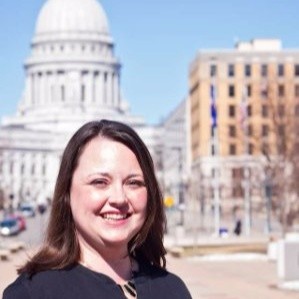
Nicole Hoffman

Nicole Hoffman

Nicole Hoffmann (she/her) is the Strategic Growth Director at Kids Forward, an antiracist policy center advocating for children and families to thrive in Wisconsin. With over two decades of experience in fundraising and nonprofit leadership, she is committed to joyfully changing the narrative of the fundraising sector’s historic and white supremacist norms to implement fundraising strategies that center equity, celebrate diversity, and stand up for justice. Nicole is the founder of the SPP Antiracist Fundraising Cohort, and she speaks with organizations across the U.S. about operationalizing an antiracist approach to fundraising. When she is not dismantling outdated systems, Nicole loves traveling, being the greatest Aunt, and playing with Gilbert, the bestest pup. You can find her on LinkedIn and via email.

Community care where? Nonprofit COVID-19 denial–The mass disabling elephant in the room

Community care where? Nonprofit COVID-19 denial–The mass disabling elephant in the room

By Miquette Thompson, Donor Organizer

…isn’t that why so many of us are here—to do the very hard work of tackling systemic issues in service to a more just and equitable world? Why are we ignoring something that has such widespread implications for our communities and movements?

Nonprofit leaders, does your organization speak of the pandemic in the past tense? No testing, masking, or vaccination policies to speak of? Back to all in-person everything, including those beloved happy hours, retreats, conferences, and gala events? 

One more question: have you considered how COVID-19 minimization and denial will impact your organization’s ability to survive long-term, and how failure to adapt to the reality of the present moment is disabling and in some cases, even killing staff and supporters? 

It’s not fun to think about. It contradicts the dominant “back to normal at all costs” and “keep producing and consuming no matter what” messaging we are receiving at all levels of society. It forces us to think about where we may have caused harm. It means that we need to create and advocate for systemic change around yet another issue. 

But isn’t that why so many of us are here—to do the very hard work of tackling systemic issues in service to a more just and equitable world? Why are we ignoring something that has such widespread implications for our communities and movements?

Facing the Reality of a Changed World

It has been surreal to watch otherwise “progressive” nonprofit leaders who speak of equity and justice participate in collective denial of the ongoing threat COVID-19 poses to our work. It has been heartbreaking to see fundraisers I once respected participating in this denial. I am by no means the first to observe this schism between stated values and action–Leah Lakshmi Piepzna-Samarasinha, Raia Small, and others have written excellent pieces on this. In our sector, we talk at length about making data driven decisions—the data is here, it’s clear, and it’s being actively ignored. COVID-19 is significantly impacting cognitive and physical health for people across age groups

As a fundraiser, I see obvious connections between COVID-19 prevention, donor capacity, and staff capacity. I’ve seen development teams struggle to stay afloat with a revolving door of sick staff experiencing impacts from repeat infections, from brain fog to cardiovascular issues. I have had direct experience seeing increases in COVID-related medical costs impact the ability of donors to both give and engage actively with organizations they love. I have watched as colleagues struggle silently to maintain their baseline health after repeat infections from the workplace, with no support from their employers who continue to push them mercilessly into “back to normal.” 

The hard truth of this moment is that there is no “normal” to return to. 

We had an opportunity to radically reimagine and restructure ways of connecting with and caring for each other when COVID-19 emerged. We can still recommit to this work. I want to push myself and my colleagues to develop creative ways to safely engage with donors and each other, because community care is not an abstract concept or a trite expression–it’s love and justice in action. For this reason, I will not stop advocating for better education around COVID mitigations among the organizations I work with, and within my own, whenever possible. 

Making Care, Love & Justice Actionable

How do we begin to do better? This list is not exhaustive, but here are some places to start:

  1. Acknowledge that COVID-19 transmission is airborne and plan events and office layouts accordingly. People’s CDC and Clean Air Club have some great resources on how to help keep the air clean to reduce transmission. Can’t afford air purifiers? Try building Corsi-Rosenthal boxes–it can be a great team building exercise! 
  2. If your organization must host in-person events, consider purchasing a set of air purifiers and a CO2 monitor for use at your organization’s events, creating clear policies and guidelines for use. Include researching HVAC and airflow into event venue research. Monitor wastewater levels in your region where possible to avoid hosting events during a surge.
  3. Provide or subsidize quality N95s at the office as part of employee wellness in favor of baggy blue surgical masks or cloth masks. COVID-19 is airborne, so while hand hygiene is great for some things, providing an endless stream of hand sanitizer and no masks is a senseless approach to mitigating COVID-19. Consider providing mask fit testing guides for employees, as we know that masks work best when they fit. 
  4. No more magical thinking–be honest about the risks you’re asking employees to take, and do not ostracize those who do not want to risk a COVID-19 infection or force them to request accommodation. Group meals are not inclusive activities for people who can’t be unmasked around people outside of their household. COVID-19 does not disappear when we eat a meal or are outside. Outdoor gatherings are not inherently risk free. Provide alternate options for people who cannot risk infection to connect with one another, and at minimum, do not penalize employees who are unable to participate in unmasked social gatherings.
  5. Accept that in-person activities are not inherently “better” than virtual activities. Not only is this line of thinking ableist, it routinely results in organizations deprioritizing the experience of virtual event attendees in favor of people attending in-person. I have been to in-person events that were extremely transactional and not engaging at all, and have also attended deeply meaningful and engaging virtual events. Events are as inclusive and engaging as we choose to make them, regardless of setting! 
  6. Normalize masks and treat them like any other piece of assistive technology. You wouldn’t ask someone in a wheelchair to stand up or a person to hide their cane or remove their glasses for a photo, therefore it is inappropriate and ableist to ask someone to remove their mask for a photo or because you’d prefer they not wear one. Call it out if you see masked people deliberately being cropped out of your organization’s photos.   
  7. Commit to building an organizational culture that treats COVID infection as preventable and not inevitable by talking about, normalizing and utilizing the many layers and types of protection that are available to us. Sustain this internal culture through reminders that COVID-19 is not just a “mild cold” but a complex pathogen that has major long-term effects, and that we have the power to protect each other. 
  8. Start or continue learning about disability justice. The work of Sins Invalid, Imani Barbarin, and Alice Wong are great, accessible places to start. Like other forms of bias, ableism can be internalized and challenging to unlearn, but must be addressed if we are truly working toward collective liberation. 

It is never too late to learn, adapt, and change behavior. As I write this article, the eight wave and second biggest surge of COVID-19 since the start of the pandemic is approaching its peak. It is my sincere and heartfelt hope that more people within the nonprofit sector will begin to embrace real, effective COVID-19 mitigations for the health and wellbeing of themselves and their communities.

Miquette Thompson

Miquette Thompson

Miquette Thompson (she/her) has been working within the nonprofit sector for nearly two decades, has been liberating capital in fund development roles since 2010, and has been a part of social justice movement work since childhood. She resides on unceded Coast Pomo land in Northern California, and is an active grassroots organizer in her community. To learn more about Miquette and read more of her writing, visit www.miquettethompson.com.

To the young, Black fundraiser…

To the young, Black fundraiser…

By Sadé Dozan, Chief of Operations & Development at Caring Across Generations

Remember that you carry within you the spirit of those who fundraised, not just for survival, but for the thriving of generations to come. Embrace this heritage, draw strength from it, and let the echoes of their heartbeats guide you in reshaping the narrative of philanthropy.

To the Young, Black Fundraiser:

Don’t leave.

We need you. 

As you navigate the complexities of what it means to be Black in Philanthropy, I need to say thank you. Thank you for daring to do this — and I see you. Your journey is both an exploration of uncharted terrain and a continuation of a legacy that spans centuries. I’ve been you, and many times, I am still you. 

Black people have been at the center of conversations about resources for centuries. Our contributions — be it through the toil of our bodies or the brilliance of our talents — have created a tapestry of wealth that often eludes our grasp. The core of wealth we have generated that remains out of reach leaves behind wounds that cut deep into our collective experience. We deserve better, you deserve better. Not acknowledging the systems we work within while we try to dismantle these inequities doesn’t do us any justice. And we deserve justice.

You.

You come from an ancestry of heartbeats who fundraise better than the books will let you believe. Our people have been at the forefront of fundraising and resource-building, weaving a narrative of resilience and collective action that predates formal studies. The books don’t tell these stories in full. But the beating hearts of our ancestors echo through time, calling upon us to continue their legacy. Remember that you carry within you the spirit of those who fundraised, not just for survival, but for the thriving of generations to come. Embrace this heritage, draw strength from it, and let the echoes of their heartbeats guide you in reshaping the narrative of philanthropy.

And yes, as you continue on this journey, it’s crucial to recognize that you will encounter hurdles unique to your experience. Unique to being Black in Fundraising. Black in Philanthropy. Shared with others — but unique just the same. The road ahead is paved with systemic barriers and disparities, and this…this is why we need you. Together, we have to confront these challenges head-on.

From the historical underinvestment in Black-led initiatives with the lack of resources allocated to projects addressing the specific needs of our communities to the microaggressions sprinkled throughout the repetitive lack of trust in resources in Black hands. I know it is hard. And, we need you even still. 

You are not only a fundraiser — you are a torchbearer. Carry the torch lit by those who understood the profound impact of collective action. Let the drumbeat resonate. Forge connections, break barriers, and know that sometimes just showing up is powerful.

View every challenge as both an obstacle and an opportunity to amplify your greatness. This is about this moment and those before you. I am witness to your greatness in progress. And I am so glad you are here. 

Do what you need to for the safety of your soul. The dances of nuanced communication within predominantly white institutions are exhausting. Find spaces for joy. The language of philanthropy, often steeped in privilege, can be an exhausting barrier. Center yourself in your why. Why are you resource mobilizing? Call it in the center, write it on your board — and recoup your joy within it. 

As you navigate these spaces, remember that your perspective is an asset. Your intrinsic knowledge is an asset. You are an asset. Have courageous conversations, and don’t believe the “there aren’t that many Black fundraisers” narrative. We are here. We are with you. And again, I say we need you. 

I leave you with a few words, things I’ve learned over the two decades I’ve been steeped in the nonprofit industrial complex. Here are a few of my not-so-secret secrets: Center Joy, Find Community, and Keep Innovating.

Center Joy: Understand that setbacks are not a reflection of your worth or the value of your cause. Fundraising is a marathon, not a sprint. Harness the strength of those who came before you, recognizing that their endurance and tenacity live on in you. Find the why, looking inward, because then you can convince yourself to go forward each morning. Care for yourself while you are caring for others. Keep the spark alive. 

Find Community: Find your tribe — in the traditional African sense — your familial village of support. Seek out mentors and allies who understand the nuances of Black fundraising. We are plenty, and I personally am here if you need me. A supportive network can provide guidance, share experiences, and bolster your resilience. Remember, you are not alone; we are united in this journey. 

Keep Innovating: Challenge the norms. Black communities have a deep history of resourcefulness and innovation — because we’ve always been resource builders. Embrace creative approaches to your work that align with the needs and aspirations of your community. Your authenticity and ingenuity will set you apart. You belong here. 

As you navigate the challenges ahead, remember that your journey is not just about fundraising; it’s about reshaping narratives, challenging systems, and contributing to a legacy of transformative change. By staying true to your roots, embracing challenges as opportunities, and building a supportive community, you have the power to redefine the landscape of philanthropy.

With unwavering support and belief in your potential,
A slightly older Black Fundraiser, 
Sadé Dozan, CFRE

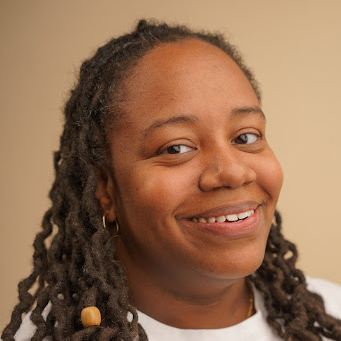
Sadé Dozan

Sadé Dozan

Sadé Dozan (she/her) is the Chief of Operations & Development at Caring Across Generations, where she anchors a national care-movement organization committed to reshaping the landscape of care. Her focus is on making care systems, including paid leave, aging & disability care, and child care, accessible and affordable for all stages of life. Her career in resource-building and nonprofit development has spanned the spectrum—inter-generational campaigns, health initiatives, economic development—and one thing is clear: fundraising is organizing. Sadé’s mission is to revolutionize how we perceive resource development and philanthropy—across all movement work.

Her call to action centers around creating a world where the resourced and those resourcing are one and the same. A world where impactful individuals control investments in their communities. She advocates for a future where Black women wield influence at every pivotal decision point. Built on a foundation of over two decades of impactful work, Sadé is steadfast in crafting a framework that centers this vision—disrupting scarcity mentalities, reshaping philanthropic narratives, and instigating systemic change.

You can find her on LinkedIn, she’d love to connect with you.

You can learn about her legacy project—Melanate!

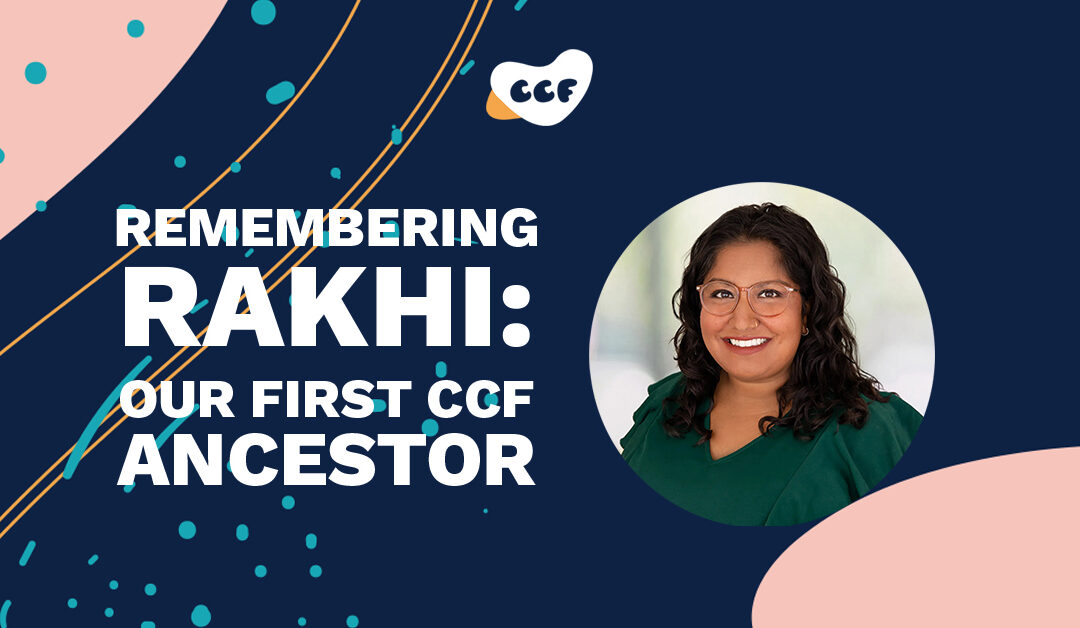
Remembering our first CCF ancestor

Remembering our first CCF ancestor

By Community-Centric Fundraising Global Council Communications Committee

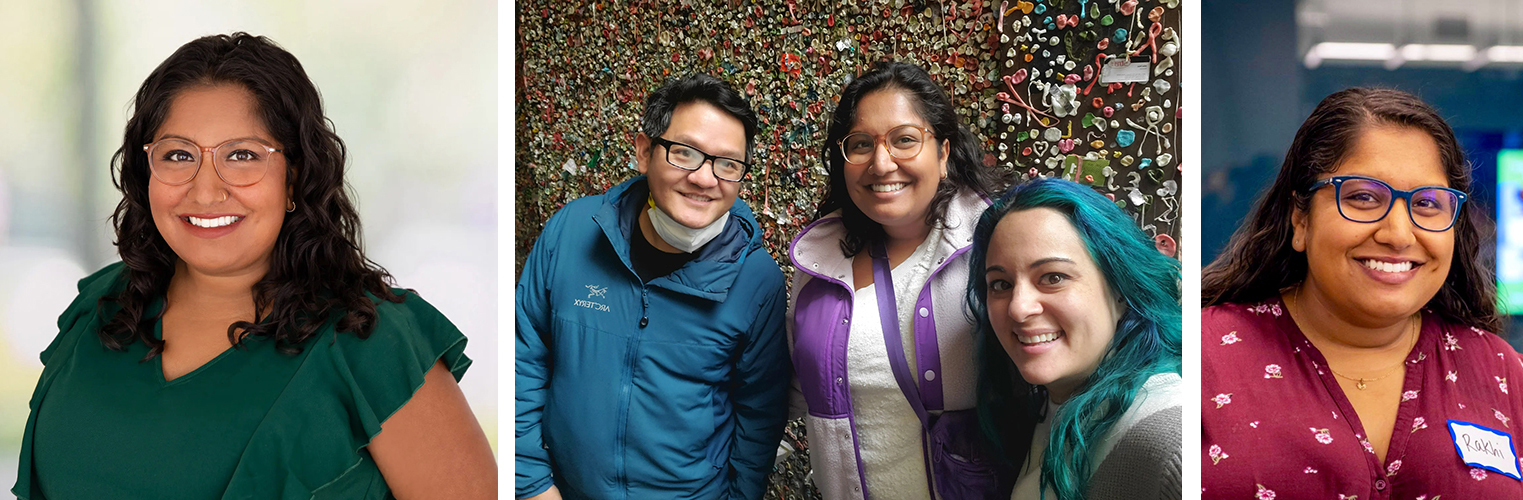
Rakhi is a nonprofit development consultant and grant writer, educator, community advocate, data scientist, and current CCF organizer. Through CCF, she has combined her experiences as a community organizer and former activist with her wide nonprofit development experience. She has received privileged credentials from schools that uphold systems of white supremacy, and as a queer, fat, brown disabled woman who was born to South Asian immigrants, is dedicated to leveraging her privileges to working towards equity, justice, and liberation for all. She currently lives, connects, and organizes on the land of the Tonkawa and Comanche peoples in Austin, Texas. She has never-ending love for and interest in babies, half-sour dill pickles, and Criminal Minds.

— Rakhi’s Community-Centric Fundraising bio

Close up of a lit candle. In the background are out of focus lights symbolizing other candles

On March 1, 2023, Rakhi became our first Community Centric Fundraising ancestor. It was an unexpected transition, and there was much left unsaid. What does it mean to grasp fruitlessly at the closure we so profoundly yearn for? With the end of the year as a marker to ponder love and loss, the passage of time, and our ancestors, we hope to bring closure to this year and those moments by honoring Rakhi.

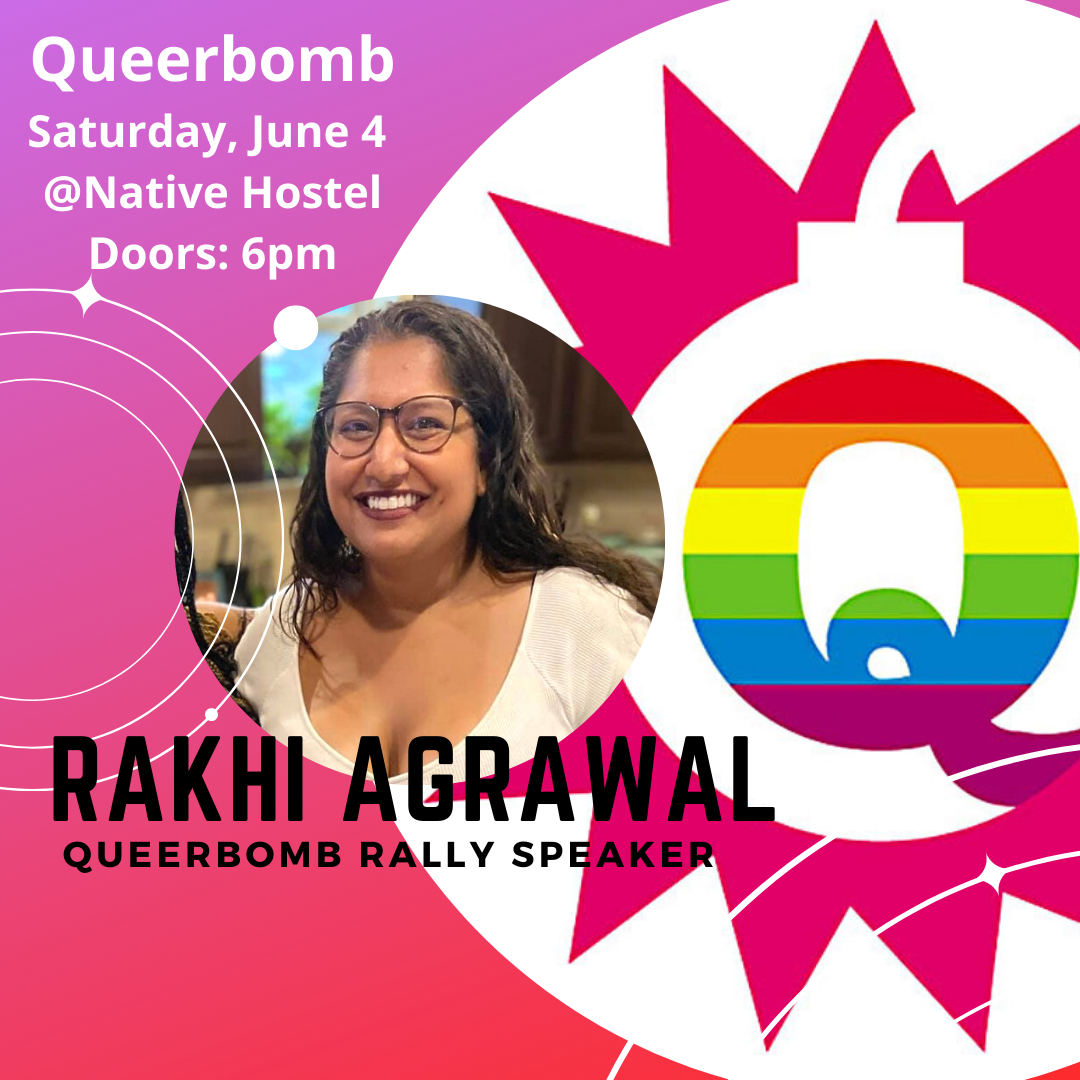
An Instagram post by Queerbomb. In the background is Queerbomb's logo and a photograph of Rakhi smiling. Text says Queerbomb Saturday June 4 at Native Hostel doors: 6 pm Rakhi Agrawal Rally Speaker

As much as each of us desires to become human embodiments of our ideals, the work of creating a better world is inherently messy because we are human beings. Rakhi was not superhuman; she sought to be her whole self and cultivate beauty in the world around her. Rakhi was profoundly shaped by her pain and experienced struggles with close relationships. Also, she designed how thousands of us have formed relationships and a sense of belonging in our virtually anchored community, CCF’s Slack space.

Rakhi experienced ongoing challenges in her personal life, including housing and navigation of her mental health. Also, Rakhi understood the need for community and sought deep relationships and connections with others, often connecting via the outdoors. She was someone who deeply yearned for a better place, a better home for BIPOC and Queer people, and helped co-create those spaces in CCF (including helping bring forth the Global Council), Queerbomb, Outdoor Rep!, and every organization she touched.

Rakhi is a CCF ancestor, and as we close out this year, we reflect and carry memories of her with us, and all the complexities that remembrance entails. We ask ourselves, “What does it mean to be in community?” and “How do we love each other well?” as well as my personal favorite, “What does justice require?”

May we release the unsaid and unresolved as we walk into 2024, and meditate on our shared responsibility as those who remain. May Rakhi live on through her legacy, of which we are all inheritors.

— Abigail, on behalf of the CCF Global Council

Three photographs of Rakhi. The first is a headshot of Rakhi wearing a green shirt. The second is a photograph of Rakhi with Founding Council members Vu Le and Rehana Lanewala. The third is Rakhi at a conference wearing a maroon shirt.

In her own words

“So, I want to offer up a few unconventional definitions of confidence. To me, confidence is:

  • Leading with integrity and accountability above all else; owning when my words, actions, and/or existence causes real hurt or harm to others
  • Fiercely grounding myself in my values, while humbly recognizing that I am constantly failing and learning and growing and changing
  • Recognizing how much light and value I can offer to my people
  • Valuing solitude over being around people who aren’t in alignment with me or what I want for the world
  • Being and embodying love, to whatever extent that is possible
  • Knowing that no matter how abnormal I am, I’m incredible and extraordinary
  • Recognizing that my fat body deserves love, regardless of the negative things the world has to say about me
  • Seeking out relationships and spaces where I can be known — seen, valued, and understood, at my best and at my worst
  • Pouring into people who offer me love and attention freely, without me having to work for it; not pouring into others.”

— Rakhi

“I helped build a movement in Chicago to obtain reparations ($$) for victims of police torture—we won.” — Rakhi

You can enjoy more of Rakhi’s words, from her early writing in 2014 about Mental Health Awareness Week at Colombia, her Hub article on fundraising, to her giving circle idea to support “underfunded groups and organizations that are BIPOC-led, LGBTQIA+/queer-led, or otherwise led by folx representative of marginalized communities and/or intersectional identities.” Here’s also Rakhi talking on Summit Sidebars with Jack Schleifer about their organization, Outdoor Rep, work that organizations like Melanin Base Camp continue.

In their own words

Honoring Rakhi Agrawal

“In her work with CCF, Rakhi was instrumental in early efforts to organize a loose affiliation of nonprofit fundraising professionals into what is now a thriving, worldwide movement. I will always remember her fierce, tireless devotion to the work, and her passion for organization.”

— Marisa

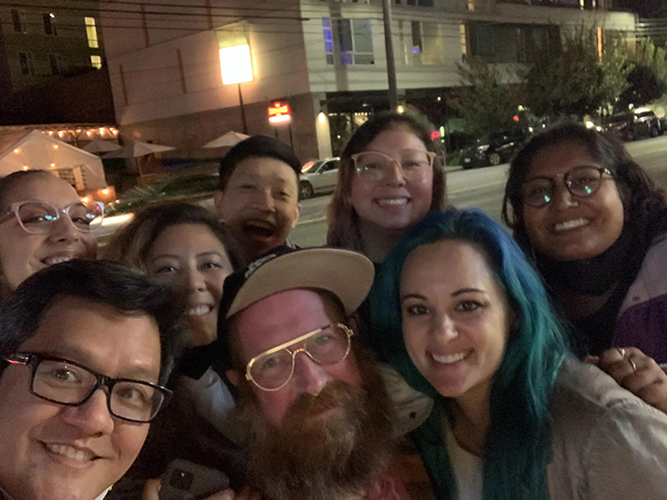
Rakhi with a group from CCF

I’m grateful for the fire and passion Rakhi brought to the movement for Community Centric Fundraising. She helped us launch the Slack community, kept the Content Hub running, and helped shape the vision for a global council transition.

James

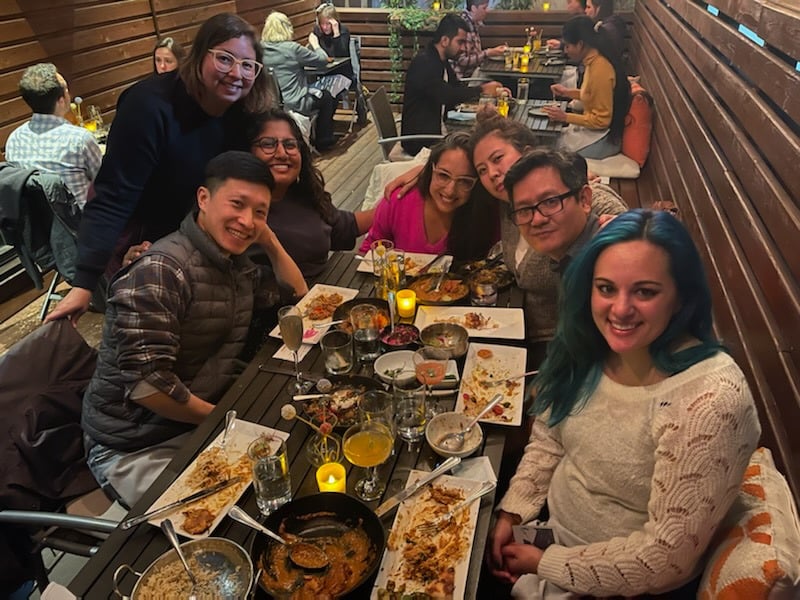
Rakhi with CCF folks for dinner

“I met Rakhi when she began supporting the Community Centric Fundraising Founding Council. She came at a time when we were stretched to the breaking point, and her dedicated, passionate, and kind-hearted soul was a huge boost to our morale and ability to keep pushing forward. She had a way of making everyone feel valued through little notes and small, unexpected gifts. Thank you, Rakhi, for all you did for us and everyone in your life.”

— Sean

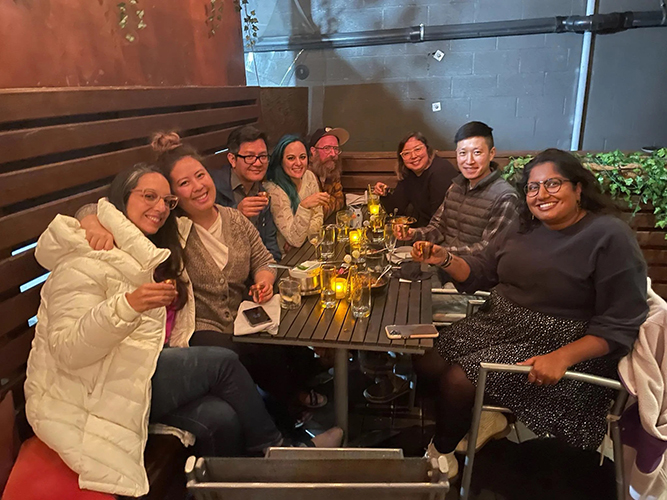
Rakhi with folks from CCF enjoying drinks

“Rakhi was a force in the effort to take the CCF movement worldwide. She was also a shining example of how to bring it home to her community. I first met her as we started organizing here in Texas. She kept the collective well and also on track, and we were one of the first groups to run regular gatherings and content. Her ability to fearlessly and brilliantly challenge every status quo in this challenging profession will inspire myself and others to do the same for generations to come.

“Her love, though — for others and for this community — is her true legacy, and that is what I will think about first when I think of her. Rakhi was my friend and a brilliant, beautiful soul. I will miss her greatly.”

Marcus Cunningham

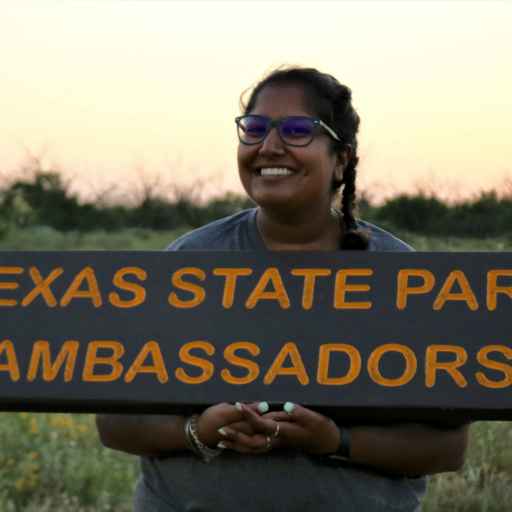
Rakhi holding a Texas State Park Ambassadors sign

“Rakhi got involved in CCF because she felt so passionately about the importance of radically transforming the nonprofit sector. She was fearless about tackling injustice wherever she saw it and brought that fearlessness to her social justice work along with a talent for systems and organizing, a brilliant mind, and a clear vision for what an equitable, anti-racist, anti-capitalist, community-centered, pro-Black sector could and should look like.

“Rakhi was wickedly funny but her humor was never unkind. Those who were lucky enough to know her were grateful for her incredibly generous, loving heart. She pushed me and challenged my thinking in so many ways, and I can’t express enough the impact she had on me both personally and professionally. I miss her dearly.”

— Rehana

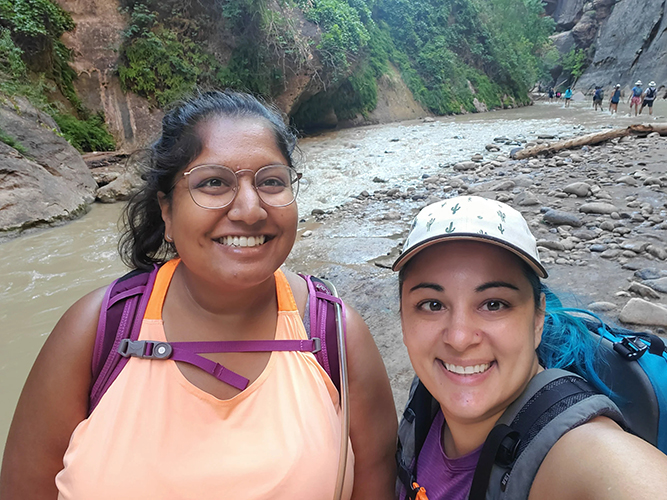
Rakhi and Rehana on a hike

Before I accepted the post as the editor of the CCF Content Hub, I began my work with Rakhi. Right off the bat, our work together was punctuated with care in a way that I had never experienced in my working life before. She took the time to talk me through my fears and actually talked me into the position, which I was shying away from due to looming self-doubt and negative self-talk.

“Once I had accepted the position, every touchpoint with Rakhi began with a check-in that focused on tending to each other and our personal needs before we even began talking about the work. And every meeting was filled with humor, smiles, and so much laughter.

“Rakhi showed me what a different type of coworking relationship could look like; one where we are people first and coworkers second. This example has changed the way I view and approach my working relationships. And I am forever grateful that I got to experience and learn this new way of coworking from someone who was so gentle, joyful, attentive, and intentional in her approach.”

— Chris Talbot

Rakhi’s obituary can be accessed here.

Community-Centric Fundraising Communications Committee

Community-Centric Fundraising Communications Committee

Ways whiteness shows up in CCF to the detriment of everyone (including white folks), part 3: Retribution for speaking out in support of Palestine

Ways whiteness shows up in CCF to the detriment of everyone (including white folks), part 3: Retribution for speaking out in support of Palestine

By Chris Talbot, nonprofit laborer and born activist

The worst way that whiteness is showing up in our movement and elsewhere in the sector, from my purview, is and always has been white folks retaliating against People of the Global Majority speaking truth to power. Most recently, it’s shown up as retribution for speaking out in support of Palestine.

(Read Part 1: “Do something about her,” and Part 2: “Stop using that word.”)

Before I launch into part three, I want to share what I mean when I say “in community” because it occurs to me some folks may not know what I mean. When I say “in community,” I don’t mean “in a community” (aka a group of people in close proximity or with a singular characteristic in common – in this case, folks who fundraise), and am continually missing an article like auto-correct keeps suggesting. 

Being in community requires stepping outside of or unlearning the Western indoctrination of individualism. It takes a praxis of community care and requires intentionality most of us don’t experience in our day-to-day life, at work, and most definitely not in our virtual interactions because intentionality and radical care require white-supremacist, colonial, Western, capitalist, competitive individualism to be decolonized and dismantled.

As bell hooks wrote in Teaching Community: A Pedagogy of Hope, “To build community requires vigilant awareness of the work we must continually do to undermine all the socialization that leads us to behave in ways that perpetuate domination.”  

For CCF members to be in true community with one another in this movement, we must collectively agree to leave our competitiveness, domination, and collusion – as well as self-chastizing ways, like shame and embarrassment – at the door. And we must be open to hearing, without judgment, the perspectives of others and steward those sharings and each other with care.

This is pretty much the opposite of what’s been happening in online interactions and in our collective organizations when it comes to People of the Global Majority speaking out against the genocide in Palestine.

Retribution for speaking out in support of Palestine

The worst way that whiteness is showing up in our movement and elsewhere in the sector, from my purview, is and always has been white folks retaliating against People of the Global Majority speaking truth to power. Most recently, it’s shown up as retribution for speaking out in support of Palestine.

These white folks are the same ones that, for the past three-plus years (at least), used their ignorance on racial and world issues as a shield from accountability. They are now telling folks that their advocacy for Palestinians and against Zionist violence is antisemitic, and in some cases, using their out-sized power to publicly berate, censure, demote, and fire them.

In the CCF community, this showed up as a white woman I’ll call Kimber (not her real name) emailing me to tell me she wouldn’t be supporting CCF – a global community centering BIPOC fundraisers and nonprofit workers – because she believed one member of color’s shared (balanced and community-based) perspective was “offensive.” 

(Because I’m nosy, and she mentioned this member’s “failure to respond to the commentary that followed,” I visited the post she referenced to read her “commentary.” As you’ve probably guessed, the “commentary” she provided was not something one would respond to; it was just unfounded accusations. It should also be noted that a lot of the other “commentary” was also a dumpster fire, and everyone who participated should investigate how they showed up at that moment and if that’s what being in community looks like for them.) 

UPDATE: After the second part of this series of essays came out, Kimber emailed me, performing the typical white woman playbook that members of the Global Majority are all too familiar with: 

Step 1: Thank you for speaking up. I’m still learning. In this case, I appreciated it and continue to struggle to hear voices and views that stretch me. 

Step 2: I hope that wasn’t me you were speaking about. Here are paragraphs of why it couldn’t be. In this case, [Two paragraphs of how she couldn’t believe this Kimber lady.] I recognize I may be completely off base and, in fact, not the Kimber you’re talking about. But I did want to reach out in case I am. That’s a horrific comment attributed to ‘Kimber.’ 

Step 3: Our measured response (if we choose to make one). I responded to Kimber that I was glad she found my article helpful and that she was looking closer and doing her work, and invited her to follow the advice in the article and discuss her journey and feelings with white colleagues who were farther in their justice and equity work (rather than email me). I then explained what I meant by what I wrote and how emailing me and calling me in to answer for a misreading of what I wrote diverted from harm caused. 

Step 4: How dare you! You have a lot to learn, actually. Immediately, Kimber’s tone changed, and Kimber began to lecture me and accuse me of being dishonest. Honesty is not a technicality. Perhaps you could do some further learning on that

This is the white woman’s playbook when confronted with behavior that is holding back the community and putting additional (and wholly unnecessary) labor on People of the Global Majority working toward liberation. It’s tiring, but more importantly, it’s diverting. And it’s the exact work y’all need to be doing with each other and not taking our time with. 

Back to the original essay:

Withholding wealth and unnecessary messages have been the lightest of the retributions enacted against people taking a stand against this genocide that I’ve seen. So, in that way, CCF has been relatively safe for people to speak their minds (the bar is in the ground and halfway to the earth’s core, though, so let’s not pat ourselves on the back just yet). 

What I haven’t seen many white members of the CCF community do is explicitly state their support for people – especially Palestinians and Jewish folks – speaking truth to power, their intent to hold space for people who are hurting right now, or their commitment to protect or support the People of the Global Majority who have been experiencing retribution in their day jobs and lives. People like me. Here’s my story:

At one of my workplaces, I received an anonymous email requesting that my organization condemn Hamas. I drafted a measured statement to share with the team and asked for edits and thoughts. The statement included how our hearts go out to everyone lost during Hamas’s attack, the families who are mourning, and those who were traumatized by the attack, including Israelis and folks in the Jewish diaspora who may see themselves as the target of this violence.

I also wrote about the collective punishment and human rights violations enacted in retaliation. I said our hearts go out to everyone lost, the families who are mourning, those who have lived a life of trauma while trapped in the Gaza Strip, all the Palestinians still under attack, as well as the folks in the Arab, Jewish, Black, Latine, and Indigenous diasporas who may be traumatized and see their own peoples’ struggles for freedom in the violence being enacted against the Palestinian people.

I went on to say that at this organization, we had staff who are both Jewish and Indigenous, who are descendants of survivors of violent genocide, and that we believed that “never again” means never again for anyone. The letter went on to talk about how communication and rhetoric mattered and how the language of the Defense Minister of Israel was troubling for folks who had survived attempted genocide, and that we were calling for a ceasefire, among other things. 

This did not go over well.

A white Jewish coworker started bastardizing the equity language I had taught the group, weaponizing it to paint me as an oppressor and to call into question my equity knowledge and my ability to teach justice, equity, diversity, and inclusion (JEDI) principles.

I took complete responsibility for the way in which I presented the letter and the harm it caused, recognizing that coming to the group with a draft rather than starting with if people had the capacity to discuss the atrocities we were witnessing or if they needed support at the moment, and that drafting a response together would have been more appropriate. I explained how I understood that it needled trauma and caused pain. I explained what I learned and how I would do things differently in the future to ensure that I wouldn’t cause the same harm again. Basically, I modeled how to take true accountability. 

I chose to share how his reaction and the silence of the other white people were also harmful to me.

This also did not go over well.

He accused me of not tending to the harm and instead centering myself. I asked him how he would like the harm I caused to be tended beyond the accountability I took. He said that he wanted to hear me say that I was wrong in supporting Palestine, calling what was happening a genocide, and other things within the letter he disagreed with. I carefully and gently explained that I took accountability for the harm I caused while bringing the draft to the team, but I would not walk back the contents.

This also did not go over well.

This was met with increasing agitation, which devolved into him accusing me of lacking empathy and trying to get the rest of the team (who remained silent during all this) to doubt my ability and competency as an equity leader, all while misusing equity words. Sometimes, after years of educating white folks in JEDI, we only end up arming people with privilege with tools to further oppress. And that’s something I don’t know how to solve.

At a later meeting, the team decided to discuss whether to make a statement, and he said the quiet part out loud: If we made a statement like the one I wrote, he and people like him might be hurt. If we made a statement he would make, People of the Global Majority (including myself and a co-worker) would be hurt. I added that if we didn’t make a statement at all, People of the Global Majority would endure the pain of the genocide and our tax dollars paying for it without support – which would also be harmful. 

His conclusion was, naturally, we shouldn’t say anything at all. And the rest of the white team agreed over the protestations of the two of us from the Global Majority. (When I brought the harm in this up during a meeting, I was gaslit and shut down by him immediately.)

The end result of all of these meetings is that we won’t be making a statement. I will also need to step away from my role as the chairperson of the JEDI Committee. I will no longer lead the continuing education of the organization – a position I picked up because this organization so harmed me in the past that I felt I had to do the extra work and emotional labor for my own well-being.

Whiteness is feeling comfortable and entitled to cause People of the Global Majority harm because white hurt needs to be ameliorated immediately, and BIPOC hurt is a given. Whiteness is standing “neutral” or saying “it’s too complicated to get involved” in situations of injustice, oppression, and in the face of genocide. Whiteness is not investigating or considering the immense pain caused by knowing doing your job right now, which you do to bring net good into this world, also means funding this genocide through your taxes. Whiteness is expecting Palestinians, anti-Zionist Jews, and other People of the Global Majority to continue to show up in these spaces as if it were “business as usual.” And truly, whiteness is expecting Zionist Jews, who are also hurting, to show up rather than tending to their own traumas. 

Whiteness isn’t interested in accountability and repair. Whiteness isn’t interested in tending to harms, psychological safety for the entire group, or being truly in community. Whiteness is interested in maintaining deference, comfort, and power at the expense of others. 

Whiteness is disparaging folks after siphoning and extracting expertise and emotional labor and weaponizing and bastardizing equity terms they provided you. Whiteness is staying silent while all of this happens, effectively enabling this violence.

A lot of white folks either don’t want to speak up or don’t have enough discernment to tell who is their equity and justice thought leaders doing what they’ve always done – affirming and advocating for the rights and lives of targeted people – and who is using the (very real, not to be minimized) trauma from horrific moments in their history to silence these equity thought leaders.

How does this type of whiteness harm white people?

The better question is, how doesn’t this whiteness harm white people? 

Bastardizing and weaponizing equity language keep us perpetually languishing in white-supremacist, colonial, Western, capitalist, competitive individualism and mars the tools available to decolonize ourselves from it.

Retribution and passively or actively allowing retaliation against people speaking truth to power destroys the psychological safety needed to make transformational change – no matter what that change may be. It renders your nonprofits and their missions useless because the best you can do under those conditions is stem the worst, not imagine and actualize a better world.

All of these actions and responses destroy community.

How to restore what whiteness has done

I honestly haven’t a clue how to restore what was done in the place of work I shared. I no longer feel safe, and I do fear further retribution. It got to the point where I was experiencing physiological symptoms of continuous stress (again).

What I didn’t share with the team was that the violent reaction and unchallenged statement of pro-Zionist language as fact caused an immediate sympathetic nervous response in my body  – it happened every time I received an email, a text, or had to join a call where the people involved were present. 

It reminded me that when it comes to the right to simply exist, it is assumed for white people and needs to be earned by the rest of us. It also reminded me of every moment I’ve gone from helpful “pet” to dangerous “threat” at every white-led organization I’ve ever worked at. And how quickly punitive measures soon follow. 

In the most recent meetings, I was able to avoid having the physiological symptoms by mentally and emotionally preparing myself with affirmations, one of which has heavy fuck you energy but is necessary for me to enter the space. It’s not conducive to building meaningful community, never mind repair. I don’t know how you can heal from that place while still immersed in it. I’m not sure it’s possible. 

(I have agreed to the team’s recommendation to contract a mediator to help restore psychological safety, but I don’t anticipate it having long-lasting results. Not when one privileged team member can derail our learning, progress, and all work because they have that power, and no one will pause or disrupt his outbursts and attacks and ask for intentionality and community care. If you have a solution for restoring things when they’ve gotten to that point, please do share.)

Before it gets to that point, white folks can learn how to emotionally regulate. I don’t mean this in the white supremacist sense of the word – masking or suppressing emotion. I mean it in the community-building sense of the word – investigating the source of the anger or anxiety; discussing the feelings with a community member you trust to help you work through it; leaning in with curiosity and willingness to discuss harms with the purpose of repair in mind; not requiring BIPOC coworkers to assuage your pain while ignoring or denying their own; and not weaponizing your dysregulation.

Those who have lived a life with lesser power already have this skill set because it means temporarily subduing your immediate, automated response for the greater community. When you’ve grown up with power and obeisance as the default, it’s a skill you must learn. But you can learn it; I hope you see you need to.

Speaking of power, it’s essential in these discussions to recognize where the power lies. Is it with the unarmed populace of Palestine, or is it with the fourth largest military in the world that has subjugated the people of Palestine for 75 years and is currently carpet bombing Gaza, the internment camp they relegated Palestinians to? Is it with the colonial superpower with the ability to unilaterally veto a ceasefire, or is it with the People of the Global Majority whose votes regarding a ceasefire are nullified? Is it with the people allowed to dysregulate and weaponize their feelings in a meeting, or is it with people who experience tirades, censures, demotions, and firings for simply speaking up? Is it with an occupational force one of the world’s superpowers funds at a rate of $3.8 billion annually and is considering adding $14.3 billion, or is it with the people who are begging for water, food, and medical supplies and having that humanitarian aid blown up or blocked by that same occupying force? Is it with People of the Global Majority being arrested for protesting in the streets, or with the ideology that mostly white representatives are protecting by declaring any protest in opposition to it to be antisemitism? 

Regardless of whether you still trust and believe the BIPOC individuals who gave y’all continual education in equity for the last three-plus years, these power differentials are blatant and need to be examined. Oppression requires institutional power to work. And noticing power differentials helps you not misappropriate the harm you experience as oppression.

White folks can also learn how to disrupt harm as it’s happening rather than allow people with privilege to continually shut down, disparage, and fire People of the Global Majority. There are countless teachings on how to call out and call in. You just need to care enough about the community and the well-being of its members to learn and utilize them.

My spirit is here in this movement to soar, not labor under the boot of whiteness – where I’ve spent the first 22 years of my nonprofit career and where I’m trying to escape right now. 

People of the Global Majority: know that I am with you, I am here for you, and if you ever want to speak up and speak out, I’m here to listen and support you. Despite everything I’ve experienced, I do believe that we can and will build a better world together.

White folks: If you’re still with me after post three, I’m going to need you to call in and bring your people along. I need you to do this outside the lens of whiteness and bring people in with compassion and grace. After 41 years of continuously laboring for all the white folks in my life, I’m too tired to do it for privileged folks who claim to be values-aligned but are consistently weaponizing their dysregulation towards me while I emotionally regulate to make space for them. 

We need someone to bring them into true community. Let that person be you.

Chris Talbot

Chris Talbot

Chris Talbot (they/them) is a queer, trans nonbinary, mixed-race artist, activist, and nonprofit employee. When they aren’t working the day job, they spend their free time editing art and literature magazines, writing and illustrating educomics to help folks affirm their nonbinary pals, creating a graphic novel to describe what it’s like to be nonbinary in a gender binary world, cuddling their cat, and quad skating in the park. 

You can find Chris at talbot-heindl.com, on LinkedIn, Instagram, Bluesky, and Twitter — and tip them on Venmo or PayPal or join as a patron on their Patreon