
The white liberal’s favorite weapon: Isolation

The white liberal’s favorite weapon: Isolation

By Maria Rio, CEO of Further Together, provider of no-nonsense truths and actionable tips, and host of The Small Nonprofit podcast

Getting you alone is not about privacy or resolution. It’s about neutralizing the threat of your voice to protect their comfort. It’s not a commitment to addressing injustice; it’s a calculated tactic to isolate, reclaim power, and maintain the status quo.

When a boss, funder, or colleague says, “Let’s take it offline” or “Let’s chat one-on-one,” what they’re really saying is, “Stop talking—you’re making me uncomfortable.” 

Getting you alone is not about privacy or resolution. It’s about neutralizing the threat of your voice to protect their comfort. It’s not a commitment to addressing injustice; it’s a calculated tactic to isolate, reclaim power, and maintain the status quo. 

Behind closed doors, powerholders avoid public scrutiny. They center themselves, strip away your peer support, shift blame—and most importantly—silence you. 

Because when oppressed people unite they expose injustice and demand accountability; nothing terrifies powerholders more. 

Why isolation works so well 

This is “divide and conquer” in action. Fragmenting collective resistance makes it easier to control and defeat opposition. 

Once isolated, the expectation is that you’ll shrink, keep things polite, and manage their comfort. Challenging contradictions between their words and actions means you’re the problem—the “angry,” “uncooperative” one who refuses to see how hard they tried (spoiler: not very). 

Without witnesses, they can gaslight you: “Are you sure that’s what happened? Maybe it’s just a misunderstanding.” 

Their goal? To make you second-guess yourself, invalidate your experience, and ensure nothing changes. They want that private chat to drain your energy so much that they won’t have to take real action—no matter how serious the issue is. 

In most cases, these concerns have already been raised—publicly or privately—by you or others, only to be ignored. 

The offer to discuss privately can feel tempting—it mimics care and engagement. However, if you’ve been through one of these cycles, you know how draining they really are. The emotional labour. The preparation. The hollow compliments and empty promises. The fear. 

The power imbalance is intentional 

These meetings are never neutral. The power imbalance—whether it’s staff vs. ED, ED vs. board chair, or nonprofit vs. funder—is huge. If the person in power is white and the critic is racialized, the stakes are even higher. Without others around, there is less room for accountability or resistance. Every second in that room reminds you of who holds the power. They own the space, the timing, and the cadence of conversation, and they decide the outcome. Once isolated, they know the issue can be dismissed as a “misunderstanding” or framed as a matter of personal preference rather than systemic harm. 

And what about you, the critic? Did you forget your survival depends on appeasing them?  

The threat doesn’t need to be spoken aloud—you feel it. Your job, funding, projects, and reputation are on the line. No witnesses. No validation. Just you explaining racism again to people who benefit from not understanding it. 

You become the lone educator, the lone dissenter—while the system remains untouched, ready to roll out the next event or campaign but with the same underlying issues. Critics thus often leave without closure, knowing their concerns are unlikely to lead to meaningful change.  

Isolation in action: The real-world examples 

This type of response is frustratingly familiar: it leaves the critic with two unappealing options—either agree to a private conversation where they will likely encounter further gaslighting, or decline the invitation, leaving their critique unresolved and risk being labeled “uncooperative.” 

Example 1: SickKids Hospital’s Mexico-Themed Gala 

SickKids’ handling of criticism about their Scrubs in the City gala shows how readily organizations use private conversations to deflect public accountability.  

In their public response, SickKids attempted to pacify criticism by mentioning collaboration with Ballet Folklorico Puro Mexico (an entertainment company hired for the event) and Rosie Krcmar (I am unsure about her connection to Mexican heritage), claiming they were “consulted” for authenticity.  

This isn’t new; invoking tokenized consultation is a well-known deflection technique. It suggests that because a few individuals from the community were engaged, the event—and by extension, the organization—is beyond reproach. This deflection by SickKids shifts the conversation away from the valid critique of cultural appropriation and covert racism and instead implies that those raising concerns are either uninformed or unreasonable. 

This type of response is frustratingly familiar: it leaves the critic with two unappealing options—either agree to a private conversation where they will likely encounter further gaslighting, or decline the invitation, leaving their critique unresolved and risk being labeled “uncooperative.” 

Both outcomes serve to exhaust and isolate the critic, while the institution faces little to no real accountability. 

Example 2: A Funder Dismissing Feedback on Inequitable Practices

After publicly tagging them for poor funding practices, Crappy Funding Practices publicly received an invitation for a one-on-one conversation. The tone of the funder’s message may seem polite and clarifying, but it relies on familiar strategies: redirecting the conversation to individual discussion, reframing criticism as personal demoralization, and minimizing the legitimacy of public concerns. 

In their response, Giving Joy mentions their small size, volunteer-run nature, and personal financial investment to elicit sympathy. Statements like “We don’t want a prize for our work, but it would be nice if you would fact-check some of your messages before you demoralize an organization that is just trying to do good” serve a dual purpose: they attempt to guilt the critic into silence while shifting attention away from the legitimate concerns about their grant practices.  

Guilt trips and white tears, often deployed in one-on-one conversations of this nature, reframe the critique as a personal attack, rather than an opportunity for reflection and improvement. 

This deflection creates an exhausting burden on the critic. They are left to either retract their statements to maintain goodwill, stop responding, or engage in a private conversation. 

Furthermore, the funder’s invitation to “have a conversation” and “fact-check” offline is a prime example of the isolation tactic. It shifts the issue from a structural critique—highlighting how microgrants like theirs burden the sector through excessive applications—to a private, controlled space where the power dynamic always favors the grantmaker.  

In addition, the invitation ignores why initiatives like #CrappyFundingPractices emerged in the first place. Anonymous public platforms for reporting inequitable grantmaking practices were created to level the power imbalance. They provide oppressed organizations and individuals with a space to speak openly, without fear of retribution. Inviting critics to move into private conversations undermines this core purpose by reintroducing the same power dynamics that public platforms were designed to counteract.  

Isolation robs the sector of collective learning opportunities. Public conversations about grantmaking practices allow the broader community to engage, share experiences, and work towards sector-wide solutions. When funders insist on taking these conversations offline, they ensure that mistakes and inequities remain hidden, limiting the potential for meaningful reform. 

Public accountability or it didn’t happen 

Those without power are left navigating emotional labor alone, with careers, livelihoods, and mental health on the line. 

If powerholders can’t have these conversations in public, they’re not serious about change. Public spaces foster real accountability. In public, they can’t twist the narrative, avoid hard truths, or win by default. Public discourse ensures that the strength of the collective carries weight. 

We must insist on public conversations where powerholders have no escape.  

Let them squirm. Let them, for once, feel the discomfort. Let them know we refuse to enable them to hide behind closed doors. 

We see through it. We’re not going away, and we refuse to be silenced.

Maria Rio

Maria Rio

As the founder of Further Together, Maria Rio (she/her) uses her lived experience and 10+ years of fundraising to tackle inequity in the nonprofit sector. She is a trusted nonprofit consultant, sought-after speaker, and the host of The Small Nonprofit podcast. When she’s not supporting visionary leaders, she’s advocating for policy changes that eliminate poverty and food insecurity. You can connect with Maria on LinkedIn, sign up for her newsletter, or tune in to The Small Nonprofit.
Money, power, respect: What fine dining taught me about fundraising

Money, power, respect: What fine dining taught me about fundraising

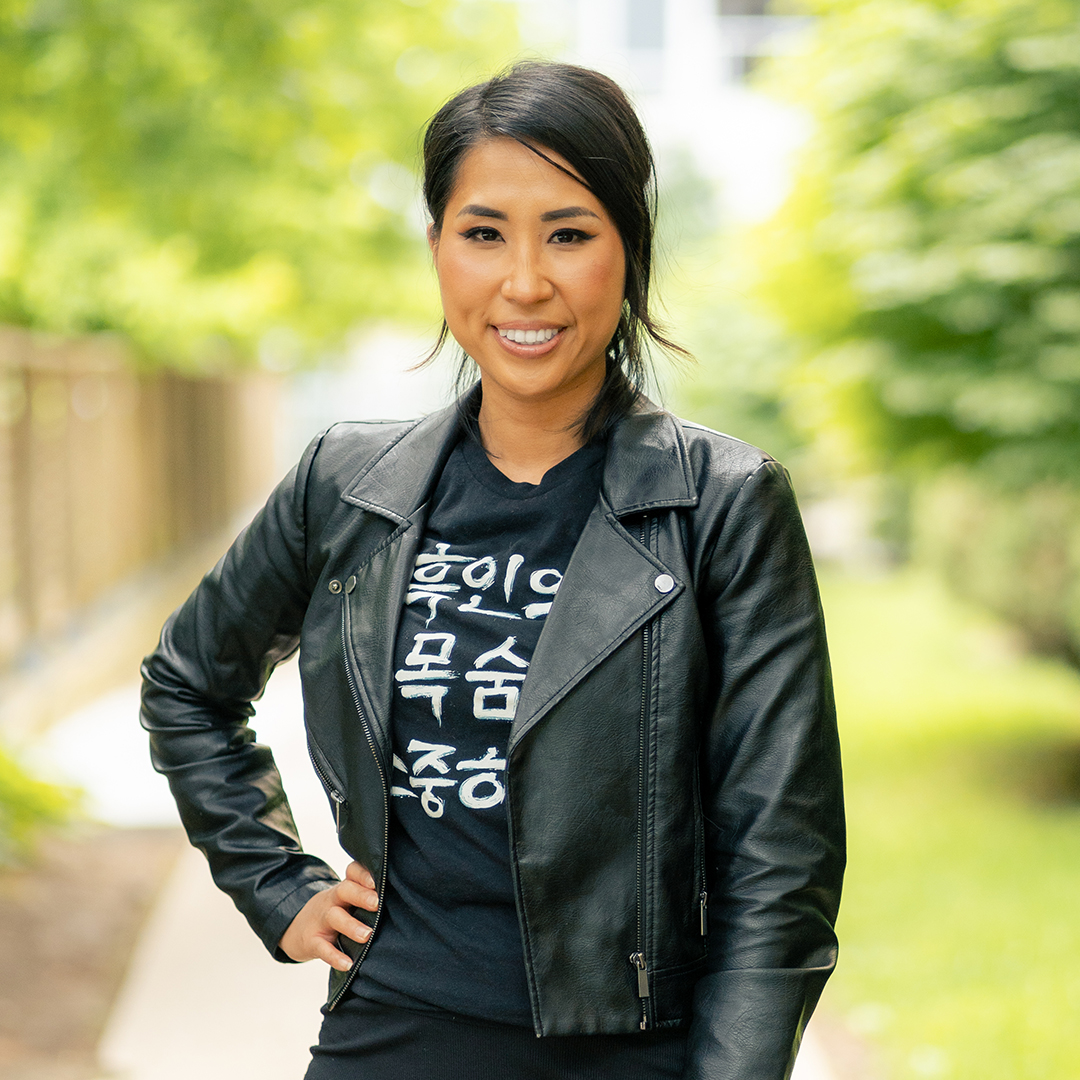
By Esther Saehyun Lee, Community-Centric Fundraising Global Council Member, Former Industry Folk, and Scorpio

Working as a server gave me a degree in studying power, wealth, and social hierarchy… Working in fine dining is a microcosm of wealth culture; wealth culture is a microcosm of power and privilege.

When I walk around my alum university, hospital wings, museum halls, opera walls, and sometimes even parks, I can always recognize the names. I will sometimes remember their kids’ names, grandkids, regular vacation spots, and stories of success. I even know how they like their martinis.

You see, before I was a fundraiser, I was a server. 

For most of my working life, I was able to live independently by working in restaurants and bars. My last job before I entered the sector full-time was as a manager and server at one of Toronto’s most prestigious and well-known fine-dining restaurants.

It wasn’t uncommon to have celebrities of all calibers drop in for a meal or a drink. We were also on regular rotation as a lunch spot for Toronto’s most wealthy and powerful. From movie stars to politicians, millionaires to billionaires, this was my norm for five years.

I worked as a server through grad school, as my supposedly “full-ride scholarship” barely covered my tuition. After I graduated, I continued serving to pay off my massive loan. 

I thought I was staying in serving to fund my education, but I’ve come to realize that serving itself was an incredible education in its own right.

Lessons from fine dining: Power dynamics, wealth culture, and social hierarchies

Being a server while pursuing a graduate degree was an interesting time. The amount of respect the rich and powerful clientele allotted to me oscillated. They’d hear I was a server and make sweeping assumptions about my intellect and education. Then they’d hear that I was a graduate student at a top university and have to unpack their classist assumptions. Introducing myself as a server always gave me the opportunity to do a quick study of someone’s values, character, and respectability narratives.

Working as a server gave me a degree in studying power, wealth, and social hierarchy. It’s an education that has been immensely helpful as I transitioned into fundraising by equipping me with a critical eye for the nonprofit sector. Working in fine dining is a microcosm of wealth culture; wealth culture is a microcosm of power and privilege.

To those who have never been in hospitality or fine dining, let me explain: You’re making a little above minimum wage while you serve people $400 bottles of wine that they casually order for a work lunch. 

I’ve listened to people earnestly share, “All I really want in the next few years is a private jet. Wouldn’t that just make life so much easier?” To which I’d respond, “Oh yes! That would save a lot of time and effort,” as I mentally calculated how much of that day’s shift could go into my massive student loan debt and how much that would leave me for groceries and rent. 

Fine dining serving is watching businessmen come in and order endless amounts of wine and food and seeing a bill that equals two months of my rent—for a Wednesday lunch. It’s watching them play “credit card roulette,” each throwing down a credit card and having me decide one randomly to see who pays.

Both fundraising and fine dining are worlds saturated with power. 

Residing in both worlds and dealing with powerful people while wielding so little power myself has equipped me with the vision and insight to study it. It gives me an interesting POV. From my analysis, the difference between fundraising and fine dining is fine dining is much more honest about the transaction at play.

Parallels between fine dining and fundraising

Working in a fine dining restaurant, I saw moguls across all industries at their most casual. Celebrating birthdays, observing funerals, and brokering business deals worth millions discussed over a bowl of pasta. I watched net worths rise and fall all in one meal. 

This took some time for me to get used to.  

I immigrated to Canada with my family when I was four. Much of my childhood was spent in precarious living, rife with food insecurity and poverty. Pretending that this mass amount of wealth spent on food and wine so casually was a part of the job was most challenging to get used to. 

As restaurant industry folks know and say, 49% of the job is technical, and 51% of the job is emotional labor. Coming to this job as an immigrant grad student with $55k in debt, the emotional was the more difficult labor. But I got used to it. I got used to putting on my uniform, entering the restaurant, and locating myself within the matrix of power and privilege.

To be a true professional server, you’re invisible until you’re needed. Waters are filled, wine is poured, food is served hot, and cutlery and napkins appear. You’re part ornamental, part operational. You’re as friendly as the table wants you to be. You’re as visible as the table wants you to be. People are comfortable talking shop because they consider you a part of the background. They’re comfortable acting like themselves because servers, for the most part, are considered invisible.

And this position gave me insight into how power operates in the 1%. 

Watching people wield their power and privilege like weapons was fascinating. It gave me an understanding of how a person navigates it when they don’t question their status or belonging in the world. It also gave me a sense of how power operates in spaces I had never been privy to. It gave me insight into wealth culture in an unadulterated way. 

The power dynamic between us–the service staff and the client or diner–was always named and acknowledged. It’s not an easy job; it’s definitely not an easy industry. It’s not one that people generally understand as respectable. But it’s an honest job as the transaction of power and privilege is made clear—usually with cash.

Power dynamics implicit in fundraising are explicit in fine dining

The work we do is not solely about generosity and community care.  Our work as fundraisers will inevitably put us in direct contact with wealth, power, and privilege. The earlier we understand this, the more effective we will be in fundraising in a principled way.

When I left serving, I was excited to exit this dynamic of power and cash. I was excited to be in a sector where this dynamic was less visible, where I wouldn’t be paid to smile. But much to my surprise, when I entered the nonprofit sector, I found it surprisingly similar to fine dining.

Wealthy, influential people’s wealth culture is marked by the ease with which people talk about money. Navigating it is pretending that $100,000 isn’t a big deal, even when you only make half that in a year. It’s walking into someone’s home, understanding that the foundation they oversee or fund is a tax vehicle for their wealth, and tailoring a proposal to get a segment of it for your organization, mission, and, if we’re honest, secure your livelihood.

It’s strange to me that we don’t talk about this more in nonprofits.

I have had a great formal education in the field of fundraising, but it lacked a serious discussion about the power differential omnipresent in our field. I never had a class that really dissected how power is distributed with money or how power is distributed in organizational hierarchies. Nothing teaches you about concentrated wealth and power quite like serving.

It’s an interesting dichotomy for us fundraisers to be in a sector renowned for wage theft and underemployment, talking to people about generosity, legacy, and wealth. Major gifts officers are paid barely above a living wage but are expected to hold a portfolio for millions.

The power dynamic within fundraising is less explicit than in fine dining. We don’t like to analyze the power dynamic or address it. It’s awkward to do so. Under the halo effect of “doing good” and “advancing the mission,” we obfuscate the level of power and privilege we have to navigate to feel secure in our jobs and hit our fiscal revenue goals. 

To pursue the work of philanthropy, we have to study the ways power and privilege operate.

So, let’s be honest about that. 

The work we do is not solely about generosity and community care.  Our work as fundraisers will inevitably put us in direct contact with wealth, power, and privilege. The earlier we understand this, the more effective we will be in fundraising in a principled way.

We may have joined this sector to serve our community; we have the skills, commitment, and values to envision a better world. But the philanthropy sector, as it is, requires more than that. It requires an unflinching eye to the concentration of unprincipled power and wealth that circulates within it.

Although I have studied fundraising in an institutional setting and continue to learn so much from my mentors and working with brilliant fundraisers, studying their approach, I also have to credit my time in fine dining. It has equipped me with invaluable insights into the dynamics of power and privilege that permeate both the worlds of fine dining and the nonprofit sector. 

I left the hospitality sector the day that my city closed all restaurants due to COVID-19 lockdowns. The day they closed the restaurants was the day I made my final payment to my student loan. I had a lot of emotions that day. While I, with the rest of the world, descended into fear and anxiety about the pandemic, I quietly exited this chapter of my life. I thought, “I’m grateful that I was able to fund my education through this job.” 

But now I think to myself, “I’m grateful for what fine dining taught me. This was an education I could have never paid for.”

Esther Saehyun Lee

Esther Saehyun Lee

Esther Saehyun Lee, MA, (she/her) is a Community-Centric fundraiser and Consultant at Elevate Philanthropy Consulting. She is a fundraiser, storyteller, and advocate who works to mobilize resources to communities. In her work and volunteer positions, she challenges and dismantles systems of power in the nonprofit sector to ground its practices towards equity and justice. She’s helped many nonprofits increase their revenue, implement fundraising processes and structures in a CCF lens, and has demonstrated increase in both revenue and donor base.

She is dedicated to advancing the mission of justice in the nonprofit sector and does so in her roles as a Community-Centric Fundraising (CCF) Global Council member and Interim Board Member of Association of Fundraising Professionals Greater Toronto Chapter. She is a movement builder dedicated to making space for people of colour within the nonprofit sector. In addition to these titles, she is an amateur banjo player and cat mom. If you’d like to chat about equity in nonprofit, grab a virtual coffee, or just exchange memes, find her on LinkedIn. If you’d like to work with Esther, book a meeting with her.

What community-based research can look like through a community-centric lens

What community-based research can look like through a community-centric lens

By Rudayna Bahubeshi, Principal Strategist at Evenings and Weekends Consulting

Community-centric engagement is not a one-off endeavor, but a partnership, where communities are engaged in decisions, reported back to, engaged for feedback and iteration, and able to meaningfully influence direction-setting. 

We often hear organizations talk about equitable and inclusive community engagement, but what does it really mean for the initiation, the process, and the outcome? 

The sector is increasingly aware of the risks of consultation fatigue – the frustration created when communities are asked ad nauseam for their perspectives – but never experience meaningful dialogue or see the results of consultations. Not only is repeated ad-hoc engagement redundant and ineffective, it also fractures trust and fails to recognize what we already know, falling short of respecting community time. 

In 2013, a coalition of researchers in The Jane Finch Community Research Partnership (JFCRP) wrote in the Connecting The Dots report that academics studying the neighbourhood “treat community members as ‘data points’” and “often asked objectifying questions based on preconceived notions of the community.” Community members were left feeling “over-researched, over-analyzed, and objectified” by their engagement with institutions and individual researchers.

We know a different approach is required.

The Arctic Institute for Community-Based Research highlights that the community must be involved at every stage and in all decision-making. So, how do we engage equitably while avoiding objectification?

At Evenings and Weekends Consulting – an organization focused on supporting the impact of nonprofits, charities, and grassroots groups to advance equity and social justice – we’ve been rethinking what community-based research can look like through a community-centric lens. 

The basics of community-centric community-based research

The vast majority of our projects incorporate a listening campaign – a multi-pronged engagement strategy that includes surveys, house meetings (group conversations), and one-on-one interviews. It is built on the recognition that a “for us, by us” approach that centres and holds itself accountable to community is not only integral to challenging colonial top-down approaches, but the only pathway to success. 

Communities are the experts in their realities.

Too frequently, community engagement is a task rather than the anchor informing the entire initiative. We have all observed such processes, or worse, have personally experienced being tokenized and treated as a representative, as though our communities are monoliths. 

A colleague recently told me of a process they observed of a community health centre that developed a youth advisory table without meaningfully planning how to engage with intention and purpose, and instead treating the creation of the advisory committee as an end in itself. Decisions were brought to this table for a stamp of approval rather than a conversation. 

My colleague described the organization’s rebranding process in which the organization selected a name that took the youth advisory committee by surprise once they were informed of the decision, because while all the young people understood an unfortunate double meaning of the new name, filled with innuendo, it was not caught by the staff and leadership who were mostly more senior in age. There were also missed opportunities to meaningfully learn from the youth about enhancing access and quality of health services. And while the previous example is humorous, the consequences of seeking approval on baked ideas can much more often be deeply insidious, wasting critical resources and opportunities to meet urgently, long-ignored community needs.  

Helicoptering in to have difficult conversations and exiting just as quickly, particularly when the subject is related to urgent gaps in social and health needs, can also create and exacerbate distress. Community-centric engagement requires a trauma-informed lens that recognizes and mitigates the harms of the power dynamics at play.

All too often, communities never see the results of their contributions. A community-centric approach necessitates clarifying mechanisms for follow-up, accountability, how insights will be used, and how community expertise will be honoured, including compensation. 

But while paying people for their time, labour, and expertise is a good start, it’s not where the listening begins. There are many considerations to be had throughout the process.

Initiating with meaningful community outreach

There are many barriers to community engagement that begin with considering how people are made aware of these opportunities. Such barriers include engagements limited to certain times of the day, failing to consider 9-5 schedules or evening shift work; options only in-person, especially in areas not well-served by public transportation; making access invitation only to the “usual suspects”; and formatting engagements in ways that assume constituencies have preexisting knowledge of the organization or other contextual information, as opposed to inviting communities to an engagement that prioritizes what they deem important. 

Overcoming barriers may look like public callouts on digital channels for broad engagement to answer questions, using plain language, versions in different languages, representative imagery, and more. 

Sometimes, it looks like working directly with partners offline. Community partners can put up posters and use word of mouth and other channels to ensure targeted outreach to community members who may have intimate experience and knowledge of particular programs and services.

And frequently it looks like a combination of these approaches. 

It is important these engagements include people who live at the intersections of multiple identities and who are experiencing compounding barriers, as these groups are among the populations systems are failing most. 

This requires working with the partner organization that has built relationships with the community you seek to engage in to understand what might be most effective. For example, perhaps it looks like an in-person engagement led by a member of the community able to bring a locally-informed lens and designing for more accessible engagement with supports such as childcare.  

For many communities, chances are that any given consultation is not the first one they or others in their community have taken part in. And yet those doing the consulting are still likely to turn up in their communities without having sought out preexisting data or information. 

It engenders greater trust to ask smart, informed questions rooted in the distinct context and to demonstrate commitment rather than just espousing it. Consider challenges the community has raised in the past and show up prepared to state what you’ve done or what you plan to do to respond. 

This is not about coming to a community with those baked ideas for programs or services that would make the outreach superfluous. It’s about recognizing that it’s irresponsible for your organization’s first step in thinking about oppression, racism, or community needs to be community outreach. When we defer action on readily available information by saying more engagement is needed, it can be a delay tactic.

Setting intentions with the community throughout the process

While it’s important to be bold and imaginative in possibilities, it’s also valuable to frame conversations with clarity on expectations. For example, if there is a funding limit for the program that you are seeking to design, share that. 

Invite big ideas, be prepared to stretch to meet them, but set expectations so communities aren’t led into a conversation where they share wonderful ideas your organization may already know they are not positioned to execute. This risks leaving people feeling ignored if they don’t see any of their ideas reflected in final decisions (which they should also be engaged in). 

It is crucial to enter conversations ready to be responsive to unexpected needs and recommendations. Rich opportunities surface when organizations recognize this. We recently worked with a national organization with a global mandate, seeking to enhance its impact addressing anti-Black racism in Canada. They engaged us to lead a program review and a robust engagement plan with staff, key partners, and Black-led and serving community organizations across the country to identify programmatic and campaign opportunities for the organization to advance work on systemic anti-Black racism. 

However, the engagements resulted in unanticipated insights that challenged the organization to not simply consider investments for campaigns, but reckon with their power, position, and history. 

Engagement participants asked critical questions about how the organization would build and, in some cases, repair trust and partnerships with Black-led organizations already doing the work. They were asked how they were lending their institutional power and resources to back existing, critical movement building that has been happening for years. Participants also took the organization to task about how the organization’s large, sometimes bureaucratic nature, closely aligned with governments, would be ready to align and support the radical, necessarily bold, and visionary politics of organizations at the grassroots level; how they would account for anti-Black racism internally; and more. 

While it is in the early days of the process, the organization has demonstrated keenness to receive and amplify these findings with their peers in the sector, move into action planning, and report back on how they will move forward. Although this was not the original purpose of the engagement campaign, the resulting invitation from communities to move into deep, intentional, accountable partnership is a much richer opportunity for the organization to place its efforts in driving sustainable, larger-scale impact.

Engage with accessibility in mind and a trauma-informed lens 

Conversations about accessibility frequently bring to mind access in the physical space, which is critical. Is the listening space accommodating to disabled people and people with different mobility needs? Is it easily accessible by transit? Is it gender inclusive? 

However, accessibility is also about how we support people in confidently and safely engaging. 

Building a space with intentional accessibility in mind can mean everything from building in quiet spaces to decompress or observe cultural and faith-based practices, meeting different linguistic needs, designing with neurodivergence in mind, providing free childcare, and providing a good meal. 

An accessible space should also be culturally responsive. Consider who is facilitating and how they are able to bring an informed lens in discussing experiences. How does the engagement align with community protocols? Ensure sessions don’t conflict with culturally important times of year or the week. When organizations are meeting communities in person, they also need to consider how they are mitigating health risks with COVID-19. 

A trauma-informed lens also means we are not asking people to teach us about systemic oppression or prove it exists. 

Community members are frequently put in a position where they have to explain what systemic racism, colonialism, transphobia, and other forms of oppression look and feel like. It is exhausting and dehumanizing to have to raise these issues as though it’s new information and be tasked with making the case for why it is important to address. 

It is the responsibility of the organization to name these systems and how they are designing programs and services with these realities in mind.

There are also important considerations when engaging with communities virtually. These include offering opportunities to call in using phones instead of computers, recognizing internet quality is uneven in some areas and access barriers for connection exist. It also means offering engagement sessions at different times, closed captioning, simultaneous translation, and different modalities to engage – such as surveys – for individuals who might feel less situated to share in group environments. 

At Evenings and Weekends Consulting, we also like to set the stage, offering folks to keep cameras on or off, set breaks as they need them, encourage them to step away as they need to, and ask how we can support a more engaging and inviting environment before we begin. 

It also means grounding in an understanding of mutual respect. How are we facilitating a space that enables us to listen deeply, giving grace to others and ourselves? How are we ensuring that individuals know the supports available to them if and when sharing difficult realities that can re-traumatize? How are we ensuring folks feel confident in prioritizing their needs or seeking someone to talk to?

Intentionally building relationships rather than participating in one-off engagement

Recall The Jane Finch Community Research Partnership’s (JFCRP) Connecting The Dots report, which outlined how communities felt objectified by the amount and style of engagement I mentioned earlier? In 2016, JFCRP assembled a system of protocols well worth reading and adopting for research within the community, as well as key principles that any researcher is expected to respect.

When gathering insights on services and experiences alongside sociodemographic data to understand how access and gaps differ across communities, equitable engagement and community stewardship become even more critical. In Canada, which has not had a similar established history of collecting race-based data as America, there is a lot of reluctance on the part of organizations and institutions to begin, and notable, valid skepticism from communities to share their data. While significant gains were made leveraging race-based data to understand the impact of COVID-19, there is still a lot of advocacy needed to press for more consistent collection in healthcare that will help direct resources and services to populations experiencing the worst outcomes. 

This effort is critical and demands us to move at the speed of relationships, building trust and partnership with communities, and recognizing communities have good reason to be skeptical. The motivations of institutions to collect race-based data have not always been well intended. Historically, there are harmful examples of governments and institutions gathering data based on race and Indigenous identity, religion, sexuality, and other intersections where the motivation was control, surveillance and extending the colonial project. 

But there are strong frameworks that provide a way forward to working with communities in research that includes sociodemographic data collection that focus on their consent, leadership, and direction. Engagement, Governance, Access, and Protection (EGAP) and Ownership, Control, Access, and Possession (OCAP) outline the importance of rigorous community data stewardship and partnership when it comes to decision-making with data with Black and First Nations communities, respectively.

These protocols and practices share an important understanding: community-centric engagement is not a one-off endeavor, but a partnership, where communities are engaged in decisions, reported back to, engaged for feedback and iteration, and able to meaningfully influence direction-setting. 

This includes stating clearly to communities what they can expect for next steps and thinking through channels and opportunities to hold organizations to account.

It should also consider how we’re thinking about clarity, safety, and risk. How are we verifying what we heard with the community after the fact, noting our biases or misunderstandings can affect our interpretation? It’s important to check the accuracy in documentation and that our framings and narratives do not perpetuate stigmas, have significant gaps, or share information jeopardizing anonymity. 

The benefit of the validation process is also that community members can see how they’ve been heard and how their voices fit into the broader trends and realities across communities, which can be informative and affirming. It gives community members a critical and organic way to hold organizations to account, and the knowledge gathering can provide insights to communities valuable to their advocacy.  

Research-backed and well-designed community consultation can and should be a healthy container for frank, needed conversations. What we do after those conversations is even more critical. 

Community consultation is not a good in itself; that is, relationship building and honouring the data provided by the community – and having it inform policy and actions – is the good we are striving for. 

Rudayna Bahubeshi

Rudayna Bahubeshi

Rudayna Bahubeshi (she/her) has over ten years of experience, including in leadership roles, in nonprofits, foundations, grassroots organizations, and government. She currently works as Principal Strategist at Evenings and Weekends Consulting, an organization supporting charities, grassroots organizations, and nonprofits advancing justice, social impact, and equity. She previously led a team in government at Ontario Health, focused on health system planning through a health equity lens. And recently completed a Masters of Public Policy, focusing her research on policy solutions to address anti-Black racism in Canada’s rental market.  Rudayna has been published in places including the CBC, TVO, Policy Magazine, The Philanthropist and more. She is a board member at Black Artists’ Network in Dialogue (BAND), an art gallery dedicated to Black artists; a board member at Access Alliance, a community health centre focused on immigrants and refugees; and volunteers as an advisor to other nonprofits. She is always keen to connect about collaborations on Linkedin.

CCF stands with activists changing systems and creating a culture of true belonging for all

CCF stands with activists changing systems and creating a culture of true belonging for all

Community-Centric Fundraising stands with activists who uphold justice and equity within the nonprofit sector. As per CCF Principle #1: Fundraising must be grounded in race, equity, and social justice.

In February 2023, Nneka Allen courageously published her testimony of anti-Black racism from the Association of Fundraising Professionals-Greater Toronto Chapter. With the support of fundraisers across the world, Nneka, Mide Akerewusi, and Múthoní Karíukí, called to action:

  1. An unreserved apology from AFP Global for the harm caused to Nneka, Mide, and Múthoní
  2. Removal of AFP-GTC’s 10-Star Designation by AFP Global
  3. Revocation/Return of the AFP-GTC Fundraising Award Given to the 2017 AFP-GTC Board Chair
  4. Acknowledgment from Nneka, Mide, and Muthoni that the above indeed forms satisfactory restitution and reconciliation for the harm caused.

Following the publication, their tireless advocacy has resulted in achieving their goals, setting a precedent for AFP institutional accountability for anti-Black racism.

Mission success comes with risk of progress retrenchment and a return to the status quo. So we remember.

Nneka, Muthoni, and Mide’s commitment to holding AFP accountable has continued since February 2023. With the support of Birgit Smith Burton, the first Black woman to hold the chair position of AFP Global, they have done critical work to hold this sector accountable. CCF stands in solidarity with them.

We at CCF stand with activists changing systems and creating a culture of true belonging for all. We recognize this historic achievement and the commitment of Nneka, Muthoni, Mide, and their allies to addressing racism and exclusion in the sector. We support their work in making it a more just and equitable philanthropic sector for all of us. 

Read Us and Them: What it Really Means to Belong.

Interview with Jasmine T. Williams-Jacobs, creator of Black Remote She: A progressive job and resource-sharing system

Interview with Jasmine T. Williams-Jacobs, creator of Black Remote She: A progressive job and resource-sharing system

By Hanna Pesha, radical queer grant writer

Black Remote She is transformative by nature, tilling the soil of the job market to make it more equitable for all involved and addressing the present-day and historical injustices that workers encounter.

Headshot of Jasmine against a purple backgroundJasmine T. Williams-Jacobs (all pronouns) is the founder and director of Black Remote She, a community-driven platform for Black queer, trans, nonbinary people, and allies interested in working remotely. 

As a self-proclaimed equity enthusiast and radical communicator, Jasmine launched Black Remote She to connect Black 2SLGBTQIA+ people and allies with equitable work cultures and gender-affirming resources. Using their passion and background in digital organizing and community engagement, Jasmine manages Black Remote She as a progressive job and resource-sharing system.

I encountered Jasmine leading a workshop at Do Something: Identity(ies) Conference 2024, hosted by Van Ethan Levy at the end of May of this year. I was especially interested in attending Jasmine’s workshop, Reinforcing Equity, Psychological Safety and Inclusion in the Workplace, as I was in a destructive work environment myself at the time.

Jasmine’s work is especially appropriate for The Hub because of the way their work upholds the second principle of CCF: Individual organizational missions are not as important as the collective community. Black Remote She is transformative by nature, tilling the soil of the job market to make it more equitable for all involved and addressing the present-day and historical injustices that workers encounter.

Hanna Pesha: I understand that Black Remote She grew out of a YouTube channel that you started in 2019. What prompted you to start that channel and then make the transition to a full community platform?

Jasmine T. Williams-Jacobs: Yes! In September 2019, I started the YouTube channel as an educational tool around remote work, which wasn’t something many Black and Brown folks around me were familiar with at the time. 

Remote work became a safe haven for me after leaving a particularly traumatic in-person workplace, and I wanted other Black and Brown folks to know it was an option for them, too. In February 2020, I decided to create a community platform to broaden my reach and start sharing direct job opportunities with job seekers interested in working remotely. 

Since that time, it’s continued to evolve as a community space for folks interested in working and networking remotely to maintain community connection in virtual spaces.

HP: When I got to hear you at the Do Something: Identity(ies) Conference at the end of May, you were marking four years since the founding of your organization. Can you talk a little bit about founding that organization on the heels of the police murders of Ahmaud Arbery, Breonna Taylor, and George Floyd, and how the awareness cracked open by those acts of terrorism affected your work?

JW-J: It was an emotional time for me and the Black Remote She community at large, but also an incredibly transformative time. Folks were finding refuge in transitioning to remote work, both as a protection from COVID-19 and to move away from workplaces that didn’t make space for the wave of grief impacting Black folks. 

It was also an awakening moment around how much emotional labor organizations were expecting from Black people in their organizations, including expectations for Black folks to lead work to organize DEI statements and other labor focused on advancing org-wide DEI efforts, regardless of their department. 

It became clear that a vetting process was needed on the platform to protect our communities from being exploited in the workplace moving forward.

HP: Do you feel that your personal values prompted you to found Black Remote She, and if so which ones and how did you come by them?

JW-J: Absolutely! I’m a strong believer in community care and centering the well-being of people impacted by systemic oppression. I wanted to create a space where Black folks could feel empowered to find flexible work opportunities and gender-affirming resources to support their livelihood. I feel like my personal values are rooted in ancestral legacies of the many Black queer and gender-expansive leaders and organizers before me.

HP: One of the things you talk about is Black, Brown, and LGBTQI+ communities deserving the comfort of being themselves in the workplace. Can you speak to that a little more? What do you think that feels like on a felt body level? 

JW-J: Whether it’s code-switching or masking femme or masc presentation, our comfort hasn’t been a priority in the workplace. I wanted to shift that and create a space for our community to connect with gender-affirming spaces where we could show up and be comfortable to be exactly as we are. 

On a body level, I think that feels like being grounded in our bodies – feeling comfortable to show up without modifying or adjusting the way we dress or speak, but fully showing up as ourselves, with the boundaries we need to protect and make space for autonomy and well-being.

HP: You talk about workplaces needing to be holistic, anti-oppressive, and people-centric. Can you speak more to what that looks and feels like, or give examples?

JW-J: Too many workplaces have forgotten to hold space for whole humans and people existing as more than a worker. We’re operating under systems of injustice and oppression all the time, but workplaces have a responsibility to dismantle systemic oppression to make space for equity, inclusion, and safety in their work culture, especially when they’re naming commitments to diversity, equity, inclusion, accessibility and belonging with specific invitations to Black, Brown, 2SLGBTQIA+, and disabled communities.

HP: What is it about remote work that can offer a haven to those in Black, Brown, LGBTQI+, and disabled communities?

JW-J: One of the biggest perks of remote work is the flexibility to work from a space that feels most comfortable, accessible, and affirming for the person. For folks looking for that option in their work style, remote work offers that haven for us. 

Studies have also shown that remote work limits microaggressions in the workplace. However, even though I can attest to experiencing less microaggressions in remote workplaces, it didn’t eliminate them. I’m always encouraging folks to ensure workplaces (regardless of location) align with your values and can accommodate your individual needs.

HP: Can you speak to accountability as a response to harassment and discrimination? Why is that important?

JW-J: To truly cultivate and maintain an affirming and equitable workplace, accountability is necessary. It creates space for restorative justice and harm reduction – allowing organizations to take responsibility and actively respond to harm in their workplace. 

Without accountability, harm will continue to repeat itself without resolve or repair for the people impacted by that harm. Ultimately, lack of accountability results in loss of trust towards the people and/or organization, perpetuating cycles of harm, and communities will eventually lose faith in their ability to maintain a safe space.

HP: What is most important for recruiters to know about the communities they are marketing to? What responsibility do recruiters have to be transparent about the resources they can offer pertaining to DEI?

JW-J: Authenticity matters in all relationships, including professionally. When recruiters are wanting to be authentic about reaching Black, Brown, and 2SLGBTQIA+ people, they have to be thoughtful and aware of the oppression impacting our communities and how unconscious bias, lack of accountability in response to harm, and lack of transparency about their organization’s journey to maintaining an affirming and equitable workplace inflicts harm on our communities and, therefore, causes employees to lose trust for the organization(s) that lured them in under false pretenses. 

When recruiters create an illusion of diversity by using DEI jargon as a marketing tool without the practices, policies, and work culture to match, they fail not only the people interested in applying, but also the organizations they’re recruiting for because it’s false advertisement. 

HP: How does the work of Black Remote She further liberation for the communities it serves?

JW-J: I love this question. 

Our basic human rights–including our right to publicly exist–have been targeted with limitations, restrictions, and removal across the globe. But Black Remote She fights against those barriers by working alongside the community to cultivate systemic change and advance collective liberation. 

With a central focus on the future of work, the platform operates as a progressive system of job and resource sharing to prioritize and center community well-being and equitable wealth distribution. The job board is community-informed to hold workplaces accountable when they fail to maintain safe, affirming, and equitable spaces for us, and the resource hub responds to community needs with mutual aid services, legal support, gender-affirming support groups, and numerous other resources to fund and resource our communities.

HP: So…how does a person know when it’s time to leave a workplace?

JW-J: Such a good question! I always talk about the internal compass of noticing a workplace is out of alignment with your values. A few red flags to look out for are:

  • Discrepancies in the work culture described to you in the interview process comparatively to being in the workplace;
  • Experiencing being silenced, ignored, or gaslit when you share concerns related to the workplace;
  • Lack of accountability in addressing concerns coming up about the workplace – either from your own reports or other employees.

Also, stay attentive to how you feel showing up to work and engaging with your team. If it feels uncomfortable, distressing, or energetically off in some way, it’s worth reconsidering if that’s the workplace for you. 

HP: What does your consultancy work look like today?

JW-J: It varies! Outside of speaking engagements, my consulting work supports organizations with recruitment, DEIAB recommendations, and digital assessments to increase and center community engagement. 

Additionally, I’ve offered consulting work to community members interested in transitioning to entrepreneurship and/or looking for guidance during their job search. 

HP: What upcoming events can people catch you at to hear you speak?

JW-J: To stay tuned for future events, folks can sign up for the Black Remote She newsletter.

Learn more about Jasmine’s consultancy services here.

Hanna Pesha

Hanna Pesha

Hanna Pesha (they/them) is a radical queer writer of grants, stories, plays, poems and articles.