Keep your “love is love” and other platitudes: 5 things individuals, organizations, and foundations can do this Pride month

Keep your “love is love” and other platitudes: 5 things individuals, organizations, and foundations can do this Pride month

By Chris Talbot, nonprofit laborer and perpetually disappointed trans queer

This year, I don’t want to see a single “ally” say “love is love,” or “love wins,” or “all you need is love,” or any other trite, pointless, platitude. (I never want to see these, but especially not this year.)

I’ve written a version of this essay for the last two years, and things have not changed for the better. In 2023, I wrote about the harms of generalized rainbow capitalism; in 2024, I wrote about the despicable pinkwashing from Israel to justify the genocide of Palestinians

This year, we have the same two unconscionable forms of pandering and racist manipulation, respectively. 

Plus, trans people in the United States are being targeted by our far-right, fascist government. 

We have been losing our rights and are being forced out of public life, with just about every one of the organizations and companies that advertise to us each Pride season implicitly or explicitly saying that we are expendable collateral damage for more “important” wins or profits. 

(What those wins could be is beyond me. I haven’t seen any attempts at retaining or solidifying any other group’s rights, either.)

This year, I don’t want to see a single “ally” say “love is love,” or “love wins,” or “all you need is love,” or any other trite, pointless, platitude. (I never want to see these, but especially not this year.) 

Here are just some ideas of what you should be doing this Pride month to be a true ally and accomplice:

Trans Ally Actions For Individuals

1. Learn about the anti-trans bills out there and provide your time, treasure, talent, or testimony to ensure that they fail.

At the time I’m writing this, there are 730 active anti-trans bills in the United States that are designed specifically to block trans people from receiving basic healthcare and gender-affirming healthcare, forcibly out trans kids to their parents, restrict access to bathrooms (and therefore, public life), allow adults to examine children’s genitals if they want to play in school sports (for real), and more.

There have been at least 12 Executive Orders targeting trans people, including one that declares that nonbinary identity (mine) doesn’t exist and forcibly socially de-transitioning us on the federal level.

You can learn about all the state-level and federal-level attacks on the Trans Legislation Tracker website.

What can “do something” look like? It will depend on what the organizations fighting these bills need. Here is a list of organizations in each state fighting against anti-trans legislation. Find out what they need specifically that you can offer and do that. If you don’t have capacity to volunteer your time and talent, make a donation. If you don’t have funds to make a donation, share with someone who does. 

2. Immediately stop purchasing items from organizations and individuals that are donating their money to the Palestinian genocide, anti-trans bills, or to get anti-trans legislators elected.

Every year, I hear about how our “allies” love Harry Potter so much and how it was a pivotal set of books from their childhood and they couldn’t possibly give it up and how dare we ask and you don’t want to alienate your allies, do you?

Yes, actually.

If the line you’re drawing is that you could not possibly stop supporting a franchise that directly lines the pockets of J.K. Rowling – who has been a virulent outspoken anti-trans activist and recently posted a photo of herself smoking a cigar on her yacht (that y’all paid for), bragging that she funded (again, with money you gave her) the U.K. Supreme Court judgment that ruled trans women should not be considered women, instantly wiping out decades of civil rights advocacy – I don’t want your allyship. She literally bankrolled trans women in the U.K. losing their rights. So, if pointing it out “alienates” our allies, you weren’t really an ally at all.

Screenshot of JK Rowling's tweet from April 16, 2025 with a picture of her smoking a cigar and drinking a drink on her yacht with the text "I love it when a plan comes together. #SupremeCourt #WomensRights"

If you want a replacement set of books to get excited about in the same genre, check out the Simon Snow Trilogy by Rainbow Rowell. Not only do the proceeds not fund anti-trans legislation, there is queer representation on the page (not off the page, with not so much as a hint on any page in several-many books, but just take the author’s word for it, bro).

3. Intercede when you see anti-trans rhetoric or violence – literally put yourself in harms way.

If you’re leaving us to endure people who openly hate us, you cannot call yourself an ally; you are now another obstacle.

Not only will they not listen to us if we try to convince them of our humanity, but our nervous systems can’t take the continual amount of emotional regulation needed to try.

I once worked at a call center after being unceremoniously laid off from a nonprofit after advocating for myself and others too many times. (A whole other story.) And at this call center, we gave phone concierge service to rich people. One of these clients would verbally abuse the call center workers, and liked to call them racial and anti-queer slurs, especially. When I told supervisors that I did not believe that I or anyone else he targeted should just take it (the directive we had been given), I was met with, “Oh, he does that to everyone,” without regard to the fact that it only had a deep impact when we shared the identities that he was screaming about.

Yes, others may have a reaction to being verbally abused and being told by management to simply endure it because said rich guy pays the owner money for this service (literally, no one should ever be required to endure verbal abuse at their job), but no, others will not have the kind of deep, traumatic, chronic-stress-creating pain that those who are from the targeted demographics will have.

The same goes here. Yes, you may have fear and a reaction to confronting an angry person with hate in their heart. No, you will not experience the same abuse that someone who is trans will if they try to navigate this person on their own. Step up. Step in. Here is a guide to combatting anti-transgender disinformation and rhetoric.

4. Give trans people their flowers while they’re still alive.

This means providing your time, treasure, talent, or testimony when we have medical procedures that aren’t covered; when we’re recovering from medical procedures estranged from our families of origin; need assistance with housing, bills, necessities, and items that bring us joy; or are trying to make a living in a society where we are the most likely to be under- or unemployed or experience low wages.

There are countless GoFundMe’s from trans folks in need all over the Internet. If you don’t want to search for one, consider helping Simon with his housing stability. Simon has been unhoused for almost two months since his landlord attacked him, and I’ve been working to get him temporary housing for that time. He has now landed a job and has the means to provide for himself again, but needs the upfront cost of moving into a place. 

5. Skip the big corporate Pride celebrations.

Celebrate Pride with the hyperlocal, marginalized-led organizations that continually look out for everyone in our communities.

For Denverites, this will mean skipping Denver Pride – which has once again chosen to pinkwash sponsors despite the community’s demand that they dump the sponsors who have dumped us – and supporting Black Pride Colorado. And the bulk of their events are this week! Check out all the events and be sure to support or attend as many as you can.

Trans Ally Actions For Organizations

1. Learn about the organizations doing the on-the-ground work and support them with your time, treasure, talent, or testimony to ensure that they succeed.

There is no such thing as mission creep (at least not in the overly broad way we think of it), so that is not a reason to forgo supporting organizations doing important and parallel work in your communities.

For example, I work in the environmental nonprofit field. Lots of organizations in my field like to pretend that social issues, like trans rights, are mission creep. However, just like we like to point to indicator species as a reflection of the environmental condition of an ecosystem, People of the Global Majority and trans people are the indicator species of the environmental conditions of our communities (a huge thank you to my friend, Parker McMullen Bushman, for this eye-opening truth).

PoGM and trans people are hit the first and worst by environmental injustice due to the systemic and ongoing belief that we are expendable and treatment as such by governments and agencies. But waterways and breezes don’t recognize neighborhood borders. 

If you can’t care about us because we’re people and deserve the right to life, liberty, and the pursuit of happiness just like everyone else, care that what is happening to us will eventually happen to you.

2. Immediately stop purchasing items from companies and supporting individuals that are donating their money to the Palestinian genocide, anti-trans bills, or to get anti-trans legislators elected.

A lot of these companies have even done the research for you by not draping their logos in rainbows this year! That was easy! Two years ago, I had to make spreadsheets and cross-reference websites about which politicians companies were donating to with a list of how those politicians voted on queer and trans rights, which took literal days.

(If you notice, a lot of the organizations that dropped the queer and trans community like a hot potato are also the ones that are on the Boycott, Divestment, and Sanctions for Palestine (BDS) list. Because fascism is fascism is fascism.)

You’ve heard me say it for the past two years, so here’s the spiel from someone else, Matt Bernstein:

“The reason you don’t see any Pride logos this year is the same reason you saw so many of them in years past: Corporations decide what to do based on what’s already popular. The problem with rainbow capitalism isn’t that rainbow logos are bad – it’s just not activism. The moment LGBTQ rights become unpopular to support, brands were nowhere to be found, because they were never truly supporting us to begin with. They were supporting their profit margin, same as they’re doing now. Walmart loves to show up when Pride is a party and disappear when it becomes a protest.”

For your large scale purchases, that means it’s time to avoid everyone pulling their support and leaving queer and trans people to fend for themselves and investing instead in those that have doubled-down and increased their support

3. Intercede when you see anti-trans rhetoric or violence, even at the cost of possible support to your organization.

I’ll never forget how I felt when a previous coworker balked at the idea of returning a $25 donation to a first-time supporter who had sent the check with a letter disparaging trans people to me, a trans person. (And later brought it up as an example of me “elevat[ing my] personal interests over the mission… result[ing] in a dysfunctional organization that no longer works productively towards the stated mission.”)

These are acts of violence that should not be allowed in the purview of your organization, regardless if the person gave $0.25 or $25,000. What is the price you’d put on someone’s dignity? (Additionally, examine why would it be less than the price you’d put on your own?) And what if every person making it decided they valued the money more, which led to the fascism we see today?

Image is the split screen meme from Community. Britta says "I can excuse anti-trans bigotry, but I draw the line at confronting it and losing $25." Shirley responds "You can excuse anti-trans bigotry?"

If you see it, you need to disrupt it, call that person in, and support the trans people in relationship with your organization, be they a donor, staff member, board member, volunteer, or a stranger at an event you’re tabling.

Always intercede. We only got to this fascist state because those on the “left” have decided that confronting fascism is a step too far. 

4. Give trans people their flowers while they’re still alive.

Organizations shout out historical figures all the time for celebratory months. What if we decided to honor people who are living for their contributions? What if, if we hold a place of relative power or privilege, we shared the good works of organizations that are marginalized-led and encouraged our membership to support those groups?

These groups and people are the least likely (statistically) to receive adequate funding for their work. We can share our stage with them and help them receive what they deserve.

(This year, because of the large targets on our backs, it would be a best practice to check in to see if that is desired first. You don’t want to inadvertently send bigots to the doorstep of a trans person or trans-led organization.)

5. Skip the big corporate Pride celebrations.

Table at or fund Pride with the hyperlocal, marginalized-led organizations that continually look out for everyone in our communities.

And tell the large corporate Pride-organizing institutions why you’re moving your support and how they can earn it back – by listening to the community, uplifting those most at-risk, and not ditching them to cater to the cisgender heterosexual community instead.

Trans Ally Actions for Foundations

1. Learn about the organizations doing the on-the-ground work for and with the whole community and support them with your time, treasure, talent, or testimony to ensure that they succeed. 

Too often, foundations pick one, large, typically cis, white, gay-led organization to support with their foundation money.

And typically, those organizations do the least for the communities they’re meant to serve or shut out the most marginalized members as a strategic practice. Because of their size and to avoid “alienating” donors, they tend to cater their offerings to a white, vanilla, cisgender, and heterosexual “norm,” playing respectability politics, and leaving those who will never fit that norm in the dust.

We’ve seen it time and time again here in Denver, with The Center on Colfax getting the majority of local foundational dollars meant for queer and trans organizations, and doing lackluster programming with it. Their annual Pride weekend doesn’t even function for the queer and trans community! It centers cis- and heteronormativity for our “allies,” to make them feel better about their privilege and to pretend that slapping rainbows on things and saying “love is love” does something.

Most of their sponsors in the last two years (the years I searched; I’m sure it’s been an ongoing practice) gave copious amounts of dollars to get anti-queer legislators elected. 

What good is a big party once a year and vapid programming throughout the rest of it, when the organizations they uplift and encourage queer people and allies to spend their money at are electing anti-trans and anti-queer legislators?

Foundations should find the intersectional organizations doing the good work for queer and trans liberation and safety year-round and support them instead.

If the large white, cisgender organizations want to sell out the rest of the community for corporate dollars, let them chase those dollars. Don’t give them the limited foundational dollars you give out annually as well. 

2. Immediately stop investing the caches of money your foundation sits on in companies that fund the Palestinian genocide, anti-trans bills, and the elections of anti-trans legislators.

Yes, even if they’re profitable. I get that in order to exist in perpetuity (as one foundation laborer informed me they have to do), you need to invest the stores of wealth you have. Do your research and divest from these companies, specifically, and invest in those that support Palestinian, queer, and trans liberation.

Unfortunately, the work of finding trans-friendly companies to invest in has not been made easy. The Human Rights Coalition’s Corporate Equality Index report – which a lot of articles will say you should use for this research – has a 100% rating for a lot of companies that give money to anti-queer legislators. They’re rating how employees of that organization feel they are treated, not how they support folks they don’t need to create their sizable profits.

For example, UnitedHealthcare has a 100% rating when I can guarantee they are not a good company to have insurance through if you’re trans (they constantly try to deny coverage of gender-affirming care, and unless your doctor will fight for you, you will not get care).

If possible, find trans-led companies supporting trans lives instead. 

3. Intercede when you see anti-trans rhetoric or violence or complicity in that rhetoric or violence.

This could mean using your sway to push organizations to do the right thing.

We’ve seen foundations drop organizations for supporting Palestinian liberation, so there’s a precedent for pushing organizations toward a value. Push them in the correct, justice-oriented direction; push them to stop their support for anti-trans legislation, rhetoric, or violence.

(You also don’t have to defund them without a conversation, as Rose Community Foundation did to organizations here in Denver who publicly supported Palestinian lives and liberation. Pushing implies that an opportunity to change course is given. The goal is change; not defunding everyone.)

4. Give trans organizations their flowers while they’re still active.

Trans-led and trans-serving organizations are grossly under-funded, despite us being a primary target of the fascist government right now.

According to The State of Trans Organizing report, 51% of trans organizations are operating with budgets below $20k, and 14% are operating with no budget at all. Nearly 30% received no support from governmental or foundational funding. Cut them checks.

Even if they can’t fill out your lengthy applications and attend pointless in-person meetings about the funding. They don’t have any money, y’all! They’re running on fumes and vibes. They can’t do those things and provide the services that are needed! Cut them checks. 

5. I covered this in the first suggestion, but it bears repeating: Skip supporting the big corporate Pride celebrations.

Celebrate Pride with the hyperlocal, marginalized-led organizations that continually look out for everyone in our communities.


As I’ve said in the last two essays, the first Pride was a riot, and the second was a protest of the conditions that necessitated that riot. While we also need to lean into queer joy and celebrate ourselves and our community, corporate Pride and empty platitudes like “love is love” doesn’t do that. It caters to white, cisgender, abled, heterosexual folks, respectability politics, and the status quo. We can’t be complicit in it, especially as our trans and Palestinian siblings are under fire.

The items I listed above for individuals, organizations, and foundations are the minimum y’all should be doing to be allies and accomplices this year. What are you going to do?
Chris Talbot

Chris Talbot

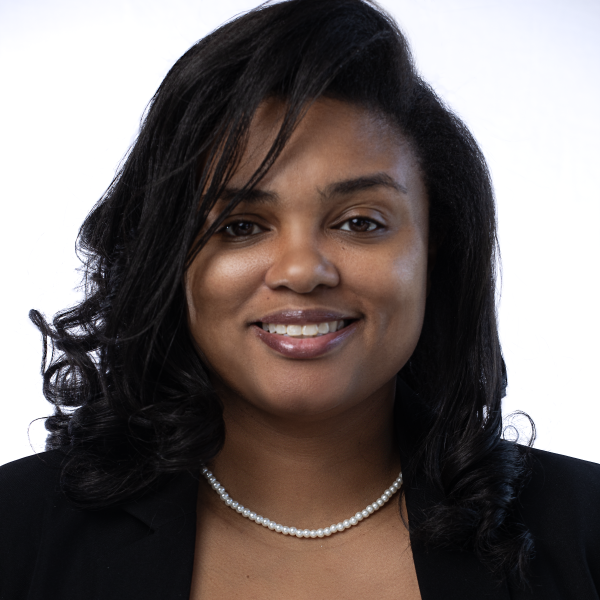
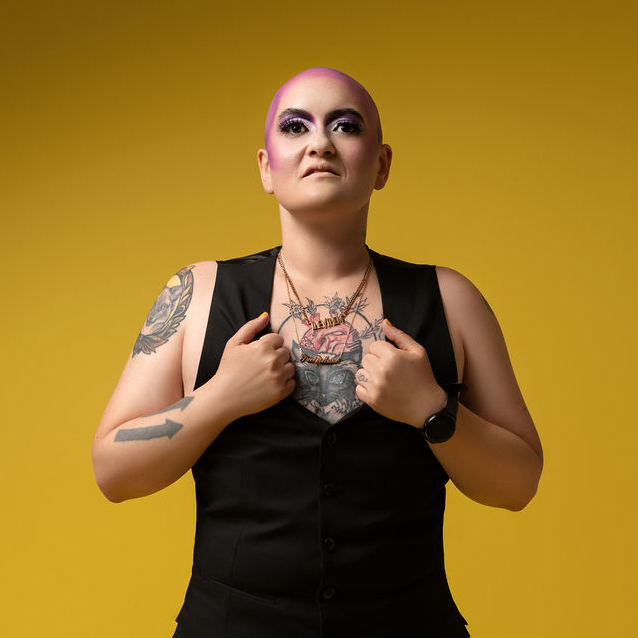
Chris Talbot (they/them) is a queer, trans nonbinary, mixed-race artist, activist, and nonprofit employee. When they aren’t working the day job, they spend their free time editing art and literature magazines, writing and illustrating educomics to help folks affirm their nonbinary pals, creating a graphic novel to describe what it’s like to be nonbinary in a gender binary world, cuddling their cat, and quad skating in the park. Purchase their debut book, Why Must the White Cis Nonprofit Workers Angry React to All My Posts? A compilation of essays, posts, and thoughts by a queer, trans, mixed-race professional surviving predominantly white cisgender heterosexual institutions.

You can find Chris at talbot-heindl.com, on LinkedIn, Instagram, Bluesky, and Twitter — and tip them on Venmo or PayPal or join as a patron on their Patreon

Photo credits: Makeup by Brittany Blaze-Shearz; Direction and photograph by Chermetra Keys/The Female Shoota; cattoo by Aura Rain Heindl-Rockman.

Beyond Philanthropy: Community-driven solutions

Beyond Philanthropy: Community-driven solutions

Episode Description

In this episode, Valerie sits down with Andrea Arenas and Michelle Shireen Muri, current consults and members of the Founding Council of Community-Centric Fundraising, to talk about reimagining philanthropy through community-driven solutions.

Accessibility

Transcripts are available automatically in the Spotify app.

Monique Curry-Mims (she/her) and Valerie Johnson (she/her) are cohosts of Beyond Philanthropy Podcast

Valerie Johnson

Valerie Johnson

Valerie Johnson joined Pathways to Housing PA in 2018, and was promoted to Vice President of Advancement and Social Enterprise in 2024. Prior to that, she worked as a fundraiser for Council for Relationships, Valley Youth House, and the American Association for Cancer Research. Valerie, a Certified Fundraising Executive, holds a Bachelor’s degree in Marketing and an MBA from Drexel University. A member of the Association of Fundraising Professionals since 2012, she served six years on the Board of Directors as Vice President of Education and Professional Development. Valerie has been a featured speaker for the PANO, NTEN, Seattle Children’s, AFP Silicon Valley, AFP GPC, and AFP Brandywine, and contributes to Generocity. She co-hosts Beyond Philanthropy with Monique Curry-Mims and spends her free time with her cats, Agador and Spartacus.

Monique Curry-Mims

Monique Curry-Mims

As Principal and Publisher at Civic Capital, an international social impact firm, Monique Curry-Mims works with social impact leaders to develop innovative strategies that facilitate, educate, and inform leaders on how to fulfill their mission and purpose in alignment with the needs of the communities they support. With over 20 years of experience managing and consulting with nonprofit organizations and foundations, Monique helps philanthropists articulate their vision by exploring the core of their mission, vision, and values. Through a facilitative process, she works with her clients to identify the specific social issues they want to address and the strategies they can employ to create a lasting legacy for their organizations and families and make an impact in their community. As part of Civic Capital’s content division, CivicContent, Monique co-hosts the Beyond Philanthropy Podcast, a monthly podcast focused on upending traditional and institutional practices of philanthropy. Monique is also the Publisher and Editor-in-Chief of Generocity, a solutions-focused social impact media outlet that takes a critical look at the impact of funding, programs, and solutions in our communities. CivicContent’s goal is to strengthen social impact through advocacy, community voices and building bridges between communities through media and journalism.

The exhausting art of making others comfortable

The exhausting art of making others comfortable

By Shama Shams, CFRE, a nonprofit executive, writer, and storyteller with over 20 years of experience in fundraising and leadership

Let me be clear: making white folks comfortable is a full-time job. One we didn’t apply for, weren’t hired to do, and shouldn’t be expected to carry.

In the late 1970s, when my family immigrated to the United States, we were encouraged—strongly encouraged—to assimilate. This went beyond learning English or adapting to a new way of life. We were expected to shed parts of ourselves: our cultural attire, our spices, our mother tongue, even our names. The whiter we looked and sounded, the more we were told we would be accepted.

So, we tried. We folded our saris into storage bins. We swallowed our accents and mimicked the cadence of American speech. We adopted behaviors, fashion, and food that felt foreign because that was the price of belonging—or so we thought.

But no matter how much we bent ourselves; we were never fully accepted. Tolerated, maybe. Tokenized, often. But truly embraced? Rarely.

Today, we talk about diversity, equity, and inclusion like they are cornerstones of progress. But the reality is that those words are increasingly being whitewashed. 

They are smoothed over, repackaged, and stripped of their weight to make sure they don’t ruffle feathers. 

Suddenly, naming racism is seen as divisive. Talking about power and privilege is “too political.” And those of us with lived experience are being asked, once again, to soften our voices to keep others comfortable.

Let me be clear: making white folks comfortable is a full-time job. One we didn’t apply for, weren’t hired to do, and shouldn’t be expected to carry.

This is not new. Historically, white-dominated systems have wielded the deprivation of basic human needs—housing, food, healthcare, and legal protection—as a tool to enforce political, racial, and social agendas.

Those of us working in the nonprofit sector are once again navigating the chilling effects of political fear tactics. The threat of funding cuts for using language that is not sanctioned by the current administration is not simply about semantics—it’s about silencing truth and stripping communities of their dignity. This is not new. Historically, white-dominated systems have wielded the deprivation of basic human needs—housing, food, healthcare, and legal protection—as a tool to enforce political, racial, and social agendas.

Now, we’re seeing that history repeat itself in real time. 

The Trump administration’s decision to terminate federal funding for legal services to unaccompanied migrant children is one such egregious example. This policy change effectively ends government support for legal representation for nearly 26,000 children who entered the United States without a parent or guardian. Without legal counsel, these vulnerable minors—many of whom have fled violence, poverty, or persecution—face expedited deportation, often without fully understanding their rights or the legal processes in front of them.

This move doesn’t just defund a program—it dismantles a critical safety net for children and families of color. It sends a message that the lives and futures of nonwhite individuals, particularly migrants, are expendable. These are not isolated policy shifts; they are part of a larger, dangerous pattern of marginalization that aims to suppress advocacy, silence truth-tellers, and dismantle systems of care rooted in justice and equity.

Nonprofit organizations must remain vigilant. We are not just service providers—we are protectors of human rights. And we cannot afford to be silent when those rights are under attack.

I am an immigrant.

A daughter of a Muslim man, named Mohammad.

My mother tongue is Bangla—the language of poets, revolutionaries, and resilience.

I have spent years trying to mold myself into something easier for others to digest. But I no longer have the energy or desire to make myself small for someone else’s peace of mind.

If my existence makes you uncomfortable, know this: your existence—when it perpetuates racism, when it demands silence from the oppressed, when it expects assimilation as the price of admission—makes me uncomfortable too.

What makes me uncomfortable is walking into rooms where I have to prove my worth.

What makes me uncomfortable is being asked to represent my race, my culture, my religion—while others get to simply be.

What makes me uncomfortable is racism—subtle or loud, institutional or interpersonal.

We didn’t come to this country to disappear. We didn’t cross oceans and borders just to vanish into your comfort zone. We came to live, to contribute, to build, and to belong.

But true inclusion doesn’t begin with comfort.

It begins with truth. With discomfort. With the willingness to confront what has been broken for far too long.

So no, I won’t whitewash my story to make it easier to hear.

And if that makes you uncomfortable—maybe it’s time to sit with that.

When we lean into discomfort with open hearts and curious minds, we become more capable of seeing the full humanity in others—and in doing so, we become better advocates, better allies, and better people.

Lean into discomfort—it’s often the first step toward meaningful growth. Rather than shying away, use it as a vehicle to explore, reflect, and evolve. Discomfort isn’t inherently negative; it simply signals that you’ve encountered something unfamiliar, something outside your norm. That moment of unease is an invitation—to expand your worldview, challenge your assumptions, and stretch beyond the borders of what’s comfortable.

Start with your own story. Take time to learn about your heritage. You may discover that you are only a few degrees removed from an immigrant journey, a story of sacrifice, displacement, resilience, or reinvention. These connections often reveal themselves when we take the time to listen—not just to others, but to where we come from.

In my work in the nonprofit sector, I’ve had the privilege of engaging with people whose lives are radically different from my own. They don’t look like me, speak like me, or live like me. Their stories are shaped by poverty, trauma, systemic injustice, and sometimes, by sheer chance. To honor those stories—to truly tell them with integrity—I have to approach each interaction with humility and curiosity. I have to be willing to dive deep, to sit in discomfort, and to listen without the filter of judgment.

Not every life I encounter is one I would choose for myself, but that’s not the point. These are not lives that require my approval—they require my empathy. Some circumstances are born out of hardship, others from generational cycles or systemic neglect. Understanding doesn’t always mean agreement, but it always demands compassion.

When we lean into discomfort with open hearts and curious minds, we become more capable of seeing the full humanity in others—and in doing so, we become better advocates, better allies, and better people.

I believe that empathy lies at the core of Diversity, Equity, Inclusion, and Accessibility (DEIA). When we strip away the politics, performative checkboxes, and coded language that too often cloud these conversations, what remains is a deeply human need—the desire to feel seen, valued, and like we truly belong. 

DEIA is not just a strategic initiative or a compliance measure; it’s about recognizing our shared humanity. It’s about creating spaces where people don’t have to shrink themselves to fit in but instead are celebrated for who they are. 

Empathy invites us to listen without defensiveness, to acknowledge experiences beyond our own, and to act with compassion and accountability. At its best, DEIA work reconnects us to one another, reminding us that inclusion isn’t about losing power—it’s about making room for everyone at the table.


Shama Shams

Shama Shams

Sanjukta (Shama) Shams, CFRE (she/her) is a nonprofit executive, author, speaker, and podcast host with over 20 years of experience in fundraising, storytelling, and leadership. As Chief Impact Officer at Uplift Northwest, she champions workforce development and community empowerment. She teaches nonprofit storytelling and fundraising at Seattle-area colleges and hosts From Passion to Purpose, amplifying nonprofit leaders’ voices. Follow Shama on LinkedIn.

The purge and the purpose: Saying goodbye to those abandoning justice in nonprofit work

The purge and the purpose: Saying goodbye to those abandoning justice in nonprofit work

By Esther Saehyun Lee, CCF fundraisers through the good times and the bad

Community-Centric Fundraising (CCF) isn’t a framework I adopted as a nice-to-have; it was critical for me to locate myself in this work.

It’s time to locate ourselves in this movement, now more than ever

I didn’t fall into fundraising.

I actually tried to reject this career path.

I couldn’t see my purpose in this sector.

Despite having a career coach advise me that this was a sector that aligned with my values and my skillset, I tried to refuse. I thought, (both correctly and incorrectly), that fundraising was about pandering to powerful, rich, and mostly white people. Then, the pandemic happened. And I had lost my job and paid off my loans, all in the same day. And I thought, maybe I will try out fundraising.

Reading books telling me how many you’s I should place, how I should pander to donors, etc., felt like I made a mistake.

There was no lens to examine the power dynamics between fundraiser and donor, no discussion of how wealth is inequitably accumulated, no critical examination of the unprincipled hoarding of wealth and power and how this sector is used to leverage this while maintaining a guise of altruism.

I was getting frustrated with this until I came across Vu Le’s article on white supremacy and the problem with centering donors’ interests and emotions. Then I felt I understood how I could belong to this sector.

It wasn’t until this moment that my studies for fundraising became a critical examination of how this industry practice excluded BIPOC and perpetuated white supremacy. 

All this to say, Community-Centric Fundraising (CCF) isn’t a framework I adopted as a nice-to-have; it was critical for me to locate myself in this work.

CCF gave me purpose as a fundraiser and resource mobilizer.

I say this now because there is a disturbing trend of fundraisers and nonprofit folks who seem to have considered this movement and framework as an extra, rather than a need. Who think they can take the principles and pieces of the ethical framework they consider beneficial to them and leave what’s “not.”

In this current climate, this is especially dangerous to do and especially dangerous to be around. 

Right now, the political climate is a terrifying one.

Right-wing politics and politicians are dominating our news cycles. There is increased surveillance on justice movements and organizations, daily violence inflicted on queer and trans communities, bodily autonomy is at stake—oh, and we know the world is burning, right?

Our sector especially has been hit hard with slashed budgets, frozen funding, and continued decimation of our sector’s resources in more ways than one.

The conversation we’ve been having about how this will affect our most vulnerable—the folks in our community who are directly impacted by this—is ongoing and remains terrifying.

But the one I want to address today is the conversation around DEI and the threat this has to all folks and organizations oriented toward justice.

While I have my criticisms and reservations about DEI as an industry (this is a whole separate article), the critical conversation we are having about this is needed.

Revealing True Commitments

Regarding the folks softening their language, prioritizing their comfort, and claiming a sudden reduction in risk capacity—let them go. One of the more nefarious dangers to justice movements is precisely the white moderate. And this sector has a tendency to reward and celebrate them.

Many organizations and people jumped on racial equity and DEI (I include CCF) because it was trendy to do so. Because there was a global call for equity and justice in 2020. Because people were at risk of losing out if they didn’t join this movement.

As the risk to implement these principles grows, as the tangible threats to justice show themselves, let these folks show themselves out.

There are those who are already removing their pronouns from their LinkedIn profiles, who are already deleting anti-racism and anti-oppression from their organization’s values, immediately erasing any trace of their “fervent commitment to equity” from their work.

Regarding the folks softening their language, prioritizing their comfort, and claiming a sudden reduction in risk capacity—let them go.

One of the more nefarious dangers to justice movements is precisely the white moderate.

And this sector has a tendency to reward and celebrate them.

This sector was designed by white moderates for white moderates. And yes, BIPOC folks can also perpetuate this specific behaviour of performative activism and fervent defense of the status quo (again a complicated conversation and another article pending!). 

Perhaps now’s the time for a seismic shift. Where we don’t celebrate mediocrity or empty gestures signifying equity but resulting in nothing. Let the dust settle and let’s see who really understands that risk is the cost of entry for racial justice and wants to support each other and weather it together.

I’ve never been interested in discussing racial equity with people who prioritize their own individual comfort above collective justice—and I think this muscle to discern who is doing so is critical to build now.

The Path Forward

There will be grief. It will be painful. But it’s not new.

It will also equip us with the required vigilance to know who will be our accomplices and who stands in the way of progress, of community, of abundance, of justice.

Let the purge happen. It’s already happening anyway. 

We’ll grieve the loss of folks we thought were on our side. We’ll still care for them. We’ll still build this world with them in mind.

But when they show themselves as false allies and you see them distancing themselves from the risk inherent in justice work, then we have to say goodbye.

The question shouldn’t be “What will happen with these DEI clawbacks? What will we lose? Who will we lose?”

The question is, “Who will remain?”

Because there are folks for whom justice and equity is not a resume booster, not a job, not a value set by an organization or a political party, but a lifelong conviction.

And those are the folks we want to be in community with.

Those are the folks we want to fight side by side with.

Esther Saehyun Lee

Esther Saehyun Lee

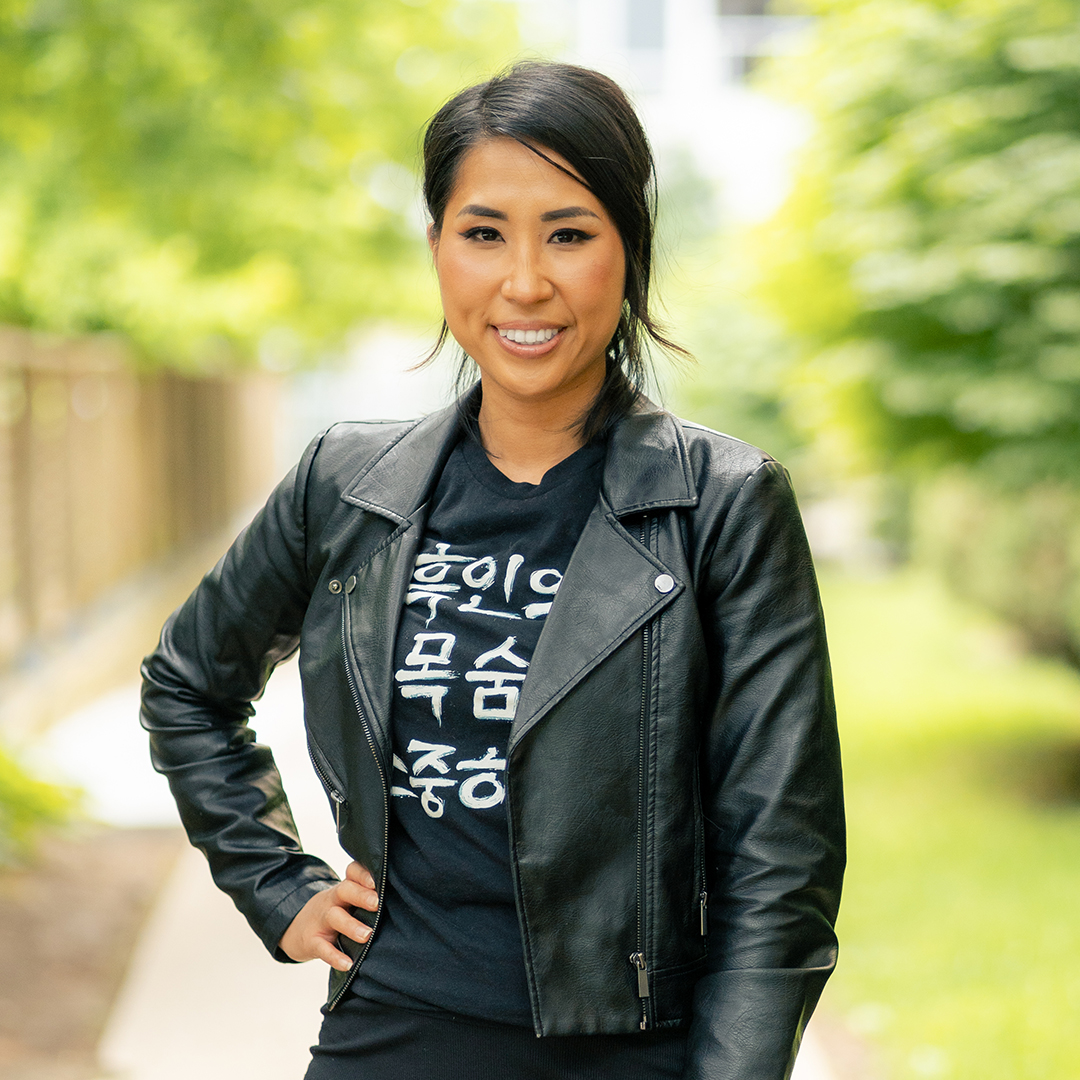
Esther Saehyun Lee, MA, (she/her) is a Community-Centric fundraiser and Consultant at Elevate Philanthropy Consulting. She is a fundraiser, storyteller, and advocate who works to mobilize resources to communities. In her work and volunteer positions, she challenges and dismantles systems of power in the nonprofit sector to ground its practices towards equity and justice. She’s helped many nonprofits increase their revenue, implement fundraising processes and structures in a CCF lens, and has demonstrated increase in both revenue and donor base.

She is dedicated to advancing the mission of justice in the nonprofit sector and does so in her roles as a Community-Centric Fundraising (CCF) Global Council member and Interim Board Member of Association of Fundraising Professionals Greater Toronto Chapter. She is a movement builder dedicated to making space for people of colour within the nonprofit sector. In addition to these titles, she is an amateur banjo player and cat mom. If you’d like to chat about equity in nonprofit, grab a virtual coffee, or just exchange memes, find her on LinkedIn. If you’d like to work with Esther, book a meeting with her.

World-building at world’s end: Our responsibility at the precipice of catastrophe

World-building at world’s end: Our responsibility at the precipice of catastrophe

By Alli Rolle, with you in the now, and the world to come

Here we are fragile, but not yet broken. Here we are rallying in defiance. Here we are with our ancestor’s breath fresh in our lungs. We are at this moment together. We are facing this moment with eyes wide open. It is now that we summon the screams in our chest. It is now that those sounds must create anew.

This essay seeks to salve the soul. 

This essay seeks to speak to the screams in your chest. 

I hope this reading serves as a communion, as a summoning toward collective action. 

I hope this reading addresses your despair. 

And I hope it prepares you for the work that is to come.

First, we must acknowledge that we are at the precipice of catastrophe. We stand in horror as the state incapacitates us mentally, physically, and spiritually. We tremor as Black, Indigenous, People of Color (POC), Queer, and Trans bodies are targeted and attacked. 

We are stunned, and we are terrified. 

The reverberations of this moment wrack through our collective bones. It incapacitates us, driving into the spine, and wedging a stake into our collective hearts. This moment is haunting, one that relentlessly pursues our unwavering and unmoving surrender. This moment is disturbing. It seeks to do away with our presence and very existence. 

Yet here we are at this precipice. Here we are fragile, but not yet broken. Here we are rallying in defiance. Here we are with our ancestor’s breath fresh in our lungs. We are at this moment together. We are facing this moment with eyes wide open. It is now that we summon the screams in our chest. It is now that those sounds must create anew.

As an activist, I often reflect on the consequences of the moment. I reflect on our despair, but I also reflect on our futures. What this moment calls for is a turn toward the collective. A turn toward the elusive. 

What this moment calls for is a summoning. For communion at the site of imagination. This moment calls on us to renew our purpose. It calls on us to build new worlds.

As fundraisers, we are required to take part in world-building at world’s end. We are required to compile our knowledge(s), experience, and ambitions to create futures beyond the current epoch of systemic and social violence. Right now, we must begin composing strategies, networks, and movements that bring about life possibilities in the midst of turmoil. It is only in doing so that we may survive the horrors of the present. 

World-Building at World’s End

As articulated by Kelly Hayes in Let This Radicalize You, we must ground ourselves in the here and now and remember that the world is much bigger than this moment. While this may seem impossible, it is a challenge we have no choice but to face. To survive this moment, we must dare to see beyond today. We must dare to see beyond ourselves. We must turn toward one another if we are to tear down and build again.

We can begin by sharing our knowledge in grounding places, in the spaces we reside in and interlock with. For some of us, this involves sharing acquisition strategies. For others, it is active participation in capacity-building. 

I have seen incredible movements manifest from the mingling of collective minds. I have seen movements made by radical acts of defiance and love. As fundraisers, it is our responsibility to share with our communities, and all communities forced into the zone of inhibition. This means we must use our skills to ensure safety and our financial, nutritional, and spiritual security. 

Our knowledge has given us the means to create strategies that bolster the capacity of community programs. It has given us the ability to foster economic, housing, and food sovereignty for our communities. It has given us the cache to create free courses, workshops, and roundtable discussions. It calls on us to serve as mentors to our youth and collaborators in liberatory spaces. 

To participate in constellations of knowledge is to form kinship at world’s end. It is in this kinship that we self-sustain, and it is in this kinship that we may survive, and one day again thrive. 

What I am imploring of you is a commitment to upending knowledge hierarchies in the pursuit of something greater. What I am imploring of you is a reimagination of your purpose, and how your knowledge can transform time, atmosphere, and space.

Beyond Ends to New Beginnings

It is our responsibility to produce efforts that move us toward liberation. We spend our careers cultivating wealth for organizations, we must bring these skills back into community spaces.

It is at this precipice that we have the opportunity to create anew. We may conceptualize this moment as what Jennifer James calls “the bottom” in the paper “A Theory of the Bottom: Black Ecofeminism as Politics.” “The bottom” is a forced site of residence where we may reconstitute the future. It is at the bottom that we think, coalesce, and take collective action. It is at the bottom that we meaningfully practice community care. 

As fundraisers, we must participate in the composition of new systems of care in kinship with artists, scholars, cultural workers, youth, elders, and a host of others. This means we must reconceptualize our roles beyond the confines of job description to understand how our skills bring about the worlds we seek to create. 

In my work, I use my skills to create spaces, supports, and food sovereignty for Black, POC, and Queer youth. I use my skills in collaboration to ensure that communities thrive. 

For you, your contributions may manifest differently. However, your ambitions should be the same. 

It is our responsibility to produce efforts that move us toward liberation. We spend our careers cultivating wealth for organizations, we must bring these skills back into community spaces. This means we must reconceptualize wealth, to embrace a definition that foregrounds collective empowerment. This means we must jump into the battle against systemic violence and help create spaces for respite and reconstruction.

To prepare for this work, we must reimagine our role in collaboration with those around us. We must think beyond acquisition and retention to bring about survival and sustainability. The work we do in tandem with others will serve as a salve to the harms we have endured. The work we do in tandem with others may serve as a map toward new worlds yet to come. 

What I implore of you is to embrace a new understanding of your role, of your position, of your purpose. What I ask is that you connect with communities, and become a part of grassroots movements. What I ask is that you prepare for this work to begin, and for it to start imminently. 

I will not promise you a gentle path out of darkness, but I can promise my presence at this cliff’s edge. 

Alli Rolle

Alli Rolle

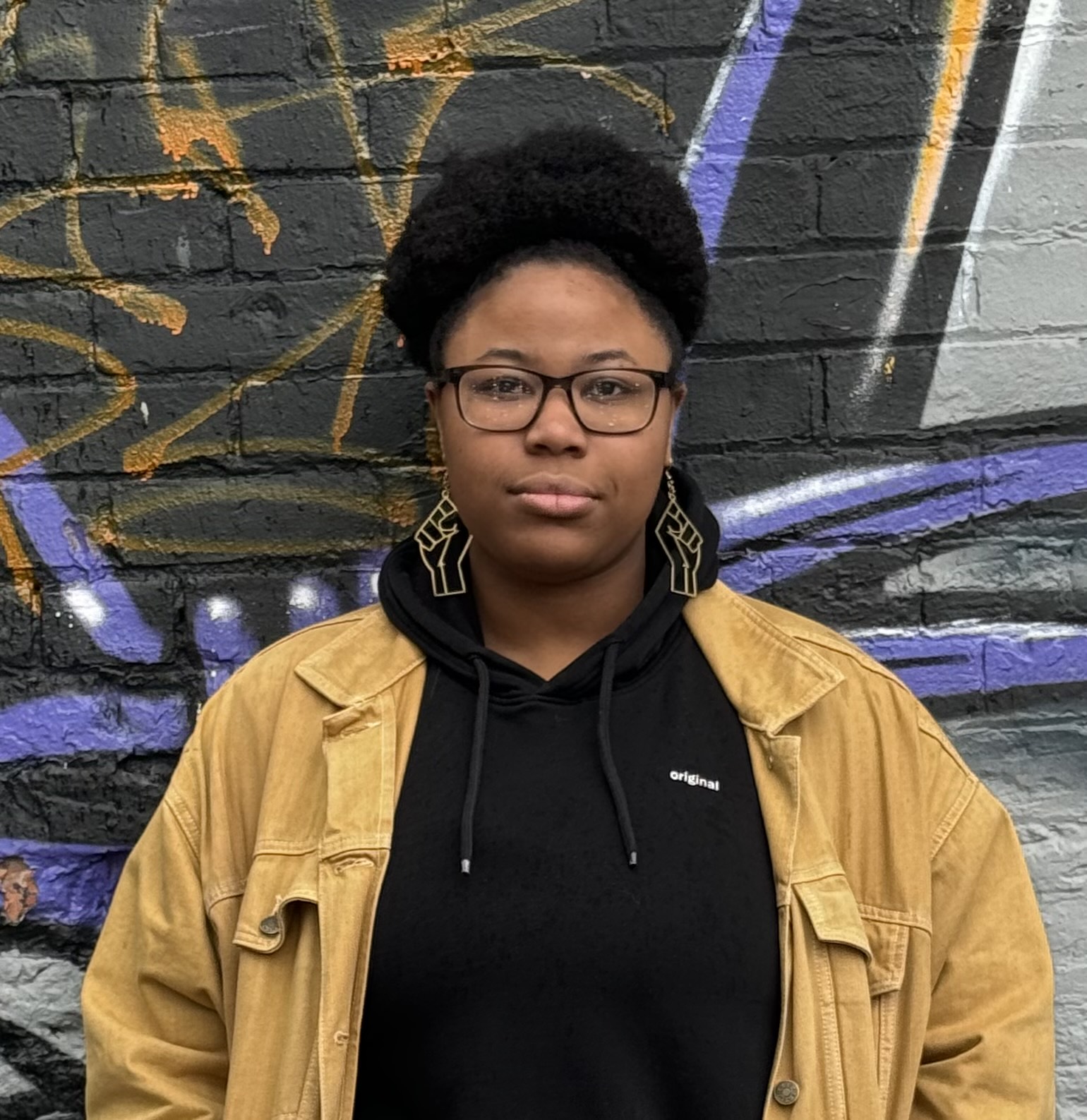
Alli Rolle (they/them) is an award-winning artist, scholar, non-profit leader, and activist. Honoring the legacy of their ancestors, Alli seeks decolonial futurities that bring about collective liberation. Alli’s work centers an Afro-Queer-futurist approach that both critically reflects on – and reimagines – life possibilities for the Black, Indigenous, Queer, and other marginalised people. Outside of the fundraising sector, Alli shifts theory to praxis by creating art-based programs that disrupt the historic and ongoing processes that subjugate marginalised bodies.