Once upon a whisper in the wind: A CCF origin story

Once upon a whisper in the wind: A CCF origin story

By Dāna James, feedback & connection coach, engagement strategist for people-powered projects and Naseem Kapdi, a compassionate, introverted career coach who specializes in working with immigrants, first- and second-generation BIPOC, and early-career professionals navigating professional transitions

The Fairy Tale

2018: A Spark in the Air

Once upon a time—not in a castle, but in a fogged-up café tucked away in Seattle—nine fundraisers gathered around a wobbly table, laughter too loud for the space, mugs clinking instead of glasses.

This wasn’t the first time they’d met like this. But that night, something was different. They were worn down, fired up, and tangled in a nonprofit system that claimed to be about liberation but still asked them to twist themselves into shapes that pleased power.

Someone’s latte had gone cold mid-rant. The air was thick with truth-telling—strong as Vietnamese coffee, warm as jasmine tea.

There wasn’t an agenda—just tired hearts, well-worn jokes, and the kind of sighs you only let out when you’re finally with people who get it.

They were tired.

Tired of the whispers in the boardroom that said, “Let’s center the donors,” while pushing their communities to the margins. Tired of showing up to jobs that claimed to be about justice, only to find themselves toeing the line of the status quo.

“Why are we lifting up donors as heroes, while acting like people need saving?”

These weren’t just fundraising problems. These were systemic problems—centuries-old, colonizer-made, class-stacked, white-supremacy-enabled problems.

The café was quiet for a beat—until a shimmer flickered by the window. A golden-winged butterfly slipped through the crack in the glass and landed gently on the rim of a chipped mug. Some say that’s when the universe leaned in to listen. The butterfly’s wings beat softly in the light, like a whisper in the wind.

They knew they had many more conversations ahead of them, but they made a promise to listen, reflect, and keep the conversation going.

The First Butterfly

Later that night, in a quiet kitchen lit by a single bulb, one fundraiser rinsed mugs as she replayed the evening’s conversation.

A soft flutter brushed past. A golden butterfly landed on the edge of the dish rack. It didn’t speak in words—but its presence thrummed with something clear, undeniable.

It felt like a birth—not of something new for novelty’s sake, but of something ancient being born again, fully seen and fully named.

The butterfly vanished. But the air was changed. The kitchen smelled different—like cinnamon and clarity.

The Second Butterfly

The next butterfly arrived in a kitchen full of bubbling stew and the rhythmic sound of a knife on a cutting board as one of our fundraisers prepared dinner for their family.

A radio hummed softly with an old love song.

They laughed while flipping through a family recipe book—half sauce, half memory.

The butterfly hovered gently, then settled near a worn photo on the fridge.

In the picture, a teenager in a graduation cap stood surrounded by neighbors—some holding trays of food, others wrapped in jackets and joy.

The card table was sagging under the weight of the dishes.

There hadn’t been enough money for a party at first, but the block came together: someone made tamales, someone else printed invitations, and an elder passed around an envelope with “Congrats” written in careful cursive.

These weren’t rules. They were ancestral recipes. Gifts. Seeds.

Taking in a full, deep breath they opened their notebook and nodded. Something was being birthed—a deeper kind of alignment.

They knew they weren’t alone.

The Third Butterfly

This kitchen was small but vibrant—steam on the windows, a table cluttered with sticky notes, a baby monitor blinking on the counter.

One of our fundraisers sat with her head in her hands, laptop open to another long donor appeal that felt like a lie.

The butterfly didn’t flutter in loudly. It slipped in through the drafty window and landed on the keyboard.

Outside there was the sound of community at work, a neighbor’s pipes had burst from the cold. No one asked who would pay. People just showed up.

One brought towels. Another ran to the hardware store.

A teenager carried buckets barefoot. A retired teacher offered cocoa and a flashlight.

Many came with hands empty, ready and willing to help share the weight of labor.

It wasn’t charity. It was kinship.

A reminder that time, care, and effort are currencies, too.

Something transformative was being born in that exchange.

The fundraiser breathed deep—then deleted the appeal draft and started over.

This time, it felt honest. It felt like they were fostering something rooted—not performative.

The beginnings of a new kind of truth-telling.

The Fourth Butterfly

The final butterfly arrived in a kitchen where the light never quite reached the corners—but the love did.

Another of our fundraisers hummed as he folded laundry beside a simmering pot of tea. Papers rustled on the counter—reflections from a healing circle the night before.

The butterfly appeared, resting for a moment on a still-warm mug. The air thickened. Not heavy—just sacred.

This wasn’t about doing more. It was about becoming more whole.

It was about fostering liberation—not just funding programs. About giving birth to ecosystems of trust, where we are not just surviving.

Not extracting. Not competing.

Becoming.

Our fundraisers weren’t confused. They had a spark.

They saw how their aunties organized rent parties.

How their immigrant neighbors ran mutual aid before it had a hashtag.

How their ancestors braided resistance into every thread of survival.

They said: “Let’s write a new story. A fundraising story where community comes first. Where equity isn’t an afterthought—it’s the main character.”

2020: A Fire Gathers

This vision didn’t come out of nowhere. It rose in the wake of deep grief.

The murder of George Floyd.

A surge in anti-Asian and anti-immigrant hate. ICE raids.

A pandemic that cracked open every quiet inequity and laid it bare.

The butterflies didn’t flinch. They had seen pain before, carried it through each life cycle.

The fundraisers gathered again, this time in digital rooms that pulsed with urgency and care.

They spoke across time zones, across dinner prep and bedtime routines.

They weren’t starting something new.

They were giving birth to something that had long been gestating in silence—something fierce, tender, and necessary.

They were not certain of much, but they were certain of one thing. That they would do it together.

The Founding Council and the larger community began to put into words the collective wisdom they had carried all along—truths once felt as whispers in the wind, now ready to be named.

The Ten Principles: A Living Compass

From butterfly wings and kitchen truths came ten principles. Not commandments. Not corporate values. But a living compass to help fundraisers, nonprofits, and communities navigate toward justice and joy:

  1. Fundraising must be grounded in race, equity, and social justice.
  2. Individual organizational missions are not as important as the collective community.
  3. Nonprofits are generous with and mutually supportive of one another.
  4. All who engage in strengthening the community are equally valued, whether volunteer, staff, donor, or board member.
  5. Time is valued equally as money.
  6. We treat donors as partners, and this means that we are transparent, and occasionally have difficult conversations.
  7. We foster a sense of belonging, not othering.
  8. We recognize that healing and liberation require a commitment to economic justice.
  9. Everyone (donors, staff, funders, board members, volunteers) personally benefits from engaging in the work of social justice – it’s not just charity and compassion.
  10. The work of social justice is holistic and transformative, not transactional.

The Spark Catches

The principles went live on a brand-new website.

And let us tell you—the people were ready.

At the first virtual town hall, 2,800 people showed up. Not one, not two—three websites crashed. It was a beautiful mess of momentum.

The CCF Blog, affectionately dubbed “The Hub,” became the cozy-chaotic kitchen table where fundraisers could swap stories, share visions, and spit truths.

They found a fiscal sponsor, raised seed funds, and kept the admin light.

Because the goal wasn’t permanence—it was birthing transformation, not building an empire.

But Movements are Messy

Now honey, every fairytale has a plot twist. And this one? Conflict.

There were communication breakdowns. Burnout. Deep questions about power.

Times when silence hurt more than disagreement. When transparency faltered. When labor wasn’t shared.

But here’s the thing: they didn’t pretend it was perfect.

They said: “Avoiding conflict doesn’t keep us safe. Justice does.” So they stayed at the table. Repaired what they could.

And when it was time, the Founding Council didn’t clutch the mic. They handed over the stage.

And What Did We Learn?

This isn’t a fairy tale. It’s a living, breathing story made of spreadsheets, side-eyes, solidarity, and stubborn hope.

Here’s what we know now:

  • Naming systemic and cultural injustice isn’t a sidebar—it’s the story.
  • Collective power grows from community, not control.
  • Movements need care, agility, and shared labor—not just charisma and logos.
  • Transformation doesn’t wear tuxedos. It wears love, sweat, glitter, and grief.

These ten principles? They’re not commandments.

They’re a compass. They’re kitchen-table spells.

And they’re fostering something bold and beautiful.

The Kettle’s Still Warm

So, this is the part where the narrator pauses and looks directly at you.

Not to say “The End.”

But to ask: What kind of magic will you make now?

The butterflies are still flying.

The kettle’s still warm.

Dust off your teacup.

Pull up a chair.

We’re just getting started.
Dāna James

Dāna James

Dāna James (she/her) is a key member of Berklee’s Alumni Affairs team and serves as Global Council Member and Community Architect for Community-Centric Fundraising (CCF), where she empowers individuals to build inclusive, intersectional spaces of belonging. Recognized for her expertise in workflow design, power dynamics, and grassroots engagement, Dāna is a dynamic speaker and currently a 2024 Feedback Champion with Feedback Labs.

Her knack for blending technology solutions with team culture has made her a go-to resource, and her analytics and engagement insights are widely respected. As the founder of the Transformative Culture Coalition, she has created spaces to recognize and unlearn white supremacy culture in everyday practices—encouraging ongoing, transformative learning that builds more supportive work environments.

A proud data nerd and classic music-theater kid, Dāna is an unapologetic voice celebrating the bittersweet symphony that is the human experience, championing those on their path to empowerment and self-expression. Blending antiracism principles with the arts and storytelling, she helps creative professionals overcome the constraints of mainstream U.S. culture and speak with their full voice. As Dāna says, “You make sense. You are enough. Be seen.”

Follow @practicedana on Instagram.
Naseem Kapdi

Naseem Kapdi

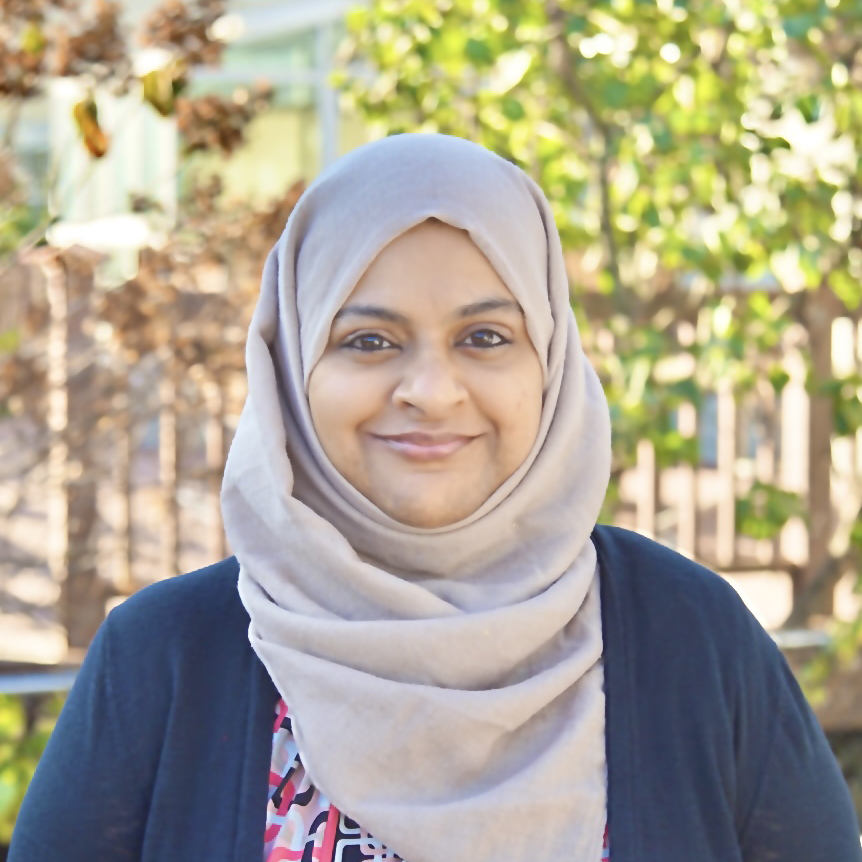
Naseem Kapdi (she/her) is a compassionate, introverted career coach who specializes in working with immigrants, first- and second-generation BIPOC, and early-career professionals navigating professional transitions. As the founder of Kimiya Coaching, she brings a calming presence, deep empathy, and a reflective approach that helps clients build meaningful careers on their own terms.

With a background as an educator, writer, pastry chef, and nonprofit professional, Naseem weaves creativity and insight into every coaching relationship. Her own journey as a first-generation professional informs her belief that career development—like crafting the perfect cup of chai—requires patience, intention, and the right mix of ingredients.

Naseem also supports creatives of color—those navigating 9-to-5 roles while exploring their creative process, pivoting into new paths, or working through the unique challenges of creative careers. She creates space for curiosity and courage, helping clients reconnect with their voice, vision, and values.

In 2025, Naseem was honored with the Community Rise & Recognize Award for her work building transformative spaces for BIWOC to connect and thrive. Through her practice, she continues to support others in steeping into their full potential—with authenticity, grace, and a generous pour of support.
The catalyzing synergy of anger and hope

The catalyzing synergy of anger and hope

By Kelly Phipps, fundraiser, dog mom, and member of the Community-Centric Fundraising Global Council

We are called to do more than collectively simmer.

The fundraisers you know are Stressed with a capital S. 

Over the last six months, I’ve joined countless briefings, gatherings, and conversations. I’ve both generated and absorbed the anger, sadness, and fear abuzz in our field. I’ve witnessed the collective contingency planning and seen foundations and organizations speak out and push back in powerful ways. 

Our anger is righteous

I’ve also witnessed the mix of these emotions land so hard that despair sets in. And when despair sets in, reactive approaches take root and the work becomes a waiting game instead of one of momentum. Anger when paired with despair takes the wind out of our movement sails. 

Our anger is powerful. And it must be tethered to hope.  

Today and in the fights yet to emerge, our righteous anger has a potent and wise partner in hope. As fundraisers, we help others tap into “what if the future could be…?” visions about what’s possible in our communities and the world. And we offer a pathway to invest in that vision[1]. Hope is embedded in our nature. 

Like every trait embedded inside of us, our environments and circumstances can influence how it manifests. And right now, there are intentional tactics at play meant to stifle the hope that is so critical to our movements. Tactics that stealthily wither up our optimism and create fertile ground for jadedness and scarcity. Tactics that redirect our imagination away from future-building and towards dreaming about the worst-case scenario. 

And as a Black woman who navigates compounding systems of oppression threatening both me and those I love—trust me, I get it. The contradictions that can come with being a community-centric fundraiser operating inside of the existing systems are particularly prickly right now. 

…what’s gotten me out of bed and into a posture of action is when I can both acknowledge and grieve for what’s at stake, and hold tight to what’s possible. In these types of conditions, to hope is to resist.

And yet, what’s gotten me out of bed and into a posture of action is when I can both acknowledge and grieve for what’s at stake, and hold tight to what’s possible. In these types of conditions, to hope is to resist[2]

We often hear mariame kaba’s wisdom that “hope is a discipline.” And while I don’t yet have it figured all out, or get it right every day, I know that this moment is calling me to be a student of that hope. 

If you want to join me in being a student of hope and infuse that into your daily practice as you mobilize resources for your community—let’s get it. Here are some quick ideas on how you can cultivate a strengthened partnership between anger and hope:

1. Acknowledge and dampen the muzzle velocity 

Political commentator and journalist Ezra Klein spotlit the concept of muzzle velocity – a tactic described by St*ve Bann*n meant to overwhelm and confuse us into complacency. This can make it hard to plan, understand clear threats, and respond strategically. It makes our work feel ten steps behind and reactive. Muzzle velocity puts us into emotional spirals and dysregulation. It numbs us. 

But if you wait 24-48 hours after a shocking executive order, something curious happens. You’ll see judges block the order, chaos erupt around implementation, and lawsuits change the pace. The threats still exist, and sometimes the emperor indeed has no clothes. Naming and understanding this pattern and why it exists is helpful because it invites us into more daily control over how we engage with information. 

Ways that I personally dampen the impact of muzzle velocity[3] in my life looks like: choosing a curated list of trusted news sources (often hyperlocal or nonprofit media organizations); having set times I engage with the news; asking myself clarifying questions to get to the root of concrete risk; and engaging with stories of wins in communities. 

2. Move in community

I remember sitting around a dinner table while at a Black organizer training a few years ago and the topic of climate crisis came up. The real and scary threats to Black and brown women and children across the globe hung heavy in the air. We started talking about how the climate crisis would impact different areas of the United States and I thought: “Ah! What will I even do when that moment comes?” 

Someone next to me chimed in and said, “Well, I’ve been studying community transitions and I’ve been thinking about how Black communities can coordinate.” I then perked up and shared that I had family in the states estimated to get an influx of people and could help coordinate places to stay. The table erupted with excitement and brainstorming and shared resource ideas. Within seconds, our completely hypothetical planning melted my anxiety and gave us shared hope and a mandate. 

Our solutions, fights, and actions now and in the near future will only be as strong as the community it’s connected to. As a fundraiser, what communities are you moving in? How can you engage more with community-centric fundraisers and those who should be leading the way (Black and brown working class, queer, and system-impacted folks)? How can you ground more deeply in the CCF principles

3. Practice playfulness. Invoke imagination. 

When I was a child, I would dig up rocks and agates in my wooded backyard and collect them. Collecting those rocks ignited my sense of wonder and discovery. They were little reminders of beauty. After finding my rocks, I would climb our pine tree and look out over the neighborhood and daydream. 

I saved a few of those agates and keep them on my bookshelf. In the last year, I’ve made a practice of holding one in my hand while in meetings. Twirling that agate in my fingers is a simple practice that keeps me grounded and reminds me to listen to my inner child—especially when the conversation is heavy or thorny.  

Black feminist author bell hooks shared in Teaching Community: A Pedagogy of Hope, that “To be truly visionary we have to root our imagination in our concrete reality while simultaneously imagining possibilities beyond that reality.” 

Our work is often serious. And if we dwell only in the headspace of what’s wrong in the world, our momentum is not sustainable. And furthermore, the future world we imagine becomes limited. Lackluster. 

Our inner children know a thing or two about imagination and play. And while I don’t subscribe to the notion that childhood is all easy and fun, children have a knack for play that is actually powerful and counterculture. Such wisdom exists in the child that can play and laugh and imagine in the face of bullies and uncertainty. What can we learn from a child whose daydreams reject the box society puts them in?

Play looks different for us all. It might mean going outside and touching a tree between meetings. Or blasting your favorite unserious song while driving to a funder meeting. Or brainstorming with chalk and paint instead of spreadsheets with your colleagues. If you are unsure of how to cultivate play and imagination into your day, think about what you did for fun as a child. I bet little you has the answer. 

4. Make hope an action. 

An undeniable way to catalyze the synergy of anger and hope is to get involved. Find a local community-led organization or political home and get involved! Have the hard conversations with friends, families, and neighbors. Get to know your local elected officials and engage them regularly around issues close to your heart. Our presence and involvement are a declaration that our world is worth fighting for.

Anger powers our engines. Hope must steer.

Brittany Cooper, the author of Eloquent Rage, says that Hope is about the belief that we can make things better.We are called right now to do more than collectively simmer in anger. Because when we make unlikely but balancing partners with anger and hope, our movement momentum thrives. How are you committing to hope today?

Footnotes

  1. I say this acknowledging the paradoxes of nonprofit 501(c)3s as imperfect containers for advancing community work inside of our existing systems.
  2. “Hope is an act of resistance.” — Preston Norton, Hopepunk
  3. Dampening the impact of muzzle velocity is not an invitation to disengage and not be aware. It’s an invitation to engage in a way that lessens confusion and numbing that stymies our action.
Kelly Phipps

Kelly Phipps

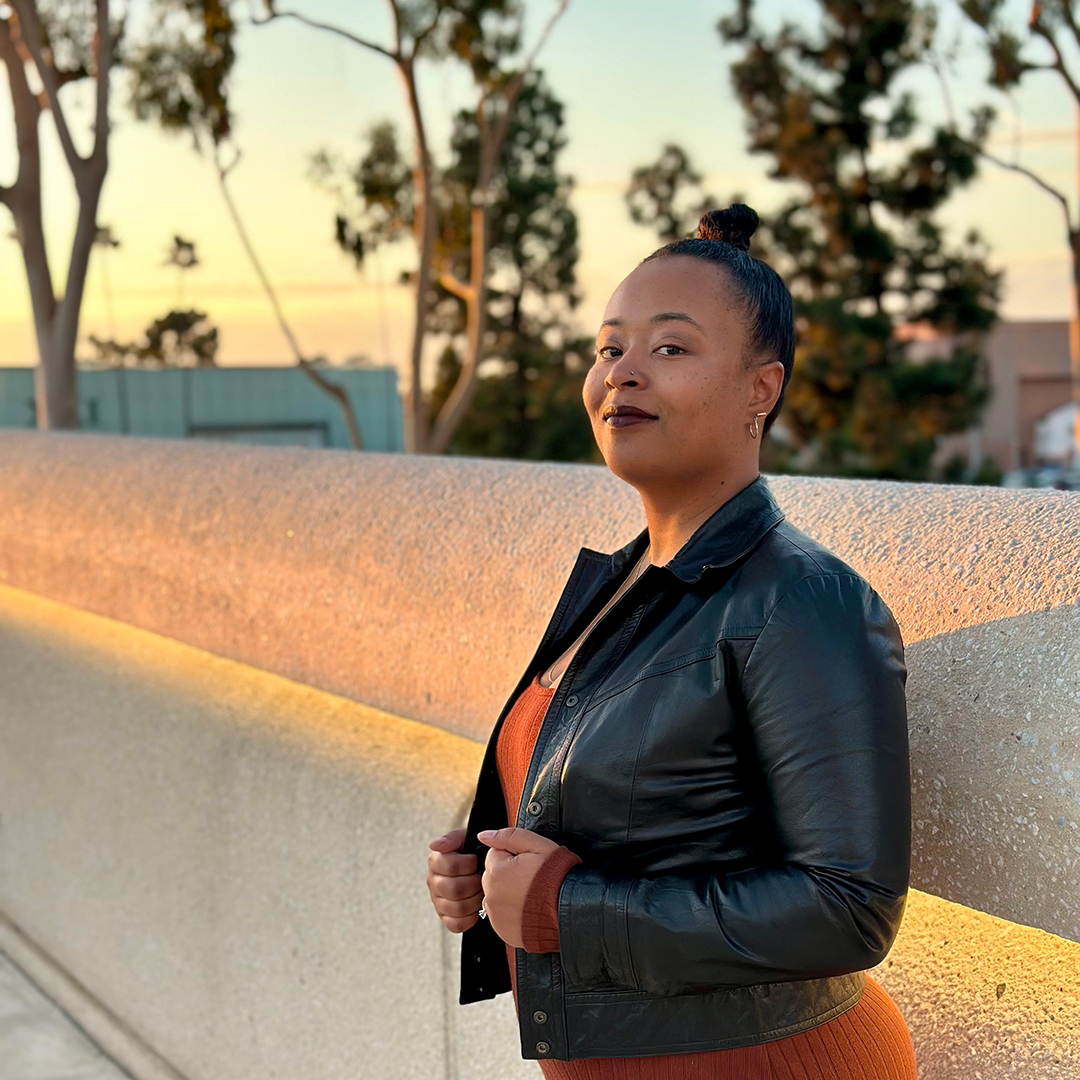
Kelly Phipps (she/her) is a doting auntie, audiobook-lover, and dog-cuddles enthusiast. When she isn’t in the thick of an Afrofuturist novel or learning to dance, Kelly serves as the fundraising and communications director at a social justice organization. Kelly has spent over a decade in nonprofit fundraising and communications (in healthcare, higher education, and grassroots community work). You can connect with Kelly here.

If we have to work to support our families, work should support our families: a call for Paid Family Leave across the sector

If we have to work to support our families, work should support our families: a call for Paid Family Leave across the sector

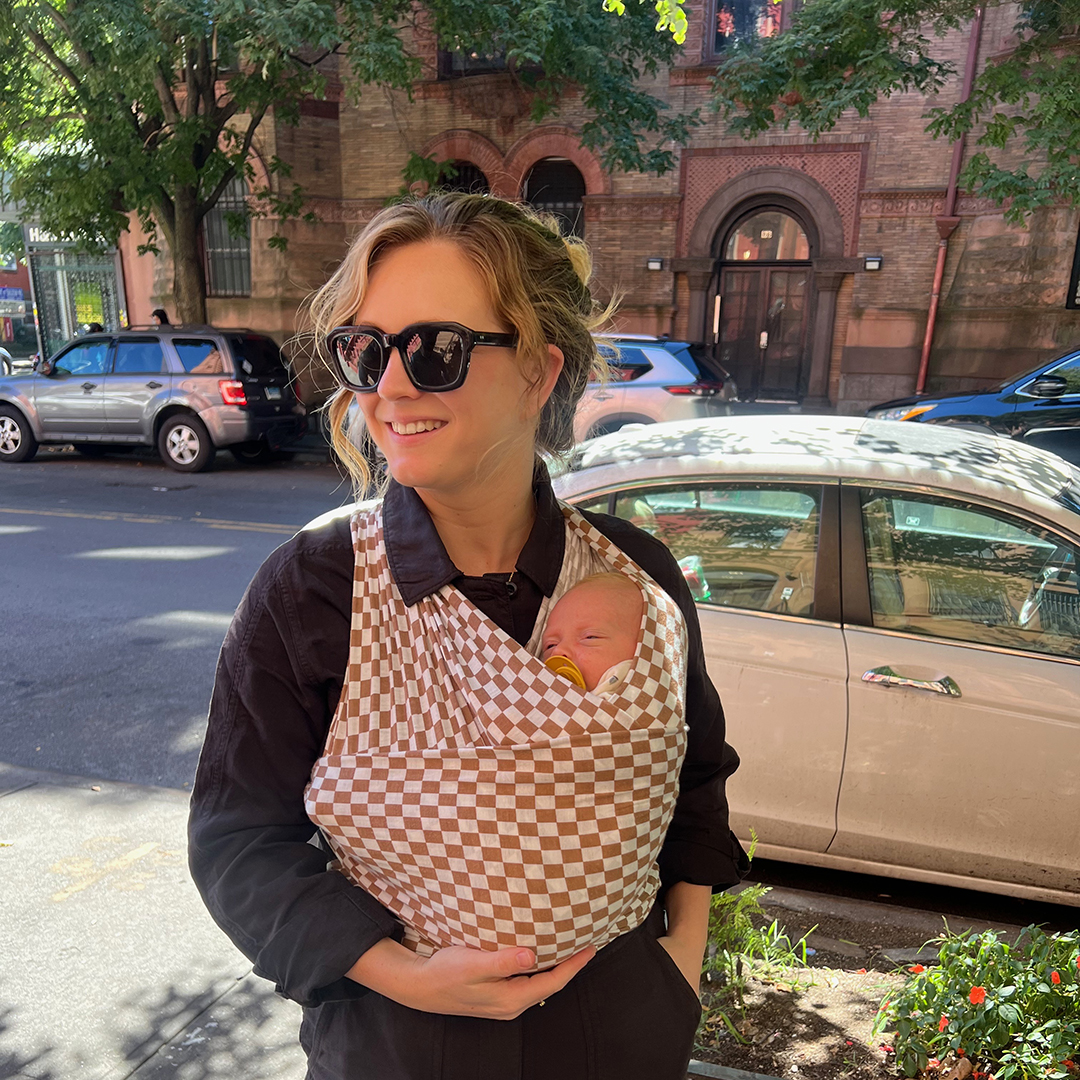
By Kate Greenhouse, fundraising copywriter and baby mom in Brooklyn

…as of March 2023, only 27% of civilian workers had access to paid family leave through their employer. Among the lowest-paid people, that number shrinks to just 6%. Cue the mom rage.

I just had a baby. And by “had a baby,” I mean my body is now a life portal; I wield an ancient human magic, and I write that with the utmost sincerity. 

And I’m also a fundraising writer, apparently, as the end of my paid family leave so rudely reminded me. 

This shift in my life, which feels like both the most monumental and mundane thing in the world, has me leaning deep into care. At home, care means wiping nostrils and butt cheeks, carting mountains of spit-up stains to the laundromat, smiling and cooing when I’d really rather not until he does it first, then it’s all I can think about. Kissing away salty tears. Care in my partnership, which means tending to big emotions—mine and my partner’s—feeling through them, surfing the waves of parenthood (which includes getting back on the board after they wipe us out). It’s completely all encompassing.

I got 16 weeks of Paid Family Leave (PFL)—seven of which were fully paid by my employer, the rest of which were paid by New York state at 67% of my income. My partner got 18 weeks fully paid (we have his union to thank for that).

But as of March 2023, only 27% of civilian workers had access to paid family leave through their employer. Among the lowest-paid people, that number shrinks to just 6%. Cue the mom rage.

There’s the physical healing that needs to happen in the weeks after giving birth, no matter the circumstances. Up to 90% of people who give birth vaginally have some degree of perineal tearing. In 2022, 33.9% of births resulted in a Cesarean section, a.k.a. major abdominal surgery, the recovery from which one must do while caring for a newborn. 

There’s a metaphysical element of it, too. Giving birth prompted a tectonic shift in who I thought I was and what I thought I was capable of. 

I needed to stay wholly wrapped in the absolute wonder of it all… Of bodies coming out of bodies, of life itself. 

And after spending my whole life within an Imperialist White Supremacist Capitalist Patriarchal system, where profit is more precious than life, everything felt even more upside down than usual. 

I needed every second of the time I got to process the vertigo.

Now it makes sense to me why so few people have access to PFL. Between forking out $2,400 a month for childcare and learning one in four childcare workers in NYC live in poverty … between nursing my perfect son and watching the murder of over 14,500 Palestinian children on my social media feeds, it’s so painfully obvious: American culture doesn’t really care about care.  

And now, I’m back at work. Good work, writing for an agency that fundraises for good causes. I fully acknowledge my privilege here. I’m married, I work remotely, and secured a spot at a lovely daycare just up the block. (Childcare costs are a whole different story.) But basic support shouldn’t feel like a privilege, it should be a given, especially in a sector that revolves around care and community… especially within the shift toward Community-Centric Fundraising. And in a system where our labor is our livelihood, it’s got to happen here. If we have to work to support our families, our work should support our families.

The most obvious step to take is establishing generous paid family leave policies across the sector. Give birthing people and their families time to heal, process, and bond before returning to work—and don’t be stingy about it. Paid family leave can mean all sorts of things, too, from caring for an ailing parent to managing a partner’s health crisis.

Another is to do away with back-to-office mandates. Let parents do laundry during lunch, pump during meetings, and spend would-be commuting time (and money) with their families. 

I could keep going: adequate healthcare plans, adequate pay, and adequate sick days and paid time off for pregnancy-related doctor appointments. And while advocates fight for things like guaranteed PFL, federal childcare reform, prenatal and maternal mental healthcare, abortion care, etc., on a state and federal scale, employers are responsible for policies that seriously impact our daily lives now. As such, our employers—even well-meaning, cash-strapped nonprofits—have the responsibility to support the lives of their employees. 

It’s surprising to me that in the latest report on Adopting Community-Centric Fundraising, there was a slight imbalance in the implementation of external-facing CCF policies and internal ones that promote equity within their own ranks. If we’re committed to seeing CCF through, we need to be all-in. 

As a life portal goddess, I believe that our organizations can be a microcosm of change—a fractal of it. If we structure our organizations around care, we prove that it works. We can shake the table. 

If you’re in a position to enact these care-oriented policies, do it. 

And if not, unionize. 

Kate Greenhouse

Kate Greenhouse

Kate Greenhouse (she/her) is a fundraising copywriter and mother living in Brooklyn. In her spare time, she likes to read, run, watch too much TV, nibble on her son’s toes, write her own wacky stuff, and collectively bargain with CWA Local 1101.

How are we living our CCF value of courage in this moment?

How are we living our CCF value of courage in this moment?

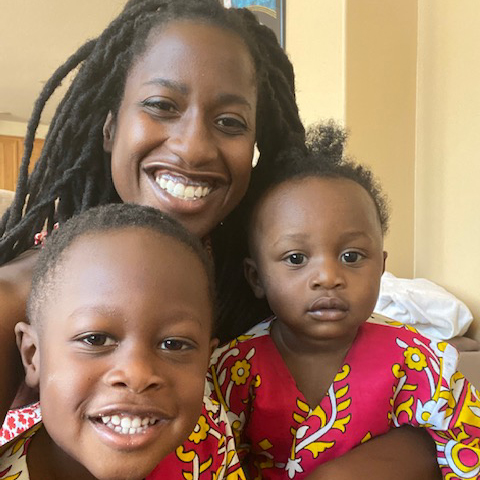
By Abigail Oduol, a CCF Global Council Member

I ask all of us to reflect on that value of courage and consider: How are we living up to our value of courage in this space, context, and moment? And how are we falling short of living up to our value of courage in this space, context, and moment?

At the time of writing, the current administration has threatened law firms who have pursued litigation against administration officials in the past, with some capitulating to demand by giving the administration free legal services. 

Many private companies (that are not subject to federal demands), have also quickly realigned themselves to the administration’s priorities. 

In the philanthropic sector, schools are getting rid of their ethnic studies programs after the administration shared its goals of dismantling diversity, equity, and inclusion programs. And so many more similar stories of pre-compliance out of fear arrive on our screens each day.  

When the CCF Global Council had its first retreat, we refined our strategic vision, connected, and reflected. What are our values in the movement? What do those mean for the way that we navigate through the world? What do those mean for the way that we navigate relationships with each other as individuals and as a group? And how do those synchronize (or not) with our own personal values? What do our values mean for how we show up in this space, and how do we really show up with those stated values? 

This was not the only opportunity to discuss our values. We continually revisit them, and in one of our most recent Global Council meetings, we discussed them again with a focus on courage. 

The Community-Centric Fundraising value of courage is something that is needed within the current context and moment. 

Courage. We believe in challenging the way things have been done, including talking about difficult matters, taking bold actions, and embracing failure. We speak and act boldly, even if it causes discomfort and disagreement. We are not afraid to tackle difficult topics including race, slavery, reparation, colonization, anti-Blackness, and white supremacy. We try things that have not been done before.

We will not be mired in process and discussion, but will take actions once there is sufficient information to act. And we accept failure as part of learning. 

I ask all of us to reflect on that value of courage and consider: How are we living up to our value of courage in this space, context, and moment? And how are we falling short of living up to our value of courage in this space, context, and moment? 

This conversation is offered with the goal of thinking through each of our values in this way. 

The following reflections from the Global Council have been edited for brevity and content:

Esther:

In a conversation with a professor of decolonization and anti-imperialist praxis on all sorts of things: US imperialism, Korea, Palestine, white supremacy—just the light stuff, right—he mentions how vocal I am in speaking about white supremacy in conversation. But he says, “When I went on your LinkedIn profile, you don’t talk about that at all. 

“Like your bio, it just says ‘dismantle systems of power,’ but you never name colonialism, you never name capitalism, you never name white supremacy as you do now.” 

I never thought about that. But I think the fact that I’m trying to make a livelihood has stopped me—even in my profile—being as visible and unapologetic about it, even though I am in my actual practice.

Why I say all this is: I think courage is something that has to be cultivated and practiced. I consider myself someone who is usually always trying to seek justice and do this work, but we’re all in a system that’s constantly trying to quiet that. And we’re all in a system that basically rewards you for not being vocal about it.

So I’m hoping that CCF Global Council can be a space where we can do that, too: where we can call each other in and push each other to be more courageous. Especially when it’s scary because let’s not forget that this sector is founded on people not saying the truth. And it’s actually founded on obscuring it and making you feel comfortable in that.

Martha Lidia:

Thank you, Esther. I think you’re not the only one. I feel like [that] in some cases—like in Guatemala with the new president, if someone else had won, I would feel slightly different.

But also, in this sector, at least in Guatemala, most of the directors are white. It’s still very challenging [to speak against white supremacy] because I’m the only [non-white] one. It’s easy to not say something and it feels—although it’s not personal—it really gets to the very personal level that is really hard to distinguish sometimes: that it’s not against “X” person, but it’s like [against] the system.

Meena:

It’s thinking, “How can I take my values and not just keep it in theory anymore, but how can I actually put it to practice?” I can talk about my values. I can talk about my beliefs. But how is it actually showing up when I’m in community, when I’m in activist spaces?

But also, how is that translating when I’m in professional settings? So for me, where it’s landing is that it takes a lot of courage to have uncomfortable conversations. And I don’t think people talk about how much discomfort exists in organizing, and in a movement building and building together, right? Many of us are incredibly intelligent and incredibly passionate; we were looking at the world through our own lived experiences.

And what I’m also kind of learning to do is like, take a step back, and like fully hear what other people are saying because their experiences and their intellect also matter in these spaces. 

Esther:

Something my coach says—Nneka Allen of Collecting Courage—she says “Courage is on the other side of fear.” It’s actually when you’re scared is the opportunity to demonstrate courage. Otherwise, it wouldn’t be courage. So I think the fact that when we do get scared in these moments, that just means it’s the opportunity to demonstrate [courage].

Rachel:

I think for me, for the last years of doing consulting work [I] have really sort of made it a point to invest in organizations that are led [by] and center marginalized identities in sort of whatever way that means. And one of the artist’s projects that I took on was actually doing racial equity work with a white-led, white-centered organization. It has been rough. The people who are left are the people willing to do the work. 

And when we talk about what it means to be a part of a movement, we have to be willing to get to the critical mass of people who have a shared vision, even if they don’t agree with the tools, even if they don’t agree with the power structure. And so I think for me, courage is figuring out two pieces of my professional work, and that’s how to be in transformative relationship with people I don’t agree with, and stay in it—like stay in relationship—and also beginning to acknowledge where abusive capitalism and class are destroying how we center the work.

So that is where I think I’m trying to be more courageous in my life.

Conclusion

So what does courage mean for us in this moment as a movement? 

I’ve come from a group that has experienced much worse things than I am experiencing right now. I have ancestors who experienced slavery and Jim Crow and domestic terrorism from the KKK. Women who had to work for white families and didn’t get to care for their own. Women who made money but couldn’t have bank accounts. Who were fired for giving service to a white customer in a segregated space. 

And here we are in this moment, exhausted and scared? What does it mean to have courage in this moment so that my story can be counted among the stories of my ancestors as someone who fought and endured the challenges of their time with joy and perspective for the opportunity to carry an ancestral burden? 

We are here. We must show up with courage as our legacy. 

Abigail Oduol

Abigail Oduol

Abigail Oduol’s (she/hers) surname is not Irish or Pennsylvania Dutch. It’s Kenyan. Abigail serves on the CCF Global Council and is a member of too many committees. She invests time thinking about how popular culture informs fundraising and how people connect to each other. Follow Abigail on LinkedIn.

A love letter to the changemakers

A love letter to the changemakers

By Marisa DeSalles, is a changemaker and founder of Good Tilth Consulting

About the Poem

Last year, I was surprised to find out I had won an award from my local fundraiser, philanthropy, and other nonprofit friends for National Philanthropy Day. “Outstanding Changemaker” was the category. As I reflected deeply on my career trajectory, especially post-pandemic, I was overcome with gratitude for the folks and ideas of the CCF movement who inspired the work I am blessed to do, uplifting and amplifying fundraisers of color in my community. And I was so inspired by the often overlooked small daily actions that fundraisers do to move the big, complicated levers of resources and power. I wrote this as my acceptance speech, and it has resonated with audiences of badass, hardworking, big dreaming fundraisers in the months since. I’m very pleased to formally publish it here on The Hub — where it all started.

Fundraisers, especially those marginalized by historical and current policies and systems, this is a poem/prayer just for you. I love you. I hope it helps you get through the tough days ahead. 

The Poem

I am the living, breathing embodiment of the highest dreams of all my ancestors and you are too, because I am a changemaker. And so are you. 

I am a walking, talking revolutionary dream.
I am unfettered imagination, run rampant.
I am heartbreak withstood, adversity understood,
I am a complete rejection of what is for the sake of what was.
I am a warm embrace of what is yet to be. 

I am beautiful futures yet undreamed,
I am the picture of the perfect community, a dream held aloft for so long by so many. I am a changemaker. 

And I am tired. 

I am weary, my burden is heavy and shifting, my reserves are nearly drained. 

The stories of need and impact, lack and help, dejection and inspiration, all pull my heart in a thousand directions, 

But I am energized. 

I wake each day with the taste of tomorrow in the back of my throat. 

I am full of resolve, I am resourceful. I am creative.
I am resilient. 

Some days, I am barely holding on. The days are long, and the need never seems to cease. The funds are never enough, and the cause often demands more than I have to give. 

But I must persevere, because I am a changemaker, and I am you. 

I am a member of a family. A valued teammate in important work. A vital part of a vibrant, diverse community. 

I am the living, breathing embodiment of the highest dreams of all my ancestors and you are too, because I am a changemaker. And so are you. 

We changemakers live between two worlds. We hold in one hand the shining, fragile promise of a just, green, prosperous tomorrow where everyone thrives, and in the other, the twisted, tangled ball of injustice and apathy and division that is today. And somehow, we must reconcile the two, bring our own arms across our chests and embrace our present moment, together, in community.
I see what is and I dream what could be, and so do you. Because you are the changemaker, and I celebrate you.
And if I am outstanding, as you claim, let my name be outstanding for these reasons only. 

Let it be said of me:
That I spoke your name in rooms of opportunity:
That I described your mission accurately to someone who might care; That I served as a faithful representation, a smooth, unblemished mirror to reflect the light of the changemaker in each of you. 

For you are making the change,
And I appreciate you.

Marisa DeSalles

Marisa DeSalles

Marisa DeSalles (she/her) is the founder of Good Tilth Consulting, a faculty member with Impact Foundry, assisting as a Certified Sustainable coach, presenting a monthly series of educational workshops and is the featured speaker, Emcee and host for the Impact Foundry’s 5th annual What IF conference. She also served on the global transition team for Community-Centric Fundraising, a burgeoning movement of nonprofit fundraising professionals working to improve fundraising through a lens of equity. She volunteers her time with Sacramento Community Land Trust, a cohort of Big Day of Giving mentees and dozens of other organizations, mentoring young and newly emerging fundraisers. Politics on Twitter, critters and plants on Insta @kidscatzntech. You can send Marisa a tip via her Venmo, @marisa-desalles.