Getting out of the way: Practicing decolonized thinking

Getting out of the way: Practicing decolonized thinking

By Kendra Nicolai, Director of Operations at Shadhika

How do we ensure that global philanthropy is not causing more harm? As a white woman in the US, working for gender justice in India, the key was discovering how my own power and privilege were getting in the way of our path to decolonization. 

When I was hired at Shadhika, a nonprofit working with women-led grassroots organizations in India, I joined the team as a Program Officer. I was a privileged white woman from the US, managing a scholarship program for young women in India. I had a decade of experience managing youth programs in Denver, Colorado, and was eager to start a new chapter, utilizing my master’s degree in international development. I had always felt passionate about helping youth and felt this was a perfect opportunity. 

Within the first two months at Shadhika, I flew to India for the first time. As much as it was exciting to visit each partner and scholar, I realized that I had a lot to learn. When decisions needed to be made about programmatic recommendations or changes, I struggled to know what to say or do. I could tell stories of the program to donors and supporters, but when questions arose about what was best for the young women, I did not have the answers. The burden fell on our partners and my colleagues, whom I leaned on for support.

What “decolonizing development” meant for me as a white woman working at Shadhika

I was worried about whether we would fail, was afraid to disappoint people, and not concerned enough about truly understanding the process of systemic change.

A year into my role at Shadhika, we hired a new Executive Director, My Lo Cook, who redefined the vision of Shadhika’s work, centering around a feminist and decolonizing core.

As our team spent time reflecting on the foundation of our work and how to move the needle for gender justice in India, we had tough conversations with our partners, staff, and board about the power we hold as a funder and how we can deconstruct this.

“Decolonizing development” is a phrase that has been buzzing around the development sector. Notably, for Shadhika, it meant shifting the power from donors’ hands to the communities we work in. It meant working with local organizations more than just as a funder, but as a partner, learning from one another, building trust, bringing more voices to the table, and leaving decisions about funding and programmatic priorities in the hands of the experts in the field.

While reflecting on my role in decolonizing Shadhika’s work, I found myself resistant to change because my mindset was stuck in traditional thinking of “this is how it has always been done.” And what we have always done was working, and was attractive to funders. I did not realize how problematic this mindset was because it protected my position. I was worried about whether we would fail, was afraid to disappoint people, and not concerned enough about truly understanding the process of systemic change.

At this point, I needed to do my homework.

How I learned to identify my power and privilege 

How could I “decolonize development” while also holding on to the power to manage programs and dictate funding for grassroots leaders working with young Indian women when I had little context of their actual experiences and challenges?

So much of my career has been working directly with youth in some capacity, both in the United States and abroad. As a white woman working in the international development sector, I had to (and continue to) learn and unlearn harmful practices that ultimately hold back these communities we care so much about. I had a lot of inner work to do regarding anti-racist practices, decolonization, and learning about the power and privilege my identity holds. Working towards this meant that I had to let go of this “passion” of mine (my career) and understand the “purpose” of our work at Shadhika – whether that included me or not. Thankfully, Shadhika held space for me to reflect and reconsider my role within the organization.

Through this reflection journey, I attended Posner Center for International Development’s Decolonizing Development Symposium, listened to and engaged with leaders in the field, and read many articles and books. The Trust-Based Philanthropy Project was one resource that helped me learn about the inherent power imbalances of global philanthropy, and the historical contexts that led to the bias of platforming voices from the global north. The book, Emergent Strategy: Shaping Change, Changing Worlds, by Adrienne Maree Brown brought to life many of the concepts and changes My was introducing at Shadhika, specifically around being true to our values and keeping our vision as the north star in everything we do.

Through these reflections, it was clear that my role as Program Officer was problematic. How could I “decolonize development” while also holding on to the power to manage programs and dictate funding for grassroots leaders working with young Indian women when I had little context of their actual experiences and challenges?

There were several moments where I could recall being in the way of true impact with the scholars at Shadhika. One example was the lack of understanding of contextual and deep-rooted historical oppression towards women and girls in India. Looking back at site visits, I realized more time was spent translating, transcribing, and teaching me the overall context of issues on the education system, child marriage, mobility, and lack of independence that girls face. I was being educated by our partners so that I could help inform the program strategy. It was clear that I was taking up space for someone in India who could manage this program more effectively, drive stronger support and collaboration, and have a basis for understanding the complexities of gender justice in India.

I realized this position as Program Officer was not for someone looking to continue following their passion for helping people. It needed to be someone who could use their knowledge and lived experiences to shape our grantmaking decision; someone who spoke the language and could listen, inform, and lead the young scholars through a formative phase of their lives. This person needed to be in India, and I was standing in the way.

Through discussions with My about these reflections, she affirmed and encouraged me to move into a new role at Shadhika that could develop my leadership and management operationally.

How we charted a new way forward

I have since moved into an operations role, managing behind-the-scenes work to ensure our program staff–all of whom are now based in India and representative of diverse Indian identities–are equipped and supported to carry out our grantmaking and program activities. I have learned to speak less, create more space to listen, and now I can have an influence on the structural and administrative work at Shadhika to ensure that we continue pushing for anti-racist, decolonizing practices throughout the organization and within the international development sector. I am continuously learning (and unlearning) what it means to be a white woman from the global north, working within the philanthropic context in the global south.

The Scholarship program is now flourishing under the leadership of our program team who are creating trusting relationships and building robust programming for young women in India.

We know we must trust grassroots wisdom — which includes acknowledging and adjusting those harmful practices — and that this journey towards decolonizing our work is a continuous learning commitment we must undertake. I am thankful for My’s leadership and for bringing a decolonizing framework which helped me see where I needed to adjust and step out of the way to allow the work at Shadhika to grow and have the impact we intend.

Kendra Nicolai

Kendra Nicolai

Kendra Nicolai (she/her) brings over a decade of experience working in the nonprofit sector, specifically within youth development. Beginning her career as a social worker, Kendra has learned and believes that empathy, trust, and curiosity are the anchors to positive relationships within a nonprofit, which provides an environment for systemic change. She brings experience in managing and developing high-functioning teams, is a problem solver, and is skilled in project management. Outside of work, Kendra is an outdoor enthusiast who also enjoys reading, playing beach volleyball, and coaching.
We need to recognize nothing is too big to fail, including and especially nonprofit organizations and capitalism

We need to recognize nothing is too big to fail, including and especially nonprofit organizations and capitalism

By Marria Evbuoma, Founder/Worker at Rotation Community Services

During the early stages of the pandemic, a homeless encampment was established on my street. Although many have a vision of San Francisco as the liberal capital of America, when it comes to respectability politics, SF is conservative AF. Instead of showing compassion or even asking why an encampment suddenly appeared on our street, most folks remained silent. A vocal few demanded the city do “something” (meaning make unhoused people disappear).

The most requested items by our unhoused neighbors were tents and tarps. Yet the nonprofit we were encouraged to work with to distribute donations told us they couldn’t collect or distribute tents or tarps because doing so encouraged camping in public throughways, which was illegal and could cause them to lose their funding.

The vocal few won. The police barricaded the block and when that section of the street reopened, the encampment was gone. It was a “sweep.”

A few days later, another encampment was established. This time the tents and trailers were across from Ocean Beach, and not near homeowners worried about property values.

By then, I had joined with others who saw the sweeps happening near them and wanted to show solidarity with our unhoused neighbors. Our community group had conversations with folks in the encampments. What were their needs? What kinds of services were the city offering? How could we work together to address the gaps between what folks needed and what was happening during a time when most services and businesses had stopped operating.

At first, we organized hot meal deliveries because the use of grills and propane stoves was cited as a public safety reason for police to remove encampments. And as our conversations evolved, we discussed access to water, electricity, and trash service— all of which determined where and why encampments were being established in our neighborhood and why they were cited as public safety concerns.

The encampments near my home and others throughout our district were typically located near open public restrooms with toilets and running water, electrical outlets, municipal trash cans, and the convergence of multiple bus lines. And at this time, I was working for a small environmental nonprofit that did outreach around diverting items from landfill.

After months of coordination, our neighborhood group organized a donation drive/beach clean up with an audit of the trash collected with several nonprofits and the support of our district supervisor. In all, folks enjoyed coming together to help others and be in nature, especially during a time when public gatherings were still not really allowed. But this is where we began to run into issues working with large nonprofits funded by city government grants.

The most requested items by our unhoused neighbors were tents and tarps. Yet the nonprofit we were encouraged to work with to distribute donations told us they couldn’t collect or distribute tents or tarps because doing so encouraged camping in public throughways, which was illegal and could cause them to lose their funding.

We additionally discovered that the recyclable and compostable items from the clean-up could not be taken home by me as an employee of a nonprofit environmental organization because I was not a permitted waste hauler (mind you, my “hauling” was rolling my compost/recycling/landfill bins to the beach for use). There were special trash bags the city had for clean-ups that could be picked up by the streets and sanitation department. But those bags could not be distributed to unhoused neighbors for “personal use” despite them depending on overflowing municipal trash cans that were generating much of the litter.

Some unhoused and housed folks also took issue with these government grant-funded nonprofits operating during “normal” business hours and requesting unneeded items. The nonprofit asked for travel sized soap and shampoo but unhoused folks wanted dry shampoo and cleansing wipes because they didn’t have water access.

After this experience, I started noticing the gaps between community needs and grant requirements and deliverables. I asked other nonprofit workers about challenges they were facing when serving their clients. Over and over again, I heard the same scenario for folks funded by government grants— funding for this, but not for that and feeling disappointed and frustrated in their work.

After this experience, I started noticing the gaps between community needs and grant requirements and deliverables. I asked other nonprofit workers about challenges they were facing when serving their clients. Over and over again, I heard the same scenario for folks funded by government grants— funding for this, but not for that and feeling disappointed and frustrated in their work. I also accepted a position at a well-established nonprofit, hoping to support environmental and social justice work in the city through a youth environmental job training program.

While at this organization, I was reprimanded for organizing a teach-in about the health dangers gas-powered tools pose to workers and getting staff and clients to speak at a rally in support of an ordinance that would provide a just-transition to electric tools.

Then, a former client I knew was shot and killed near headquarters. And, there was an active shooter situation where clients and staff were trapped for hours as police negotiated with a client who had been terminated from the program because of threats of violence against other clients and staff.

Despite the trauma and the health risks they were facing, there were no supportive services or counseling for our clients. Most of the organization’s funding came from state agency grants and fee-for-service contracts that just wanted the jobs done, supporting the conditions of labor exploitation that BIPOC, immigrant, and low-income folks have been cycling through for generations.

How is it that we can ask folks to go “back to normal” when we know government grant-funded organizations, which are often the biggest in municipalities, continue to operate without intersectionality and effective community responsiveness? As passionately as we work, we must recognize that homelessness, litter, gun violence, and even apathy are signs of a larger problem: capitalism.

The dysfunction of operating within capitalism, a system that relies on superlatives to define successes, has become even more obvious since the pandemic. But how long will the infrastructure hold?

Like with financial institutions in 2008, cities, states, institutions, businesses, and nonprofits received COVID-19 funds from the federal government to help keep them from collapse. Three years after the start of the pandemic and in the face of another bank “bail out,” perhaps we need to recognize that nothing is too big to fail. And maybe accepting failure is just what we need to heal and be able to do the work how we know it needs to be done.

Marria Evbuoma

Marria Evbuoma

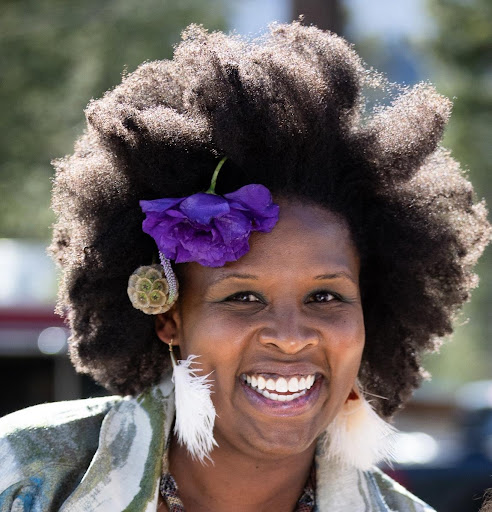
Marria Evbuoma (she/her, we/us) is a mom, zero waste advocate, and educator currently living in Huichin Ohlone land (Oakland, CA). She founded Rotation Community Services in 2022 to offer intersectional, equity-focused zero waste guidance, education, and resources in order to help dismantle the systems and traditions that harm individuals, communities, and our planet. When she’s not literally talking trash, she enjoys writing, community gardening, hula hooping, and making plant potions.

IG: @bold.azz.love
Venmo: @boldazzlove

Just because you hire a CCF fundraiser does not mean you are committed to the CCF principles

Just because you hire a CCF fundraiser does not mean you are committed to the CCF principles

By Esther Saehyun Leenew fundraiser, young leader, and Scorpio; and Maria Rio10+ years of experience in nonprofit project/people management

Hiring someone committed to the principles of equity and justice does not mean you are absolved from working towards equity and justice too.

Read that again.

CCF fundraisers committed to challenging the status quo are often coming into this sector with intersectional identities and lived experience. This gives them an acute understanding of power, privilege, oppression, and being othered.

Hiring a fundraiser who is committed to CCF values is powerful. Fundraisers hold the integral position of having one foot in the community, one foot in the organization, and mediating both. Our role is to communicate the needs of the community to the organization we serve and the needs of the organization back to the community we serve. Hiring a CCF fundraiser means you have someone committed to equity and justice that is mobilizing resources to serve the community rather than the individual organization.

In recent years, the nonprofit sector has welcomed talks on anti-racism, equity, and ethical fundraising in even the most public spaces. This is due to the mobilization, support, and platform built by Community-Centric Fundraising and the courage of nonprofit workers committed to pushing this work forward.

But with this shift comes a wave of performative activism that is dangerous.

One that breeds a specific type of toxicity in organizations. One that is detrimental to those committed to equity and to those coming into the field.

Young fundraisers of color join organizations because they know the harms the sector causes and want to make a difference. When they first arrive, they are optimistic and pour their energy into the mission they believe in. However, often, they find out that the greatest challenges to ethical practices are not external but internal.

Nonprofit professionals, especially those with multiple marginalizations, see lofty values presented in annual reports, public communications, and their onboarding package, only to experience microaggressions, condescension, and oppression while being praised for openly challenging the sector and holding it accountable to its values.

We quickly learn that the sector is founded on:

  • White Supremacy: A culture that views people of color as lesser than their white peers. A culture that sees people of colour solely as the recipients of philanthropy, and not decision-makers or leaders;
  • Centering Wealth and Capitalism: Placing wealthy donors on a pedestal and perpetuating a system that prioritizes the needs and preferences of white donors with money rather than the communities we serve;
  • Nonprofit Industrial Complex: Nonprofit organizations are reliant on the institutions that create and perpetuate the social problems organizations seek to address; and
  • Unpaid or underpaid labor: Overreliance on unpaid or underpaid labor, which is usually provided by women and people of color who are often relegated to lower-paying or volunteer positions.

Hiring a CCF fundraiser to shoulder the labor of equity and ethical fundraising, and to call out and challenge the ways the organization is perpetuating harm is only one piece of the puzzle. Alone, it is a Sisyphean task that sets them up for failure and harm.

As the CCF movement grows, as more and more fundraisers openly call for equitable fundraising, demand change for a sector founded on white supremacy and capitalism, and call on the community to dismantle the nonprofit industrial complex, the question we must pose is, what ways are we allowing the guise of community-centric fundraising (or more specifically, a racialized community-centric fundraiser), to conceal the amount of harm being done behind closed doors?

In what ways are you complacently reaping the benefits of the fundraiser or fundraising department taking on the work of reflecting, healing, and questioning?

In pursuing the best intentions of hiring a CCF fundraiser, you may be perpetuating the very harms you are trying to dismantle.

For all the senior leadership, board members, and decision-makers at nonprofit organizations, let us pose to you the questions that CCF fundraisers must ask themselves each day. We invite you to go through the ten CCF principles and specifically reflect on the questions below:

1. Fundraising must be grounded in race, equity, and social justice.

Are you willing to talk to your donors about white supremacy, colonialism, misogyny, transphobia, and racism?

Are you willing to lose donors and lose revenue to do so?

2. Individual organizational missions are not as important as the collective community.

Do we work collaboratively with other organizations to benefit the community? Does our work benefit the sector?

Would we be willing to decline a funding opportunity for another organization to do their work?

Would we be willing to shut down if our presence as a nonprofit organization was harming the community more than it was benefitting it? Or if other organizations could do the work better than we were?

Do you take political action to enable systemic solutions to systemic problems?

3. Nonprofits are generous with and mutually supportive of one another.

Do we see other organizations as competition? Or do we see them as part of our team and our mission?

Do you share resources with other organizations, or do you gatekeep knowledge and funding opportunities for yourself?

4. All who engage in strengthening the community are equally valued, whether volunteer, staff, donor, or board member.

How do you perceive the clients who benefit from your organization? Do you see them as recipients or vital contributors to the community? Do they have a seat at the table?

Do you place board members and major donors on a pedestal? Do you respect the recipients of our services as much as you respect them?

5. Time is valued equally as money.

Do you appreciate a financial donation more than a donation of time? How do you steward those who provide non-monetary supports?

6. We treat donors as partners, and this means that we are transparent, and occasionally have difficult conversations.

What assumptions do you make about donors and their capacity to have an honest discussion about oppression and power?

Do you cater to white fragility, or do you center lived experiences of systemically oppressed communities in your work?

7. We foster a sense of belonging, not othering.

In what ways do you perpetuate a harmful power dynamic when speaking to or about your clients?

Would your clients feel like the only X person in your board meetings? Your fundraisers? Your stewardship events?

How do you perceive your clients? How do you perceive yourself?

8. We promote the understanding that everyone (donors, staff, funders, board members, volunteers) personally benefits from engaging in the work of social justice- it is not just charity and compassion.

Do you believe people give out of “the goodness of their hearts”?

Do you believe that your very presence in this sector means you do not perpetuate harm?

Do you believe that because you dedicated your time and labor to this sector, you are by all accounts “good”?

9. We see the work of social justice as holistic and transformative, not transactional.

What work do you do to help people unlearn the harmful myths of nonprofits and fundraising?

  • Do you challenge or reinforce power imbalances? Do you cultivate an environment where donors feel entitled to control the direction and priorities of the organization?
  • Do you modify the missions or programs to fit donor preferences rather than respond to the community needs?
  • Do you try to hide overhead or administrative costs from your donor? Do you try to minimize staffing costs to solicit donations?
  • Do you perpetuate or cultivate a culture of saviorism?

10. We recognize that healing and liberation requires a commitment to economic justice.

Do you recognize that mobilizing resources is only one part of the work of equity?

Do you recognize that part of the work of centering community in fundraising and nonprofit work means that you are actively challenging and dismantling its practices?

As with any new movement, framework, or challenge to the ways that be, there will be growing pains. The fact that we can write this article to question how hiring a CCF fundraiser can conceal the harms being done inside the organization marks a turning point. It means that we have more fundraisers who are openly challenging the sector and seeking action that is not performative. We are creating space for the next generation of fundraisers and ensuring that the harm we have experienced can become our history instead of their prophecy.

Do not hire a CCF fundraiser, applaud them for their commitment to equity, and think that will suffice.

Do not hire a CCF fundraiser and assume that their work means you or the organization is more ethically aligned by this fundraiser’s very presence.

You should be actively working with them and not just taking credit for their labor.

You should be asking yourself, “in what ways do I perpetuate harm? In what ways do I take up space? In what ways do I oppress? In what ways do I empower and make space?”

The CCF movement was founded as a response to the perpetuation of harmful practices in the nonprofit sector. Any and every nonprofit professional, volunteer, donor, and board member has been complicit in these practices. The difference is that someone committed to CCF will name this, address it, and actively seek to unlearn this.

We are all complicit in harm, and we are all responsible for imagining a new and better way forward. You are not closer to equity simply because you state you are. Until we all understand that this work can only move forward for the community by the community, we cannot make progress.

Being in community does not mean deflecting the work of equity to a few individuals. Being in community is sharing space with like-minded folks committed and dedicated to this work. People who not only understand the structural inequities in the nonprofit industrial complex but also admit their complicity in perpetuating it. People that act to ensure the next generation can experience less oppression. People that share the same commitment, the same values, and the same curiosity to imagine and innovate new practices for this sector. People who will hold you accountable, call you in, call you out, and work to heal – together. 

Hiring someone committed to principles of equity and justice does not mean you are absolved from working towards equity and justice, too.

We can only do this work if we have a shared vision of equity for our organization, our community, and our sector.

We can only center community if we are willing to cultivate trust with each other.

We can only do this work if we do it in community.

Esther Saehyun Lee

Esther Saehyun Lee

Esther Saehyun Lee (she/her) is most well-known by her peers as an excellent meme/personal emoji creator, and creative co-conspirator. She continues to create space within systems of oppression to develop engagement and fundraising practices as a consultant at Further Together. She joined the nonprofit sector because of the CCF movement and is honored to be a member of the CCF Global Council to continue to hold the sector accountable in its mission and values. As a feminist killjoy and unabashed nerd, she is committed to creating environments that are centered in laughter, curiosity, and justice in the work of equity.

Maria Rio

Maria Rio

Maria Rio (she/her) is a fundraising consultant with Further Together with 10+ years of non-profit experience. She is regularly asked to speak on issues related to fundraising and her op-eds have been featured in national publications. She was a finalist for the national 2022 Charity Village Best Individual Fundraiser Award and has a deep passion for non-profit work. Maria also sits on the Board of Living Wage Canada.

You can connect with Maria through Further Together or through LinkedIn.

A few ways we can make hiring practices more equitable in our sector

A few ways we can make hiring practices more equitable in our sector

By Kristin Cheung, Executive Director

I’m currently in an Executive Director leadership role for a nonprofit based in Vancouver, Canada. And I often receive emails and contacts from recruiters looking to hire. A few months ago, I was interviewed for a position with another nonprofit organization in a different city. Because it was another city with unfamiliar folks, I expected the hiring process to be different from what I’m used to, with small changes here and there. But as the interview process went on, from the initial phone call to the group interview, there were many moments that made the entire process uncomfortable for me.

I’ve probably completed dozens of interviews in the past 15 years of my work experience – both as the interviewer (hiring candidates) and the interviewee (applying for a role). And as I reflected on this specific and uncomfortable experience, it made me question — what are the best practices for “equitable hiring” that make the experience positive for both candidate and interviewer?

I am constantly learning through my experiences and knowledge shared with my peers. I’m conscious about building an organization with justice, equity, diversity, and inclusion embedded in all aspects of the organization. Hiring practices are one of the most important aspects, and these are a few ways to make hiring practices equitable in our sector:

Paying Candidates for Interviews

Paying people fairly and at a living wage is one key aspect of supporting all folks involved in the hiring process. This also includes Hiring Committee members, specifically if your organization invites members of the community that you serve to join a hiring committee.

When any candidate enters the interview process, they have already completed hours of work, including researching the job role and organization, filling out the application, developing a well-crafted resume and cover letter, and preparing themselves professionally, emotionally, and mentally for the actual interview.

To make the hiring process more equitable, organizations should look into paying candidates for their interview time.

In Toronto, FoodShare Toronto (a food justice nonprofit organization) started paying candidates $75 per hour-long interview in 2022.

Paul Taylor from FoodShare Toronto said in an interview with City News: “From an equity perspective, folks who have already been made vulnerable by systems and public policies, this is going to help advantage those folks a little better, at least eliminate and challenge some of the disadvantages by recognizing there are costs.”

Paying people fairly and at a living wage is one key aspect of supporting all folks involved in the hiring process. This also includes Hiring Committee members, specifically if your organization invites members of the community that you serve to join a hiring committee. Paying the committee members to join meetings, review applications, and make key decisions in the hiring process is an equitable practice.

Organizations can start by paying candidates for interviews at the local living wage. Living wages should also be the foundation of your organization’s pay scale. A living wage is defined as what is needed to afford a minimum standard of living for a worker and their family and should be enough to cover all basic needs. By starting the wages at a living wage, your organization reduces income inequality by providing everyone a base liveable wage regardless of race or gender. What is considered a living wage varies based on where you live., You can use Living Wage Calculators to determine the different rates in the USA and in Canada.

Providing job interview questions ahead of time

Candidates with language barriers, neurodiverse candidates, people with disabilities, and other folks facing invisible barriers will be able to plan ahead and help them with the process.

The traditional model of interviews is to present your list of interview questions to the candidate on the spot without any preparation to see how the candidate can quickly respond to the intimidating interview questions off the top of their head.

What this does is reward the candidates with more “interview training,” more experience, and more English language skills to go on to the next interview phase. Providing the candidates with interview questions beforehand will make the process more equitable. All candidates have the same opportunity to prepare and can be evaluated on the same criteria; this promotes equity in the interview process and reduces the potential for bias or discrimination

Candidates with language barriers, neurodiverse candidates, people with disabilities, and other folks facing invisible barriers will be able to plan ahead and help them with the process. And it will make them feel more comfortable with the interview stage. It will also level the playing field and ensure all candidates have the opportunity to perform the best of their abilities.

Randstad (an HR service company) states “People with disabilities consistently face systemic barriers and discrimination when accessing employment.” Providing information such as the interview questions in advance will make the interview process more accessible and inclusive for everyone.

Disclosing the pay for the role

Pay transparency policies are one of the most effective ways to close the gender pay gap and make it more equitable in hiring across the board. In the US, only 34% (or 17 states) have laws around pay transparency, and in Canada, only 30% (or 4 out of 13 provinces/territories) have laws around pay transparency or pay equity legislation. In the province of British Columbia (where I work), women earned 17% less than men; average hourly wages for men were $35.50 CAD while women earned an average of $29.53 per hour (with the gap increasing for Indigenous, racialized, and newcomer women). In the US, it’s similar; women earned an average of 82% of what men earned. Employers should be required to include wage or salary ranges on all advertised jobs. Doing this will contribute to closing the gender pay gap across the board.

Overall, all organizations have different values and mission statements. We spend a lot of time, energy, and resources to meet the needs of our community and take care of the patrons in our circle, whether they be donors, stakeholders, or other members of the community we are working with. But we should also be taking care of the folks inside the organization as well. We need to take care of our employees and treat them well — starting before they interview with us and throughout their journey with our organization. By compensating people involved in the hiring process fairly for their time, providing questions beforehand for accessibility, and providing pay transparency, we can make hiring practices more equitable for the sector.

Kristin Cheung

Kristin Cheung

Kristin Cheung | 冮雪莉 (she/her) is an arts administrator and fundraiser. She is originally from Treaty 6 territory (Edmonton) and now currently residing in the Unceded territories of the xʷməθkʷəy̓əm (Musqueam), Skwxwú7mesh (Squamish), and səl̓ílwətaʔɬ (Tsleil-Waututh) Nations (also known as Vancouver), Turtle Island. Passionate about working with and supporting the work of underrepresented communities, she has volunteered and fundraised for numerous culturally diverse nonprofits in Vancouver and Edmonton. In 2016, she co-founded The Future is you and me, a free community mentorship program for young women of colour and Indigenous women in the arts. This intersectional feminist program aims to build a future with strong, diverse women in leadership positions, reflective of the current cultural landscape. Kristin has a Masters in Arts Administration & Cultural Policy from Goldsmiths University of London and spends her free time as a board member of Centre A and Room magazine. 

The myth of the unqualified Black job candidate: systemic racism that undermines Black self-reliance and what can be done to combat it

The myth of the unqualified Black job candidate: systemic racism that undermines Black self-reliance and what can be done to combat it

By: Johane Alexis-Phanor, a fundraising and communications consultant with an expertise in building capacity for organizations that impact racial equity

Today, movements on behalf of Black people look significantly different, especially in the nonprofit world. White executive directors and board members determine the vision. White-led foundations (both public and private) fund the initiatives. White businesses provide technical assistance. White staff execute the projects. And white people benefit in the form of more funding, accolades, and career advancement.

Black self-reliance fueled one of the most successful acts of defiance during the Civil Rights Movement, the Montgomery bus boycott, which led to the integration of the public bus system in the United States.

During the 13 months of the boycott, more than 300 Black taxi drivers and Black drivers organized an intricate carpool system for the Black people of Montgomery, Alabama. Black ministers and leaders, including Martin Luther King Jr., and Black workers came together to carpool, take taxis, or simply walk to work. Thousands of Black women like Georgia Teresa Gilmore led and participated in grassroots fundraising efforts selling cakes, pies, and other plates of food to fund the Montgomery Improvement Association (MIA) and the protest. Black women professionals of the Women’s Political Council helped initiate and organize meetings, communicated with protesters, and drafted the boycott and the changes they sought for Montgomery’s bus system. Black leaders determined the vision and strategy of the bus boycott. Black grassroots activists galvanized protesters. Black businesses supplied financial and technical assistance. Black churches provided spiritual and moral support as well as meeting places for organizing. Black workers provided support networks and bodies to undertake the nonviolent action. And Black people benefited in the form of freedom, integration, and equal rights.

Today, movements on behalf of Black people look significantly different, especially in the nonprofit world. White executive directors and board members determine the vision. White-led foundations (both public and private) fund the initiatives. White businesses provide technical assistance. White staff execute the projects. And white people benefit in the form of more funding, accolades, and career advancement.

Multiracial alliances are important in the movement for social justice. For example, it was a white Supreme Court that ruled that bus segregation laws were unconstitutional. Furthermore, we can’t talk about the Civil Rights Movement without speaking about the support of white foundations as well as the NAACP, which was started by Black and white activists.

However, the erosion of Black self-reliance and the systemic racism that undermines Black empowerment has come at a large cost to our communities. And this is partly because white leadership often focuses on the deficits of Black communities, failing to recognize Black community assets like Black wisdom, Black creativity, and Black vision.

For white leadership, Black communities have nothing to offer but Black problems. Thus white leadership has marginalized and undermined the autonomy and voice of Black people. The lack of Black leadership, especially in the nonprofit field, has led to some insidious attacks on the complete freedom, emancipation, and achievement of equity in the Black community.

The Myth of the Unqualified Black Job Candidate

When they told us there were no qualified Black job candidates, senior management really meant, “There are no Black candidates with the right education and connections, and we’re not willing to invest in an excellent Black candidate with potential.”

During my own time in the nonprofit world, “There are no qualified Black candidates” was a popular refrain that would be used to justify why our staff was largely white.

Every time a position was open, senior management would gather, and everyone would agree that we should hire a candidate who reflected the communities we served. Then, the applications would roll in, and many of the Black candidates would be deemed unqualified and inferior.

But, as I have seen over many years and as any professional in the nonprofit world can tell you, the truth is that nonprofits hire “unqualified” job candidates all the time.

Job descriptions are aspirational; no candidate meets all of the skills requirements. This is intentional because nonprofits want to hire someone who can grow into a role. They don’t want someone who is going to get bored and leave the organization in a few months, leaving them to incur more costs to search and once again train and onboard a new candidate.

Qualified candidates are not born; they are created. The candidate just needs to have the basics and the organization needs to believe that the candidate is capable enough to learn on the job.

When they told us there were no qualified Black job candidates, senior management really meant, “There are no Black candidates with the right education and connections, and we’re not willing to invest in an excellent Black candidate with potential.” I know this because I saw the lengths that white senior staff went to hire unqualified white job candidates.

There was an opening for one of the better-paying jobs in my former organization in a department with the most opportunities for career advancement. After the director of that department, a white woman, searched for a few months, she came back to the executive director and senior staff and told us she could not find a Black candidate. This position was a priority in our organization, and accounted for a large percentage of our work. The department director had failed to secure a Black search firm. She had failed to ask the Black staff to reach out to their networks. And she had failed to reach out to any Black professional organizations. Yet, she felt justified in claiming she had not found any good candidates of color. At this point, the Black staff went into overdrive to find potential candidates. But it was too late. The department director had already narrowed down the finalists to two white applicants, one of them from her alumni association.

Senior staff were asked to sit in on the interviews of the two final candidates and what I experienced that day, was one of the most jarring examples of unjust hiring practices I have ever seen.

The first applicant, who the director had found through her alumni association, walked into the interview as though the meeting with our organization had been an afterthought. Her appearance was better suited for a day at the farmers’ market, and her arrogance told us that she believed that her connection to the director meant she was a shoo-in. She answered the questions with nonchalance and didn’t hide from us the fact that she had several other offers.

The second candidate, like the first, had nowhere near the skills the job required. She had never worked in communities of color, nor was there any real passion or commitment to our type of community work. Nevertheless, these were the finalists. In our post-interview debrief, we all agreed that these were not the best candidates for the job. However, these candidates were people the director of that department felt comfortable with because of “white familiarity” — shared backgrounds, interests, and hobbies  —- that superseded job skills.

As I left that meeting, I overheard the director say she planned to hire both of these very unqualified white candidates. She would work very closely with them. Their strengths and weaknesses would balance each other out. It would take some work, and she would have to rearrange some things in the department. The candidates would need a lot of training and supervision. But she believed they could grow into the role.

And that’s when it dawned on me: would the director have gone above and beyond to make exceptions to rearrange an entire department and to provide so much close supervision for a Black man or a Black woman? The answer is no. Black people are not afforded these opportunities. We are just deemed “unqualified.”

At any point during the process, the executive director should have stepped in with the belief that this position in the best-paid department of the organization could have been better used to enfranchise the low- and moderate-income Black people we purported to serve.

In the end, only one of the unqualified white candidates was hired, the one who had not exemplified through her résumé nor through her interview any real connection or commitment to the Black community.

Championing Black Self-Reliance

Black self-reliance means Black leadership, which means access to power, resources, and just and equitable change.

Given that about 80 percent of overall staff at both nonprofits and foundations are white, there is a glaring issue of racial inequity in the hiring practices of these organizations. I believe that this story and its examples of structural racism, as seen by Black people being locked out of opportunities because they don’t belong to the right networks or have the right education, and the lack of effort to recruit Black candidates, are representative of some if not many of the hiring processes of nonprofits.

Here are three solutions to promote racial equity and Black leadership in the philanthropic field:

1. Establish Racially Equitable Hiring Practices as a Written Organizational Value that Is Endorsed by the Entire Organization

It’s important for nonprofits to not just say that they want to practice equity when it comes to the staff they hire; this goal needs to be written into the organization’s values statements and strategic plans.

Achieving racial equity in its hiring practices needs to be an organizational goal supported by everyone from the executive director to department heads, staff, board members, vendors, and suppliers. Often, equity is relegated to one department or person in the organization. This person usually has a title like “director of diversity and inclusion.” This person works in a silo and is tasked as the one who is supposed to care and implement all diversity initiatives. This model does not work. If an organization decides it wants its staff to reflect the population it serves, there must be concrete goals about what that looks like, and all personnel need to be actively engaged in this work.

2. Have a Plan

Organizations need to establish a systematic process for finding Black leadership.

First, this includes developing robust relationships with Black affinity groups where potential candidates can be found. In Boston, organizations like the Urban League of Eastern Massachusetts, the NAACP Boston Branch, and the National Black MBA Association Boston Chapter are all great sources of talent.

Nonprofits should ask existing Black staff to reach out to their networks when positions open. Newspapers and media outlets that cater to Black communities, like The Bay State Banner and the Dorchester Reporter, should be obvious job posting sites. Finally, if resources are available, search firms that specialize in finding Black talent should be used.

3. Qualified Black Job Candidates Are Nurtured, Not Born

Organizations should be ready to invest in and support the pipeline of potential Black candidates and existing Black staff. As a Black woman who has worked in nonprofits, I’ve experienced firsthand the burnout that comes from a lack of training, support, and mentorship.

There are several professional development programs that nonprofits can access for their employees. In corporate leadership, fundraising, and community development, particularly, these include The Partnership, Inc, the Association of Fundraising Professionals Diversity & Inclusion Program, and the Mel King Institute. Organizations should not only be prepared to pay the costs associated with programs, but also offer recommendation letters and provide their workers the flexibility to take part in these leadership development opportunities.

Black people who have lived in Black communities and experienced firsthand the joys, as well as the challenges that face our neighborhoods, are the most equipped to address the problems Black communities face. Black employees have a nuanced view of our strengths as well as the areas that need investments. We have an emotional attachment and a long-term commitment to the work. We have a vision grounded in real life, not textbooks, white papers, and nonprofit workshops and presentations.

This emphasis is not meant to diminish the value and strategy of reaching across racial lines and working with different groups in a mutually beneficial way. But our community loses and suffers because we do not prioritize investing in, promoting, and championing Black leadership in Black communities. There are significant long-term implications for the movement at hand. Black self-reliance means Black leadership, which means access to power, resources, and just and equitable change.

Johane Alexis-Phanor

Johane Alexis-Phanor

Johane Alexis-Phanor (she/her) Johane is a fundraising and communications consultant with an expertise in building capacity for organizations that impact racial equity. She grew up as a second generation immigrant in the Haitian enclave of Mattapan, in Boston. Using her entrepreneurial spirit, she launched Beyond Wordz to assist with the organizational development of non-profits doing work to positively impact Black people and Black communities. To date, she’s raised close to $3 million to support community development initiatives. In 2022, she was one of 5 finalists for the Haitian-American Young Citizen of the Year given by the U.S. Haitian Chamber of Commerce to recognize professionals under 45 whose commitment, outstanding civic engagement, volunteerism and public service has benefitted their community. Follow her on Twitter at @beyondwordz_.

S.M.A.R.T. Black Philanthropy (SBP) aims to advance a new model for philanthropic efforts in Black communities. This model is asset based instead of deficit based. It prioritizes a collaborative approach instead of a directive approach to philanthropy. Finally, it is rooted in Black traditions and movements.

SBP is written from the perspective of a Haitian-American woman who inadvertently found herself in the field of community development working to leverage charitable giving to support the economic empowerment of communities of color. It challenges the current paradigm of philanthropy while exploring issues of Black self-reliance, structural inequalities in the non-profit field, the intersection of faith and social justice, and more. The S.M.A.R.T in S.M.A.R.T Black Philanthropy stands for specific, measurable, achievable, realistic, and timely- an acronym that is often used to set mission-driven goals. These writings present a S.M.A.R.T alternative for achieving greater social good through philanthropy.