
By Chantelle Ohrling, a practitioner of radical reciprocity breaching the dams of accumulated capital
We are living through an extraordinary resurgence. Across British Columbia, a new generation of Black youth, activists, and professionals is building upon an unbroken lineage of resistance, fusing modern digital tools with ancestral mutual aid, and offering modern iterations of our historical spectrum of giving, in the face of persistent institutional underfunding.
Part 1 of this essay can be found here.
III. Urban Sanctuaries: Gifts for Sanctuary, Labour and Civil Solidarity in Vancouver’s East End (1910s – 1970s)
By the turn of the 20th century, the pulse of Black life in British Columbia had migrated across the water to the mainland, following the economy and settling into the paved alleys and wooden porches of Vancouver’s East End, the neighborhood we now hold dear as Hogan’s Alley. I’ve heard Elders describe the livelihood of the community—the legendary musicians who came to perform, the delicious meals served at woman-owned restaurants, and the fierce determination of the residents to care for each other.
Hogan’s Alley was a vibrant, multi-ethnic ecosystem of Black porters, Italian grocers, Indigenous families, and Chinese labourers. It quickly grew around the Black Sleeping Car Porters who brought their families to settle around the train stations that employed them. Recognizing the vital need for a permanent, Black-owned spiritual and cultural sanctuary, community leader Nora Hendrix (grandmother of legendary guitarist Jimi Hendrix) co-founded a fundraising drive alongside local Black families. In the pages of Wayde Compton’s pivotal Bluesprint: Black British Columbian Literature and Orature (and originally published in Opening Doors: Vancouver’s East End), Nora’s voice reaches across the decades:
“All the families and everybody that wanted a church, we all got together, and commence working for it to get this church started… So then we got together and so they said, ‘Well if you raise $500, we’ll raise $500.’ So all of the sisters and brothers, we commence getting busy then, to start having entertainments and bazaars and suppers and everything we could have, to raise the money to buy this church.”
And again, as with The Committee of Coloured Ladies of the British Colony of Victoria, Ms. Hendrix shares that the funds raised were not an insignificant amount, especially to a community facing discrimination in employment:
“Getting dollars together them days was hard. When you went out to work, all you got was a dollar and a half for your days’ work. And your carfare. That’s what you got in them days. So, you see it taken us a little while to raise up $500.”
To raise five hundred dollars when your daily wage is a dollar and fifty cents means every dime is an incredible sacrifice. It means planning and hosting these events when your own feet ache from washing someone else’s floors. This underscores how important spatial legacy planning was to the community.
In 1921, when the African Methodist Episcopal Fountain Chapel officially opened its doors at Jackson and Prior, the community gained a physical sanctuary purchased through micro-donations. When the community wasn’t worshipping there, it was also a space where sleeping car porters could rest after days on the tracks and organize for the union, and where meetings were called to help support Black youth harassed by the police.
Those sleeping car porters who successfully organized for labour rights came together again to organize for civil rights. Four brothers—Frank, Fred, Richard, and Dave Collins—lived in Strathcona and worked the trains. Frank Collins became President of the local division of the Brotherhood of Sleeping Car Porters (BSCP) and co-founded the British Columbia Association for the Advancement of Colored People (BCAACP) in the 1950s. Some of the support for these initiatives came from union dues, and much of it came from the Ladies’ Auxiliary—women who baked pies, and hosted dances and other fundraising events.
Women like Judy Graham nee Williams (the daughter of Roy Williams, a member of the Calgary Chapter of the BSCP), who grew up to become a fundraiser for the BCAACP in the 1970s, created the Miss Black BC Pageant as a fundraiser and tirelessly went radio station to radio station to secure press coverage. She sent letters requesting corporate sponsorship and in kind donations. They turned community joy into capital for legal defense.
Then came the concrete. In the late 1960s, under the banner of “urban renewal,” the City of Vancouver decided that Hogan’s Alley was an “urban blight” to be cleared. They ran the Georgia and Dunsmuir Viaducts straight through the heart of the community.
IV. Archival Preservation: Gifts of Memory, Cultural Preservation and Spatial Redress in Vancouver and Victoria (1980s – 2010s)
When you tear down a neighborhood’s buildings, you threaten to erase its memory. For two decades after the viaducts were poured, Vancouver pretended Hogan’s Alley had never existed. Official histories spoke of pioneers and timber barons, leaving Black residents as invisible specters. Reclaiming space requires an act of archival recovery. In the 1980s and 1990s, Black philanthropy in BC evolved into gifts of memory and cultural preservation.
It’s vitally important that communities tell their own stories to ensure the narrative isn’t reshaped nor “absented” (Dr. Adam Rudder describes “absenting” as “the very active process that has rendered Black experience invisible in the official historical record”). Thanks to the hard work of many individuals over the years, these histories have been uplifted in a way that makes it easier for current generations of Black Vancouverites to find belonging.
In 1994, community members formed the BC Black History Awareness Society (BCBHAS) in Victoria, contributing thousands of hours of uncompensated research to dig up birth records, photographs, and buried land titles. Since then, they’ve initiated museum exhibits, plaques at historical sights (including for those early Black pioneers on Salt Spring Island), and they host an online archive with a plethora of information.
In 2001, activist-scholar Wayde Compton offered a monumental gift of cultural stewardship: Bluesprint: Black British Columbian Literature and Orature. He gathered over a century of lost voices, speeches, poems and letters, binding them into a single book that proved we have been here shaping this colonial project from its beginning. And then came the grassroots organizers who refused to let that book gather dust on a library shelf. Adam Rudder, Junie Désil, Karina Vernon, Sheilagh, Bryan Johnson, Joy Russell, and Mwalu Peeters, worked alongside Wayde as Hogan’s Alley Memorial Project (HAMP), a truly grassroots group who donated their time without government grants or corporate sponsors. They organized historical walking tours down Union Street, hosted civic forums on Black urbanism, planted guerrilla public art beneath the viaducts, and stood before Vancouver City Council demanding recognition.
In 2013, HAMP’s collective work resulted in a permanent historic marker installed on Union Street. By 2017, that momentum resulted in Hogan’s Alley Society (HAS), which pushed beyond memory into spatial redress. HAS negotiated a historic Memorandum of Understanding with the City of Vancouver to steward the land beneath the Georgia Viaducts—once they are removed—through a groundbreaking Black-led community land trust. They helped to shift the conversation from remembering what was lost to owning the physical land for future Black generations.
Djaka Blais, inaugural Executive Director of Hogan’s Alley Society, also recognizes the foundational work the organization builds upon:
“Black communities in BC have always practiced philanthropy, not only through financial contributions, but through commitments of organizing, volunteering and collective care. For generations, we have organized and created solutions in spaces that were never designed with us in mind, and sometimes actively excluded us.
“Today, we are witnessing an exciting moment for Black community leadership in BC. Black-led organizations are intentionally growing in scale, deepening their impact, and building the infrastructure our communities have long deserved. From arts and culture to health, housing, education, entrepreneurship, and youth leadership, Black organizations across the province are demonstrating that when communities have the resources and trust to lead, we create innovative, lasting solutions that benefit everyone.”
V. The Modern Horizon: Gifts for Mutual Aid, Systems Reform and Belonging & Freedom (2020s – Present)
We are living through an extraordinary resurgence. Across British Columbia, a new generation of Black youth, activists, and professionals is building upon an unbroken lineage of resistance, fusing modern digital tools with ancestral mutual aid, and offering modern iterations of our historical spectrum of giving, in the face of persistent institutional underfunding.
In 2020, in response to the monstrous wake of George Floyd’s murder, initiatives like Vancouver Black Therapy emerged to fund culturally competent mental health care for Black youth. In doing so, they revived gathering models like the Black Flea Market as fundraising engines, echoing Nora Hendrix and the East End community’s historical drive to establish Fountain Chapel. That same year, Anthonia Ogundele founded Ethos Lab, an innovation academy centering the African philosophy of Ubuntu. By launching Canada’s first Black-led Virtual Reality environment, Ethos Lab expanded gifts of placemaking into digital realms, cultivating the next generation of diverse creators.
By 2022, student grassroots organizers addressed the erasure of physical sanctuary in Vancouver’s East End by establishing the Vancouver Black Library (VBL), a community-funded hub for Black literature, study, and peer support. VBL directly mirrors the Victoria Pioneer Rifle Corps, who fundraised for a Coloured Library 160 years prior, proving that autonomous literary hubs as gathering spaces endure.
This momentum continues across sectors: the Canadian Association of Black Lawyers (CABL) recently dedicated hundreds of pro bono hours to design BC’s first Black Legal Clinic, while the BC Black History Awareness Society (alongside REP Here in Canada), opened downtown Victoria’s “Black and Here Community Centre” this past Emancipation Day as a new hub for the community and cultural organizing.
Organizations like the Black Youth Initiative exemplify the future of diasporic giving within Foundations. In rejecting the crumbs of traditional grant-making operating as passive recipients of charity, they actively steward building youth-led leadership pipelines, financial literacy programs, and autonomous spaces of joy and resistance. As Chair and Director of Fund Development Emmanuela Droko observes:
“Black Youth Initiative is a labour of love, born from the unwavering care and dedication of three Black femmes at the intersections of refugee, migrant, Muslim, queer, and disabled… Our practice is the future of philanthropy. As reflected in histories from Africville to Little Jamaica and Park Lane, the future of our sector is rooted in reimagining systems of governance, accountability, and power… Where our rest is as valued as our labour. Where our youth grow old and get to live, create, dream, and breathe.”
We reoccupy paths cleared by Sylvia Stark’s healing hands, John Craven Jones’s uncompensated classroom, the Victoria Pioneer Rifle Corps’ library, Nora Hendrix’s chapel, The Brotherhood of the Sleeping Car Porters, and radical archiving with the Hogan’s Alley Memorial Project and BC Black History Awareness Society. We operate outside of charity because we have always practiced radical, reciprocal care for as long as we’ve occupied these stolen Coast Salish lands.
Western institutions define legacy as a hoarding strategy—a static accumulation of capital frozen in trusts to immortalize an individual. But viewed through the 7 Generations Teachings and the Black traditions, legacy is a living, circular technology. It reaches seven generations back to honour the work of our ancestors, and projects seven generations forward to ensure Black and Indigenous youth inherit spaces of absolute safety, intellectual rigor, and unburdened joy.
As a Black woman navigating institutional philanthropy on the ancestral, unceded territories of the xʷməθkʷəy̓əm (Musqueam), Sḵwx̱wú7mesh (Squamish), and səl̓ilwətaɁɬ (Tsleil-Waututh) nations, my vocation is to redirect extracted capital toward spatial redress. True Black philanthropy in British Columbia does not seek passive inclusion within colonial structures. As operationalized in the Equity and Right Relations Framework I co-created for CAGP Greater Vancouver, it requires fundamentally restructuring philanthropic systems, policies, and governance models to center relational accountability and redistributive justice. It’s also an example of how Black communities can be in solidarity with First Nations, Indigenous, Inuit & Metis Peoples.
To hold professional credentials in planned giving means carrying the master’s tools into spaces constructed on wealth extraction. Audre Lorde warned that these tools cannot dismantle the house that built them. My work is not to glorify these mechanisms, but to subvert them—breaching the dam of accumulated capital to restore the natural flow of reciprocity toward Black-led placemaking community land trusts and youth-led spaces of liberation.
By harmonizing our ancestral practices of susu and Ubuntu with Indigenous grounded normativity, we transform legacy giving into a radical vehicle for land back and intergenerational sovereignty, ensuring those who come seven generations after us inherit a world with clean air where they can freely dream and belong. As I type this closing, the smoke is clearing, and I can once again see the rhythm of the tide.
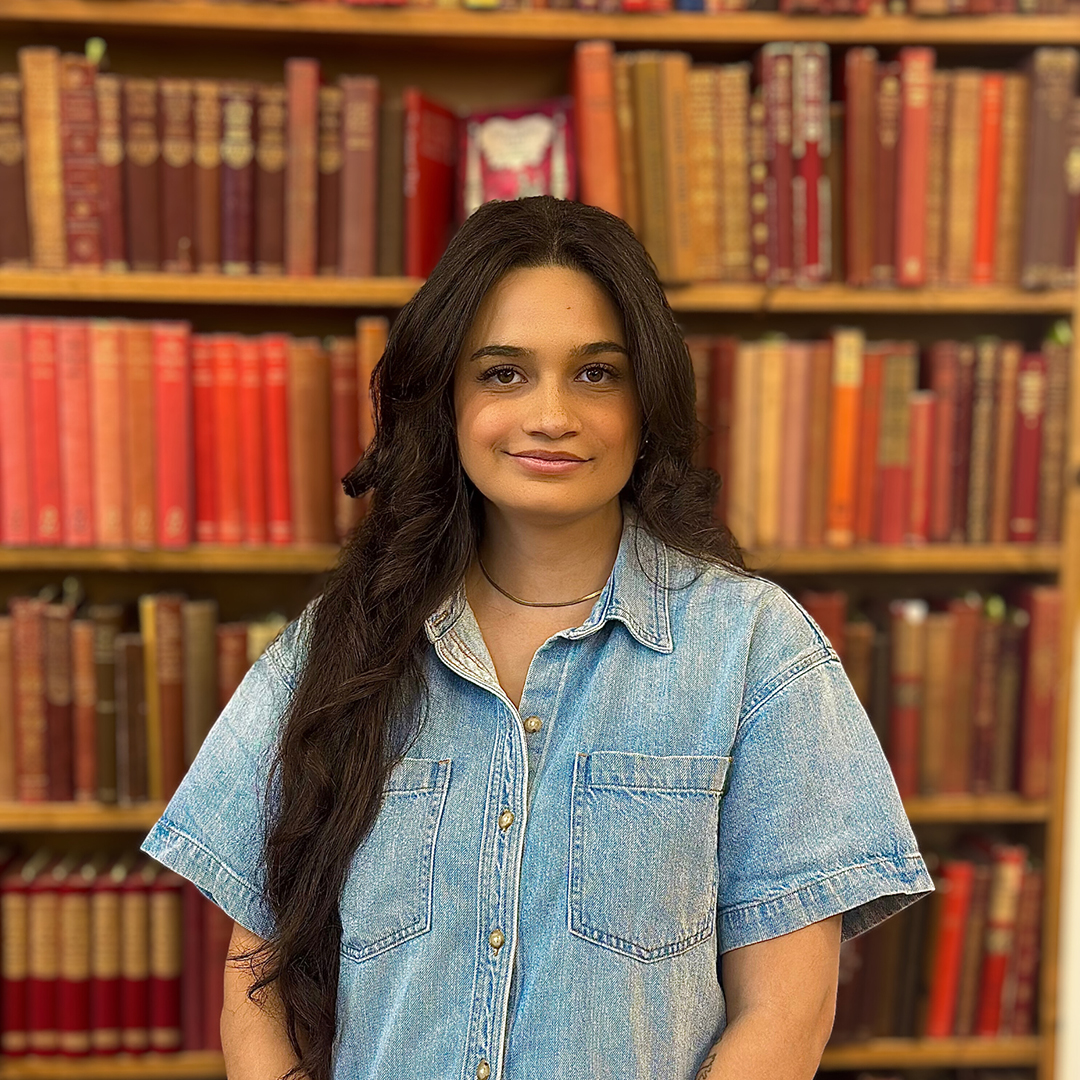
Chantelle Ohrling
Chantelle Ohrling (she/her), comes from a long line of rebellious Afro-Taíno women. When she isn’t nerding out about planned giving or deeply engrossed in a book, she’s honouring her responsibilities to her communities by tracing histories, listening to stories, and building connections for liberation. She believes we can alchemize oppressive systems (much like fungi decompose dead matter) into fertile ground for new societies rooted in reciprocal relationships based on deep care and respect for all living relations. You can find her on LinkedIn.
Discover more from CCF
Subscribe to get the latest posts sent to your email.