
By Chantelle Ohrling, a navigator of memory and legacy for cultural preservation in the wake
Black philanthropy has never been defined by excess monetary wealth, accumulated capital at the cost of relentless extraction and destruction. It is a spectrum of giving that encompasses the profoundly radical redistribution of anything and everything we have. Whether expressed through hard earned cash, labour, teaching, healing, organizing, or archiving, these gifts preserve the community’s capacity to survive, remember itself, and shape its own future.
I. The Architecture of the Wake
There is a rhythm to the tide in the Pacific Northwest—a cold, relentless pullback of water that reveals what was buried in the mud, followed by a rushing return that covers it all up again.
I sit at my desk on the ancestral and stolen territories of the xʷməθkʷəy̓əm (Musqueam), Sḵwx̱wú7mesh (Squamish), and səl̓ilwətaɁɬ (Tsleil-Waututh) nations, watching an orange glow thick with wildfire smoke darken across that tide contained within a bay. I’m worrying about the future.
As one of the lucky few Black women to be working within the polite and well-intentioned halls of Western institutional philanthropy (84% of CFRE certificants are white), I am paid to think about futures. I am paid to facilitate legacies—a person’s last hopes for a better future in what (and for whom) they’ve left behind.
As a result, I spend a lot of time mulling over what is chosen to be preserved and passed down across generations.
The concept of legacy as defined by Canadian institutions often feels sterile, stripped of right relations with land and community. It’s focused on tax-efficient giving vehicles and the preservation of capital. It comes with the presumptions that wealth is something accumulated through careful diligence within a fair market, and that charitable giving is an act of top-down nobility when a benevolent surplus is dropped from the balcony to the street below—noblesse oblige.
When realistically, much of the philanthropic capital that we rely on has been extracting resources, land, and labour from Black and Indigenous Peoples. As I’ve described in “Anti-colonial by design: CAGP Greater Vancouver’s equity & right relations framework,” I imagine endowments and trusts as reservoirs filled and held by the dam of historical and ongoing injustices.
I come from a more communal lineage of legacy. Long before I earned my CFRE credentials, long before I learned how to review estate accounts or turn hopes for the future into endowments and trusts, I was raised in the Caribbean traditions of collective care. I learned “philanthropy” (the love of humanity) in the home from my mother, as she organized susus—the brilliant, trust-based technology of resource pooling where folks gather their hard-earned dollars and hand them to one another in a rotating circle, ensuring that everyone within said circle is supported. Susus embodies the Central and Southern African ethos of Ubuntu: the fundamental truth that I am because we are. As Robin Wall Kimmerer reminds us, all flourishing is mutual.
To be Black in the diaspora, as theorist Christina Sharpe describes, is to live “in the wake”—in the ongoing, turbulent aftermath of the middle crossing, crashing in the persistent wakes of displacement, constantly swimming against the destructive rip tide of racial capitalism.
A wake is the track made by a vessel as it moves through the water (in the case of the trans-atlantic slave trade, many vessels moving across the atlantic ocean for five centuries). It’s a path of movement defined by disturbance.
Living in the wake means understanding that state violence has always tried to end our worlds—whether through genocidal laws like the Indian Act or the very literal violence of bulldozers over Hogan’s Alley. But as Robyn Maynard and Leanne Betasamosake Simpson remind us, Black and Indigenous peoples have been “building worlds and then rebuilding worlds for as long as we have been in existence.”
Black philanthropy is part of that relentless world-building in real time.
Black philanthropy has never been defined by excess monetary wealth, accumulated capital at the cost of relentless extraction and destruction. It is a spectrum of giving that encompasses the profoundly radical redistribution of anything and everything we have. Whether expressed through hard earned cash, labour, teaching, healing, organizing, or archiving, these gifts preserve the community’s capacity to survive, remember itself, and shape its own future.
Nneka Allen affirms that “the only way we survived is through community and the flowing generosity in all forms”.
In In the Wake, Sharpe emphasizes that even in spaces where we were never meant to survive, we reimagine practices of care—as repair, maintenance, and radical attention.
As I practice the modern vocation of legacy giving today on Coast Salish lands, I carry a complex duality. My presence here is rooted in a long, unbroken tradition of diasporic care. Unearthing these ancestral histories grounds us and offers hope, reminding us that we belong to a lineage that created abundance for their community in the wake. Yet I remain acutely aware that early Black settlement in this province was entangled with the British Crown’s colonial project.
Invited in the 1850s to serve as a buffer against American expansionism, Black pioneers were refugees of Jim Crow while simultaneously participating in the settlement of land never ceded by its original Indigenous stewards.
To practice Black philanthropy authentically today is to navigate this tension directly: to honour our ancestral survival strategies while holding an unyielding commitment to Indigenous sovereignty through UNDRIP and truth-telling on this land. To practice legacy giving specifically on xʷməθkʷəy̓əm, Sḵwx̱wú7mesh, and səl̓ilwətaɁɬ lands requires what Michi Saagiig Nishnaabeg scholar Leanne Betasamosake Simpson calls ‘grounded normativity‘: a place-based ethical framework generated through non-dominating, relational care.
Our ancestral traditions of susu and Ubuntu must harmonize in right relations with the land (and its kin) that we find ourselves upon.
Black diasporic traditions of the “Wake” and the 7 Generations Teachings that many unique and diverse First Nations share, meet at the intersection of intergenerational accountability. The Sto:lo First Nations describe it: “In the Halq’emeylem language… We have the word tómiyeqw which translates into English as both great-great-great-greatgrandparent and great-great-great-great-grandchild. The relationship expressed in this 1 word connects people seven generations past with those seven generations in the future. The connection between the past and future rests with those of use living today, in the present.”
Where Western institutional legacy giving defines legacy as an accumulation of capital transferred forward at death, both Black radical tradition (Sankofa) and this intergenerational philosophy of “tómiyeqw” define legacy as an unbroken stream of relational ethics, spatial stewardship, and intergenerational care practiced in real time.
The accounts gathered here represent only a fraction of a rich, enduring tradition of Black giving—a lineage of collective care that has fundamentally shaped the social and physical landscape of British Columbia. Ultimately, by unearthing the historic spectrum of Black giving in British Columbia—from pioneer mutual aid to modern spacial reclamation—we reframe and recenter Black philanthropy as an unbroken, dual-track tradition of collective care that restores community actualization to the benefit of our (all living relations’) shared futures.
II. The Settler-Refugees: Gifts of Community Development, Transnational Solidarity and Placemaking on Vancouver and Salt Spring Island (1850s – 1910s)
If you travel to Salt Spring Island today, beneath its celebrated artisanal culture lies evidence of the early Black pioneers who helped to settle this island community. Of the 20 families who first settled there in 1860, just about seven generations ago, nine were Black American.
When Sir James Douglas—himself a man of Afro-Caribbean descent through his mother—invited recently emancipated free Black people in California north to the Colony of Vancouver Island, over six hundred Black men, women, and children packed their lives into trunks and set sail from San Francisco. They were continuing their escape from the brutal codification of slavery.
The Black pioneers that came were a highly educated and organized group, in spite of the oppression of the times. They were business owners, teachers, nurses, church founders, and graduates of Oberlin College. They organized politically and fundraised for local and international causes.
Among them was John Craven Jones, a graduate of Oberlin College, who embarked on a mission of volunteer teaching on Salt Spring Island. At that time, there were only 16 teachers for the entire province, and Mr. Jones served as one without salary for a decade. Jones was the first Black teacher in the Province and first teacher on Salt Spring Island, teaching from 1859 to 1875. His altruistic decade-long commitment to volunteer teaching is one of the earliest instances of Black community building labour in British Columbia. I can only imagine that he understood the importance of education to the development and security of his community. John Craven Jones teaching for a decade without pay leaves a vitally important legacy as an investment in a generation he would never see.
At the same time, Sylvia Stark—who was born into slavery and had her freedom purchased by her father in Missouri before coming north—moved across Salt Spring Island as a midwife and healer. Her hands brought hundreds of babies into the world at a time when seeking state-sanctioned medical care carried immense risk for Black families. Her care was a vital shield against systemic neglect—a reality that persists today, where Black maternal mortality rates remain disproportionately high across Western healthcare systems. When Mrs. Stark passed away on Salt Spring Island in 1944 at the age of 105, she left behind a legacy defined by decades of uncompensated, life-giving community care.
Even as these pioneers planted crops and cleared timber on Coast Salish lands, their hearts remained tethered to their kin still enslaved by the American South. On April 13, 1863, in a small wooden hall in Victoria, a group of Black women gathered as the Committee of Coloured Ladies of the British Colony of Victoria. They had a letter published describing their hopes for gifts to support the freedom of “contrabands,” the name given to escaped enslaved people and free Black people who affiliated with Union forces during the American Civil War. The first donation was equivalent to $5,300.00 CDN today; the second donation was equivalent to $18,000.00 CDN today. When recent studies show that Black folks donate a higher percentage of their salary than other demographics, those staggering numbers show that we have been doing so for a very long time.
When I read their letter printed in the Victoria Daily Gazette, generously reproduced by the BC Black History Awareness Society, I had to take a moment to process the magnitude of this gift. These ladies, living on the precarious edge of a colonial frontier, understood that local abundance should and could still be in solidarity with global liberation. They practiced subversive transnational aid nearly a century before Audre Lorde would vocalize this as “I am not free while any woman is unfree.”
And when white settlers refused to allow Black men to join the local volunteer fire brigade despite their donations, these pioneers did not shrink. They formed the Victoria Pioneer Rifle Corps in 1860—an all-Black, self-funded military unit that bought their own uniforms and built their own hall. The unit’s expenses were raised through subscriptions from the Black community and fundraisers, including dances and musical events held at said hall. They funded their own protection because the state refused to protect them.
Members of the Victoria Pioneer Rifle Corps organized fundraising events to establish a Coloured Library in Victoria. Together with the gifts of Charles Alexander, one of the Black pioneers, initiating and assisting in the building of the original Shady Creek church in Saanich in the 1860’s, this early library initiative proved that Black giving was dedicated to building autonomous cultural and intellectual spaces for the betterment of the entire community. They successfully engaged in placemaking to create space for belonging.
These early settlers could not have known what the future would bring for their community— in fact, the conditions and racism faced by the Black pioneers would send a significant number of them back to the south of the border. Yet they wholeheartedly devoted themselves to uplifting those around them after already impossibly long days of labour.
By unearthing the spectrum of giving with pioneer mutual aid, Black philanthropy emerges as a caring, comprehensive and often well coordinated source of sovereignty and mutuality. The histories of these pioneer roots set the foundation for what follows: into the urban modern landscape with campaigns for labour and civil rights, churches, cultural institutions and protection from police violence.
Across generations and geographies, Black communities continue to pool money, labour, knowledge and care to sustain one another, build places of belonging and create conditions for community actualization across British Columbia. As we’ll see in part 2, Black communities are constantly in motion, radically redistributing an expansive range of resources.
Chantelle Ohrling
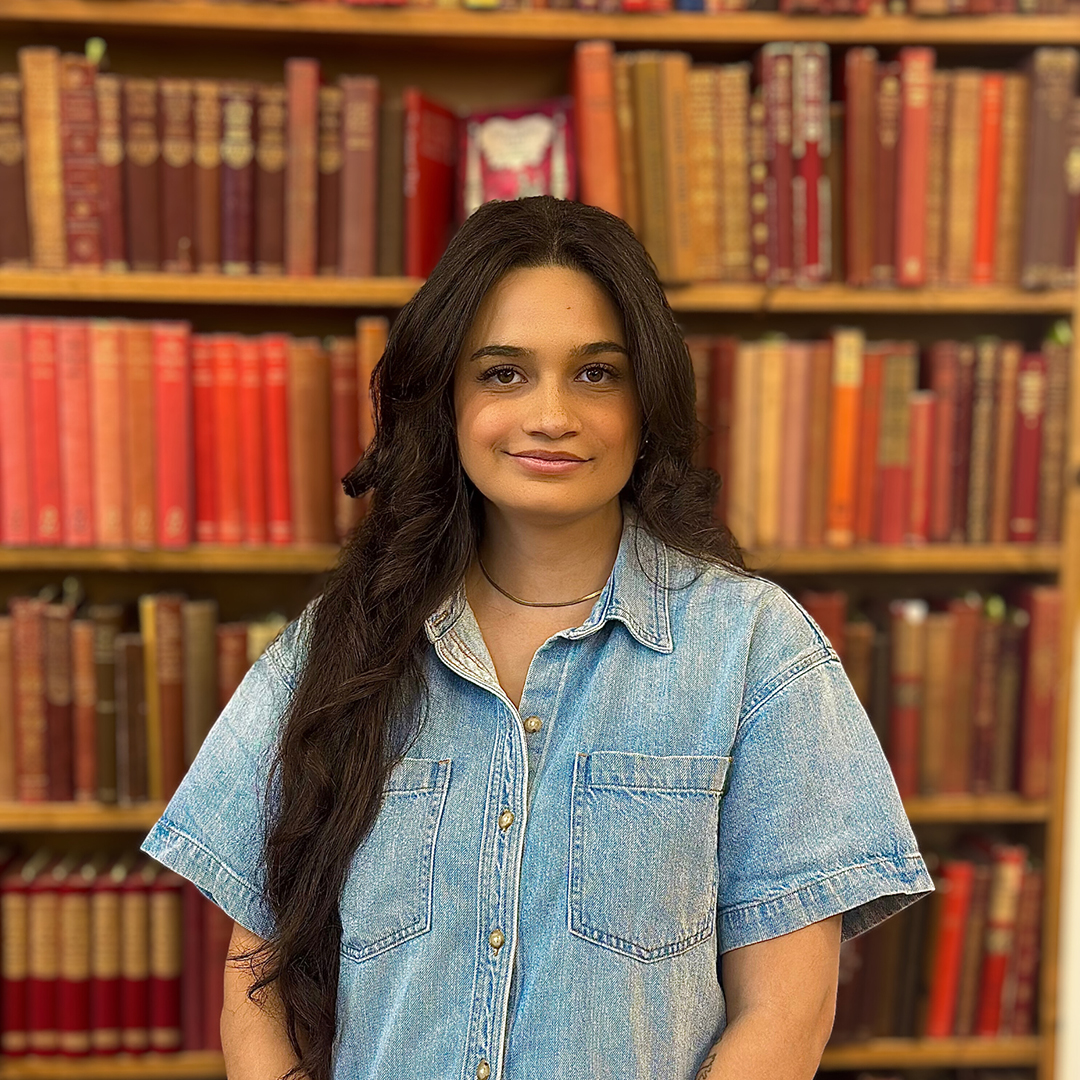
Chantelle Ohrling (she/her), comes from a long line of rebellious Afro-Taíno women. When she isn’t nerding out about planned giving or deeply engrossed in a book, she’s honouring her responsibilities to her communities by tracing histories, listening to stories, and building connections for liberation. She believes we can alchemize oppressive systems (much like fungi decompose dead matter) into fertile ground for new societies rooted in reciprocal relationships based on deep care and respect for all living relations. You can find her on LinkedIn.
Discover more from CCF
Subscribe to get the latest posts sent to your email.