
By Frank Velásquez Jr., Storyteller Extraordinaire, Social Justice Warrior, and Relationship Cultivator
Think about the last time you spoke your mind in a meeting without worrying about tone. Or dressed casually without wondering if you’d be seen as ‘unprofessional.’ Or corrected someone without fear of being labeled ‘aggressive.’ That’s privilege. Now imagine if every one of those moments required you to think before doing. That’s what PoC do on the daily.
Hey Josh!
I’ve been playing basketball since I was around eleven. The truth is that it’s been my only form of exercise and I know my days are numbered after a couple of knee surgeries. I’ve been playing at the local Y over the last 15+ years, and you can bet I’ve been involved in a few—ahem—disagreements.
One disagreement stands out.
In pickup basketball, an unwritten rule is that if the offensive player feels they were fouled, they call the foul. There might be some rolled eyes and minor complaints from the opposing players, but almost 100% of the time it’s accepted, and the game goes on.
This one particular game was relatively close. A teammate stole the ball, passed it ahead to me, and I dribbled to the other side of the court for a potential game-winning layup. But as I went up for the shot, a guy on the other team bumped me kinda hard. I lost control of the ball, and the guy who bumped me corralled the ball and was about to run in the opposite direction. I immediately said, “Foul.” And this guy—a white man—not only proceeded to yell that he did not foul me, he walked to the other side of the court with the ball in hand, completely dismissing the rules of the court.
I muttered, “White privilege,” then went to sit down.
He heard me and his level of anger went to a whole new level. He followed me to where I was sitting and wanted to let me know, very loudly, that he was raised around Mexicans. (As if proximity to Brown folks gave him a pass.) I told him that means nothing. I “gently” reminded him that his white skin gave him privilege and the fact he discounted my foul call and walked to the other side proved my point. His face reddened even more. He aggressively moved into my personal space and yelled directly into my face. I was not afraid, which might have pissed him off further.
I did not move. I looked up at him and shook my head. And I once again uttered, “Privilege.”
He was incensed. My comment moved him from verbally assaulting me to almost physically assaulting me. It required another white man to pull him away from me.
Josh, this dude is a tall, white, cisgender man. Built like a truck. And attractive. Every one of those identity markers are all dominant in our country! He was so comfortable in his white privilege that he didn’t even know or care that he has it. Consciously or subconsciously, he carries privilege over me, a Brown shorter man with a Dad body.
Honestly, his anger reminded me of Brett Kavanaugh’s confirmation hearings to the Supreme Court. That “how dare you question me” attitude was in full-force. His indignation that I could call him privileged while he was literally demonstrating it, was privilege in its truest form.
And this is why assimilation exists.
White people don’t have to watch their tone. They don’t have to think about consequences the same way People of Color (PoC) do. He felt comfortable using his tone. He felt comfortable getting into my personal space and threatening harm.
I am not afforded these liberties. I have to be 100% aware of my surroundings. And even in integrated spaces like the Y, it will always default to being a white space. You walk in and see the donor names on the wall; they’re almost all white surnames. And many with the name of the donor as part of the Y’s name itself—like the Jordan, Witham Family, and Benjamin Harrison YMCAs all located in the same city! Rarely is there one sporting a Spanish surname.
I already know my place, and he made sure to remind me that I knew my place. He was the rule maker. And the expectation was for me to submit to his new rules.
This is forced assimilation.
Josh, you possess the same identity markers as the basketball player does. You’re tall, white. You are good-looking and fit!
Think about the last time you spoke your mind in a meeting without worrying about tone. Or dressed casually without wondering if you’d be seen as ‘unprofessional.’ Or corrected someone without fear of being labeled ‘aggressive.’ That’s privilege. Now imagine if every one of those moments required you to think before doing. That’s what PoC do on the daily.
Can you share a time when you benefitted from your privilege? What was the reason? What do you see now that maybe you didn’t see then? Have you ever had to consciously think about fitting in? Or do you just fit? Why do you think this is? How do you think PoC might be harmed by having to constantly fit in?
Josh. I got five things I want you to understand about assimilation.
White people benefit from assimilation
Whether you know it or not, you do. Hundreds of years ago, white men wiped out 90% of Native Americans and set a new standard that, to this very day, every non-white person has to meet. From “proper English” to “professionalism” to workplace norms and characteristics, PoC are expected to meet these standards. And still, a white man with a felony background has a higher chance of securing a job than a Black man without a felony.
White people reinforce assimilation when you expect “professionalism”
White men long ago established what “professionalism” is based on a white standard. For example, all women are expected to have straight hair. Most Black women inherently have thick curly hair and yet these ‘professional’ standards expect them to have straight hair. This discrimination became so embedded into ‘professionalism’ that the CROWN Act (Creating a Respectful and Open World for Natural Hair) had to be passed to make it illegal to discriminate based on natural hair texture and protective hairstyles.
It’s not surprising that legislation was needed to protect Black women from hair discrimination. It shows how deeply assimilation has been baked into workplace ‘standards.’ So every time you uphold ‘professional’ standards – straight hair, dress shirts and ties, muted colors, clean-cut short hair, speaking without an accent – you’re reinforcing assimilation.
Assimilation physically harms People of Color
The parents and grandparents and great-grandparents assimilated to survive. My maternal grandmother, a single mother raising five children, chose to assimilate her children because she believed that life would be easier for them. It wasn’t. Not for my tías and tíos. Not for our communities of color. The stress of constant code-switching, of monitoring tone, of suppressing culture, all that compounds over generations. And after years of weathering, our bodies carry the weight, breaking them down causing literal physical harm. Don’t expect PoC to “just be themselves;” you just don’t know how unsafe that is to be in spaces designed for you.
White comfort is rooted in white supremacy
Those feelings of discomfort that come up for you when a PoC shares the harm they’ve experienced at the hands of white people is a natural response. Narratives have historically, and still currently, been shaped and formed to erase the hundreds of years of harm white people have done to PoC. But when the feelings of being uncomfortable are framed as a lack of safety, that framing is white supremacy showing up. So when a PoC names racism and your first response is defensiveness. That’s your comfort being prioritized over their safety. Sit with that.
Assimilation exists for your comfort. Being an ally means being able to sit with discomfort while asking yourself why the expectation is that everyone conforms to whiteness.
Support acculturation instead of perpetuating assimilation
I want to be clear. Acculturation is not the opposite of assimilation. It’s PoC keeping their culture while also adapting to navigate systems. You can support acculturation by learning to correctly pronounce someone’s name, challenging ‘professional’ standards that are really white norms, and creating space where PoC can be as much as their whole selves without having to code-switch. Don’t reward conformity. Value diversity.
Josh, that guy on the basketball court felt entitled to make the rules. And to get in my face when I called out his privilege. Do better than he did. You have the same identity markers he does: white, tall, fit, cisgender man. The power you wield shouldn’t come in the form of anger and dominance. Your power comes forth when you step back, cede space, and call out the entitlement when you see it in other white men.
That’s real power.
With ❤️ and 🙏🏽
Frank
Author’s note: This is an excerpt from an upcoming, yet to be titled book by Frank Velásquez Jr. Each topic addressed in the book consists of two separate letters: One written to a Person of Color and the other written to a white ally.
It’s important to note that if I was facilitating a circle in person or virtually, I would hold these conversations in distinct healing spaces to minimize harm on each side. For PoC in America, we have historically been denied spaces to ourselves. Even when we create our own spaces, they’ve been destroyed in very visible ways, like the destruction of Black Wall Street in Tulsa and in many more subtle ways like prenatal care for Black mothers. We will never feel 100% safe in spaces that were never designed for us in mind, whether it’s workplaces, hospitals, banks, schools, restaurants, realty locations, business ventures, boardrooms, or pretty much any space PoC occupy!
When we create spaces for ourselves, we can finally breathe. We can be unfiltered knowing we don’t have to worry about unwanted gazes, unwelcome attention, uninvited responses, and/or hurt feelings. We can be fully us.
In our dedicated space, PoC can begin our healing journey from the lens of the oppressed.
For white allies, it’s also important to have a separate healing space, but for very different reasons. White allies historically carry privilege not afforded to PoC. This has resulted in a generational wealth gap that favors white folks over Black folks (by a factor of ten) and brown folks (by a factor of eight). For many allies, they carry the guilt and shame of how they’ve benefitted from systemic oppression. It’s something that can be hard to reconcile with, especially when reparations enter the discussion.
But we need white folks, and they need a healing space of their own to reflect, relearn, and reemerge stronger allies. Therefore, the separate letters aren’t for code-switching purposes; they are speaking directly to two very distinctive groups: People of Color and white allies.
Each letter is written to a specific individual to maintain that one-on-one connection. This isn’t about specific people; it’s about you, the reader. Using a person’s name reminds me that I am writing to you as a person, not a group.
Check out the letter on the topic of “assimilation,” to the a Mexican man whose first language is English, published last week.
Frank Velásquez Jr.
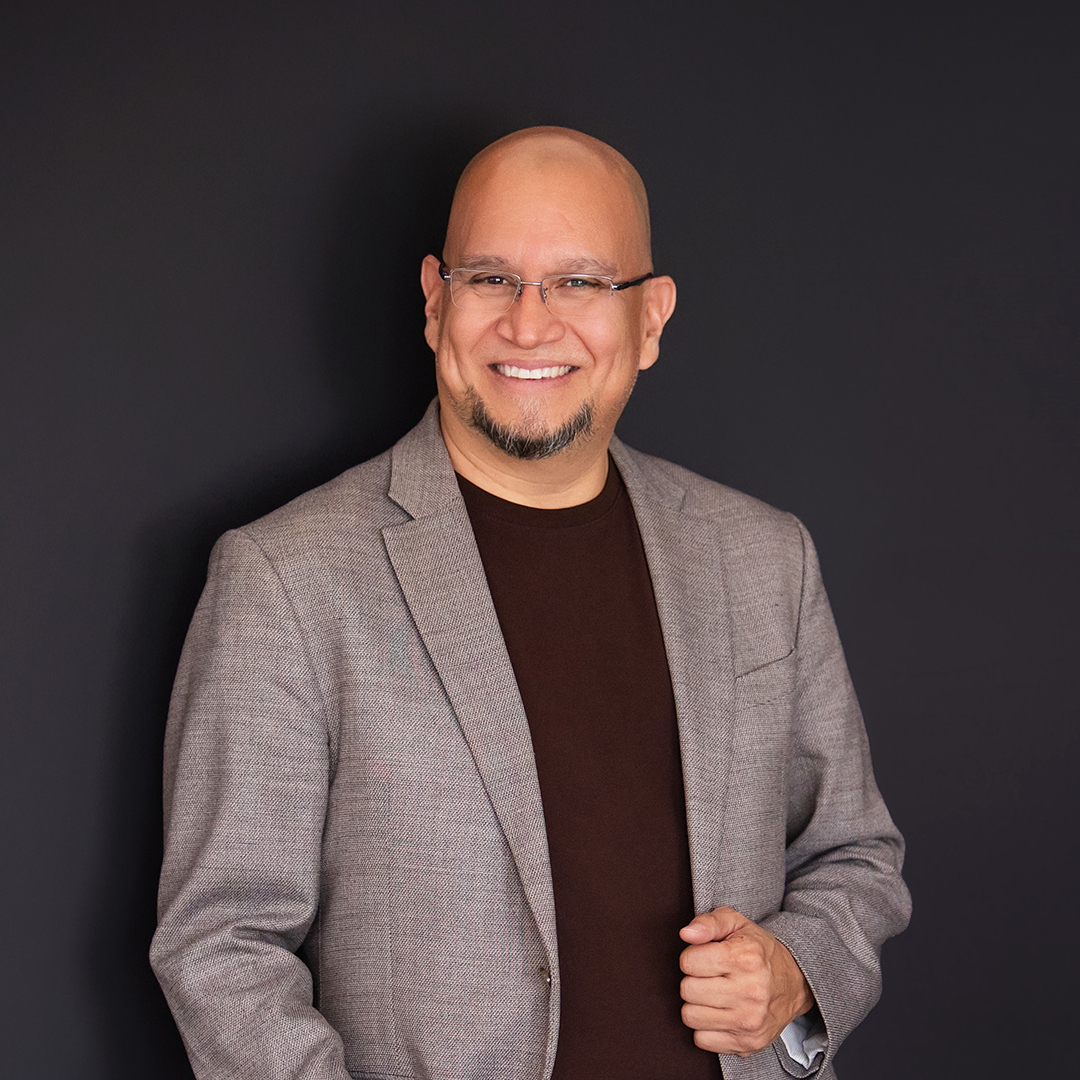
Meet Frank Velásquez Jr. (he/his/el): Storyteller Extraordinaire, Social Justice Warrior, and Relationship Cultivator! In relentless pursuit of racial and gender equity, Frank’s warmth brings folks together to talk through the tough stuff. And whether he’s delivering a keynote on leadership, language, or equity, or chatting one-on-one with a close friend or new connection, his real-talk energy remains consistent, powerful, and generous. Because to Frank, every person’s story matters like each ingredient in a yummy bowl of gumbo. Each standing on its own, but together making something unforgettable.
From major conferences like the Nonprofit Storytelling Conference, AFP ICON, and AFP Lead to training rooms everywhere from Walt Disney World to the MGM Grand Las Vegas, Frank has reached thousands of folks with narratives that just hit different, leaving each group invigorated with his unique blend of storytelling magic, quick wit, and social justice fire!
As the Founder of 4 Da Hood and the visionary behind the Ascending Leaders in Color leadership program, Frank forges pathways for Peeps of Color to step into their power – authentically, courageously, and with unapologetic joy. Because for Frank, advancing equity isn’t just a job – it’s about thriving in a world our ancestors dreamed for us, a world where communities of color have the same access and opportunity to build their generational wealth.
And he’s doing it one connection, one story, one courageous conversation at a time.
You can follow his work at 4dahood.com and contribute towards a PoC scholarship for the Ascending Leaders in Color program here.
Discover more from CCF
Subscribe to get the latest posts sent to your email.