
By Frank Velásquez Jr., Storyteller Extraordinaire, Social Justice Warrior, and Relationship Cultivator
But why does it feel like achieving the American dream equates to shedding the best things about our culture, the very culture that makes us innovative thinkers, incredible leaders, and amazing people?
Hey Hey, Edgar!
Ni de aquí, ni de allá.
I feel like you feel this like I do, my brother.
My story begins with my grandmothers.
My grandmothers’ journeys couldn’t be any more different.
My dad’s mom—Grandma Anita to me—lost her husband in a mining accident in Miami, Arizona. He was 37. She was only 28 and suddenly widowed with four children. She spoke no English. I can’t imagine how fast her life changed in that moment.
She made her way down to Tucson, remarried, lived off old Nogales Highway on a ranch, and had two more children. Every one of her children spoke Spanish as their first language. They learned English in school because that was the expectation. But as soon as they returned home, so did their Mexican culture because Grandma Anita kept it alive through food, language, and art.
Then there’s my mother’s mom, my Grandma Maria. She lost her husband in a very different way. He was rightfully incarcerated leaving her to raise their five children all on her own at the tender age of 32. Again, I cannot fathom being 32 with five kids to bring up all by myself.
Unlike my Grandma Anita, Grandma Maria chose not to remarry. She raised her children very differently than my paternal grandmother did. Though she didn’t speak English herself, she made sure her kids did. She made them dress the part, speak the part, and live the part of what she thought a successful American should be like. She wanted my mother and her siblings to “fit in” and not go through the struggles she was going through. And just like my Grandma Anita’s children, my Grandma Maria’s kids were also forced to speak English in school.
And let me be clear. My parents’ elementary-school years were in 1950s Arizona. At that time, Arizona educators (as well as ones all around the nation) were primarily monolingual white women. It was a common practice for teachers to pull out their wooden ruler (or some similar weaponized instrument), and hit Spanish-speaking students if they spoke their native language. The message was clear: “If you live in America, you need to speak the English language.”
Fast-forward to January 1969: about a year after my parents’ marriage and the birth of their first child (my sister) they made a pivotal decision. They decided to speak English to their children. No Spanish in the household. At all.
My siblings and I were assimilated.
Truthfully though, assimilation began two generations earlier with my maternal grandmother. With a deep desire for her children to financially “succeed,” combined with the pressure to conform to the norms and expectations of the dominant culture—including competition, capitalism, individualism, and many more Eurocentric workplace characteristics—she determined that conforming was the best path to “success.” Sadly, that decision led to a sense of alienation and the slow erasure of her children’s identities and her children’s children’s identities, mine included.
But we weren’t the only ones. Thousands of Tucson children were raised this way.
The trauma that all of our parents and parent’s parents experienced, severely impacted my generation. Many of us lost our language and other parts of our culture because our parents genuinely didn’t want us to experience the trauma that they did.
And to achieve success meant we needed to speak English, lose the accent, dress in muted colors, and live the part. It was supposed to lead to the American dream.
But why does it feel like achieving the American dream equates to shedding the best things about our culture, the very culture that makes us innovative thinkers, incredible leaders, and amazing people?
I spent most of my young adult life feeling neither from here nor from there.
Ni de aquí. Ni de allá.
Make no mistake, assimilation was always by design.
Edgar, you and I and every one of our family members were made to feel less than at an early age. We were forced to fit in. Yet even in the “preferred” dominant space, we were still made to feel less than. And that has extended into adulthood. We still don’t fit in. We might be able to dress the part or hide our accent, but we can’t immediately hide our skin color, dark curly hair, and brown eyes. And even when our primos have the “preferred” skin tone and hair texture for the white-dominant spaces we occupy, they still can’t hide their non-Anglo names and accents.
The constant pressure to fit in is literally killing us. Our bodies have been weathered leaving us exposed to higher rates of diabetes, blood pressure, and mortality rates.
This is the adverse effect of assimilation.
Edgar, how did that pressure show up in your body as a child? How has it shown up now? And do you feel guilt or shame not speaking Spanish? How have you navigated these feelings over the years? How do you feel now?
There is a remedy for assimilation.
Acculturation.
Here are five real ways acculturation can stop the adverse effects of assimilation:
Acculturation helps us reclaim what was taken
Assimilation was forced upon our parents and grandparents and great-grandparents. But stopping the cycle is possible. You have the ability to keep alive the things that make us Brown and Proud! The point is you start. What is stopping you from learning Spanish now? Reconnect to your traditions. Reclaim your heritage. Relearn what was stolen. You don’t have to be fluent to reconnect. Start with one tradition, one recipe, one phrase your abuela used to say. Every word you learn, every custom you practice, that’s reclamation. That’s power. Assimilation does not have to be a permanent state.
Acculturation helps us see our culture as strength, not a liability
The things that were taken—language, customs, the cultural things that make you you—were taken because they were strengths. Teamwork over individualism; “What’s in it for us?” over “What’s in it for me?” Collaborative thinking over “Us vs. them” thinking, power-sharing over power hoarding, multilingual over monolingual—you see the pattern. Whereas white workplace culture says “every man for himself”—they value “dog eat dog”—our community has always been our strength. The cookout, the quinceañera, the backyard fiesta; culture has always been our strength. It’s made us more innovative, more collaborative, more human.
Acculturation connects community; assimilation isolates us from them
Assimilation is meant to isolate. It starts with language. You and I couldn’t communicate with our abuelas because of assimilation. We missed out on the jokes and stories that our tîos told in Spanish. This was our first disconnection but most def not our only disconnection. Customs, erased. Traditions, eliminated. But acculturation means we can reclaim our narratives so that our kids won’t carry that same wound. They can learn Spanish. They can know their nanas’ stories firsthand. And they can stay connected to the community that holds them up when white spaces try to break them down. And hopefully never experience weathering like we have.
Acculturation protects us
It’s no coincidence that assimilation in America is white-centered. People of Color (PoC) are expected to conform to whiteness for white comfort. Speak “proper” English, dress “professionally,” act like them and maybe, just maybe, you’ll be rewarded. Assimilation does not serve us. It serves them. Acculturation is about you. It says: “I’ll learn to navigate your spaces, but I’m not giving up who I am to do it.” It helps you navigate spaces while remaining whole and adapt when you want to without being forced to. Acculturation protects your well-being, your identity, and your sense of who you are. You get to be whole.
Acculturation helps us access superpowers the dominant group can’t
Navigating spaces as a PoC gives you special skills that are uniquely yours: You read rooms differently. You understand multiple perspectives because of your multiple intersections. You’re comfortable with change, ambiguity, and complexity because it’s built in your DNA through generational trauma and wisdom. These are not deficits. This is strategic intelligence. You code-switch between cultures seamlessly. You translate not just language but entire worldviews. You hold complexity that would break someone who’s only ever known one way of being. Again, these aren’t compensations for oppression. These are actual superpowers that make you a better leader, a better thinker, a better human.
Edgar, our ancestors made choices they thought would protect us, just like my Grandma Maria. And for that we are grateful. But the cycle needs to stop. The generational harm remains firmly in place. But we can reclaim what was taken. We can stop the cycle. Assimilation be damned! Let’s be us, fully us.
With ❤️ and 🙏🏽
Frank
Author’s note: This is an excerpt from an upcoming, yet to be titled book by Frank Velásquez Jr. Each topic addressed in the book consists of two separate letters: One written to a Person of Color and the other written to a white ally.
It’s important to note that if I was facilitating a circle in person or virtually, I would hold these conversations in distinct healing spaces to minimize harm on each side. For PoC in America, we have historically been denied spaces to ourselves. Even when we create our own spaces, they’ve been destroyed in very visible ways, like the destruction of Black Wall Street in Tulsa and in many more subtle ways like prenatal care for Black mothers. We will never feel 100% safe in spaces that were never designed for us in mind, whether it’s workplaces, hospitals, banks, schools, restaurants, realty locations, business ventures, boardrooms, or pretty much any space PoC occupy!
When we create spaces for ourselves, we can finally breathe. We can be unfiltered knowing we don’t have to worry about unwanted gazes, unwelcome attention, uninvited responses, and/or hurt feelings. We can be fully us.
In our dedicated space, PoC can begin our healing journey from the lens of the oppressed.
For white allies, it’s also important to have a separate healing space, but for very different reasons. White allies historically carry privilege not afforded to PoC. This has resulted in a generational wealth gap that favors white folks over Black folks (by a factor of ten) and brown folks (by a factor of eight). For many allies, they carry the guilt and shame of how they’ve benefitted from systemic oppression. It’s something that can be hard to reconcile with, especially when reparations enter the discussion.
But we need white folks, and they need a healing space of their own to reflect, relearn, and reemerge stronger allies. Therefore, the separate letters aren’t for code-switching purposes; they are speaking directly to two very distinctive groups: People of Color and white allies.
Each letter is written to a specific individual to maintain that one-on-one connection. This isn’t about specific people; it’s about you, the reader. Using a person’s name reminds me that I am writing to you as a person, not a group.
Stay tuned for the letter on the topic of “assimilation,” to the white ally, coming next week.
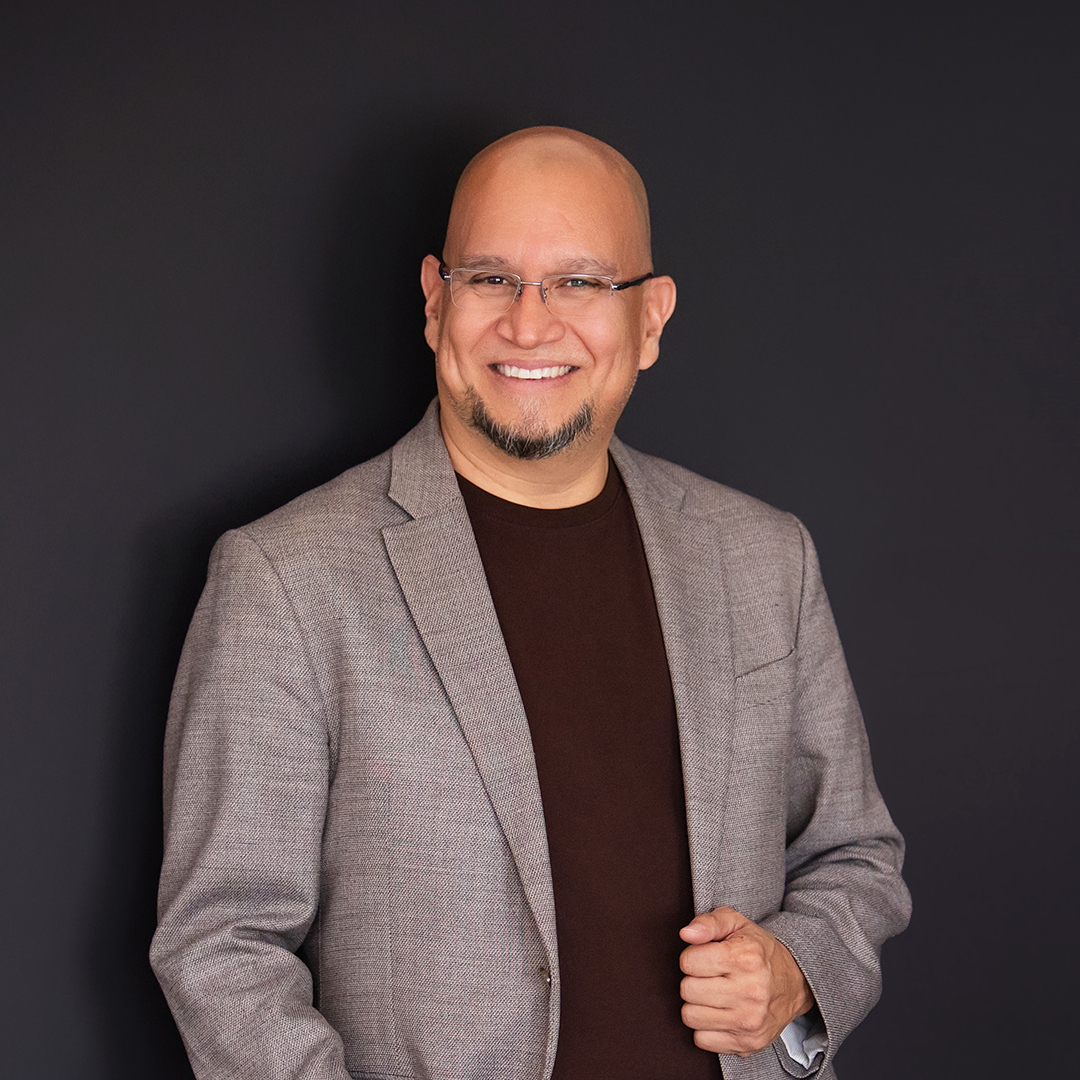
Frank Velásquez Jr.
Meet Frank Velásquez Jr. (he/his/el): Storyteller Extraordinaire, Social Justice Warrior, and Relationship Cultivator! In relentless pursuit of racial and gender equity, Frank’s warmth brings folks together to talk through the tough stuff. And whether he’s delivering a keynote on leadership, language, or equity, or chatting one-on-one with a close friend or new connection, his real-talk energy remains consistent, powerful, and generous. Because to Frank, every person’s story matters like each ingredient in a yummy bowl of gumbo. Each standing on its own, but together making something unforgettable.
From major conferences like the Nonprofit Storytelling Conference, AFP ICON, and AFP Lead to training rooms everywhere from Walt Disney World to the MGM Grand Las Vegas, Frank has reached thousands of folks with narratives that just hit different, leaving each group invigorated with his unique blend of storytelling magic, quick wit, and social justice fire!
As the Founder of 4 Da Hood and the visionary behind the Ascending Leaders in Color leadership program, Frank forges pathways for Peeps of Color to step into their power – authentically, courageously, and with unapologetic joy. Because for Frank, advancing equity isn’t just a job – it’s about thriving in a world our ancestors dreamed for us, a world where communities of color have the same access and opportunity to build their generational wealth.
And he’s doing it one connection, one story, one courageous conversation at a time.
You can follow his work at 4dahood.com and contribute towards a PoC scholarship for the Ascending Leaders in Color program here.
Discover more from CCF
Subscribe to get the latest posts sent to your email.
Thank you for sharing this. This letter hit differently for me as a white woman who’s ancestors weren’t always considered white (I’m Ashkenazi). It reminded me of the costs of becoming so fully assimilated into whiteness in American culture, and what did my family have to give up in exchange for the privilege of whiteness.
Ava! Thank you so much for your response. And thank you for your reflection. The privilege of whiteness is real. I myself have sometimes experienced the benefits of that privilege as a light-skinned Mexican with no accent. I’m very curious to get a comment for next week’s essay which is my letter to a white ally about the effects of assimilation.