By Abigail Oduol, a Community Centric Fundraiser
This piece contains spoilers. The writer acknowledges that Disney+ is currently on the BDS list, and does not encourage readers to break the boycott. Reading this piece is a substitute for watching the movie.
Funding decisions made while we experience urgency and trauma can carry invisible ethical costs. These costs only become clear after they have reshaped our values, our communities, and us. So I ask again: How far will you go to secure the funding to make your vision of the future real?
How far will you go to secure the funding to make your vision of the future real?
On one hand, I feel pragmatic. I want to redistribute wealth. I want the wealth that was built by the abusive extraction of my ancestors’ labor to be recaptured for my people’s liberation.
But practically, what does it look like to yearn for something, to have a desire that is born from your trauma? To desire a vision that you believe you were meant to bring into the world?
To be a formerly housing insecure person working at a housing-first organization?
A Black person at an organization fighting environmental racism?
Funding decisions made while we experience urgency and trauma can carry invisible ethical costs. These costs only become clear after they have reshaped our values, our communities, and us. So I ask again:
How far will you go to secure the funding to make your vision of the future real?
Riri Williams, a young Black scientist pursuing a PhD at MIT asks this question. This piece uses the limited series Ironheart as a metaphor, but it’s for fundraisers who sit closest to money and consequence.
The example of Riri’s arc helps us realize how ethical erosion in securing funding happens incrementally, that our trauma can accelerate compromise, and loss of our community is the real cost.
Building the Dream at Any Cost
Riri Williams is young, gifted, and Black. She is singularly focused on building Ironheart suits (akin to Iron Man’s armors) to help first responders’ response time.
Her obsession with being the solution is rooted in trauma: her stepfather and best friend were killed by gun violence in front of her.
Riri has the charisma, drive, and passion of a nonprofit founder. She originally funded her work through a scholarship at MIT that gives her access to a fancy lab and equipment. As Dean Choi reluctantly explained to Riri, before expelling her:
“We tailored a course of study to your needs. And I work hard to get qualified people like us into seats here. But you’re making it impossible. I allowed some leniency, maybe too much, given your situation, but… You sold completed assignments to students at every school in the area.”
Riri’s choices damage her reputation and end possibility for current and future partnerships. Her sense of urgency and compromise mean returning to Chicago empty-handed.
Riri asks these questions at MIT:
Will you steal time and resources from your current job?
Will you develop side hustles that jeopardize your role and erode trust?
I know someone who started their consultancy by taking resources and clients away from their employer until they were ready to launch on their own. If we are struggling to maintain our ethical obligations as fundraisers, what does this mean for our former colleagues and future partnerships?
The real-life MIT had a scandal where a wealthy, problematic donor was disqualified from donating to one unit of the school but was secretly qualified and solicited by another unit. That donor was a post-conviction Jefferey Epstein.
The supervisor who gave the instructions. The fundraiser who solicited him. The person who processed the gift. The person who covered up the gifts in the database. Each person made decisions along the way to get their work done and not rock the boat. Their choices ultimately compromised themselves and the organization.
This is the first kind of compromise—not truly malicious, but private—deciding speed is more important than trust.
Fast Money and the Loss of Community
Following her exit from MIT, Riri returns to Chicago where she is lured into participating in a high-end theft ring, led by a man named Parker, to earn fast money to meet her goals.
Riri becomes too busy funding her project to stay connected to the people she wants to help. She doesn’t see how they are there to help her and provide a real, reciprocal relationship. Each member of her community brings something unique and necessary to the table. But she sees them, functionally, as her beneficiaries. She only allows them to help when she is out of options that allow her to control the plan and outcomes.
The notable break from that pattern came in the form of her AI, an accidental reconstruction of her deceased best friend (more on this soon).
Riri asks this question with Parker’s crew:
Will you accept money when you disagree with how it’s made, but believe your intentions are pure enough to override values misalignment?
The logic of “I believe in me”—my values, my desire to put good into the world—can make things blurry. This is especially true when the decision aligns with what’s allowed in fundraising, but the choice is ethically ambiguous.
It’s when we make decisions to push for a gift because we want to meet goals, but it’s not the right gift for the donor’s financial health. When we feel the pressure of the cause or our performance more than the pressure to do what’s right. When we get focused on the number going up but forget why we are fundraising in the first place.
We often do not consider how these choices might subtly shift our sense of self over time in ways that are easy to miss.
As I work to coordinate the CCF Family Reunion, for instance, I look at our fundraising goals and am tempted to explore institutions that are not values-aligned. I want to solicit money from the evilest corporations because, in my heart, I truly don’t believe they deserve to both be evil and keep all their money. But even if they did give it to us to do great things, I don’t want to lose everything for it. I don’t want my deep desires for liberation and redistribution to sabotage the long-term mission of transforming philanthropy just so that I can see particular milestones on my internal schedule. I don’t want to lose the community I’m doing this work with and for.
This is the second kind of compromise, where our reasoning replaces accountability, and isolation feels comfortable because we’re overconfident in our own abilities.
The Soul Stealing Deal
In the final three episodes, the series’ focus turns to magic.
It is revealed that Parker made a bargain with the demon Mephisto to get what he desired most and a magical hood to help him. But each time he uses the hood, grotesque scars spread across his body. They are a physical manifestation of Parker paying for power by losing his soul.
Riri and Parker have a classic Marvel showdown, and the final battle destroys Riri’s AI. Rather than ending with this bittersweet victory, the show ends with Riri meeting Mephisto.
He reads her mind and understands that more than iron suits, she desires community and relief from her past trauma. The demon preys on these desires, her belief in her own brilliance, and the truth that the world has been against her in order to manipulate her.
Riri asks what it will cost to get her dreams and Mephisto replies, “Nothing you’ll miss.”
She asks him not to hurt anyone she loves. He agrees. They shake hands and her AI becomes real. A scar creeps across Riri’s forearm. Mephisto has taken a piece of her soul.
Rather than turning to the community who had proven that they were willing to help her in any way she needed, she turns away. Riri abandons their advice and support in favor of a deal with Mephisto to regain her AI. She receives his corrupted version of something that was good (also a note of warning to those tempted to substitute community with AI tools).
That loss is not incidental. It is the cost.
Riri asks these questions with Mephisto:
Will you accept support from a shadowy, all-powerful figure whose intentions and interest in you are unclear, when the cost seems invisible or minimal?
What does it mean when someone promises your community will be safe, but your choices themselves could still reshape that community in ways you can’t anticipate?
This metaphor feels immediately familiar. Transformational gifts and billionaire philanthropy are things many of our boards and executive directors dream of nightly. But money and influence are often connected. For instance, Bill Gates’ philanthropy is often discussed for pushing personal and political agendas and laundering his reputation.
According to Tim Schwab on Tech Won’t Save Us, “He has so much power. He has so much money. He can pull so many levers. And of course, the most important lever he can pull is giving away money… so many would-be watchdogs, would-be critics are reluctant to speak up or speak out for fear of losing his patronage. Either they’re taking money from Gates right now or they hope to in the future. And you’re talking about tens of billions of dollars…going to universities, to think tanks, to advocacy groups, to journalism news outlets.”
I know I am not willing to pay the price of someone being sexist or racist toward me. I know I don’t want to serve goals when they jeopardize my health. As an individual gift officer, what if someone is problematic in other areas, wants to establish a large asset gift to fund urgent, transformative work? What if a wealthy, powerful person decides that they like our mission, and me, and wants to fund it?
The person could have a philanthropic philosophy aligned with trust-based philanthropy. But what do I do if not, and even without them saying anything, I begin to feel the pressure to be silent about the harm they are causing?
Here’s what we’ve seen so far: the pattern is incremental compromise for funding. It’s driven by urgency, trauma, and scarcity. The consequences are a loss of community, ethics drift, and a loss of self.
What do you do when saying “no” feels like harm?
When you’re Tony Stark and you have all the money in the world, there is no moral dilemma. Following your values is inconvenient but achievable.
But what if you’re Riri Williams: a resource poor Black woman from the Southside of Chicago with a lot of talent and a dream? Or a fundraiser at a small food security organization trying to reach salary parity with your local barista while dealing with funding cuts?
What happens when you know what saying “yes” means, but you feel that saying “no” will destroy your quarter, or your year? When turning down the funds could harm the people who rely on your programs?
We must ask the hard question—do we want our vision, or our executive director’s vision of a better world no matter what the costs? Because the cost might be the community, we are doing this work for.
The cost might be our soul.
Fulfilled goals do not mean fulfillment. Sometimes the cost of getting what we want only becomes visible after our choice is too late to undo. To be clear, these are not all personal failings but rather predictable outcomes of systems that underfund justice work.
Decide what your boundaries and limits are before trauma, urgency, and ambition hits.
Before we’re staring down the reality of our funding situation, we must decide in advance how high a cost is too high? What money will we not take? Because when the opportunity comes, our trauma, urgency, and ambition will team up against our morals to justify whatever feels necessary.
And it might be the very thing that destroys us.
I write this as someone who thinks about this often. What will this gift cost me? What am I willing to pay to close it? What am I willing to pay to make sure my goals are realized?
What might someone use to manipulate me into making choices that are not in my community’s long-term best interest?
Some of the answers to these begin with intentional conversations and premade plans.
These plans could be things like regularly revisiting a gift acceptance policy. Holding regular boundaries workshops. Doing “ethical exercise” by practicing saying “no” and doing what you believe is right even when it’s inconvenient. Move ethics beyond philosophical conversation and into the concrete realities that you are likely to encounter by scenario planning. These are some beginning steps. Much of this work of examination will take the discipline of cultivating community with others outside of your board and executive director.
Community is the only real safeguard against making funding choices that cost too much.
Beyond having a premade plan, there are individual and communal responses. As an individual, go to therapy with a real person who isn’t invested in your approval. Find someone who doesn’t cosign your existing beliefs about yourself and your perspective. Build a tolerance for being around people who can challenge you, tell you that you’re wrong, and that you’re not seeing something clearly.
As a Black American woman, it means there are some deeply necessary and uncomfortable conversations that I have in Bible studies, the beauty salon, and in my family group chat. It’s a community healing circle wherever I go.
Ask and discuss with others your first instinct and interrogate where it comes from. Because sometimes gut feelings are some bad pesto you ate, sometimes they’re your intuition, and sometimes they’re the worn patterns of trauma. Having a community will help you begin to tell them apart.
Be in real, authentic community with people who have enough context to understand your pressures and yet, enough distance to see what your temptations might be obscuring.
Some days I want everyone on the billionaire top ten list to empty out their Donor Advised Funds into the organizations I know are deeply struggling. But then I ask: what would that actually cost us? Would it fix the heart of what’s broken? And I feel less sure.
What I do know is that my coworkers and several CCFers I’m in community with know what I’m like at my best when I’m living my values. They will tell me if they see the scars forming, if I am losing pieces of my soul. They know me well enough to challenge the myths I tell about myself.
Riri had those people too, but she pushed them away. She didn’t want them to see what she was doing and who she was becoming. She didn’t want them to know that the dream came at such a high cost.
So do we accept the gift?
If you’re still not sure, I’d say this: when the money comes close, keep your CCF community closer. Community is the only real safeguard against making funding choices that cost too much, especially when we give permission to them being empowered to disagree.
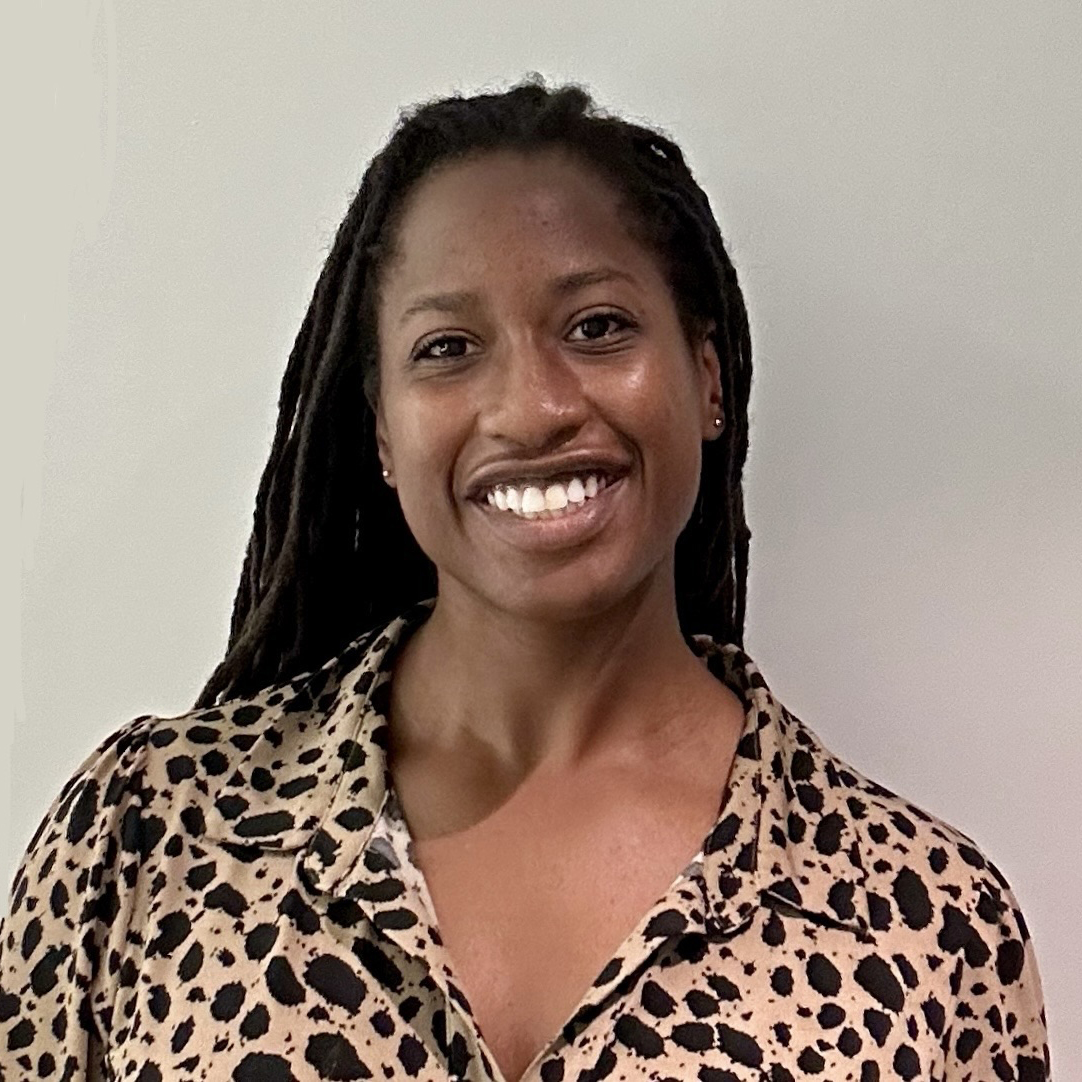
Abigail Oduol
Abigail Oduol’s (she/hers) surname is not Irish or Pennsylvania Dutch. It’s Kenyan. Abigail is the CCF Movement Coordinator and is a member of too many committees. She invests time thinking about how popular culture informs fundraising and how people connect to each other. Follow Abigail on LinkedIn.
Discover more from CCF
Subscribe to get the latest posts sent to your email.