By nae vallejo, access designer and experiential archivist
Artist Statement
I am interested in what happens when we stop asking institutions to recognize us and instead deepen our commitment to one another. What kinds of memory become possible when legitimacy is no longer the goal? What futures can take root when we trust living knowledge?
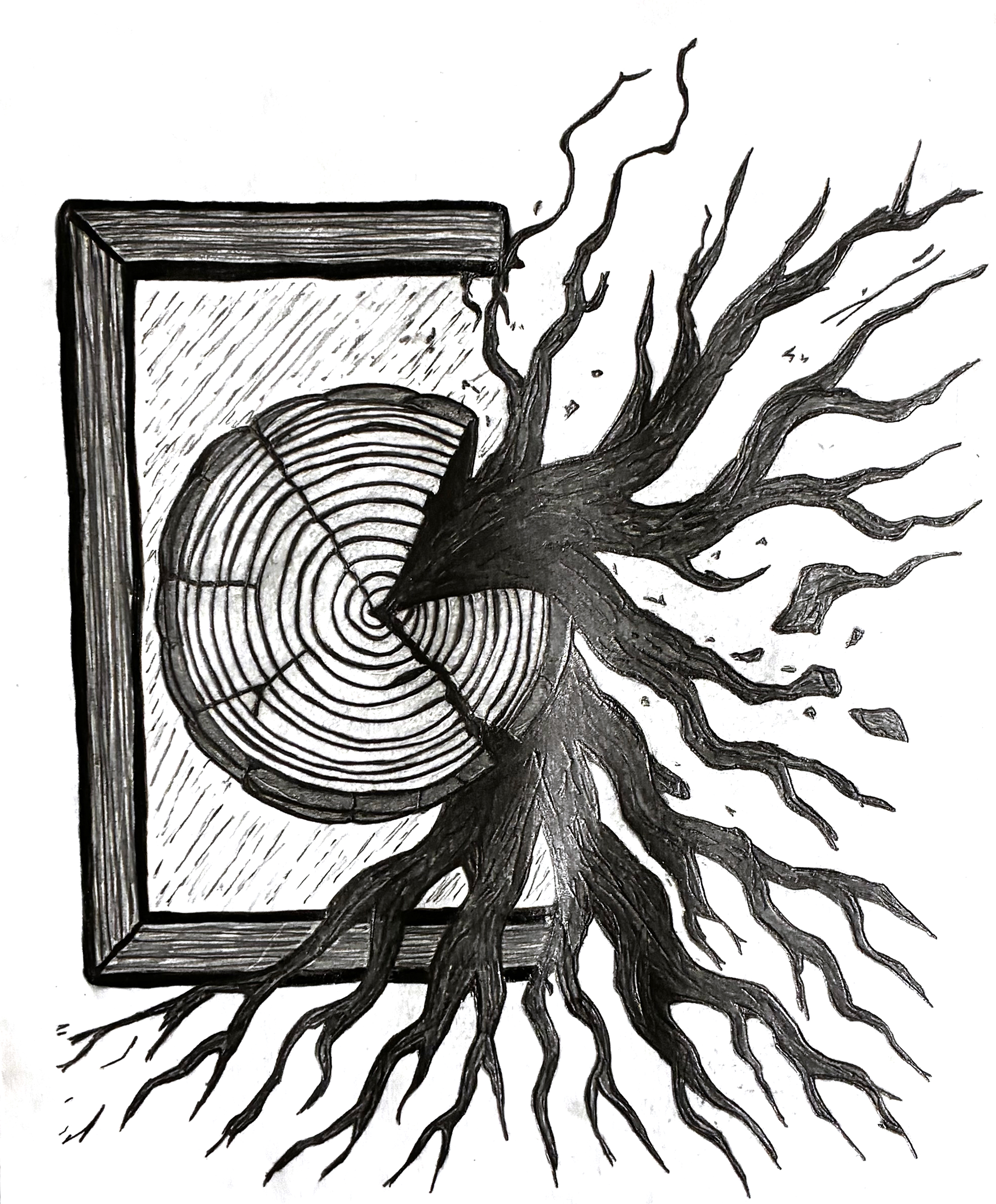
Breaking Frame began as a quiet insistence. An image of something that would not stay contained.
At the center of the drawing sits a cross-section of a tree, held inside a rigid frame. Its rings are precise, orderly, and legible—time made measurable. This is the version of memory that institutions tend to prefer: flattened, stabilized, and sealed. But the tree does not end there. From its core, roots push outward, splitting the frame, traveling beyond its edges, continuing their work elsewhere.
This piece reflects how memory actually lives.
I come to this work as a Black, Caddo, Mexican, queer, trans, disabled artist and experiential archivist whose life has been shaped by partial records and missing names. I have learned that what is most vital is often what does not survive formal documentation. Family stories carried in gesture. Ancestral knowledge preserved through care. Community truths that move between bodies rather than files. Breaking Frame holds that knowing.
The frame in this drawing is not simply a border; it is a system. It represents the structures that decide what counts as history and what is dismissed as anecdote, what is preserved and what is lost. The circular rings inside the frame suggest a controlled narrative of time—one that moves forward neatly, one that can be catalogued. But the roots refuse this logic. They interrupt the composition. They break symmetry. They do not ask for permission.
Roots are not chaotic. They are intelligent. They respond to pressure. They search for nourishment. They remember where water once lived. For communities that have been excluded, misrecorded, or erased, this kind of memory is survival. When official archives fail us, we become the archive. We carry what we need forward through relationship, through repetition, through care.
The act of breaking in this piece is not violent; it is necessary. The frame fractures because it cannot hold what it was never designed to honor. The roots do not destroy the tree, they extend it. They insist that memory is not meant to be sealed. It must remain in motion to stay alive.
Graphite felt essential for this work. The material itself resists the fantasy of neutrality. Each mark is a record of contact, reminding me that archives are always shaped by who experiences them and how. The uneven textures and visible strokes echo the way memory behaves: layered, imperfect, and persistent.
Breaking Frame is also about care. About tending what grows beyond sanctioned boundaries. About honoring the labor of remembering when systems are not built to support you. This piece is for those who have learned to hold history sideways, who gather fragments and keep them alive through use rather than preservation.
I am interested in what happens when we stop asking institutions to recognize us and instead deepen our commitment to one another. What kinds of memory become possible when legitimacy is no longer the goal? What futures can take root when we trust living knowledge?
This drawing does not offer resolution. The roots keep moving. The break remains open. Breaking Frame is an invitation to stay with that opening, to recognize memory as a living practice, and to honor the ways we continue to grow beyond what was meant to contain us.
Visual details:
Title: Breaking Frame
Medium: graphite on cardstock paper
Alt text: graphite drawing of a framed tree trunk cross-section with visible rings, while roots break through the frame and extend outward. The image shows roots refusing containment and growing beyond the border.
nae vallejo
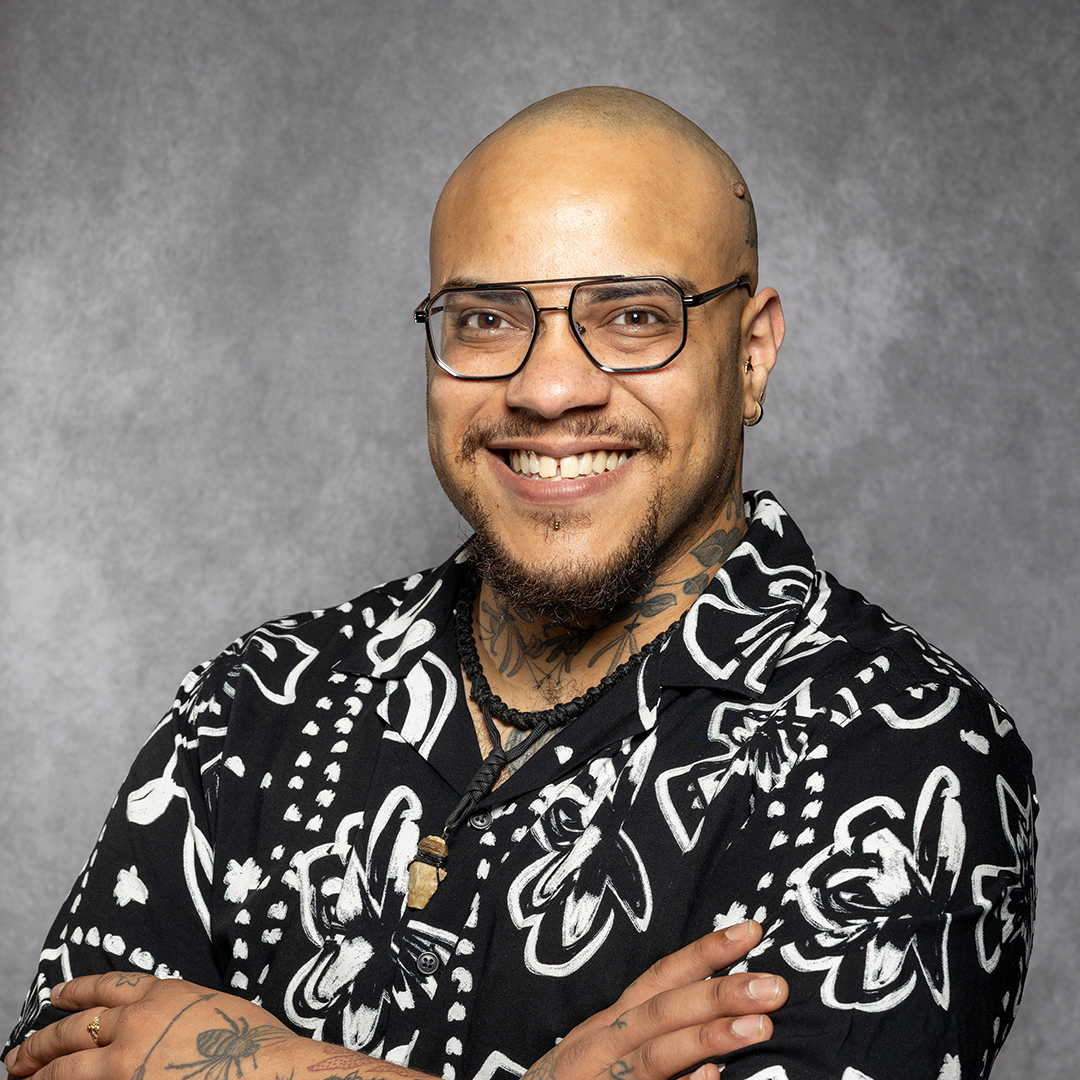
nae vallejo (they/he) is a Black, Caddo, Mexican, queer, trans, disabled experiential archivist and access designer. their work moves through memory, rememory, and care, exploring how survivors leave trace across body, land, and story. as the founder of naeborhood projects, nae creates art that weaves disability justice, sensory attunement, and community connection into everyday practices of survival and tenderness. a hard of hearing, neurodivergent service dog guardian and lifelong educator, he centers interdependence, ritual, and storytelling as tools for collective care. follow their offerings on Instagram @naeborhoodprojects and support their labor via Venmo @nae-vallejo or Paypal @naevallejo.
Discover more from CCF
Subscribe to get the latest posts sent to your email.