By Naya Díaz, in community with the North American Council of Community-Centric Fundraising
“I love America more than any other country in this world, and, exactly for this reason, I insist on the right to criticize her perpetually.”
— James Baldwin, Notes of a Native Son
“America’s obsession with self-reliance has made us blind to how much we owe one another.”
— Rebecca Solnit
Donor-centric fundraising is the Declaration of Independence’s most faithful heir. The document proclaims that “all men are created equal”– but in practice, the founders reserved that promise for white, property-owning men who they believed were endowed with the wisdom and right to determine whose lives, freedoms and futures would deserve dignified support systems. This framing built an entire philanthropic sector around that belief.
Our ancestors, both Indigenous and colonial, had vivid dreams for their descendants to thrive and become what they had only imagined. Yet, only one of these ancestral groups was able to set constitutional foundations that generated wealth and resources for themselves. The other was the actual resource. They were the labor, the land, and the body that made the 1776 experiment possible while also being written out of its promises.
During this quarter-millennium birthday, we reckon with what those dreams produced—constitutional rights for some and non-rights for others—culminating in 250 years of struggle in the hopes that we can choose a different path for the next 250 years.
This moment asks for reflection; we must dust off the narrow table this country was built on to face how it has been widening and lengthening over two and a half centuries, while guarded by colonial mythologies. As we step into this once-in-a-lifetime birthday of the colonial project on these stolen lands from Turtle Island, many of us will be celebrating and grieving the complexity of where our feet stand today.
Bayo Akomolafe reminds us that “the times are urgent, and so we must slow down,” and how wayfaring moments like these help us sense our entanglements with each other.1 This anniversary is a 250-year-old threshold asking of us to not rush towards solutions that continue to create conditions that our democratic pillars cannot withstand. It is a moment to tell truths made of forgotten and dismissed stories of economic mutualism and disrupt a cycle of supremacy-based philanthropic mythologies.
Manifest Destiny proclaimed it was divinely destined to expand across North America, allotted by providence, rooted in American exceptionalism, romantic nationalism, and a god-given sense of racial and cultural superiority.
It also deployed the word “philanthropy” as one of its covers.
In his message at the Second Annual Message to Congress on December 6, 1830, President Andrew Jackson justified the forced removal of Indigenous peoples by declaring, “But true philanthropy reconciles the mind to these vicissitudes as it does to the extinction of one generation to make room for another.” The “self-made man,” as Henry Clay named him in 1832 on the Senate Floor, became the mythic figure through which economic individual accumulation is framed as virtuous and aligned with the national common good.2
This is the current operating system donor-centric fundraising runs on.
Donor-centric fundraising is the Declaration of Independence’s most faithful heir. The document proclaims that “all men are created equal”—but in practice, the founders reserved that promise for white, property-owning men who they believed were endowed with the wisdom and right to determine whose lives, freedoms and futures would deserve dignified support systems. This framing built an entire philanthropic sector around that belief.
In donor-centric fundraising, many of the wealthy donors sit at the narrow table from their place of power while the community performs its requests in metrics and language the donors find acceptable. Much of the impact measured has been interpreted by the donors—the people furthest from the problem. Generosity is assumed to flow downward from donor to community. But the people doing the work are often the most generous—their contributions simply are not legible in a system designed to recognize only one kind of giving.
The gap between the Declaration’s promise and delivery has been expanding for the last 250 years.
Community-Centric Fundraising lives in that gap while not abandoning the democratic promise. It reinforces that the people closest to the problem must lead its solution, that generosity must be understood to flow in all directions, and that power must be redistributed and sustain equitable terrains. At this 250-year moment, we are inviting our peers to sunset donor-centric fundraising.
Remembering and Reclaiming
“What would it be like to be raised on gratitude, to speak to the natural world as a member of the democracy of species, to raise a pledge of interdependence?”
— Robin Wall Kimmerer, Braiding Sweetgrass
Community-Centric Fundraising is a BIPOC-led movement practicing this work through remembering and reclaiming what community-centric giving and reciprocity means. These ancestral practices were mycelially networked, navigated underground through reciprocity, and fed the whole from the roots up. As early as the 1700s, Latine and Chicane women formed female sociedades—mutualistas rooted in ‘ancestral conocimientos.’ The wisdom and ‘consejos’ of those who came before us were carried through ceremony, kitchen table pláticas, and femtorship.3
We see these practices in the rotating credit associations West African and Caribbean immigrants carried across oceans, in the Indigenous gift economies settler colonizers moved swiftly to dismantle, in the burial societies of the Black South, and in the potlatches returning surplus to those in need, and in the affinity networks Asian American immigrants built to survive racism and economic marginalization—each a node in a vast living network that no colonial myth could fully sever. 4,5,6,7
Along the Trail of Tears, as Mohawk seed keeper Rowan White reminds us, people tucked corn and beans and squash into buckskin pouches. Even in the face of starvation, they did not eat their seeds. They kept them alive for future generations.8
In 1787, Absalom Jones and Richard Allen formed the Free African Society of Philadelphia which was a self-governed, dues-paying organization. It collectively existed to care for people with illness, death, and hardship. This was a practice of surviving together when institutions of systemic harm are not built to sustain us.
Dana Arviso, a Diné scholar and philanthropy leader, names how Native communities are this country’s original philanthropists. The traditional giving practices of Indigenous peoples are grounded in respect, relationships, reciprocity, and communal responsibility. They predate American philanthropy by millennia and continue to inspire what a genuinely community-centric movement can become.9
Encouraged by these many lineages and ancestral practices, CCF has become a movement guided by ten core principles evolved through years of conversations and time spent with BIPOC fundraisers. These principles state that:
- Fundraising must be grounded in race, equity, and social justice.
- Individual organizational missions are not as important as the collective community.
- Nonprofits are generous with and mutually supportive of one another.
- All who engage in strengthening the community are equally valued, whether volunteer, staff, donor, or board member.
- Time is valued equally as money.
- We treat donors as partners, and this means that we are transparent, and occasionally have difficult conversations.
- We foster a sense of belonging, not othering.
- We promote the understanding that everyone personally benefits from engaging in the work of social justice—it’s not just charity and compassion.
- We see the work of social justice as holistic and transformative, not transactional.
- We recognize that healing and liberation requires a commitment to economic justice.
The Institute for the Future (IFTF) forecasts a world reorganizing around extreme heat where mutual aid becomes lifesaving infrastructure and the economy redesigns itself around mutualism. What IFTF theorizes as the future, our ancestors practiced as survival. In fact, some communities are already returning to these models such as the democratic investment fund, Boston Ujima Project Inc., the community loan fund, Cooperation New Orleans, and the Sogorea Te’ Land Trust working to rematriate ancestral land in Lisjan territory.10
These examples and others are modeling what the next 250 years can create—a liberated and post-donor-centric world.
The Invitation
“The ways we respond to crisis is part of the crisis.”
— Bayo Akomolafe
Our ancestors built care and reciprocity without frameworks or conferences or mission statements. They navigated this work in the dark, under surveillance, mycelially-networked across generations, with nothing but each other and community values durable enough to survive 250 years of attempted erasure.
There was no destination to manifest. Instead communities moved together, interdependent, adjusting with what the community needed and trusting that path is made by moving in the right relationship with each other.
Ancestral conocimientos—the wisdom carried through generations of BIPOC communities—remind us this work has always been about returning to the kitchen table, to the land, to the circle, and to each other. Collective belonging, scholar Kristina Parzen argues, is achievable only when continual processes of Indigenous centering and settler unsettling are enacted through shared labor and active participation.11 For CCF, this means donors can become participants in a shared labor of community-centric well-being and economic justice, building a future in which colonial and patriarchal values are no longer the norm.
We are already entangled in this moment which we cannot step outside of. But we can choose how we move within it. Will we choose the extractive logic that created the crisis, or do we choose to move with the relational, reciprocal intelligence our ancestors have always practiced and that our descendants deserve? Will we choose the narrative that says generosity flows from the top down, from unstable and harmful democratic pillars? Or will we accept that the future lies in allowing those closest to the margins to lead the way?
While we see ribbons of red, white, and blue light up our skies, and the Statue of Liberty reinforced as a symbol of hope, welcome, liberty, and justice, may we choose a North Star that remembers, practices, and moves together through a woven tapestry of our collective Indigenous ancestral community-centric values, toward liberation for all.
1 Bayo Akomolafe, “The Times are Urgent: Let’s Slow Down • Writings – Bayo Akomolafe” and “ To be entangled • Writings – Bayo Akomolafe”
2U.S. Senator Henry Clay, Registers of Debates in Congress, 22nd Congress, 1st session in Feb 2, 1832
3Lisa Mendoza Knecth,and Dolores Delgado Bernal “Ancestral Knowledges: Chicanx and Latinx Leadership in Community Organizations of South Central Texas” (University of Texas at San Antonio) The concept of femtorship is drawn on networks to build, heal, and sustain communities across generations. Her work grounds the concept of legacy work as slow, sacred, and intergenerational building a city one stone at a time, knowing you may never see it completed.
4Aubrey Bonnett, Institutional Adaptation of West Indian Immigrants to America (1981); Shirley Ardener, “The Comparative Study of Rotating Credit Associations,” Journal of the Royal Anthropological Institute (1964)- Known as susus in West Africa and the Caribbean, rotating savings and credit associations are pre-colonial in origin and were carried through the diaspora.
5Marcel Mauss, “Potlatch Ban,” The Canadian Encyclopedia;, The Gift (1925)- The potlatch was a primary economic and governance system among Northwest Coast Indigenous peoples-was banned by Canada in 1884 and the U.S. in the late 19th century.
6Jessica Gordon Nembhard, Collective Courage: A History of African American Cooperative Economic Thought and Practice (Penn State University Press, 2014); “Forming Organizations,” National Museum of African American History and Culture
7Yvonne Yen Liu, “For Asian Immigrants, Cooperatives Came From the Home Country,” YES! Magazine (May 2018).
8Rowan White, through her work at About – Sierra Seeds and keynote presentation at Young Farmers Conference
9 Dana R. Arviso (Diné), Reclaiming Philanthropy: Re-centering Native Giving in Respect, Relationships, Reciprocity, and Communal Responsibility (University of Washington, 2024).
10 Rebecca Marx, Brett Theodos, and Tené Traylor, Community Ownership and Self-Determination (Urban Institute, 2025).
11 Kristina Parzen, “Non-Colonial Creative Interventions,” International Journal of Critical Diversity Studies 7.2 (December 2025).
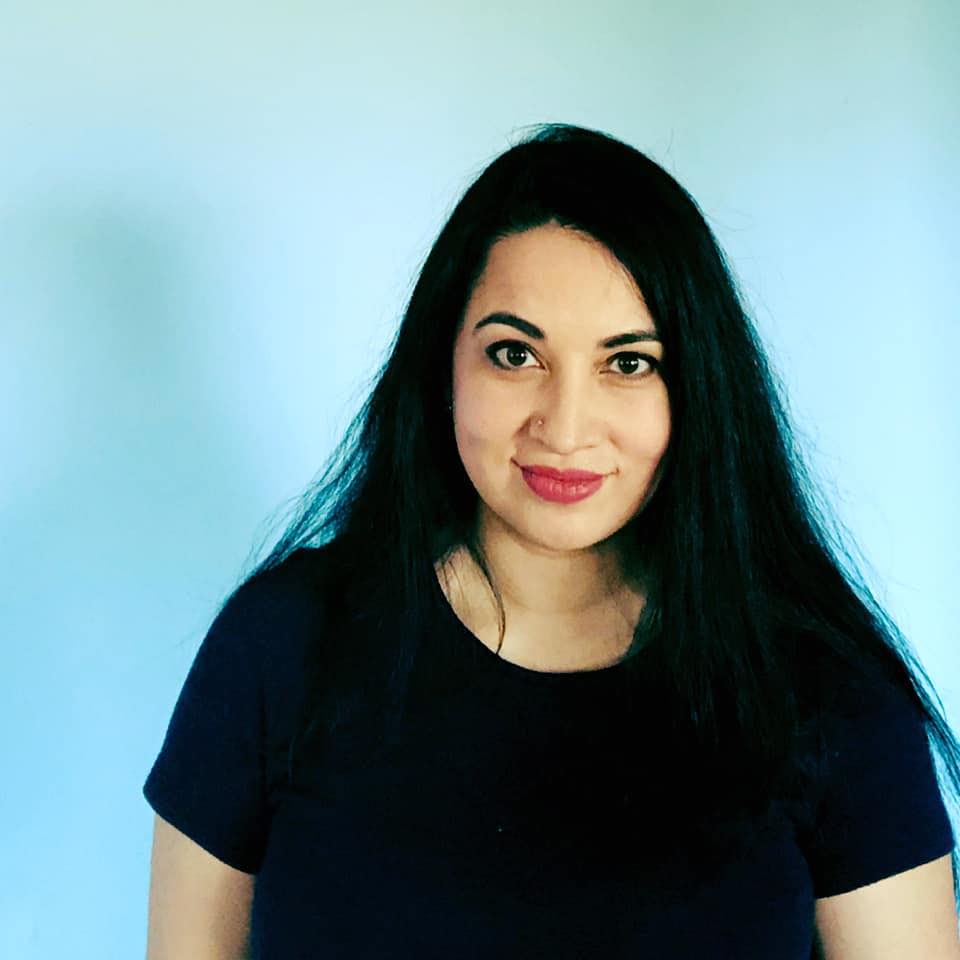
Naya Díaz
Naya Díaz is a national impact strategist, cultural weaver, and narrative architect working at the intersection of community power, healing-centered leadership, and systems transformation She brings over 18 years of experience in nonprofit executive leadership, community organizing, and movement building. She currently serves as a Member Services Director at YWCA USA, supporting 190+ local CEO and board leaders across the country in strengthening governance, sustainability, and movement alignment with a deep commitment to dignity, equity, and community-centric infrastructure.
Beyond institutional strategy, Naya is the founder of the Mythic Plurality Project, an emergent narrative and cultural design framework that activates story, ancestral memory, and imagination as tools for remythologizing political, spiritual, and economic possibility. Her work bridges funders, organizers, artists, and frontline community leaders; moving fluidly between the strategic and the soulful to reimagine philanthropy and social impact beyond transactional cultures and into relational, cultural, and world-shaping practices.
She joins the Community-Centric Fundraising North American Council with a devotion to re-rooting philanthropy in communal reciprocity, storytelling, and right relationship ensuring that the ways we resource movements reflect the futures we are daring to build together.
Discover more from CCF
Subscribe to get the latest posts sent to your email.