
By Marissa Ditkowsky, Volunteer Executive Director of Crip the Law
While the barriers to building a thriving, disabled-led organization can feel insurmountable, funders have the opportunity to break cycles and fund pathbreaking work if they can imagine a future where everyone can not just survive but thrive.
I’m a multiply-disabled activist and attorney. I have myotonic dystrophy type 2, which is a form of muscular dystrophy that not only causes muscle pain, fatigue, and weakness but also wreaks multi-systemic havoc, from my endocrine and gastrointestinal systems to my immune and reproductive systems. I’m also openly autistic and have anxiety.
In law school, I didn’t really have many disabled mentors. I didn’t feel supported or like I had community. I had to re-invent the wheel every step of the way.
In 2018, several disabled law students from around the country—myself included—began an email chain discussing the issues we were experiencing. As it turned out, many of us were facing similar issues related to access and accommodations. It became clear that there was a gap. That discovery led to the birth of the National Disabled Law Students Association (NDLSA).
While NDLSA continues its important work today, the original NDLSA board members graduated, progressed in our careers, and decided to create the National Disabled Legal Professionals Association, now known as Crip the Law. Crip the Law is a national association created by and for disabled lawyers, judges, policy experts, legislators, academics, and other legal workers, professionals, and organizers to promote professional growth and opportunity for disabled legal professionals, improve access and inclusion in the profession, and ensure access to justice for all.
Crip the Law is entirely disabled-led, and we are all volunteers; I’m the volunteer executive director. We do this work in our “free time” on top of full-time jobs, because we care so deeply.
For me personally, I’m in this work to make sure no one ever feels alone.
Running a nonprofit as disabled and chronically ill volunteers who are not compensated for our labor is exhausting. Navigating the inaccessible quagmire that is philanthropy can feel isolating and hopeless. Add the fact that my organization approaches our work with a disability justice lens, and fundraising within the current landscape becomes all the more difficult.
While the barriers to building a thriving, disabled-led organization can feel insurmountable, funders have the opportunity to break cycles and fund pathbreaking work if they can imagine a future where everyone can not just survive but thrive.
Funding Disability Justice in the Nonprofit Industrial Complex
Laws are, supposedly, established to maintain order and reflect a society’s morals. Yet, more often than not, the law operates as a tool of oppression and exclusion. Similarly, the legal profession itself is exclusionary and inaccessible—and that is by design. As a result, the law’s architects, enforcers, and interpreters are, by and large, not reflective of the populations they purport to serve. The disability rights framework functions within an inaccessible, inequitable, confusing, and burdensome legal system designed to uphold the status quo and maintain power and wealth in the hands of the privileged few.
Pursuing liberation from within as disabled attorneys with the goal of dismantling what exists and creating something new, is exactly how we crip the law. To ensure that we are at the table, we need a substantial cultural shift to increase access and inclusion in the legal profession; we need to change the nature of the profession as a whole. It can be difficult to square a disability justice lens with any goal of operating within this profession, but our hope is that by increasing disability representation in the profession, we can work toward dismantling our current systems and building something new.
Unfortunately, many funders maintain wealth and power operating within these systems leading to the predicament we find ourselves in. In The Revolution Will Not Be Funded: Beyond the Nonprofit Industrial Complex, INCITE! Women of Color Against Violence, brought this framework about the nonprofit industrial complex into our vernacular. The question becomes: “How do disabled folks—particularly multiply-marginalized disabled folks—do the work we know will actually lead to radical change while operating within capitalism and philanthropy as it currently exists?”
The Landscape of Disability Representation in the Nonprofit Sector
Disabled people are severely underrepresented in nonprofit leadership. This underrepresentation is even more pronounced in large nonprofits with more resources. According to a Candid report on diversity in the nonprofit sector, only about 8 percent of nonprofits have a chief executive officer (CEO) who identifies as disabled. Candid’s research also showed that Black, Women of Color, and disabled CEOs are more likely to lead organizations with limited financial resources.
While there are many factors, bias against disabled folks is one of the biggest contributors to this lack of representation in the nonprofit sector.
Across sectors, disabled people are more likely to be unemployed than their nondisabled counterparts, whether due to employment discrimination, issues accessing reasonable accommodations or supported employment, work disincentives created by requirements for critical public benefits, the costs associated with being employed while disabled (like special transportation or equipment), or a broken care infrastructure without paid leave or essential supports to care for themselves or their loved ones.
Disability representation should, of course, be a priority for disability organizations. Community-led organizations are more effective. Who can understand a community better than those who are a part of that community? Even with a mantra like “nothing about us without us,” so many organizations that purport to do disability work are truly neither led by or for us.
But what we don’t hear enough is the fact that disability representation is critical for all organizations. Disabled workers are a valuable asset, bringing unique perspectives and creative solutions to any organization, regardless of issue area. We also understand from our own experiences that all issues are disability issues.
Having disabled people in leadership positions is particularly important due not only to their experiences but also their potential to change workplace culture. Disabled-led organizations may think more critically about how their policies affect disabled workers and work toward creating a culture that is more accessible and inclusive. That might look like offering unlimited paid leave, remote work, flexible hours, four-day work weeks, quality and fully-covered health insurance. They might also have more comprehensive discrimination, harassment, accommodations, and diversity, equity, inclusion, and accessibility (DEIA) policies. They might even be more likely to prioritize universal design where possible.
Many disabled folks—particularly multiply-marginalized disabled folks—have experienced discrimination, harassment, and inaccessible, outdated, and unwelcoming workplace cultures. I am, unfortunately, one of those people (though I’m lucky that my current full-time employer prioritizes flexibility and health and wellbeing).
But if disabled folks are given the opportunity, we can do things differently. It isn’t just because our leadership would benefit from those policies as disabled people—it’s because we know and understand all too well what it feels like to be in workplaces that don’t care about our health and well-being. And when policies are accessible to disabled folks, they benefit workers from other backgrounds too. For example, caregivers—who are disproportionately women and women of color—may benefit from remote work options and flexible leave and work schedules.
If having happier workers isn’t enough of a benefit, healthy workplace cultures have been shown to improve productivity, retention, and employee engagement. And for funders looking for results and demonstrated impact, that is truly the most bang for your buck.
Barriers to Disability Representation in the Nonprofit Sector
There are many barriers to disability representation in the nonprofit sector. I’ve, of course, experienced some of these myself, but every disabled person’s experience is different. While I discuss my own experience throughout, I also spoke with Cara Reedy, who founded the Disabled Journalists Association, to illustrate the different ways we experience the inaccessibility of philanthropy. Both Reedy and I run growing, disabled-led organizations.
a. A Lack of Resources and the Catch-22 of Nonprofit Fundraising
For a small, disabled-led, volunteer-based organization like Crip the Law, a lack of financial resources is particularly problematic. Many of us are already running on empty dealing with what many people would consider two full-time jobs: employment that pays our bills and managing our physical and mental health in a world that does not want us to exist. Not to mention that applying for and researching grants to make money is in and of itself a full-time job. Raising money and applying for grants also costs money, with critical tools like the Foundation Directory costing at least $1,119 per year for nonprofits.
Many people with disabilities also cannot afford to lose out on income or life-saving, employment-based health insurance benefits to take the risk of starting a nonprofit full-time. According to the National Disability Institute, people with disabilities require 28 percent more (or $17,690) per year in income to achieve the same standard of living as nondisabled people due to additional costs such as health care, caregiving, transportation, special food, accessible housing, home modifications, assistance technology, durable medical equipment, and more. As someone who is lucky enough to have extremely comprehensive health insurance, my average costs are still at least several hundred dollars per month.
Yet disabled people (particularly multiply-marginalized disabled people) are more likely to live in poverty. Another NDI survey reports that 55 percent of disabled people could not come up with even $2,000 in the event of an emergency compared with only 32 percent of nondisabled folks.
Without resources to hire any full or part-time employees, doing the work we’re passionate about and supporting our community is an uphill battle. It’s a catch-22 for those of us just starting out—we must choose between poverty or burnout, both of which may exacerbate disability and make it more difficult to get the supports and health care we need. For me, trying to run a nonprofit as a part-time volunteer is physically and emotionally exhausting, leading to pain flares and anxiety. It’s impossible to maintain any semblance of “work-life balance.”
This disparity exists for disabled-led nonprofits, too. Reedy says, “When you fund disabled people, you actually have to give us extra money . . . because we need extra supports.” But we are very efficient with the money, Reedy adds. While disabled-led nonprofits or more likely to be under-resourced, we need to (and many do) cover additional costs related to accessibility, whether that is accessible in-person spaces, captioning, American Sign Language (ASL) interpretation, or COVID-19 safety.
Crip the Law will not, and does not, host events without captioning, ASL interpretation, or an accessibility contact. A one-hour, remote event may cost us about $450—$400 more than any other organization might spend. While we would argue that all organizations should be making their events accessible in this way, it is imperative from the get-go when running an organization by and for disabled people. Otherwise, we are dead on arrival.
b. Disability Issues are Not a Funding Priority
Disability representation in philanthropy is also bleak. A 2022 Council on Foundations report found that respondent foundations reported only 1.5 percent of staff members had a disability, and only 8 percent reported having at least one full- or part-time staff member with a disability. When it comes to smaller foundations, the Exponent Philanthropy 2024 Foundation Operations and Management Report found that only 11 percent of participating foundations had at least one disabled board member and only 4 percent had a disabled full-time chief executive officer or top administrator.
At the same time, most funders are not prioritizing disability issues in their portfolios.
The Disability & Philanthropy Foundation found that in 2019, only about 2 percent of funding reported in Candid’s Foundation 1000 went toward disability. And of this 2 percent, most funding focused on services and supports “on the assumption that disability needs to be fixed or cured, rather than seeking to eliminate systemic barriers and abolish discrimination toward disabled people.”
There is even less of a focus on funding projects that expand disabled representation in the sector—a goal separate from simply funding organizations that address disability issues. While many people with disabilities do work on disability issues, disabled people are, and belong, in all movements.
Rebecca Cokley, Program Director for U.S. Disability Rights at the Ford Foundation, has been one of the major players in disability rights and justice funding since 2021. Not only has she moved more than $100 million to disability rights and justice causes, but she has made it a priority to promote disabled leadership and representation. In fact, Reedy explained that her first grant was from the Ford Foundation. But as Cokley rightly states, “It’s going to take more than $10 million a year to uplift what was 64 million people prior to long COVID. It can’t just be Ford.”
The Disability & Philanthropy Forum has continued its work to educate funders and promote disability inclusion, such as through organizing the Presidents’ Council on Disability Inclusion in Philanthropy and encouraging members to “[i]ncorporate best practices for recruiting, retaining, and promoting people with disabilities on [their] staff.” And the Borealis Disability Inclusion Fund, which is supported by the Presidents’ Council on Disability Inclusion in Philanthropy, has also made great strides toward disability justice, inclusion, and rights. In 2020, the fund made a five-year, $20 million commitment.
Even when funders do focus on disability issues, their priorities do not always line up with our goals. For example, while foundations like the WITH Foundation and Robert Wood Johnson Foundation extensively fund important disability work, much of that work is specifically focused on health care. And there is a false assumption by other funders that, somehow, all disability issues fall into that narrow scope. Other funders may simply avoid funding true disability justice or abolitionist organizations.
Making matters worse, the Trump Administration’s blatant attacks on funders like the Open Society and the Ford Foundation, as well as its attacks on anything even resembling “DEIA” (diversity, equity, inclusion, and accessibility) have had a chilling effect on efforts that had been underway to promote and expand disability inclusion and representation.
Reedy noted that having disabled people in philanthropy makes a difference—as with any job. “We will make it better and it will be better for you, too,” she says. Those with lived experience have a unique perspective and understanding of disability work and the barriers to disability representation. Sandy Ho, executive director of the Disability & Philanthropy Forum, has expressed similar sentiments about the importance of disability representation in philanthropy. “We need to hire more people with disabilities across every area of grantmaking,” Ho said. “Whether in tech or climate change or civic engagement, these perspectives can only make philanthropy more accountable and also better in actually moving us forward.”
c. The Non-Existent Pipeline
It’s no secret that having mentors and connections help people get ahead. Workers with connections at an organization or company are four times more likely to be hired for a job there. Implicit bias also shapes who people take on as mentees. When so many individuals in leadership roles are cis, straight, and nondisabled white men, individuals who remind them of themselves are more likely to get a leg up.
In the philanthropy space in particular, it is critical to know people. Many foundations don’t even accept unsolicited requests. Knowing someone is the only way to get into those spaces. Reedy noted that every bit of money she has received has been with help, saying, “I feel like people should be honest about that.”
Mentors in these spaces can also provide much-needed guidance and advice about the unnecessarily complicated ins and outs of philanthropy. Reedy said it is “difficult for disabled people who have been disenfranchised for so long to request the right amount of money,” for example.
Without the few disabled mentors and peers I have—like Reedy; Meier Galblum Haigh, who also leads a disabled-led nonprofit organization; and Rebecca Cokley—I never would have known what a letter of intent was or that it was necessary, what a funder briefing was, or how to get in the door.
With disabled folks underrepresented in the philanthropy and nonprofit spaces, having an “in” is that much more difficult. Without mentors or peers with additional resources, connections, or experience, disabled and multiply-marginalized disabled folks trying to build their own organizations are at a severe disadvantage.
d. Unspoken and Unwritten Rules
If I’ve learned anything at all about philanthropy over the past few years running Crip the Law, it’s that there are a lot of unspoken, unwritten, and conflicting rules. For example, don’t cold email, even if you have no mutual connections or other in. But circulate your letter of intent. Don’t be afraid to ask for money, but also don’t immediately ask for money—asking for a conversation to “learn” will get you better luck!
I’ve had mentors describe fundraising and philanthropy as a “game.” While this has helped frame how to view philanthropy and fundraising, I still can’t seem to figure out the rules. As an autistic person, all of these seemingly illogical “rules” are hard to wrap my brain around—and I certainly would not have been able to pick them up or infer them myself. The “rules” make navigating these spaces completely inaccessible for people like me. I can’t imagine how I would navigate philanthropy without mentors and connections, which, as discussed, disabled people, particularly multiply-marginalized disabled people, are less likely to have.
e. The “Necessity” of Travel
For the greatest chance of success in philanthropy, travel is an imperative. Many funders expect in-person meetings to establish relationships prior to committing to substantial gifts. But these expectations leave marginalized groups behind—particularly disabled-led organizations.
Travel is particularly difficult for many disabled folks. First, there is the recurring question of cost and existing resources among disabled individuals. Second, there is the obvious physical and mental toll of travel. Even for nondisabled folks, travel is exhausting. My body begins to ache just thinking about travel. The lack of sleep associated with extensive travel makes my pain even worse.
Some people even have disabilities that make it painful, uncomfortable, or flat out dangerous to travel. Those could include, for example, severe heart conditions, ear conditions, and chronic obstructive pulmonary disease or other pulmonary disorders. My vestibular conditions mean that every time I get on a plane, bus, or train, for example, I risk severe nausea, vomiting, headache, vertigo, and feeling faint.
I am personally immunocompromised and high risk, meaning I am more prone to getting sick and experiencing more severe illness across the board. That might mean that I am more likely to be too sick to travel, or I am more likely to get sick from travel. Confined, indoor spaces like trains, buses, and planes are hotbeds for illness. This reality has been all-the-more difficult to navigate since the beginning of the COVID-19 pandemic. People like me remain at higher risk of contracting and experiencing severe illness from COVID-19—and I’m not alone. I still wear N-95 masks when indoors, particularly during travel, to reduce risk as much as possible. But it does not, and cannot, completely eliminate the risk.
Then, there are the unnecessary barriers that make travel much more difficult than it should be. Disabled folks who use wheelchairs or scooters, for example, cannot remain in them on the flight. These devices often need to be checked or otherwise stored—and that is a huge issue when airlines routinely break and mishandle them. As an ambulatory mobility scooter user, my scooter is frequently damaged on flights. When our durable medical equipment (DME) is broken, we are left stranded. For more customized devices, repairs can cost thousands of dollars and take months. Those who cannot walk may need to get assistance boarding a plane using an aisle chair. And don’t even think about having to use the restroom; many planes don’t even have accessible bathrooms.
This list of barriers is by no means exhaustive, and I can only speak to my experience: I do not purport to speak on behalf of the entire disabled community. That said, I know that I am not alone in the challenges I face in navigating philanthropy with a disability. My priority will always be the work and showing up for my community. But it’s easy to become distracted, overwhelmed, and demoralized when the only way to fund that work feels like it was designed to be completely out of reach for people like me.
Funders that truly value representation, equity, and community-led solutions cannot continue to expect disabled people to navigate the world in the same way as our nondisabled peers; we have to begin challenging long-established norms and asking, “why?” Questioning these engrained beliefs is not just critical for disability representation. When we make philanthropy more accessible to people with disabilities, we make it more accessible for all.
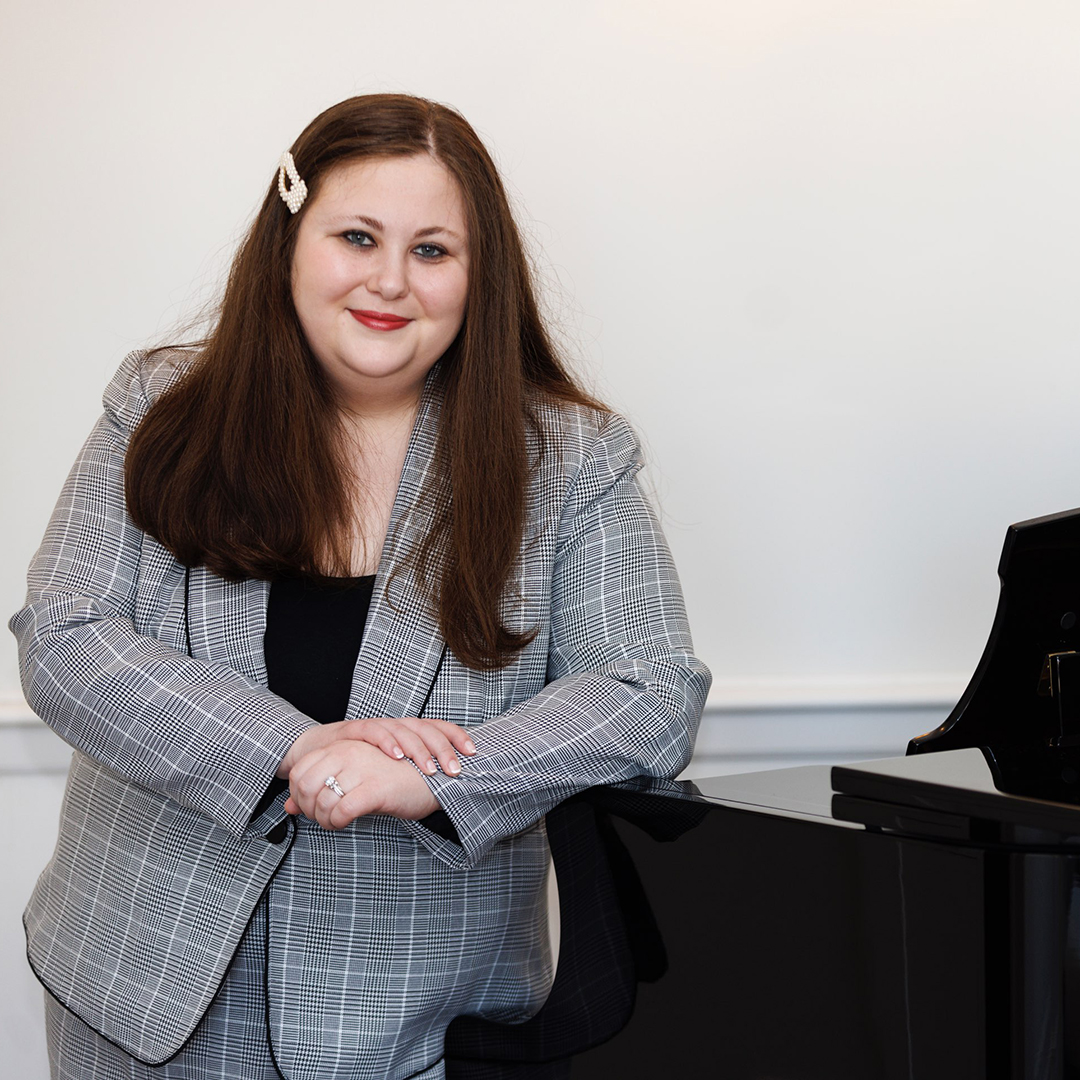
Marissa Ditkowsky
Marissa Ditkowsky (she/her) is a multiply-disabled activist and attorney. Marissa is the volunteer executive director of Crip the Law and a former leader of the National Disabled Law Students Association. She serves full-time as the Disabilities Community Project Staff Attorney at Tzedek DC, a non-profit dedicated to safeguarding the legal rights and financial health of DC residents with low incomes dealing with debt and consumer issues. She is also an adjunct professor at the American University Washington College of Law, where she teaches disability rights. Marissa graduated magna cum laude from the American University Washington College of Law in 2019.
For more information about Crip the Law, visit cripthelaw.org. You can join Crip the Law at https://cripthelaw.org/join/ or donate to Crip the Law at https://cripthelaw.org/donate/.
Discover more from CCF
Subscribe to get the latest posts sent to your email.