By nae vallejo, access designer and experiential archivist
…a reflection on how we leave trace in a world that often prefers us unrecorded; how we craft memory in the face of disappearance; how we insist on our survival not only as individuals but as a collective story.
I have spent most of my life attuning to the stories that never made it to the page but moved through us anyway. Sometimes they arrived as whispers, half remembered family histories, fragments of language, the shapes our elders’ hands made in the air when the words they needed had been taken from them.
Other times they arrived in my body first: the weight of an unnamed grief, the familiar thrum of recognition when I met another person who carried the same inherited silences.
The archives I grew up around were not boxes or drawers or climate controlled vaults. They were people. They were scars. They were gestures. They were the way my tías laughed to keep from crying. They were the way my cousins survived without having any proof that their survival mattered to anyone but us.
I write now as a storyteller who learned early that official archives rarely make room for people like me. And when they do, the room is small, cold, and curated by someone who has never been asked to pay the cost of being misremembered.
I grew up noticing the gaps: who made it into the record and who did not, who was framed as a problem and who as a pioneer, whose story was considered trustworthy and whose truth required a citation. Over time, I stopped looking to institutions for recognition and began turning toward my communities, asking how we wished to be held in memory.
The answer was never a filing system. The answer was always: through one another.
This essay emerges from that lived practice, from years of building, protecting, and tending to Black, Native, Mexican, trans, disabled, and queer archives of survival that do not wait for institutional permission. It is a reflection on how we leave trace in a world that often prefers us unrecorded; how we craft memory in the face of disappearance; how we insist on our survival not only as individuals but as a collective story.
Archives That Remember Us
I learned from the desert that memory can take the shape of almost anything.
A cactus holding water for years without complaint.
A seed sleeping until the exact moment the world becomes gentle enough to let it sprout. A landscape misread as empty that is actually full of lifetimes.
The desert, in its quiet brilliance, helped me understand my own body as an archive, one shaped by survival, repetition, and the slow layering of experience over time. I often remind myself of a truth that has always been inside me: disabled, Black, Native, trans, and poor bodies are memory keepers. Even when the external world insists we have no history, our bodies are carrying it anyway, holding the imprint of what we endured, what we lost, and what we dream toward.
Archiving, for me, is not just collecting or preserving. It is noticing. It is witnessing. It is saying: we exist, and that matters to the unfolding world. This is why archives cannot be passive.
We are not archiving the past; we are archiving our ongoing becoming. Our stories cannot be sealed, not when our communities are still fighting for breath, care, and recognition. Our memories are not relics. They are living instructions.
When I think of archives, I think of my kin who have survived long enough to tell their stories, even when the telling was risky. I think of the ways we find to keep each other alive: sharing meals, rewriting policies, building mutual aid, making art that helps us hold ourselves more gently.
These everyday practices are as worthy of preservation as any certificate or official document. We leave trace in the way we care for each other. We leave trace in the way we refuse erasure. We leave trace every time one of us chooses to be visible on our own terms.
When Institutions Hold the Pen
Working within and alongside nonprofits taught me something I already suspected: most institutions are not built to honor complexity. They reward what can be quantified, categorized, or easily celebrated. They prefer stories that fit the grant application over stories that challenge the foundations of their power.
As an access worker, artist, and experiential archivist, I have often watched institutions flatten what they claim to uplift. They love the idea of archiving us, but only after smoothing the parts deemed too sharp, too political, too embodied, too contradictory. They want our resilience, but not our grief. Our innovation, but not our critique. Our brilliance, but not our boundaries. Many nonprofits hold our stories the same way they hold funding: temporarily, conditionally, and with the expectation that we should be grateful.
I have witnessed archival projects that claim to celebrate trans people while refusing to compensate us properly. I have seen institutions frame themselves as protectors of “community memory” while ignoring the communities they name. I have seen stories curated by people who never lived the worlds they are documenting.
These systems often treat memory like a resource to extract rather than a relationship to honor.
Archival harm is real. Extraction is real. Misremembering is its own kind of violence.
When an institution becomes the gatekeeper of our stories, it also becomes the gatekeeper of our survival. It decides what gets recorded and what remains invisible. It decides which Black trans person becomes a symbol and which becomes a footnote. It decides which narratives are “useful” and which are “too much.”
This is why our self-made archives matter. They are one of the few places where we get to be remembered in our full humanity, messy, contradictory, brilliant, sacred, grieving, becoming. Not sanitized. Not made palatable. Not asked to shrink.
When we hold our own archives, we hold our power.
Archives as Relationship
The archives I trust most are the ones made of relationship. The ones where someone says, “We will hold your story close until you are ready to share it.” The ones where we gather in living rooms, community centers, bookshop corners, or on Zoom and express the truth out loud. The ones built through years of organizing, healing, caretaking, and survival.
The memory keeping methods of my ancestors have always been creative. We pass stories through recipes, hairstyles, jokes, altar spaces, playlists, tattoos, scribbled notes, and paintings. We archive with our imaginations because imagination is how we stay alive.
Sometimes archiving looks like a drawing taped to a fridge. Sometimes it looks like a story whispered during a night walk. Sometimes it looks like sharing breath and presence in spaces that were not built for our ways of being.
These practices resist institutional models that define archives as static or objective. Community archives breathe. They shift with us. They make room for the complexities that formal archives often exclude and silence; they make room for contradiction, nonlinear timelines, trauma that does not resolve neatly, joy that arrives unexpectedly, dreams that exceed what official records allow.
As an access designer, I also think of archives as containers shaped around the needs of those who use them. If an archive cannot be felt or understood by the people it claims to serve, it is not doing its job.
Accessibility is not decoration; it is a fundamental question of who gets to inherit memory. Who gets to witness themselves reflected? Who gets to feel welcomed into the archive instead of studied by it? Who gets to shape the story, expand it, complicate it, correct it?
Our communities have always practiced collective editing. We teach each other how to remember in ways that honor truth and care. We make space for different versions of the same story because memory is communal, not singular.
To archive in this way is to love.
The Risk of Disappearing
There is a specific ache that comes with realizing you might be forgotten. Not because you lived quietly, but because your existence was never considered part of the record.
Black trans people—especially Black trans women and femmes—die without their histories being preserved far too often. Disabled Black trans people face even deeper erasure: records lost, names misspelled, pronouns ignored, causes of death misreported, legacies misinterpreted or claimed by others. It is not dramatic to say that disappearing is a real risk for us. It is not dramatic to want our people to be remembered. It is survival.
When I write or draw, I am often thinking of the ones we lost, the ones who deserved entire archives but received obituaries that refused to call them by their names. I think of the friends who told me stories they never wanted institutions to hold, but hoped we would. I think of the
power of recording a life not because it will be celebrated, but because it existed.
Our ancestors left us traces: quilts, oral histories, carvings, songs, prayer circles, burial sites, protest chants. Traces that proved we were here even when the state insisted otherwise. To leave trace now is to continue that lineage of resistance. To create our own archives is to protect the stories of those who will come after us.
Archiving as Liberation, Not Just Preservation
Archiving is often framed as a neutral act, a matter of cataloging, organizing, safeguarding. But for Black, Native, trans, disabled and poor communities, archiving is profoundly political. It is a declaration that our lives are worth remembering. It is a refusal to allow institutions to shape our narratives for us.
When we build our own archives, we do more than preserve memory. We expand possibility. We inform future generations that we did not simply survive, we created, we loved, we built, we laughed, we fought, we healed. We dreamed beyond what we were given. We resisted every attempt to compress our fullness into something digestible.
Archiving becomes a form of liberation when it is rooted in the recognition that our stories are sacred. I have watched community archives become spaces of healing, places where someone witnesses their younger self reflected and feels less alone. Places where elders pass down wisdom that institutions never cared to collect. Places where the next generation learns the names and stories of people who made their existence possible.
In this sense, leaving trace is not just for us. It is a gift to the future. It says: We wanted you to inherit more than grief. We wanted you to inherit the truth of our brilliance. We wanted you to know that we were here, and you belong to a lineage of possibility.
My Own Practice of Leaving Trace
My creative and organizing work is rooted in a commitment to memory as care. Whenever I make art, design access, build curriculum, or write, I am archiving. I am documenting the textures of a moment, how it felt in the body, what it taught me, how it shaped the community
around me. I think of my drawings as archival maps. I think of my essays as containers. I think of my access work as a form of memory keeping that ensures no one is left behind.
My practice is guided by slowness, what the desert taught me about timing, nourishment, and opening only when it is safe. Slowness is a political choice in a world that demands speed over care, production over presence. Slowness allows me to listen deeply, to attune to my body’s archive, to honor the seasons my creativity moves through. As a disabled storyteller, I have learned to trust my own rhythm, even when it contradicts institutional timelines. My body is not an inconvenience; it is an archive that has kept me alive. When I honor its pace, I am honoring every memory it carries.
My work is also shaped by the belief that archives should be accessible, not only physically or digitally, but emotionally, spiritually, and culturally. Our communities deserve archives that feel like home, not like surveillance. Archives that invite us to contribute rather than prove ourselves. Archives that adapt to our needs rather than force us into predetermined structures.
When I imagine the archives I want to build, I imagine softness, room for disabled bodies to move their own way, room for trans people to tell stories without fear of misgendering, room for grief that does not need to be tidy, room for laughter that fills entire rooms, room for the parts of us that institutions have never made space for. I imagine archives with enough tenderness to hold our contradictions and enough rigor to protect us from misinterpretation. I imagine archives as mycelial networks, not boxes. As relationships, not records. As living, breathing sites of truth telling.
A Future That Remembers Us
We are living in a moment where many of us are hyper visible and deeply targeted, celebrated in headlines one day and threatened in legislation the next. This contradiction makes our archival practices even more urgent.
We cannot rely on institutions to tell our stories accurately, lovingly, or at all.
The future will remember us only if we leave memory intentionally. It will remember the organizers who built care networks when the state refused to. The healers who tended to
wounds the world could not name. The artists who transformed survival into beauty and instruction. The elders who made maps for the rest of us. The youth who imagined possibilities bigger than the violence around them. The disabled kin who dreamed futures where rest is valued as deeply as action.
We deserve a future that does not just acknowledge us but learns from us. If our archives can help build that future, one where our people are understood not as moments but as lineages, then we will have done something worth remembering.
We Are Already Becoming Memory
When I think about leaving trace, I think about the desert again, the way it holds history without needing to be witnessed to be real. I think about the cactus blooming quietly at dawn. I think about how memory survives even when the conditions are harsh. I think about how we, too, have survived conditions not meant for our thriving and still managed to create beauty.
We are the archives we have been waiting for. We are the evidence. We are the record. We are the trace.
Archives are not simply collections of what happened. They are living testimonies to who we are becoming, our grief, our brilliance, our contradictions, our care, our imagination, our refusal to disappear.
Leaving trace is not a final act. It is an ongoing practice. An embodied, communal commitment. A way of saying: We were here. We are here. We will continue to be here. And the future will know us because we insisted on remembering ourselves.
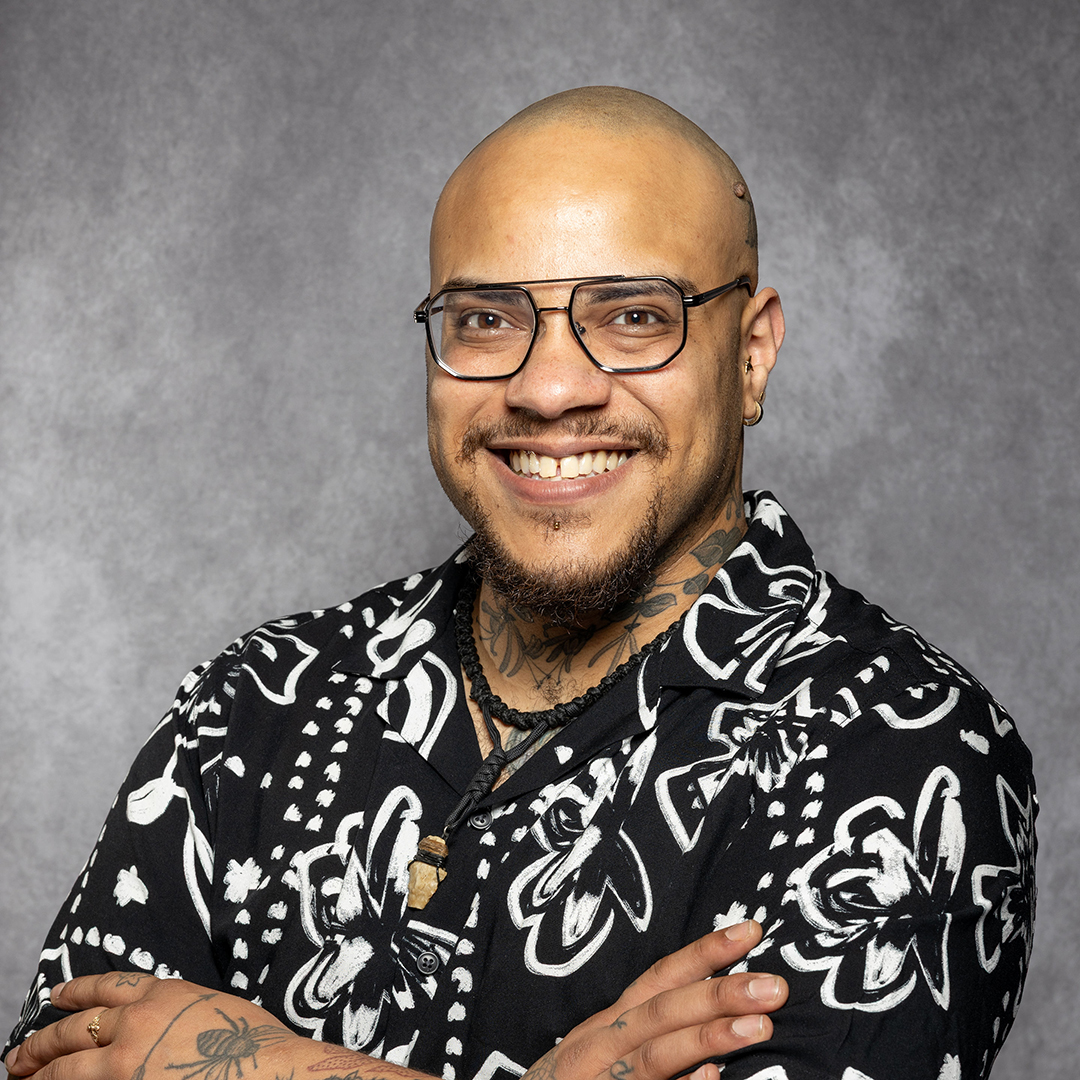
nae vallejo
nae vallejo (they/he) is a Black, Caddo, Mexican, queer, trans, disabled experiential archivist and access designer. their work moves through memory, rememory, and care, exploring how survivors leave trace across body, land, and story. as the founder of naeborhood projects, nae creates art that weaves disability justice, sensory attunement, and community connection into everyday practices of survival and tenderness. a hard of hearing, neurodivergent service dog guardian and lifelong educator, he centers interdependence, ritual, and storytelling as tools for collective care. follow their offerings on Instagram @naeborhoodprojects and support their labor via Venmo @nae-vallejo or Paypal @naevallejo.
Discover more from CCF
Subscribe to get the latest posts sent to your email.