
By Hildy Gottlieb, futurist and social scientist at the nonprofit Creating the Future
If all we do is resist and react in this moment, without also working to create what is possible, we are dooming ourselves to playing defense in perpetuity.
When times are tough, articles start popping up, suggesting that organizations eschew long-term planning in favor of focusing on survival.
It happened during the 2008 crash. It happened when Trump was elected the first time. It is happening again now in this current state of crisis. Right now, the Chronicle of Philanthropy is promoting a webinar about “streamlined” planning, noting, “Today’s uncertain climate calls for shorter planning horizons and increased flexibility.”
In this time of crisis, we need the exact opposite of that advice.
We need to have a different conversation that has been arising among nonprofit leaders; an alternative that directly addresses Alice Walker’s observation that “The most common way people give up their power is by thinking they don’t have any.”
Instead of simply reacting to current circumstances, this is precisely the time to step into our power to create the future we want to live in. If all we do is resist and react in this moment, without also working to create what is possible, we are dooming ourselves to playing defense in perpetuity.
When positive change has happened in the world, it has happened at critical junctures like this one, when it feels like things couldn’t get any worse. And that change has always been about what is possible rather than only reacting to what is wrong. From Nelson Mandela and Martin Luther King to modern-day movement leaders, it is not just their defensive strategies that inspire us; it is the ultimate why of those efforts, their dogged pursuit of a future that is more humane than our present circumstances.
This time of polycrisis is a defining moment for our sector. The hunger for a more humane, equitable, healthy, loving path forward is palpable. This is the time to step into our power to create that.
And that all starts with the plans we develop and begin to execute right now.
Short-term planning leaves us vulnerable
Folks who urge short-term, reactive planning mean well. It can be a struggle to think about the future when the present is so uncertain. The advice of those experts is therefore to focus on weathering the storm.
Unfortunately, the result is that nonprofits and our communities are no stronger now than we were during the last crisis and the one before that. We are still vulnerable, subject to the whims of forces outside our control.
The problem, though, is not just one of the time period the plan will cover. The problem is actually the fault of strategic planning itself. Because traditional strategic planning is simply not meant for the work nonprofits do – in times like these and always.
Birthed in the military and then adopted by the business world, strategic planning was designed for gaining strategic advantage over an enemy (in business: the competition) to create short term gains (win a battle, increase profits). As such, it is about defining the current reality and dealing with it in some way.
The result is a planning process that is almost entirely reactive, whether that is reacting to demand or reacting to a problem. Those processes may start with visioning as a warm-up exercise, but the next step is not about creating that vision. With the instruction “Now let’s get down to reality,” the process de facto tells us that our vision for the community is not realistic, and then moves straightaway into responding or reacting to current conditions.
That is why so many supposedly “strategic” plans feel more operational and incremental than truly strategic. It is also why the plan you made in 2023 no longer fits with reality in the dark times of 2026. If a plan is built to react to current circumstances, then that plan will clearly be inapplicable when those circumstances change.
Whether we use traditional planning or the short-term, reactive planning many experts are recommending, those plans cannot move us beyond the conditions that keep nonprofits vulnerable, and particularly, the conditions that keep our communities vulnerable. The next time there is a crisis, we therefore wind up in the same defensive position, trying to survive and wishing there was a better way.
The reality is therefore not that we need shorter term, more reactive plans.
The reality in this pivotal moment is that we need a form of planning that is intended for organizations to step into the power we do have. We need an approach that leads us to simultaneously resist and react, while aiming to make our communities the humane, healthy, equitable places we want to live in.
And because traditional strategic planning was never intended for that, it is incapable of taking advantage of this moment.
Taking a community impact approach to planning
So then, what kind of planning would guide organizations to step into their power?
First, it would be radically inclusive, because when we are living in scarcity, the answer is each other. In the spirit of “nothing about us without us,” we would be planning alongside the very community members who will be affected by that plan.
The plans themselves would then be rooted in our community’s aspirations. When the present is scary, and we are living with uncertainty, the answer is what is constant – our shared vision for a better future. Planning would therefore be tethered to that aspirational vision, not just as a warm-up exercise, but as a realistic and achievable goal.
Our plans would then determine what it would take to achieve that vision. We would be encouraged to build the line of dominoes that would lead to that ultimate reality.
Those plans would also be strength-based in all ways, acknowledging the power we do have and the assets we have to build upon.
That inclusion, that striving for what is possible, that building on strength – that is the planning that is needed right now. Planning that guides us to simultaneously intervene in the current moment while working to create what is possible for the future of our communities. Planning that focuses on the “why” of our work, the North Star of radical possibility and maximum community impact, now and into the future.
The questions guiding this type of community impact planning are the questions that traditional strategic planning never asks:
- Who will be affected by the plans we make? What would it take for those individuals to participate in those decisions, to lead the direction we take?
- What are the visionary results our organization will aim to create in our community? What steps will we take to turn that vision into reality?
- What do we have to build upon, to resource the change we want to create? And especially what do we have together, in a spirit of mutual aid and mutual care.
What does this look like in practice?
During COVID, the food bank in my hometown of Tucson, Arizona, began their community impact planning by connecting with the people who would be affected by that plan. That included conversations with their partner agencies, and with all the people those partner agencies served, as well as all 100+ employees on the food bank’s staff.
The questions they asked in those conversations were not about the problems people faced. Instead, they asked about people’s aspirations for their community, and the steps they thought were important to take to turn those aspirations into achievable goals. Some of those steps were about solving current problems, while other steps reached for goals around equity and quality of life.
Those conversations were especially important during the critical time of COVID, when people were feeling scared, alone, hopeless. Instead of simply reacting to the crisis, folks were seeing their power to create the community they wanted to live in.
After those initial conversations, the food bank continued that inclusion, inviting community members to be the ones to prioritize which were the most important goals for the food bank to focus on.
This approach of radical inclusion and radical possibility was about seeing the community as participants in and agents of their own future. In reaching for what was possible for their community, they also addressed what needed to be fixed. The entire approach was rooted in the strengths of those community members. And the result was a pathway to hope at a time that felt anything but hopeful.
What this approach makes possible in times like these
We can make a bigger difference.
Rooted in the “why” of an organization, a community impact approach helps groups create a walkable path to actually achieving their vision. At a time when there is so much hopelessness, there is great power in not only imagining what is possible, but devising plans to achieve that.
We don’t have to choose one or the other; we can address all issues.
Community impact planning simultaneously aims at what is possible while responding to current circumstances, addressing the short term within the long term. When you ask, “What would it take for our culture to be more humane?” the answers will obviously include alleviating people’s suffering. The difference is you won’t be treating those interventions as if they are the ultimate goal. Instead, you’ll be addressing current problems within the context of the future you intend to create.
We can be more radically inclusive.
Inclusion is our nonprofit superpower. By including the folks who will be affected by your work, you are building upon the strength of numbers, the strength of your community’s interconnections. And you will be living the values of “nothing about us without us.” During this time when we all need to feel that we can do something to make a difference, you will be tapping into all that energy while providing folks with a path to their own power.
We can be a source of hope.
If there is anything those of us working in social change need right now, it is hope. Hope is a strength that builds upon itself. Reactivity saps our hope, leaving us on the hamster wheel of scarcity and powerlessness. When you ground your planning in the future you intend to create, you are building a pathway of hope. And that hope becomes another strength to build upon.
The time for that planning is now.
When we shrink our plans, we are shrinking our potential, our power, and ourselves. This moment is instead calling us to our best selves, and to step into the power we may not realize we have – our collective power to create a future different from our past.
Will we squander all that power and potential in reactive, short-term planning that leaves us always playing defense? Or will we pull together and build upon our collective imagination to create the future we want?
That choice all starts with the plans we make right now.
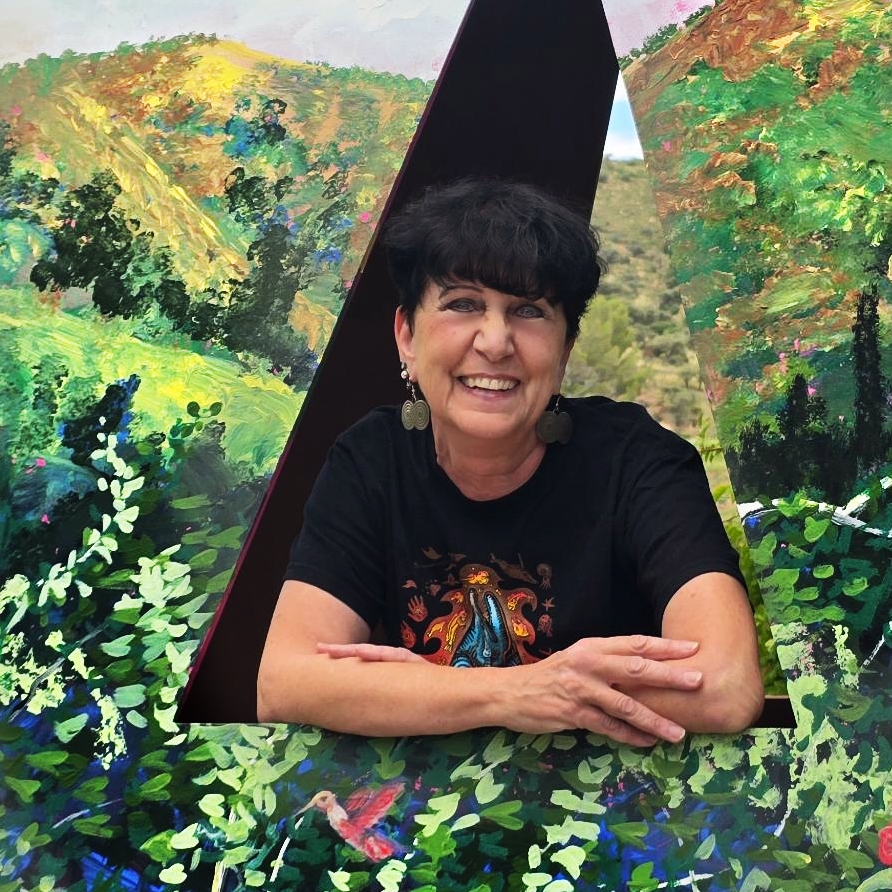
Hildy Gottlieb
Hildy Gottlieb (she/her) is the founder of the nonprofit Creating the Future, and the author of the forthcoming book, How to Create the Future. You can learn more about Community Impact Planning and connect with Hildy at https://creatingthefuture.org/
Discover more from CCF
Subscribe to get the latest posts sent to your email.