
By Abigail Oduol, a Community Centric Fundraiser
Bureaucracy has faces. A long time ago, in a past life it seems, it wore mine. I was a refugee resettlement officer on the continent of Africa, straddling nonprofit immigration work and public service.
At the time of writing, refugees are in the news cycle. The current administration has just banned and seriously restricted travel for almost 50% of African countries, including the top countries for refugees. There has also been a targeted denaturalization effort at Somali families across Minnesota and the US. And just like following the fall of the racist apartheid government in South Africa, the US government has once again adopted a policy of admitting white South African applicants for resettlement to the US.
Bureaucracy has faces. A long time ago, in a past life it seems, it wore mine. I was a refugee resettlement officer on the continent of Africa, straddling nonprofit immigration work and public service.
Most days I’d sit in the office and do some sort of administrative work related to refugee processing. I’d look at spreadsheets and put numbers into them. I didn’t smoke, but I’d take smoke breaks to go outside and feel the air on my skin. I was a cog in the process that’s required for someone to come to America as a refugee.
There are common threads in their stories. They have all fled their country because of a durable threat of violence against them and their family because of protected characteristics such as gender, sexuality, political affiliation, ethnic group, or religion. They’ve fled, sometimes to other villages first, and finally to another country that won’t let them stay permanently. Some countries require that refugees live in camps.
Where I worked, only some types of refugees were allowed to live in cities. The United Nations High Commissioner on Refugees (UNHCR) reviewed all the refugees, prioritizing groups that camp life was unsafe for. After that, refugees were assigned and ranked based on profiles of who was accepted into countries’ programs in the past. According to the USCIS website, this is the structure, but functionally, the relationship with UNHCR as of now is even more complex and unclear.
Less than 2% of all refugees were approved to participate in the United States Refugee Admission Program. And they don’t get to choose where they go. They may have family members in Italy or Canada or Sweden, but may be chosen instead for the US program. Saying no to the US refugee resettlement program may mean that they don’t get resettled at all.
Here are the true stories of people I interviewed:
- A Muslim man secretly converted to Christianity after having a dream. But he lived in a country where religious conversion is illegal. He told his wife on their wedding day that he was not actually a Muslim. He is now fleeing family members and local authorities trying to kill him.
- A gay man was being hunted down by each village he moved to because of expressing his sexuality or people guessing his sexuality. Being gay is illegal in his country.
- An albino person was running for their life because of their body parts being valued for local witchcraft. If they return, they’ll be killed and the country they are currently in won’t let them stay.
- In Sudan, fertile land is being taken away from Darfuris by the government and given to non-Black citizens, enforced by deputized forces on horseback called janjawed.
- I met a variety of former journalists, radio personalities, and educated elites who spoke out against their government’s actions. Regardless of the different countries they came from, their governments responded similarly: punishment for them and their family that included torture and imprisonment.
- I interviewed children who chased a butterfly across the border and were shot at when they tried to go home because border crossings were illegal in their country.
- I spoke with people who experienced unspeakable state-sponsored violence because of the language they spoke. Some of the situations were so violent and intense that the interpreters broke down mid-story, with one having to leave the room and take the rest of the day off.
There were so many violent stories. Although I love action movies and thrillers, I couldn’t watch either for years without a panic attack. Gunshot sounds in songs triggered me, too. My colleagues and I experienced secondary trauma. Sometimes the stories we heard were all we could think about, all we could see.
Once I interviewed refugees and collected a lot of biographical and demographic information, they had another interview with the US State Department. Then, if approved, they faced a series of other security checks and verifications before they could come to the US. It could take as short as a month or as long as many years. Any life change that should have been celebratory like getting married, having children, or becoming a legal adult could reset a refugee’s case entirely.
Someone who had lived in a refugee camp their entire life met someone and got married. They had to navigate case bureaucracy with a number of repercussions for interviews, security clearances, and travel. Someone’s child turned 18, and now they had to have their own persecution claim about horrific events their parents didn’t want to discuss with them.
As I did this work, I often felt conflicted. Some things that people experienced outside the US could happen or did happen in some form here. And that was the hardest part of my job as a Black American interviewing and recording the stories of mostly Black people from across the continent of Africa. It was: telling them that the things they were trying to escape were also present where they were trying to go.
A gay Black man I interviewed asked for a white caseworker, believing that I would not do as good of a job in his case. (Anti-Blackness is a global project.) I had to tell him that if he gets to the US, whiteness will not protect him.
A group of Dafuri refugees said to me, “at least there’s no janjawed [northern Sudanese militia] to target us based on our skin color in America,” and I had to tell them the truth about being Black in America.
Was I taking some of these people out of the frying pan and into the fire? I think that for some people, yes. Their best lives would not have been in the refugee camp or in America, but in another country that would recognize their full humanity and allow them to be with their family and flourish. I hoped that over time, more countries would follow Tanzania’s example and allow refugees to assimilate into their society.
A colleague reminded me of all the white saviorism built into the system at every stage, from hand-picking who receives help, and then making that help “conditional, revocable and political.” The system as it existed centered the limited benevolence of the US and other countries at every turn, and refugee self-actualization didn’t even exist as a philosophical exercise.
All of this to say the program wasn’t perfect. And now, it’s gone.
On January 20, 2025, the administration signed executive orders banning refugee resettlement and freezing foreign aid. It was abruptly operationalized on January 22, when 10,000 refugee’s flights were canceled and 120,000 people’s cases were put in limbo. The current administration has its priorities, and the refugees I worked with have not been among them.
When looking at what is happening across the United States, it can be hard to remember that there are people that we don’t see and that you may never get to meet who are also nonprofit workers.
Within the US context, many fundraisers that I know supported this work through applying for grants and securing individual gift funds to improve the day-to-day experiences of refugees still living in camps. They mobilized churches, communities, and individual gift donors to greet refugees at the airport, donated beds and TVs, taught new refugees how to pass their driver’s test, and donated money to ease the pains of resettlement in a foreign land.
For the many fundraisers and refugee workers, the federal freezes and funding cuts meant an abrupt end to something challenging and meaningful that they’d dedicated their lives to.
I mourn for the people who had to start all over again and not in a new country, for the people whose hope for the future was snatched away, and for the peoples whose lives are in danger in their current location. I also see a way forward in completely rebuilding a program that has been razed to the ground. It’s hard to know how to feel.
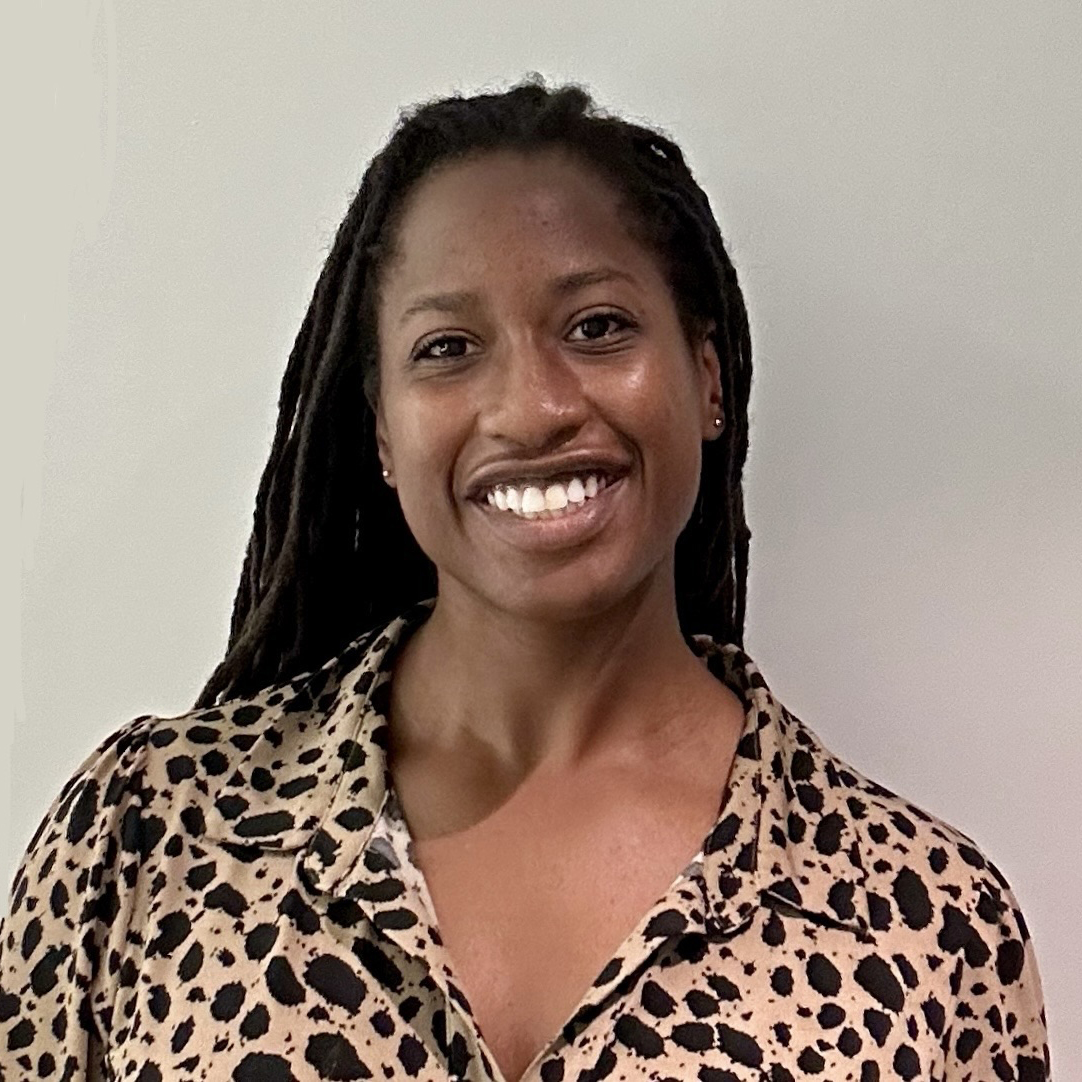
Abigail Oduol
Abigail Oduol’s (she/hers) surname is not Irish or Pennsylvania Dutch. It’s Kenyan. Abigail is the CCF Movement Coordinator and is a member of too many committees. She invests time thinking about how popular culture informs fundraising and how people connect to each other. Follow Abigail on LinkedIn.
Discover more from CCF
Subscribe to get the latest posts sent to your email.