

By Unzila Chowdhury, a nonprofit strategist and development expert committed to helping BIPOC leaders build sustainable, values-aligned organizations
I found it helpful to draw parallels between [the Yamas and Niyamas] principles and various elements of my life to better understand them. They’ve provided a framework that has shaped my approach to both work and fundraising efforts.
Fresh out of college, naive with a fiery passion to create change, I eagerly joined a nonprofit organization 3,000 miles away from my friends and family as a volunteer in Southern California. I quickly came to understand firsthand a harsh and all-too-familiar reality in this sector: that nonprofit organizations are often complicit in upholding the very systems of oppression they claim to dismantle.
This became painfully clear when I reported a case of sexual harassment and was placed on paid leave. It wasn’t until another coworker who had also been harassed by the same person came forward that meaningful action was finally taken. It made me wonder whether a single person’s experience would have ever been taken seriously on its own. At the same time, I was earning just $12,000 a year while living in California, providing essential services with minimal training. This was a clear reflection of how the nonprofit sector often exploits those doing the most critical work. Overwhelmed and anxious, I began showing up to the only support I could afford, free meditation sessions at the neighborhood yoga studio.
The 5 a.m. meditation session turned into a 10-month journey through rigorous yoga teacher training. As a South Asian Muslim woman, I had always felt uneasy about mainstream yoga studios in the U.S. Their tendency to appropriate the practice, obscuring the violence inherent in the caste system and brushing over real-world issues with a shallow “namaste” ethos, made me especially skeptical (shout out to my teacher, Scott Miller, for speaking truth to power and creating a safe, affirming space for me throughout this journey).
Despite my reservations, I dove deep into yogic theory and discovered practices that I could apply to different aspects of my life.
The Yamas and Niyamas, foundational principles of yogic philosophy, have been particularly impactful. Somehow, I found it helpful to draw parallels between these principles and various elements of my life to better understand them. They’ve provided a framework that has shaped my approach to both work and fundraising efforts. While I don’t claim to have mastered these principles—and I’m unsure if perfection is even attainable—they continue to serve as a meaningful guide.
The nonprofit world and the yoga world, in many ways, share the same pitfalls: both often preach values of peace, equity, and justice, yet frequently fail to address issues head-on—such as the ongoing genocide in Palestine. The unwillingness of both spaces to engage meaningfully against such atrocities is disheartening, but not surprising. This, however, is a conversation for another day.
Years later, when I stumbled upon Community-Centric Fundraising (CCF) principles, it felt like finding a similar philosophy in a different form.
The Yamas: Ethical Disciplines in Nonprofit Work
The Yamas, as described in The Yoga Sutras of Patanjali, are ethical principles that guide how we interact with the world and others. In the context of nonprofit fundraising, these values can provide a moral compass for how we engage with communities, donors, and colleagues.
Ahimsa (Non-violence): Compassion in Action
Ahimsa, or non-violence, means practicing compassion for all living beings—avoiding harm in thought, word, and deed.
In the nonprofit sector, I believe this calls us to reflect on how, even with good intentions, we might inadvertently cause harm. Are we perpetuating trauma for those we claim to serve by exploiting their stories for donations? Are we overworking staff in the name of doing good?
Ahimsa urges us to cultivate kindness and gentleness in our interactions and to recognize that, in trying to help, we must be careful not to harm.
Satya (Truthfulness): Honest Communication
Satya is the practice of truthfulness—not just in speaking the truth but in living it.
Nonprofit organizations must be transparent with all stakeholders, from staff and partners to funders, donors, and the communities they serve. It’s essential to be honest about the challenges we face, the impact we have (or haven’t had), and where we need to grow. Too often, nonprofits are caught in a cycle of presenting inflated success stories to appease funders.
Satya calls for integrity and authenticity, even when the truth is difficult to confront. The work that we do in the nonprofit world is far from perfect and does not always achieve the desired outcomes. Yet, embracing truthfulness fosters genuine growth and encourages others to follow suit.
Asteya (Non-stealing): Respect for Time and Resources
Asteya, or non-stealing, reminds us to respect what is not ours—including time, energy, and resources.
In the nonprofit world, this principle can challenge the culture of overwork and burnout. How often do we steal time from our staff, asking them to sacrifice their well-being for the mission? And how often, in our relentless pursuit of making an impact, do we take time away from our loved ones or neglect ourselves? We must honor the time and energy of everyone involved in our work and our lives, ensuring we don’t deplete our most valuable resources, our people.
Brahmacharya (Moderation): The Right Use of Energy
While traditionally interpreted as celibacy, Brahmacharya, in the modern context, is about the wise use of energy.
In fundraising, this can be seen as a call for balance, avoiding overindulgence or hoarding resources. Nonprofits sometimes fall into the trap of accumulating funds without a clear plan for their ethical use, or prioritizing fundraising over the actual work of serving communities. It’s crucial to be discerning about the grants pursued and the donors accepted, even choosing to decline funding if your values don’t align with the granting agency or if it would benefit other organizations more significantly than your own.
Brahmacharya asks us to direct our energy thoughtfully and efficiently, ensuring we don’t exhaust ourselves or waste resources.
Aparigraha (Non-possessiveness): Letting Go of Attachments
Aparigraha teaches us to let go of attachment—to outcomes, material possessions, or even our professional identities.
In nonprofit work, we often tie our sense of self-worth to our jobs, to the success of a campaign, or to the validation of funders. This attachment can cloud our judgment and fuel unhealthy competition for resources.
Aparigraha reminds us to serve without clinging to results, and to work for the sake of the greater good without letting our ego drive the mission.
The Niyamas: Inner Observances and Personal Practices
While the Yamas focus on how we engage with the external world, the Niyamas turn our attention inward, guiding our personal discipline and self-care. In nonprofit fundraising, these principles help us maintain our integrity, build resilience, and foster a healthy relationship with our work.
Saucha (Purity): Keeping Things Clean
Saucha refers to cleanliness—of body, mind, and environment.
In the workplace, this can mean maintaining a clear and organized space, but also cultivating mental and emotional purity. It’s about setting boundaries and wiping your feet at the door, so to speak, when moving between work and personal life.
Purity in thought and intention helps us approach our work with clarity and focus, ensuring that we’re not carrying the weight of unresolved stress or negative emotions into our relationships with colleagues or the communities we serve.
Santosha (Contentment): Cultivating Gratitude
Santosha is the practice of contentment—being at peace with what we have and where we are.
In the fast-paced, outcome-driven world of nonprofit fundraising, it’s easy to get caught in the cycle of constantly striving for more: more funds, more recognition, more impact.
Santosha teaches us to find contentment in the present, and to appreciate the progress we’ve made without always seeking external validation or success. Gratitude for small victories fosters a sense of fulfillment, preventing burnout and helping us maintain perspective.
Tapas (Discipline): Enduring for Growth
Tapas is the inner discipline and resilience that comes from willingly enduring discomfort for the sake of growth.
In nonprofit work, this can be seen as the grit required to stay the course, especially in challenging times. Fundraising is often difficult, filled with rejection, setbacks, and long hours.
Tapas asks us to embrace these challenges as opportunities for personal and organizational growth, building the stamina needed to continue the work despite obstacles.
Svadhyaya (Self-study): Reflection for Growth
Svadhyaya, or self-study, is the practice of reflection and self-awareness.
In our line of work, this means regularly reflecting on our personal actions, performance, and motivations. Are we truly serving our mission, or have we strayed? Do we understand the impact of our work on others, including unintended consequences? Is it time to step down from our position and let others lead?
Svadhyaya encourages us to seek feedback, engage in self-inquiry, and continually evolve, ensuring that we’re operating from a place of integrity and alignment with our values.
Ishvara Pranidhana (Surrender): Letting Go of Control
Ishvara Pranidhana is the practice of surrendering, and letting go of ego-driven desires and outcomes.
This is about recognizing that we cannot control everything—that sometimes, despite our best efforts, outcomes are beyond our grasp, especially as we sit in the belly of the beast fighting against different forms of systemic oppression. Surrendering to the process doesn’t mean giving up, but rather it’s about staying humble, remembering that we are part of something larger than ourselves. The issues we are trying to solve have existed before us and may not be solved in our lifetimes. It’s about allowing space for grace and being prepared for unexpected outcomes, all so that we can continue fighting for a better world.
Both the nonprofit sector and the practice of yoga, despite their shortcomings, hold an encompassing and ubiquitous role in society. They are spaces where individuals strive to address challenges and growth, often with profound sincerity and effort.
Yet, as with any system or philosophy, they are not immune to the contradictions and imperfections of the world they inhabit.
Both have the potential to either perpetuate harm or be forces for deep transformation, depending on how their principles are understood and applied.
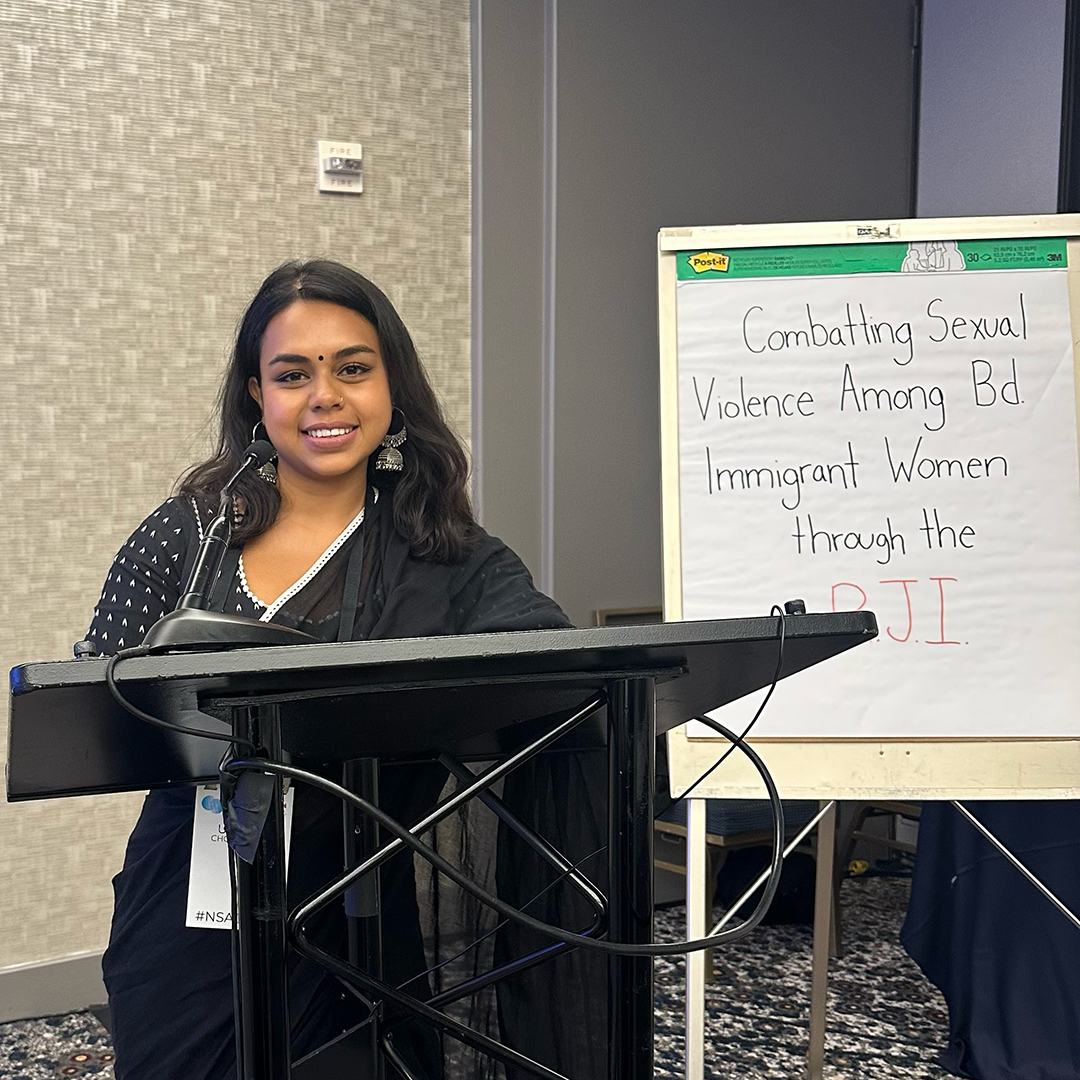
Unzila Chowdhury
Unzila Chowdury (she/her) is a nonprofit development and workforce professional with over eight years of experience working with diverse populations, including formerly incarcerated individuals, Native American governments, and unhoused individuals. Her focus is on supporting BIPOC nonprofit leaders in growing their organizations sustainably and in alignment with their values. Unzila has also worked at the intersection of multi-family affordable housing and clean energy. Currently, Unzila serves as the Director of Development at Laal NYC, a Bronx-based nonprofit serving Bangladeshi immigrant women survivors of domestic violence. She holds a Bachelor of Arts in Economics and Environmental Science, with a Minor in Women, Gender and Sexuality from St. Mary’s College of Maryland and a Master’s in Nonprofit Management from Antioch University.
Discover more from CCF
Subscribe to get the latest posts sent to your email.
deep gratitude for offering this with so much honesty and grounding. the way you trace your journey from harm in a nonprofit space to finding language and steadiness through the yamas + niyamas felt like such a clear naming of what so many of us move through quietly. i really appreciate how you hold the contradictions of these spaces without letting go of possibility.
your reflections on ahimsa, satya, and asteya especially resonated. the connection you draw between nonprofit “service” and the ways our labor, safety, and stories are mishandled is something i have witnessed, too. and the way you frame these principles as daily practices rather than ideals feels like an invitation toward a deeper kind of integrity.
thank you for speaking to the violence of silence around palestine, too. that honesty is part of the discipline and truth-telling our sector desperately needs.
i’m grateful you shared this here. it’s a reminder that our work inside organizations and inside ourselves can be rooted in something more embodied, more accountable, more human.