
By Chantelle Ohrling, a cultivator of reciprocal legacies in the face of extraction
This is the story of one holiday of many that keeps the room’s colonial mythology alive. In telling it, I hope to help reconstruct the room in truth, so that its warmth no longer depends on exclusion.
Somos un agujero
En medio del mar y el cielo
Quinientos años después
Una raza encendida
Negra, blanca y taína
¿Pero quién descubrió a quién?
We are a hole
In between the sea and the sky
Five hundred years later
A race ignited
Black, white and Taíno
But who discovered whom?
Juan Luis Guerra, El Costa de la Vida
If we picture the modern holiday season as a room built to protect an alternate history within the colonial memory, then Columbus Day in the U.S. and Canadian Thanksgiving in October would be the metaphorical threshold. This “room” was a constructed space designed to enshrine false memories that legitimize settler belonging. Its walls are carefully papered with constructed imagery of settlers and Indigenous Peoples in harmony sharing harvests, of “untouched wilderness”—terra nullius—waiting to be bravely conquered, and the ceremonies of violent religions which depict themselves as saviours.
Within this room is also the “season of giving,” which teaches that charity is the highest form of love and that mercy can replace justice. The giver is redeemed, and the power structure remains intact. But this room, the spirit of the holiday season, was built on stolen land with stolen labour from stolen people. For those excluded from this alternate history—unless playing the role of gratitude that was scripted by whiteness—we are left in the cold outside of this “room.” This is the story of one holiday of many that keeps the room’s colonial mythology alive. In telling it, I hope to help reconstruct the room in truth, so that its warmth no longer depends on exclusion.
I trace my maternal ancestry to the Taíno and African peoples, who withstood the earliest European incursions upon Quisqueya and Ayiti. This heritage grounds my understanding of 1492 not as discovery but as the onset of racial capitalism and genocide. And while we’re rightfully critical of Colombo, it’s important to remember that he was only one man.
Many colonizers came to our shores with a greed akin to starvation and careless violence in their hearts.
In the process of said tracing, I have parted the illusionary curtains of history’s victors and learned to recognize the violent and extractive face of settler-colonialism continuities across modern contexts. Including those of Canada, the United States, and Israel.
But too many of my colleagues are still unaware of what happened in 1492 and the true legacy of Cristoforo Colombo…
There are three main actors in this story of Caribbean land, yet history only remembers two: the colonizers colonizing on “paradise’s” shores (Colombo and his men, followed by the Portuguese and Spanish slavers) and those colonizing from their own shores (the European royals).
What about the people who were already on the islands?
Do you know their name?
You eat their fruit: guava, banana, papaya. Most of the world uses their name (canoa) for canoes. Some of their food items have even become crucial aspects of European and Western nation cultural identities: potatoes (batata), corn (maiz), and barbeque (barbacoa). Castles all over Europe are adorned with furniture and doors carved out of the bodies of their sacred caoba (mahogany) trees. We all covet laying in one of their hamaka’s (hammock) on their shores.
Despite the impact they continue to have, they’re continuously wiped from history.
So who rescued Colombo in 1492?
—
Take my hand and walk with me alongside a Caribbean shore. Warm, crystal clear blue waters roll and crash against white sand beaches. Palm trees thicken into mountains covered with rainforests made up of fruit trees and mahogany. A myriad of endemic birds are singing into the sweetly scented breeze.
There are no internationally-owned resorts in the distance using tourists to separate the locals from their shoreline. It’s 1491, and you can still see a monk seal, and the ocean is heavy with life.
Taíno Peoples are busy trading tobacco with other Nations and incorporating pineapple on the islands from the mainland of Turtle Island.
What happened during First Contact?
Contrary to the education we receive, Columbo found himself among “… a highly populated and culturally sophisticated web of islands whose inhabitants were connected to one another through ties of kinship, political alliances, and trade networks. In many ways, the Caribbean Sea acted as a highway tying various indigenous cultures and peoples to one another. Some maintained ties as far afield as the South American and Mesoamerican mainlands.”
These inhabitants governed themselves in complex, matrilineal, practices connected to land and ritual. Inheritances were passed down matrilineally. The sacred cemi figures and myths of Atabey (mother of the Taíno’s major deities) reflected reverence for deeply communal and reciprocal relationships with kin and land. These values are reflected in the many unique cultures across Turtle Island, and were exalted and held up by Abraham Maslow centuries later after he spent time with the Blackfoot Nation — as seen in his Hierarchy of Needs. (It is important to note that although Maslow observed the Blackfoot philosophy on needs, he appropriated and misrepresented it, focusing on a hierarchy rather than interdependency and built his hierarchy entirely on the individual needs, removing the community actualization and cultural perpetuity aspects from the Blackfoot perspective.)
In spite of the 533 years of violent extraction, Indigenous Peoples still embody these values across the continent, to the point of sacrificing their lives to protect water and land.
“This island, like all the others, is most extensive. It has many ports along the seacoast excelling any in Christendom — and many fine, large, flowing rivers. The land there is elevated, with many mountains and peaks incomparably higher than in the centre isle. They are most beautiful, of a thousand varied forms, accessible, and full of trees of endless varieties, so high that they seem to touch the sky… The nightingale and other small birds of a thousand kinds were singing… There were palm trees of six or eight varieties, the graceful peculiarities of each one of them being worthy of admiration as are the other trees, fruits and grasses… There is honey, and there are many kinds of birds, and a great variety of fruits… Hispaniola is a marvel… as also the magnificent rivers, most of which bear gold… This is worth having, and must on no account be given up.”
In December 1492, a European voyager, later mythologized as an explorer, accidentally grounded his fleet upon the reefs of a Caribbean island. The Taíno inhabitants, acting on their principles of communal reciprocity, extended aid and sustenance to the survivors. Colombo and his men depended entirely on the Taíno, whose humanitarian ethos inherently led them to aid the strangers and share their resources freely.
This generosity, born from a worldview rooted in kinship and care, was immediately weaponized against them in the machinery of empire.
From his journals: “Inside, they were well swept and clean, and their furnishing very well arranged; all were made of very beautiful palm branches.” He said there were “wild birds, tamed, in their houses; there were wonderful outfits of nets and hooks and fishing-tackle.” Colombo wrote that it was a “delight” to see Taíno canoas (canoes) that were “very beautiful and carved … it was a pleasure to see its workmanship and beauty … the best people in the world, and beyond all the mildest … a people so full of love and without greed … They love their neighbors as themselves, and they have the softest and gentlest voices in the world, and they are always smiling.
“…they are very guileless and honest, and very liberal of all they have. No one refuses the asker anything that he possesses; on the contrary, they themselves invite us to ask for it. They manifest the greatest affection towards all of us … content with the very least thing or nothing at all…” He wrote in his letter of discovery, “… they should be good servants… and I believe that they would easily be made Christians … will take hence, at the time of my departure, six natives for your Highnesses.”
In these early colonial texts, we see the first examples of a predictable violence: colonial praise for generosity and beauty immediately giving way to claims that Peoples are property. Colombo claimed the Taíno lacked governance and religion, believed himself god-sent, and renamed landscapes to suit his delusional entitlement.
While there isn’t space or time for it within this piece, the mention of forced religious conversion to Catholicism is another main force of colonialism which continues to this day. Colombo and his men were the first missionaries in the western hemisphere. And we can’t forget that the Doctrine of Discovery and Terra Nullius were created by Pope Alexander VI to enable Colombo’s “right to claim land that was deemed vacant for their nation.” Land was considered Terra Nullius (vacant land) if it had not yet been occupied by Christians. Such vacant lands could be defined as “discovered” and as a result sovereignty, title, and jurisdiction could be claimed. In doing so, the Doctrine of Discovery invalidated the sovereignty of Indigenous nations and gave Christians the right to subjugate and confiscate the lands of Indigenous Peoples.” This enforcement of religion also violently restricted gender rights.
This event — “first contact”—welcomed the genocidal and ecocidal machinery of imperialism that spread across Turtle Island against Indigenous Peoples and Africans with the Trans-Atlantic Slave Trade.
Walter Rodney writes that “the transportation of millions of Africans was a drain of human skills and energies which could have been used inside Africa.” He names this a culture of extraction, defined as a system that “destroyed the capacity of the African economy to grow.” The genocide was not only in the deaths during the middle passage — fifteen to twenty million gone — but in the deliberate stripping of Africa’s ability to sustain itself.
And what you do to the people, you do to the land. Genocides almost always coincide with ecocide. Not only did our numbers diminish so quickly and sharply that we were declared extinct on paper as early as 1533, but half of the island lost 98% of mahogany (caoba) trees sacred to Taíno culture. According to the John Brown House Museum, “With growing demand for mahogany, deforestation spread steadily through the West Indies and Central America during the 18th century and contributed to the alienation of Indigenous peoples from their native lands.”
Not to mention the zealous overhunting and destruction of animals. There used to be seals in the Caribbean seas; they were declared extinct in 1962.
We see the continuing effects of this treatment of Indigenous Peoples today in Canadian apartheid enacted through the Indian Act, and American immigration detention and theft of Indigenous People of Central and South America. In the extensive for-profit prison system, continuing the chattel slavery of African descendants through the 13th Amendment. In the violent extraction of resources and capital in Africa and South America committed by international companies.
How we resisted and continue to resist.
My mother’s ancestors resisted colonization fiercely.
My Taíno ancestors burnt down the first colonizer settlement in 1493, leaving Colombo to return to no survivors apart from the children to be born from his men’s assaults, no settlement except for charred remains.
We refused to grow food for them.
We organized mass rebellions, and this spirit lives on.
We escaped to the mountains and survived in marronage, as described in Freedom as Marronage by Neil Roberts.
We offered our knowledge and sacred caves to our indigenous African cousins fleeing slavery.
Our deep kinship ties are depicted in ceramics possessing both African and Indian characteristics, which are fairly commonly discovered in the Caribbean. As well as in the bachata and merengue born of Afro-Indigenous beats.
Despite this, very rarely are we mentioned by name — even in very progressive publications.
Colonization has done a wonderful job of almost erasing us from the history books.
I regularly scan the index of many books on colonization and decolonization. Almost all of them mention Colombo by name, but never the Taíno or Arawak Peoples. For example, this article in The Guardian manages to write of our destruction without mentioning the Taíno or Arawak Peoples by name once, and only references the island by the colonial name. Even the source that I used as a definition for Terra Nullius — an organization created to amplify Indigenous voices — participates in our erasure by not naming the Taíno and centering Colombo in the story of 1492.
In recent years, activists across Turtle Island have been calling to replace the holiday on October 13th with Indigenous People’s Day. While an improvement upon the holiday, most retellings of this history are still participating in the erasure of my Taíno ancestors.
“Indigenous Peoples’ Day is an official city and state holiday in various localities in the United States that celebrates and honors Indigenous American peoples (Native Americans) and commemorates their histories and cultures. It is celebrated on the second Monday in October. It began as a counter-celebration held on the same day as the U.S. federal holiday of Columbus Day, which honors Italian explorer Christopher Columbus genocidal Cristoforo Colombo. It is celebrated as an alternative to Columbus Day, citing the lasting harm Indigenous Tribes suffered because of Columbus’s all colonizers’ contributions to the European colonization of the Americas.” (Wikipedia)
Many publications question our existence at all.
As recently as 2023, The Smithsonian was questioning our existence and bemoaning our lack of racial purity, with only a quick note that blood quantum was a Nazi invention. But many people are direct descendants of and have inherited our culture of marronage. My family and many other families have been on the same land they have always been on, still call plants and lands their Taíno names, still have Indigenous reciprocal relationships with all living relations.
While I will not describe the atrocities that my ancestors survived in detail, I do want to stress the scale of the horrors. The Spanish royalty, who were responsible for the creation of the Spanish Inquisition, had Columbo arrested and removed from his post as Governor due to his cruelty. Many other writers choose to focus on the gory details, like Aura Bogado in this article here. These resources are how I’ve learned of my ancestry. If I want to find my ancestors, I have to look in Colombo’s and other colonizers’ journals and read the atrocities of what they did in their own words. I have to go searching for the legacies of resistance and reciprocity I’ve inherited in books called The Conquest of Paradise: Christopher Columbus and the Columbian Legacy, Conquest of Eden 1493-1515, and Paradise Destroyed: Catastrophe and Citizenship in the French Caribbean.
What these books fail to include is the resistance that continues to this day and the beauty of Afro-Taíno culture which illuminates the islands.
My African ancestors — likely also Afro-Taíno descendants of marronage — freed themselves and the entire island from slavery. Haiti was the first nation to outlaw the barbaric practice that was brought to us first by Portuguese slave traders.
My family is from a part of the Dominican Republic still called by its Taíno name and known for its dedication to rebelling and protesting injustices. We have resisted American imperialism in the form of US-placed and backed dictators who committed genocidal acts against our Haitian siblings. We have built a beautiful blended African Indigenous culture which dances bachata and laughs in the face of our supposed extinction. I even have friends who are reviving the Arawak language and writing poetry in Taíno.
The journals of Colombo describe my Taíno ancestors as “liberal of all they have,” people who gave without hesitation, who welcomed strangers with open hands and open hearts. Colonial greed tried to twist that generosity into servitude, but what my ancestors embodied was not weakness. Their legacy is one of ethics of abundance, reciprocity, and care.
That same ethic flows in my blood and lives in my marrow. It is why I do the work I do: to resist systems of extraction and to cultivate relationships rooted in reciprocity and justice. Their resistance was more than burning settlements and refusing subjugation; it was also in their insistence that generosity is strength, that community is wealth, that survival is an inheritance we must continue to defend. I carry that forward, knowing that to honour them is to build a future where giving restores balance instead of taking it away.
Colombo’s colonialism also continues on — on our island, in evolved forms of capitalism, and in the same violent settler-colonialism we see in the genocide committed against Palestine.
International hotel chains owned by American and Spanish capitalists profit off of destroying our environment whilst creating a dependency on tourism. Canadian mining companies revel in extractivism, polluting our land and water as they exploit gold — maintaining Colombo’s destructive hunger for resources. Megalithic cruise ships destroy sensitive reefs in two major ways: dumping toxic waste in the ocean and, just as Colombo did in 1492, physically striking them.
Subvert “Columbus Day” and all the anti-Indigenous holidays of this season.
Center the Taíno, the Africans, the Afro-Taíno.
We’re still here. We survived. Say our names. Refuse the erasure.
It was not the “Columbian” Exchange, it was the Taíno Exchange.
Don’t mention his name or 1492 without also naming those who continue to survive and thrive.
Celebrate our survival not by celebrating Colombo and his extractive, violent values, but by aligning yourself with the values of generosity and respect for the land he sought to destroy.
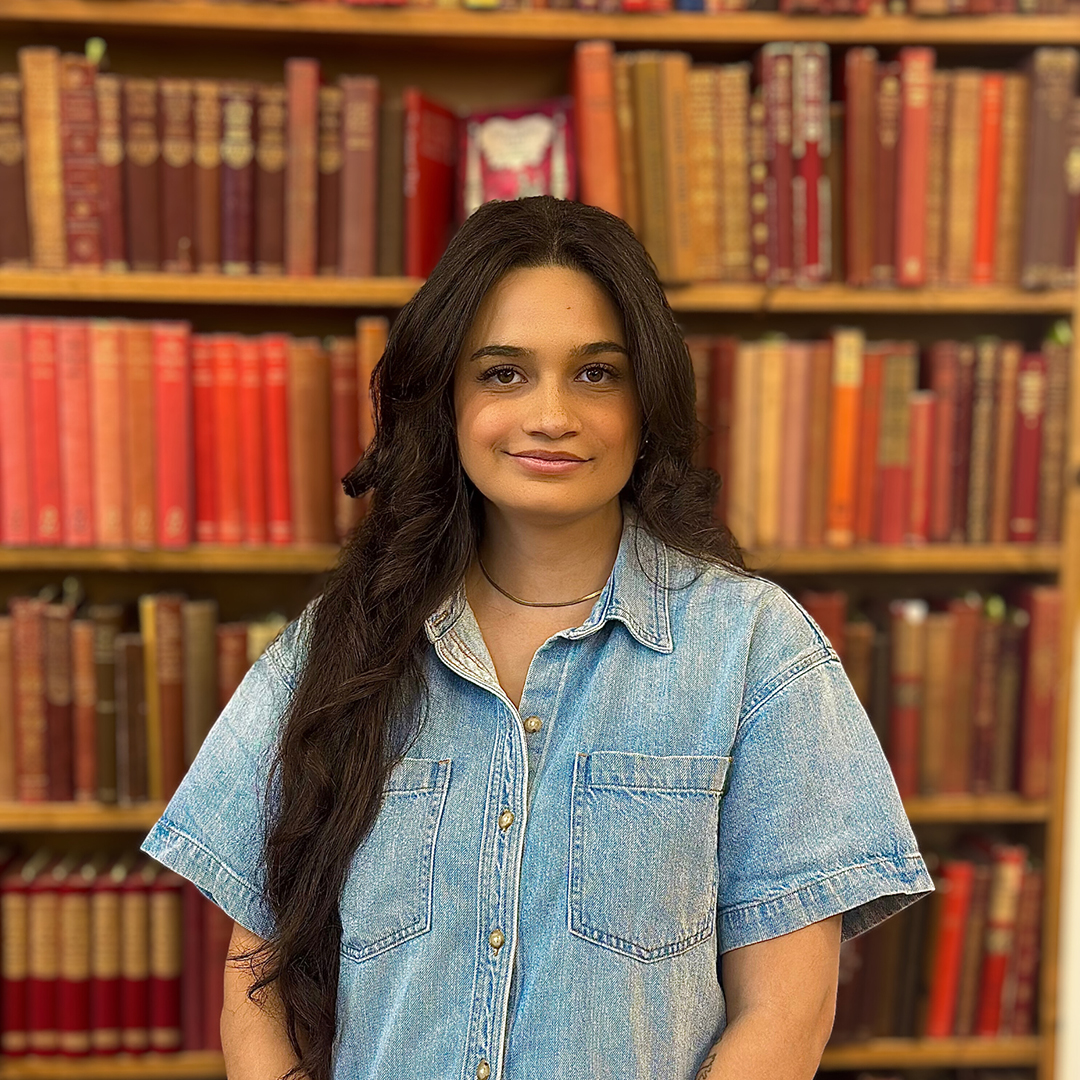
Chantelle Ohrling
Chantelle Ohrling (she/her), comes from a long line of rebellious Afro-Taíno women. When she isn’t nerding out about planned giving at Ecojustice or with her nose in a book, she’s honouring her responsibilities to her communities by tracing histories, listening to stories, and building connections for liberation. She believes we can alchemize oppressive systems (much like fungi decompose dead matter) into fertile ground for new societies rooted in reciprocal relationships based on deep care and respect for all living relations. You can find her on LinkedIn.
Discover more from CCF
Subscribe to get the latest posts sent to your email.