By Calion Winter, consultant building capacity and community for nonprofits with ethical tech
I’ll be the first to admit that I have a lot of disabilities, so after being excluded so many times, I started to question: “Is it just me? Am I too hard to accommodate?” But the requests I made were simple…
“We don’t have the capacity” is something disabled people hear all the time when trying to receive services from a nonprofit.
It’s not direct exclusion; they say we’re plenty welcome on their website—but the program materials fall short. And, when we ask for accommodations, more often than not we face the dreaded “we don’t have the capacity.”
Every time I hear this, as a disabled person, it reads as “we don’t have the capacity to care for you.” It still shocks and disappoints me, especially when the nonprofits’ missions are about supporting populations with a high percentage of disabled people. If that’s true, then why are accommodations that are essential for us to participate the last thing built into their programs?
How this Unintentional Exclusion Manifests
Nonprofit programs can be incredibly impactful to communities. As a trafficking survivor, there are many I’ve joined in hopes of developing my career, healing trauma, and otherwise improving my life. I’ve also joined other programs in queer nonprofits, disability nonprofits, and immigrant nonprofits.
Having interacted with dozens of programs, only one was ever truly accessible.
I’ve sat with this realization for years with a hopeful longing that it really was “just capacity limits” holding them back from building in accessible practices. But as the months and years passed by, I realized “capacity” was just an excuse.
Their exclusion looked like videos without captions or transcripts; documents without screen reader friendly layouts; a lack of trigger warnings; requirements for cameras to be on at all times; in-person event attendance requirements, without rest spaces, accommodations for lying down, or airborne infection control policies.
The basics, like a wheelchair accessible venue, were a bit more common to see—but still not available all the time.
Even many fully-online programs lacked accessibility, beyond missing captions and transcripts. Many times, a program’s level of engagement was stated to be small—perhaps around two hours a week. So I joined, knowing that this was within my capacity as someone with multiple energy-limiting disabilities. Then, on the first day, I learned there were five hours of work due that week, in addition to a live call.
I wish I could say this only happened once, but it’s a pattern I’ve seen repeated over and over again.
When asking for accommodations, the response was always “we don’t have the capacity” or “that’s now how our program is structured, we’re sorry it doesn’t work for you.”
“Is It Just Me?”
I’ll be the first to admit that I have a lot of disabilities, so after being excluded so many times, I started to question: “Is it just me? Am I too hard to accommodate?”
But the requests I made were simple—captions on a single video (even auto-generated ones would work), ability to work at a slower pace, mask and testing encouragement for in-person events, or keeping my camera off so I could lie down while participating. I also met other people who were similarly excluded. It wasn’t just me.
And yet, even if it had been just me—one member out of 25 in a program—was it wrong to ask for an accommodation anyway?
Disability Justice in Our Programs and Our Movements
So how do we shift towards disability justice in our nonprofits? In the organizations that have been inclusive and accessible, here’s what I’ve noticed (or fought for):
Disabled leadership:
Without disabled leaders, ableism will always slip into organizational structures. Hiring disabled consultants, especially those unable to work full- or even part-time, helps ensure energy-sensitive programming. Hiring disabled leadership will instantly highlight what program elements aren’t accessible. If there’s no budget to hire, have an open dialogue with disabled program members—including those who have left the program—to ask what could have been better, and pay them for their time and expertise.
Don’t use capacity as an excuse:
We live in an age where capacity strains on our organization can be radically transformed by using community resourcing, CRM technology, and many other innovative strategies. Even without strategies to increase capacity, building in accessibility only takes transparency, accountability, and a few minutes a week to add in some captions or reformat a document.
Start with accessibility:
When designing a new program, think about various disabled communities. What might they struggle with? How will you navigate it? Consider things like mobility conditions, neurodivergence, sensory disabilities, and chronic illnesses that affect energy levels. If you have in-person events, also keep in mind high-risk communities during an era of frequent infectious disease.
Building Accessible Programs is About Flexibility
Community-centered programming is all about building programs for the people they help, rather than only the whims and experiences of funders or organizational leadership. So, when developing nonprofit programs, consider flexibility and multiple points of access.
One nonprofit I worked with had a great workbook of materials for a course they hosted, but when they misinformed the group of how many hours of live attendance were required, anyone who dropped out had their access to all course materials restricted. Even self-guided workbooks were denied to disabled applicants, simply because they couldn’t attend multiple hours of live sessions.
Flexibility means offering partial course access. Examples could be evergreen (repeated, always available) eCourse versions; self-guided workbook access; making live coaching optional for some cohorts, whenever possible; pre-recording videos; or recording live sessions (edited to protect anonymity, if needed) to distribute afterward.
The beautiful thing about this flexibility is that it helps everyone, not just disabled members. Single parents or busy students can watch recordings after work or school. Transcripts can be quickly auto-translated to increase language accessibility. Or, if someone otherwise totally healthy gets sick with COVID, they know they don’t lose program support while their body recovers.
So, take some time and ask: How are we welcoming disabled people into our programs? How are we excluding them? How can we designate just a little time each week to improve accessibility? This way, capacity is never an excuse our organizations use for exclusion again.
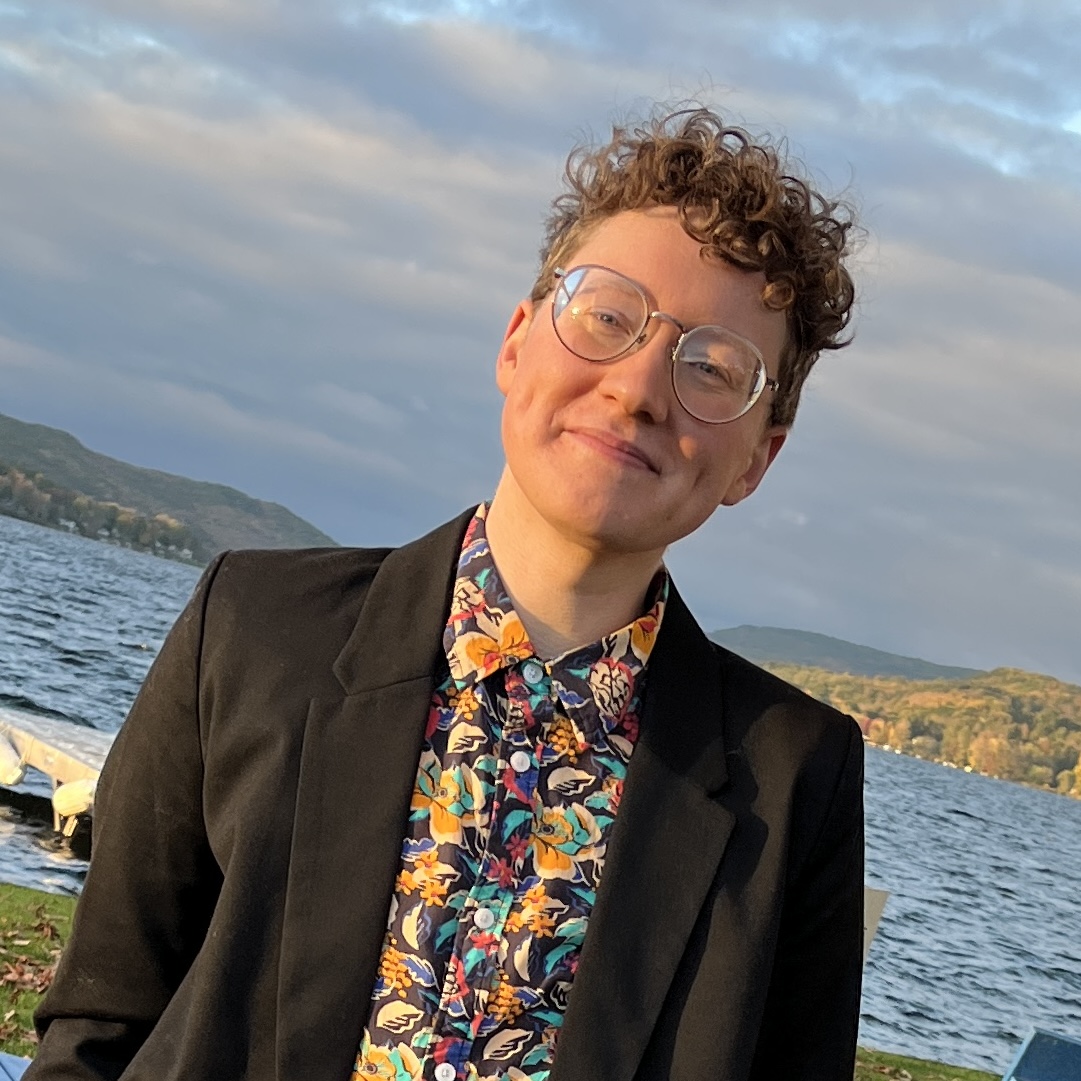
Calion Winter
As a multiply-marginalized trafficking survivor, Calion Winter (he/they) has been a passionate international activist for over ten years. His experience with severe disability has created a deep desire to innovate ways to expand movements in the midst of great limitations. He founded Taking Routes to do this and, through it, helps nonprofits expand capacity and revenue through CRMs and other technological solutions. Follow their work at Taking Routes or you can find them on LinkedIn here, too.
Discover more from CCF
Subscribe to get the latest posts sent to your email.
your breakdown of what unintentional exclusion actually looks like, no transcripts, inaccessible documents, rigid attendance, no infection-control, no rest, felt painfully familiar and deeply validating.
i especially appreciate how you frame disability justice: not as a bonus or an add-on, but as leadership, transparency, and flexibility woven from the very beginning. your call to stop using “capacity” as shorthand for “we didn’t prioritize you” is one the sector desperately needs to hear.