By Michelle Flores Vryn, CFRE, frontline fundraiser, board member, and writer
And we know the pieces are shifting. Philanthropy is in flux. DEI efforts are being re-evaluated or quietly shelved. Staff turnover is rattling once-stable institutions. Long-standing funding sources are vanishing. What remains, as my friend Stephanie Green Weizer says, is the “organic matter of our missions”—the values, love, and truth that can’t be extracted or destroyed. From this nutrient-rich core we can build something new.
Jigsaw puzzles are the perfect metaphor for the moment we’re in.
The image on the box top gives you the full picture and serves as guidance for how the pieces fit together. There’s comfort in knowing what you’re working to assemble. Without that clarity, the task of organizing and fitting each piece together would feel overwhelming, even incapacitating.
We’re in a similar moment now in the social sector: searching for a shared vision, a guiding image, unsure of what the next stage of adaptation should, could, or will look like.
The Organic Matter Beneath It All
And we know the pieces are shifting. Philanthropy is in flux. DEI efforts are being re-evaluated or quietly shelved. Staff turnover is rattling once-stable institutions. Long-standing funding sources are vanishing. What remains, as my friend Stephanie Green Weizer says, is the “organic matter of our missions”—the values, love, and truth that can’t be extracted or destroyed. From this nutrient-rich core we can build something new.
But what exactly are we growing toward?
Otto Scharmer of the Presencing Institute reminds us, if we want healthy, living systems, we need to tend to the soil beneath them (instead of our default move of jumping into tactics and strategies). When we move too quickly into solutionism, we miss the chance to assess the state of the “social soil.” This is what Scharmer calls the quality of our relationships, our awareness, and our shared sense of purpose. Within the review of these elements, we better understand what’s making the soil unhealthy, as well as how to fix it.
Just like a regenerative farmer tends the roots to improve the harvest, we must tend to the unseen foundations of our work. For nonprofits, regeneration means designing systems that replenish energy and trust rather than extract them. Our challenge isn’t a lack of tools. It’s that we keep organizing around the same assumptions and power dynamics that created the very problems we’re trying to solve. We talk about transformation while we cling hard to extractive relationships and top-down decision-making.
No wonder progress feels slow.
The Infrastructure of Belief
Belief is the invisible and mysterious architecture beneath everything we build.
Think about Yvon Chouinard, founder of Patagonia. What if he had doubted that a company could actually center its business strategy on environmental activism with a goal to “build for years, not seasons”? At the time, everyone thought that idea was wild and far-fetched, except for Chouinard. The conventional wisdom said consumers wanted to feel good about their purchases without actually changing their behavior. Chouinard believed they wanted consistency between their values and their consumption, even if it cost more.
Turns out, he was right. But here’s the more interesting part. His success gave other companies permission to try similar approaches. Over the last few years, outdoor brands like The North Face, and REI have led the charge in speaking out on controversial issues, taking stands that risk alienating portions of their customer base. Chouinard didn’t just build a successful company—he shifted the entire industry’s understanding of what was possible.
This moves us to an important question: what do we believe is possible for our sector?
Belief doesn’t guarantee outcomes but it does orient us. It shapes how we show up, how we design, and what we think is achievable. If we believe this sector can only operate within scarcity, we’ll build accordingly. If we believe something more generative is possible, we plant different seeds.
The Consensus That Nobody Talks About
From conversations with social sector leaders–including community organizers, funders, nonprofiteers, consultants–I’ve heard a surprising level of alignment when they talk about what they want! It sounds like this:
- Communal effort over individual heroics
- Work systems that are healthy, not extractive
- Philanthropy that nurtures long-term ecosystems, not just short-term projects
- More joy, more love, more dignity in the day-to-day
These aren’t broad brushstrokes but specifications for a different kind of infrastructure. They represent a shared understanding that we’re not just trying to fix what’s broken processes, but to build what’s never existed. At least, not yet.
Still, when we imagine the future, we often default to minor upgrades of the present. Our vision gets trapped in “recursive futurism” or recycling old frameworks instead of imagining new ones. We tweak what already exists instead of asking bolder questions. Not “what will a nonprofit look like in 10 years?”—but rather “what will community care look like in 20 years?” Not “how do we diversify grantmaking panels?”—but “what if philanthropy as we know it disappears and something new grows in its place?”
The problem isn’t that we lack imagination. It’s that we’ve been trained to imagine within constraints that no longer serve us.
Navigation Without Destination
Many terms in systems thinking (such as “wayfinding”) imply we’re heading to a clear destination. But I think it’s more like sailing toward a floating island. It moves. We recalibrate. We learn. And as we adjust and readjust our sails, we become something new in the process.
To me, this isn’t about finding the right strategy or map. It’s about developing the capacity to navigate uncertainty without losing our sense of direction.
Transformation doesn’t happen through one big leap. It happens in fractals: small moves, slow trust-building, daily experiments. We make the road by walking it. And sometimes, we bring a machete to clear a trail no one else has seen yet.
Yes, it’s slower. Yes, it’s messy. But we also know we can’t go back to the way things were.
Cultivating the Social Soil
Scharmer calls to pay attention to the quality of the soil beneath the systems translates into:
- Practicing deep listening over quick reactions
- Centering conversation over control
- Prioritizing relationships over transactions
- Acting from shared intention rather than individual reaction
This moment is not about preserving the current system but composting parts of it. We let go of the old for compost and use it to nourish what comes next.
This is not an analysis from the sidelines but rather a shared story in motion. Kind of like those novels in the 90s that let you select your ending (anyone remember the “Give Yourself Goosebumps” series by R.L. Stine?). So you—yes, you!—are the protagonist. You decide how this next chapter unfolds. The next move isn’t “out there” waiting to be found. It’s (y)ours to make. If you love this sector and want it to evolve, please don’t step aside. Don’t wait. Participate when and where you can.
As Mr. Rogers said, “Often when you think you are at the end of something, you’re actually at the beginning of something else.” Perhaps now the social soil is ready to be transformed into something new. The only question is whether we are brave enough to plant something different from its nutrients.
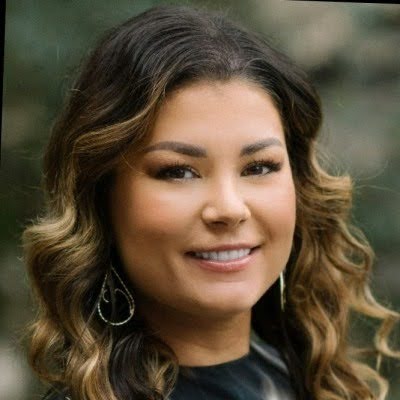
Michelle Flores Vryn
Michelle Flores Vryn, CFRE, is not your typical fundraiser. She’s part strategist, part brand architect, and part movement-builder. For 15+ years, she’s raised big dollars for bold ideas, working across conservation, higher ed, and civic engagement. Michelle co-founded two research efforts: the international AI Equity Project and the national Social Impact Staff Retention Project—both focused on what’s next for the future of nonprofit work. She speaks often on reimagining systems, donor engagement, and underscoring the untapped power of brand to build community. Michelle serves as the Vice Chair of Professional Development on the Association of Fundraising Professionals (AFP) Global Board of Directors and is a co-organizer of the Texas Chapter of Community-Centric Fundraising (CCF).
Find Michelle on LinkedIn – she’d love to connect!
Check out her website to learn more about her work.
Send Michelle a tip via Venmo: @Michelle-Flores-Vryn
Discover more from CCF
Subscribe to get the latest posts sent to your email.