By Kristen Corning Bedford, creating lots of little on-ramps in many small spaces
What will shake enough people from the dream that any of this is working for anyone, so that we gain the momentum to build the frameworks that can take us into a different future?
“You never change things by fighting the existing reality. To change something, build a new model that makes the existing model obsolete.” —R. Buckminster Fuller
We have entered a monumental moment of collective disillusionment.
While many of us have been working from this place for generations, mending the edges of fraying systems within our core communities and wondering how to connect the dots to create true systemic change, there is now a captive audience who are being explicitly exposed to the rot behind the rhetoric.
Individual donors are reeling from a sense of powerlessness that leads to incapacitation, foundations are inundated with requests to make up the difference in lost government contracts, and nonprofits are trying to stay out of the crosshairs so they can continue to serve their missions.
There has never been a more powerful moment to reimagine our entire industry.
These days my colleagues and I are asking each other, what are the new pathways of funding that will evolve from this moment? How do we foster resource shifting and community to community connections that are sustained within local jurisdictions but not siloed from each other? What kinds of stakeholder investments are necessary to move these ideas from the edges to the center?
And at the core of my questioning is a much bigger question: What will shake enough people from the dream that any of this is working for anyone, so that we gain the momentum to build the frameworks that can take us into a different future?
Becoming a problem for some brought me into more meaningful relationship with others.
I think back to the time when I served as the first PTA Equity Chair at my son’s public grade school. Months into the COVID lockdown, I learned that our school had amassed a reserve fund of half a million dollars with no clear path for spending it, and I was curious to understand, if a global pandemic wasn’t a trigger to use our “rainy day funds,” while others in our community were being critically impacted, what was?
I thought highlighting the discrepancy between our words and actions, especially when the schism between day-to-day realities was laid so starkly bare in our neighborhood, would be an antidote to inaction. But naming a problem in the system exposed something deeper to examine, an inquiry into the heart of a hoarding society that maintains a firm distinction between the haves and have nots. And, as Sara Ahmed highlights in Living a Feminist Life, “[t]o give the problem a name can be experienced as magnifying the problem, … [w]hen we give problems their names, we can become a problem for those who do not want to talk about a problem even though they know there is a problem.”
But becoming a problem for some brought me into more meaningful relationship with others.
In response to this new financial awareness, several parents created a pooled PTA fund in our neighborhood to address the inequitable distribution of wealth in our public schools, overlaying current school data over previously red-lined neighborhoods.
With a PowerPoint presentation in hand, we began meeting with parent teacher leadership teams to illuminate how past racist systems were sustaining current and unexamined harm in our public-school PTA funding.
After one of these meetings — which had become heated with the questioning of smug parents — I reflected on the pattern of this script and the familiar stickiness of an anxiety that I am also steeped in.
The weed of supremacy culture is tenacious and seeing a tendril of it unfurling itself from another mom’s mouth, made me soften toward her. I realized that these parents are also hosts of this thing, more than the sum of their parts, and when I explored my own feelings of righteousness and defensiveness in reaction to their opposition, the thought go the light, Carol Anne! popped into my head – a reference to the moment in the movie Poltergeist when the psychic protagonist, Tangina, urges the mother to call to her daughter and tell her to move away from what feels like a place of safety but is actually an evil force whispering lies to keep her close.
I texted this movie moment to another parent as we discussed how these PTA meetings were going, and I used a meme of Tangina with pursed red lips issuing forth a matter-of-fact instruction to Carol Anne’s family: “Now let’s go get your daughter.” While the mother is terrified that she’s putting her daughter in harm’s way because the instructions run contrary to everything she’s known, and the daughter is oblivious to the danger, assuming she’s safe all along, it’s the guide who remains strong and certain because she’s gone through this before.
As soon as I hit send, I was flooded by a warmth of connection, which was quickly followed by a chill of recognition: oh shit …we are all daughters of this thing, and we are each other’s sisters. Which means that the health and wellbeing of each of these fearful, angry women is tied to the health and wellbeing of my entire community, and I don’t get to turn away from them because I don’t like the origin of our sisterhood.
Risking my comfort opened the door for the community to collectively envision a different future
Softening the veil between micro/macro, center/margin, or us/them, unravels and exposes the lie behind the façade: ego death on a community wide scale. This is risky work, but “[i]n the long run,” says theoretical physicist David Bohm “it is far more dangerous to adhere to illusion than to face what the actual fact is.”
The backlash to facing facts in our increasingly polarized and social media distorted bubbles is real. The fear of being othered – losing our status, our jobs, our identity, our friends and family – is hardwired into being human, and this then becomes the great manipulator, making us easily malleable to the workings of the system. But being malleable and soft is also the solution. We are flexible and tender, and this malleability becomes radical as we create lots of little on-ramps in many small spaces.
The individual and the system operate in a tightly woven relationship, which is often maintained in purposefully invisible ways to provide cultural and societal protection. You can’t truly see what you haven’t experienced, as Alfred Korzybski profoundly expressed when he said, “The map is not the territory.” When I stopped relying on the map to engage with the landscape, I was inundated with tactile information about the territory, and I could ask simple and more evocative questions.
Asking our neighborhood PTA, “why are we hoarding so much money when there are people who need it right now,” broke the illusion that any of this is okay, which then engaged new voices to gather in a collectively held mechanism of dismantling and rebuilding. This became a community wide inquiry into how to change deeply ingrained injustices when we’re also complicit in sustaining them, and it forced people to confront hard-held truths about who they are, what they deserve, and what communities they belong to.
The pattern in the script is the key to the solution: systems change when enough people upholding the systems change.
A core of camaraderie and connection and care can be found in the light, but to gain the momentum necessary in this moment of horror movie proportion, we need a collectively held vision of a different future.
How do we make this future irresistible to those who are seduced by the whisperings of what has always felt safe and right? How do we model strength and certainty in the face of grave danger and fear? How do we sustain coordinated collaboration across sectors and demographics to build new models?
We already have the skills and resources necessary for this global imagination movement – what we need now is mass mobilization of people who have been taught to fear the light.
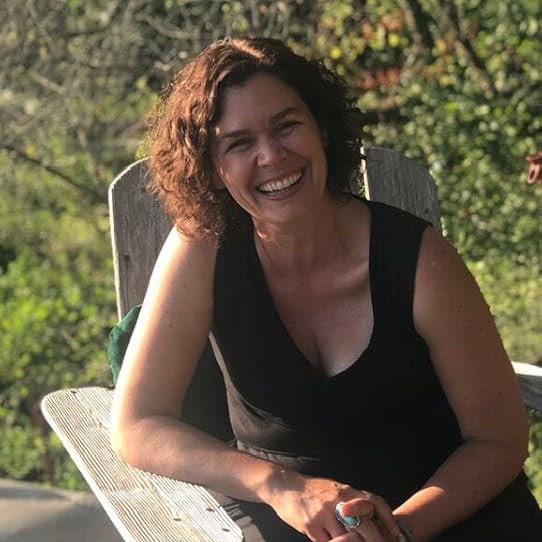
Kristen Corning Bedford
Kristen Corning Bedford (she/her) is a visionary catalyst, whole systems designer, and feminist philanthropist who has spent 30 years creating innovative pathways for changemaking and belonging. She is the author of A Generous Heart, Changing the World Through Feminist Philanthropy, which guides individuals on a journey to examine their intent, passion, and resources to create joyful change in the world. You can connect with Kristen through her website or on LinkedIn.
Recently, Kristen was joined in conversation with Radical Flexibility Fund Founder and CEO, Riva Kantowitz, to discuss new pathways of resource shifting and the joys and challenges that come with envisioning a new future of local and global funding mechanisms. You can watch a replay here.
Discover more from CCF
Subscribe to get the latest posts sent to your email.