
By Esther Saehyun Lee, Founder of Elevate Philanthropy Consulting with a Scorpio sun and Cancer moon (so writing about grief in the nonprofit sector was basically inevitable.)
Cumulative grief does not resolve through individual effort. It becomes more bearable in community. When we can name it together, sit with it together, and refuse to let it harden into cynicism together.
If you have ever read articles about grief, hope is usually nearby. People who are grieving are told that hope is on the way, that they shouldn’t lose it, that it’s waiting for them on the other side. The relationship between hope and grief is a close one. Our sector is good at selling hope. We are terrible at naming grief.
Working in the nonprofit sector means having a direct line into grief:
Grief for the version of myself that entered this sector so full of hope.
Grief of realizing the systems are working exactly as designed.
Grief of being complicit in a sector that creates the problems it claims to solve.
Grief of knowing there is enough money, enough food, enough houses, enough resources to ensure that no one is hungry, houseless, or alone and that the biggest barrier is us.
Grief that another world is possible, but that it requires us to care for each other in ways that most of us have never been taught.
This is cumulative grief. As J.S. Park, former atheist turned Christian turned hospital chaplain and writer describes it in his book, As Long as You Need: Permission to Grieve: “[cumulative] grief is accumulated secondhand, causing chemical changes in the body, building up like toxins, wearing down the soul. Many of us are here. Many of us have been here for a long time, absorbing catastrophe daily.”
It is worth naming what we are actually sitting inside of right now. Federal funding is being gutted. Organizations are scrubbing language from grant applications to avoid triggering clawbacks. DEI commitments that took years to build are being quietly walked back under legal pressure. People are being disappeared off streets. Fascism is not a future threat we are organizing against but a present condition we are fundraising inside of. And we are still making stewardship calls. Still building sponsorship decks. Still trying to hit year-end targets.
I understand that mobilizing resources is critical work. I believe that. It’s why despite my relentless critiques about our sector and practices, I remain here, committed to mobilizing resources to missions and organizations every day.
And still, there are days when I feel like I do nothing but participate in and benefit from an industrial complex that is perpetuating the very harms we say we are trying to eradicate. I feel overwhelmed. I feel horrified. I wonder if any of it is enough.
And I say this not to seek sympathy but to remind myself—and others—that this discomfort, this guilt, this tension, is calling for us. This is the grief doing its job and keeping us honest about the gap between what is and what should be.
And it shows up. Depending on the day, it can feel like my hope for this sector is simply gone and that I have resigned myself to perpetuating harm. Cumulative grief has the potential to transmute sadness into despair, to quietly shrink what we believe is possible. It can make the imagination go quiet. Inward.
But the consequences go far beyond me. Cumulative grief shows up in how organizations make decisions. It shows up as risk aversion with boards and executive directors making smaller, safer bets because they are exhausted and cannot afford to lose. It shows up as shrinking vision, as the slow erosion of the bold thinking that brought most of us into this work in the first place.
We talk about burnout as a staffing problem, a retention problem, a self-care problem. We rarely talk about it as a strategic problem or one that is quietly limiting what our organizations are willing to imagine and attempt. We rarely talk about how this risk aversion moves the needle, slowly but surely, until we have drifted so far from our values, we don’t remember why we chose to do this work in the first place. Or what is actually possible.
It also needs to be said that cumulative grief is not distributed equally. BIPOC staff, program staff working closest to community, people who carry lived experience of the very issues their organization addresses—we absorb more. Read this fantastic piece about fear and immigration policy by Shama Shams on the CCF Hub.
We bring more of ourselves to this work, and we are often offered the least protection from its weight. Leadership tends to have more buffers: more distance from direct service, more agency over their time, more access to the resources that cushion the hardest moments.
For a sector that talks constantly about equity, we have been remarkably quiet about this particular inequity.
The sector’s primary answer to cumulative grief has been individual: therapy stipends, mental health days, wellness programming, resilience workshops. These things are not worthless. But they are insufficient because they place the burden of recovery on the person rather than on the conditions causing the harm. They treat a collective wound as a personal failure to cope.
You cannot wellness your way out of structural grief.
As a sector, we have also made grief a private experience. We carry it quietly. We perform fine in meetings and fall apart on the commute home. We assume the weight is ours alone to manage.
For a sector that talks about community, solidarity, and shared power, I have to ask, why is grief the thing we keep to ourselves?
Cumulative grief does not resolve through individual effort. It becomes more bearable in community. When we can name it together, sit with it together, and refuse to let it harden into cynicism together.
This is arguably the most important infrastructure we are not building.
What would it look like to acknowledge grief as part of how we open a meeting? To check in with each other not just about capacity but about what we are carrying? To talk publicly about the gap between the world our work imagines and the world we are actually living in?
Grief is not the villain in this story. It is a reminder of our humanity. A signal that we are still paying attention, still refusing to normalize what should not be normalized. The grief means something is still alive in us.
But I want to ask directly: what are you protecting yourself from by keeping this grief private? What agreements have you made with your organization, your colleagues, yourself to stay quiet about the cost of this work?
And what becomes possible if we stop?
Arundhati Roy wrote “another world is not only possible, she is on her way. On a quiet day, I can hear her breathing.”
Grief is what helps us hear her.
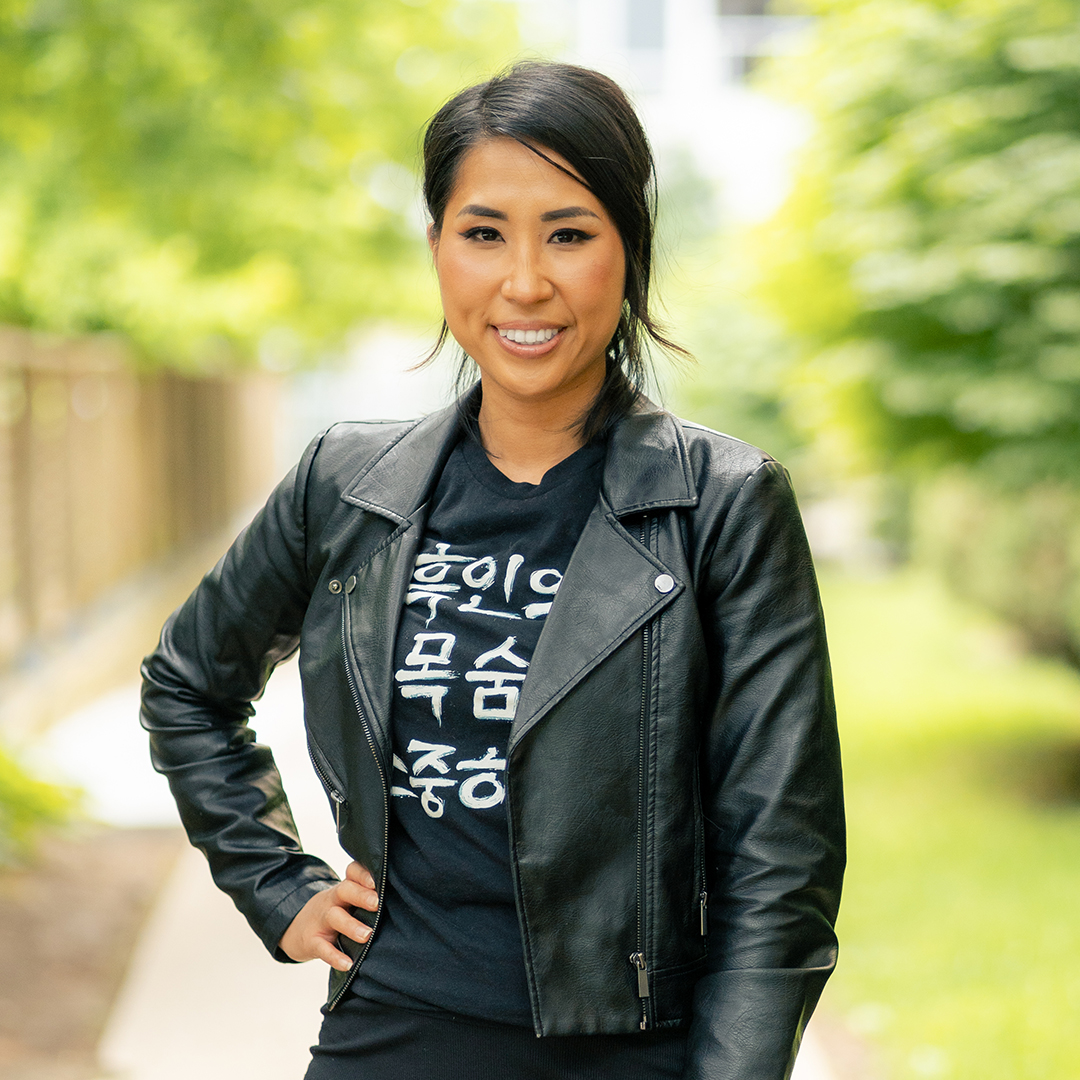
Esther Saehyun Lee
Esther Saehyun Lee, MA (she/her) is the founder of Elevate Philanthropy Consulting, a fundraising and strategy practice that works with small and mid-sized nonprofits across Canada and the United States. She is a Trauma of Money™ certified fundraiser, storyteller, and advocate whose work centres on mobilizing resources to communities that have been deliberately divested from.
She partners with nonprofit leaders to build fundraising capacity and ground their organizations in equity-aligned practice. Her approach is shaped by Community-Centric Fundraising values and a belief that how we raise money is as important as how much we raise.
She brings this commitment into the broader sector through her roles as a CCF Emeritus Council member and co-lead of the Asian Fundraisers in Canada Collective, where she works to create space for fundraisers of colour and challenge the structures that concentrate power in the sector. Outside of her consulting work, Esther is an amateur banjo player and a devoted cat mom.
If this resonated, join me on May 20 for The Scarcity Vow — a free webinar on what the nonprofit sector does to our relationship with money, and what it costs us. Register here.
Discover more from CCF
Subscribe to get the latest posts sent to your email.